Tag: Price Surge

  • Inflation edges higher as weekly SPI indicates increase in prices

    Inflation edges higher as weekly SPI indicates increase in prices

    According to the Weekly Sensitive Price Indicator (SPI) released by the Pakistan Bureau of Statistics (PBS), the Combined Group’s SPI increased by 0.04 per cent during the week ending February 22, 2024.

    Additionally, the SPI surged by 30.68 per cent YoY compared to the same period last year.

    As of February 22, 2024, the Combined Index stood at 315.31, a slight uptick from 315.18 on February 15, 2024. A year ago, on February 23, 2023, the index was significantly lower at 241.29.

    Analysing the data for 51 items, it was found that the average prices of 23 items increased, 8 items decreased, and 20 items remained stable.

    Notable increases during the week were observed in the prices of tomatoes (22.71 per cent), bananas (7.40 per cent), diesel (3.02 per cent), chicken (1.22 per cent), and petrol (1.00 per cent).

    Conversely, onions (14.42 per cent), eggs (11.19 per cent), LPG (1.82 per cent), cooking oil (5 litres) (0.75 per cent), and wheat flour (0.36 per cent) experienced significant decreases.

    Breaking down the SPI percentage change by income groups, it was noted that SPI decreased across all 3 quantiles while increasing across 2 quantiles. The lowest-income group saw a weekly decline of -0.08 per cent, while the highest-income group recorded a rise of 0.09 per cent.

    On a yearly basis, the SPI change across different income segments revealed an increase ranging between 25.53 per cent and 35.39 per cent. The lowest-income group witnessed a 25.53 per cent increase, while the highest-income group recorded a 28.22 per cent rise.

    Specifically, the average price of Sona urea reached Rs4,928 per 50 kg bag, reflecting a 9.19 per cent increase from the previous week and a substantial 69.14 per cent surge compared to the same period last year.

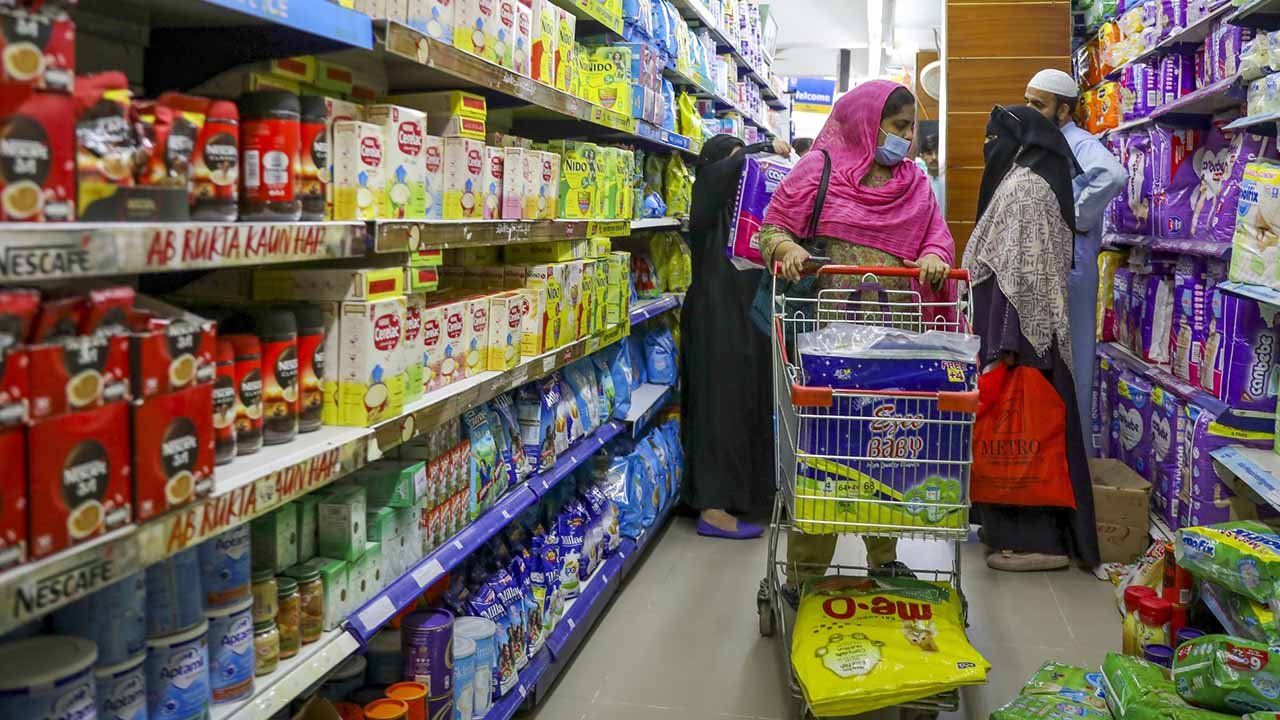
    The surge in prices, especially for essential items, poses a challenge for the general populace, particularly those in lower-income groups.

    Authorities and policymakers are likely to face increasing pressure to address and mitigate the impact of inflation on the economy and the daily lives of people.

  • 24 karat gold price surges by Rs800 per tola, silver takes a dip

    24 karat gold price surges by Rs800 per tola, silver takes a dip

    In a notable shift in the precious metals market, the per-tola price of 24 karat gold in Pakistan witnessed an increase of Rs800, reaching Rs213,200 on Saturday. This rise is compared to its previous sale at Rs212,400 on the last trading day.

    Similarly, the price of 10 grammes of 24 karat gold experienced an uptick, climbing by Rs686 to Rs182,785 from Rs182,099.  The All Sindh Sarafa Jewellers Association reported that the prices of 10 grammes of 22 karat gold also saw an increase, reaching Rs167,553 from Rs166,924.

    On the other hand, the price of per tola silver exhibited a decrease of Rs30, settling at Rs2,550. Simultaneously, the price of ten grammes of silver witnessed a decline of Rs25.72, reaching Rs2,186.21.

    Internationally, the price of gold ascended by $9, reaching $2,034 from $2,025, as reported by the Association. These fluctuations in the precious metals market reflect the dynamic nature of global economic conditions, influencing prices both domestically and internationally.

  • OGRA approves massive gas tariff hike for SNGPL, SSGC consumers

    OGRA approves massive gas tariff hike for SNGPL, SSGC consumers

    In a move to address the fiscal challenges faced by Sui Northern Gas Pipelines Limited (SNGPL) and Sui Southern Gas Company Limited (SSGC), the Oil and Gas Regulatory Authority (OGRA) has granted approval for a noteworthy increase in gas tariffs.

    Effective January 1, 2024, consumers of SNGPL will experience a 35.13 per cent surge, while SSGC customers will witness an 8.57 per cent rise.

    This marks the second adjustment in gas prices within the current fiscal year, following a substantial 193 per cent increase announced by OGRA, effective November 1, 2023. The decision to implement these changes is aimed at bridging the Rs98 billion shortfall collectively faced by both gas companies.

    The interim government’s initial projections aimed to collect Rs980 billion, intending to cover the estimated revenue requirements of Rs700 billion for both SNGPL and SSGC.

    The recommended average increase in the prescribed gas price is set at 23 per cent, reaching Rs1,590 per mmbtu, compared to the previous average of Rs1,291 per mmbtu determined on June 2, 2023.

    Specifically, OGRA has outlined a 50 per cent increase (Rs415.11 per mmbtu) for SNGPL, elevating the gas price to Rs1,238.68 per mmbtu, effective July 1, 2023.

    Simultaneously, the gas price for SSGC has been raised by 45 per cent (Rs417.23 per mmbtu) to reach Rs1,350.68 per mmbtu.

    The decision to increase gas prices aligns with the interim government’s commitment to the International Monetary Fund (IMF), with an agreement to announce a raise in gas sale prices by February 18, 2024.

    However, the OGRA Ordinance stipulates that if the government remains unresponsive to OGRA’s notification within 40 days, the determined tariff by the regulator will be automatically enforced.

    The recent approval underscores the ongoing efforts to address financial challenges and ensure the sustainability of the gas sector in Pakistan.

  • Price Monitoring Committee responds to alarming spike in food prices

    Price Monitoring Committee responds to alarming spike in food prices

    In response to the surge in food prices, the Food and Industries Departments of Punjab, Sindh, and KP have jointly implemented robust monitoring measures, including heavy fines, surprise raids, and the sealing of establishments engaging in price gouging.

    The Caretaker Minister for Planning, Development, and Special Initiatives, Muhammad Sami Saeed, led a crucial meeting of the National Price Monitoring Committee (NPMC) on Tuesday.

    The committee convened to assess the prices of essential commodities amid the current economic challenges.

    As of the week ending on January 11, 2024, the Chief Statistician, PBS, presented a comprehensive overview of the country’s price situation.

    The report revealed a 1.4 per cent increase in the SPI over the previous week (WoW) and a significant 44.2 per cent surge over the corresponding week of the previous year.

    The spike in SPI was primarily attributed to the increased prices of perishable items such as tomatoes and onions, as well as poultry products like chicken and eggs.

    Out of the 21 monitored items, prices for 21 increased, 8 decreased, and 22 remained stable. Noteworthy declines were observed in the prices of potatoes, vegetable ghee, and sugar.

    During the meeting, the minister inquired about the measures taken by provincial governments and ICT to bridge the gap between wholesale and retail prices.

    Representatives from the provincial Food and Industries Departments of Punjab, Sindh, and KP assured strict monitoring through the imposition of heavy fines, surprise raids, and the sealing of shops involved in overcharging.

    Despite challenges in the supply of perishable items due to extreme weather conditions, the meeting underscored the importance of addressing climate change.

    The administration of Punjab is actively working on controlling prices by sensitising Deputy Commissioners across the province.

  • Cost of living rises in Pakistan: Weekly inflation jumps by 0.81%

    Cost of living rises in Pakistan: Weekly inflation jumps by 0.81%

    In a recent report by the Pakistan Bureau of Statistics (PBS), the Weekly Sensitive Price Indicator (SPI) for the Combined Group witnessed a marginal increase of 0.81 per cent Week on Week (WoW), concluding on January 04, 2024.

    The SPI also exhibited a substantial 42.86 per cent Year on Year (YoY) surge when compared to the corresponding period from the previous year.

    The Combined Index, reflecting the overall price movement, stood at 313.66 as of January 04, 2024, compared to 311.14 on December 28, 2023. In contrast, a year ago on January 05, 2023, the index was reported at 219.56.

    Out of the 51 items considered, the average prices of 19 items experienced an increase, 09 items observed a decrease, and 23 items remained stable throughout the week.

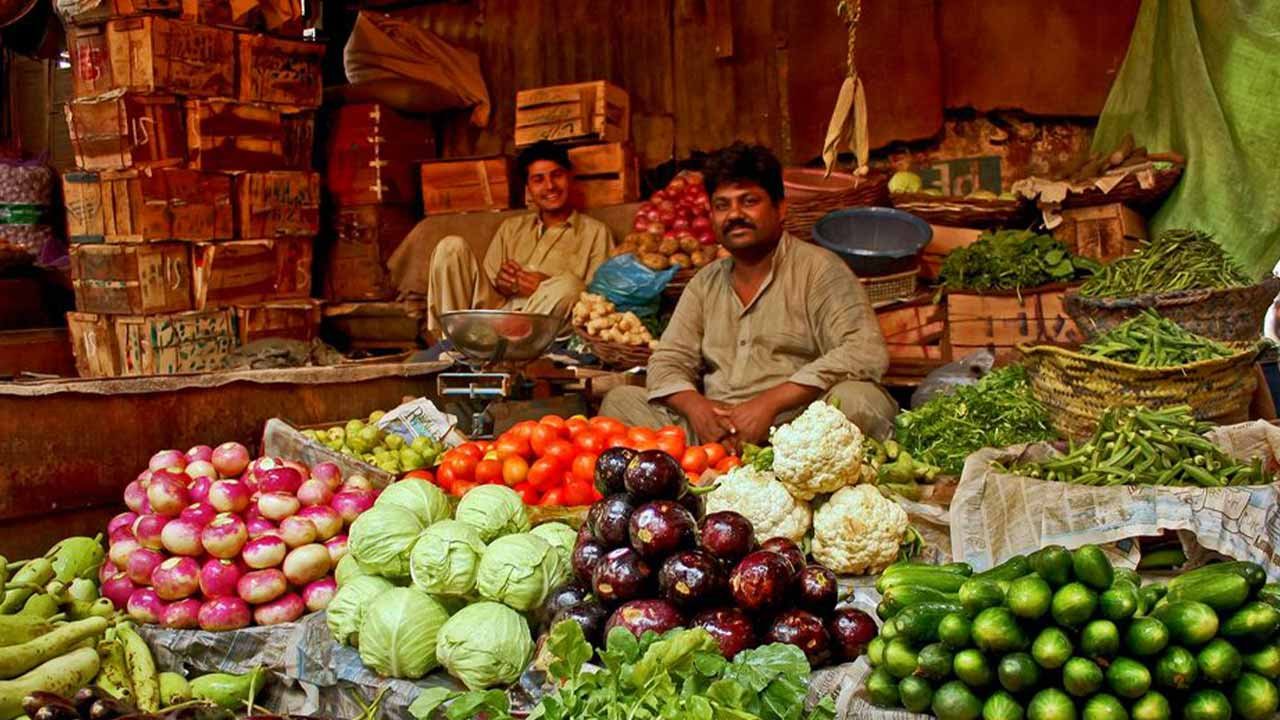
    During this period, notable price hikes were observed in tomatoes (16.04 per cent), chicken (13.98 per cent), eggs (3.20 per cent), onions (3.04 per cent), and bananas (2.13 per cent).

    Moreover, significant decreases were noted in the prices of potatoes (8.68 per cent), tea Lipton (1.29 per cent), garlic (0.68 per cent), and cooking oil 5 litre & vegetable ghee 2.5 kg (0.54 per cent) each.

    Analysing the weekly SPI percentage change across income groups revealed a universal increase ranging from 0.79 per cent to 0.84 per cent. The Lowest Income Group experienced a rise of 0.81 per cent, while the highest income group recorded a slightly lower increase of 0.8 per cent.

    On a yearly basis, the SPI change across different income segments exhibited a general increase ranging from 35.33 per cent to 46.38 per cent. The Lowest Income Group saw a yearly rise of 35.33 per cent, while the highest income group recorded an increase of 41.35 per cent.

    Noteworthy price points in the market included Sona urea, with an average price of Rs4,618 per 50 kg bag, marking a 0.02 per cent increase from the previous week and a substantial 72.45 per cent surge compared to the previous year.

    In contrast, the average Cement price recorded at Rs1,226 per 50 kg bag showed a 0.47 per cent decrease from the previous week but stood 17.43 per cent higher than prices observed last year.

    These fluctuations in the SPI underscore the dynamic nature of the market, reflecting both short-term variations and longer-term economic trends.

    As consumers and businesses navigate these changes, analysts are closely monitoring the SPI for insights into broader economic patterns.

  • December inflation may surpass 30% due to gas price hike

    December inflation may surpass 30% due to gas price hike

    In December, inflation is expected to surpass the 30 per cent threshold, driven by the recent increase in gas prices and the persisting adverse base effect, which continues to impact the consumer price index (CPI).

    The headline inflation for December is projected to settle at approximately 30.11 per cent year-on-year (YoY) and 1.18 per cent month-on-month (MoM), in contrast to the previous month’s figures of 29.2 per cent YoY and 2.7 per cent MoM.

    This monthly inflation rate is significantly lower than the 12-month average of 2.17 per cent MoM.

    Consequently, the average yearly inflation for the first six months of FY24 is estimated to be 28.87 per cent YoY, compared to 25.05 per cent YoY in the same period of FY23.

    The surge in inflation can be attributed to the adverse base effect and the notable increase in gas prices, which were not fully realised in the previous month.

    Conversely, food inflation is expected to exhibit a marginal decrease of 0.29 per cent MoM, driven primarily by the decline in prices of tomatoes, potatoes, chicken, and oil.

    Additionally, the transport index is forecast to undergo a 4 per cent MoM decrease, mainly due to the relief in petrol and high-speed diesel (HSD) prices.

    Post-December, inflation is anticipated to decline at a relatively faster pace, supported by the favorable base effect, the delayed impact of monetary tightening, and other administrative measures.

    The December spike is attributed to the lingering effects of the overdue gas price hike. Notably, unforeseen climate events, volatility in global commodity prices, especially oil, and external account pressures pose significant upside risks to the inflation outlook.

    Global oil prices are on the rise amid challenges in Red Sea shipping, potentially threatening the inflation outlook.

    Moreover, the successful completion of the International Monetary Fund (IMF) review, coupled with additional loan programmes, remains crucial.

    The outstanding amount of $1.8 billion under the stand-by arrangement (SBA) is yet to be released.

    The accompanying chart illustrates the yearly inflation trajectory based on different MoM CPI scenarios. At 0.5 per cent and 1 per cent MoM CPI, yearly inflation is projected to fall below the 22 per cent policy rate by February–March 2024.

    By the end of FY24, with 0.5 per cent and 1 per cent MoM CPI, it is expected to decrease to 15.29 per cent and 19.37 per cent, respectively, a significant change from the previous month’s forecasts of 12.9 per cent and 17.5 per cent.

    Considering the last 12-month average of 2.17 per cent MoM, the real interest rate is anticipated to remain in negative territory by the end of FY24.

  • Gold prices surge in Pakistan: 24-karat soars to Rs217,600 per tola

    Gold prices surge in Pakistan: 24-karat soars to Rs217,600 per tola

    The price of 24-karat gold per tola witnessed a surge, rising by Rs400 and reaching Rs217,600 on Tuesday, as compared to its previous closing at Rs217,200.

    Similarly, the cost of 10 grammes of 24-karat gold also experienced an uptick, increasing by Rs343 to Rs186,557 from Rs186,214.

    Meanwhile, the rates for 10 grammes of 22-karat gold climbed to Rs171,011 from Rs170,696, as reported by the All Sindh Sarafa Jewellers Association.

    In contrast, both the per-tola and 10-gramme silver prices remained stable at Rs2,670 and Rs2,289.09, respectively.

    On a global scale, the price of gold saw an increment of $4, reaching $2,047 from $2,043, according to the Association.

    Simultaneously, the Pakistan Stock Exchange (PSX) witnessed a significant downturn in intra-day trading on Tuesday, with the benchmark KSE-100 index plummeting by over 2,600 points.

    The PSX reported a loss of 2,633 points, causing the 100 index to dip below the 63,000-point threshold, trading at 62,571 around 2:30 pm.

    This decline comes after a sustained bullish trend lasting over a month, which followed the successful conclusion of a staff-level agreement with the International Monetary Fund (IMF).

    Market analysts attribute the bearish trend to stocks in the exploration and production (E&P), fertiliser, and banking sectors.

    Throughout the session, profit-taking was evident, contributing to the index fluctuating by over 2,500 points.

  • OGRA notifies major gas price hike for November

    OGRA notifies major gas price hike for November

    The caretaker government’s decision to implement a gas price increase of over 172 per cent for non-protected domestic consumers has left many shocked and outraged.  

    Starting on November 1, the revised prices are set to impose a significant financial burden on households already grappling with financial difficulties. 

    According to the notification released by the Oil and Gas Regulatory Authority (OGRA), the new gas prices represent a substantial hike across various consumption levels.  

    For instance, customers consuming 100 cubic metres of gas per month will now be charged Rs1,000, up from the previous rate of Rs400. Those using 150 cubic metres will see their monthly costs rise from Rs600 to Rs1,200. 

    On the other hand, the price for a monthly consumption of 200 mmbtu has increased to Rs1,600 from the previous Rs800, and for users consuming 300 mmbtu monthly, the cost has risen to Rs3,000 from Rs1,100. 

    Moreover, the charge for consuming 400 mmbtu of gas per month has gone up from Rs2,000 to Rs3,500. For those using more than 400 mmbtu per month, the new rate is Rs4,000, up from the earlier Rs3,100. 

    This significant and unexpected price surge is anticipated to have a severe impact on household budgets, especially for low-income families who heavily depend on natural gas for cooking and heating. 

  • NEPRA announces increase in electricity tariff, impacting November bills 

    NEPRA announces increase in electricity tariff, impacting November bills 

    In yet another unsettling development for power consumers already burdened by rising costs, the National Electric Power Regulatory Authority (NEPRA) has announced an increase of Rs0.40 per unit in the electricity tariff.  

    This adjustment, approved by NEPRA in response to the monthly fuel adjustment for September, will result in higher charges on November bills for electricity consumers. 

    It’s important to note that this tariff hike will affect all consumer categories, except for those classified as lifeline consumers and K-Electric users.  

    In October, NEPRA had previously approved a separate increase of Rs1.71 per unit in the electricity tariff, which was attributed to fuel adjustment charges (FAC) for the month of August. This increase was reflected in the bills for October. 

    Additionally, on October 3rd, NEPRA sanctioned a per-unit price increase of Rs 3.28 as part of the quarterly adjustment.  

    This adjustment will entail a recovery of Rs3.28 per kilowatt-hour (kWh) from various consumer categories within power distribution companies (DISCOs) and K-Electric over a six-month period, spanning from October 2023 to March 2024. 

  • IMF should help Pakistan uphold right to electricity, says HRW

    IMF should help Pakistan uphold right to electricity, says HRW

    For the past week, Pakistan has witnessed extensive protests against the recent surge in electricity prices. In several cities, these protests escalated into violence.

    The government-sanctioned price increase arrives at a critical juncture as Pakistan grapples with one of the most severe economic crises in its history. This crisis imperils the fundamental rights of millions, including access to healthcare, nutrition, and a satisfactory standard of living.

    According to Human Rights Watch, successive Pakistani governments have failed in reforming the country’s energy sector, contributing to the current crisis. The recent surge in prices is linked to a substantial US$3 billion agreement between the International Monetary Fund (IMF) and Pakistan.

    This pact, sanctioned in July 2022, stipulates the government’s obligation to eliminate energy and fuel subsidies, transition to a market-driven exchange rate, and implement tax increments.

    While Human Rights Watch fundamentally opposes fossil fuel subsidies due to their adverse climate impact, the removal of these subsidies without substantial investment in social security often results in disproportionate repercussions for individuals with low incomes.

    Elevated electricity prices can further elevate the costs of essential commodities like food, housing, and services.

    Recognising the right to an adequate standard of living, Human Rights Watch asserts that access to dependable, secure, clean, and affordable electricity without discrimination is imperative.

    Given the situation, it is imperative for the IMF to conduct a comprehensive assessment of the consequences of these adjustments. Rather than abrupt subsidy removal, the IMF should establish a comprehensive reform strategy aimed at mitigating price escalations and facilitating a seamless transition to sustainable energy sources.

    Such reforms could encompass the implementation of a universal social protection system designed to extend benefits to individuals at higher risk of income insecurity, including children, elderly citizens, and people with disabilities.