Tag: Price Trends

  • Gold price surges to Rs229,500 per tola

    Gold price surges to Rs229,500 per tola

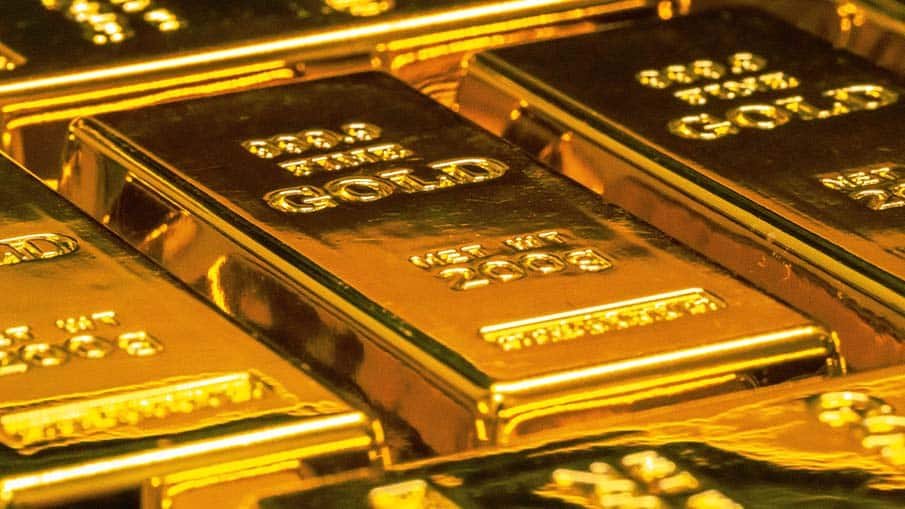
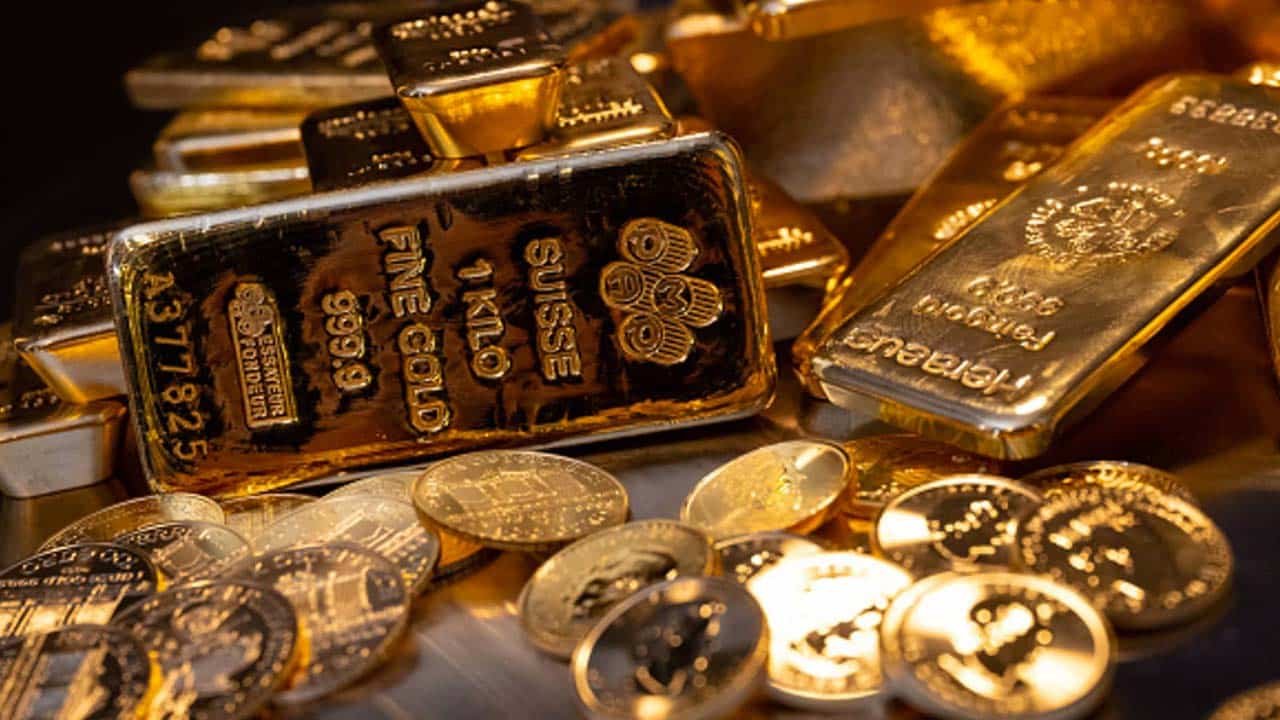
    The local bullion market saw a modest rise on Wednesday, with 24-karat gold fetching Rs229,500 per tola, marking a Rs100 increase from the previous session.

    Last week, gold prices had surged by Rs700 per tola. According to the Karachi Sarafa Association, the price of 24-karat gold rose to Rs196,760 per 10 grammes, up by Rs86.

    Additionally, 22-karat gold was priced at Rs180,363 per 10 grammes.

    Silver prices, however, remained steady, with 24-karat silver maintaining its price at Rs2,580 per tola and Rs2,211.93 per 10 grammes.

    Internationally, spot gold approached its all-time high, trading at $2,181.6 an ounce, marking a 0.13 per cent increase for the day.

    Investors are closely observing the Personal Consumption Expenditures (PCE) index data, which serves as the Federal Reserve’s preferred measure of inflation.

    This data could offer insights into when the Federal Reserve might begin reducing interest rates. Lower interest rates typically benefit precious metals like gold, which do not yield interest.

  • Pakistanis catch a break as weekly inflation hits 18-week low

    Pakistanis catch a break as weekly inflation hits 18-week low

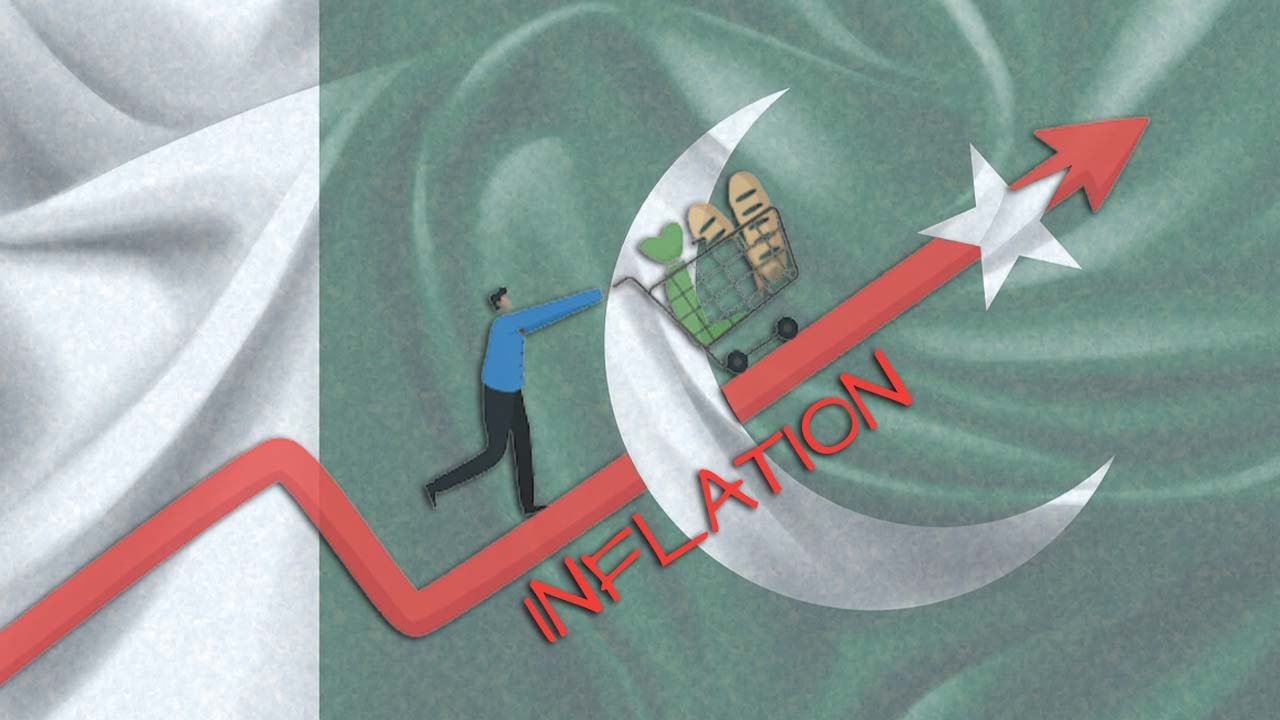
    Short-term inflation in Pakistan dipped to 29.06 per cent year-on-year by the week ending March 21, stepping down from its prolonged stint above 30 per cent for the past 18 weeks, as per recent official data.

    The pullback in weekly inflation, tracked by the Sensitive Price Index (SPI), was primarily attributed to a drop in the prices of key staples like tomatoes, onions, and potatoes. The SPI noted a 1.13 per cent week-on-week decrease as of March 21, down from 32.89 per cent recorded in the previous week.

    This follows an unbroken 11-week stretch of inflation topping 40 per cent, starting from 29 per cent noted on November 8, 2023. The surge was largely fueled by upticks in gas prices, electricity tariffs, and essential kitchen item costs.

    Weekly inflation peaked at a record 48.35 per cent year-on-year in early May 2023, before cooling off to as low as 24.4 per cent in late August 2023, only to surge past 40 per cent again by the week ending November 16, 2023.

    Among the notable declines in prices on a week-on-week basis were tomatoes (36.73 per cent), onions (19.58 per cent), potatoes (4.02 per cent), garlic (2.87 per cent), pulse mash (1.25 per cent), wheat flour (1.02 per cent), sugar (0.95 per cent), pulse masoor (0.86 per cent), and diesel (0.60 per cent).

    Conversely, significant increases were seen in the prices of LPG (1.49 per cent), shirting (0.74 per cent), beef (0.53 per cent), rice basmati broken (0.48 per cent), mutton (0.42 per cent), mustard oil (0.40 per cent), rice irri 6/9 (0.25 per cent), powdered milk (0.14 per cent), and georgette (0.03 per cent) compared to the previous week.

    On an annual basis, notable price hikes were observed in gas charges for Q1 (570 per cent), chilli powder (86.05 per cent), gents sponge chappal (58.05 per cent), garlic (57.41 per cent), onions (54.65 per cent), gents sandal (53.37 per cent), gur (39.86 per cent), sugar (35.01 per cent), salt powder (33.29 per cent), energy saver (29.83 per cent), and pulse mash (27.31 per cent).

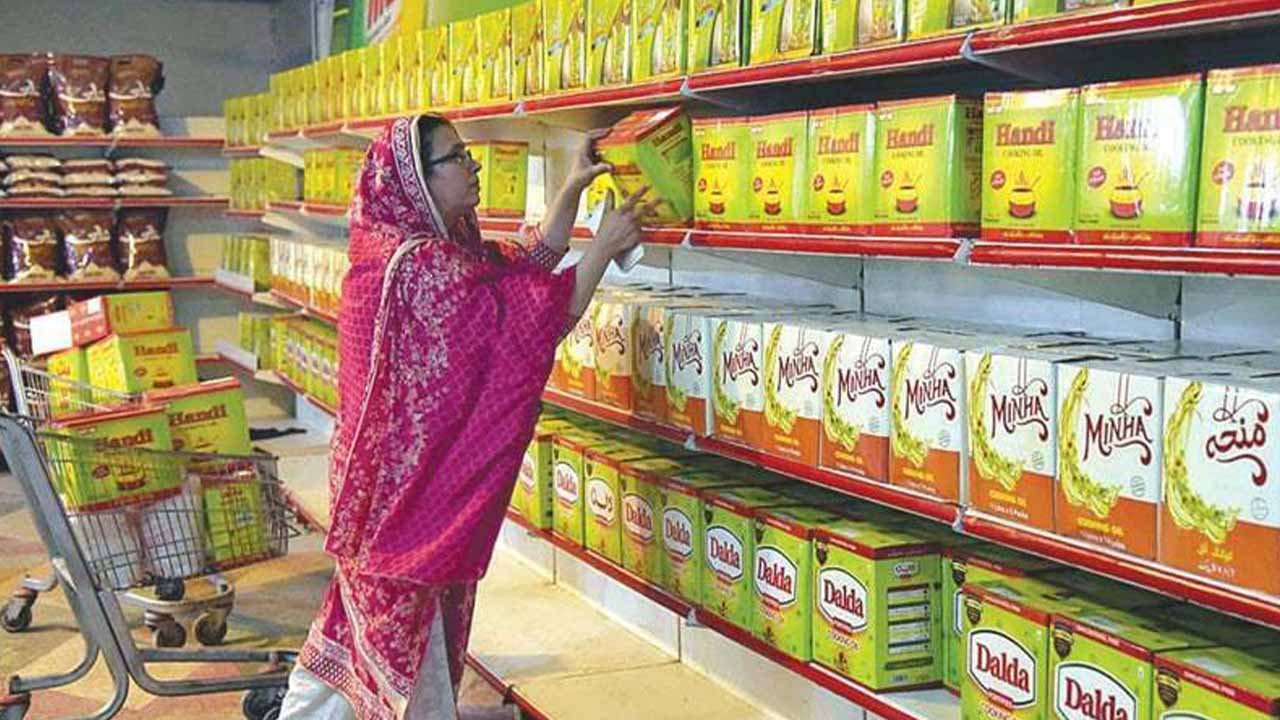
    In contrast, certain items witnessed declines, with cooking oil 5-litre dropping by 21.35 per cent, followed by vegetable ghee 2.5 kg (18.48 per cent), vegetable ghee 1 kg (18.44 per cent), mustard oil (13.90 per cent), bananas (13.52 per cent), diesel (2.47 per cent), and cigarettes (0.06 per cent).

    The short-term inflation, gauged through the SPI, stood at 323.50, compared to 327.21 in the preceding week and 250.66 a year ago. Comprising 51 items collected from 50 markets in 17 cities, the SPI is calculated weekly to monitor the prices of essential commodities and services at shorter intervals. Data indicates that prices of nine items increased, 17 items decreased, and 25 items remained stable compared to the previous week.
  • Gold prices in Pakistan remain unaffected by political uncertainties

    Gold prices in Pakistan remain unaffected by political uncertainties

    Despite political uncertainties, the domestic bullion market exhibited stability, with 24-karat gold maintaining its price at Rs215,500 on Friday, showing no deviation from the previous session.

    This stability is indicative of the domestic gold market functioning normally, aligning with international gold rates and the exchange rate.

    The Karachi Sarafa Association reported that the prices of 10-gramme 24-karat gold and 10-gramme 22-karat gold also remained constant at Rs184,756 and Rs169,360, respectively.

    Similarly, silver prices showed resilience in the domestic market, with 24-karat silver being traded at Rs2,600 per tola and Rs2,229.08 per 10-gramme.

    On the global stage, the international spot gold exhibited minimal fluctuations, standing at $2,033.5 as of 12:40 pm.

    This stability in both domestic and international markets suggests a steady scenario despite the prevailing political uncertainties.

  • Pakistan’s weekly inflation soars beyond 44%

    Pakistan’s weekly inflation soars beyond 44%

    In the latest economic developments, Pakistan has witnessed a surge in weekly inflation for the third consecutive week, marked by a notable increase in the Sensitive Price Indicator (SPI) for the Combined Group.

    The SPI for the said group witnessed a significant rise of 1.36 per cent week over week (WoW) during the week concluded on January 11, 2024.

    Adding to the economic landscape, the SPI showcased a remarkable year-over-year (YoY) increase of 44.16 per cent, comparing the current statistics with the corresponding period from the previous year.

    Last week’s SPI for the Combined Group demonstrated a WoW increase of 0.81 per cent.

    Data released by the Pakistan Bureau of Statistics (PBS) reveals that the combined index stood at 317.92 in comparison to 313.66 on January 4, 2024.

    Notably, this index was recorded at 220.53 a year ago, specifically on January 12, 2023.

    Among the 51 items analysed, 21 experienced an increase in average prices, while prices for 8 items decreased, and 22 items remained stable.

    The noteworthy price hikes during the week were observed in tomatoes (15.63 per cent), onions (8.94 per cent), chicken (6.42 per cent), electricity charges for Q1 (5.11 per cent), and eggs (4.31 per cent).

    Conversely, significant decreases were noted in the prices of potatoes (5.92 per cent), vegetable ghee (1 KG) (0.84 per cent), sugar (0.43 per cent), vegetable ghee (2.5 KG) (0.29 per cent), and mustard oil (0.26 per cent).

    The weekly SPI percentage change, when categorised by income groups, indicated a uniform increase ranging between 1.2 per cent and 1.34 per cent across all quantiles. The lowest-income group experienced a 1.2 per cent rise, while the highest-income group recorded a 1.34 per cent increase.

    On a yearly basis, the analysis of SPI change across various income segments revealed an overall increase ranging from 36.06 per cent to 47.48 per cent.

    The lowest-income group witnessed a yearly rise of 36.06 per cent, whereas the highest-income group recorded a significant increase of 42.71 per cent.

  • Local gold prices drop by Rs1,900 per tola

    Local gold prices drop by Rs1,900 per tola

    On Monday, gold prices in Pakistan experienced a decline in alignment with the global market trend. 

    The local market recorded the yellow metal at Rs216,100 per tola, marking a decrease of Rs1,900 throughout the day.

    The 10-gram gold was traded at Rs185,271, reflecting a reduction of Rs1,629, as reported by the All Pakistan Gems and Jewellers Sarafa Association (APGJSA).

    Contrastingly, on the preceding Saturday, gold prices had surged by Rs1,000 per tola in Pakistan.

    The international gold rate exhibited a $20 premium, reaching $2,047 per ounce on Monday, following an $18 dip in the global market, according to APGJSA.

    In parallel, silver rates remained steadfast at Rs 2,660 per tola during this period.

  • Cost of living rises in Pakistan: Weekly inflation jumps by 0.81%

    Cost of living rises in Pakistan: Weekly inflation jumps by 0.81%

    In a recent report by the Pakistan Bureau of Statistics (PBS), the Weekly Sensitive Price Indicator (SPI) for the Combined Group witnessed a marginal increase of 0.81 per cent Week on Week (WoW), concluding on January 04, 2024.

    The SPI also exhibited a substantial 42.86 per cent Year on Year (YoY) surge when compared to the corresponding period from the previous year.

    The Combined Index, reflecting the overall price movement, stood at 313.66 as of January 04, 2024, compared to 311.14 on December 28, 2023. In contrast, a year ago on January 05, 2023, the index was reported at 219.56.

    Out of the 51 items considered, the average prices of 19 items experienced an increase, 09 items observed a decrease, and 23 items remained stable throughout the week.

    During this period, notable price hikes were observed in tomatoes (16.04 per cent), chicken (13.98 per cent), eggs (3.20 per cent), onions (3.04 per cent), and bananas (2.13 per cent).

    Moreover, significant decreases were noted in the prices of potatoes (8.68 per cent), tea Lipton (1.29 per cent), garlic (0.68 per cent), and cooking oil 5 litre & vegetable ghee 2.5 kg (0.54 per cent) each.

    Analysing the weekly SPI percentage change across income groups revealed a universal increase ranging from 0.79 per cent to 0.84 per cent. The Lowest Income Group experienced a rise of 0.81 per cent, while the highest income group recorded a slightly lower increase of 0.8 per cent.

    On a yearly basis, the SPI change across different income segments exhibited a general increase ranging from 35.33 per cent to 46.38 per cent. The Lowest Income Group saw a yearly rise of 35.33 per cent, while the highest income group recorded an increase of 41.35 per cent.

    Noteworthy price points in the market included Sona urea, with an average price of Rs4,618 per 50 kg bag, marking a 0.02 per cent increase from the previous week and a substantial 72.45 per cent surge compared to the previous year.

    In contrast, the average Cement price recorded at Rs1,226 per 50 kg bag showed a 0.47 per cent decrease from the previous week but stood 17.43 per cent higher than prices observed last year.

    These fluctuations in the SPI underscore the dynamic nature of the market, reflecting both short-term variations and longer-term economic trends.

    As consumers and businesses navigate these changes, analysts are closely monitoring the SPI for insights into broader economic patterns.

  • Annual inflation increases by 29.65% in Pakistan, driven by rising gas prices 

    Annual inflation increases by 29.65% in Pakistan, driven by rising gas prices 

    According to the Pakistan Bureau of Statistics (PBS) report released on Friday, the weekly inflation, as measured by the Sensitive Price Indicator (SPI), exhibited a decline of 0.33 per cent during the week ending on October 19. 

    The Combined Index, as reported by PBS, stood at 277.11, down from 278.04 on October 19, 2023, with a notable contrast to the index of 213.74 recorded on October 27, 2022, a year ago.

    Among the 51 items monitored, the analysis indicates that the average prices of 14 items experienced an increase, 17 items saw a decrease, and 20 items remained stable. 

    Significant reductions were observed in the prices of chicken (10.19 per cent), onions (4.4 per cent), rice IRRI-6/9 (3.84 per cent), bananas (3.64 per cent), gur (3.4 per cent), pulse masoor (2.36 per cent), sugar (2.22 per cent), and mustard oil (2.17 per cent). 

    Conversely, notable price increases were recorded for tomatoes (20.81 per cent), potatoes (3.33 per cent), eggs (1.63 per cent), salt powdered (0.91 per cent), garlic (0.77 per cent), tea prepared (0.67 per cent), bread plain (0.56 per cent), and mutton (0.28 per cent).

    In a year-on-year comparison, the trend reveals an increase of 29.65 per cent in overall inflation, with substantial hikes in gas charges for Q1 (108.38 per cent), cigarettes (94.46 per cent), chilies powder (84.11 per cent), rice basmati broken (78.51 per cent), wheat flour (77.49 per cent), sugar (63.22 per cent), rice irri-6/9 (62.83 per cent), gents sponge chappal (58.05 per cent), gur (57.73 per cent), and salt powdered (54.84 per cent). 

    In contrast, price decreases are observed in tomatoes (31.90 per cent), onions (24.88 per cent), pulse gramme (5.82 per cent), mustard oil (4.16 per cent), and vegetable ghee (1 1 kg) (0.92 per cent).

  • Will iPhone 15 Pro Max in Pakistan surpass the price of a Hyundai SUV in India?

    Will iPhone 15 Pro Max in Pakistan surpass the price of a Hyundai SUV in India?

    The iPhone 15 Pro Max with 256 GB of storage is initially priced at $1,100 in the United States, which, at the current exchange rate of Rs295, translates to approximately Rs325,000 in Pakistani rupee (PKR).

    However, it’s anticipated that the cost will significantly rise in Pakistan due to additional expenses like Pakistan Telecommunication Authority (PTA) approval and retailer margins.

    Given the precedent set by the iPhone 14 Pro Max, which currently retails for Rs540,000 in Pakistan, we expect the starting price of the iPhone 15 Pro Max to be around Rs555,000 or possibly even higher once local mobile shop owners import and sell them.

    Apple iPhones generally have higher price tags in Pakistan due to taxes and PTA approval fees, making it challenging to pinpoint the exact cost.

    Nonetheless, it’s reasonable to assume it will exceed Rs500,000, considering that the iPhone 14 Pro Max is already priced above this threshold in Pakistan.

    Additionally, a Pakistani website called Phonebolee suggests an expected price of PKR 643,999 for the Apple iPhone 15 Pro Max.

    In terms of comparisons to India, a report by DNA India highlights the astonishing prices of iPhones in Pakistan. It notes that the Apple iPhone 15 Pro Max, priced over Rs7.3 lakh in Pakistan, surpasses the cost of a Hyundai Exter 5-seater SUV, which is priced at INR 5.99 lakh in India.

    However, it’s important to be cautious about such comparisons, as they might not accurately reflect the actual market dynamics.

    Keep in mind that the exact price of the iPhone 15 Pro Max in Pakistan can vary among different retailers.

    Additionally, the exchange rate between the Indian rupee and the Pakistani rupee is approximately 1 INR to PKR 3.56. So, when comparing the INR 600,000 price of an SUV, it equates to approximately Rs2,136,800, or Rs2.1 million in Pakistani rupees, which is significantly higher than the expected price of the Apple iPhone 15 Pro Max.