Tag: Prime Minister Imran Khan

  • FIA places six key aides of former PM Khan on ‘stop list’

    FIA places six key aides of former PM Khan on ‘stop list’

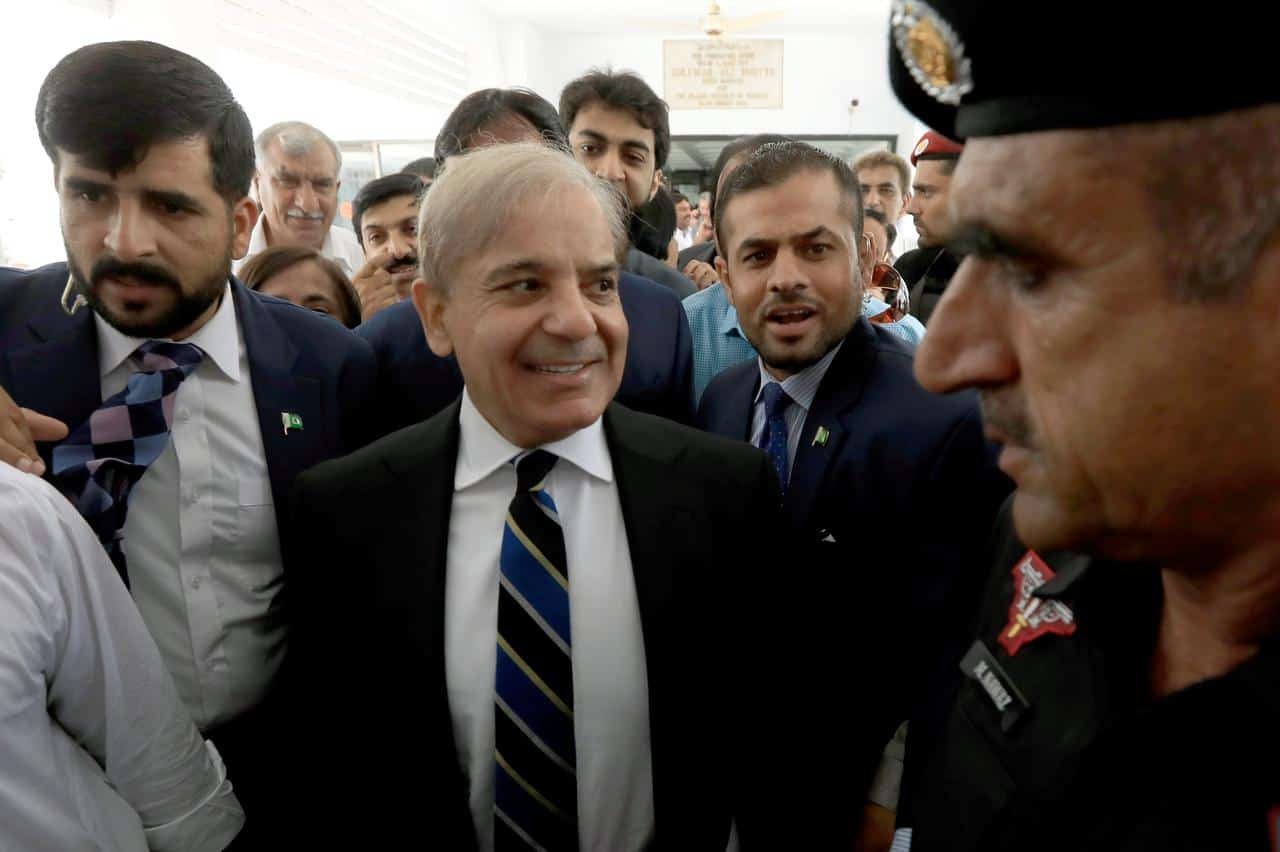
    The Federal Investigation Agency (FIA) on Sunday placed the names of six closed aides of former Prime Minister (PM) Imran Khan on ‘stop list,’ barring them from travelling abroad without permission.

    According to official list: they Khan principal secretary Azam Khan, former special assistant to PM on political communication Dr Shahbaz Gill, ex-adviser to PM on interior and accountability Shahzad Akbar, Director-General (DG) Punjab Corruption Establishment Gohar Nafees, and DG Federal Investigation Agency Punjab Zone Mohammad Rizwan’s names have been added to the ‘stop list’. As per reports, the name of Pakistan Tehreek-Insaaf’s (PTI) head of social media Dr Arsalan Khalid is also among the list.

    The FIA introduced a system of ‘stop list’ in 2003 to stop unwanted people from trying to leave the country in the shortest possible time as placing someone’s name on Exit Control List (ECL) takes a long time.

    The development came after, the Opposition’s no-confidence motion against former Prime Minister Imran Khan succeeded on Sunday, with 174 members voted in favour of the motion.

  • ‘Martial law or elections – your choice’: Khan threatened to impose martial law, states report

    ‘Martial law or elections – your choice’: Khan threatened to impose martial law, states report

    Imran Khan, who was ousted as Pakistan’s prime minister (PM) on Saturday, April 9, had threatened to impose martial law rather than facing the no-trust motion and handing over the power to the Opposition, reports The Guardian.

    The news outlet writes, “On Friday, a senior minister from his ruling government sent a message to an Opposition leader that read: “Martial law or elections – your choice.”

    “It appeared to threaten the Opposition with the ultimatum that they should agree to Khan’s demand for fresh elections or he would bring in Pakistan’s powerful military to take control, as has happened repeatedly in the country’s history,” writes The Guardian.

    “Imran Khan believed it should be him or no one,” says the news report, attributing, to one figure from the Opposition who said he had refused the demand.

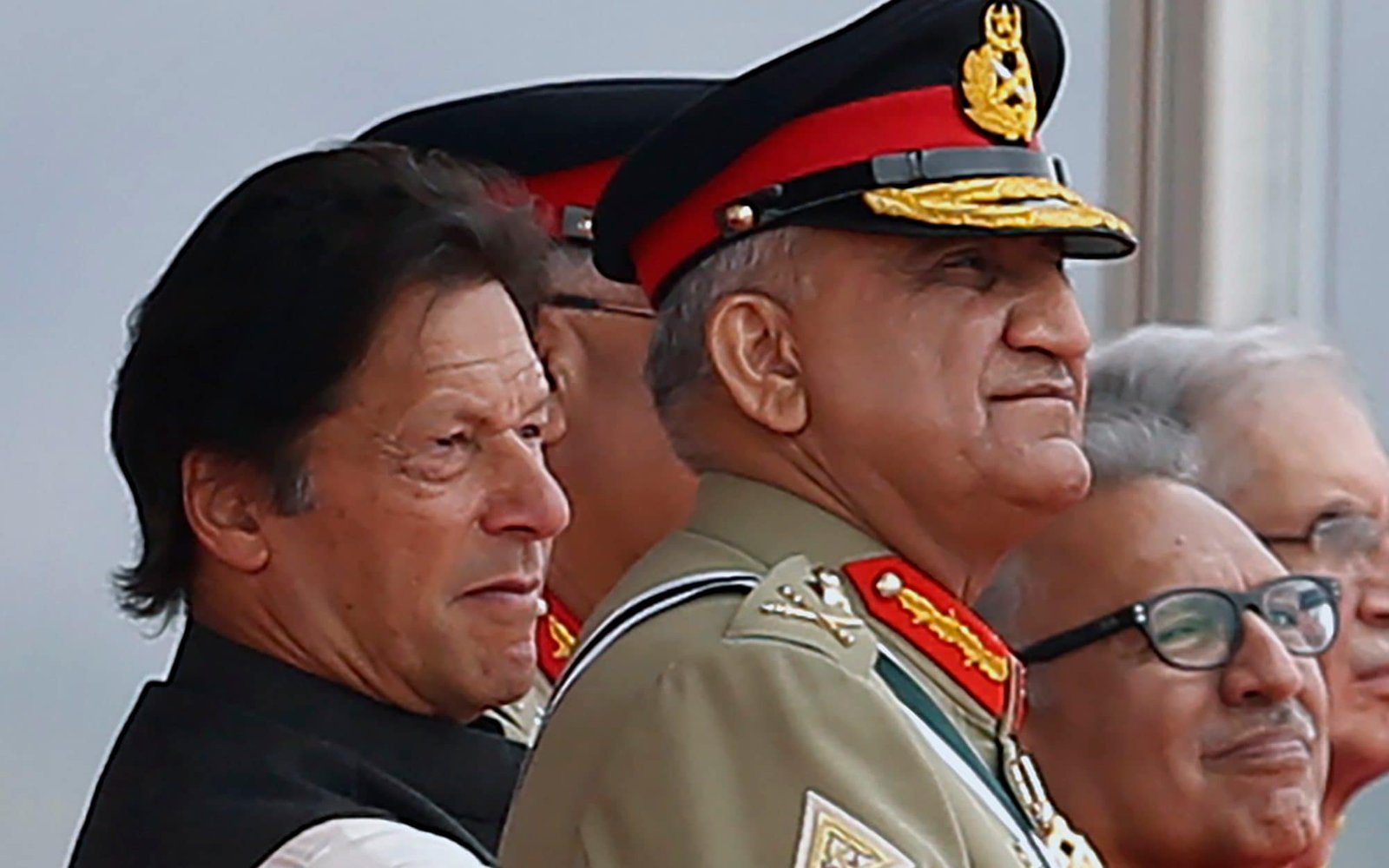
    The news report also states that the premier had attempted to sack Chief of the Army Staff (COAS) General Qamar Javed Bajwa in order to provoke the military into taking control and imposing martial law.

    “Imran Khan wanted to sack the army chief, but the forces received information about it and they thwarted his plan after they came to know about it,” said a security official on condition of anonymity. “Khan wanted to create a huge crisis to remain in power,” writes The Guardian.

    There were also reports that the COAS and the former PM had 45 minutes meeting in Prime Minister House. The Inter-Services Public Relations (ISPR)  has dismissed BBC Urdu’s story that claims that Khan was pushing for the removal of COAS.

    The Opposition’s no-confidence motion against former Prime Minister Imran Khan succeeded on Sunday with 174 members voted in favour of the motion. The magic number to oust Khan was ‘172’. The National Assembly debated on the matter for more than 12 hours and the political situation in the country took a critical turn.

    Later, PM Khan was voted out as Prime Minister of Pakistan a little after midnight with 174 votes.

  • ‘Amazing outpouring of support’: PTI supporters rock streets countrywide

    ‘Amazing outpouring of support’: PTI supporters rock streets countrywide

    Pakistan Tehreek-e-Insaf (PTI) supporters took to the streets across all major and small cities in massive numbers to show their solidarity with their leader and former Prime Minister Imran Khan. Party supporters came out following a call given by Khan for peaceful protest.

    A day after Khan was voted out of power, he, during an address to the nation, had said that he will not tolerate the installation of a “foreign government” in Pakistan and that he will turn to the public for support if such a thing happens.

    “We are not a nation that can be used like tissue papers,” Khan said during a live telecast, maintaining that Pakistan does not want unilateral relations with any country.

    Earlier in the day on April 10, Khan tweeted that today marked the beginning of a “freedom struggle” against what he called was a “foreign regime-change conspiracy”. In an attempt to galvanize his supporters, he said “it is always the people who protected their own sovereignty and democracy.”

    PTI had shared the venues for the protests hours before their supporters took to the streets. 

    Islamabad

    The protest in the capital started from Zero Point. People waved flags while chanting slogans in favour of the former prime minister.

    Former Information Minister Fawad Chaudhry thanked PTI supporters for turning out to Rawalpindi for the protest.

    Lahore

    PTI leader Hammad Azhar posted a video of a rally from his constituency of NA-126 leaving for Liberty Chowk.

    Peshawar

    A large number of protesters including women and children turned up at Peshawar Press Club and expressed solidarity with the ousted prime minister.

    Karachi

    A protest was held in Karachi on Rashid Minhas Road where a large number of supporters, including women and children, were in attendance.

    Overseas Pakistani too came out in support of Khan.

    Khan thanks protestors for ‘amazing outpouring of support’

    Imran thanked his supporters in a tweet done prior to midnight.

    “Thank you to all Pakistanis for their amazing outpouring of support and emotions to protest against US-backed regime change abetted by local Mir Jafars to bring into power a coterie of pliable crooks all out on bail,” he tweeted.

    “[It] shows Pakistanis at home and abroad have emphatically rejected this.”

  • Khan becomes the first prime minister in Pakistan’s history to be voted out of power

    Khan becomes the first prime minister in Pakistan’s history to be voted out of power

    Imran Khan makes history as he becomes the first prime minister in Pakistan’s history to be voted out of power. The Constitution of Pakistan witnessed historic moments as the country saw a transfer of power and made it clear: The Law is Supreme.

    The Opposition’s no-confidence motion against Prime Minister Imran Khan succeeded on Sunday, April 10, with 174 members voting in favour of the motion. The magic number to oust Khan was ‘172’. National Assembly debated on the matter for more than 12 hours and the political situation in the country took a critical turn.

    Speaking on the occasion, Pakistan Muslim League-Nawaz’s (PML-N) President Shehbaz Sharif said, “We cannot thank Allah enough for allowing us to see this new day,” said Shehbaz. “We thank everyone for their sacrifices, and now, once again, a Pakistan based on Constitution and law is about to come into existence,” the PML-N president said, hoping that the alliance would move the country towards progress.

    “I would like to congratulate the whole nation and this House, as for the first time in the history of the country, a no-confidence motion has succeeded and we have made history,” said Pakistan People’s Party (PPP) chairperson Bilawal Bhutto.

    “On April 10, 1986, Benazir Bhutto ended her self-imposed exile and arrived in Lahore to launch her struggle against Ziaul haq,” said Bilawal.

    The PPP chairman said that on April 10, 2022, the person who was declared “selected” by the Opposition and proved himself to be an “undemocratic burden” on the country saw the end of his rule. 

    “Today [on] April 20, 2022, we welcome [you] back to the purana Pakistan,” said Bilawal

    What happened in NA from April 9 to 10

    The historic and crucial session of the National Assembly (NA) session to decide the fate of Khan was held on April 9, as per the Supreme Court’s orders given on April 8. However, Khan never showed up.

    Voting on the no-confidence motion against Prime Minister Imran has begun as PML-N Ayaz Sadiq chaired the session. National Assembly Speaker Asad Qaiser resigned from his post on Saturday, saying he could not take part in a foreign conspiracy to oust the prime minister.

    Before announcing his resignation, Qaiser said that he had received “important documents” from the cabinet, which he invited the leader of the opposition and the Chief Justice of Pakistan to see. “In line with our laws and the need to stand for our country, I have decided that I can’t remain on the position of the speaker and thereby resign,” he said. Because this is a national duty and it is the Supreme Court’s decision, I will ask the panel chairman Ayaz Sadiq to run the session.

    Chief Justice of Pakistan Umar Ata Bandial open the Supreme Court’s doors in light of the current political situation. The chief justice instructed the relevant officials of the top court to open the doors at 12am, as the National Assembly Speaker Asad Qaiser was yet to allow voting on the no-confidence motion against PM Khan.

    Meanwhile, Islamabad High Court’s (IHC) doors opened on the instructions of IHC Chief Justice Athar Minallah.

    Prior to this, the NA session was adjourned again and was expected to resume at 9:30pm after Isha prayers. The latest adjournment was the fourth of the day as the Opposition’s clamour for immediate voting throughout the day has fallen on deaf ears.

    Speaker NA Asad Qaiser delayed the session until 12:30pm, but the break had been prolonged and the voting is now expected to take place at 8pm, i.e. after iftaar.The NA session resumed at 2:32pm. However, the session was also adjourned for Asar and Maghrib prayers.

    Shehbaz Sharif takes the floor:

    The session started at 10:30am today with Quranic recitation, followed by naat recitation. At 10:40am, the national anthem was played.

    At 10:43am, Leader of the Opposition Shehbaz Sharif took to the floor of the House and started addressing. He called on NA Speaker Asad Qaiser to conduct proceedings in accordance with SC directives, stating that the parliament would be writing history today. “Today, parliament is going to defeat a selected prime minister in a constitutional manner,” he declared.

    Shehbaz urged the Speaker to play his role and to have his name “written in history in golden words”.

    “You must cash in on this moment with conviction and with your heart and your mind. Don’t follow the dictation of a selected prime minister,” he urged Qaiser, adding that the apex court’s directives were clear.

     Qaiser interjected the Opposition leader and said that he would conduct proceedings according to the law and the Constitution.

    “[But] the important thing is that there has been discussion of an international conspiracy. This should also be discussed,” said Qaiser.

    On this, Shehbaz told Qaiser that he would be violating the law and order of the SC.

    “Under the court’s directives, you are bound to take up this agenda item and no other item. That is the intent of the order and you cannot deviate from it,” he said, calling on the Speaker to hold voting on the motion forthwith.

    “The SC’s orders will be followed in true letter and spirit,” Qaiser replied, giving the floor to Foreign Minister Shah Mahmood Qureshi.

    Foreign Minister Qureshi addresses the floor of the House

    At 10:51am Qureshi took to the floor and accepted that according to the Constitution, it is the right of the Opposition to submit a no-confidence motion, while it is the government’s responsibility to defend itself from the motion.

    Citing PM Khan’s April 8 address to the nation, Qureshi said that just like the premier said, although we are disappointed with Supreme Court’s judgment but respected the court’s orders. He added that NA proceedings were being conducted in accordance with the directives issued by the court.

    “Today is Saturday and the session has started at 10:30am. The court said the session will not be prorogued unless the process of Article 95 and rule 37 is concluded.”

    Highlighting the seriousness of the “threat letter” controversy, Qureshi said: “The National Security Committee (NSC) took two decisions. First, they acknowledged there was interference in Pakistan’s internal matters and that a demarche must be issued,” he said, adding that the Foreign Office followed these directives.

    “The second was to immediately summon the Parliamentary Committee on National Security and for the matter to be presented before elected representatives,” he said, adding that the Opposition was also invited.

    Session adjourned till 12:30pm

    The Opposition benches started protesting and shouting. Shah Mahmood Qureshi asked why they were “nervous”. Meanwhile, the Opposition continued to chant the slogan “voting karwao, voting karwao” during Qureshi’s speech. Amidst all this ruckus, Qaiser at11:03am adjourned the session till 12:30pm.

    Number of Opposition members

    Pakistan Muslim League-Nawaz (PML-N) Marriyum Aurangzeb tweeted the total number of Opposition members present in NA.

    Meanwhile, the session was to start at 12:30pm, but it has still not started.

    Voting will take place at 8:00pm: reports

    Journalist Nasim Zehra, who is currently inside Parliament, has tweeted that the Speaker is reportedly going to return by 2:00pm to announce that the voting will take place at 8:00pm.

    Bilawal holds Qureshi responsible for PM’s troubles

    Bilawal began by telling Niazi he was violating the Constitution and the court’s orders. “You cannot take up anything else except for what is on the agenda. Not only you, but the speaker also did the same,” he told him, demanding that voting is held on the no-confidence motion.

    Turning his guns on PM Imran, Bilawal said that the premier was breaking the law on his way out of office. “If you want to be involved in it, then it’s your choice. But I had warned the prime minister to stay away from the man speaking before me,” he said, referring to the foreign minister.

    The PPP chairman alleged that FM Qureshi was responsible for the premier’s troubles, again calling for voting to be held on the no-confidence motion. “If you don’t come to today’s agenda, then you should know that the opposition will not leave […] we will snatch our constitutional rights from you.”

    ‘SC’s ruling interference in proceedings of Parliament’: Asad Umar

    Planning Minister Asad Umar claimed that the Supreme Court’s declaration of the deputy speaker’s ruling was “interference in the proceedings of the Parliament.” “If Supreme Court has to decide on which day and at what time the session will be summoned then we should do away with assembly,” said Umar. He added that the apex court’s decision was “an interference in Parliament’s matters”.

    “Would it have been right if the Parliament had intervened in Supreme Court’s matters?” asked Umar. He also questioned whether it would have been right if the Parliament decided which judge comes and goes in the Parliament.

    Zardari calls for voting on no-trust motion

    In his speech, former president Asif Ali Zardari said, “I just want to make a request to hold voting on the no-confidence motion. Don’t waste time.” He said that the stock market rose after the apex court issued its verdict while the dollar also fell, once again calling on the speaker to hold the vote.

    “I don’t want to go to the court against you tomorrow. We have to live in Pakistan. We have to maintain links with every political party. So hold the vote and end this. Let’s move forward so that Pakistan can prosper,” he told Qaiser.

    ‘Opposition is a part of US conspiracy’

    Human Rights Minister Dr Shireen Mazari’s speech revolved around the alleged US influence on Pakistani politics. “It is this nation’s misfortune that America has always been successful in [changing] the leaders of Pakistan.”

    The Supreme Court had on Thursday, April 8, ordered the government to hold voting on the motion on Saturday, April 9, at all costs according to the agenda issued for April 3 session when the deputy speaker rejected the motion through a ruling declaring it “unconstitutional” and a “foreign conspiracy”. 

    The top court’s directives came after Chief Justice Umar Ata Bandial took suo motu notice of Deputy Speaker Qasim Suri’s ruling and the subsequent dissolution of the assembly, declaring all the decisions unconstitutional.

  • ‘Imran Khan stumped’: What led Khan to this point?

    ‘Imran Khan stumped’: What led Khan to this point?

    The Supreme Court of Pakistan (SCP) has “stumped” Prime Minister (PM) Imran Khan through its historic verdict on April 7. The verdict seems to have cleaned bowled Khan as the National Assembly (NA) was restored after the apex court declared the government’s decision to dissolve the assembly and NA Deputy Speaker Qasim Suri’s ruling against the Constitution. This decision is being described as a win for the Constitution of Pakistan.

    In its verdict, the top court has called for convening the NA session on April 9, at 10:00am.

    Court order

    The apex court’s five-member larger bench — headed by Chief Justice of Pakistan (CJP) Umar Ata Bandial and comprising Justice Muneeb Akhtar, Justice Aijazul Ahsan, Justice Mazhar Alam, and Justice Jamal Khan Mandokhel — heard the case and then later issued the ruling. The decision was unanimously given by 5-0 judges.

    Here is what the court order has to say:

    “In consequence of the foregoing, it is declared that at all material times the Prime Minister was under the bar imposed by the Explanation to clause (1) of Article 58 of the Constitution and continues to remain so restricted. He could not, therefore, have at any time advised the President to dissolve the Assembly as contemplated by clause (1) of Article 58.”

    “In consequence of the foregoing, it is declared that the advice tendered by the Prime Minister on or about 03.04.2022 to the President to dissolve the Assembly was contrary to the Constitution and of no legal effect,” said the order.

    The Supreme Court also “declared that the assembly was in existence at all times, and continues to remain and be so”.

    SC ordered for the session of NA to reconvene on Saturday, April 9 no later than 10:30am, saying that the session cannot be prorogued without the conclusion of the no-trust motion against Prime Minister Imran Khan.

    Pledge to fight for Pakistan “till the last ball”: PM Khan

    After the verdict was announced, PM Khan took to Twitter and said that he pledged to fight for Pakistan till the last ball.

    “I have called a cabinet mtg tomorrow as well as our parliamentary party meeting, and tomorrow evening I will address the nation. My message to our nation is I have always and will continue to fight for Pakistan till the last ball.”

    Government’s reaction to the decision:

    Information and Law minister Fawad Chaudhry took to Twitter and said, “This unfortunate decision has exacerbated the political crisis in Pakistan.”

    “Immediate elections could have brought stability to the country. Unfortunately, the importance of the people has been overlooked,” said Chaudhry.

    Minister for Human Rights Shireen Mazari tweeted, “A judicial coup happened last night down to ordering how & even at what time NA session must be held, ending parliamentary supremacy!”

    In another tweet, Mazari wrote, “The long shadows hanging over this judicial decision think the game has been won but frankly it has just started.”

    Special Assistant to the PM Dr Shahbaz Gill said, “Our forefathers cut off their necks in 1947 and crossed the Wagah border to live in an independent country.”

    “Looks like they’re back in the 1947 situation,” said Gill.

    Opposition’s reaction to the SCP ruling

    Reacting to the decision of the top court, the Leader of the Opposition Shehbaz Sharif tweeted, “Mubarak to all who supported, defended & campaigned for the supremacy of the Constitution. Today, politics of lies, deceit & allegations has been buried.”

    Pakistan People’s Party (PPP) Chairman Bilawal Bhutto-Zardari took to Twitter and celebrated the Opposition’s win by writing: “Democracy is the best revenge.”

    Pakistan Muslim League Nawaz’s (PML-N) leader Maryam Nawaz said, “Congratulations to Pakistan for getting rid of the most incompetent and most failed government.”

    Timeline of the events since April 3

    The legal battle against NA dissolution raged on for five consecutive days.

    April 3:

    National Assembly (NA) Deputy Speaker Qasim Suri on April 3 said that the no-confidence motion, presented on March 8, should be according to the law and the Constitution. “No foreign power shall be allowed to topple an elected government through a conspiracy,” he said, adding that the points raised by the law minister about Article 5 were “valid”.

    After Suri on Sunday “dismissed” the no-confidence motion against PM Khan, terming it against Article 5 of the Constitution, the legal war began. PM Khan then addressed the nation, saying he had advised President Dr Arif Alvi to dissolve the National Assembly, which the President approved. 

    CJP Umar Ata Bandial took suo motu of the dismissal of the no-confidence motion.

    April 4:

    On Monday, April 4 the CJP had remarked that the court would issue a “reasonable order on the issue”, but the hearing was adjourned after Farooq H. Naek, the counsel of PPP and other Opposition parties, presented his arguments.

    April 5:

    The Supreme Court on Tuesday, April 5 sought a record of the National Assembly proceedings conducted on the no-confidence motion filed against Prime Minister Imran Khan and adjourned the proceedings till April 6.

    PPP Senator Raza Rabbani quoted media reports about the ECP had said it was not possible to hold general elections within three months. However, the ECP denied issuing any statement concerning elections.

    April 6:

    CJP Bandial on Wednesday, April 6, said, “We first want to wrap up the case on what happened in the NA on April 3,” the CJP remarked.

    The chief justice said that “negative statements” are being issued against the court and it is being said that the court is delaying the matter.

    April 7:

    The court, in its short order, on Thursday, April 7, ruled that the deputy speaker’s ruling was “contrary to the Constitution and the law and of no legal effect, and the same are hereby set aside”.

  • Political use of ‘diplomatic cable’ to haunt Pakistan’s Foreign Office for many years: report

    Political use of ‘diplomatic cable’ to haunt Pakistan’s Foreign Office for many years: report

    The ‘diplomatic cable’ which has plunged Pakistan into a constitutional crisis, also attracted fair resentment from the Foreign Office (FO) against the Pakistan Tehreek-e-Insaf (PTI) for using the communique for gaining ‘political mileage’.

    Kamran Yousaf in his report for The Express Tribune writes, “Two Foreign Office officials, spoke to The Express Tribune on condition of anonymity due to sensitivity of the issue, revealed that the diplomats were not happy with the controversy.”

    One diplomatic on condition of anonymity told Yousaf that the repercussions of the way the government used “secret and classified communication” to achieve its “political objectives and its negative impact” would be felt in the FO for “many years” to come.

    “Diplomats are eyes and ears of Pakistan who give frank and honest feedback from the countries where they serve,” the official added.

    “Such honest and candid assessments are meant for policymakers to devise a strategy accordingly,” the official explained.

    “But if governments start using such secret communications for their political gains, then the diplomats would be reluctant to write honest assessments,” the official cautioned.

    “If the Foreign Office start making public diplomatic cables, people would be blown away,” the official said, insisting such candid discussions between diplomats are common.

    Prime Minister (PM) Imran Khan on April 3, named Assistant Secretary of State for South and Central Asian Affairs Donald Lu as the United States (US) representative who had a meeting with Pakistan’s Ambassador in the US, which led to the “threatening diplomatic cable”.

    PM Khan on March 27 claimed that the Opposition’s no-trust move is part of an alleged “foreign-funded conspiracy” hatched against his government. It is pertinent to mention here that the Opposition tabled the no-confidence motion against PM Khan on March 8. The government claims to have received the threatening communique on March 7.

  • ‘Punish disobedient Imran Khan’: Russia lashes out at US for ‘plotting against Pakistan’

    ‘Punish disobedient Imran Khan’: Russia lashes out at US for ‘plotting against Pakistan’

    Russian Ministry of Foreign Affairs on Tuesday declared that Russia is well aware of the events that led to the dissolution of the National Assembly (NA) in Pakistan.

    In a statement, Russian Ministry of Foreign Affairs Spokesperson Maria Zakharova said, “Immediately after the announcement of the upcoming working visit of Imran Khan to Moscow on February 23-24 this year. The Americans and their Western associates began to exert rude pressure on the Prime Minister, demanding an ultimatum to cancel the trip.”

    “When he nevertheless came to us, United States (US) Deputy Secretary of State for South Asia D Liu [Donald Lu] called the Pakistani ambassador in Washington and demanded that the visit be immediately interrupted, which was also rejected.”

    “According to the Pakistani media, on March 7 this year. in a conversation with Pakistani Ambassador Asad Majeed, a high-ranking American official (presumably the same D Liu) sharply condemned the balanced reaction of the Pakistani leadership to the events in Ukraine and made it clear that partnerships with the United States are possible only if Imran Khan is removed from power.”

    Zakharova further added, “The situation leaves no doubt that the United States decided to punish the ‘disobedient’ Imran Khan: a group of deputies of the same party of the prime minister ‘suddenly’ went over to the Opposition and the question of a no-confidence motion against the head of the incumbent government (Prime Minister) was immediately tabled in the parliament, the vote on which was scheduled for April 3rd.”

    “There is another attempt of shameless US interference in the internal affairs of an independent state for its own selfish purposes. The above facts eloquently testify to this. The Pakistani Prime Minister himself has repeatedly stated that the conspiracy against him was inspired and financed from abroad.”

    “We hope that Pakistani voters will be informed about these circumstances when they come to the elections, which should be held within 90 days after the dissolution of the National Assembly,” read the statement.

    It is pertinent to mention here that Pakistan is in a state of political chaos as the no-confidence motion against Khan was dismissed abruptly on Sunday. Deputy Speaker Qasim Suri said that the no-confidence motion, presented on March 8, should be according to the law and the Constitution. “No foreign power shall be allowed to topple an elected government through a conspiracy,” he said, adding that the points raised by the minister were “valid”.

  • All eyes are on the Supreme Court: What can we expect today?

    With what seems like an uncalled-for use of power, the abrupt dismissal of the no-confidence motion against Prime Minister (PM) Imran Khan is being termed an “unconstitutional trump card”. Citizens of Pakistan have serious reservations over how Article 5 has been used as an ‘excuse’ by the Pakistan Tehreek-e-Insaf (PTI) government to effectively subvert the constitution.

    Pakistan is in a state of constitutional crisis and all eyes are on the Supreme Court of Pakistan (SCP). The main question is which way will the SCP direct the future of Pakistan? The two options that seem likely to emerge after the hearing will primarily shape the future politics and state of democracy in Pakistan.

    The Supreme Court of Pakistan is scheduled to hold a hearing on the suo motu notice taken by Chief Justice of Pakistan (CJP) Umar Ata Bandial. A five-member Supreme Court bench will hear the case for and against the dismissal of the no-confidence motion yesterday. CJP Bandial will head the session starting at 1pm on Monday.

    If the apex court decides in favour of the Opposition

    If the five-member bench decides in favour of the Opposition, the NA session will reconvene and the Lower House will have to continue with the voting on the no-confidence motion tabled against PM Khan. If Khan loses the majority, he can no longer hold office. And that the apex court will call for a fresh election in a time period of six months.

    If the apex court decides in favour of the government

    If the honourable judges of the Supreme Court decide in favour of the government, then fresh elections will be called in a time of 90-120 days. Meanwhile, it is also being speculated that the apex court will remark that it has nothing to do with the parliament and that what does goes inside the assembly strictly stays within the assembly.

    It is pertinent to mention here that Deputy Speaker of National Assembly Qasim Suri, on Sunday, April 3, dismissed the no-trust motion against Khan, terming it “unconstitutional”, saying that it was backed by “foreign powers”.

  • Explainer: Law says dismissing no-confidence motion is a big no-no

    Explainer: Law says dismissing no-confidence motion is a big no-no

    Pakistan is in a state of political chaos as the no-confidence motion against Prime Minister (PM) Imran Khan was dismissed abruptly on Sunday. The move came after National Assembly (NA) Deputy Speaker Qasim Suri termed it “unconstitutional”, saying that it was backed by “foreign powers”.

    Suri then quickly disallowed voting on the no-confidence motion and adjourned the session. Later, on PM Khan’s advice, President Arif Alvi dissolved the National Assembly, with the premier asking the nation to get ready for fresh polls.

    After the nation was left in shock, there was much talk about the “unconstitutional trump card” used by PM Khan.What everyone wants to know is: did Khan subvert the constitution of Pakistan?

    Lawyer Salaar Khan tweeted a brief comprehension of the constitutional premise of what happened on Sunday, April 3, which went viral on Twitter.

    “Instead of allowing the vote to proceed against the Prime Minister, the Deputy Speaker dismissed the resolution. After this, the President was able to dissolve the National Assembly on the PM’s advice,” tweeted Salaar.

    “Under Article 58 of the Constitution, the President may dissolve the National Assembly on the PM’s advice. However, a PM against whom a vote of no confidence ‘has not been voted upon’ cannot ask the President to dissolve the house,” wrote Salaar.

    “To get around this, the Deputy Speaker first ‘dismissed’ the no-confidence resolution submitted against the PM. He did this on the basis of a personal interpretation of Article 5, which provides for loyalty to the state.”

    “The rather feeble argument here was that because the letter that Pakistan had received from the US suggested a regime change would improve relations, the vote of the no-confidence motion, itself, was against anti-state,” said the lawyer.

    “The irony, of course, is that Article 5 also provides for obedience to the Constitution – which was arguably violated in the process of the dismissal of the no-confidence motion.”

    “Procedurally, a ‘motion’ for no-confidence is first moved and, if leave is granted, it becomes a ‘resolution’. Under the Rules of Business in the National Assembly, there is no provision that actually allows a Speaker or Deputy Speaker to dismiss a resolution.”

    “In fact, the role of the Speaker is very clearly defined in Schedule 2 of the Rules of Business in the NA, and is essentially limited, in a VoNC, to announcing the result.”

    “And so, because the Speaker can’t dismiss a resolution for a VoNC, there is still a VoNC that has not been ‘voted upon’ by the Prime Minister. Consequently, the PM could not have advised that the assembly be dissolved under Article 58.”

    “In fact, in doing so, it may even be argued that he not only violated Article 5, by not obeying the Constitution but also subverted the Constitution under Article 6. It is, however, important to note that Article 6 is often used rather flippantly in common parlance.”

    “Finally, is the question of what the SC may do in all of this. One provision of the Constitution that has been mentioned a lot is Article 69, which bars courts from interfering in certain Parliamentary proceedings.”

    “However, the SC has laid out exceptions to this bar. Courts can interfere where there is not an ‘irregularity’ but a ‘patent illegality’, where there is clear mala fide, or where the matter in question affects the composition of the house, itself (such as in Farzand Ali).”

    “But while the SC may well find that it can interfere, how far it will go is another question. In theory, the SC could find the dissolution to be without legal effect and even order voting to resume on the VoNC. But given recent precedent, that may be a long shot.”

    The Supreme Court of Pakistan took suo moto notice of the Assembly proceedings on Sunday, April 3, and restrained the state institutions as well as the political parties from taking any unconstitutional acts and exploiting the situation.

  • Legal Battle: Is what Prime Minister Imran Khan did today, legal?

    Legal Battle: Is what Prime Minister Imran Khan did today, legal?

    After the National Assembly (NA) Deputy Speaker Qasim Khan Suri on Sunday “dismissed” the no-confidence motion against Prime Minister (PM) Imran Khan, terming it against Article 5 of the Constitution, the legal war began. PM Khan then addressed the nation, saying he had advised the President to dissolve the National Assembly, which the President approved. The country is in a state of shock and the main question is: Is what is going on, legal?

    BUT FIRST, WHAT HAPPENED IN THE ASSEMBLY SESSION?

    Loyalty to the state is the basic duty of every citizen under Article 5: Fawad Chaudhry

    The much-awaited and crucial NA session started after a delay to hold the vote on the no-confidence motion against Khan.

    Information Minister Fawad Chaudhry said, “On March 7, our official ambassador was invited to a meeting attended by the representatives of other countries. The meeting was informed that a motion against PM Imran was being presented,” he said, adding that this happened a day before the Opposition filed the no-trust move.

    “We were told that relations with Pakistan were dependent on the success of the no-confidence motion. We were told that if the motion fails, then Pakistan’s path would be very difficult. This is an operation for a regime change by a foreign government,” he alleged.

    NA speaker dismisses no-confidence motion against PM Imran, terms it contradictory to Article 5

    After Fawad Chaudhry spoke, Deputy Speaker Suri agreed with Fawad and said that the no-confidence motion was presented on March 8 and should be according to the law and the Constitution. “No foreign power shall be allowed to topple an elected government through a conspiracy,” he said, adding that the points raised by the minister were “valid”.

    He dismissed the motion, ruling that it was “contradictory” to the law, the Constitution, and the rules. The session ended and the government representatives walked out.

    LET’S GET LEGAL: What is Article 5?

    According to Article 5, “Loyalty to the State is the basic duty of every citizen.”

    “Obedience to the Constitution and law is the [inviolable] obligation of every citizen wherever he may be and of every other person for the time being within Pakistan.”

    THEN WHAT HAPPENED: On PM Imran Khan’s advice, President Arif Alvi approved the dissolution of the assembly

    In a surprise move, the premier on Sunday said that he has advised President Alvi to dissolve all the assemblies.

    President Dr Arif Alvi dissolved the National Assembly on the proposal of PM Khan.

    In a brief address to the nation after the no-confidence motion was rejected, the premier congratulated the nation and said that he had sent a proposal to the President to dissolve the NA and the nation should prepare for the next election.

    WAS WHAT HAPPENED LEGAL?

    What do the legal experts have to say?

    The Current reached out to legal experts to understand and get better clarity on the constitutional process in relevance to dismissing the no-trust move against PM Khan.

    Senior Lawyer and Journalist Muneeb Farooq terming the dismissal of the no-trust move “absolute nonsense” said, “The court will decide if what the speaker did is illegal and the no-confidence motion will likely move on. Today the court is closed, they [the Opposition] will take it to the court tomorrow.”

    Farooq further said, “Article 69 says that the court cannot question parliament proceedings, but there are exceptions,” adding that certain things were taken to court and the Supreme Court has ruled on them.

    WHAT’S FAROOQ’S MAIN POINT?

    Farooq said that the Prime Minister does not have the right to ask the President to dissolve the national assembly when there is a motion of no-confidence against him. He also added that the Speaker cannot dismiss a motion against the PM when the motion is already a part of the agenda. He added that Article 5 cannot be used in this situation, the way the government has used it.

    THE OTHER SIDE:

    Supreme Court Lawyer Chaudhry Faisal Hussain said, “The Deputy Speaker gave the ruling to dismiss the no-confidence motion. It is in his power to discard the no-confidence motion against the prime minister. Hence the motion gets dismissed and PM Khan still remains the prime minister.”

    WHAT’S HUSSAIN’S MAIN POINT?

    “Since Imran Khan is still Prime Minister, he can call for fresh elections, after dissolving the assembly, which he has done. The issue now will be that PM Khan has already moved past the no-confidence motion. If the assembly had not been dissolved, then perhaps the Supreme Court could make a ruling on the no-confidence issue.”

    ANOTHER POINT OF VIEW

    Advocate Supreme Court of Pakistan (SCP) Salman Akram Raja speaking to Geo News said that what happened in the National Assembly today was “highly unconstitutional”.

    He further said that SCP will look into the ruling given by the deputy speaker and could decide on allowing early elections or letting the no-confidence motion vote happen.

    The Joint Opposition had submitted the no-confidence motion to kick out PM Khan on March 8. According to reports, Chief Justice Umar Bandial has called his fellow justices to his place to discuss what is going on in the country.

    Meanwhile, sources say the Supreme Court may hold special proceedings today as well.