Tag: Prime Minister Imran Khan

  • PM Imran approves special CSS exam to fill 188 vacancies

    PM Imran approves special CSS exam to fill 188 vacancies

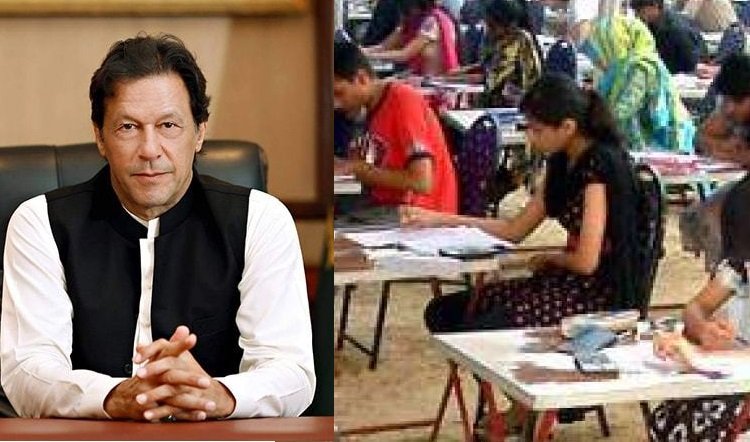
    Prime Minister (PM) Imran Khan has approved the special Central Superior Service (CSS) exam to fill 188 vacancies.

    “Balochistan 49, Rural Sind 41, Urban Sind 19, KP 22, ex Fata/GB 16 & AJK 2. We truly believe in giving equal opportunities to all federating units [sic],” tweeted Special Assistant to Prime Minister (SAPM) on Establishment Shehzad Arbab.

    Speaking to a private media outlet, Arbab said the exam is likely to be conducted by year-end.

    Annual CSS examinations are held to recruit candidates to the permanent elite bureaucratic authority, and the civil service that is responsible for running the civilian bureaucratic operations and government secretariats and directorates of the Cabinet of Pakistan. The premier is the final authority on all matters regarding the civil service.

  • Bilawal seeks Imran’s voluntary resignation over ‘coronavirus failures’

    Bilawal seeks Imran’s voluntary resignation over ‘coronavirus failures’

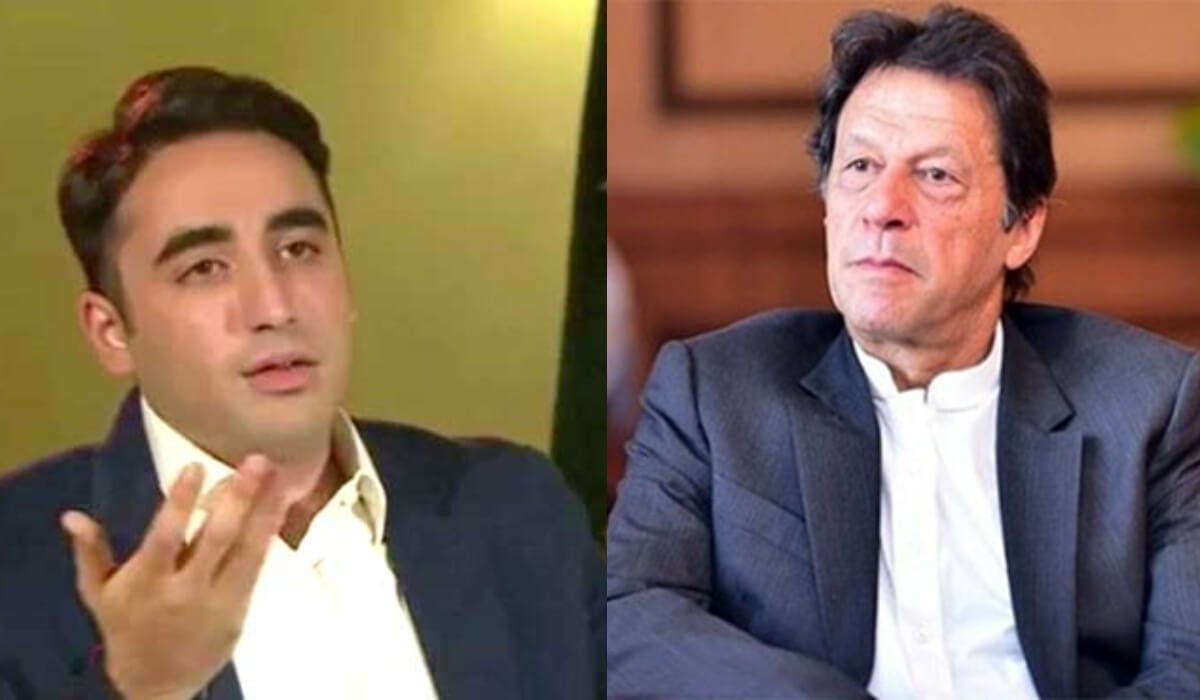
    Pakistan People’s Party (PPP) Chairman Bilawal Bhutto-Zardari has said that Prime Minister (PM) Imran Khan should voluntarily resign and appoint someone else in his stead, as tensions between the Centre and Sindh government continue to rise as COVID-19 cases continue to spike across the country.

    Talking to Sindhi language news channels, Bilawal slammed the premier for a lack of consensus in the country on how to tackle the persisting coronavirus situation.

    “We [PPP] have been demanding the prime minister to step down since day one,” said the PPP chief. “Keeping in mind the coronavirus situation, I am not asking for his resignation. But Imran Khan should start working as a prime minister. He should play his role in uniting provinces in this crisis.”

    Bilawal urged PM Imran to voluntarily resign under these difficult circumstances and appoint someone else in his stead. The PPP chairman said that a national consensus was necessary to win the fight against the coronavirus. “The whole state should be on the same page against the coronavirus,” he said, adding that the prime minister was responsible for the absence of it. “The federal government is responsible for ensuring a consensus is reached.”

    Bilawal praised the Sindh government for providing relief to the masses as cases in the province continue to surge. “Sindh government is taking brilliant steps to provide relief to people,” he said. “CM Sindh has also joined hands with welfare organisations. People are being provided relief today due to the initiatives taken by the PPP,” he added.

    He said that Sindh government was about to kick off “phase two” of its plan to ward off the coronavirus. “We are providing relief to the people despite facing a shortage of resources,” he said.

    Referring to criticism over his statement on Karachi and Sindh a few days ago, Bilawal said that some people were presenting his remarks in a negative light and taking them out of context. “I consider it an insult to answer these [accusations],” he said, adding that those who were criticising him were working on their agenda to break up Sindh.

    The remarks came a few days after the PPP chairman hit out at the federal government in a fiery presser, slamming it for neglecting doctors and medical officers throughout the country.

    “Can you imagine Pakistan declaring war and sending its army without guns, bullets, and a uniform?” he had said.

    The PPP chairman had lamented that the doctors were only demanding two things — protective gear and a reduced burden on hospitals so that they may carry out their jobs more effectively.

    “The prime minister has failed to deliver […] He mentioned daily wagers in all of his addresses, but sadly none of them has received a single dime yet,” he had regretted.

    It is our responsibility to provide for them like we would provide for our armed forces, he said, adding: “We are trying to provide for our doctors who are in contact with COVID-19 patients, I know that all provincial governments are playing their due role as well.”

    “But the Centre should also play its role in supporting the provinces in the war against coronavirus,” he had said.

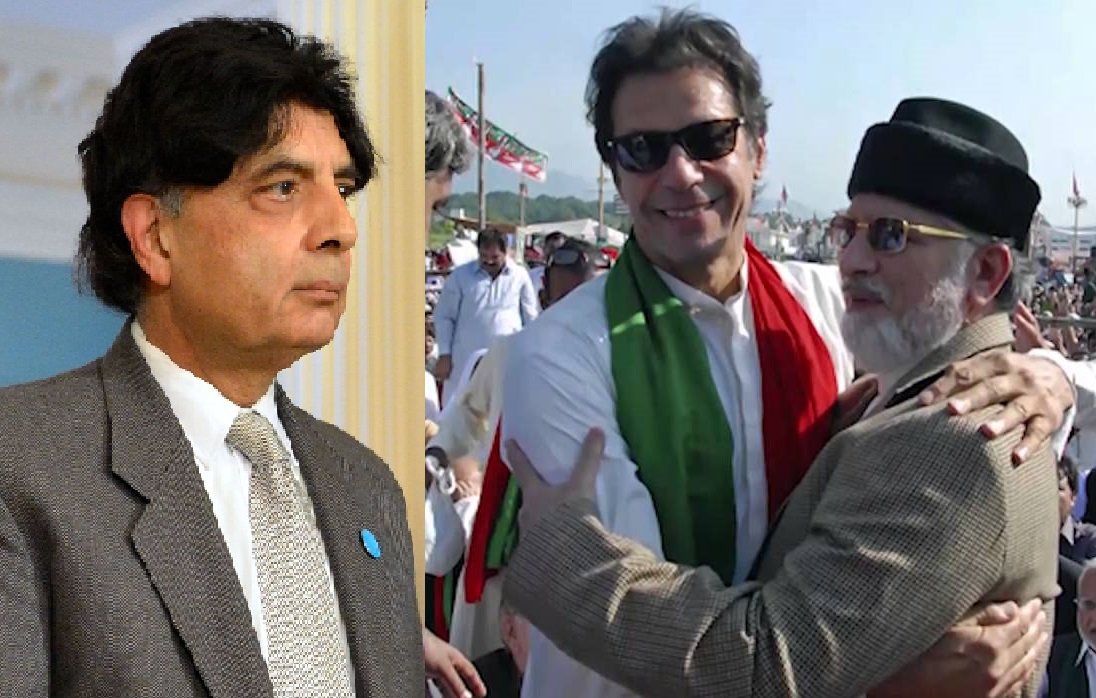
  • VIDEO: ‘Ch Nisar secretly facilitated Imran, Qadri’s 2014 Islamabad sit-ins against PML-N govt’

    VIDEO: ‘Ch Nisar secretly facilitated Imran, Qadri’s 2014 Islamabad sit-ins against PML-N govt’

    Pakistan Muslim League-Nawaz (PML-N) leader Javed Latif has claimed that former interior minister Chaudhry Nisar secretly facilitated the 124-day-long demonstration jointly organised by Pakistan Tehreek-e-Insaf (PTI) and Pakistan Awami Tehreek (PAT) in 2014 against the PML-N government.

    Latif, who was part of a three-guest panel at anchorperson Hamid Mir’s show on Monday, said that Nisar released the “violent protesters” who attacked the parliament and state-owned broadcaster Pakistan Television Corporation (PTV).

    According to him, Nisar facilitated the entrance of protesters in the heavily guarded Red Zone that houses the president and prime minister houses in addition to several other highly-sensitive secretariats.

    “Nisar’s disagreement with Nawaz Sharif’s GT Road rally was also part of his plan. He continuously opposed the party policy on certain important matters and today we all know about his current political standing and reputation,” Latif said.

    WATCH VIDEO:

    It merits a mention here that since his association with former prime minister Nawaz Sharif in the mid-80s, Nisar was Sharif’s go-to man in matters involving the country’s powerful establishment — until he fell out of favor as a result of his advocacy of a non-confrontational policy with the military following Sharif’s judicial ouster in 2017. 

    Hailing from a respected military family himself, Nisar had allegedly played a key role in the appointment of retired General Pervez Musharraf as the Chief of the Army Staff in 1998. 

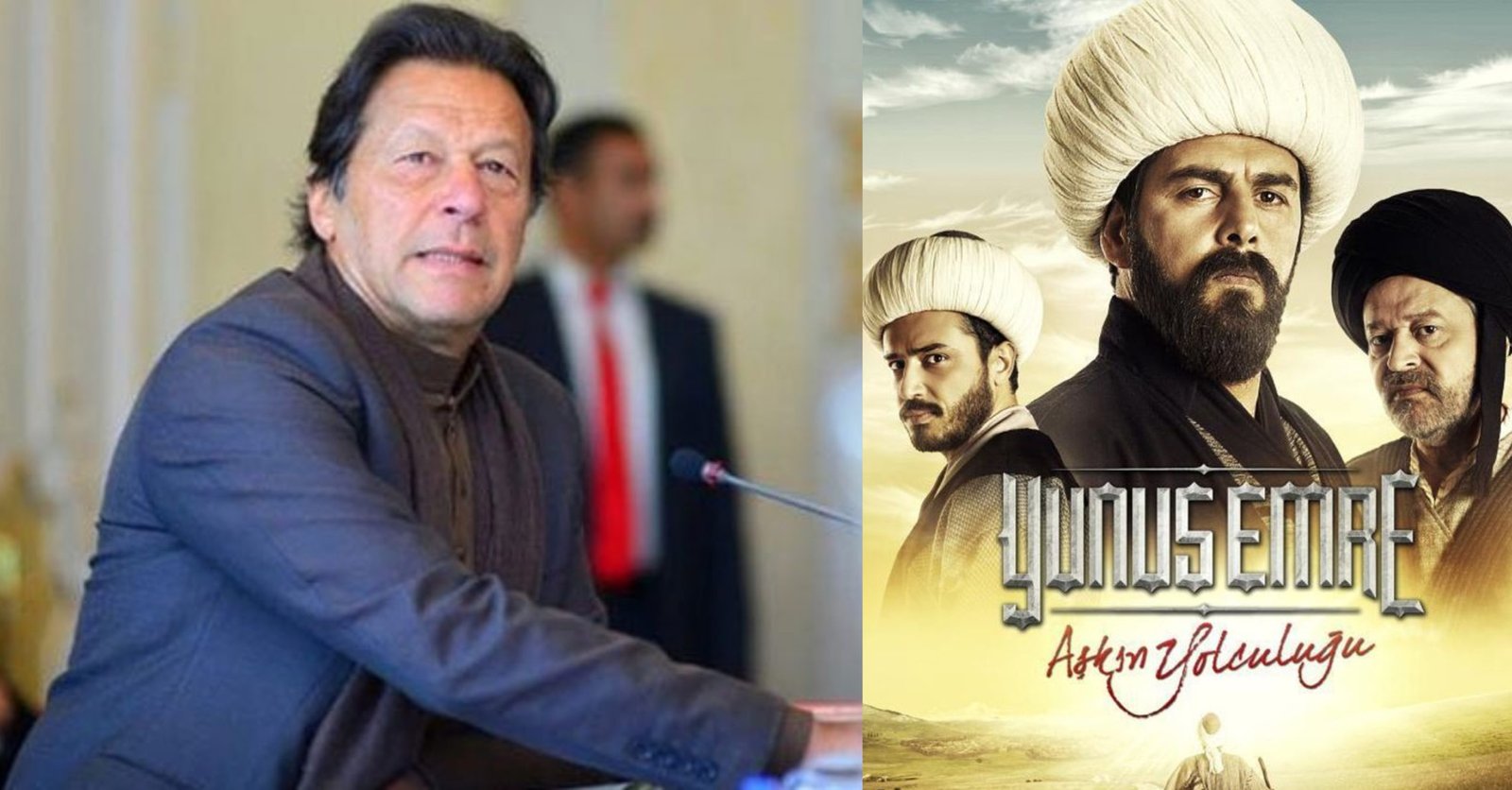
  • After ‘Ertugal’, PM Imran Khan wants Pakistanis to watch ‘Yunus Emre: Aşkin Yolculuğu’

    After ‘Ertugal’, PM Imran Khan wants Pakistanis to watch ‘Yunus Emre: Aşkin Yolculuğu’

    It appears that Prime Minister Imran Khan is a big fan of Turkish cinema because Senator Faisal Javed Khan has revealed that the premier wants Yunus Emre: Aşkin Yolculuğu to be telecast in Pakistan.

    Read more – PM Khan calls out Bollywood for spreading vulgarity

    In a Twitter update, Khan shared that PM Khan wants Pakistanis to watch this drama because it highlights Islamic history.

    Yunus Emre: Aşkın Yolculuğu is a Turkish biographical historical television series created by Mehmet Bozdağ, the man behind Diriliş: Ertuğrul. It starres Gökhan Atalay in the lead role. According to Faisal, the series is a journey of transformation. It centres around the life of Yunus Emre, the 14th century Anatolian Sufi poet, who greatly influenced the Anatolian culture.

    The first episode of the series was released on June 18, 2015 and over the years it has become a favourite among the Turkish audiences. It has an IMDb rating of 7.8.

    Read more – Shaan is disappointed with PTV for airing ‘Diriliş: Ertuğrul’

    Meanwhile, on the recommendation of PM Imran, PTV has started airing Diriliş: Ertuğrul with Urdu dubbing. The drama has proven to be a big hit among Pakistani audiences.

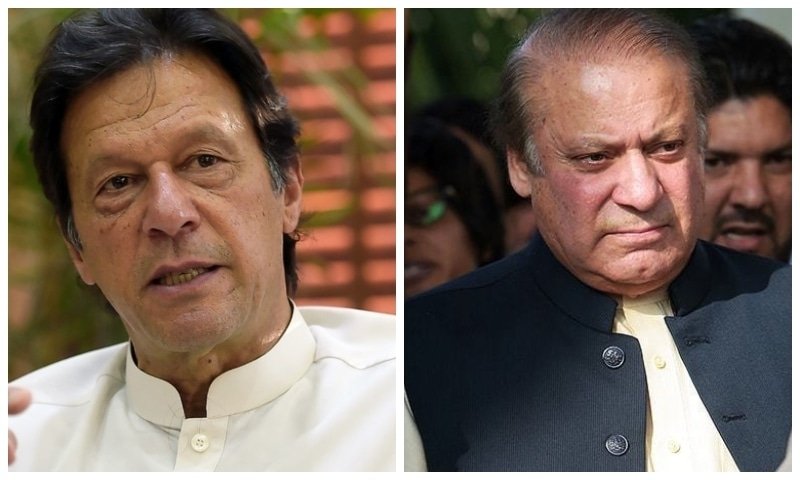
  • New deal on the table? Proposed NAB law can undo Nawaz and Maryam’s conviction

    New deal on the table? Proposed NAB law can undo Nawaz and Maryam’s conviction

    Amid government’s efforts to amend the 18th Amendment that turned Pakistan from a semi-presidential to a parliamentary republic, which the ruling Pakistan Tehreek-e-Insaf (PTI) cannot do without the support of opposition parties owing to its strength within the parliament, the Pakistan Muslim League-Nawaz (PML-N) in collaboration with Pakistan People’s Party (PPP) has prepared a draft of proposed changes in NAB Ordinance and shared it with power brokers which, if incorporated, will undo the conviction of former Prime Minister (PM) Nawaz Sharif and his daughter Maryam Nawaz for now.

    According to The News, a Lahore-based businessman who was in the custody of the National Accountability Bureau (NAB) until recently, is a go-between in this process as he is equally close with the power brokers. In a meeting arranged at his place on April 24, a draft was prepared. Shahid Khaqan Abbasi represented PML-N and Farooq H Naek was from the PPP side.

    While Abbasi says he did not attend any such meeting, a picture of the same showed him present there. It has also been learnt that Nawaz is not up for amendments and insists on scrapping the anti-graft body altogether.

    Former premier Abbasi has not only confirmed the preparation of a new draft, but also said that he offered a set of recommendations aimed to reform NAB and they were incorporated in the draft. However, he dispelled the impression that the draft has either been shared with apolitical players or is being used as a bargaining ploy on the 18th Amendment.

    A PML-N leader, however, was quoted as saying that Abbasi has been given the task at his own desire to mend the fences through a common friend as the channel used during the amendment to the Army Act had now become dysfunctional.

    According to reports, the draft indicates that it will be beneficial for the entire political class in general and for Nawaz in particular — Nawaz, who was thrown out as the country’s chief executive through the instrument of disqualification. The proposed amendment under question is related to section 15 of the ordinance dealing with disqualification. In sub-section (a), reads the proposed change, the words “forthwith cease to hold public office” shall be omitted and substituted by “cease to hold public office after the appeal process against his conviction has been exhausted”.

    Presently, disqualification comes into effect with conviction from a trial court whereas the proposed change suggests it be actualised only after the entire appeal process is exhausted.

    In addition, the burden of proof has been proposed to be shifted on NAB, unlike the present practice where the accused has to prove that the allegations leveled against him or her are untrue. Likewise, the proposed change requires that an offence should form part of NAB jurisdiction only when public money equivalent to Rs1 billion or above is involved. Remand duration has been proposed to be limited to 14 days instead of making it extendable up to 90 days.

    Among other proposed rules, NAB chairman’s power has also significantly been curtailed in the proposed draft. His term has also been cut to three years from four.

    The arrest of an accused has been linked with his/ her non-cooperation and it has been proposed that the chairman’s power to order arrest should be delegated to the court along with prescribed criteria as to when arrests can be ordered by a judge. NAB is required to formally inform an accused about the nature of charges along with a set of questions the investigators want him/ her to answer, according to the proposal.

    Likewise, entire interrogation shall be video-recorded and the accused is entitled to have an attorney of choice during the course of interrogation, according to the proposed amendment. NAB is required to focus on the charges it leveled instead of opening new fronts and there must be no supplementary challan unlike the present practice, the draft revealed.

    Public office holders have also been proposed to be redefined as this definition should be limited to those holding executive powers; parliamentary secretaries and lawmakers must not fall in this jurisdiction. As per the proposal, decisions made by the cabinet or a statutory policy-making body can’t be called into question by NAB that would also be required to complete any investigation within a period no longer than six months.

    Likewise, NAB can’t recommend placing anyone on the no-fly list once the accused has been granted bail.
  • Mixed signals in the time of corona

    The total number of coronavirus cases in Pakistan, by the time this was written, stood at 19,854 and the same is likely to reach the 20,000 mark some time today or by tomorrow morning.

    Every ten days, the number of COVID-19 cases in Pakistan double. Just look at the month of April and how many cases increased, especially after easing down the lockdown. The government, however, thinks that coronavirus has not been “as fatal in Pakistan as it has been in many other countries”, especially the west.

    Minister for Planning, Development and Special Initiatives Asad Umar recently said, “Coronavirus has caused 58 per cent more deaths in the United States (US), 207 per cent more in Spain and 124 per cent more in the United Kingdom (UK) as compared to Pakistan in the same period.” Even if we think the mortality rate is lower when compared to other countries, it does not mean we have to be lax about it. Official projections predict 150,000 cases by the end of this month.

    What was even more surprising was how, in a recent speech, Prime Minister (PM) Imran Khan shifted the blame of the lockdown to the “elite”. He said the decision to impose a lockdown was taken by the elite and the rich, without thinking of the poor. PM Imran tweeted to that effect also while felicitating Muslims for Ramzan.

    The premier blames the elite and rich for taking this decision when it was indeed he and his government that imposed the lockdown. Granted that Imran himself was against the lockdown and finally gave in due to the health emergency but blaming the elite, in this case, is quite misplaced. The World Health Organization (WHO) and others who are dealing with the coronavirus pandemic have recommended lockdowns and aggressive testing apart from social distancing and other measures that we have to take in order to avoid falling prey to this pandemic.

    China went for a lockdown and PM Imran doesn’t tire of giving China’s example so why blame the rich and the elite for a lockdown in Pakistan — a lockdown that is now not much of a lockdown either. Traffic has increased, more shops are open, and except for Sindh, mosques are open as well during Ramzan.

    While we acknowledge that self-isolation is a privilege that isn’t afforded by many, especially the poor, we do not have the answer to how we will cope with an outbreak if cases start to rise exponentially. Doctors have recently warned that Pakistan’s healthcare system will collapse if this happens. So where will the poor go if lockdown is relaxed and they get coronavirus?

    The rich and elite and privileged will go to private hospitals but what about the poor? We have to choose between struggle and death, and can only hope that the cases in Pakistan remain low.

  • Naya Pakistan: Govt starts paying unemployed people to plant trees

    Naya Pakistan: Govt starts paying unemployed people to plant trees

    When construction worker Abdul Rahman lost his job to Pakistan’s coronavirus lockdown, his choices looked stark – resort to begging on the streets or let his family go hungry.

    But the government has now given him a better option: Join tens of thousands of other out-of-work labourers in planting billions of trees across the country to deal with climate change threats, Reuters reported.

    Since Pakistan locked down starting March 23 to try to stem the spread of COVID-19, unemployed day labourers have been given new jobs as “jungle workers”, planting saplings as part of the country’s 10 Billion Tree Tsunami programme.

    Such “green stimulus” efforts are an example of how funds that aim to help families and keep the economy running during pandemic shutdowns could also help nations prepare for the next big threat: climate change.

    WATCH VIDEO:

    “Due to coronavirus, all the cities have shut down and there is no work. Most of us daily wagers couldn’t earn a living,” Rahman, a resident of Rawalpindi district in Punjab province, told the Thomson Reuters Foundation.

    He now makes 500 rupees ($3) per day planting trees – about half of what he might have made on a good day, but enough to get by.

    “All of us now have a way of earning daily wages again to feed our families,” he said.

    The ambitious five-year tree-planting programme, which Prime Minister (PM) Imran Khan launched in 2018, aims to counter the rising temperatures, flooding, droughts and other extreme weather in the country that scientists link to climate change.

  • From interior to info, health, telecom, power, civil aviation among others: Military men serving Pakistan

    From interior to info, health, telecom, power, civil aviation among others: Military men serving Pakistan

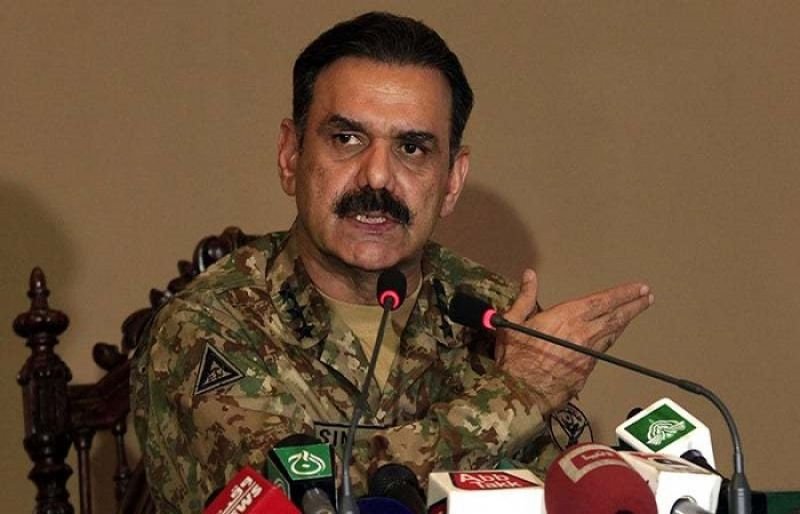
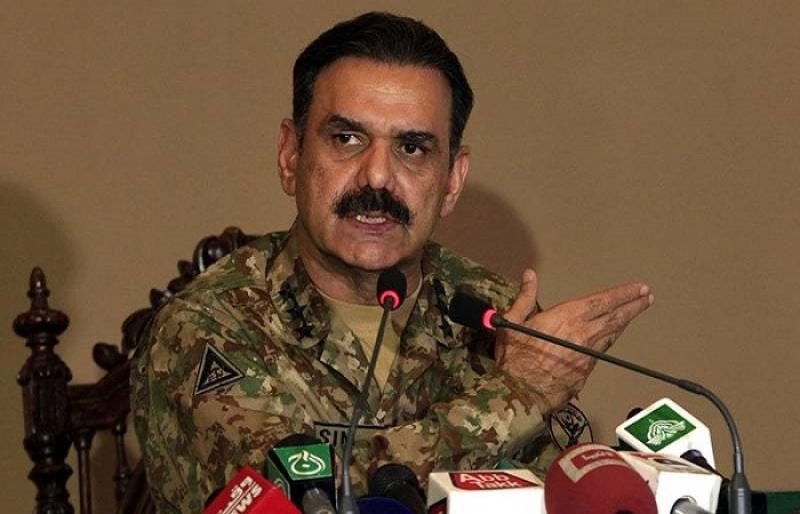
    With former military bigwig Lieutenant General (r) Asim Bajwa being appointed as the special assistant to the prime minister (SAPM) on information and broadcasting earlier this week, the list of military men discharging their duties in various sectors to serve Pakistan has been added to.

    The development falls in line with the beliefs of various members of the ruling Pakistan Tehreek-e-Insaf (PTI), including PM Imran Khan and his federal ministers such as Fawad Chaudhry, who have time and again praised the armed forces of the country for being the most powerful and well-organised national institutions.

    While some elements appear bothered by the increasing list of both former and serving military officials working with the government at a time when civil-military relations in the country “stand at their historic best”, here is what you should know about those working to revamp different sectors for the cause of ‘Naya Pakistan’.

    Interior Minister Brigadier (r) Ijaz Shah:

    The Ministry of Interior, which is primarily responsible for implementing the internal policies, state security and administration of internal affairs involving the state, is being led by Brig (r) Ijaz Ahmed Shah. Prior to entering politics, Shah has served as a spy military officer of the Pakistan Army. He has also served as the minister for parliamentary affairs.

    SAPM on Information & Broadcasting Lt Gen (r) Asim Bajwa:

    Lt Gen (r) Bajwa, who replaced former information minister Dr Firdous Ashiq Awan as the premier’s media aide on Monday, is a retired three-star general. During his military career, he has served as the director general (DG) of the Inter-Services Public Relations (ISPR) as well as the commander of Pakistan Army’s Southern Command. He is also the chairman of the China-Pakistan Economic Corridor (CPEC) Authority.

    NDMA Chairman Lt Gen Muhammad Afzal:

    Lt Gen Muhammad Afzal of the National Disaster Management Authority (NDMA) — a federal authority mandated to deal with disasters and their management in the country — has risen to the occasion over the past few weeks as the coronavirus situation in Pakistan started worsening. Other than his experience with the Frontier Works Organization (FWO), he is qualified in international law of conflict with a special focus on civilian casualties and displaced persons.

    FROM CIVIL AVIATION TO HEALTH AND BEYOND:

    Among other not so familiar names are Squadron Leader (r) Shahrukh Nusrat, who is serving as an executive at the Civil Aviation Authority (CAA) after he was reappointed as the authority’s DG last year; National Institute of Health (NIH) Executive Director Maj Gen Dr Aamer Ikram, Air Marshal Arshad Malik, who is serving as the chief executive officer (CEO) of the Pakistan International Airlines (PIA); Water & Power Development Authority (WAPDA) Chairperson Lt Gen (r) Muzammil Hussain and Pakistan Telecommunication Authority (PTA) chief Maj Gen (r) Amir Bajwa.

  • VIDEO: Fawad Ch removes successor Firdous Ashiq Awan from Imran cabinet’s WhatsApp group

    VIDEO: Fawad Ch removes successor Firdous Ashiq Awan from Imran cabinet’s WhatsApp group

    Incumbent Federal Minister for Science & Technology and former information minister Fawad Chaudhry has removed his successor Dr Firdous Ashiq Awan from the WhatsApp group of Prime Minister (PM) Imran Khan’s cabinet after Awan, who had been handed the reins of the Information Ministry last year, was removed as the special assistant to the PM on information and broadcasting.

    Ever since Fawad was replaced by non-elected Awan in 2019, reports had hinted at a possible rift among the ranks of Pakistan Tehreek-e-Insaf (PTI). The now science & tech minister had also discussed with a media outlet the cold war that was going on within the ruling party, saying that “non-elected people had the power to change portfolios of ministers” and “important decisions were made without many team members knowing about them”.

    Among several other reported spats between Fawad and Awan, with the ex-SAPM even complaining of some lawmakers’ behaviour to PM Imran, Fawad’s statements of a battle going on between elected and non-elected members was followed by Awan “admiring Fawad’s ‘struggle to always stay in headlines“.

    Amid rumours that the two weren’t best of friends ever since Fawad’s removal and Awan’s subsequent appointment, the federal minister had earlier this year even called out PM Imran’s former aide on “illiterate” remarks regarding Punjab Chief Minister (CM) Sardar Usman Buzdar.

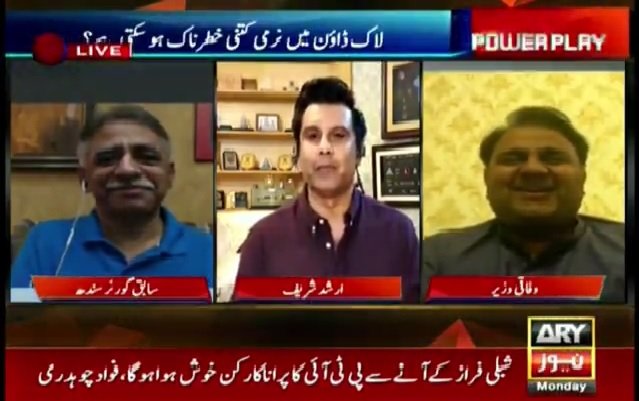
    With Awan being replaced by former military bigwig Lt Gen (r) Asim Bajwa on Monday and PTI Senator Shibli Faraz being handed the reins of the Information Ministry, senior journalist and analyst Arshad Sharif asked if Fawad, being an admin of the WhatsApp group of PM Imran’s cabinet, had added Faraz and removed his successor, cracking the minister up.

    WATCH VIDEO:

    “That is how it is. If they go, they have to be removed,” a smiling Fawad told the journalist, adding that he was shocked to know that Sharif knew about the group, its admins and whatever happened in it.

  • Ex-ISPR chief Asim Bajwa replaces Firdous as PM’s special assistant, new info minister also appointed

    Ex-ISPR chief Asim Bajwa replaces Firdous as PM’s special assistant, new info minister also appointed

    Former Inter-Services Public Relation (ISPR) director-general (DG) and military bigwig Lieutenant General (r) Asim Bajwa has replaced Dr Firdous Ashiq Awan as Prime Minister (PM) Imran Khan’s special assistant on information and broadcasting, while Pakistan Tehreek-e-Insaf (PTI) Senator Shibli Faraz has been handed reins of the Information Ministry.

    According to the details, while Firdous has been removed from her position, Faraz has been appointed as the federal information minister — a post that had lied vacant ever since the premier removed incumbent Federal Minister for Science & Technology Fawad Chaudhry last year.

    Faraz is an investment banker by profession and was a Pakistan Air Force (PAF) pilot and then a civil servant. He contested the election for the Kohat district mayor in 2002 and his uncle Barrister Syed Masood Kausar is a former governor of Khyber Pakhtunkhwa (KP). He is the son of the late poet Ahmad Faraz.

    Firdous’s successor, Bajwa, on the other hand, is currently also serving as the chairman of the China-Pakistan Economic Corridor (CPEC) Authority.

    During his military career, Bajwa has served on multiple instructional and command-level posts, such as leading the 111th Infantry Brigade. Besides serving as a brigade major at an infantry brigade and serving as the chief of staff at a strike corps, Bajwa has also instructed courses at the Pakistan Military Academy (PMA) Kakul and the Command and Staff College in Quetta.

    He has also served as the deputy military secretary to the president of Pakistan.

    In December 2010, he was promoted to the rank of a major general and in June 2012, as the ISPR chief — preceding former military spokesperson Maj Gen Asif Ghafoor.

    In September 2015, he was promoted to the rank of lieutenant general, appointed inspector general (arms) at General Headquarters (GHQ) in December 2016 and later Southern Command commander.