Tag: Prime Minister Narendra Modi

  • Modi leads yoga day event in Indian-occupied Kashmir

    Modi leads yoga day event in Indian-occupied Kashmir

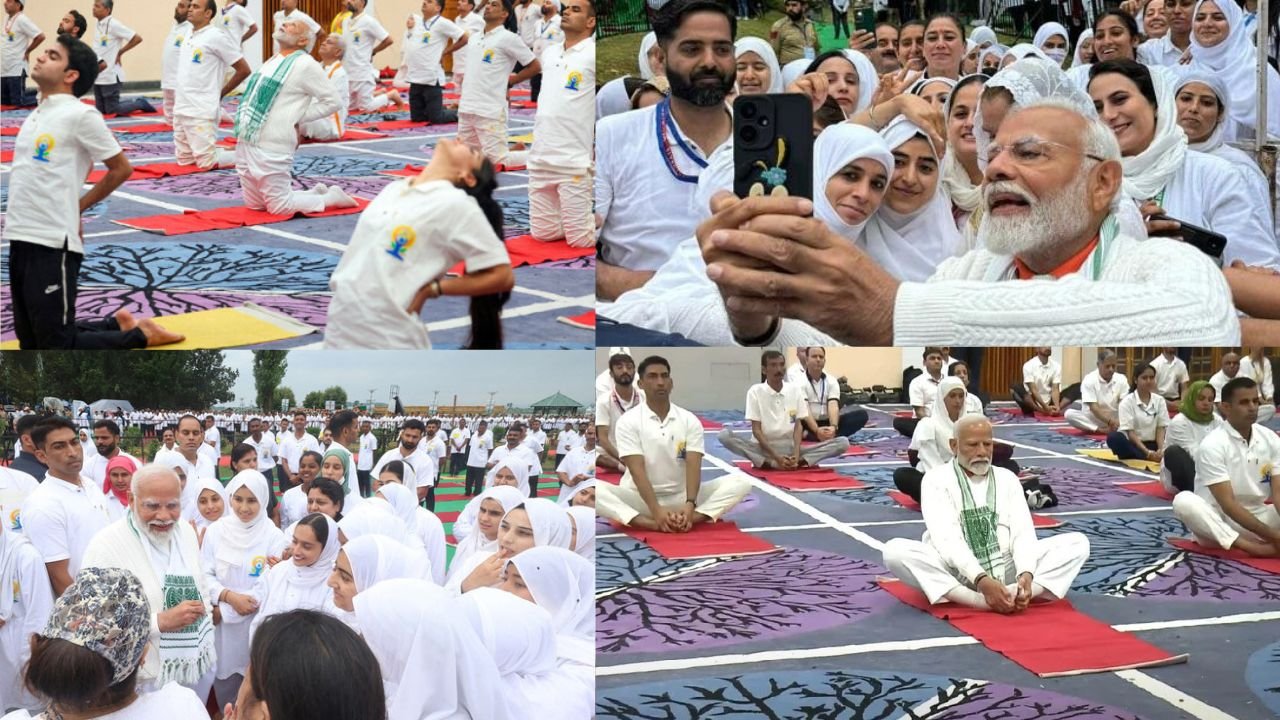
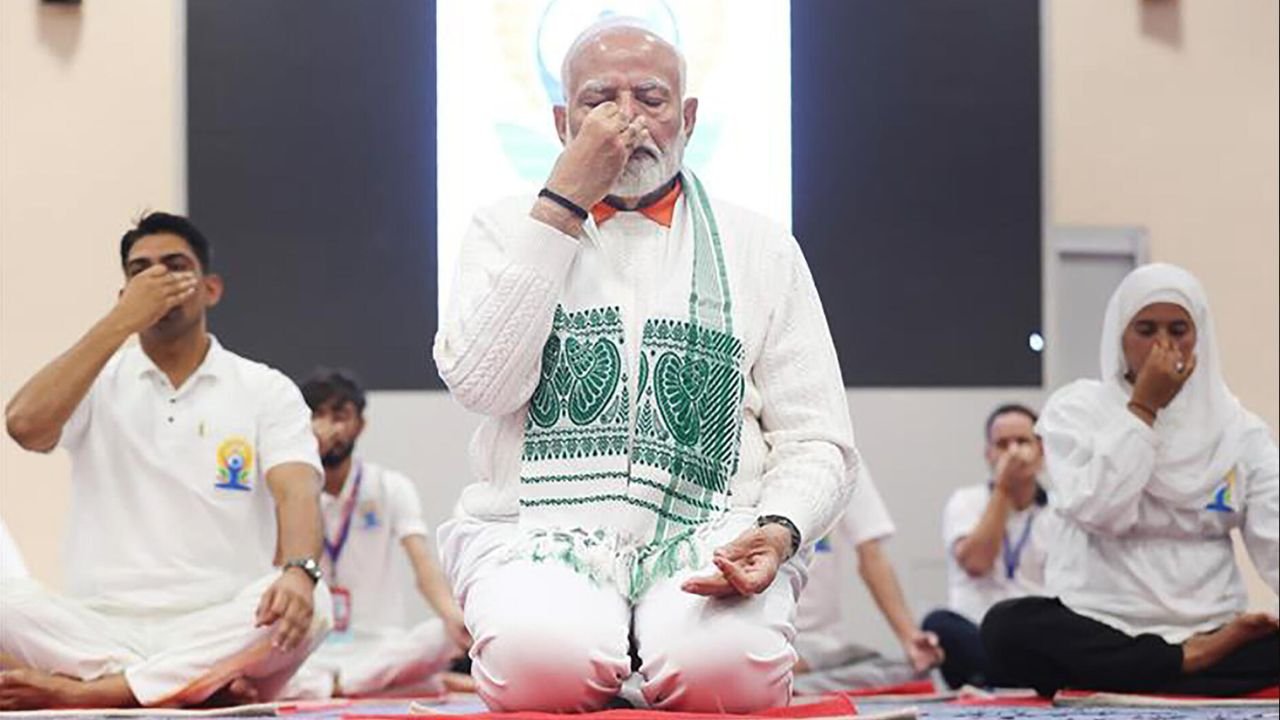
    Stretching, arching his back and kneeling on a mat, India’s Hindu nationalist Prime Minister Narendra Modi led hundreds of people performing yoga in India-held Kashmir on Friday.

    The exercises in Srinagar marked the 10th International Yoga Day, Modi’s own brainchild.

    But while yoga is not itself a religious practice, it has its origins in Hindu philosophy — the god Shiva is said to have been the first yogi — and many Kashmiris are indifferent to the discipline.

    Thousands of government employees, schoolteachers and students from all over the region were brought in for the event, although rain forced Modi’s performance indoors.

    Afterwards, he urged hundreds of people including many police and armed forces personnel on the shores of Dal Lake to make yoga “a part of their daily lives”.

    “Yoga fosters strength, good health and wellness,” he said.

    But one Srinagar resident saw the event as a cultural intrusion.

    “This yoga is being imposed on our children to culturally change the next generations and control their minds,” they told AFP, declining to be identified for fear of reprisal.

    “It’s an imposition on us.”

    Modi’s visit comes after a series of attacks, including one where nine people were killed and 33 injured when a bus carrying Hindu pilgrims plunged into a deep gorge after a suspected attack.

    June 21 was declared International Yoga Day a decade ago and Modi has since led events at emblematic locations across India, and last year at the UN headquarters in New York.

  • Modi sworn in for third term; a dozen ministries for allies

    Modi sworn in for third term; a dozen ministries for allies

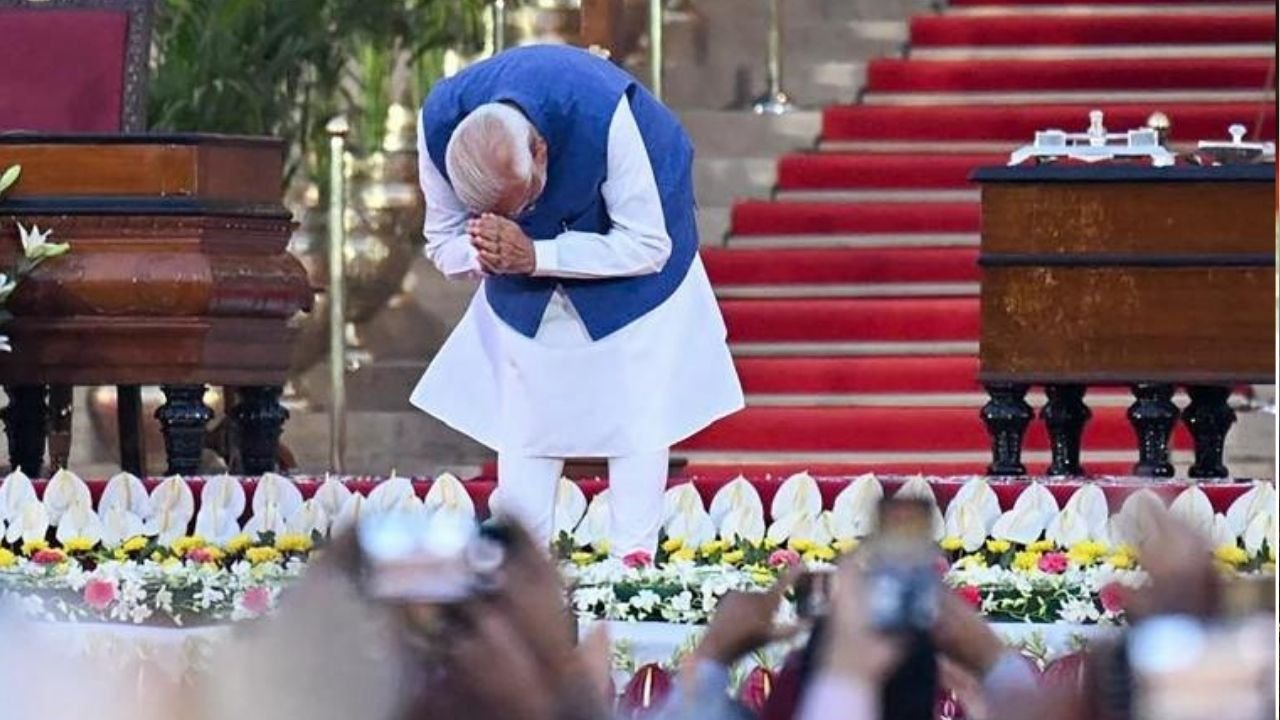
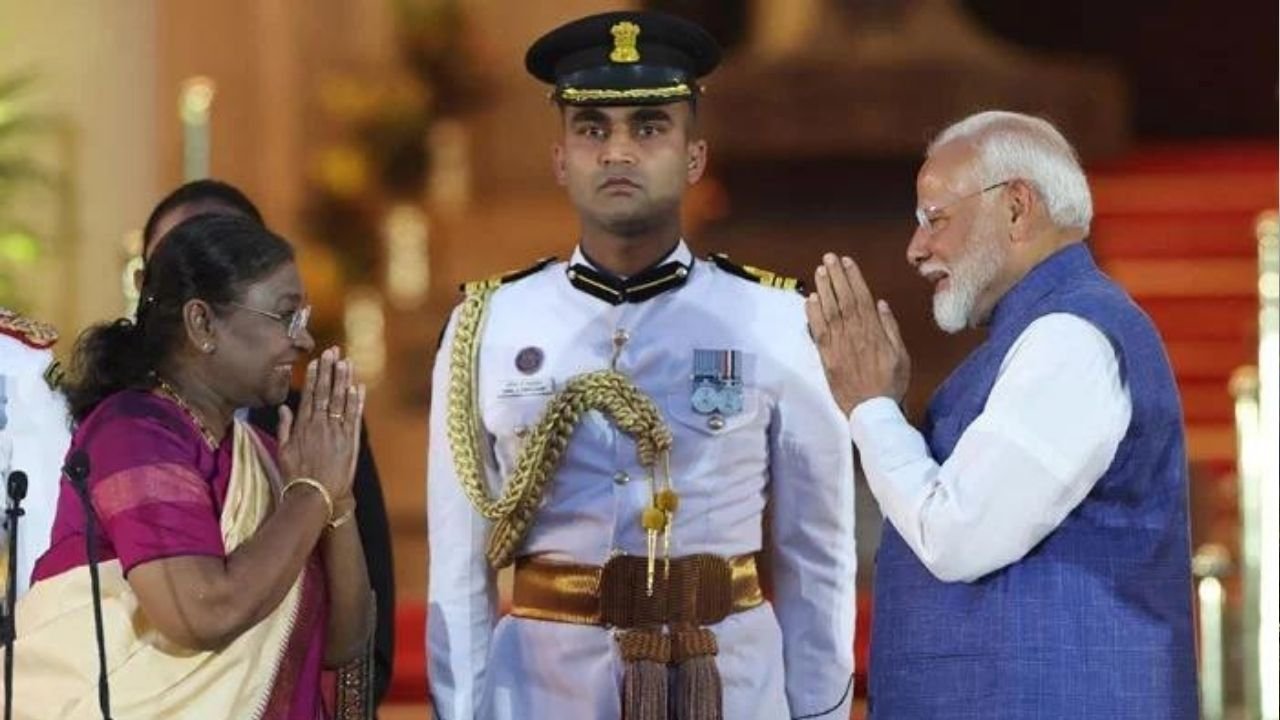
    NEW DELHI: India’s Prime Minister Narendra Modi was sworn in on Sunday for a third term after worse-than-expected election results left him reliant on coalition partners to govern.

    His office said he would appoint a 71-member cabinet, including 11 National Democratic Alliance (NDA) ally ministers.

    Modi’s Hindu-natio­nalist BJP ruled outright for the past decade but failed to repeat its previous two landslide wins this time around, defying exit polls. He was instead forced into quick-fire talks with the 15-member coalition NDA, which guaranteed him the parliamentary numbers to govern.

    Flanked by top BJP officials and party leaders of his coalition, Modi vowed in a ceremony marking his formal assumption of pow­er to “bear true allegiance to the constitution of India”.

    South Asian leaders from neighbouring Bangladesh, the Maldives and Sri Lanka attended the ceremony, but China and Pakistan did not.

    The crowd also included adoring BJP loyalists, as well as celebrities such as Bollywood legend Shah Rukh Khan and billionaire tycoons Gautam Adani and Mukesh Ambani, key Modi allies.

    But with Modi yet to announce details of his cabinet, the line of lawm­a­­kers also taking the oath of office was keenly wat­ched as an indication of who will be in government.

    Larger coalition parties have demanded hefty concessions in exchange for their support. Other coalition leaders to take the oath included Ram Mohan Naidu of the Telugu Desam Party, the largest BJP ally with 16 seats, and which media reports has extra­cted four cabinet seats.

    Rajiv Ranjan Singh also took the oath, from the BJP’s next biggest ally the Janata Dal (United) with 12 seats, which has reportedly two minister posts.

    Indian media reported widely that the top jobs including the four most powerful posts of the interior, foreign, finance and defence would remain in BJP’s control. The Hindus­tan Times described days of “hectic talks”, while the Times of India said the BJP had sought to “pare down” their partners’ demands.

    Modi’s previous cabinet had 81 ministers.

    ‘More consultation’

    But analysts said that the coalition would shift parliamentary politics and force Modi’s once domineering BJP into a somewhat more conciliatory approach.

    “In the past, the BJP has had confidence because of its sheer majority,” said Sajjan Kumar, head of the Delhi-based political research group PRACCIS. “The coalition will now force the BJP to engage in more consultation.”

    Political analyst Zoya Hasan of Jawaharlal Neh­ru University said Modi faced potential challenges ahead, warning he may be “meeting his match” in the “crafty politicians” of the TDP’s Chandrababu Naidu and JD(U)’s Nitish Kumar.

  • Ab ki baar, 400 nahin hua paar; Why did Modi falter in Indian elections?

    Ab ki baar, 400 nahin hua paar; Why did Modi falter in Indian elections?

    Elections in 2024 are surprising, to say the least. Many polls across the globe have given a jolt to political pandits, dismantling their expectations. Be it in Pakistan or in neighbouring India; the results sent a shock wave among observers. In India, particularly, the result defied exit polls and set a precedent of what is called the power of vote.

    While the expected Leader of the Opposition, Rahul Gandhi, was on a country-wide tour titled “Bharat Joro Yatra,” Prime Minister Narendra Modi and the leading party, BJP, were conniving for a change in the constitution.  Campaigning for a third time in the office, “400 paar” was the slogan Modi chanted all along. With more than 65 percent voter turnout and a six-week-long grueling process of polls amid the heatwave, the climax showcased the fruit of the exhaustive exercise. The total number of seats won by the ruling party was 240, far behind the magic number of 272, and it lost 63 seats compared to the election of 2019. Economist and author Parakala Prabhakar called this “a very clear tight slap on PM’s face,” but what led to the results?  

     In the span of the last five years, the BJP government led by Narendra Modi outrightly showed hate against minorities, especially Muslims, and promoted the saffron-tainted movement of Hindutva. It started off with the revocation of the Special Status of Kashmir, followed by the Citizen Amendment Act, and culminated with the inauguration of Ram Mandir. 

    303 seats in 2019 enabled BJP to strip Kashmiris of their statehood on August 5, 2019, because it was seen as the biggest hurdle in the drive for development in the region. However, in the garb of this modernization, the aim was to alter the disputed area’s demographics eventually.  

    With CAA, the Modi government further pushed Muslims to the periphery. This “fundamentally discriminatory” piece of law endangered the citizenship of a large number of Muslims in the country. It declared them illegal immigrants, but the Modi government remained unfazed in the face of all criticism. 

    The mishandling of the pandemic, coupled with the high unemployment rate of eight percent, proved to be a catalyst, but it was the largest farmer’s protest in Punjab that turned out to be a major blow. Millions on the road, the police crackdown on protestors, and the rigidity of the government made headlines all across the globe. Resultantly, Congress dominated the polls in Punjab with a high voter turnout of 62.80 percent.

    Islamophobic rhetoric, anti-Dalit sentiment, a spiraling economy, and unconstitutional motives of the sitting government resulted in the BJP’s defeat in Uttar Pradesh and Maharashtra, the two most significant states. 

    The party of “saffron parakeets” kept on ignoring the pulse of the nation and inaugurated Ram Mandir with glitz and glamour in Ayodhya, above the ruins of the demolished Babri Masjid. Modi proudly claimed that the Mandir will be a “temple of national consciousness”. The voters ironically consciously rejected him. Though the BJP will again form the government under the umbrella of the National Democratic Alliance, this will be a coalition government, weak at its core and unable to execute the idea of changing the system of governance from Parliamentary to Presidential.

    Although it is true to democratic traditions, the credit for this stupendous result goes to the voices of reason, who relentlessly stood in the way of Modi’s aim to establish his “taana shahi”.  YouTuber Dhruv Rathee, who has been named by renowned publications as one of the “factors,” made it his mission to create awareness of all the inconsistencies in the election process, scandals in Modi’s governance, and the wildly objectionable things Modi has said and done. His videos were watched by a whooping number of 476 million people, got screened in some areas while he flexed as the “power of the common man”. Some journalists like Rana Ayuub and Karan Thapar and writers like Arundhati Roy chose to call a spade a spade and will go down in history for being on the right side. 

    With the coalition government in place, will there be a new more introspective Modi or a rather aggressive one? It is yet to be seen, but he surely wouldn’t be the same as he was in the last five years.
  • Iphones lost, bags stolen at Narendra Modi Stadium during Pakistan-India match

    The Narendra Modi Stadium in Ahmedabad witnessed a high-octane World Cup clash between arch-rivals India and Pakistan on Saturday. The world’s biggest cricket stadium was filled to capacity as more than one lakh spectators came to watch the most anticipated match of the year.

    But while the majority of the fans got what they wished for and went back home with smiles on their faces after India’s resounding victory, a section of the crowd was left wondering who stole their mobile phones.

    Bollywood actress Urvashi Rutela couldn’t see Naseem Shah bowl due to his recent injury and unfortunately lost her phone during the match too.

    “Lost my 24 carat real gold i phone at Narendra Modi Stadium, Ahmedabad! If anyone comes across it, please help. Contact me ASAP! Tag someone who can help,” Urvashi tweeted on Sunday.

    A video by Indian sports journalist Vikrant Gupta is currently going viral on social media, wherein he disclosed incidents of mobile phone and purse thefts during the Pakistan-India match in Ahmedabad.

    Gupta stated, “While entering the ground, my friend’s mobile phone was stolen from his pocket, and several other spectators also reported incidents of mobile and purse theft.” Criticizing security officials, he highlighted the possibility of mismanagement and security issues in handling such a massive crowd. He emphasized that thefts taking place in the ground surpass the concerns of mismanagement and security glitches.

    Many other people lost their phones that day.

    Meanwhile, there was one fan who even got his iPhone back as a security guard managed to catch the thief.

    Another X user, @tricatrio also lost her phone. She wrote, “Lost my iphone 15 at Narendra Modi Stadium, Ahmedabad!”

    User @shizmaite wrote, “Chaos at the gates & no one to handle the crowd. A good day ended on a bad note! #indvpak”

  • ‘Pakistan is our strategic partner’: US responds to Rahul Gandhi’s remarks

    ‘Pakistan is our strategic partner’: US responds to Rahul Gandhi’s remarks

    The United States (US) has responded to Indian National Congress leader Rahul Gandhi’s remarks in the Indian parliament, Lok Sabha, that the policies adopted by Prime Minister Narendra Modi have brought Pakistan and China closer.

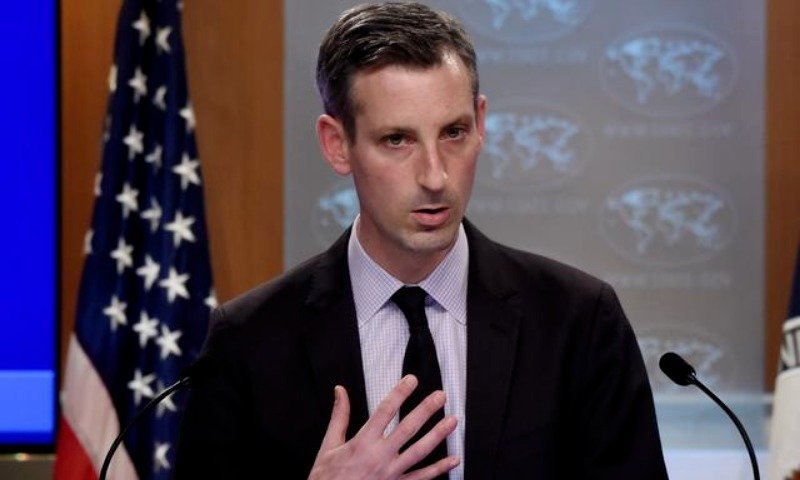
    The US State Department spokesperson Ned Price refused to “endorse” such a statement on Washington’s behalf and said, “Pakistan is our strategic partner.”

    “I’ll let Pakistanis and the PRC (People’s Republic of China) speak for themselves about their relationship. These remarks will certainly not be endorsed by me,” Price said during a regular press briefing.

    The US said it values its relationship with Pakistan while emphasising that there was no requirement, as far as Washington was concerned, for other countries to choose between the US and China.

    “We’ve made the point all along that it is not a requirement for any country around the world to choose between the United States and China,” Ned Price told reporters when asked if Pakistan and China have become closer because “they feel abandoned” by the US.

    Rahul, while speaking in Lok Sabha on the Motion of Thanks on President’s address during the ongoing Budget Session of Parliament on Wednesday, said, “India’s single most important strategic goal has been to keep China and Pakistan apart but what you have done has only brought them together.”