
Tag: PRL

  • Profit plunge: Pakistan Refinery Limited records Rs1.24 billion loss

    Profit plunge: Pakistan Refinery Limited records Rs1.24 billion loss

    Pakistan Refinery Limited (PRL), a subsidiary of Pakistan State Oil Company Limited (PSO), faced a significant loss of Rs1.24 billion in the third quarter ending March 31, 2024, primarily due to reduced revenue and escalating costs.

    This marks a stark contrast to the same quarter in the previous fiscal year, when PRL posted a profit of Rs1.77 billion.

    The financial setback was announced through a notice to the Pakistan Stock Exchange (PSX) on Wednesday following a meeting of PRL’s board of directors on April 23. In light of the loss, the board recommended no dividend distribution.

    According to the report, the loss per share (LPS) for the quarter was Rs1.97, a notable decline from earnings per share (EPS) of Rs2.81 in the same period last year (SPLY).

    This financial downturn was driven by a 17 per cent drop in revenue from contracts, which fell to Rs49.45 billion in 3QFY24 from Rs59.55 billion in SPLY. As a result, PRL recorded a gross loss of Rs559.1 million, a significant shift from a gross profit of Rs4.46 billion in SPLY.

    The company’s ‘other income’ rose dramatically, up over 95 per cent to Rs1.12 billion in 3QFY24 compared to Rs574.32 million in SPLY.

    Despite this increase in other income, the company’s operating expenses soared by more than 240 per cent, reaching Rs1.69 billion in the third quarter, compared to Rs495.52 million in SPLY.

    Consequently, PRL reported an operating loss of Rs1.13 billion, a sharp reversal from an operating profit of Rs4.54 billion in the same period last year.

    The loss before tax (PBT) from refinery operations in 3QFY24 was Rs2.11 billion, a considerable drop from a profit of Rs2.65 billion in SPLY.

    However, despite the quarterly loss, PRL’s performance over the first nine months of the fiscal year remains positive, with a profit of Rs5.27 billion—more than double the Rs2.53 billion earned in the same period last year.

    Pakistan Refinery Limited was established in 1960 and has a current capacity of approximately 50,000 barrels of crude oil per day.

    It produces various petroleum products, including furnace oil, high-speed diesel, kerosene oil, jet fuel, and motor gasoline.

    Despite the recent downturn, the company’s operational capacity and product range remain robust.
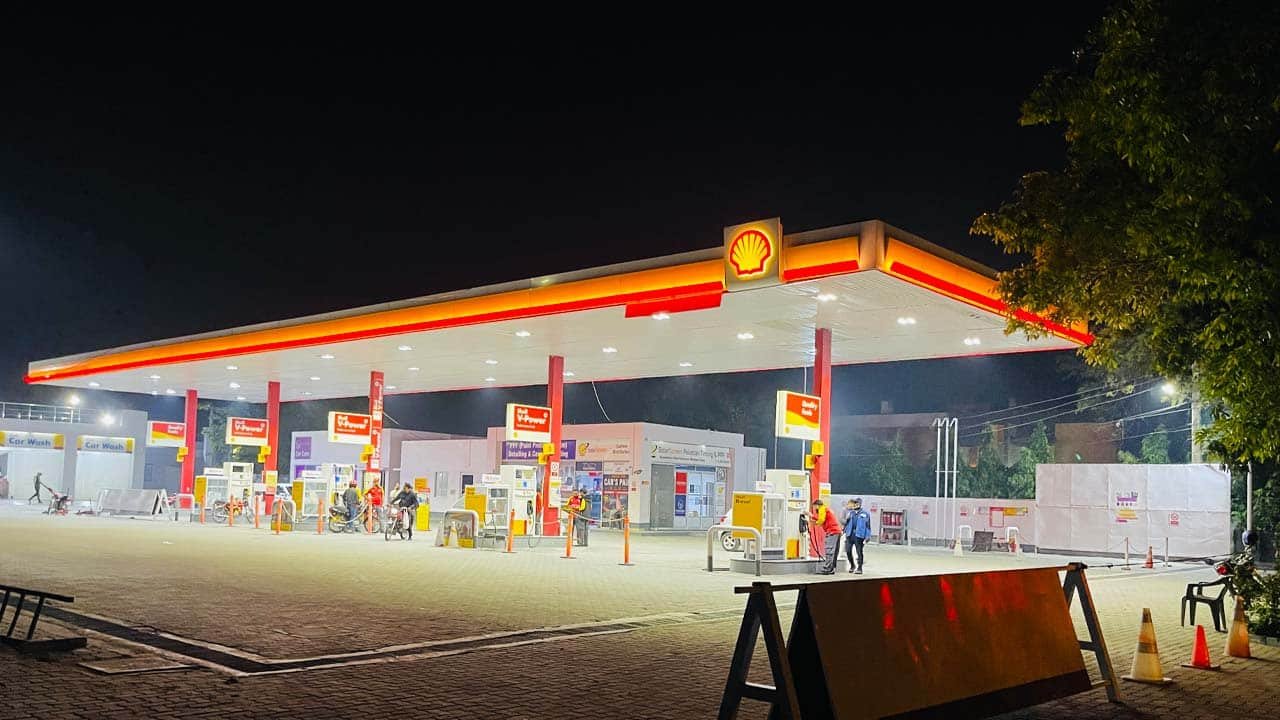
  • PRL and Airlink in talks to buy stake in Shell Pakistan

    PRL and Airlink in talks to buy stake in Shell Pakistan

    Shell Petroleum Company has decided to exit Pakistan by selling its 77 per cent stake in the local business. This move follows Shell’s recent updates on its global operations and concerns about the economic difficulties in Pakistan.

    In a notice submitted to the Pakistan Stock Exchange (PSX), Next Capital Limited, the managing party representing the Acquirers, Pakistan Refinery Limited and Air Link Communication Limited, declared their intention to acquire a majority stake of 77.42 per cent in Shell Pakistan Limited.

    Next Capital stated, “We, Next Capital Limited, hereby submit a Public Announcement of Intention by Pakistan Refinery Limited and Air Link Communication Limited (collectively referred to as the “Acquirers”) to acquire 77.42 per cent shares and control of Shell Pakistan Limited,” reflecting their involvement in the transaction.

    Speaking to Reuters, Airlink CEO Muzzaffar Hayat Piracha confirmed that the acquisition is a joint venture between Pakistan Refinery Limited and Airlink. However, the specific details regarding the shareholding distribution between Airlink and Pakistan Refinery Limited will be disclosed at a later stage, as stated by Piracha.

    For Airlink, entering the petroleum business aligns with its strategic objective of diversification. Airlink, primarily known as a smartphone distributor, manufacturer, and retailer, views this expansion as a progressive step.

    Pakistan Refinery Limited (PRL), which operates as one of the five refineries in Pakistan and functions as a subsidiary of Pakistan State Oil Company Limited, did not provide an immediate response to the request for comment.

    Shell Pakistan faced financial setbacks in 2022 due to fluctuations in exchange rates, the devaluation of the Pakistani rupee, and unsettled receivables. These challenges were further compounded by the ongoing financial crisis and economic slowdown experienced by the country.

  • First-ever discounted Russian crude oil cargo arrives in Karachi

    First-ever discounted Russian crude oil cargo arrives in Karachi

    Under a newly established agreement between Islamabad and Moscow, the inaugural shipment of discounted Russian crude oil arrived in Karachi on Sunday, marking the beginning of enhanced trade relations between the two nations.

    Departing from Russia over a month ago, the oil cargo reached Pakistan via Oman. Officials announced that the unloading process would commence on Monday, with the oil undergoing processing at the Pakistan Refinery Limited (PRL).

    During its lengthy voyage, the 100,000 metric ton oil shipment was divided into two parts in Oman due to the Karachi port’s limited capacity to accommodate larger vessels. Subsequently, two smaller ships, each carrying 50,000 metric tons of oil, embarked on their journey to Karachi.

    Upon the cargo’s arrival, Prime Minister Shehbaz Sharif expressed his enthusiasm on Twitter, describing Sunday as a “transformative day” and affirming the fulfillment of his commitment to the nation.

    He expressed the belief that these developments would contribute incrementally to prosperity, economic growth, energy security, and affordability. The Prime Minister further recognised and commended all those involved in this national endeavor who helped turn the promise of Russian oil imports into reality.

    Sources indicate that this Russian oil shipment will not be subject to the existing domestic oil pricing mechanism in the country. Consequently, the PRL will assume the benefits or losses associated with the Russian oil. Additionally, the sources stated that this shipment serves as a test case to evaluate the quality of the crude oil and the ratio of refined products. A report will be submitted to the federal government to inform future decisions regarding long-term commercial oil agreements.

    Pakistan had secured its order for the initial cargo of Russian crude oil at a discounted rate of up to $18 per barrel. Following the Platts crude oil prices, Islamabad applied a discount ranging from $16 to $18 per barrel, according to insider information.