Tag: production

  • Nikon may stop making SLRs to focus on mirrorless models

    Nikon may stop making SLRs to focus on mirrorless models

    Nikkei, a Japanese business journal, stated earlier today that Nikon is going to discontinue producing DSLR cameras and concentrate on mirrorless cameras. Naturally, this news spread throughout the camera community and was covered by numerous popular sites.

    Nikon Inc. posted a statement on its website clarifying that it would keep producing, marketing, and servicing its DSLR camera range.

    According to Nikkei’s initial report, the company has discovered that Nikon will withdraw from the single-lens reflex camera sector and pivot toward digital solutions under rising competition from smartphone cameras.

    To be more precise, Nikkei stated that Nikon “plans to focus resources on mirrorless cameras, which have become widespread items as a result of more advanced digital technologies.”

    Nikkei doesn’t go into further detail about how this information was gathered, and it just adds a brief history of Nikon, its history as a photographer, and the situation of the camera market now to the initial piece.

    It’s interesting to note that Nikkei ends the statement by stating that “Rival Canon likewise aims to follow Nikon and discontinue producing DSLRs within a few years,” but it doesn’t provide any further information on that assertion.

    Soon after, Nikon learned about the piece, but not before the photographic community picked up on Nikkei’s first revelation.

    Nikon Inc. posted the following comment on its website in reaction to the report from Nikkei and the articles from other publications:

    ‘There was a media article regarding Nikon’s withdrawal of SLR development. This media article is only speculation and Nikon has made no announcement in this regards. Nikon is continuing the production, sales and service of digital SLR. Nikon appreciate your continuous support.’

    The statement from Nikon Inc. is clear-cut, but Nikon doesn’t specifically refute the details in the Nikkei report. Nikon just states that “Nikon has not announced in these regards” rather than claiming the news is false.

    Nikon does claim that it will keep up “the manufacturing, sales, and service of digital SLR,” but that’s a somewhat nebulous claim that only applies to here and now.


  • Here’s a look at the world’s first V12 supercar from ’60s

    Here’s a look at the world’s first V12 supercar from ’60s

    When the Lamborghini Miura first appeared in 1966, it set new records as the world’s fastest production vehicle. The Miura set the standard for sports cars at the time, achieving a top speed of 280 km/h and accelerating from 0 to 100 km/h in 6.7 seconds. It is widely regarded as the first supercar.

    Ferruccio Lamborghini founded his sports car company in an attempt to compete with Ferrari. His first car, the 350GT, launched in 1964 and was instantaneously praised as a worthy rival to modern Ferrari grand tourers. But it was his second car, the mid-engined Miura, that really hurt Maranello.

    Miura held a unique place in automotive history. It was regarded as the world’s first “supercar,” a term coined by automotive writer LJK Setright to describe this vehicle’s exotic appearance, advanced design, and incredible performance. The latter may have been overstated by Lamborghini, who initially claimed it could reach 300 km/h.

    The Miura was dubbed a supercar for its advanced mid-engined design. At the time, mid-engined setups were thought to be either impossible or unnecessary for road cars (among them included Enzo Ferrari). Prior to the Lamborghini, a few cars attempted to use it on the road, but the majority of them were actually road-legal race cars, such as the 1954 Porsche 550 Spyder or 1964 Ford GT40.

    Only the De Tomaso Vallelunga, which debuted a year before Miura, was a true mid-engined road car. Of course, the 4-cylinder De Tomaso was not a supercar. Lamborghini was the first to use a mid-engine in a serious performance vehicle.

    The most significant contribution Miura made to history was launching a two-horse supercar race between Lamborghini and Ferrari. In 1969, Ferrari reclaimed the world’s fastest car title from Miura with the Daytona 365GTB/4.

    In 1974, Lamborghini responded with the even more ambitious Countach, and Ferrari responded with the 365/512BB. In 2022, the ‘supercar war’ is still going on.

  • PM Shehbaz directs to eliminate taxes on raw materials used by export industries

    PM Shehbaz directs to eliminate taxes on raw materials used by export industries

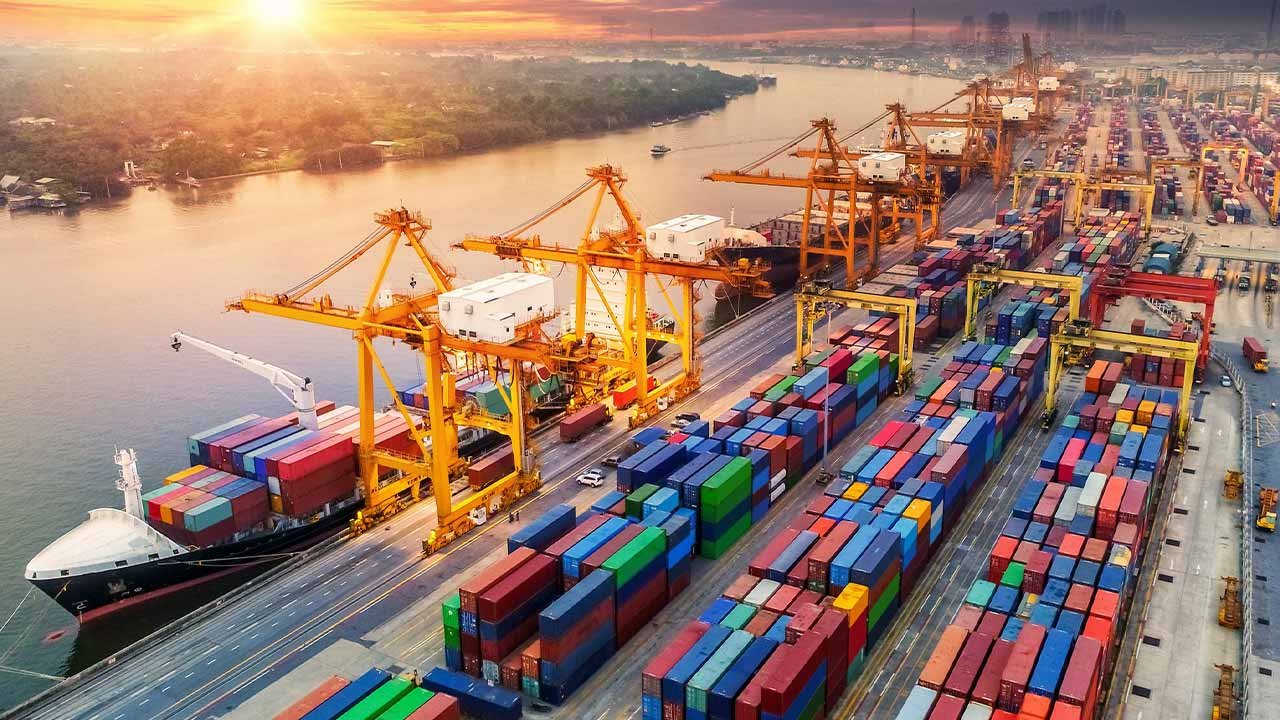
    Prime Minister (PM) Shehbaz Sharif, urged authorities to abolish all taxes on raw materials used in the export industry and to set up task teams to attract investment in a variety of local industries.

    The new government has been attempting to put in place a long-term plan to resuscitate Pakistan’s struggling economy, with the premier reaffirming his plea for increased exports to alleviate the country’s growing cash constraint yesterday.

    The premier met with a team from the American Business Council, which included officials from the pharmaceuticals, food processing, IT, e-commerce, retail, textile, sports, and logistics sectors, according to APP.

    Federal ministers Syed Naveed Qamar, Makhdoom Murtaza Mahmood, and Marriyum Aurangzeb were also present at the meeting.

    Task groups were constituted by the prime minister to solicit investments in a variety of areas. Tourism, pharmaceuticals, information technology, e-commerce, large-scale manufacturing, and agriculture will all have task teams constituted.

    He reminded the team that the government was working hard to guarantee that high-quality agricultural products were produced for export. The government was pushing for policy consistency for the first time, he said, because “subjects of the national economy and public welfare are above politics”.

    Shehbaz Sharif also asked the secretary of trade and the secretary of the Board of Investment to guarantee that the investors’ concerns were addressed immediately, and he requested a compliance report within a week.

    Business representatives, on the other hand, told state media that government initiatives had helped them regain investor confidence, and that the pre-budget dialogue with stakeholders was a “positive step”.

    PM Shehbaz has called all stakeholders to get together on Tuesday, ahead of the budget declaration on June 10, to finalise a long-term plan to rebuild the ailing economy. Top businessmen, agriculturists, and economists attended the day-long pre-budget meeting, where they offered advice on how to lift the country out of its unparalleled economic crisis.

    During the meeting, the premier pledged that their suggestions would be taken into consideration and that separate plans for agricultural, industrial, and financial expansion would be developed.

    PM Shehbaz also stated that political stability cannot be attained without economic stability and that it was past time for the elite class to make sacrifices and for non-productive assets such as real estate to be taxed. He advised businesses to invest in renewable power rather than relying on the country’s vast coal reserves for power generation.

    The prime minister also emphasised the importance of reducing imports while increasing exports, assuring attendees of the government’s full support in expanding local business and eradicating any barriers.

  • Honda to discontinue Insight next year, confirms production of Civic and CR-V hybrid

    Honda to discontinue Insight next year, confirms production of Civic and CR-V hybrid

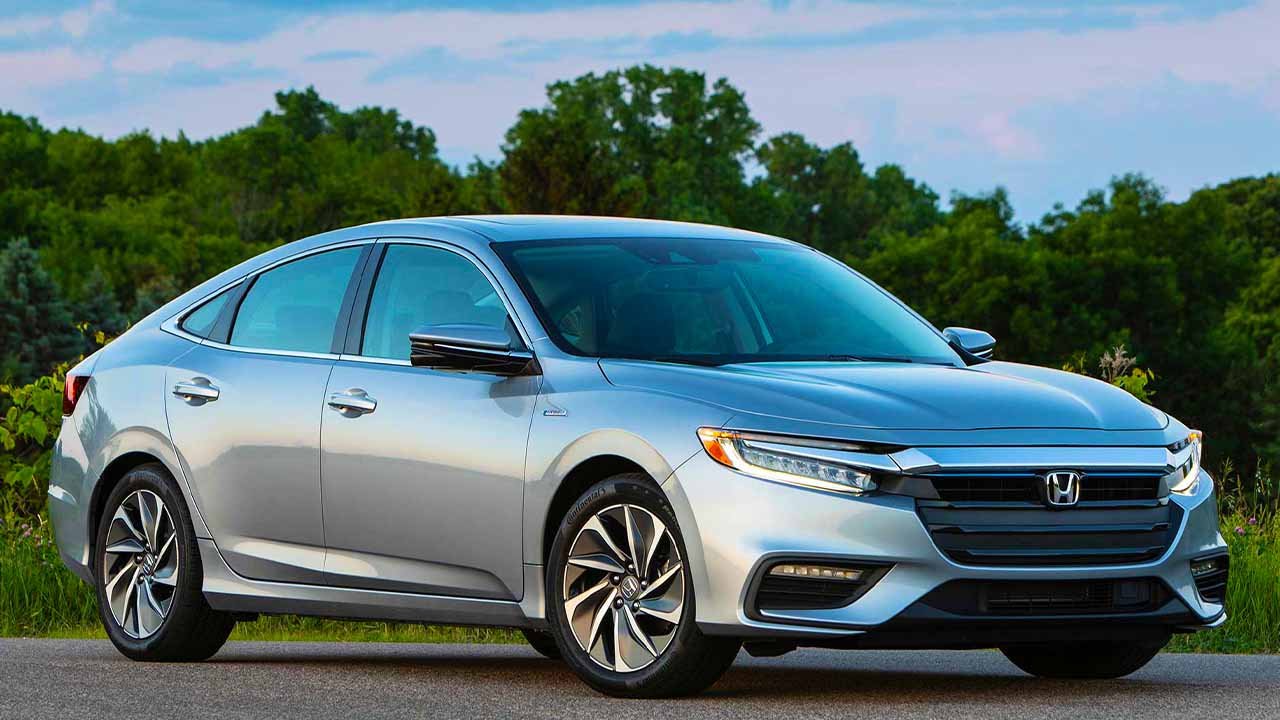
    The Honda Insight will be phased out of production in 2023 as the company intends to concentrate on key hybrid versions, including the upcoming CR-V and Accord hybrids. Honda will also offer a new Civic Hybrid to replace the Insight under the new plan.

    Honda Insight will be phased out in June, but the Japanese automaker has not announced when the Civic substitute will arrive, only that it will appear at some point in the future. Honda’s other hybrids, on the other hand, will not take long to arrive. The manufacturer will release the CR-V Hybrid later this year, followed by the Accord Hybrid. According to Honda, hybrids will account for 50 per cent of each model’s sales mix.

    The auto giant debuted the Civic in Europe last month, bringing the 11th-generation model to the continent. It’s unknown how comparable the Civic Hybrid in the United States will be to the global model, but it could give a sense of what to anticipate. The Civic e:HEV produces 181 horsepower (135 kilowatts) and 232 pound-feet (315 Newton-meters) of torque thanks to a 2.0-liter Atkinson-cycle engine and two electric motors. It will be available in Europe this fall.

    After a five-year absence, Honda reintroduced the current-generation Insight for 2019. It came with a 1.5-liter engine and two electric motors that produced 151 horsepower (112 kW) and torque of 191 lb-ft (258 Nm). It was built on the previous-generation Civic, but it was placed slightly higher in Honda’s lineup than the famous passenger vehicle. Since 2018, Honda has sold over 70,000 third-generation Insight hybrids.

    Read more: Hyundai Pakistan launches another variant of obsolete Elantra

    Honda Insight has been there for 23 years, so it may not be gone forever from Honda’s range. The new model will most likely debut with the CR-V Hybrid later this year.

    The prevailing Honda Accord was debuted for the 2018 model year, and it is expected to receive a mid-cycle refresh that would update the complete portfolio, including the hybrid model.

  • Pakistan’s exports grew 25% in the last nine months

    Pakistan’s exports increased by 17.3 per cent in March 2021 to $2.773 billion, up from $2.365 billion in March 2021 and 25 per cent in the last nine months.

    The Prime Minister’s Adviser on Commerce and Investment, Abdul Razak Dawood, said that exports increased by 25 per cent to $23.332 billion in the July-March fiscal year 2021-2022, compared to $18.688 billion in the same period last year, implying a $4.644 billion upsurge.

    On the other hand, according to preliminary data from the Pakistan Bureau of Statistics (PBS), exports fell 2 per cent on a month-on-month (MoM) basis to $2.77 billion in March 2022, down from $2.82 billion in February 2022.

    Dawood said in a tweet, “We are glad to share that Pakistan’s exports for Mar-2022 grew by 17.3 per cent to $2.773 billion as compared to $2.365 billion Mar-2021. For Jul-Mar 2022, our exports grew by 25 per cent to $23.332 billion as compared to $18.688 billion in Jul-Mar 2021. This is an increase $4.644 billion”.

    While talking about the target for exports he added that “We expect to achieve our yearly target. The import figures would be shared when finalised by the PBS. We would like to congratulate our exporters for maintaining the momentum of exports under these testing times in the global market”.

    Pakistan’s current account deficit (CAD) decreased by 78.46 per cent to $545 million in February from $2.531 billion in January, owing primarily to a steep drop in imports.

    Read more: FBR records 29.1% growth during July 2021 to March 2022, despite providing ‘massive tax relief’

    Surprisingly, the CAD crossed the $12 billion level in the first eight months of FY22, showing no signs of improvement in the external account. The CAD was only $34 million in February 2021.

  • Adnan Siddiqui is ‘super stoked’ to be part of a partnership that ‘transcends borders’

    Adnan Siddiqui is ‘super stoked’ to be part of a partnership that ‘transcends borders’

    The Pakistani entertainment industry is all set to witness a new era as Pakistan and Turkey join hands through a new collaboration.

    According to details, Adnan Siddiqui and Humayun Saeed will be part of the new project that has Tekdin Films and TRT production as partners. The former has produced Diriliş: Ertuğrul that has taken audiences in Pakistan by atorm

    In a post on Instagram, Siddiqui revealed that Tekdin Films, which is the name behind the hit series Diriliş: Ertuğrul, will be working with Pakistan’s TRT Films. Adnan added that he along with his Meray Paas Tum Ho co-star Humayun will be overlooking the pre, on-going and post-production activities of this collaboration.

    “As millennials say: ‘super stoked’ to bring to you a partnership that transcends borders. Pakistan and Turkey have joined hands in a collaboration between Dr Kashif Ansari’s Ansari films, TRT films and Mr Kamal Tekdin’s Tekdin Films to usher in a fresh era in Pakistani industry. The new venture has also got on board yours truly and Humayun as an extended arm, ” he wrote.

    Adnan further shared: “For the uninitiated, Tekdin Films is the name behind the blockbuster Diriliş: Ertuğrul. I have always believed that art should be free from the shackles of international and geopolitical boundaries. This is my small step towards that.”

    “Dr Kashaf Ansari and Mr Kamal Tekdin have formed a new production that will infuse freshness in Pakistani content. He asked me and my friend and colleague Humayun Saeed to come on board and here we are,” said Siddiqui in a statement.

    On being asked what would the new alliance mean for native entertainment industry, Siddiqui, who has not let borders constrain his work, said, “Art should not be a slave to international boundaries and political agendas. It should be allowed to flow freely and prosper.”

    The project is expected to release by the end of this year.

  • Resting the food panic amid COVID-19

    Resting the food panic amid COVID-19

    The global coronavirus pandemic has resulted in either a partial or full closure of most industries, wreaking havoc on the country’s economy. Though food scarcity is not a problem yet, during Ramzan, the closures can spell misery for people despite the government’s assurance of consistent supply. In order to simmer down the current food panic and hoarding of goods, it is to be ensured that the production and availability of essential goods are not halted by the arrival of COVID-19 in Pakistan.

    There are two sources of concern in this situation.

    First, despite growth in livestock, which contributes to almost 2/3 of the agricultural output in Pakistan and accelerated slightly to 4.0% in fiscal year (FY) 2019; agricultural production as a whole expanded by only 0.8%. Second, with COVID-19 escalating, Pakistan has recently suspended its trade and closed its borders, leaving many distressed and worrying about the shortage of essential Iftar items.

    In order to address the first concern, it is imperative to note that an overall decline in all sectors was already being witnessed before COVID-19. The slowdown in the agriculture industry was exacerbated by weaker demand and higher costs until the disease arrived. As for the shortage of essentials food items, Punjab alone is a mass producer of many food essentials that will be easily available during Ramzan. An analysis by the Urban Unit states the availability of most essential items from April to June 2020:

    • Tomatoes: Punjab’s production was recorded 1,38,397 tons during 2018-19
    • Potatoes: Punjab has 96.94% share in the total domestic production of potato and the total arrival in local wholesale markets was recorded at 510 to 515 trucks/day on an average
    • Garlic: Domestic production was recorded at 72,598 tons in 2018/2019.
    • Chilies: Production of chilies in Punjab is 11,698 tons
    • Onions: 20% in total domestic production
    • In addition to these, all forms of meat and dairy will be available as 3.7 million litres of milk are supplied per day and the daily supply of beef and mutton is 518,861 tonnes and 130,000 tonnes per day, respectively.

    Under essential items, rice is the only commodity that is expected to suffer a blow by the pandemic, but it is harvested in September. All vegetables and fruits such as capsicum, cabbage, cauliflower, bittergourd, cucumber, turnip, guava, melons and strawberries will be available in an abundant amount.

    While no serious panic has been witnessed in consumer behavior in Pakistan unlike in Europe or the United States (US), the government must exercise extreme vigilance on supply-demand trends during Ramzan. There should be no hoarding, and a robust price control mechanism must be put in place at the grass-root level by respective provincial and district administrations.

    For example, the Food Department of the Punjab government has taken effective and strict measures and warned of a crackdown on unnecessary stock holdings.

    So far, collective efforts by the Food Department along with the Deputy Commissioner’s Office and the Industries Department have led to the collection of fines worth Rs2,883.71 million from accumulators of food items, out of which Rs882.03 million was collected within just 40 days i.e. from March 1 to April 9.

    In an attempt to reduce the current wheat prices, the department is further identifying and disqualifying ghost mills from the official quota and borders are also being sealed, barring wheat transportation outside the province and ensuring food security.