Tag: profit

  • Samsung Electronics expects 10-fold rise in Q1 profit

    Samsung Electronics expects 10-fold rise in Q1 profit

    Samsung Electronics said Friday it expects first-quarter operating profits to rise more than 10-fold year on year as chip prices recover.

    The firm is the flagship subsidiary of South Korean giant Samsung Group, by far the largest of the family-controlled conglomerates that dominate business in Asia’s fourth-largest economy.

    The tech giant said in a regulatory filing that January-March operating profits were expected to rise 931.3 percent to 6.6 trillion won ($4.89 billion). Operating profits in the same period last year totalled around 640 billion won.

    The expectation exceeded the average estimate by 20.5 percent, according to South Korea’s Yonhap news agency, which referenced its financial data firm.

    Sales, meanwhile, are expected to rise 11.4 percent to 71 trillion won, Samsung said.

    South Korean chipmakers, led by Samsung, enjoyed record profits in recent years as prices for their products soared, but a global economic slowdown dealt a blow to memory chip sales.

    However, the semiconductor market had been predicted to recover this year and grow 11.8 percent, according to industry monitor World Semiconductor Trade Statistics.

    The news from Samsung comes after South Korea’s SK Hynix — the world’s second-largest memory chip maker — announced in January that it had returned to profit after four consecutive quarters of losses.

    Samsung’s overall outlook is “fortified by a resurgence in the smartphone market, escalating DRAM (memory chip) prices”,  Neil Shah, vice president of Counterpoint Research, told AFP.

    Samsung is expected to release its final earnings report at the end of this month.

  • New profit rates unveiled for National Savings Schemes

    New profit rates unveiled for National Savings Schemes

    The Central Directorate of National Savings (CDNS) has recently adjusted the rates of return on several National Savings Schemes.

    Special Savings Certificates (SSC) will now offer a 16 per cent return, down by 40 basis points (bps) from the previous 16.4 per cent.

    Similarly, Defence Saving Certificates (DSC) will yield 14.22 per cent, a decrease of 19 bps from the earlier 14.41 per cent.

    Short Term Savings Certificates (STSC) will see a decline to 20.34 per cent from the previous 20.8 per cent, reflecting a 46 bps decrease.

    Moreover, Regular Income Certificates (RIC) now offer a 15 per cent return, down by 12 bps from the previous 15.12 per cent.

    Notably, Bahbood Savings Certificates (BSC), Savings Account (SA), and Pensioners Benefit Account (PBA) rates remain unchanged.

    These adjustments will take effect from January 26. The revision precedes the upcoming Monetary Policy Committee (MPC) meeting of the State Bank of Pakistan (SBP) on Monday, January 29, 2023.

    In the last MPC meeting, the SBP maintained the key interest rate at 22 per cent, anticipating a significant decline in headline inflation during the second half of FY24.

    The December Consumer Price Index (CPI)-based inflation registered at 29.7 per cent year-on-year, slightly higher than November, with a 0.8 per cent month-on-month increase.

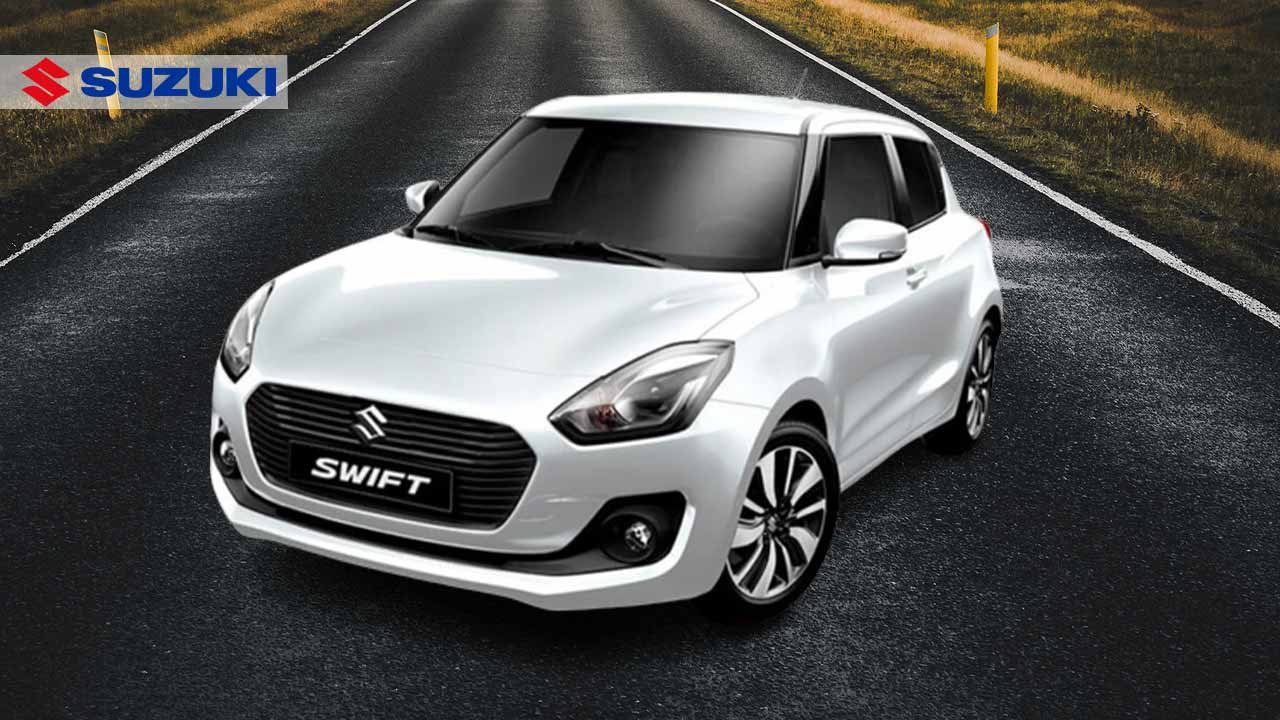
  • Pak Suzuki’s fiscal year ends with Rs9.68 billion loss: Operational disruptions and low demand

    Pak Suzuki’s fiscal year ends with Rs9.68 billion loss: Operational disruptions and low demand

    Pak Suzuki Motor Company Limited (PSMCL) has reported a substantial net loss of Rs9.68 billion for the fiscal year that ended on June 30, 2023. The loss was attributed to import restrictions and weakened demand, causing a significant increase compared to last year’s Rs17.238 million loss.

    The drop in sales was due to operational disruptions caused by inventory shortages. The loss per share (LPS) reached Rs117.58 for this year, a stark contrast to the Rs0.21 LPS recorded from January to June 2022. Despite these challenges, the cost of sales remained stable at Rs39.037 billion, compared to Rs108.415 billion the previous year.

    Financial expenses surged to Rs10.141 billion from Rs1.842 billion last year, contributing to the increased losses. However, the company did manage to achieve a Rs3.238 billion profit for the quarter ending on June 30, a significant improvement from the Rs442.989 million recorded during the same quarter the previous year. Earnings per share for this quarter were Rs39.36, compared to Rs5.38 per share in the previous year.

    Experts noted that the second-quarter results exceeded expectations due to increased gross margins from car price hikes. The company also gained from finance income of Rs2.6 billion due to exchange rate gains.

    During this time, the company’s revenue dropped by 67 per cent year-on-year and 2 per cent quarter-on-quarter due to lower sales volume caused by disruptions in raw material supply and reduced demand. Despite challenges, the company achieved a 10 per cent gross profit margin in 2QCY23, a significant increase from 4 per cent the previous year.

    According to The News, the auto sector faces challenges like obtaining Letters of Credit (LCs) for imports and sluggish demand due to high prices and interest rates. Car sales declined 57 per cent year-on-year in the first month of fiscal year 2023–24, as reported by the Pakistan Automotive Manufacturers Association (PAMA). PAMA-registered car manufacturers sold only 5,092 units in July, a 16 per cent decrease from the previous month.

    Despite the challenges faced by Pakistan’s auto industry, including low sales and various disruptions, it’s worth noting that car prices in the country remain at their highest point.

  • Petroleum dealers’ strike averted: Govt approves Rs1.64 per litre profit margin increase

    Petroleum dealers’ strike averted: Govt approves Rs1.64 per litre profit margin increase

    The government has successfully reached an agreement with the Pakistan Petroleum Dealers Association (PPDA) to avert the strike they had threatened last week. After extensive negotiations, the government agreed to increase the profit margin on petroleum products for dealers by Rs1.64 per litre.

    Chairman of the PPDA, Abdul Sami Khan, made the announcement regarding the deal. Initially, the government had proposed a lower increase of Rs1.64 per litre, but the dealers, who had originally sought a higher increase of Rs5 per litre, resisted, deeming it insufficient to cover their rising business costs. Eventually, they accepted the government’s offer.

    The new profit margin for dealers will be implemented in four phases. Every fortnight, it will be raised by Rs0.41 per litre, culminating in a full raise of Rs1.6 per litre within two months. This will bring the dealers’ margin to Rs7.6 per litre, up from the current Rs6 per litre.

    The decision to strike was initially announced by the PPDA in response to the ongoing inflation crisis. The association stated that increasing interest rates and inflation had severely impacted their businesses and demanded a raise in the dealership margin to cope with the challenges they were facing. They also pointed out a decline in sales by 30%, partly due to the smuggling of Iranian fuel into the country.

    Read more: Petroleum dealers and Minister set to meet today to resolve profit margin dispute

    However, the strike was deferred for two days after the PPDA members engaged in discussions with the State Minister for Petroleum, Musadik Malik. The minister’s visit to Karachi was aimed at convincing the PPDA to call off the nationwide strike.

    In summary, following negotiations with the government, the Pakistan Petroleum Dealers Association has agreed to suspend their planned strike, and the government will increase their profit margin on petroleum products in a phased manner over the next two months.

  • Kya log waqai mehngai se tang aa kar apna sona baich rahay hain?

    Kya log waqai mehngai se tang aa kar apna sona baich rahay hain?

    From meeting hospitalisation expenses to paying hefty electricity bills, Pakistanis are increasingly selling their gold jewellery to tide over inflation in Pakistan.

    This trend has been fueled by mounting expenses, such as expensive food products, rising petroleum prices, education fees, medical expenses, and house rents, in the face of low income. According to multiple sources in the jewellers’ association, there has been an upsurge in the number of people selling off gold as compared to buyers, in recent months.

    Several social media posts indicated that people were compelled to sell their gold in order to pay for their electricity bills after the government imposed hefty Fuel Cost Adjustment (FCA) charges in monthly electricity bills.

    The FCA was added to the electricity bills for the month of August, drawing protests from citizens who demanded the government immediately withdraw the FCA as it was an injustice to the consumers and they did not have the capacity to pay outrageous electricity bills.

    The Current contacted several jewellers in Lahore to uncover whether people were actually selling gold to pay their electricity bills.

    According to the owner of a renowned gold shop in Liberty Lahore, when inflation is high, people’s only alternative is to sell any gold they may have. “There are undoubtedly more sellers because gold prices have reached an all-time high at this time. Comparatively, there are noticeably more sellers than purchasers. Another reason for selling gold is to combat inflation.”

    When asked if locals were really selling gold to pay their power bills, the goldsmith responded, “People sell gold for many different purposes outside merely paying their electricity bills. A lot of people sell their gold in order to invest in more lucrative assets, this may not necessarily be about bills. A number of individuals sell gold in order to invest in real estate or build their own houses.”

    Owing to overall inflation, gold prices had hit an all-time high, but since last week, they have been steadily declining. The latest drop in gold prices also prompted people to sell their gold as it was the ideal time to get the best price and acquire other assets, as they could later buy gold at a lower price after its price is stabilised.

    The majority of gold jewellers in the vicinity of Lahore’s posh area asserted that this unquestionably occurs at a time when the country’s economy is unstable and consumers are left with no choice but to sell the assets they have been saving for years to utilise in crises.

    Another jewellery store owner in Lahore’s less well-off area admitted that “This happens,” but added that “Not everyone is willing to discuss their personal and financial concerns or reveal causes why they are selling gold and what they need money for. People visit our shops for reasons other than just paying their electricity bills, such as emergencies or the urgent need for cash to cover healthcare expenses.”

    Investors frequently turn to gold as a safe haven when the economy is struggling or when there are conflicts on an international scale. For investors looking for a safe investment with a proven track record of profitability, gold appears to be an attractive alternative in light of rising inflation and the stock market trading far below its highs.

  • Pak Suzuki suffers losses of Rs17.23 million due to rising production costs

    Pak Suzuki suffers losses of Rs17.23 million due to rising production costs

    Pak Suzuki Motor Company Ltd. (PSMC) reported its half-yearly results, which were completed on June 30, 2022. The company reported a net loss of Rs17.23 million against a net profit of Rs1.19 billion, according to the automaker’s latest filing on the Pakistan Stock Exchange (PSX).

    According to Mettis Global, the company’s sales revenue climbed 30 per cent YoY, from Rs66 billion to Rs112, 62 billion, mostly due to volumetric growth and pricing increases.

    As a result of growing input costs and the significant depreciation of the local currency, the gross margins during 1HFY22 decreased from 5.98 per cent to 3.74 per cent.

    Regarding the company’s primary expense heads, distribution and marketing costs came in at Rs1.64 billion, up 30 per cent YoY, while administration costs dipped to Rs1.48 billion, up 11 per cent YoY.

    In contrast to Rs866 millionn in 1HFY21, the company additionally received Rs1.56 billion in other income.

    Furthermore, as a result of rising interest rates, finance costs increased by 6.2x YoY, from Rs292 million to Rs1.8 billion.

    The company also paid Rs767.84 million in taxes, which represents an increase of 57 per cent YoY because of the impact of super taxes.

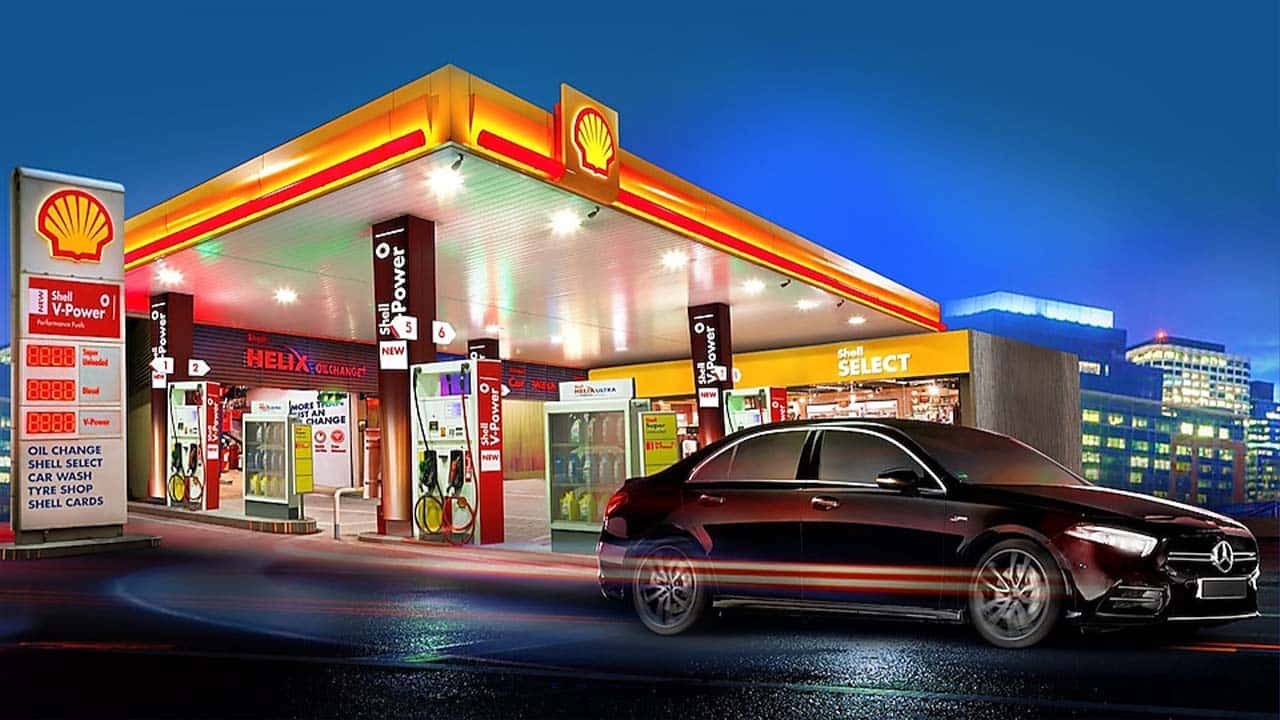
  • Shell Pakistan posts after-tax profit of Rs7.4 billion in first half of 2022

    Shell Pakistan posts after-tax profit of Rs7.4 billion in first half of 2022

    The results for the first half of the year are announced by Shell Pakistan Limited’s (SPL) Board of Directors. In comparison to the profit of Rs2,153 million recorded during the same period last year, the company reported an after-tax profit of Rs7,469 million in 2022.

    The significant rebound is a result of increased company performance with a strategic focus, a positive shift in the government’s pricing methodology for the S&P Global Platts indexes, and safe and effective fuel operations.

    According to Brecoder, the petroleum business added 13 new retail locations during this span, that will contribute to increased volume. In the market for premium fuels, Shell V-Power continues to be the market leader.

    In order to ensure that the business plays a significant part in the development of Pakistan’s energy future, the company will actively work to curtail the impact of present impediments and strive to grasp opportunities.

    Earlier, the business also confirmed its decision to cease its aviation operations in Pakistan. Currently, SPL operates its aviation-related business out of four locations.

    Including Nawabshah Airport, Begum Nusrat Bhutto Airport in Sukkur, Quetta International Airport, and Jinnah Airport in Karachi. SPL has concluded that it is no longer commercially viable to continue with its aviation operations in the country after careful consideration.

    In order to promote practices that will make Pakistani roads safer, the business also wrote the road safety book “Once Upon a Road.” The book will be covered in Pakistan’s sixth-grade curriculum developed by the Care Foundation.

  • Microsoft reduces profit estimation due to market volatility

    Microsoft reduces profit estimation due to market volatility

    Microsoft slashed its fourth-quarter profitability and earnings projections on June 2, becoming the latest U.S. corporation to notify of the impact of a stronger dollar.

    An aggressive Federal Reserve and increased geopolitical tensions have driven the dollar up 14 per cent against a basket of currencies in the last year, forcing companies like Coca-Cola Co and Procter & Gamble to lower their expectations for the rest of the year.

    A stronger dollar generally consumes the earnings of multinational corporations that have extensive global operations and convert foreign currencies into dollars. Microsoft has lowered its sales forecast for all three segments, which include Windows products, cloud services, and personal computing.

    Corporate hedging activity has increased as more businesses seek to protect their revenues from the impact of market volatility in the face of rising inflation. It’s indeed common for businesses to preserve themself from unusual currency transitions, however, the intensity comes after years of low forex fluctuation when market volatility had little impact on income.

    Revenue for the quarter is expected to be between $51.94 billion and $52.74 billion, down from a previous range of $52.40 billion to $53.20 billion. Microsoft reduced its profit forecast from $2.28 to $2.35 per share to between $2.24 and $2.32 per share.

    Considering Refinitiv data, analysts expect earnings per share of $2.33 on revenue of $52.87 billion. In April, the company forecasted double-digit revenue growth for the next fiscal year, owing to increased demand for its office software and cloud services as economies reopen and businesses shift to a hybrid model that allows employees to work from both the office and from home.

  • Honda Pakistan records 40 per cent increase in earnings

    Honda Pakistan records 40 per cent increase in earnings

    Honda Atlas Cars Limited (HACL) concluded the financial year with a 40 per cent increase in earnings, giving investors reason to be optimistic. This is despite several challenges including an ongoing chip shortage, rising commodity prices on overseas markets, hefty freight rates, and the rupee’s depreciation.

    “The result is below our expectations, which is mainly due to higher-than-expected distribution costs and effective tax rate,” Ismail Iqbal Securities auto sector analyst Muqeet Naeem stated.

    The automaker benefited from the fact that demand for four-wheelers remained high despite the problems.

    Honda purchasers appear to be unconcerned with price changes, preferring to purchase their preferred vehicles whenever they want, regardless of how much more expensive they are now than they were only two years ago.

    Prices have continued to rise at a rapid pace. There may also be a sense that prices will continue to rise. However, in a market known for “own money” or high premiums, continued demand despite price increases should not be surprising.

    The earnings per unit sold is a great marker of how quickly prices have risen. Honda sold 57 per cent more automobiles in MY22 than the previous year, which ended in March 21.

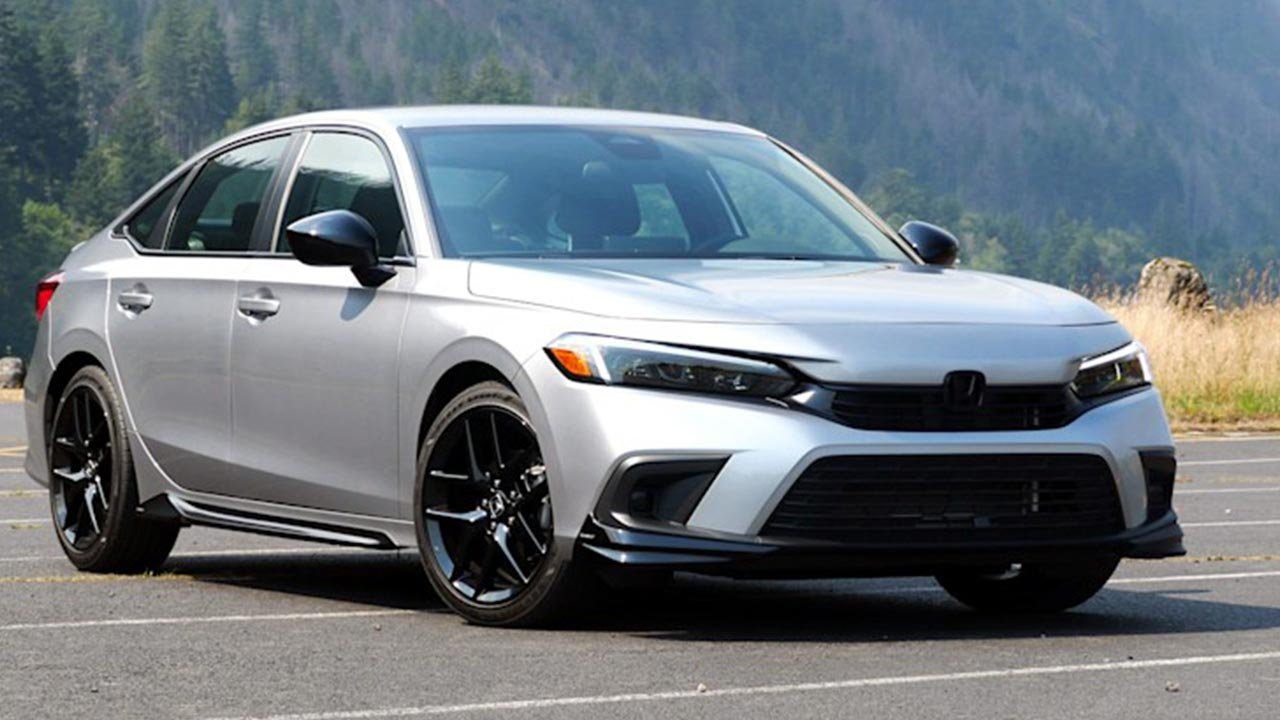
    The introduction of a new Civic generation considerably attributed to Honda’s sales growth.

    Not only have imports become more expensive as the PKR has depreciated against the greenback, but inflationary pressures on inputs and rising fuel prices have also contributed to cost increases. Revenue and cost per unit sold have generally increased in lockstep.

    As a result, despite strong demand growth, margins have fallen to 5 per cent.

    Other income, which consists of customer advances, has significantly bolstered the company’s profitability. Other income boosted the bottom line by 47 per cent in MY22, compared to 33 per cent the previous year. This also suggests that demand will continue to rise in the coming months.

    However, as lending rates continue to skyrocket, the company may lose demand from purchasers who plan to finance their vehicles through a bank.

  • The recent ban on imports might barely make a dent

    The recent ban on imports might barely make a dent

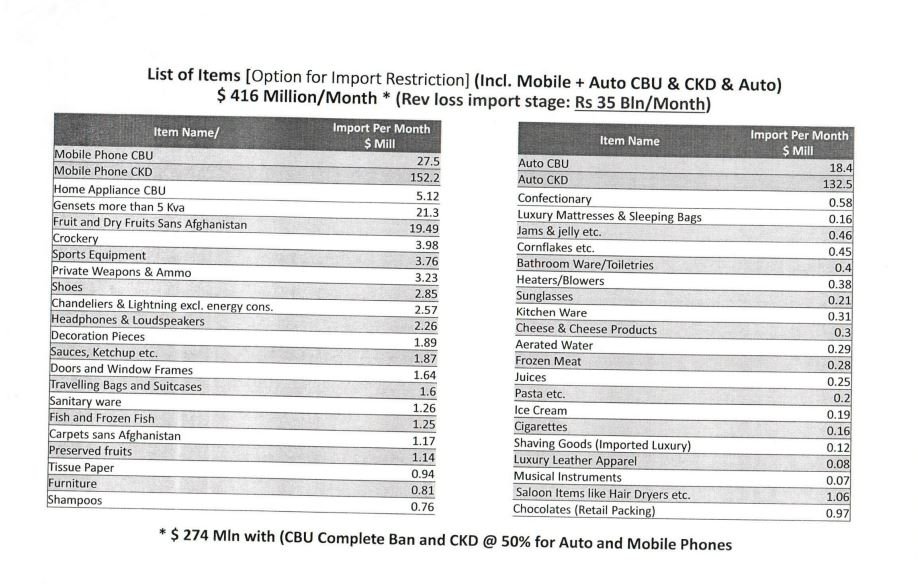
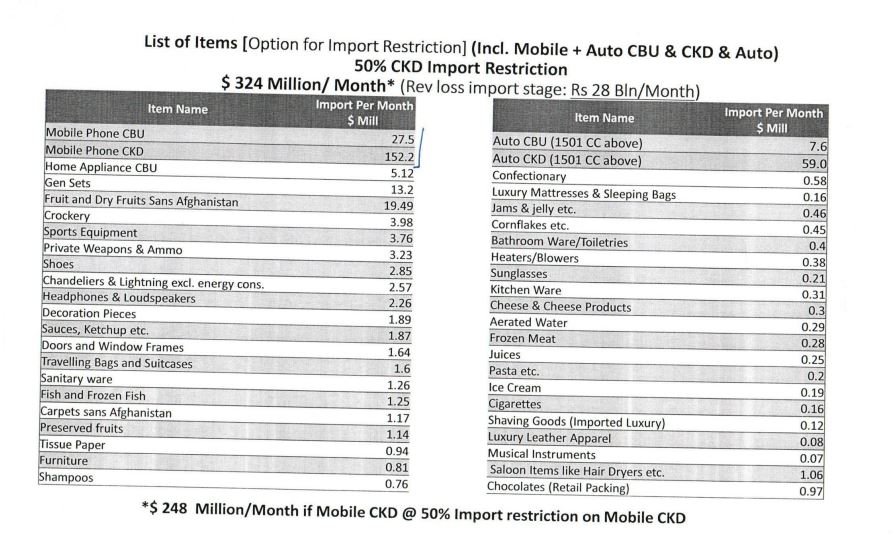
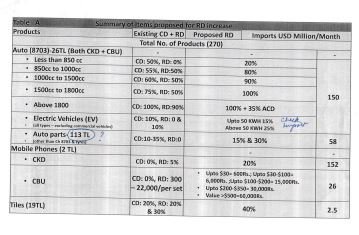
    On Thursday, May 19th, 2022, the federal cabinet issued a list of 41 items which will be banned from being imported for two months. This is in an attempt to address the current account deficit. The list of products is banned from being imported into the country, which means that essentially any shops or restaurants which rely on using these products will be forced to find local alternatives.

    These products will be banned regardless of what branding or packaging they use and only on the basis of whether the specific product is imported or not. Even products which are imported from abroad but packaged locally, will now be banned.

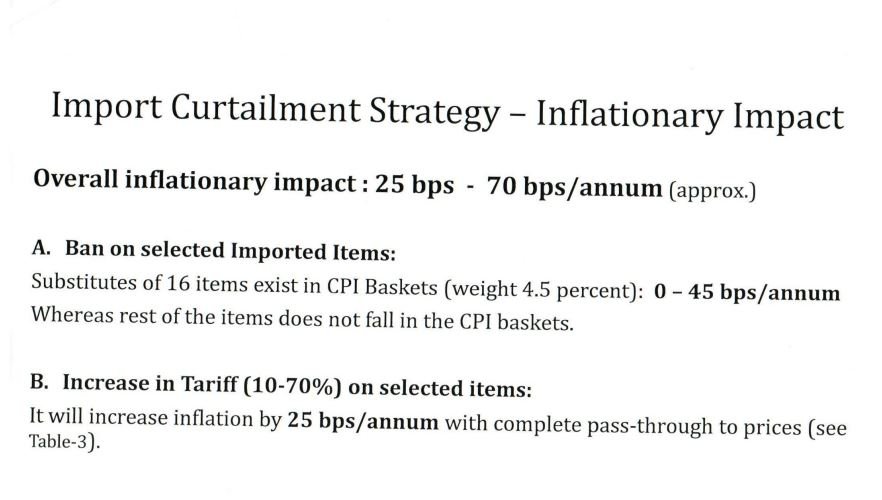
    Economists, university professors and business journalists took to Twitter to analyze and assess the merits and demerits of this decision. The discussion around luxury products and the fact that a lot of products which are labelled as “luxury items” are actually essential. Sanitary imports, valued at $16.4m are wrongly categorized as non-essential and although local alternatives also exist but it is definitions like these which disallow such decisions to be founded in research and expertise.

    The valuation of these imports which was published by the Pakistan Bureau of Statistics, was being quoted to ridicule the decision by many. What’s interesting to note is that most brands which appear to be entirely local, import a major chunk of their supply and will now be forced to smuggle goods instead.

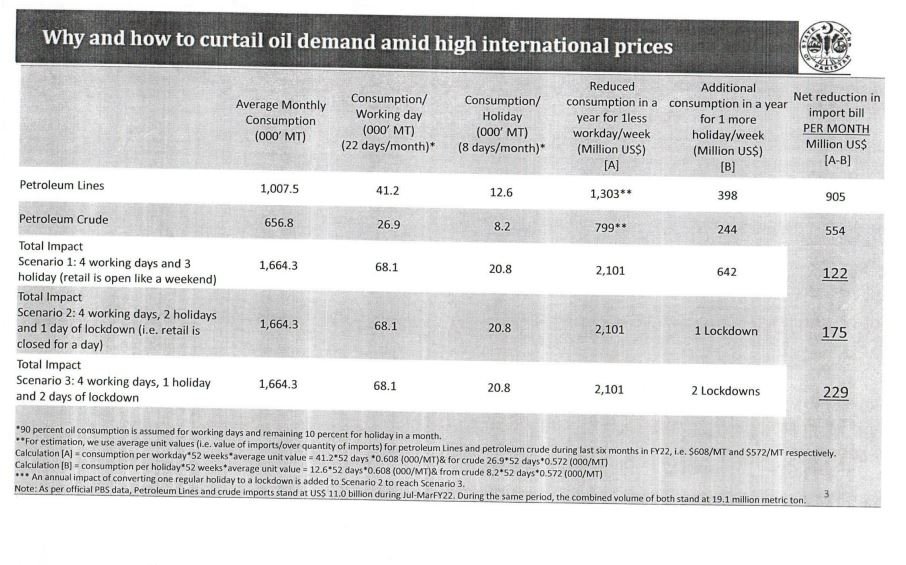
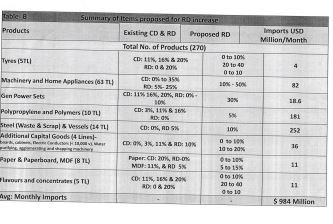
    Only from the data shared by PBS it becomes clear that for the fiscal year 2022, June to March, the total value of petroleum imports was $11 billion, while the total value of banning all these non-essential “luxury” items is a total $984 million, which forms only about 8.9% of the total value of petroleum imports.

    In conversation with Profit Magazine’s Ariba Shahid, she clarified that this would still prove to be a largely fruitless move since the most significant chunk of the import bill is still being used up to run the energy sector without any thought being given to the humongous fuel subsidies . “For a very long time the State Bank of Pakistan has been talking about how if we remove the oil component from it, the current account deficit is improving, which is true and basically means that people are not spending money to buy other items and most of the import bill is petrol and soy bean oil.”

    Economists Ammar Khan and Atif R Mian also took to Twitter to analyze this decision of “patchwork economics”. Commenting on this unsustainable gap in Pakistan’s balance of payment, on April 15th, 2022 during a discussion on Pakistan’s economy at Princeton University, he explains that for Pakistan to grow it is a necessary condition for Pakistan to deal with this problem and digs deeper into the structure of the economy. He particularly takes apart urban land reforms, the necessity to levy a capital gains tax on speculative real estate transactions and analyzes how Pakistan is not even economically stable enough to grow at the rate of India and Bangladesh and it is primarily due to the elite capture of the economy that disallows the economy to attempt to fix its loopholes.

    Echoing similar sentiments, Ariba Shahid explained that due to a weaker economy, the import bill is not as significantly high due to a reduced demand pull because of a lowered purchasign power and hence banning these products will be insignificant and might barely make a dent in the current account deficit. “The need of the hour is to reverse the fuel subsidy,” says Shahid, “This decision will swell up the grey market economy and smuggling will increase.”