Tag: progressive

  • Exclusive: Transgender activist Shahzadi Rai discusses inclusive education policy initiated by Sindh Govt

    Exclusive: Transgender activist Shahzadi Rai discusses inclusive education policy initiated by Sindh Govt

    Transgender activist Shahzadi Rai took to social media to announce that she was collaborating with Sindh Education Minister Sardar Shah to work on the first ever transgender inclusive education policy, which will allow more members of the khwaja sira community to enroll into schools and continue to pursue higher education through scholarship programs set up by universities.

    Speaking to The Current, Rai, who is working as a Violence Case Manager for Gender Alliance Initiative, spoke about the importance of the policy, which is a step forward in helping transgender individuals pursue their academic dreams and help in empowering their community:

    “Through this policy, we aim to help members of the Khwaja Sira community pursue higher education, especially those who can read and write but could not study in schools. When we had our meeting to discuss this policy, one of the first things we talked about was setting up a scholarship program for the transgender community in universities. So that more transgender people can study ahead.”

    We also talked about how this policy will help in setting up more safe and inclusive environments for transgender individuals:

    “We had also discussed setting up more safer environments within schools for transgender people. We are forming up a draft of the things we want. Although it won’t be a part of this policy that we are drafting, but ahead in the future we will start including books with chapters that will discuss the history of the transgender community.

    In this policy, we have ensured that it is strictly forbidden that no teacher can misbehave with a transgender student. Our biggest concern is to ensure that teacher’s are trans-friendly.”

    Sindh Education Minister Sardar Shah was seen speaking on the importance of the education policy at the Sindh Assembly, highlighting the importance of such a step which will help members of the transgender community become equal members of our society by providing them fair education policies.
  • Ban against corporal punishment enforced in Islamabad

    On Thursday, the federal government of Pakistan introduced rules to enforce the ‘Prohibition of Corporal Punishment Act, 2021’ throughout the capital city and territories, banning corporal punishment in public and private schools.

    According to Dawn, the law was passed three years ago, however the rules were updated a couple of months ago and the act was finally launched on Thursday.

    According to the act, teachers who are found guilty of inflicting violence on students will be punished through major penalities like compulsory retirement, dismissal from service or demotion to a lower post. Minor penalties include withholding promotion for a specific period or increment or financial advancement in accordance with the rules or orders pertaining to the service or post.

    The law states:

    “The child has the right to be shown respect for his personality and individuality and shall not be made subject to corporal punishment or any other humiliating or degrading treatment.”

    Speaking at the launch at the Islamabad Model College for Girls in F-10/2, the Minister of Federal Education Rana Tanveer Hussain praised the act as a shift towards fostering a culture of non-violence and empowering the rights of children:

    “Let us work together to implement these rules effectively and create an environment where every child feels safe and nurtured.”

    Convener of the Parliamentary Caucus on Child Rights and Parliamentary Secretary Law and Justice, Mehnaz Akber Aziz, who was also present at the ceremony, discussed the significance of the rules towards improving the lives of children:

    “The launch of the Prohibition of Corporal Punishment Rules is a testament to our commitment to ensuring children’s well-being and upholding their rights. These rules will provide clear guidelines and enforce strict measures to eradicate corporal punishment from educational institutions and child-related settings throughout Islamabad. I hope this will also incentivise the currently 2.4 million out-of-school children to head to schools.”

    United Nations International Children’s Fund (UNICEF) Representative Abdullah A. Fadil spoke on why corporal punishment must be outlawed in Pakistan:

    “Corporal punishment can inflict immediate pain and suffering, and sadly may also cause irrevocable damage that can last a lifetime. We need to act now and put all our weight behind this act so that all children in Pakistan are able to learn and grow in a safe environment and are protected in a society which respects and upholds their rights and dignity.”

  • Sindh becomes the first province to introduce teaching license policy

    In a historical move, Sindh has become the first province to introduce a teaching license policy for instructors from the public and private sector.

    Under this policy, two teacher training insitutes will be established under the Sindh Teacher’s Education Development Authority (STEDA) and a board will be set up to oversee teacher trainings as well as provide professional licenses.

    With this initiative, anyone who wishes to join with a Bachelor’s in Education (BEd.) can give the exam, after which they will be provided with a license to teach students from one of the three categories: elementary (Grades 1-8), primary (Grades 1-5) and secondary (Grades 6-12).

    The Sindh government has also taken a step to attract more people towards the teaching sector by opening up 700 new vacancies for elementary school teachers for BPS-16 across the province, which will be offered to those with a BEd and a teaching license obtained by passing the exam.

    Speaking on the success of the policy, the Provincial Minister of Sindh for Education, Culture, Tourism and Antiquites, Syed Sardar Ali Shah said:

    “Conceptualising and bringing the teaching license policy to life has not been easy. However, I am grateful to Aga Khan University’s Institute for Educational Development (AKU-IED), Sindh Teachers Education Development Authority (STEDA), Durbeen and all other partners who have worked tirelessly to make this policy a possibility. The success of the next generation of teachers and students ultimately depends on its smooth implementation.”

    He also added that Sindh was the only province in Pakistan to pass the landmark bill which shall improve the teaching profession and attract mroe bright minds to the field:

     “Sindh is the only province that has approved a teaching license policy, which represents a proactive approach to recognising the value and importance of effective teaching. With the policy in place, the Sindh Government has laid the foundation for a more robust and professional teaching workforce, which will have a positive and lasting impact on the educational landscape in the province.”

  • In groundbreaking move, National Assembly passes bill granting paid maternity leave

    In a historical move, yesterday the National Assembly passed the ‘Maternity and Paternity Leave Bill’ 2020, which has granted mothers the right to take up to six months paid maternity leave from their workplaces at their first birth, as well as leaves for three to four months during the birth of their second and third child as the bill states:

    “Maternity leave shall in the prescribed manner be granted on full pay outside the leave account to a female employee on her option to the extent of one hundred and eighty days on first birth, one hundred and twenty days on second birth, ninety days on third birth.”

    The bill also granted paternity leave for fathers, allowing men to take one month paid leaves from their work places on the birth of their child:

    “A male employee expecting his wife to give birth to a child shall , at his option, be granted paternity leave on full pay not exceeding thirty days.”

    The bill has been passed in federal territory, which means it will be made a legal priority for Islamabad workplaces to include paid paternity and maternity leave in their policies. But hopefully, this progressive step will soon encourage other cities to take note and follow to make inclusive policies that do not push women out of the workplace after their marriage.

    The bill was presented at the National Assembly by Pakistan Peoples Party (PPP) Senator Quratulain Marri, who praised her colleagues support to prioritise social issues, which helped in making this landmark legislation possible.

    Social media users have celebrated the legislation as a progressive step that will stop women from being forced to chose between motherhood and their jobs, and applauded Senator Marri for helping ensure this will happen.

  • Underrated Pakistani dramas that dared to touch upon taboo subjects

    Underrated Pakistani dramas that dared to touch upon taboo subjects

    When one thinks of Pakistani dramas, we all know what comes to our minds: weddings, divorce, the cheap version of 50 Shades of Grey, more weddings etc.
    But to distract ourselves from the current mundane pile of breakups, crying and abuse, we can’t forget that kabhi kabar you can find a gem, a refined drama that accurately reflects the stories we want Pakistani drama creators to tell.
    It’s not often that dramas with original, well crafted stories are brought into the spotlight as they get targeted with endless criticism from right wing critics and are even sent notices for displaying ‘vulgar’ content and soon are forgotten as the next show steps into the spotlight.
    We have found some dramas that were helmed by prominent women like Bee Gul and Angelina Malick, which shone light on taboos.

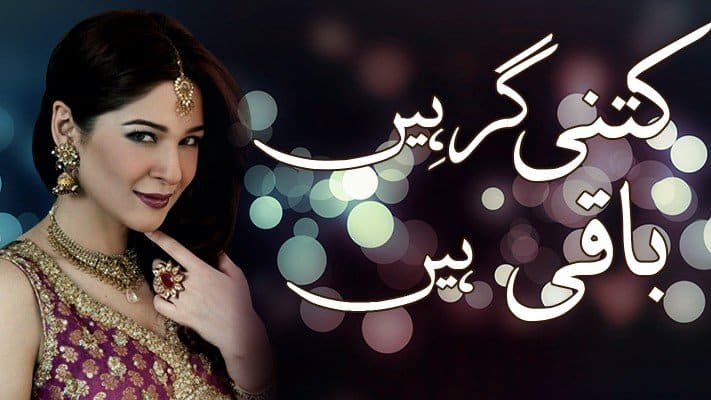
    1 Kitnay Girhain Baki Hain (2011-2017)

    Produced by Angelina Malick and written by Bee Gul, this series was an anthology of short stories that reflected the struggles of women in our society, and explored topics like homosexuality, infidelity, rape etc

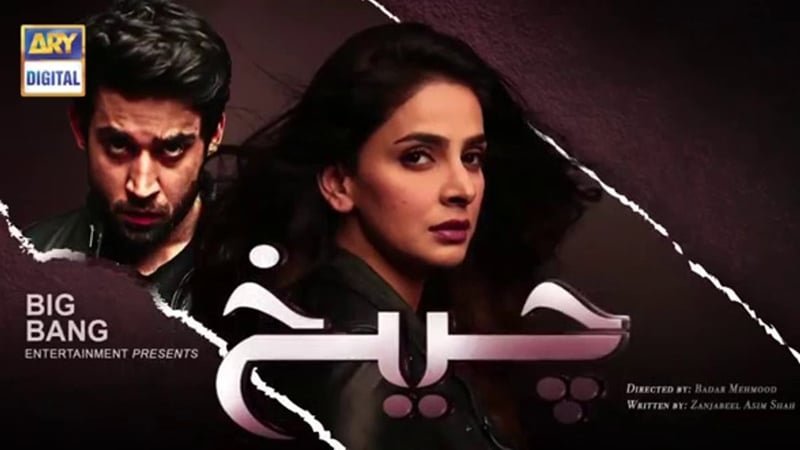
    2 Cheekh (2019)

    When Mannat (played by Saba Qamar) finds out that her closest friend Nayab was raped by her brother-in-law and then murdered for trying to reveal the truth, she strives hard to find justice for her friend in court and in the process, has to face hurdles from her in-laws.

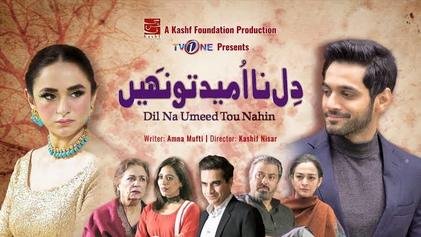
    3 Dil Na Umeed Tou Nahi (2021)

    Penned by Amna Mufti and produced by Kashf Foundation, the show received several notices from PEMRA for ‘vulgarity’, so that’s even more reason to give it a watch. It delves into the lives of child sex workers, who are kidnapped from their homes and forced to work in prostitution in order to make a living.

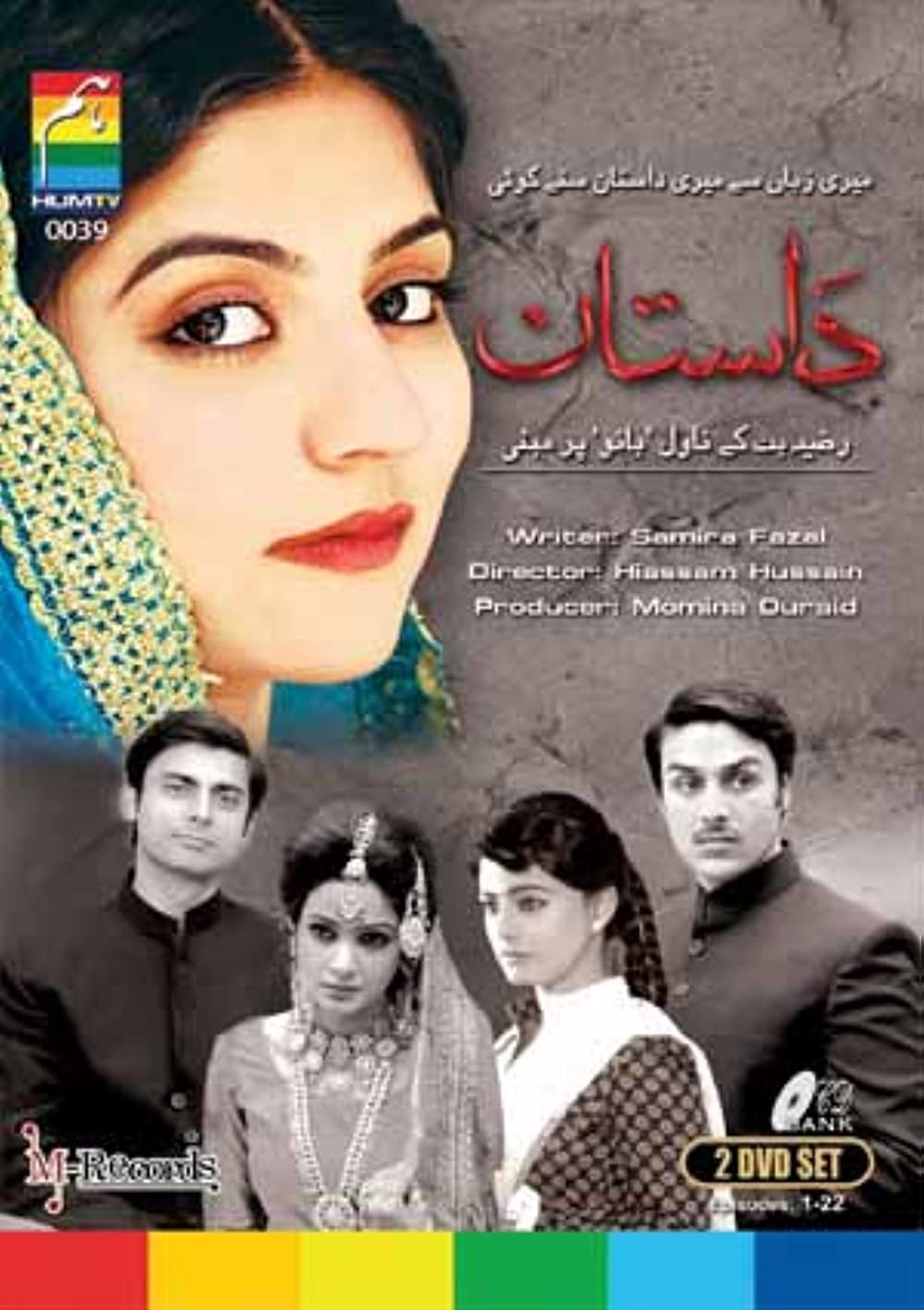
    4 Dastaan (2010)

    Adapted from the novel ‘Bano’ by Rabia Butt, the show explores the trauma caused by Independence, and how it upturned the life of one woman, Bano. Bano and her family lived in India, where her brother supports the cause of the Indian National Congress, and is against the cause of setting up Pakistan. However, when the separation of the two countries was announced in 1947, Bano’s life was completely overturned overnight.

    5 Neeli Zinda Hai (2021)

    Aman and Sumbul are a married couple who have had stillbirth, and are now trying to restart their lives in a new home. When they shift with their daughter to a new house, the couple keeps hearing noises at night which convinces them that the house is haunted.

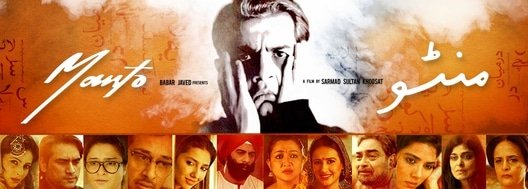
    6 Manto (2017)

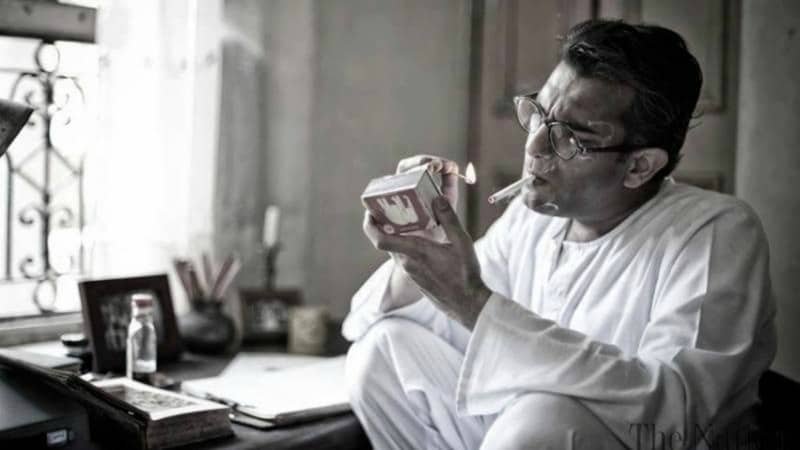
    Directed by and starring Sarmad Khoosat, the series was previously released as a film in 2015, and then as a television drama in 2017. The drama revolves around the popular Urdu writer Saadat Hassan Manto, and the last seven years of his life when he had to face charges of obscenity for his short stories like ‘Thanda Gosht’, ‘Peshawar say Lahore’ and ‘Toba Tek Singh’.

    7 Talkhiyaan (2012)

    Written by Bee Gul, the drama is an adaptation of Arundhati Roy’s acclaimed novel ‘The God of Small Things.’ It revolves around the life of Bibi, who leaves her abusive husband and moves back to her parents home with her two children, Zoya and Jugnu, where her parents criticize her for taking such a stand, but refuse to treat her divorced brother the same way.