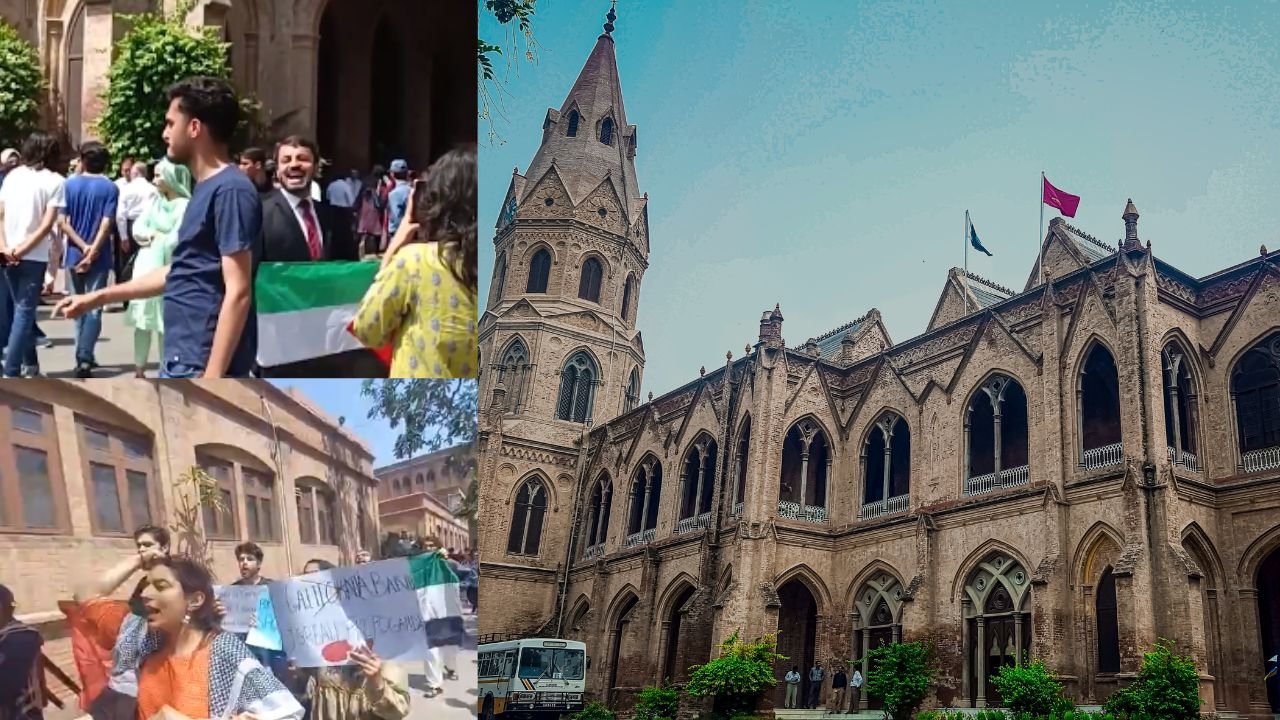
Students of Government College University (GCU) held Palestinian flags while protesting against a US Consulate-sponsored concert of the American band Raining Jane in Lahore.
University administration canceled the concert after the students protested by raising the Palestinian flag at the US Consulate concert.
In videos that emerged from the protest, it can be seen that students remained undeterred and raised the popular slogan, ‘From the river to the sea, Palestine will be free.”
demands that the students apologize and give an undertaking on stamp paper within an hour, which has passed, however the students stand firm on their stances. The student cards of the aforementioned students have been confiscated, and they are now being threatened with strict + pic.twitter.com/68jeToUf91
— Progressive Students’ Collective (@PSCollective_) May 2, 2024
GCU Vice Chancellor Dr. Shazia Bashir told Dawn that all the demands of the students were accepted and the event was postponed. She said no disciplinary action was taken against any of the students.
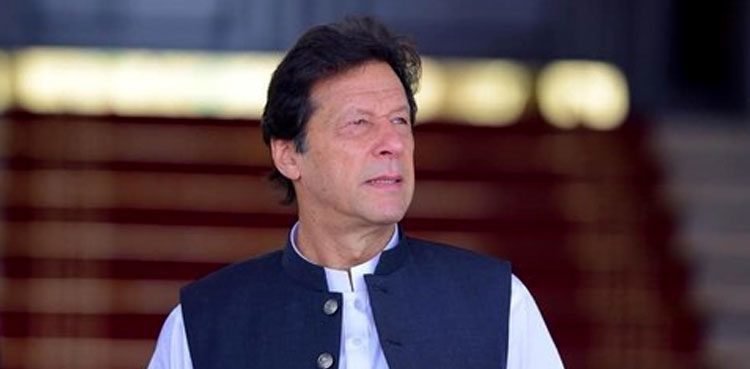
A sedition case has been registered against organisers and participants of the recently held Students’ Solidarity March despite Prime Minister (PM) Imran Khan expressing his government’s willingness to allow the restoration of student unions subject to the establishment of a “comprehensive and enforceable code of conduct”.
“Universities groom future leaders of the country and student unions form an integral part of this grooming,” the premier tweeted Sunday.
Referring to the student unions of the past, PM Imran said that they had become “violent battlegrounds and completely destroyed the intellectual atmosphere on campuses”.
He, however, clarified that unions will be “restored and enabled to play their part” in grooming the future leaders of the country. The premier said that a “comprehensive and enforceable conduct” based on the “best practices in internationally renowned universities” will be developed so that their restoration can be made possible.
We will establish a comprehensive & enforceable code of conduct, learning from the best practices in internationally renowned universities, so that we can restore & enable student unions to play their part in positively grooming our youth as future leaders of the country.
The tweets came a while after reports claimed that a sedition case had been registered against participants of Friday’s march.
According to reports, Lahore’s Civil Lines police, on behalf of the state, registered the case on sedition charges against Ammar Ali Jan, Farooq Tariq, Iqbal Lala (father of Mashal Khan, who was lynched over allegation of blasphemy in Abdul Wali Khan University, Mardan), Alamgir Wazir (nephew of MNA and Pashtun Tahafuz Movement leader Ali Wazir), Mohammad Shabbir and Kamil Khan, besides 250-300 unidentified participants.
The action flew in the face of the recent statements by several ministers and government representatives, including the premier, who supported the students.
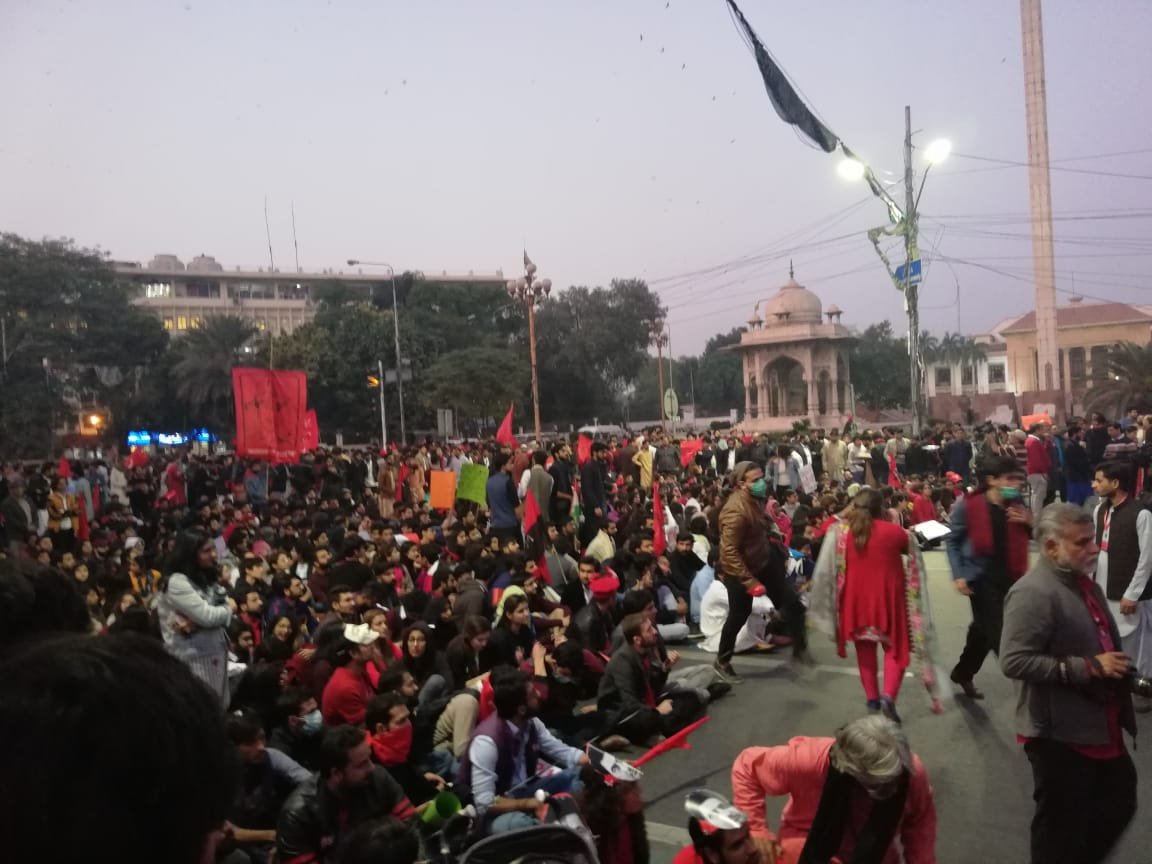
On Friday, the students had taken to the streets in 50 cities of the country to voice their demands, including the restoration of student unions.
According to the FIR, complainant Sub-Inspector Mohammad Nawaz said he was on patrol when he received information that a rally of 250-300 people led by Ammar Ali Jan, Farooq Tariq, Iqbal Lala, Alamgir Wazir, Mohammad Shabbir and Kamil Khan was being taken out. He said he reached Faisal Chowk on The Mall where the protesters were forcibly blocking the road to set up a stage to deliver speeches.
“The speakers incited the students against the state and its institutions and speeches and slogans were recorded on mobile phones and can also be checked through PPIC3 cameras,” he claimed.
Capital City Police Officer (CCPO) Zulfiqar Hameed told Dawn that one of the suspects, Alamgir Wazir, was arrested two days ago in the case. He said the case was registered on behalf of the state because the students were delivering provocative speeches and chanting slogans against the state and its institutions. He said police would arrest the other people involved in the case as well.
Ministers, leaders of opposition parties, journalists as well as rights activists have voiced their support for marchers as students across the country take to roads for 2019 edition of the Students’ Solidarity March and press the authorities for better educational facilities.
The marchers insist that the government must ensure the following:
Lift the ban and hold elections for student unions
Abandon privatisation of educational institutes and reverse the recent decision of school and college fee hike
The state should pledge free education for all
No more budget cuts for the Higher Education Commission (HEC) or sacking of educational staff
At least five per cent of the GDP should be allocated for education
Abolish the semester system
Lift the ban on students from participating in political activities
End the intervention of security forces in educational institutions and release all students held captive in the name of national security
Establish committees to investigate incidents of sexual harassment and ensure women are made a part of the setup
All universities should have a library, hostel and provide transport and an internet connection
Modernise education systems according to the modern scientific requirements
Set up schools and colleges in lesser developed areas and increase the quota of students coming from outside main cities
Establish research centres for a transition from fossil fuel energy to renewable energy in public sector universities
Announce April 13 as a national holiday to honour Mashal Khan
The march on Friday was held in over 50 cities across Pakistan, including Karachi, Lahore, Islamabad, Rawalpindi, Quetta, Gilgit, parts of Khyber Pakhtunkhwa (KP), Azad Jammu & Kashmir (AJK) and interior Sindh.
Students, labourers, lawyers and rights union members all joined in as thoroughfares flooded with marchers holding banners, placards and red flags. Solidarity was also expressed with members of New Delhi’s Jawaharlal Nehru University Students’ Union (JNUSU) as protests against fee hike continues across the border.
In a tweet, the Progressive Students’ Collective (PSC) shared the final locations for the march.
Rawlakot A) Degree college to Zaheer Chowk 10.30 am B) Poonch University to Main Road 11.00 am
— Progressive Students’ Collective (@PSCollective_) November 29, 2019
Pakistan People’s Party (PPP) chief Bilawal Bhutto-Zardari also lent his support to the marchers.
“The PPP has always supported student unions. The restoration of student unions by SMBB [late former prime minister Benazir Bhutto] was purposely undone to depoliticise society,” he tweeted.
end to privatization of public universities, implementation of sexual harassment legislation, right to student housing & the demilitarization of campuses. The spirit of activism and yearning for peaceful democratic process from a new generation of students is truly inspiring. 2/2
“Today students are marching in the #StudentSolidarityMarch for the restoration of unions, implementation of right to education, end to privatisation of public universities, implementation of sexual harassment legislation, right to student housing & the demilitarisation of campuses. The spirit of activism and yearning for a peaceful democratic process from a new generation of students is truly inspiring [sic].”
Earlier in the day, Federal Minister for Science and Technology Fawad Chaudhary also came out in support of the restoration of student unions and termed the ban “undemocratic”.
I fully support Restoration of students unions, ban on students unions is anti democratic,we can always ensure that students politics must remain violence free and regulations may be introduced for smooth functioning but ban on students politics amounts to limit future politics
Federal Minister for Human Rights Shireen Mazari wrote:
Causing polarisation. What is needed is not a ban on Student Unions but clear rules – which Unis shd enforce – so that student unions function effectively as they do in other parts of the world – learning tolerance & accommodation of the other.
Among others who expressed support for student marchers were politicians including PPP’s Farhatullah Babar, former Awami National Party (ANP) parliamentarian Bushra Gohar and journalists, including Mazhar Abbas.
We stand by and with #StudentSolidarityMarch. Ban on unions unacceptable, intimidating presence of uniform on campuses unacceptable, forced occupation of students space by uniform unacceptable, shrinking space for intellectual infrastructure in name of 5G war unacceptable https://t.co/0lovJs2aIO
Earlier, the PSC and other organisations from all over Pakistan had formed the committee (SAC) at a national level to demand the revival of student unions and other issues. Representatives of student organisations from Sindh, Balochistan, Gilgit Baltistan, KP, AJK and Punjab are part of the SAC.
According to Dawn, over the past three weeks, SAC office bearers have conducted corner meetings in public and private educational institutions to hold the march in their respective areas. They said the Pakistan Tehreek-e-Insaf (PTI) government had left students dejected and directionless and reduced the higher education budget to almost half, bringing Pakistan into the list of countries that spend very less on education.
Ahead of the march, scores of Pakistani student leaders studying at international universities have also voiced their support for the march.
In an open letter addressed to the government, students have come together under the banner of the Pakistan International Students Alliance (PISA) and registered opposition to the ban on student unions.
On November 2 and 3, 2019, in a meeting hosted by the Progressive Students’ Collective, more than twenty students’ organisations from all across the country, including Gilgit-Baltistan (GB) and Azad Jammu & Kashmir (AJK) formed the Students’ Action Committee to demand revival of student unions and other issues in higher education.
The committee vowed to
launch a nationwide struggle for revival of student unions, against the cut in
educational budget, increasing harassment cases in universities, security
forces interferences in educational institutions, student torture cases, lack
of educational infrastructure and ban on freedom of expression. It also decided
that the first public activity under the banner of Students’ Action Committee
would be the Students’ Solidarity March on November 29, 2019.
The current crisis of
higher education in Pakistan confronts students in the form of rising cost of
education and a drastic decrease in immediate returns from a college degree.
Not only is it harder to afford college education, but education expenses also
leave students and their families in more debt and with limited job
opportunities. A shrinking job market with employment opportunities swayed
through social capital in the form of “contacts” has no space for a majority of
graduates.
We are marching on November 29 to organise and to seek institutional power in universities and create a way of holding onto that power. It’s our education — we should control it.
It seems like a
four-year degree only qualifies one to become a daily-wage labourer. Given this
continual crisis, students are organising on campuses across the country for
the forthcoming Students’ Solidarity March, after so many decades their
struggles for the restoration of students’ unions are not fragmented but
coordinated.
Since the collapse of
the students’ movement of the 70s and the subsequent ban on student unions in
1984 under the dictatorship of General Ziaul Haq, most campus activism has
taken the form of single-issue groups. There is a ban on any kind of political
activity by students on campus and those who have tried to raise their voice
for rights, have been rusticated, abducted and sometimes killed by fascist
groups. By using anti-terror laws, their voices have been suppressed.
Due to different kinds of repression on campuses, students haven’t been able to form an alliance that can give voice to all those being robbed of their rights and facing severe repression.
From the past one year,
students are agitating in different campuses on different issues, which include
protests and sit-ins against fee hikes, sexual harassment, against the
abduction of a number of students and for better housing, internet and transport
facilities on campuses.
While the resistance
that popped up at Quaid-e-Azam University (QAU) against budget cuts and tuition
hikes remained partially successful in pressurising the administration to succumb
to some of their demands, the fiscal situation and budget cuts at QAU are not
unique.
We are marching because if we want to create radical change on our campuses — change that addresses economic and cultural aspects of our life — we need to move towards students’ unionism.
Provincial governments
across the country are cutting funding to schools and universities; the
university officials are using budget cuts to jack up tuition fees (hikes that
will continue for a long time) and to cut essential services and programmes.
While the students at QAU, Punjab University (PU), Sindh University (SU) and
the University of Balochistan (UoB) are putting up an amazing response to fee
hikes, sexual harassment and securitisation of campuses, a coordinated effort
under the banner of Students’ Action Committee to revive student unions would
be more beneficial for the student body to assert its power as a class that
represents the youth of this country.
Therefore, we are marching on November 29 to organise and to seek institutional power in universities and create a way of holding onto that power.
Progressive policy
changes are a great thing on our campuses and they should be fought for, but
they should be fought for in the context of building student power at campus
level as well as at national level. Building student power means gaining more
and more control over our campuses and the decisions that affect us as students.
In the end, student power means a student-run higher education system.
It’s our education — we should control it.
We are marching
together to ensure that local victories do not become isolated pockets of
progress and resistance. We are marching to ensure that this work spreads and
students find ways to coordinate efforts with those underway at other campuses
in their areas.
Movements grow not only by example, but when they actively engage people and share resources and hard-earned lessons. Because the federal government still makes most of the higher education policy decisions, students also need to coordinate on the national level in ways that foster cross-campus solidarity and encourage local initiatives.
We are also aware of
the fact that coordinating efforts should never mean that local campus organising
becomes merely an extension of some larger campaign because this sort of
strategy cannot support long haul organising. We need coordination that is
mutually beneficial to everyone involved.
We are marching on November 29 because if we want to create radical change on our campuses — change that addresses economic and cultural aspects of our life — we need to move towards students’ unionism. Unions that are run by the rank and file students; that fight alongside faculty and workers; that seek to empower the historically oppressed and revolutionise our educational system.