The effects of poorly managed or no lockdowns at all are raising their ugly heads as Pakistanis has reached the 14th position in the global ranking of countries most affected by the new coronavirus — COVID-19 — with 165,062 cases, while it now ranks 6th among nations with the most number of active cases around the globe, as per Worldometers.
The World Health Organization (WHO) earlier this year warned that South Asia could become yet another new epicenter of the pandemic, however, despite the warning and rapidly increasing number of coronavirus cases, Prime Minister (PM) Imran Khan has only announced the imposition of “smart lockdowns” with only certain areas in worst-hit cities being put under restrictions.
The decision was taken keeping in view the consequent struggles of the poor, whom the government believes might not be able to survive a complete lockdown and its effects on the already deteriorating economic conditions.
While experts, including Dr Attaur Rahman of PM’s task force, believe the government has already failed to deal with the pandemic and is grossly under-reporting both COVID-19 fatalities and infections, the virus is yet to peak — by the end of July or August –, data suggests.
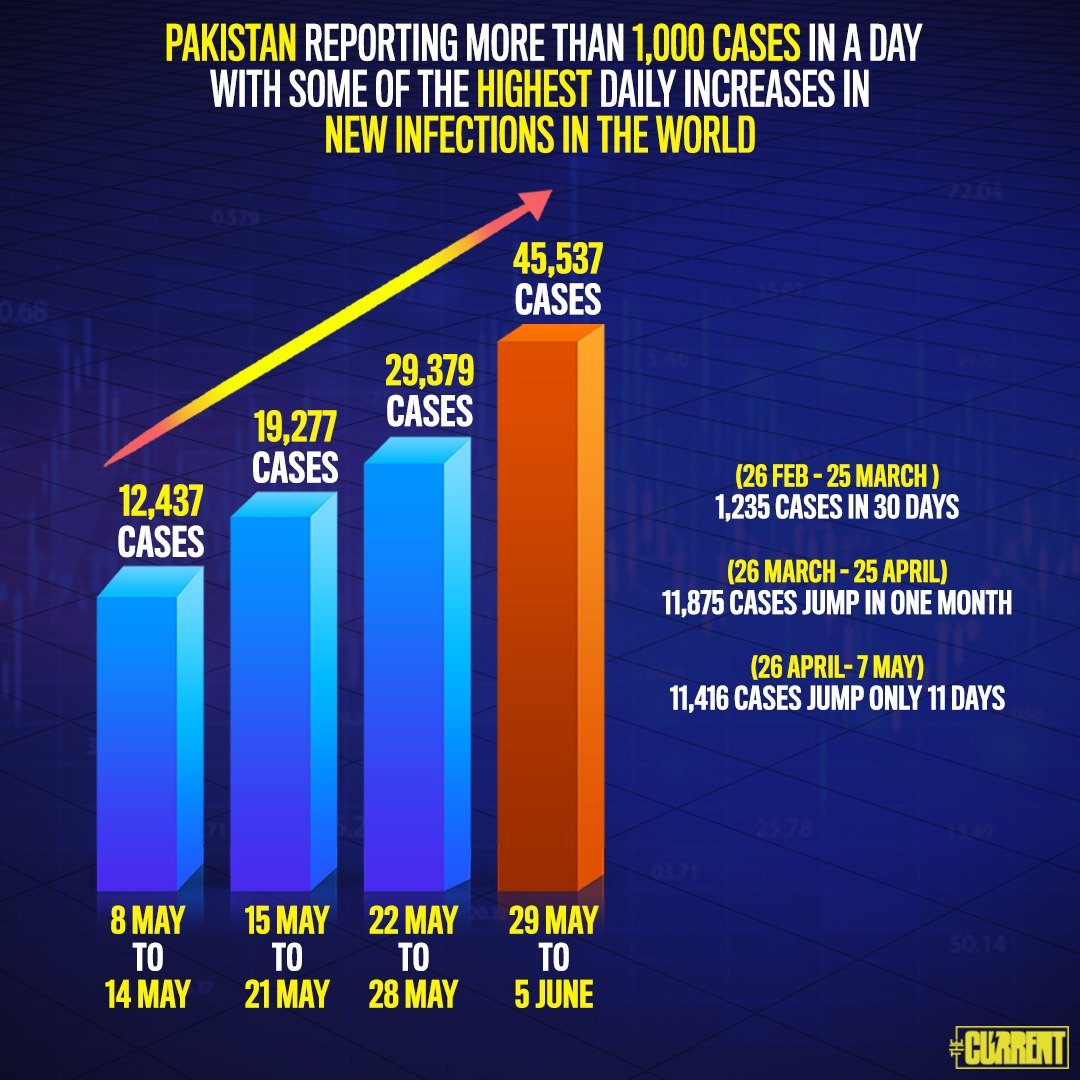
An analysis by The Current showed that before lockdown restrictions were eased in Pakistan ahead of Eidul Fitr, the highest number of confirmed coronavirus cases stood at 24,648 during the first week of May. The figure then crawled up to 122,574 by June 11, while the number of coronavirus cases as of this moment stands past 165,000 with thousands of cases being reported every day despite a low testing capacity.
It is estimated that the actual number of infections is very high with Lahore alone having more than 2 million cases by now.
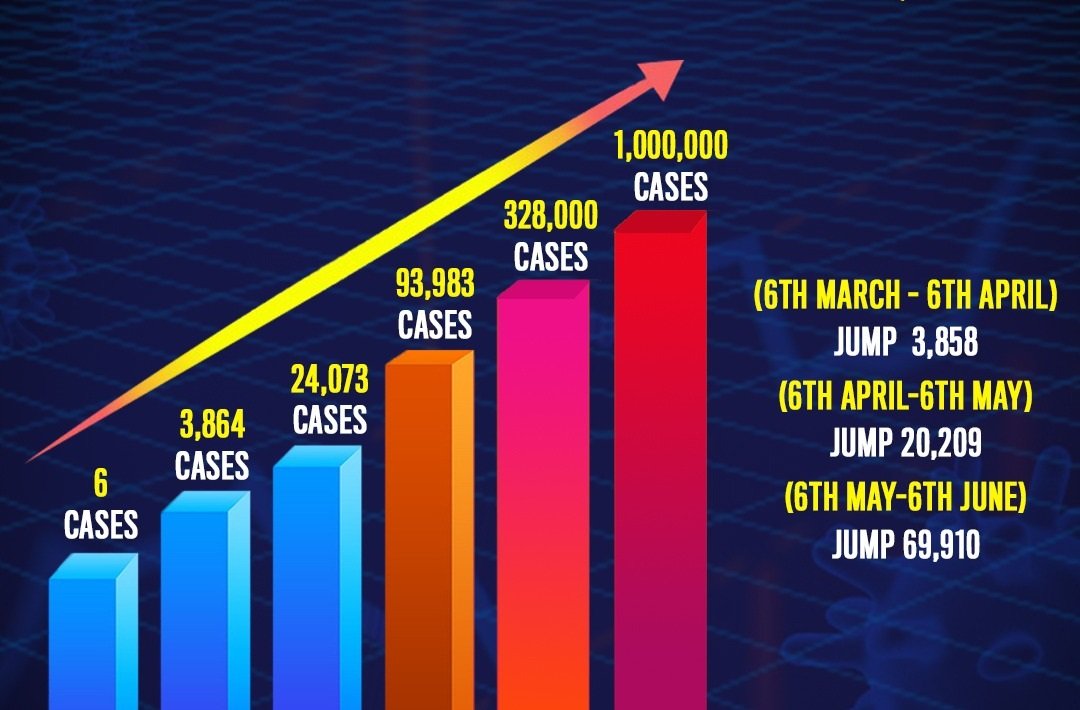
Pakistan has experienced its largest month-wise jump since the pandemic began, with 69,910 cases being reported between May 6 to June 6. Earlier, 3,858 COVID-19 cases were recorded between March 6 and April 6 while 20,209 were reported between April 6 to May 6.
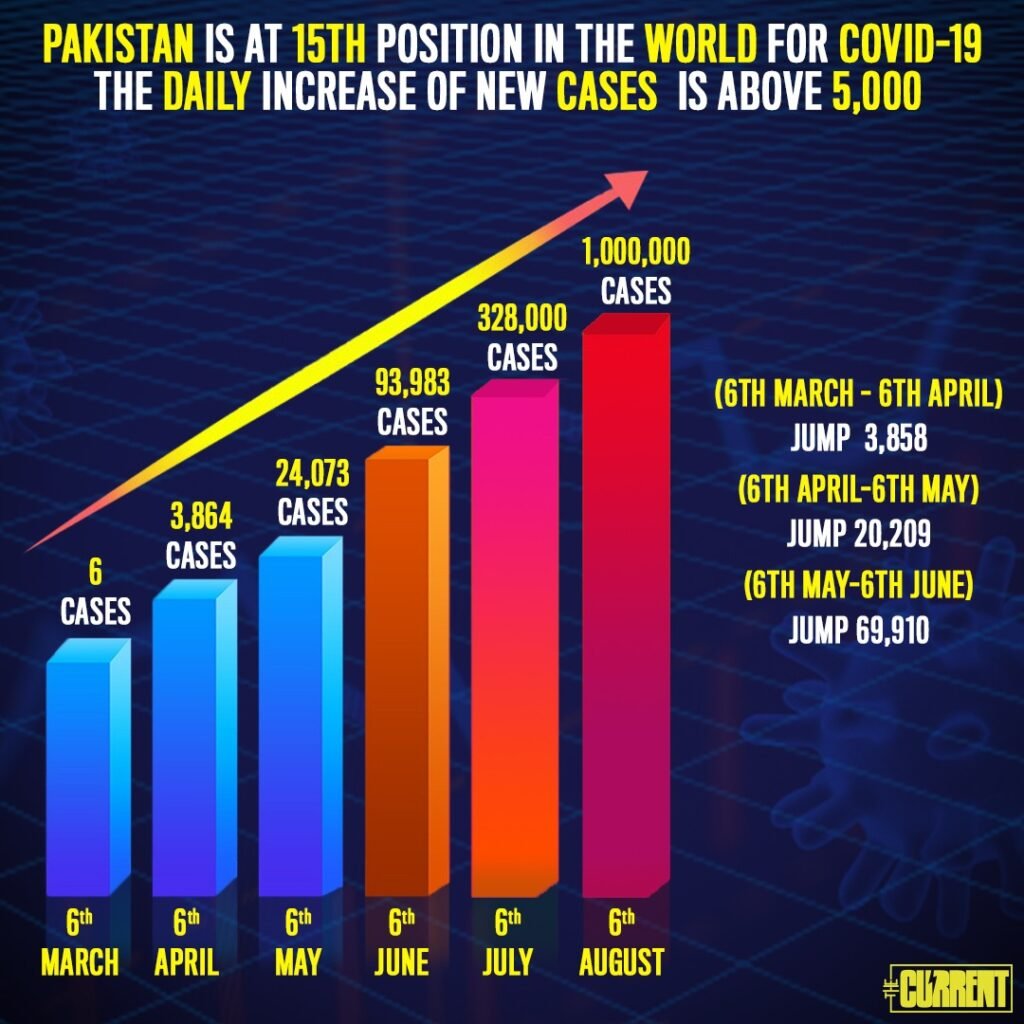
According to projections, the figure is likely to reach a million by August 6 if strict lockdowns aren’t imposed and social distancing guidelines are not followed.
A comparison with the best and worst managed lockdowns from across the globe also puts things into perspective.
| Country | Outcome |
| New Zealand | |
| Prime Minister Jacinda Ardern announced a strict lockdown on March 25 when 100 people had tested positive and no deaths had been reported. | After a 76-day lockdown, New Zealand lifted all restrictions, declaring the country ‘corona free’ but borders remain closed. No new case for more than two weeks has been reported in the country except three suspected ones. |
| Wuhan | |
| The capital of Hubei province of China was the origin of the deadly virus, where 11 million residents were locked up at their homes since January. | After an effective 77-day lockdown, Hubei reports zero COVID-19 infections and the country has reported zero coronavirus deaths since January. |
On the other hand:
| Country | Outcome |
| India | |
| On March 25, India imposed a countrywide lockdown that was called a curfew by PM Narendra Modi. The development had come when 519 confirmed cases and 10 deaths had been reported across India. | A bit over two months later, with India easing lockdowns and shopping malls, restaurants as well as temples being re-opened, it has become the country with 4th highest number of coronavirus cases in the world. |
| Iran | |
| Iran shut schools, postponed events and discouraged travel since the country reported its first COVID-19 death in February. Despite these measures, the number of deaths and infections continued to grow until a countrywide lockdown was imposed in March. | With the lockdown being eased from mid-April to May 26 when everything was reopened, including shopping malls, parks, religious shrines, restaurants and historical sites, the number of deaths has jumped to nearly 10,000 with over 200,000 infections. |
By the time this report was filed, Sindh topped the chart with most infections in Pakistan (62,269), with Punjab trailing behind at 61,678, Khyber Pakhtunkhwa (KP) at 20,182, Islamabad at 9,941, Balochistan 8,998 and Gilgit-Baltistan and Azad Jammu Kashmir (AJK) at 1,225 and 769 infections, respectively.