Tag: #property

  • Bollywood actress Aishwarya Rai owns Dubai properties worth crores

    Bollywood actress Aishwarya Rai owns Dubai properties worth crores

    Bollywood actress Aishwarya Rai Bachchan owns properties worth millions of rupees in Dubai. She is among the highest-paid actresses in Bollywood. Even after becoming a mother and taking a break from films, she continues to increase her wealth through endorsements and other means. This is why she has also invested in properties worth millions in Dubai, besides India.

    According to reports from Indian media, Aishwarya Rai Bachchan owns a luxurious house in Jumeirah Golf Estates, Dubai. Its approximate value is 15 crore Indian rupees.

    The reports state that Aishwarya Rai’s total wealth is 776 crore Indian rupees. She charged around 10 to 12 crore rupees for working in a film.

    Aishwarya Rai started her career as a model in 1991. She won the Miss World title in 1994.

    Later, in 1997, she made her debut in Bollywood with the film ‘Aur Pyaar Ho Gaya’ and then acted in many blockbuster films.

    In 2007, Aishwarya Rai married Abhishek Bachchan, son of the legendary Indian actor Amitabh Bachchan. They welcomed a daughter named Aaradhya Bachchan in 2011.

  • Property transfers for overseas Pakistanis to be made easier by CM Punjab

    Property transfers for overseas Pakistanis to be made easier by CM Punjab

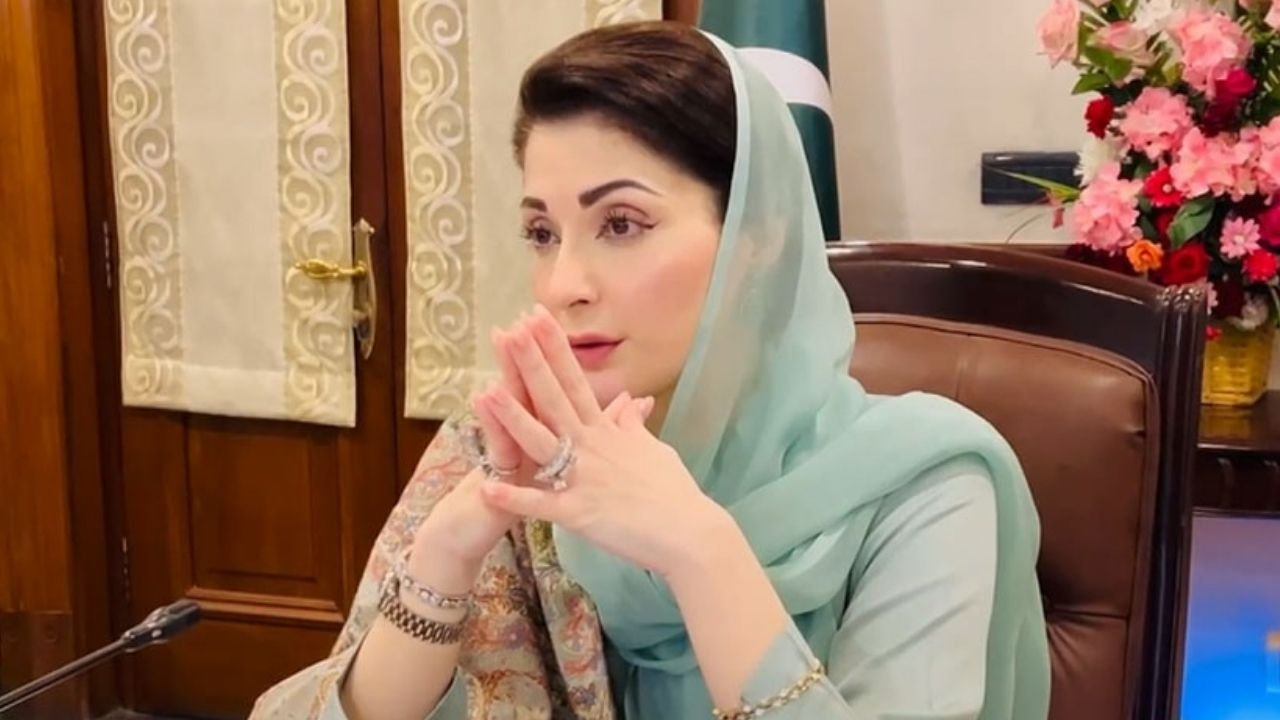
    In a bid to protect expatriates from fraud, Punjab Chief Minister Maryam Nawaz, has announced the launch of a property transfer service tailored for overseas Pakistanis.

    Chairing a special meeting of the Punjab Board of Revenue (BoR) focusing on reform, the chief minister outlined key features of the service.

    The newly introduced property transfer service aims to streamline the process for Pakistani diaspora, offering facilities such as mutation, e-filing, and land registration.

    CM Maryam ordered launching the service at the earliest for Pakistanis residing in the United States (US), United Kingdom (UK), Saudi Arabia, and other Gulf countries.

    Asserting strict adherence to timelines in property transfer services, CM Maryam urged for meticulous record-keeping of government land across the province. The meeting also delved into discussions regarding the Punjab Land Record Authority, with the chief minister directing measures to establish roadside small gyms and parks on government land, alongside the setup of land facilitation centers in every district.

    Plans were unveiled to establish land facilitation centers in 11 divisions by June 30, with the online availability of land records for 5,798 Mauza anticipated by December 2024.

    Additionally, the initiative intends to kickstart online land record projects in 10 districts of the province, utilizing 811,044 acres of government land for corporate farming.

    Maryam directed to take measures for building roadside small gyms and parks on the government land. She also ordered the establishing of land facilitation centers in every district.
    The meeting was told the land facilitation centers would be set up in 11 divisions by June 30. The participants were also told that land records of 5,798 Mauza would be available online till December 2024.
    Earlier engagements saw CM Maryam presiding over a meeting on the Urban Unit in Lahore, where she emphasized the importance of comprehensive planning for the Regional Economic Corridor in Punjab. Directives were issued to draft a mapping plan for industrial zones, with a focus on assisting small industrialists and controlling smog through data-driven strategies.

    Maryam Nawaz affirmed the government’s commitment to facilitating investors, highlighting the dedication to fostering a conducive environment for economic growth and development in Punjab.

  • Alcoholic man murders father over property dispute in India

    Yesterday, in Rajsthan’s Ajmer in India, a man, Mukesh, had reportedly murdered his father while he was drunk, during an argument that escalated over property division. According to the mother, the heated conversation began earlier in the day but had seemingly settled which is when she chose to depart the house. However, India Today reports that when the mother returned, she found her dead husband’s body and immediately reported to the police.

    Baldev Ram, in charge of the Ansagar Police Station, revealed to the media that the authorities had taken swift action to arrest Mukesh, and were keeping him under custody as the investigation continues. The body of the deceased has been sent for a post-mortem examination.

  • AJK man legally transfers thousands of kanals to Maryam Nawaz

    Zahid Hussain, a man hailing from Azad Jammu and Kashmir (AJK), handed down his land spread across thousands of kanals to Pakistan Muslim League-Nawaz (PML-N) Senior Vice President Maryam Nawaz via a legal procedure.

    He said that Maryam can use the land for whatever purpose she sees fit.

    On the legal deed, which has been shared on Twitter, the man stated, “I, Zahid Hussain, s/o Wilayat Hussain, hereby declare that I am of sound mind and have voluntarily decided to bequeath all the lands I possess, whether 50,000 kanals or 32,000 kanal, to Maryam Nawaz, d/o Nawaz Sharif, without any coercion or pressure from anyone”.

    Moreover, the affidavit stated that the PML-N leader is now the owner of 50 per cent of the property, excluding approximately 50 kanals which is the inheritance of Hussain’s children and other heirs, in the life of Mazhar (possibly an heir of Hussain). According to the man, she will be the owner of 100 per cent of the property, excluding the same as above, after Mazhar’s death.

    Reacting to the news, Maryam Nawaz said that it is “very touching”.

    “OMG! Why would he do that! It is very touching though,” Maryam wrote on Twitter.

  • Footballer wife demands property after divorce, finds out husband is broke, everything in his mom’s name

    Footballer wife demands property after divorce, finds out husband is broke, everything in his mom’s name

    Spanish newspaper Marca reported on Thursday that Hiba Abouk, the ex-wife of Moroccan footballer Achraf Hakimi, was unable to obtain half of his wealth after filing for divorce because the sportsman allegedly has no assets in his name.

    Abouk requested half of Hakimi’s assets and fortune during divorce process, but was told that everything he earned is under his mother’s name. The report also stated that his mother was the recipient of his hefty salary.

    The couple tied the knot in a private ceremony in 2020 and are parents to two children.

    In June, Morocco World News reported that Achraf Hakimi, who plays for Paris Saint-Germain, is the sixth highest-earning African footballer, with a weekly income of over $215,000. However, Hakimi is currently under investigation for rape allegations made by a 24-year-old woman in February.

  • FIR filed against Gauri Khan over purchase of Lucknow property

    FIR filed against Gauri Khan over purchase of Lucknow property

    An FIR has been filed against Gauri Khan, wife of Bollywood icon Shah Rukh Khan, in Uttar Pradesh’s Lucknow.
    Khan is a well-known interior designer who has worked with prominent celebrities like Farah Khan, Ranbir Kapoor and Siddharth Malhotra.

    The FIR was filed under Section 409 of the Indian penal Code which pertains to breach of trust, and was registered with the Sushant Golf City police in Lucknow.
    The complaint was filed by Kirat Jaswant Shah, a resident of Mumbai, who said that he had paid the entire amount for a flat, which was approximately Rs86 lakhs, but had not recieved it. The flat in question is located in the Tulsiani Golf View project in the Sushant Golf City area of Lucknow.
    Along with Khan, who is the brand ambassador for the housing project, other people named in the FIR include Managing Director of Tulsiyani Construction and Development Limited, Anil Kumar Tulsiyana and the director Mahesh Tulsiyana.

  • Illegal commercial properties worth billions sealed in Lahore

    Illegal commercial properties worth billions sealed in Lahore

    The Evacuee Trust Property Board (ETPB) has sealed 11 distinct commercial buildings and properties worth billions of rupees in Lahore on the Supreme Court’s directives.

    The Federal Investigation Agency (FIA), a police team, and the administration conducted a raid and took action against encroachments under the direction of ETPB Chairman Habibur Rahman.

    In renowned commercial areas like Sheesha Moti Bazaar, Wichuwali, Hingana Street, Sutar Mandi, Ravi Road, Mohini Road, and Bradlaugh Hall, the team sealed numerous properties that were in illegal possession.

    Participating in the operation under the direction of Administrator Lahore Akram Joya were Deputy Administrator Taskinullah, Abdul Waheed Khan, Asim Ejaz, Ahmed Hassan, and Saad Butt.

    While, Director FIA Mohammad Zawar, SHO Raza Awan, SHO Benish Rehman, Rana Naeem, Kashif Gujjar also participated in the raid.

  • Majority of property owners in London are Indians, followed by English and Pakistani people

    Majority of property owners in London are Indians, followed by English and Pakistani people

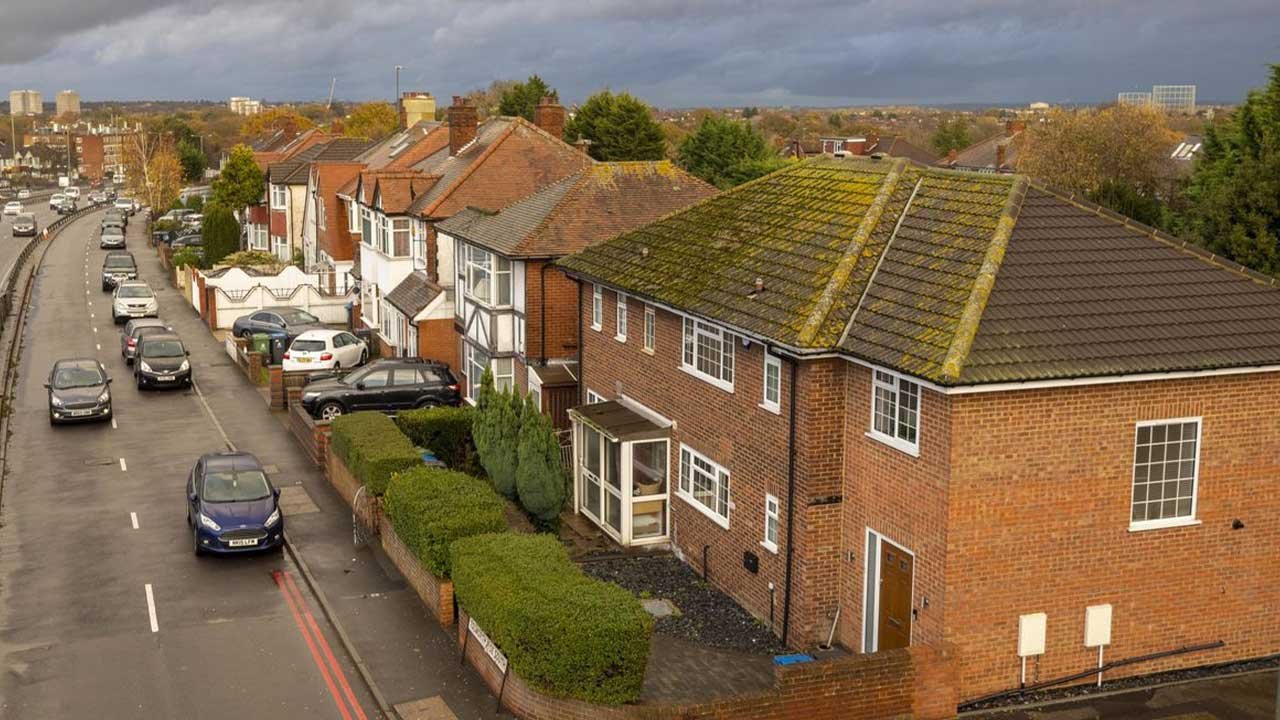
    Indians are among the people who own the most real estate in the capital of the United Kingdom (UK), London, more than the English themselves.

    According to London-based residential developer Barratt London, the largest group of property owners in London are Indians, who are represented by those who have lived in the UK for generations, NRIs, investors from other countries, students, and families who travel to the UK for education. English and Pakistani people are next in number.

    These Indian investors, who reside in both the UK and India, are prepared to spend anywhere between GBP 290,000 and GBP 450,000 for a one, two, or three-bedroom property in London, the nation’s capital.

    “We are seeing a strong demand from Indian investors looking to purchase properties in London and invest in the stable and long-term property market. Outside of London, most of our products are sold to UK residential buyers, who buy these properties and live in them,” Stuart Leslie – International Sales and Marketing Director for Barratt London, told Financial Express.

    In London, 30 per cent of sales are made to pure investors (those who want to use the apartments as rentals), and 30 per cent of those buyers come from foreign markets.

    “This year we have seen a growth in the percentage of Indian homebuyers, who make up 7-8 per cent of the overseas market players. We are really reacting to where the demand is coming from rather than speculating and looking for business,” Stuart Leslie said.

    According to a Knight Frank survey, 10 per cent of India’s UHNWIs intend to purchase a new home in 2022, and they prefer to invest in domestic real estate, followed by homes on the UK, UAE, and US foreign markets.

    London is well-liked by Indian investors and homebuyers because it is a hub for finance and education and one of the major international entry points for investors.

    Additionally, it makes sense for Indian homebuyers to look at the real estate market in London given that the cost per square foot is roughly comparable between London and Mumbai and that the two cities also share a similar legal framework, making transactions simpler.

    “The reason why Indians are comfortable with buying property is because of the market fundamentals and confidence along with a history of Indians investing in houses in London. They’re eager to invest in the UK residential markets because they are getting better returns owing to the exchange rates and market presence presently. It is relatively a safer market in comparison to the UAE or India,” he said.

    In addition to being a “stable market” for residential real estate, the UK has advantages over other international potential markets, such as good weather and quicker travel times.

    Many families and students, especially those from India, relocate to the UK for educational opportunities. According to Stuart Leslie, the number of Indian students applying to UK colleges and universities has surged by 128 per cent in just one year.

    Therefore, there are several reasons why Indians have traditionally preferred to invest in the UK, including the country’s high-quality educational institutions, business-friendly environment, cosmopolitan mindset, language familiarity, and expanding investment opportunities.

    Currently, there is a demand for finished or nearly finished projects since people are looking to move quickly after the pandemic. Barratt London’s common price range for real estate is between GBP 390,000 and GBP 450,000.

    “This is not a price which people normally associate with the London market but with tier-II or tier-III cities. This makes people want to own properties in London rather than smaller cities of the UK,” he said.

  • Residential buildings make up 80 per cent of Pakistanis’ wealth: Study

    Residential buildings make up 80 per cent of Pakistanis’ wealth: Study

    Almost 80 per cent of the wealth accumulated by Pakistani households by the time they are 60 to 65 years old is made up of residential buildings, according to a recent World Bank study.

    Between the ages of 25 and 65, the net worth of the typical Pakistani household increases by 60 months’ worth of consumption (5 years).

    According to a DAWN report, residential housing makes up the majority of this growth, whereas other types of wealth like land, durables, business and farm values, and financial assets stagnate over time. Early in life, asset accumulation is slower; it picks up between the ages of 40 and 65.

    According to a study titled “Life Cycle Savings in a High-Informality Setting — Evidence from Pakistan” published earlier this week, financing elderly consumption will be a significant challenge in the future due to a combination of factors including population ageing, deteriorating family and village risk-sharing networks, and low formal pension coverage.

    When compared to other investment options, real estate and land are a safe bet, as evidenced by the fact that households save primarily in these areas. According to the study, housing may be a way to permanently store resources in a way that makes them difficult for other family members to steal or use against them.

    According to the study, it might also be a result of a lack of access to other reliable, safe, and high-return long-term saving options. Participation in alternative saving methods may be hindered by low levels of financial literacy, numeracy, and familiarity with formal banking institutions.

    The study emphasised that Pakistan has expanded financial inclusion much more slowly than other nearby countries and that these barriers must be removed.

    Despite being a safe investment, housing is relatively illiquid, which depletes funds for short-term consumption smoothing. Only 3 per cent of Pakistani adults (15 and older) report being able to rely on savings for emergency funds, while 49 per cent claim it is impossible to come up with emergency funds.

    According to 41 per cent of people ages 15 and older, family or friends are typically the primary source of emergency funds; 25 per cent report borrowing for medical expenses.

    Theoretically, policies that permit more real estate assets to be used as collateral for loans made through formal financial institutions could lessen the need for liquid precautionary savings and free up funds for retirement savings. However, these programmes might also promote excessive debt and result in evictions.

    Scarcity of other secure, liquid savings options may also restrict the income potential of self-employment. Although self-employed people have similar levels of education to wage workers, they are typically older. Nearly half of self-employed people lack education.

    Given that the majority of self-employed businesses are started with their own capital, the older age of the self-employed may indicate that the first working years are spent acquiring start-up capital. Only 11 per cent of people aged 15 and older, according to Findex surveys, borrow money to launch or grow a business.

    According to the study, expanding options for secure long-term savings outside of the housing through the use of government-sponsored or subsidised old-age savings instruments could lead to greater independence in old age and lessen the burden on younger families.

    The study found that the average net worth accumulation accelerates around the age of forty, roughly in the middle of the working years. We demonstrate that active saving likely plays a significant role, even though some of this accumulation may reflect patterns in inheritances.

    Around that time, household income growth starts to outpace household consumption growth, and the saving rate rises by 20 percentage points between ages 40 and 65. This suggests that people in that age range may benefit most from programmes designed to encourage formal saving.