Tag: protest

  • IHC grants permission to PTI for rally in Islamabad

    IHC grants permission to PTI for rally in Islamabad

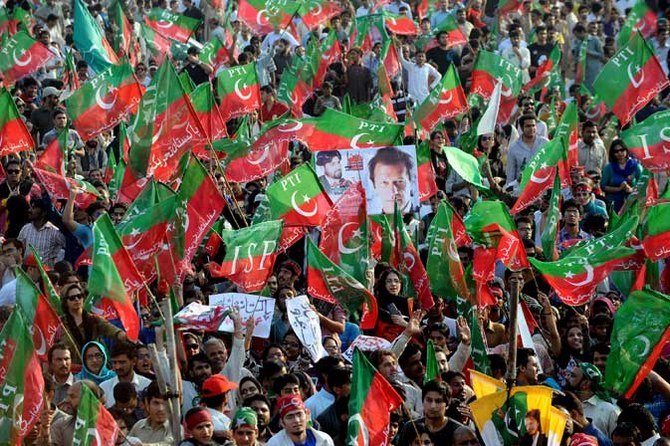
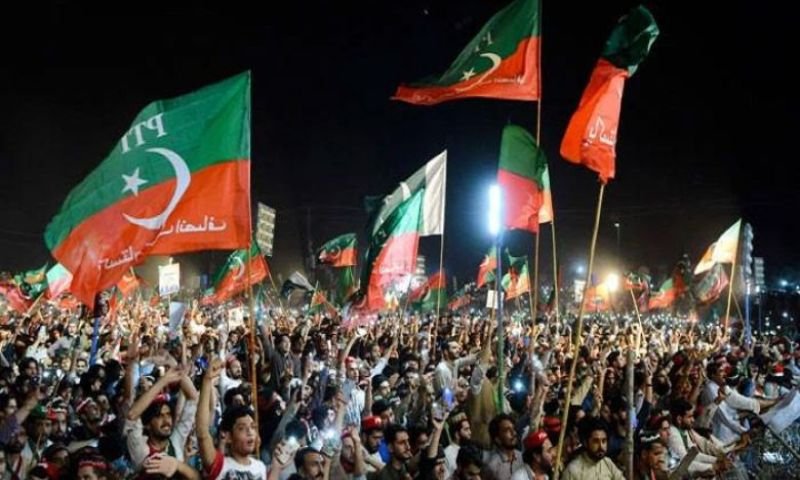
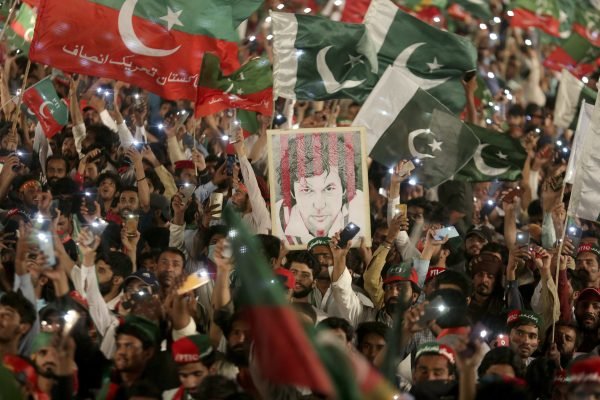
    The Islamabad High Court on Wednesday directed the administration authorities of the capital city to allow Pakistan Tehreek-e-Insaf (PTI) to conduct a rally.

    Previously, district authorities denied permission to PTI for staging a protest against alleged poll-rigging in the general elections 2024 in Islamabad citing security risks.

    “One’s right of assembly cannot be taken away,” IHC Chief Justice Aamer Farooq said while hearing PTI’s petition seeking the court’s permission for staging the rally. The justice emphasized that public gatherings are for everyone and it should not come under any restrictions.

    The Inspector General of Police (IGP) Islamabad had warned PTI to avoid public gathering without getting a formal approval from relevant authorities.

    Furthermore, according to PTI leader Sher Afzal Marwat, the party has moved up the date for holding the rally to April 6.

  • PTI denied permission for protest on March 30

    PTI denied permission for protest on March 30

    Pakistan Tehreek-e-Insaf (PTI) has been denied permission by district authorities to hold a protest on March 30 in Islamabad. The party had reached out to the Islamabad High Court (IHC) to get permission for holding a rally on March 30 after the district administration of Islamabad did not respond to the party’s request. However, the capital’s administration on Sunday finally refused to allow PTI to hold a public rally against alleged poll rigging in 2024 general elections, citing security concerns.

    The reply from the administration came after the deadline given to them by the IHC to take a decision on PTI’s request to stage a protest in the capital city.

    PTI’s regional president Aaamir Masood Mughal opined that his party would again approach the courts. “If you can’t provide security even in the capital, then you have no right to stay in the government,” he added.

    PTI also planned to hold a press briefing about the upcoming International Monetary Fund (IMF) package, its consequences on the public and the economy on March 25.

  • PTI decides to march against alleged poll rigging

    PTI decides to march against alleged poll rigging

    The Pakistan Tehreek-e-Insaf (PTI) has announced to stage a protest against the alleged rigging in the 2024 general elections. The incarcerated founder of the party Imran Khan believes that the mandate was stolen from people and post-poll rigging was rampant.

    According to them, election results were changed in the Form 47s compared to Form 45s to benefit the current ruling party Pakistan Muslim League-Nawaz (PML-N) and the Pakistan Peoples Party (PPP).
    PTI member and the Chief Minister of Khyber Pakhtunkhwa (KPK) also said “The incumbent government at the Centre has been formed after stealing PTI’s 180 seats.”

    Previously, the party had sought permission from the Deputy Commissioner of Islamabad to lawfully stage a protest in the capital city but received no reply. After this, they reached the Islamabad High Court (IHC) to be allowed to hold a rally. It is believed that they wanted to stage the protest on Pakistan Day but later decided against it and set the date to March 30.

    Imran Khan’s party is also set to hold a press briefing on the impacts of upcoming International Monetary Fund (IMF) package on the general public on March 25.

  • Turks Up In Arms Over Killing Of Stray Cat

    Turks Up In Arms Over Killing Of Stray Cat

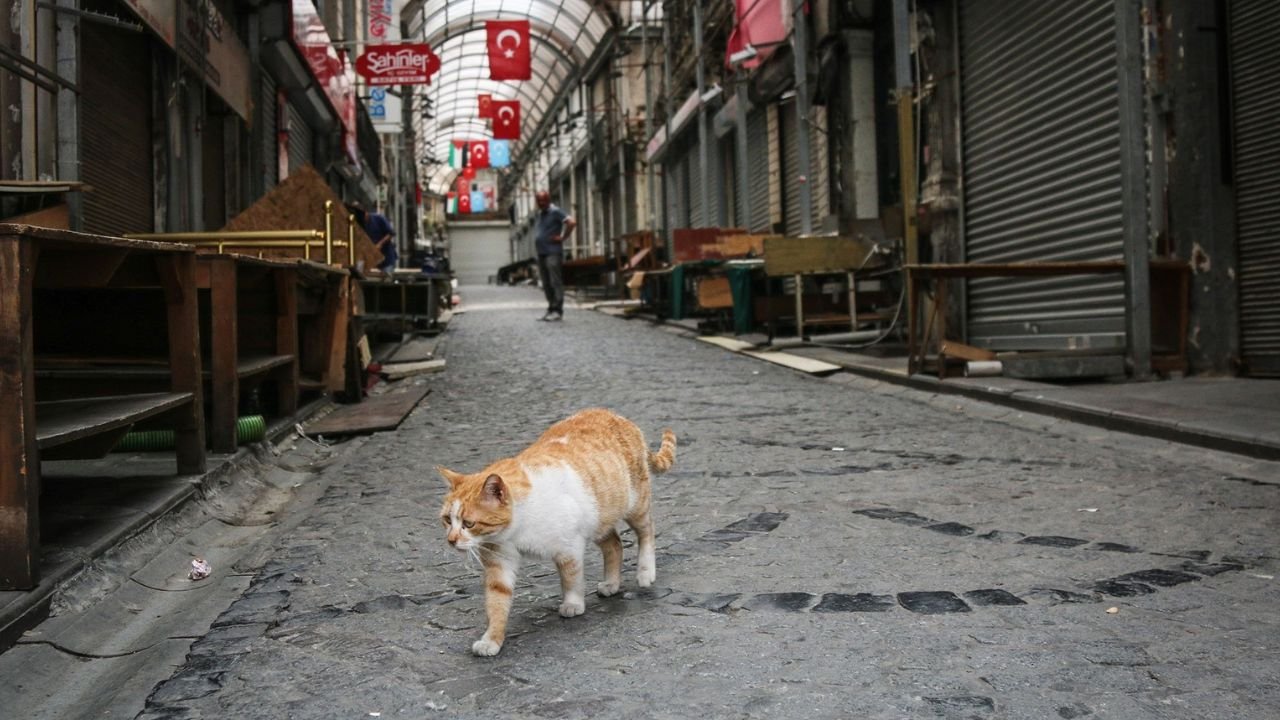
    The killing of a stray cat in Istanbul has triggered petitions, protests and death threats, pushing the president to intervene and the courts to retry the culprit.

    On January 1, Ibrahim K. was caught on a security camera in the lobby of the building where he lived kicking to death a stray cat named Eros that his neighbours regularly fed.

    He was sentenced in early February to 18 months in jail but was then released for good behaviour, sparking indignation among animal welfare groups and a section of the public in Turkey, whose large stray cat population is often fed and sheltered.

    Some 320,000 people signed an online petition demanding a stiffer sentence and in late February the justice ministry said Ibrahim K. would be retried after it received a night-time call from President Recep Tayyip Erdogan saying he was taking a “personal” interest in the case.

    Ibrahim K. was retried on Wednesday in a court building where hundreds of people thronged the corridors and the atmosphere was tense.

    The judges increased his sentence by one year but did not order him to be detained, ignoring the demands of animal welfare groups and internet trolls who have sent him death threats.

    One animal rights group is to appeal, saying Ibrahim K. should be jailed for the maximum four years allowed by law.

    On Thursday, the hashtag #JusticeforEros (#ErosicinAdalet) was trending on X, formerly Twitter, in Turkey and several major newspapers, including Hurriyet, splashed pictures of the dead cat on their front pages.

    Hurriyet carried several articles about Eros and “Ibrahim the killer”.

    Several celebrities have joined the Justice for Eros appeal, including Argentinian footballer Mauro Icardi, the star striker at Istanbul giants and reigning Turkish champions Galatasaray.

  • S. Korea starts procedures to suspend licences of 4,900 striking doctors

    S. Korea starts procedures to suspend licences of 4,900 striking doctors

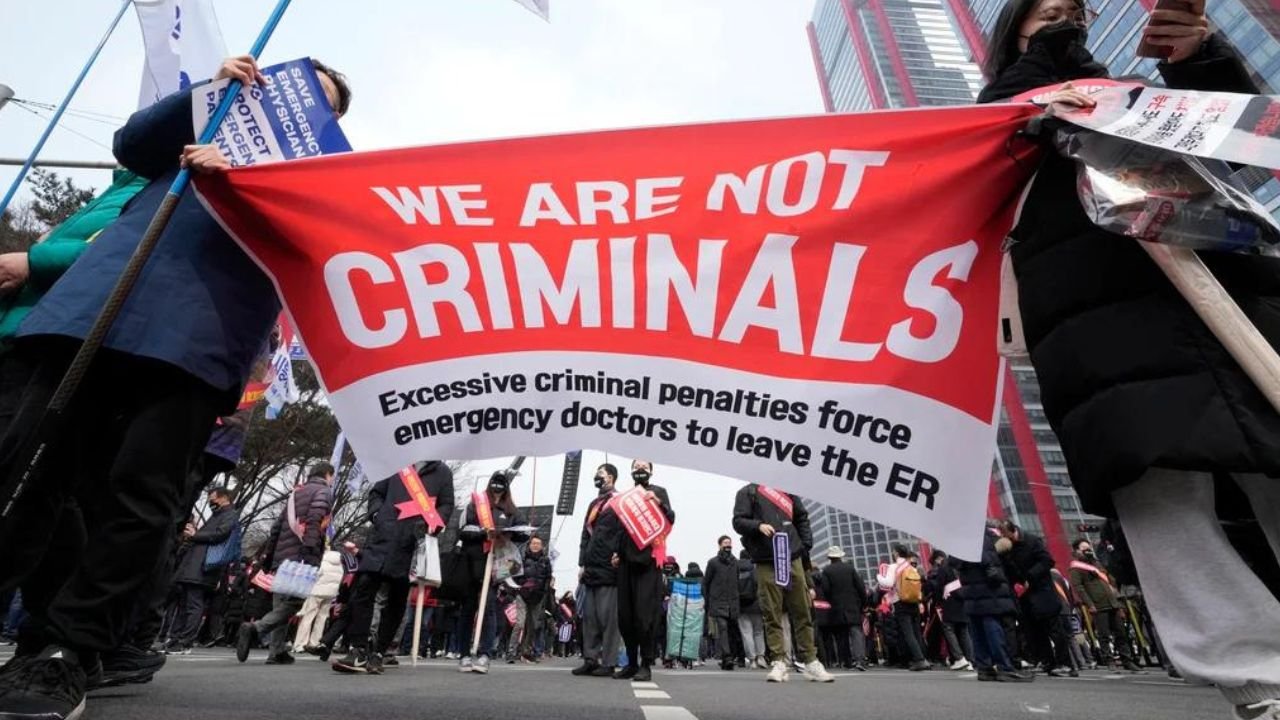
    South Korea said Monday it had started procedures to suspend the medical licenses of 4,900 junior doctors who have resigned and stopped working to protest government medical training reforms, causing health care chaos.

    The walkout, which started February 20, is over government plans to sharply increase the number of doctors, which it says is essential to combat shortages and South Korea’s rapidly aging population, while the medics argue it will erode service quality.

    Nearly 12,000 junior doctors — 93 percent of the trainee workforce — were not in their hospitals at the last count, despite government back to work orders and threats of legal action, forcing Seoul to mobilize military medics and millions of dollars in state reserves to help.

    The Health Ministry on Monday said it had sent administrative notifications — the first step to suspending the doctors’ medical licenses — to thousands of trainee doctors after they defied specific orders telling them to return to their hospitals.

    “As of March 8 (notifications) have been sent to more than 4,900 trainee doctors,” Chun Byung-wang, director of the health and medical policy division at the health ministry, told reporters.

    The government has previously warned striking doctors they face a three month suspension of their licenses, a punishment which, it says, will delay by at least a year their ability to qualify as specialists.

    Chun urged the striking medics to return to their patients.

    “The government will take into account the circumstance and protect trainee doctors if they return to work before the administrative measure is complete,” he said, indicating doctors who come back to work now could avoid the punishment.

    “The government will not give up dialogue. The door for dialogue is always open … The government will respect and listen to opinions of the medical community as a companion for the medical reforms,” he added.

    The government last week announced new measures to improve pay and conditions for trainee medics, plus a review of the continuous 36-hour work period, which is a major gripe of junior doctors.

    The strikes have led to surgery cancelations, long wait times and delayed treatments at major hospitals.

    Seoul has mobilized military doctors and earmarked millions of dollars of state reserves to ease service shortfalls, but has denied that there is a full-blown health care crisis.

    Military doctors will start working in civilian hospitals from Wednesday this week, Chun said.

    Under South Korean law, doctors are restricted from striking, and the health ministry has asked police to investigate people connected to the work stoppage.

    The government is pushing to admit 2,000 more students to medical schools annually from next year to address what it calls one of the lowest doctor-to-population ratios among developed nations.

    Doctors say they fear the reform will erode the quality of service and medical education, but proponents accuse medics of trying to safeguard their salaries and social status.

  • Karachi mein kab aur kahan bijli nahi hogi?

    Karachi mein kab aur kahan bijli nahi hogi?

    The K-Electric (KE) on Thursday announced an hours-long power shutdown in parts of Karachi due to forthcoming “critical maintenance activity” at Malir Grid today (Friday).

    According to the official statement, the power distribution company would be undertaking a critical maintenance activity at Malir Grid on December 29.

    The maintenance work will be undertaken to ensure the stability and reliability of the power supply to consumers residing in these areas, the KE spokesperson said.

    As per the schedule, the power supply will remain temporarily suspended from 9am to 6pm for Malir Grid.

    For further guidance, customers may also reach out to KE’s social media platforms or via call centre 118, the company added.

    Following are areas served by the Malir Grid may experience power shutdown during the maintenance work:

    Askari-V Flats, Askari-V Malir Cantt, Model Colony Sheet-5, 6, 7, 8, 9 & 10 Lassi Para, Rana Garden, Alamgir Society Block-A&C, Liaquat Avenue, Gulshan-e-Qamar, Deh-Tapo Memon goth, Block 8 & 8/A till Malir Cantt, Gulistan-e-Johar, Malir H-Area, F.South, Jinnah Square, Aleemabad, Sajan Goth, Sehar Town, Bismillah Town, D-4 Area, D-1, C-Area, S-2, S-1, D-2 Malir Colony, Bout Goth, F.South, G-Area, Ind Area, Jinnah Colony, Jaffer Tyar Malir, Malir Millat Garden, Sahibdad Goth, Abidia Center, Bout Goth, Askari V Bungalows, Malir Cantt. Sector H Bungalows, Model Colony RKV, Sheet # 3, 4, 5, 6, 9, 12, 13, 14, 15 & 16, Jaffer Bagh, Tina Square, Sweet Homeland, Memon Goth Industrial Area, Damlottee Road, Malir Nafees Banglows, F.South, Nafees Town, Jaffer Tyar, Aleemabad C Area, Seher Town, Atiq Town, and Sajan Goth.

    The electricity firm had announced the power shutdown schedule for areas served by Memon Goth-New Landhi Grid and Orangi Town Grid on December 25 and 26 respectively.

  • December 11: Global strike for Palestine

    December 11: Global strike for Palestine

    Palestinian activists and organisations across the world have called for a global strike on Monday, December 11, to demand immediate ceasefire of the Israeli attacks on Gaza that have intensified with time.

    Palestinian coalition, National and Islamic Forces, called for a strike and people across the world, to strike “all aspects of public life” in support of Gaza.

    “We expect the entire globe to join the strike, which comes in the context of a broad international movement involving influential figures. This movement stands against the open genocide in Gaza, the ethnic cleansing and the colonial settlement in the West Bank,” the statement released by the coalition read.

    “The strike also opposes attempts to undermine the just national cause of the Palestinian people,” it said.

    People around the world have been called to unanimously express their solidarity with Palestinians who are currently suffering the consequences of Israeli atrocities being committed in Gaza. So far, more than 18,000 people have been killed and more than 49,000 people have been wounded.

  • Why are students in Islamabad protesting?

    Why are students in Islamabad protesting?

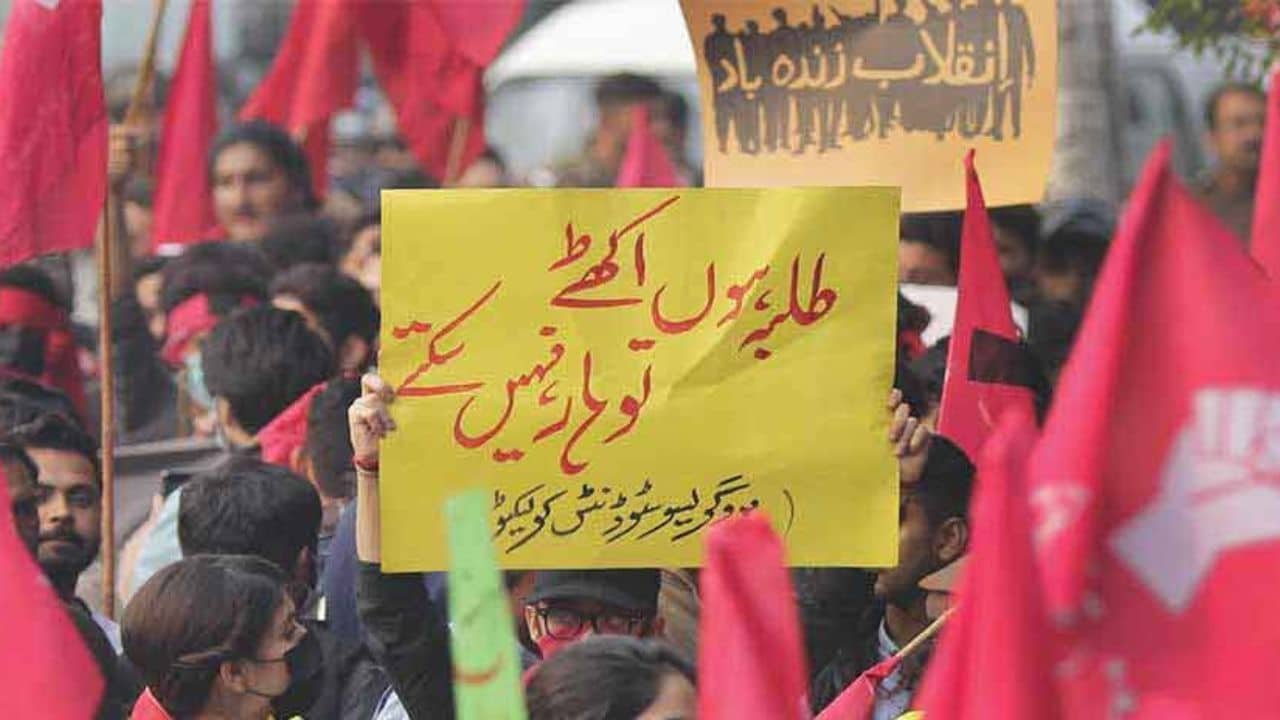
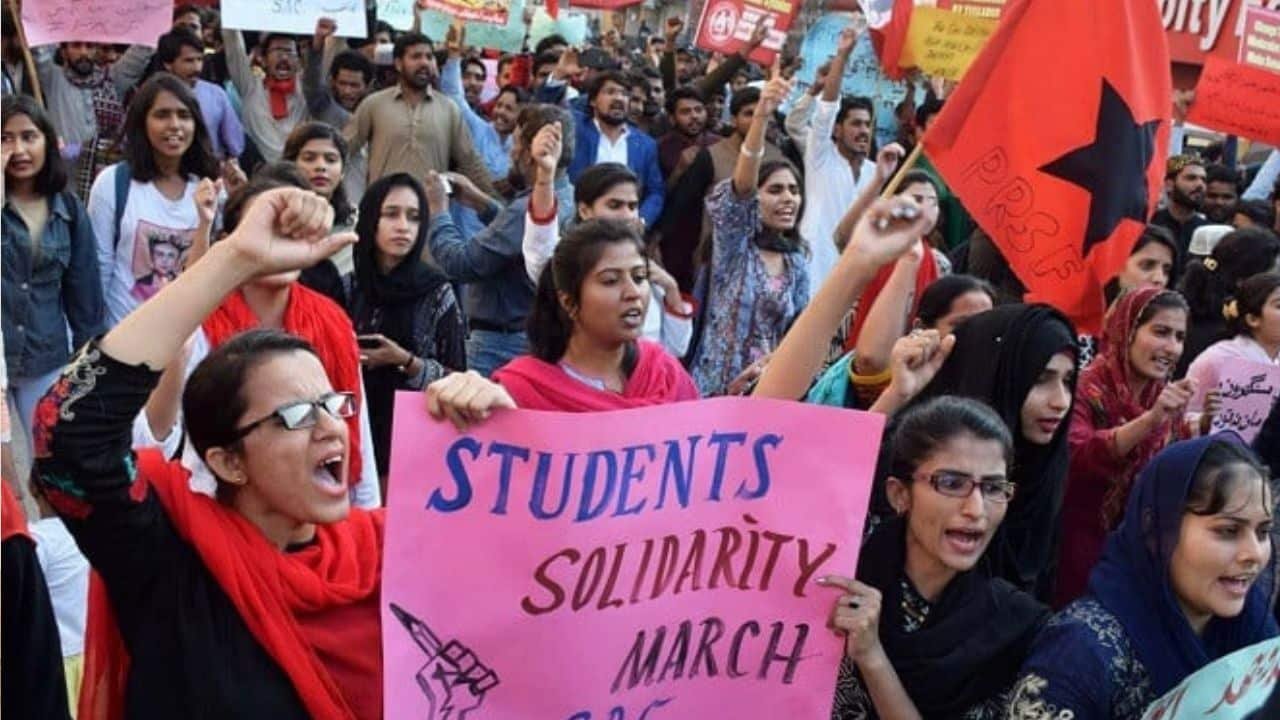
    A large number of university students in Islamabad protested on Tuesday demanding their universities and the Higher Education Commission (HEC) resolve their accommodation problem.

    Thousands of students were evicted from privately-run hostels after the Capital Development Authority (CDA) sealed many buildings over ‘non-conforming use’. It means that they were operating as a commercial enterprise without authorisation, reports The Express Tribune.

    The students also registered a public interest petition in Islamabad High Court (IHC) against CDA’s policy that has left around 30,000 students on the verge of eviction.

    The petition is filed under section 4(xxiii) of the Federal Universities Act and other laws stating that the universities are bound to create sufficient student accommodation on campus and also to “approve or license” hostels and lodgings existing in the city.

    However, in Islamabad, only five out of the 35 universities over the last two decades have taken any such steps. “As a result, students are compelled to reside in privately-managed student hostels located in the CDA sectors,” it informed.

    CDA issued non-conforming notices to over 70 hostels in November.

    According to the hostel owners, many students had to spend the night on the street after at least two hostels were shut down late in the evening without proper warning.

    The petition also points out that HEC has a statutory mandate to protect the interests of students including their accommodation matters, “but has so far failed to intervene in this crisis”.

    At the preliminary hearing, Justice Miangul Hassan Aurangzeb issued directions for the HEC chairman to grant a hearing to the students and redress their grievances.

  • Bangladesh police clash with 25,000 protesting garment workers

    Up to 25,000 garment workers clashed with police in Bangladesh on Thursday, officials said, as protests rejecting a government-offered pay rise forced the closure of at least 100 factories outside Dhaka.

    A government-appointed panel raised wages on Tuesday by 56.25 percent for the South Asian nation’s four million garment factory workers, who are seeking a near-tripling of their monthly wage.

    Bangladesh’s 3,500 garment factories account for around 85 percent of its $55 billion in annual exports, supplying many of the world’s top brands including Levi’s, Zara and H&M.

    But conditions are dire for many of the sector’s four million workers, the vast majority of whom are women whose monthly pay starts at 8,300 taka ($75).

    Police said violence broke out in the industrial towns of Gazipur and Ashulia outside the capital after more than 10,000 workers staged protests in factories and along highways to reject the panel’s offer.

    “There were 10,000 (protesting) workers at several spots. They threw bricks and stones at our officers and factories, which were open,” Mahmud Naser, Ashulia’s deputy industrial police chief, told AFP.

    “One of our officers was injured. We fired rubber bullets and tear gas to disperse the workers,” Naser said.

    He said more than 100 factories were shut down in Ashulia and surrounding areas.

    Thousands of workers also clashed with the elite Rapid Action Battalion (RAB) and police at Konabari and Naujore in Gazipur, with police using batons and tear gas to drive them into alleys, AFP correspondents at the scene said.

    “Some 15,000 workers blocked the road at Konabari, and vandalised vehicles and other properties. We had to disperse them to maintain law and order,” Gazipur municipality administrator Sayed Murad Ali told AFP.

    At least two injured workers were taken to hospital, police said.

    Intimidation

    The workers are seeking a wage rise to 23,000 taka and unions representing them have rejected the panel’s increase as “farcical”.

    Police say at least three workers have been killed since the wage protests broke out in key industrial towns last week, including a 23-year-old woman shot dead on Wednesday.

    At least six police officers have also been injured in the protests.

    Unions say the panel’s wage increase fails to match soaring prices of food, house rents and schooling and healthcare costs.

    They have also accused the government and police of arresting and intimidating organisers.

    “Police arrested Mohammad Jewel Miya, one of the organisers of our unions. A grass-roots leader… was also arrested,” Rashedul Alam Raju, the general secretary of the Bangladesh Independent Garment Workers Federation (BIGWUF), told AFP.

    Another union leader, speaking on condition of anonymity, said at least six union leaders had been arrested and unions were being threatened by police to call off the protests and accept the wage offer.

    There was no immediate comment from police about the arrests.

    The United States has condemned violence against protesting Bangladeshi garment workers and “the criminalisation of legitimate worker and trade union activities”.

    In a statement, State Department spokesman Matthew Miller urged the panel “to revisit the minimum wage decision to ensure that it addresses the growing economic pressures faced by workers and their families”.

    Thea Lee, the US Department of Labor’s deputy undersecretary for international affairs, called for the release of BIGWUF organiser Miya.

    The Netherlands-based Clean Clothes Campaign, a textile workers’ rights group, has also dismissed the new pay level as a “poverty wage”.

    The minimum wage is fixed by a state-appointed board that includes representatives from the manufacturers, unions and wage experts.
  • Iceland’s Prime Minister strikes over gender pay gap

    Iceland’s Prime Minister strikes over gender pay gap

    Tens of thousands of women in Iceland, including the prime minister, walked off the job on Tuesday to demand equal pay and protest violence against women, organisers said.

    Iceland already tops a World Economic Forum (WEF) ranking for gender equality, but organisers said the country needed to make even more progress and lead by example.

    “We are keenly aware that we have not reached gender equality, and even though the situation may be better than other places, there is no reason to just call it a day,” Steinunn Rognvaldsdottir, one of the organisers of “Kvennafri” (Women’s Day Off), told AFP.

    The protest day has been called six times since 1975, this was only the second time that organisers made it a full-day strike, she added.

    The other times, women walked off the job at a symbolic hour after which they were technically no longer earning a salary compared to male colleagues.

    The average wage gap between men and women was 10.2 percent in 2021, according to Statistics Iceland.

    Around 90 percent of Iceland’s women took part in the first protest in 1975, “which was momentous”, Rognvaldsdottir said.

    Prime Minister Katrin Jakobsdottir was among those striking, her office told AFP.

    “She will not attend to official duties and in that regard today’s scheduled cabinet meeting has been moved to tomorrow,” a spokesman said.

    – ‘A present for mother-in-law’ –

    Tens of thousands of women gathered for a large demonstration in the afternoon at the main square of the capital Reykjavik, and protests were also planned in other towns around the country of 400,000 people.

    In Reykjavik, where 75 percent of city employees are women, 59 daycare centres and preschools were closed and all city services were affected by the strike.

    City employees taking part in the strike will not lose pay, the city said.

    Organisers of the movement said they expected men to take charge of the unpaid work that often falls to women.

    “For this one day, we expect husbands, fathers, brothers and uncles to take on the responsibilities related to family and home, for example: preparing breakfast and lunch boxes, remembering birthdays of relatives, buying a present for your mother-in-law, making a dentist appointment for your child.”

    “We always have to be on guard when it comes to our rights,” Lina Petra Thorarinsdottir, 45, told AFP.

    “In Iceland we are proud of what we have accomplished and I am thankful for the women that came before us,” said Thorarinsdottir, head of tourism at marketing group Business Iceland.

    But she said would continue to protest until women enjoyed “equal rights in full”.

    The strikers also wanted their protest to raise awareness of gender-based violence.

    “We still see that up to 40 percent of women have experienced some form of violence or will experience some form of violence in their lifetime,” Thorarinsdottir said.

    “The strike is for both equality when it comes to paid and unpaid work, it also has to do with violence against women and non-binary people,” she said.

    Fjola Helgadottir, a 41-year-old nurse, was unable to take part in Tuesday’s strike action.

    “I would have liked to participate in today’s protest but because we work in the children’s emergency room, we have to provide that service,” she told AFP.

    “The cause is extremely important.”