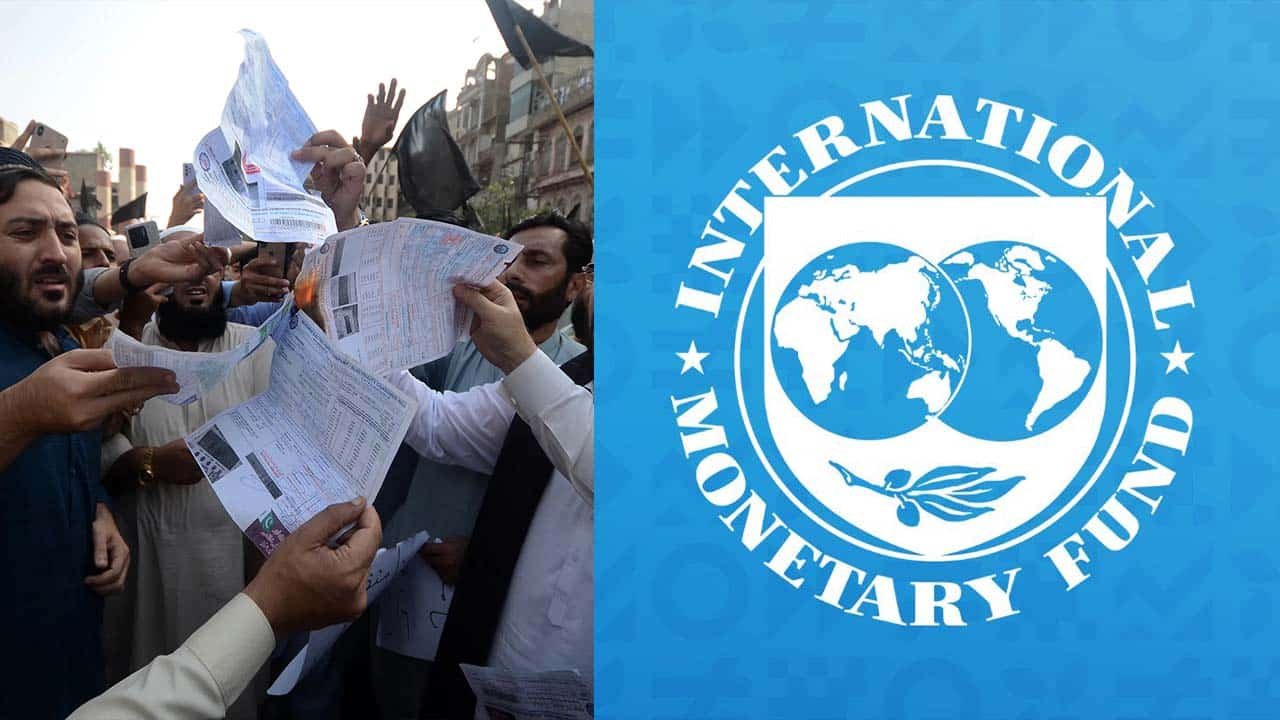
Tag: protests

  • More than 500 arrested in Bangladesh capital over violence: police

    More than 500 arrested in Bangladesh capital over violence: police

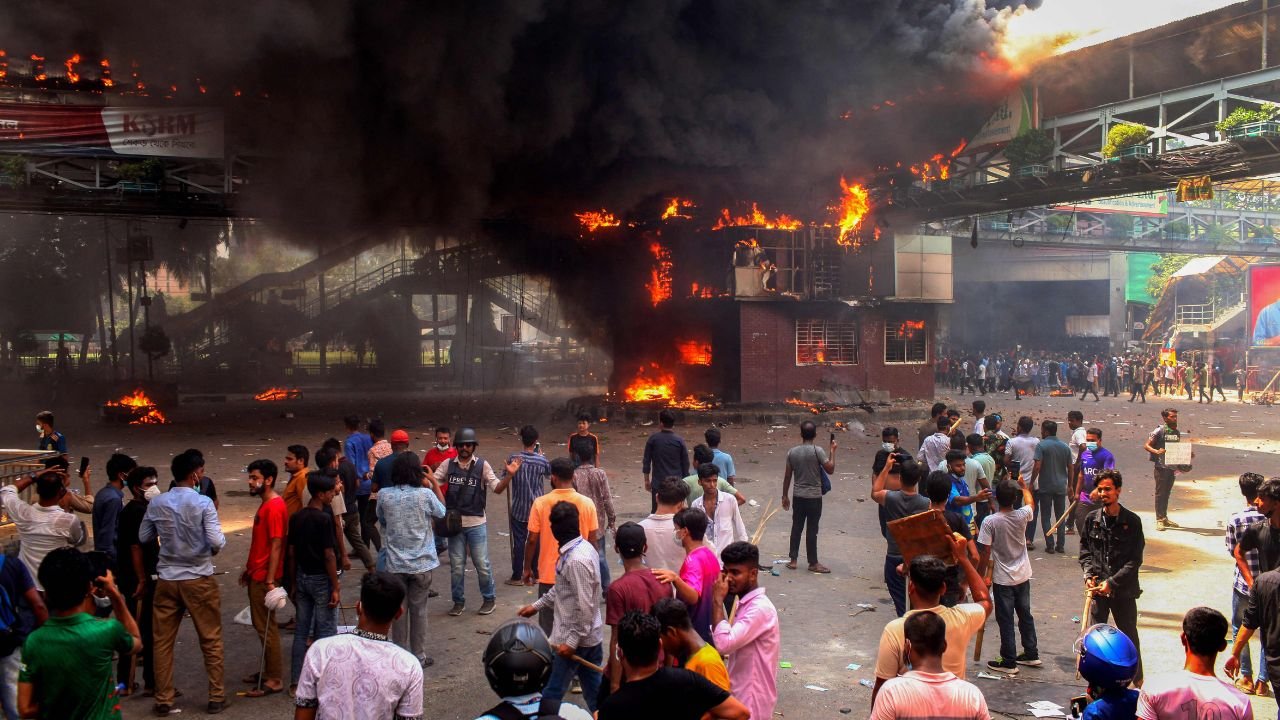
    More than 500 people, including some opposition leaders, have been arrested over days of clashes in the Bangladesh capital Dhaka sparked by protests against job quotas, police said Monday.

    “At least 532 people have been arrested over the violence,” Dhaka Metropolitan Police spokesman Faruk Hossain told AFP.

    “They include some BNP leaders,” he added, referring to the opposition Bangladesh National Party.

    The detainees included the BNP’s third-most senior leader Amir Khosru Mahmud Chowdhury and its spokesman Ruhul Kabir Rizvi Ahmed, he said.

    A former national football captain turned senior BNP figure, Aminul Huq, was also held, he added.

    Mia Golam Parwar, the general secretary of the country’s largest Islamist party, Jamaat-e-Islami, was also arrested, Hossain said.

    He said at least three policemen had been killed during the unrest in the capital and about 1,000 injured, at least 60 of them critically.

    BNP spokesman A.K.M Wahiduzzaman told AFP that nationwide, “several hundred BNP leaders and activists were arrested in the past few days”.

    sa/slb/sco

    © Agence France-Presse

  • Bangladesh imposes curfew, calls in military after deadly unrest

    Bangladesh imposes curfew, calls in military after deadly unrest

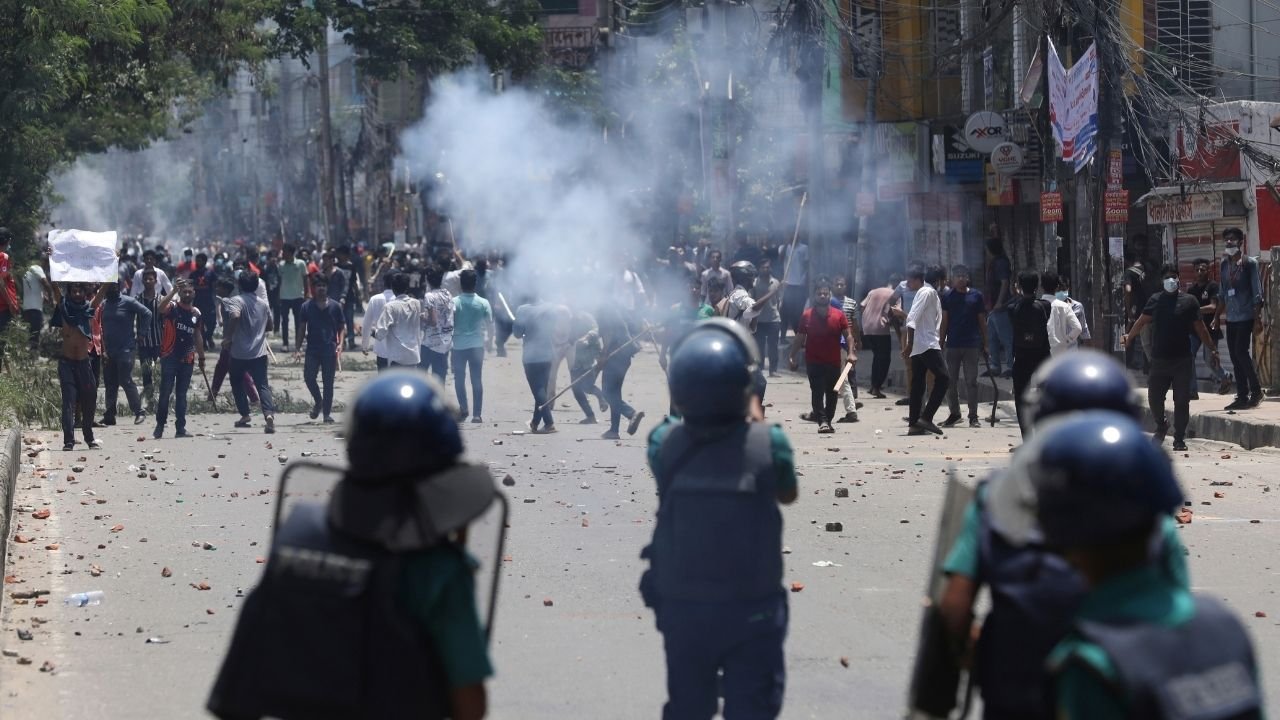
    Bangladesh on Friday announced the imposition of a curfew and the deployment of military forces after police failed to quell days of deadly unrest that has spread throughout the country.

    This week’s clashes between student demonstrators and police have killed at least 105 people, according to an AFP count of victims reported by hospitals, and pose a momentous challenge to Prime Minister Sheikh Hasina’s autocratic government after 15 years in office.

    “The government has decided to impose a curfew and deploy the military in aid of the civilian authorities,” Hasina’s press secretary Nayeemul Islam Khan told AFP.

    He added that the curfew would take immediate effect.

    Police in the capital Dhaka earlier took the drastic step of banning all public gatherings for the day — a first since protests began — in an effort to forestall more violence.

    “We’ve banned all rallies, processions and public gatherings in Dhaka today,” police chief Habibur Rahman told AFP, adding the move was necessary to ensure “public safety”.

    That however did not stop another round of confrontations between police and protesters around the sprawling megacity of 20 million people, despite an internet shutdown aimed at frustrating the organisation of rallies.

    “Our protest will continue,” Sarwar Tushar, who joined a march in the capital and sustained minor injuries when it was violently dispersed by police, told AFP.

    “We want the immediate resignation of Sheikh Hasina. The government is responsible for the killings.”

    Student protesters stormed a jail in the central Bangladeshi district of Narsingdi and freed its inmates before setting the facility on fire, a police officer told AFP on condition of anonymity.

    “I don’t know the number of inmates, but it would be in the hundreds,” he added.

    ‘Shocking and unacceptable’

    At least 52 people were killed in the capital on Friday, according to a list drawn up by the Dhaka Medical College Hospital and seen by AFP.

    Police fire was the cause of more than half of the deaths reported so far this week, based on descriptions given to AFP by hospital staff.

    UN human rights chief Volker Turk said the attacks on student protesters were “shocking and unacceptable”.

    “There must be impartial, prompt and exhaustive investigations into these attacks, and those responsible held to account,” he said in a statement.

    The capital’s police force earlier said protesters had on Thursday torched, vandalised and carried out “destructive activities” on numerous police and government offices.

    Among them was the Dhaka headquarters of state broadcaster Bangladesh Television, which remains offline after hundreds of incensed students stormed the premises and set fire to a building.

    Dhaka Metropolitan Police spokesman Faruk Hossain told AFP that officers had arrested Ruhul Kabir Rizvi Ahmed, one of the top leaders of the main opposition Bangladesh Nationalist Party (BNP).

    ‘Symbol of a rigged system’

    Near-daily marches this month have called for an end to a quota system that reserves more than half of civil service posts for specific groups, including children of veterans from the country’s 1971 liberation war against Pakistan.

    Critics say the scheme benefits children of pro-government groups that back Hasina, 76, who has ruled the country since 2009 and won her fourth consecutive election in January after a vote without genuine opposition.

    Hasina’s government is accused by rights groups of misusing state institutions to entrench its hold on power and stamp out dissent, including by the extrajudicial killing of opposition activists.

    Her administration this week ordered schools and universities to close indefinitely as police stepped up efforts to bring the deteriorating law and order situation under control.

    “This is an eruption of the simmering discontent of a youth population built over years,” Ali Riaz, a politics professor at Illinois State University, told AFP.

    “The job quotas became the symbol of a system which is rigged and stacked against them by the regime.”

    ‘Nation-scale’ internet shutdown

    Students say they are determined to press on with protests despite Hasina giving a national address earlier this week on the now-offline state broadcaster seeking to calm the unrest.

    Nearly half of Bangladesh’s 64 districts reported clashes on Thursday, broadcaster Independent Television reported.

    London-based watchdog NetBlocks said Friday that a “nation-scale” internet shutdown remained in effect a day after it was imposed.

    “Metrics show connectivity flatlining at 10% of ordinary levels, raising concerns over public safety as little news flows in or out of the country,” it wrote on social media platform X.

    sa/gle/sst

    © Agence France-Presse
  • At least 30 killed in Kenya anti-government protests: HRW

    At least 30 killed in Kenya anti-government protests: HRW

    At least 30 people died in protests in Kenya this week sparked by a government drive to substantially raise taxes in the East African country, Human Rights Watch said Saturday.

    “Kenyan security forces shot directly into crowds of protesters on (Tuesday) June 25, 2024, including protesters who were fleeing,” the NGO said in a statement.

    “Although there is no confirmation on the exact number of people killed in Nairobi and other towns, Human Rights Watch found that at least 30 people had been killed on that day based on witness accounts, publicly available information, hospital and mortuary records in Nairobi as well as witness accounts,” the statement said.

    “Shooting directly into crowds without justification, including as protesters try to flee, is completely unacceptable under Kenyan and international law,” said Otsieno Namwaya, associate Africa director at Human Rights Watch.

    “The Kenyan authorities need to make clear to their forces that they should be protecting peaceful protesters and that impunity for police violence can no longer be tolerated,” Namwaya added.

    The largely peaceful rallies turned violent on Tuesday when lawmakers passed the deeply unpopular tax increases following pressure from the International Monetary Fund (IMF).

    After the announcement of the vote, crowds stormed the parliament complex and a fire broke out in clashes unprecedented in the history of the country since its independence from Britain in 1963.

    President William Ruto’s administration ultimately withdrew the bill.

    – IMF pressure –

    The state-funded Kenya National Commission on Human Rights said it had recorded 22 deaths and 300 injured victims, adding it would open an investigation.

    “Eight military officers came out and just opened fire on people. They killed several people, including those who were not part of the protests,” HRW quoted a rights activist in Nairobi as saying.

    “Kenya’s international partners should continue to actively monitor the situation… and further urge Kenyan authorities to speedily but credibly and transparently investigate abuses by the security forces,” the rights watchdog said.

    Ruto had already rolled back some tax measures after the protests began, prompting the treasury to warn of a gaping budget shortfall of 200 billion shillings ($1.6 billion).

    The cash-strapped government had said previously that the increases were necessary to service Kenya’s massive debt of some 10 trillion shillings ($78 billion), equal to roughly 70 percent of GDP.

    The Washington-based IMF has urged the country to implement fiscal reforms in order to access crucial funding from the international lender.

    “The bill was  expected to raise an additional $2.3 billion in the next fiscal year, in part to meet IMF requirements to increase revenues,” HRW said.

    “Widespread outrage should be a wake-up call to the Kenyan government and the IMF that they cannot sacrifice rights in the name of economic recovery,” Namwaya said.

    “Economic sustainability can only be achieved by building a new social contract that raises revenues fairly, manages them responsibly, and funds services and programs that protect everyone’s rights.”

    sva/ach/smw

    © Agence France-Presse

  • AJK protests continue as PM Shehbaz approves Rs23 billion grant for Azad Kashmir

    AJK protests continue as PM Shehbaz approves Rs23 billion grant for Azad Kashmir

    Prime Minister Shehbaz Sharif on Monday approved an urgent grant of Rs 23 Billion to resolve the issues of people in Azad and Jammu Kashmir (AJK).

    The development came after violent protests erupted in the AJK on the Awami Action Committee’s (AAC) call against high electricity bills and taxes.

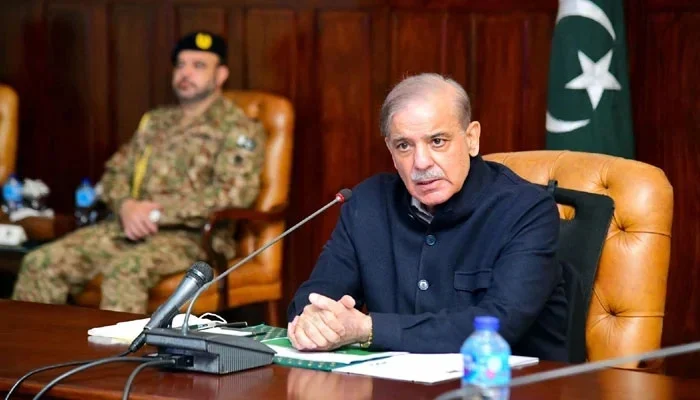
    PM Shehbaz presided over a meeting on Azad Kashmir’s protests in which the grant was approved.

    However, AAC leader Shaukat Nawaz said that he refuses to end the protest until they receive a notification affirming that their demands have been accepted.

    “Promises have been made in the past as well to dissolve protests. (This time) we will not return believing the political promises,” he said, adding that the government’s seriousness would be trusted when a notification regarding the resolution of their demands would reach them.

    The AAC called for a shutter down and wheel-jam strike across the state to protest the electricity price hike and taxes.

  • AJK protests enter fourth day as deadlock between government and protestors continues

    AJK protests enter fourth day as deadlock between government and protestors continues

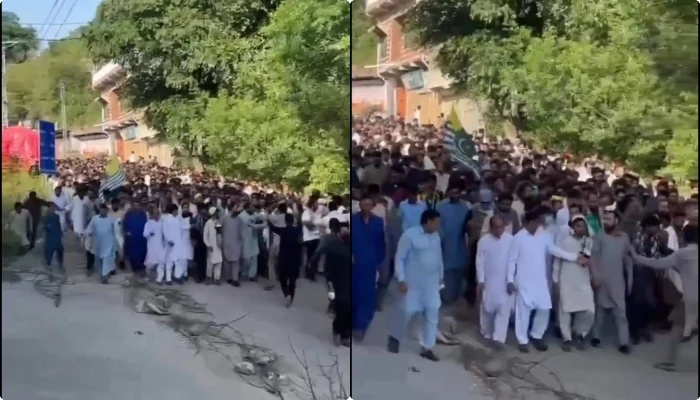
    The Awami Action Committee (AAC) in Azad Jammu and Kashmir (AJK) have staged massive protests and sit-ins against high electricity bills and taxation for the fourth day now.

    Protestors plan to reach the capital Muzaffarabad, after violent clashes took place between the AJK police and the protestors.

    The government of AJK called in Rangers and AJK police after clashes between the police and protestors erupted in Mirpur during demonstrations that killed a cop and injured more than 70 others.

    Heavy contingents of police have been posted at roundabouts and sensitive locations, while markets, trade centres and educational institutes remain closed, and transport is suspended.

    Prime Minister Shehbaz Sharif expressed grave concern on the situation and stated that there should be “absolutely no tolerance for taking the law into one’s own hands”.

    Meanwhile, the central leadership of the AAC has distanced itself from the violent incidents that occurred during the protests.

    A sub-inspector was killed while dozens of other policemen and protesters also got injured during the teargas shelling by the police and stone pelting by the demonstrators.

    Violent protesters damaged multiple vehicles, including a magistrate’s car on the Poonch-Kotli road. Moreover, markets, trade centres, offices schools and restaurants remained closed across the AJK.

    Cellular services have been suspended in different parts of AJK.

  • Maulana Fazlur Rehman announces protests against February polls

    Maulana Fazlur Rehman announces protests against February polls

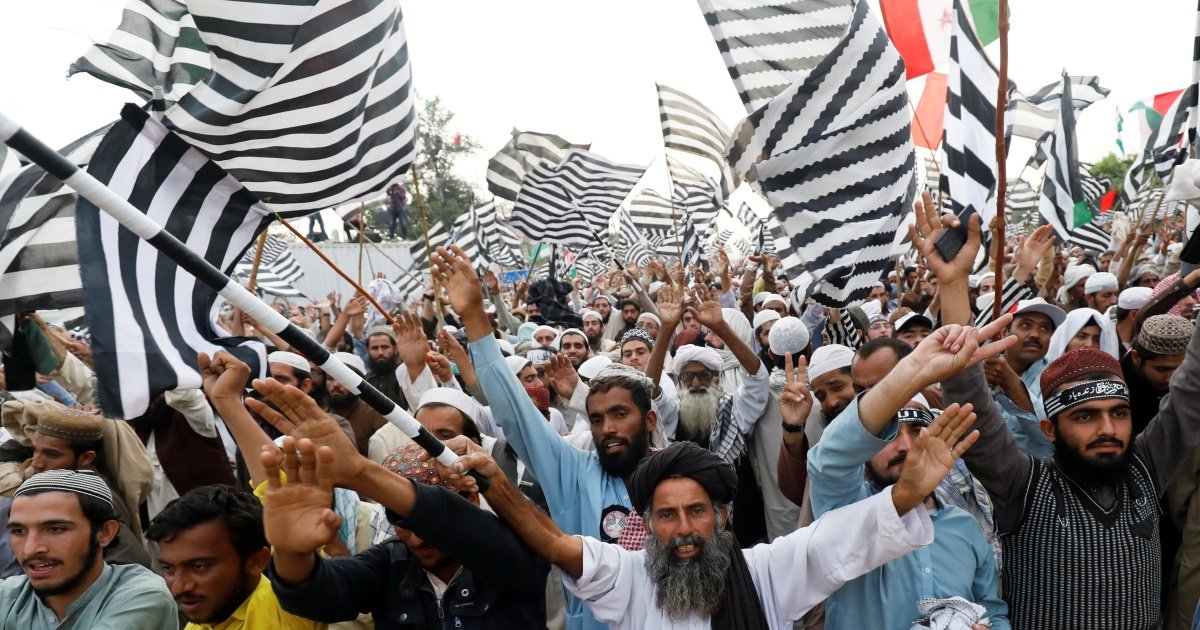
    Leader of Jamiat Ulema-e-Islam- Fazl (JUI-F) Maulana Fazlur Rehman on Wednesday said that his party had decided to boycott by-elections and will be holding protests in different cities from April 25.

    “Just like in 2018 elections, the mandate of people has been stolen in elections of 2024. We decided that our party would not accept the results of recent elections because this parliament is more of a representative of the establishment rather than the people,” said the chief of JUI-F.

    By now, major political parties like Pakistan Tehreek-e-Insaf, JUI-F, and Jamaat-e-Islami (JI) have rejected the results of February 8 elections, making the general elections controversial.

    “This is our narrative and we have decided to move forward with it. We will start this movement named ‘Awami Assembly’ from April 25 from Balochistan’s Pishin,” said the JUI-F leader. The second ‘Awami Aseembly’ will begin from Karachi on May 2 and the third phase would be in Peshawar on May 9.

    He also said that his party is in contact with other political parties, “so that a united opinion of people comes forward.”
    He criticized the Elections Commission of Pakistan for neglecting its legal obligations and accused the security agencies of overstepping their boundaries.

  • PTI to hold countrywide protests over alleged rigging

    PTI to hold countrywide protests over alleged rigging

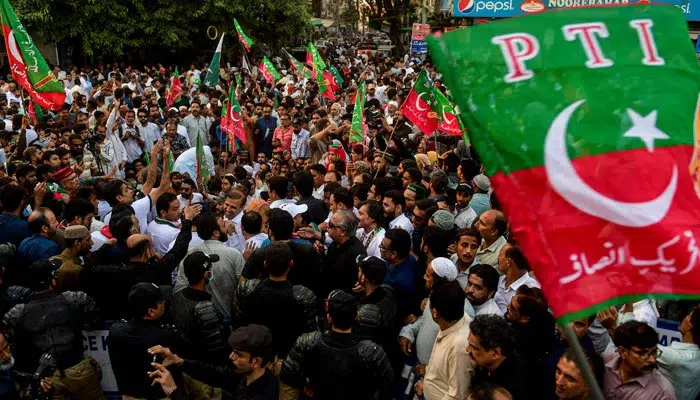
    The Pakistan Tehreek-e-Insaf (PTI) will hit the streets today at 12pm across the country to protest against what they claim is rigging and tampering with election results from February 8th.

    Major parties that won the most seats have been looking for allies and making alliances to form the next governments at both the national and provincial levels.

    The PTI expressed disappointment with the election results, where its affiliated candidates won over 90 National Assembly seats, making them the largest group. They announced plans to hold peaceful protests countrywide against what they called “record-high rigging” in the recent general elections.

    “The PTI has called for country-wide protests against the unprecedented, massive, brazen rigging in general elections 2024, where PTI’s win of 180 National Assembly seats and a two-thirds majority in the parliament, was cut down to half,” the party said in a statement.

  • BBC admits to ‘misleading’ coverage of pro-Palestine protests

    BBC admits to ‘misleading’ coverage of pro-Palestine protests

    British Broadcasting Corporation (BBC) News has admitted to “misleading” sentences used to describe recent pro-Palestine protests when one of its presenters, Maryam Moshiri, termed the marches supportive of Hamas.

    Moshiri posted on X (formerly Twitter), “Earlier we reported on some of the pro-Palestinian demonstrations at the weekend.

    “We spoke about ‘several demonstrations across Britain during which people voiced their backing for Hamas’.

    “We accept this was poorly phrased and was a misleading description of the demonstrations.”

    Notably, BBC did not apologise for the statement.

    People around the world have been coming out on the streets against Israeli attacks on Gaza. So far, more than 2,800 Palestinians have been killed while the survivors are deprived of basic necessities including food, water, healthcare, electricity and internet.

  • Karachi wholesale grocers announce market shutdown in protest against alleged illegal raids, fines

    Karachi wholesale grocers announce market shutdown in protest against alleged illegal raids, fines

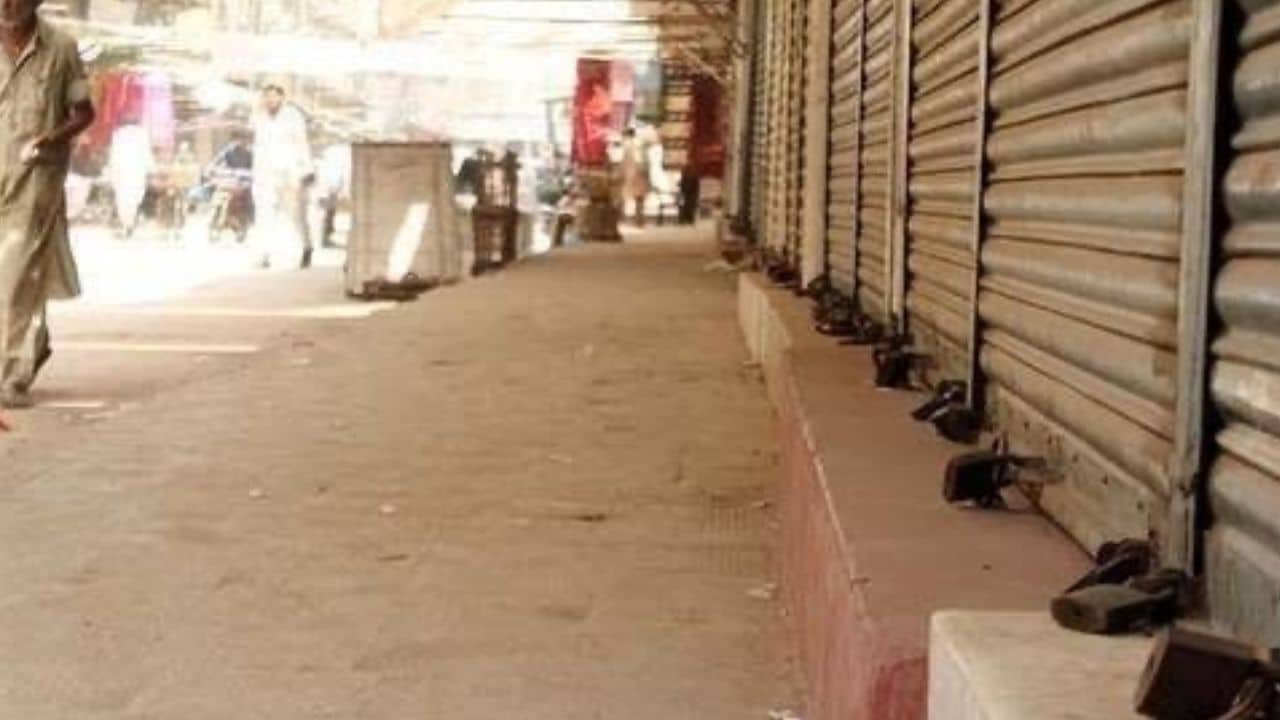
    Wholesalers in Karachi are set to stage a market shutdown on Monday in protest of what they consider unlawful raids and penalties imposed by the district administration in an effort to combat hoarding.

    According to ARY News, Rauf Ibrahim, the Chairman of the Karachi Wholesale Grocers Association (KWGA), held a press conference today, expressing concern that the district administration’s actions have created fear among traders due to shop and go-down closures. 

    He cautioned that they would cease operations at wholesale markets on Monday unless the district administration unseals these establishments. He said if these unjust raids and fines persist, we will suspend commodity markets on Monday.

    Ibrahim alleged that the district administration is sealing shops and go-downs under the pretext of cracking down on hoarding. He cited an instance where a shop owner in Joria Bazar was fined Rs30,000 for storing just two sacks of sugar.

    He criticised the categorisation of wholesalers with 100 to 500 sacks of sugar as hoarders and stressed that traders are willing to cooperate with authorities during hoarding crackdowns.

    Ibrahim urged the administration to take decisive action against genuine hoarders.

    To combat hoarding, federal and provincial governments have initiated operations in various cities, including Lahore, Rawalpindi, Islamabad, Faisalabad, Peshawar, Quetta, and Dera Ismail Khan, resulting in the confiscation of illegally stockpiled sugar.

    Meanwhile, a spokesperson for the Utility Stores Corporation (USC) assured that there is an ample supply of sugar available at controlled prices nationwide.

  • IMF approves relief plan for 4 million consumers with monthly power usage below 200 units

    IMF approves relief plan for 4 million consumers with monthly power usage below 200 units

    After extensive negotiations prompted by widespread protests against soaring electricity bills, the International Monetary Fund (IMF) has reportedly granted approval to a relief proposal targeting consumers with monthly electricity consumption of up to 200 units, allowing authorities to implement an installment-based billing system, according to sources cited by Geo News.

    Sources indicated that the final authorisation for implementing the installment billing system will require approval from the federal cabinet. 

    Approximately 4 million electricity consumers are expected to benefit temporarily from this initiative.

    Regrettably, the interim government’s proposal to extend relief to consumers using up to 400 units of electricity per month was rejected by the IMF. This decision means that approximately 32 million consumers would have benefited if the proposal had been accepted.

    Additionally, sources disclosed that the IMF stressed the importance of combating electricity and gas theft while also focusing on improving revenue collection.

    Furthermore, the sources revealed that the IMF had requested an increase of 45 to 50 per cent in gas tariffs, effective from July 1. However, the approval of this tariff hike remains contingent upon federal cabinet approval.

    In response to persistent protests by citizens and traders who have taken to the streets to denounce the steep increases in power bills and additional taxes, the caretaker government led by Prime Minister Anwaar ul Haq Kakar in Islamabad has been actively engaging with the IMF to secure immediate relief for electricity consumers in the economically challenged nation, where the populace is grappling with soaring inflation.

    It is crucial to note that Pakistan is currently operating under an IMF programme, making any relief or subsidy subject to IMF approval.