Tag: PTA

  • Ban on TikTok lifted in Pakistan: Fawad Chaudhry

    Ban on TikTok lifted in Pakistan: Fawad Chaudhry

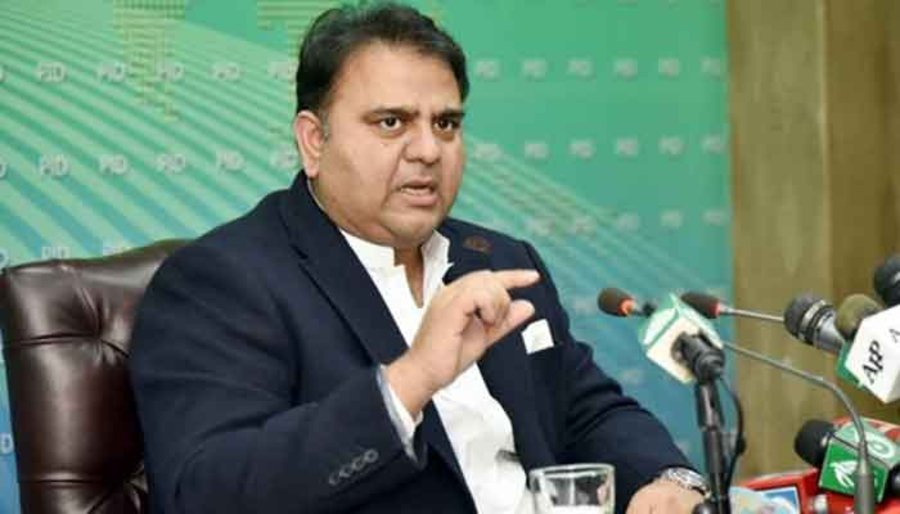
    Federal Minister for Science and Technology Fawad Chaudhry on Thursday said that Peshawar High Court (PHC) has lifted the ban on TikTok as it was ordered by a single-member bench of the same court.

    “Peshawar High Court has suspended the operation of single bench judgement, ban on TikTok has been lifted. We need a framework to encourage international companies to make Pakistan their investment hub,” tweeted the federal minister.

    In March, PHC ordered Pakistan Telecommunication Authority (PTA) to ask service providers to block users access to TikTok immediately in the country.

    “In respectful compliance to the orders of the Peshawar High Court, PTA has issued directions to the service providers to immediately block access to the TikTok App,” the PTA said.

    PHC Chief Justice (CJ) Qaiser Rashid Khan heard the petition filed by a citizen and ordered the ban on Tiktok.

    This is the second time when TikTok faced a ban in Pakistan.

    In October last year, the PTA had blocked TikTok after the company “failed to fully comply” with its instructions for the “development of an effective mechanism for proactive moderation of unlawful online content”.

    The moves had, however, led to outcry over “bars on digital advancement” in the country.

  • Facebook in talks with PTA to set up office in Pakistan

    Facebook in talks with PTA to set up office in Pakistan

    Facebook is reportedly planning to launch three new projects, including an office, in Pakistan. 

    Speaking on the development, Advisor to Chief Minister (CM) of Khyber Pakhtunkhwa (KP) on Science, Technology and Information Technology (ST&IT) Zia Ullah Bangash said that a meeting was held between officials of Facebook’s management and representatives of the Pakistan Telecommunication Authority (PTA). 

    Both sides also discussed issues of legislation and compliance. While the meeting made good progress on numerous fronts, Bangash explained that Facebook intends to assist the country by setting up an office in the near future.

    Similar to YouTube, Facebook is planning on monetizing its entertainment model so that individuals and video content creators who want to earn big could benefit from it.

  • PUBG mobile hits one billion downloads worldwide

    PUBG mobile hits one billion downloads worldwide

    PlayerUnknown’s Battlegrounds (PUBG) has hit one billion downloads worldwide since 2018, making it one of the most successful smartphone games.

    The latest download figures defeated other popular games like Kiloo, Subway Surfers and Candy Crush Saga.

    Unlike PUBG mobile, the other games were not as sophisticated and have vast appeal for audiences.

    PUBG Mobile publisher Tencent is currently one of the biggest game companies by revenue. The company said that it aims to gain half of its video game revenue from outside its home market of China.

    Several of its game studios like LightSpeed, Quantum and Timi have already started working in the United States (US) to create original content for the global audience.

    Last year, Pakistan Telecommunication Authority (PTA) had temporarily banned the game by stating that it is harmful to user’s health after some segments of society had claimed the same.

    Later on, after getting assurance from the company for a comprehensive control mechanism, PTA had unbanned the game.

  • ‘Fault in submarine cable’: PTA plans to fix bad internet with additional bandwidth

    ‘Fault in submarine cable’: PTA plans to fix bad internet with additional bandwidth

    The Pakistan Telecommunication Authority (PTA) announced on Friday that internet service providers are increasing the bandwidth to fix the internet issues across the country.

    Internet users across Pakistan are facing connectivity issues following technical faults in the international submarine cable near Egypt.

    According to the details, Trans World Associates (TWA) has communicated the service degradation on the international connectivity towards Europe on the SMW5 cable system due to a subsea fault in the cable system. PTA issued a statement in this regard which reads: “Work is underway through international counterparts in Egypt to rectify the fault at the earliest.”

    Meanwhile, the PTA assured that it was monitoring the situation and will continue to update internet users in Pakistan. The telecommunication authority, however, didn’t mention any timeline regarding the restoration of services.

    According to the reports, “While the work to remove the fault is continuing, the internet service providers (ISPs) are being shifted to the spare capacity maintained by the company,” said a TWA senior official quoted by a news media outlet.

    TWA network caters for around 40% of internet traffic in Pakistan.

  • Remove ‘sacrilegious content’ or face legal action, PTA tells Google and Wikipedia

    Remove ‘sacrilegious content’ or face legal action, PTA tells Google and Wikipedia

    The Pakistan Telecommunication Authority (PTA) has issued notices to Google and Wikipedia over the dissemination of “sacrilegious content” on their platforms, saying a legal action will be taken in case of a failure to remove the content.

    In a press release shared on its Twitter handle, the PTA said that the action against the tech giant and the online encyclopedia was taken after “complaints regarding misleading search results associated with ‘Present Khalifa of Islam’ and unauthentic version of Holy Quran uploaded by Ahmadiyya Community on Google Play Store” were received.

    Calling it a matter of a “very serious nature”, the PTA approached Google with the directives “to immediately remove the unlawful content”.

    “The platform has been issued with the notice under Removal and Blocking of Unlawful Online Content (Procedure, Oversight and Safeguard) Rules 2020 (“Rules”) to remove the sacrilegious content to avoid any legal action by the regulator,” it added.

    According to the PTA, people also registered complaints against Wikipedia for “hosting of caricatures of Holy Prophet (PBUH) and dissemination of misleading, wrong, deceptive and deceitful information through articles portraying Mirza Masroor Ahmad as a Muslim”. 

    “After extensive communication on the matter, Wikipedia has been finally served with the notice to remove the sacrilegious content to avoid any legal action,” the statement added.

    “In case the platforms remain non-compliant, PTA shall be constrained to initiate further action under Prevention of Electronic Crimes Act 2016 (PECA) and Rules 2020,” said the regulatory authority.

  • Petition filed in LHC to block TikTok through VPNs, proxies

    Petition filed in LHC to block TikTok through VPNs, proxies

    A citizen approached the Lahore High Court (LHC) on Monday requesting authorities concerned to block the use of TikTok through Virtual Private Networks (VPN) and proxies.

    In his petition, the petitioner explained that people are still using Tiktok through VPN and some other proxies. The court was pleaded to direct the government to ban the use of TikTok through VPN and proxies as well.

    Meanwhile, social media star Hareem Shah slammed the government’s decision to ban the video-sharing app saying that it is only a diversion from real issues like wheat flour crisis and rape cases. She said that YouTube and other social media sites also carry content which is questionable.

    Shah further explained her point saying that if nails grow on fingers we cut the nails, not the hands.

    On the other hand, the most followed TikTok Star Jannat Mirza supported the government on the ban but said it should not be on permanent basis.

    Many other prominent personalities including Shahid Afridi and Imran Abbas supported the ban on Tiktok.

    The Government of Pakistan banned TikTok on Friday due to “immoral/indecent” content being shared on the social media platform. The ban has sparked uncertainty in the content creator industry considering that a great number of people earn from social media.

    However, Federal Minister of Information Technology and Telecommunication Aminul Haque on Saturday had clarified that the government will lift the ban on TikTok after removal of objectionable content.

  • Banning culture

    Banning culture

    Earlier this week, the Pakistan Telecommunication Authority (PTA) said in a statement that due to a number of complaints from “different segments of society against immoral/indecent content on the video sharing application TikTok”, it has issued instructions to block the popular video-sharing app.

    This comes after a final warning to TikTok was issued in July over explicit content posted on the platform. PTA says TikTok was given “considerable time to respond and comply with” instructions for development of an effective mechanism for proactive moderation of “unlawful online content” but TikTok “failed to fully comply” with the regulator’s instructions.

    Special Assistant to Prime Minister of Pakistan on Political Communication Dr Shahbaz Gill tweeted that several parents complained against the app on the Prime Minister Portal and said that their young children are being misled by the app’s content, which is against our religion and culture. One is bewildered why these parents felt the need to complain to the state regarding an app being used by their children instead of stopping them from using this app and limiting and monitoring their technology usage.

    It is the duty of parents to keep an eye on their children’s activities. We have seen that most parents give tablets or cell phones to children at a very young age and do not control what they see or do. Instead of encouraging their children to read books or play outdoor games or indulge in other healthy activities, a lot of parents worldwide give their children access to the internet and gadgets when even tech giants like Bill Gates and Mark Zuckerberg have a very strict policy for their children when it comes to technology. According to Business Insider, Gates, the former CEO of Microsoft, implemented a cap on screen time in 2007 when his daughter started developing an unhealthy attachment to a video game. He also did not let his children get cell phones until they turned 14. Zuckerberg wants his daughters August and Maxima to spend time reading books of all kinds instead of getting lost in technology at a young age.

    This is what these parents should have also done instead of asking the state to ban an app that is not just popular but has made money for many of its users. TikTok is an app that is used a lot by lower middle class or poorer sections of our society. A lot of Pakistani TikTok stars have now made it big due to their huge following on this platform. They are earning their livelihoods due to their popularity on TikTok. It is a platform where they display their talent. It is unfortunate that we have now banned an app that is being used for earning livelihoods in a country plagued by unemployment.

    Moral policing is something we should all be way off. Who would have thought that a biscuit advertisement with a few dance sequences would cause such controversy that the regulatory authority would issue an advisory to advertisers on how to make ads for their products? On October 5, the Pakistan Electronic Media Regulatory Authority (Pemra) issued an advisory for broadcasters and advertisers, which says: “It has been observed with concerns that themes of advertisements of ordinary consumer products like biscuits, surf, etc. being aired on satellite TV channels are not corresponding with the disposition of these products.” This led to some channels pulling the add off air.

    It is time that we stop regulating people’s lives, what they see, and their creativity. People need to express themselves in different ways and they should be allowed to do so as long as they are not breaking any rules or endangering someone’s life, including their own. Regulations lead to more censorship. We certainly do not need more of it.

  • Govt bans TikTok

    Govt bans TikTok

    The Government of Pakistan has banned TikTok due to “immoral/indecent” content being shared on the social media platform. 

    According to details, the Pakistan Telecommunication Authority (PTA) issued instructions for the blocking of the application across the country. 

    Keeping in view the complaints and nature of the content being consistently posted on TikTok, PTA issued a final notice to the application and gave it considerable time to respond and comply with the Authority instructions for the development of an effective mechanism for proactive moderation of unlawful online content.

    However, the application failed to fully comply with the instructions, therefore, directions were issued for blocking of TikTok application in the country.

    TikTok has been informed that the Authority is open for engagement and will review its decision subject to a satisfactory mechanism by TikTok to moderate unlawful content.

    According to Tiktok’s transparency report, the social media app had earlier issued a statement that the company had “removed 3,728,162 user videos that were found in violation of regulations from Pakistan from July 1 to December 31, 2019, 

    Earlier, in an interview, Minister for Information Minister and Broadcasting Senator Shibli Faraz said that Prime Minister (PM) Imran Khan had remarked that the video-sharing app is affecting society’s values badly and should be blocked.

     “PM Imran is extremely concerned about the ‘growing obscenity and vulgarity’ in the society and has directed all relevant sections to check the trend before it destroys the socio-religious values of Pakistani society,” Senator Faraz had said. 

  • Pakistanis are outraged with PTA for blocking Tinder

    Pakistanis are outraged with PTA for blocking Tinder

    On Tuesday, the Pakistan Telecommunication Authority (PTA) blocked access to Tinder and several other dating apps in a bid to control “immoral” and “indecent” content.

    In a statement, PTA said it barred users from accessing Tinder, Grindr, SayHi, Tagged and Skout after the social networking apps failed to “moderate… content in accordance” with Pakistan’s laws.

    The PTA said the ban addressed the “negative effects of immoral/indecent content”, adding that the apps could request to have their blocks lifted if they show they are “moderating the indecent/immoral content through meaningful engagement”. However, the regulator did not specify what it meant by that engagement.

    Meanwhile, Tinder, in a statement, said it would “welcome the opportunity to discuss our product and moderation efforts with PTA and look forward to a meaningful conversation.”

    Following the announcement, enraged Pakistanis took to social media to express their anger at PTA for blocking the apps.

    https://twitter.com/hiraq36/status/1300805674495025155?s=20

    https://twitter.com/gigglypundit/status/1300800999594979328?s=20

    Other Twitter users including Osman Khalid Butt decided to make a joke of the situation.

    Earlier, PTA asked YouTube to immediately block all videos they consider “objectionable” from being accessed in the country. The demand was criticised by rights campaigners who fear creeping censorship and control of Pakistan’s internet and printed media.

    In July, authorities issued a final warning to Chinese-owned social media app TikTok, ordering it to filter any obscene content, following which TikTok not only upgraded its ‘Community Guidelines’, but also released its Urdu language version for Pakistani users.

  • Amazon enters Pakistan to provide web services

    Amazon enters Pakistan to provide web services

    Amazon is forming a team to establish Amazon Web Services (AWS) in Pakistan to drive the adoption of cloud computing. Amazon has also registered a local office under the name Amazon Data Services Pakistan (Pvt) Ltd. 

    According to the Security Exchange Commission of Pakistan (SECP) database, the Pakistan office is led by Paul Andrew Macpherson as the Chief Executive Officer (CEO), while Shoaib Munir is a director. 

    A spokesperson from Amazon shared that the technology leaders are currently seeking a public policy specialist with a focus on driving AWS cloud computing solution adoption in Pakistan. The role focuses on removing regulatory and political blockers to cloud adoption. 

    Whenever big companies enter small markets, it is common practice for them to appoint an advisor on public policy. When Bytedance, the parent company of Tiktok entered Pakistan, they hired Hassan Arshad to work with Pakistan Telecommunication Authority (PTA) on policy infrastructure.

    The State Bank of Pakistan (SBP) directed banks to utilise cloud computing technology under the condition that systems and service providers shall be located in Pakistan along with all physical servers and services. 

    Under this rule, AWS would need to set up its data center and cloud server in the country. 

    According to the e-commerce policy framework of Pakistan, the Ministry of Information Technology and Telecommunication is in the process of formulating Pakistan’s first cloud policy, while the Draft Data Protection Act is at an advanced stage of consultations.

    AWS hopes to work with relevant government departments in Pakistan as they develop and revise policies related to the digital economy, including cloud-first policies, data protection regulations, outsourcing guidelines, cybersecurity policies, tax policy, and over the top regulations. They will also proactively build relationships with key policymakers, politicians, and influencers.