After MPA Rana Munawar Ghous, Lahore’s Khokhar brothers of the Pakistan Muslim League-Nawaz (PML-N) have also handed over their resignations from respective assemblies to the party leadership.
As per the details, MNA Malik Afzal Khokar and MPA Saiful Malook Khokhar submitted their letters amid talks of mass resignations by opposition lawmakers in protest against the government.
PML-N leader Azma Bukhari has said that the party has not asked lawmakers to hand in their resignations but they are submitting them on their own.
On the other hand, the leadership of the 11-party opposition alliance, Pakistan Democratic Movement (PDM), will meet in Islamabad today to devise strategy for the second phase of the anti-government movement.
Resignations from the assemblies by PDM lawmakers will also be discussed in the meeting.
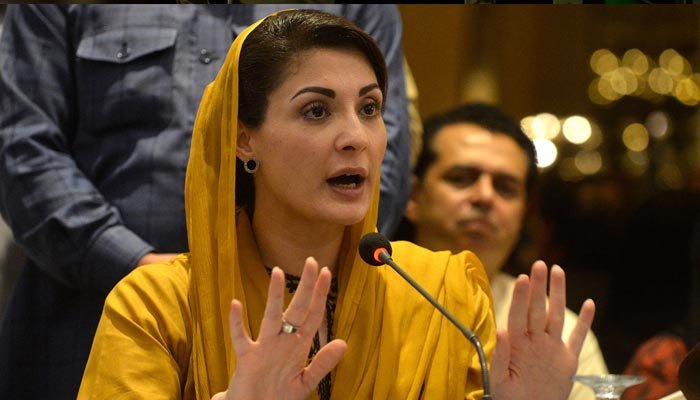
Amid increasing censorship in the country, Pakistan Muslim League-Nawaz (PML-N) Vice President Maryam Nawaz has urged media houses to resist the government pressure, saying the media should stand united if it doesn’t want to become a tool for anyone.
Addressing a social media workers convention in Lahore, the PML-N VP said no one would be able to cower the media into submission if the media houses stood united against repression.
She said the government has pitched news channels and anchorpersons against each other, adding that those who had “courage to speak were asked to sack anchors if they didn’t want to get shut down”.
It may be mentioned here that after the current government came to power, several journalists were sacked from their jobs. The journalists she is referring to could include Matiullah Jan, Nusrat Javed, Murtaza Solangi and Talat Hussain. But not all of the journalists were fired, Talat, for example, parted ways with Geo after mutual agreement.
In a reference to the incarceration of Geo head Mir Shakilur Rehman, she said the heads of those channels who refused to capitulate were put into the NAB cell. She said media was even not free to run the name of a retired officer on TV, as it only broadcasts scripts approved by the authorities.
“I understand that these channels are doing it under compulsion, but asked for how long they will endure this,” Maryam said, adding that “Geo News is nowadays against us [PML-N], but I know it is facing pressure”.
According to the PML-N leader, journalists like Matiullah and Ali Imran were being abducted but the ‘fake’ prime minister had no idea about it when asked on TV.
“If you don’t know who attacked Maryam’s room in Karachi and who kidnapped Captain (r) Safdar and Sindh IG then why people shouldn’t call you ‘Khaw Makhaw’,” she said alluding to the Karachi incident after the PDM rally in the port city.
She asked the media for how long it would endure this attitude. Maryam said if the same situation continued then one day the journalists will be whisked away from their houses and then they will have to say that they went to the northern areas for ‘recreation’.
A cup of tea served to former prime minister Nawaz Sharif disturbed him during his address via video-link at an event organised by Pakistan Muslim League-Nawaz (PML-N) media cell.
“When you knew I was speaking then why did you keep it here,” the clearly perturbed three-time prime minister said in the footage.
It is pertinent to mention here that the PML-N in accordance with its social mobilisation plan has announced holding seven workers conventions throughout Punjab to build the momentum for running a decisive movement against the government from the Pakistan Democratic Movement (PDM) platform.
The decision regarding holding workers conventions was announced during a PML-N Punjab chapter meeting presided over by party provincial President Rana Sanaullah and attended by senior leaders, including all divisional and district presidents and general secretaries.
On the other hand, Shahbaz Gill, Adviser to PM on Political Communication, shared the footage of Nawaz Sharif with the caption, “Nothing but parchee (script) during the speech.”
PML-N leader Hina Parvez Butt hit back at Gill, saying, “So, secretly you watch Nawaz’s speeches.”
“The ruling party’s most recent act of issuing a list of news media talk-show anchors, dubbing them pro-corruption, drives a deeper wedge into a polarised nation.”
It is no secret that the truth of national integration of the Islamic Republic of Pakistan is not just bitter but severely inconvenient. The fine line that separates diversity and differences among this nation has blurred so many times that it has almost permanently been reduced to a smudge. From the barracks to the parliament, sermons and edicts from atop the mosque minarets, political jargons from atop the containers and trucks, to the unending layers of multiple identities — divisions are the Achilles’ heel of this society.
Issuing a list of journalists, dubbing them against the interests of the state, vilifying them publicly was like shooting a nuke at this Achilles heel. Driving a wedge at the very source of information of the nation, the media, is creating the deepest division imaginable so far. In the history of deleted tweets in this country, these two might have very long lasting effects.
A ruling political party being unaware of this landmine or apathetic to the consequences of triggering it can potentially prove to be catastrophic.
73 years of age, sick, weak and drained it stood on shaky feet, running out of natural body resources, vitals dimming, surviving on one shot of steroids after another, scars of surgical interventions spread across the map of its skin and a plethora of side-effects from past treatments racking its existence. It had almost forgotten the number of doctors that had taken a shot at it, sometimes even without its total consent. Almost every one of those taxing prognosis left it more vulnerable and feeble. All of them focused on treating the symptoms and not the disease, worsening the illness.
It was almost as if they knew, but never disclosed that it was plagued by the uncanny Autoimmune Disease – an ailment in which the organs of its own body were at constant war with each other. It was almost as if they were intentionally not treating the disease because ending its ailment would end years of profiteering from its misery, and yet they all claimed they did everything to serve its interest. Or maybe decades of varying drugs had blurred its ability to separate those who sought to save it from those who added to its agony.
The story of Pakistan is difficult to pen down because it is hard to indisputably identify the heroes and the villains. Pakistanis to this day are even conflicted over autocratic dictatorships being good or bad. This is a country where coups were celebrated, even if by a significant minority. Its very inception on the basis of a presumed uniformity of a religion so deeply divided across sectarian lines was unsteady. The ethnic, cultural, political and ideological differences at its core, though dormant at the time, were highly flammable. While these divisions stayed buried under the unanimous rejected of Hindu subjugation, the fault lines under the surface started growing into visible cracks once liberated from the common enemy. This is why, ever since, the integration and unity of this nation has always been a function of hatred, fear and anger against a common enemy, rather than collective growth, pride and prosperity.
However, in times when an aggravated threat of a common enemy does not exist, Pakistan’s autoimmune disease starts tearing her apart and eating the core of the country hollow. For all these reasons, and more, the worst thing that can happen to this already fragmented and disunited country is fuelling more divisions.
From its campaign leading to the 2018 elections, PTI and its patron in chief Imran Khan has been extremely careless, if not intentionally exploitative, of this ability of the Pakistani polity. He went further than the usual practice of demonising and defiling his political rivals and berated their voters and supporters as dumb donkeys following their leaders mindlessly like zombies. At his massive public meetings he openly vilified news organisations that disagreed with him. The rants inadvertently led to mob attacks on news media offices and at times on journalists.
The ruling party’s most recent act of issuing a list of news media talk-show anchors, dubbing them pro-corruption, incites targeted and aggravated hatred against these journalists. But more importantly still, it drives a deeper wedge into a polarised nation. It impacts not just PTI supporters but the supporters of its political rivals as well. With the history of Pakistan and its behavior in view, this action will have consequences far more long-lasting than being perceived.
This list discourages openness to differing views and perspectives. It freezes the ability to question and challenge one’s hardened positions and clan-vote mentality. It encourages the dangerous practice of sticking to narratives that only feed people’s confirmation biases. It magnifies and glorifies selective perception. But more than anything else, it breeds generations of an ill-informed polity, with an ‘us-versus-them’ mindset for its own countrymen, incapacitated to vote a credible person into power, adding to the long list of bad doctors that would worsen this ailing country’s autoimmune disease and feed off its ailing semi-conscious body.
The Petroleum Division (PD) on Thursday said the government had procured 41 spot liquefied natural gas (LNG) cargoes, during the last 27 months, on average of below 12 percent Brent that helped save $237 million.
The PD said the first query, in the media reports, pertained to the LNG procurement to run both terminals in full capacity and import of six cargoes in December.
“It must be understood that the two terminals together have operated on 65 percent or less capacity in nine months out of last 27 months. Another factor which must not be ignored is that the previous government had signed long-term contracts for 800mmcfd (million cubic feet per day) for supply of LNG.” Unless this was sold first, it said, buying more was not possible, even if it was available at cheap rate.
The previous government also signed 1,200mmcfd of terminal capacity on a ‘take or pay’ basis which resulted in $527,000 per day payment, regardless of the level of use of these terminals.
“The current government purchased 41 spot LNG cargoes on much less average for the whole year than term slope of 13.37 percent Brent, which enabled us to save $237 million in last 27 months,” it added.
“Also, once you award a cargo, which has a fixed delivery date, it is near impossible to move it, especially in winter peak. Hence, if you do partial ordering of spot cargoes, you may not be able to slot more cargoes later, because that results in change of delivery date of all cargoes.”
Secondly, the PD said, it was being asked why the government invited tenders for December in November. “This is factually incorrect. Pakistan LNG Ltd. placed tender notice for six LNG spot cargoes for use of December on October 02, 2020.”
Third question, it said, was related to forward purchasing in summer for winter delivery when global market prices were down due to less demand in summer.
“It must be understood that spot cargoes are generally for ready delivery (i.e. within 30-60 days). While you can do forward buying (i.e. order today for delivery many months later), the pricing for such purchases is done on a forward curve for Brent and swap spreads for slope.”
So, if spot cargoes were available in July for 10 percent of the Brent, “resulting in say $4/mmbtu delivered price, an order placed in July for delivery in December does not get priced at $4/mmbtu.”
The sellers would use forward projections of the Brent in December and “Swaps spreads for slope in December, resulting in a much higher price for delivery in December.”
It said, “An expectation that we can get ready price of summer for delayed delivery in winter, assumes that the sellers are so naive, and we as buyers are so smart, that we can take advantage of them. This simply shows lack of understanding of how forward market works.”
“As an example, the JKM swaps on Oct 02, 2020 for December delivery were $5.5/mmbtu. The same JKM swaps for December delivery in mid August were $5.4/mmbtu, a bare 10 cent difference. So even if the December tender were issued in mid August, the price would have been effectively the same.”
Fourth question, the PD said, was based on comparison between Pakistan and India on spot purchasing of LNG claiming that India saved billions of rupees by placing orders for November three weeks before Pakistan.
“Again this is factually incorrect. Pakistan placed tender for November delivery on Sept 09 and Sept 15 with the PPRA compliant mandatory 30 days. India placed a one day tender on Sept 29 and awarded on Sept 30. The price of this one cargo was $0.98/mmbtu less, as reported by Bloomberg, than the November average of Pakistan. Many major suppliers like Vitol and Trafigura have bought December cargoes at prices higher than Pakistan as reported by Bloomberg. Are they all incompetent? Single cargoes cannot be compared because they depend on the day of award and conditions of tender.”
For example, the PD said, Pakistan LNG Limited (PLL) required 21 days credit period and 10 percent of performance guarantee on LNG supplies. “Also our port cargoes are 400 percent higher. India does not have these conditions. An example of the reverse situation was PLL spot cargo of July 27, 2020 at price of $2.2 but Reliance, India awarded a cargo only three days later on July 30, at $2.7, a full 20 percent higher.”
Unfortunately, the PD said, some media persons claimed that the spot buying this year had caused Rs122 billion loss to the exchequer.
“The total of all cargoes bought in 2020 on spot was $353 million, or Rs 57 billion, with an average just below 12 percent. So, it is illogical to say that when money spent is Rs57 billion, somehow a loss of Rs122 billion has been created.” Even if compared to contract deliveries, the spot purchases, including higher December numbers, the Petroleum Division said, it was still cheaper.
“The public discourse needs to move to planning and implementation on legal reforms to declare LNG as gas, from the deliberate distortion created by the last government declaring it petrol,” the PD statement concluded.
The Federal Board of Revenue has collected Rs1.690 trillion during the first five months (July-Nov) of the fiscal year 20-21, collecting Rs17 billion more than the collection target set for the required period.
According to media reports, the overall collection could further increase to Rs1.694 billion after book adjustment.
Profit reported that the department had collected Rs350bn revenue in November, witnessing a growth of 4.4 per cent against last month’s 3.7 per cent.
According to a report in Express Tribune, the five-month target was set at a low level, which was equal to 33.7 per cent of the annual target and considered very low.
The report claimed that the FBR could not achieve the monthly target for the fourth successive month and the five-month target was achieved only due to the better performance of Pakistan Customs.
It is pertinent to mention that the government had fixed Rs4.963 trillion as tax target for the current fiscal year after consultation with the International Monetary Fund.
Ali Tareen, who is the son of Prime Minister (PM) Imran Khan’s close aide and Pakistan Tehreek-e-Insaf (PTI) bigwig Jahangir Tareen, was on Monday offered to join the Pakistan People’s Party (PPP) in response to a tweet calling Aseefa Bhutto-Zardari “pretty cool”.
“Political differences aside, Aseefa is pretty cool,” Tareen had tweeted after Aseefa’s address to the Pakistan Democratic Movement (PDM) jalsa in Multan, which was seen as the formal entry into politics by the daughter of the late former PM Benazir Bhutto and ex-president Asif Ali Zardari.
Political differences aside, Aseefa is pretty cool.
“Shukriya [thank you] Ali Tareen we welcome you to join PPP [sic],” tweeted a PPP supporter in response to the Multan Sultans co-owner’s praise for Aseefa.
The tweets came as several netizens took to Twitter to praise Aseefa, who was filling in for her coronavirus positive brother PPP chief Bilawal Bhutto-Zardari, over her maiden public address. Many said she reminded them of her mother Benazir.
Earlier, Aseefa delivered a short and brisk speech. She vowed to stand by her brother “every step of the way”.
She began her speech by heaping scorn on the “selected” government. “Despite the cruelty and oppression by the selected [government], so many of you have gathered here. This selected [government] will have to go!”
She said those who think the opposition will be cowed into submission are mistaken, Geo reported.
Aseefa said that the people had announced their decision and that they wanted PM Imran to “pack up and leave”.
Speaking about her mother, she said Benazir Bhutto had carried on her father’s mission — to establish a welfare state — and faced several setbacks.
“[Former] president Asif Zardari introduced the 18th Amendment and BISP [Benazir Income Support Programme] and fought for the people’s rights,” she said and promised supporters that she would continue their mission and would not back down.
“They think that we are afraid of arrests. If they arrest our brothers, then they should know that every woman of PPP is ready to take up the struggle,” she said.
Prime Minister (PM) Imran Khan on Saturday refused to say that former military bigwig as well as his ex-aide Lt Gen (r) Asim Saleem Bajwa was not guilty of corruption, maintaining that it wasn’t his job to say so.
In an interview with senior journalist Mansoor Ali Khan, when asked to say on camera if Bajwa was not guilty of corruption, the premier said, “I cannot say this because it is not my job to say this. However, I will say that he gave a very detailed answer to the allegations against him. I sat with our law minister and reviewed it.”
Earlier this year, Bajwa had rebutted a news report linking his military career to his family’s businesses, terming it “malicious propaganda”. Amid opposition’s tirades against him despite a clarification, he had decided to continue serving as the chairperson of the China-Pakistan Economic Corridor (CPEC) Authority but stepped down as the premier’s aide on information and broadcasting.
PM Imran himself had, however, expressed satisfaction over the ex-army official’s clarification regarding his assets and rejected the resignation at first.
“These were mere allegations and if anyone had any problems with it, they should file a case against the retired army officer with the National Accountability Bureau (NAB),” the premier said on Saturday.
He added that Bajwa was made the CPEC chairperson based on his credentials as opposed to any pressure from the army on him to do so. “He had served in the past as the commander of the Southern Command in Balochistan and had also worked closely with the Chinese. Gwadar is the focal point of the whole CPEC project.”
The premier said that the government had then appointed Bajwa as his special assistant on information as he had also worked as the Inter-Services Public Relations (ISPR) chief and had the much-needed experience for the job.
PM Imran reiterated that he was not under any pressure from the armed forces and among other executive decisions, the Pakistan Tehreek-e-Insaf (PTI) was in charge of the country’s foreign policy. “The army hasn’t [directed] me to do one thing which I did not want to do,” he said.
“I would have resisted the army if they exerted pressure on me. The entire foreign policy [being implemented today] is mine, you can check the PTI’s manifesto,” the premier added.
The prime minister said that Pakistan’s foreign policy today was centered around the PTI’s manifesto, adding that the world was praising Pakistan for advocating non-military solutions to conflicts. “There was pressure on us to take a side in a conflict between any Muslim countries; we said we would remain neutral and play our role in uniting Muslim countries instead.”
During the wide-ranging interview, PM Imran spoke on various issues and also trained guns at the opposition.
Responding to a question, he said that former PTI general-secretary Jahangir Tareen was going through “difficult times” but said that he would not interfere in the sugar inquiry investigation.
“Jahangir Tareen has been really close to us [in the past], we have worked together in the past closely,” he said. “Tareen says he is innocent. The investigation is going on, I will not interfere in matters of institutions,” added the PM.
He said that under his government, an inquiry against the sugar cartel was launched for the first time in Pakistan’s history. He said that an FIR had also been registered against Tareen.
When asked about former Punjab government spokesperson Fayazul Hasan Chohan who was shown the door a couple of weeks ago and Dr Firdous Ashiq Awan was appointed as a special assistant to the chief minister (CM) of Punjab, the premier said both mattered to him.
“We need both Fayyaz Chohan and Firdous Ashiq Awan,” he said. “In order to win the match, you need to change the team sometimes,” he said.
The premier said that Chohan wanted a “strong” ministry which he had been given now.
Speaking further about the Punjab government, the PM said that his party had brought in people on merit. “The same setup was in power in Punjab over the past 30 years, but we brought in people on merit.”
He said that the new Punjab inspector general (IG) was doing a fabulous job, adding that Punjab CM Usman Buzdar was doing a commendable job as far as development projects were concerned. “You will see that after five years, Buzdar will be the number one provincial chief executive in the country,” he said.
When asked to respond to allegations of being a “selected” PM, the premier said that he couldn’t understand their criticism.
He said that Pakistan People’s Party (PPP) chief Bilawal Bhutto Zardari was the leader of his party because “he had shown a piece of paper” (in reference to Benazir Bhutto’s will) and Maryam Nawaz was leading the Pakistan Muslim League-Nawaz (PML-N) because she was Nawaz Sharif’s daughter.
“And they make these allegations against a man who has struggled in politics for the past 22 years,” said the premier, referring to himself.
He said that the leadership of the PML-N and the PPP had opened corruption cases against themselves. “Nawaz Sharif threw Asif Zardari in jail,” he said. “Our government only made cases against Shehbaz Sharif.”
Referring to former PM Nawaz’s medical condition, the premier said that when he read the PML-N chief’s medical reports, he couldn’t help but wonder whether a person could suffer from so many ailments. “No one exerted pressure on me to send Nawaz abroad,” he said, adding that no one could do so either.
To another question, PM Imran said that the Inter-Services Intelligence (ISI), being one of the best spy agencies in the world, knew about everything he does.
Workers and leaders of joint opposition’s Pakistan Democratic Movement (PDM) on Saturday broke into the venue of the alliance’s Multan gathering to be held on November 30, which had reportedly been sealed by the administration.
According to reports, the district administration had placed 30 containers around the venue, Qila Kohna Qasim Bagh, with more being brought in to block roads leading to the city and police deployed outside.
As per the details of Saturday’s incident, a rally led by sons of former prime minister (PM) Yousaf Raza Gillani, namely Ali Haider and Ali Musa, overpowered law enforcement to enter the venue. Pakistan Muslim League-Nawaz (PML-N) workers led by local party leaders also accompanied the PPP stalwarts.
The episode saw several scuffles between opposition workers and the police on different routes leading to the stadium where the rally was headed. A final scuffle broke out right outside the venue where hundreds of cops were discharging their duties.
Unconfirmed reports of casualties — both police personnel and political workers — are pouring in.
A senior PPP leader confirmed to The Current that Gillani brothers have taken control of the venue and a welcome camp is also being setup at the stadium. “They refuse to leave until the gathering has been held on Monday.”
To a question, they said the people of Multan are overjoyed to have with them the late former PM Benazir Bhutto’s daughter, Assefa Bhutto-Zardari, who’ll be replacing her coronavirus positive brother and Pakistan People’s Party (PPP) chief Bilawal Bhutto-Zardari.
Earlier, more than 200 workers of PDM constituent parties were arrested and raids were being conducted to arrest more. The lists of workers, particularly from the PML-N and PPP, were provided to respective police stations.
The arrests had come after the government vowed to not let opposition “put people’s life at risk” by holding a gathering amid the second wave of COVID-19.
As the opposition claims the government is using the virus outbreak to stop the PDM from holding its rallies against “the fascist regime”, PML-N Punjab President Rana Sanaullah has declared that the Multan rally will be held at all costs.
Talking to the media outside the party’s Model Town secretariat in Lahore, he said if the government did not de-seal Qila Kohna Qasim Bagh, the entire city of Multan will become the venue of the public meeting.
He said the first phase of the PDM’s anti-government protests will be completed by holding the last event of the series in the Punjab capital on December 13, and the next phase will begin after the alliance leadership devises a new strategy.
“We stand united against the government,” he said.
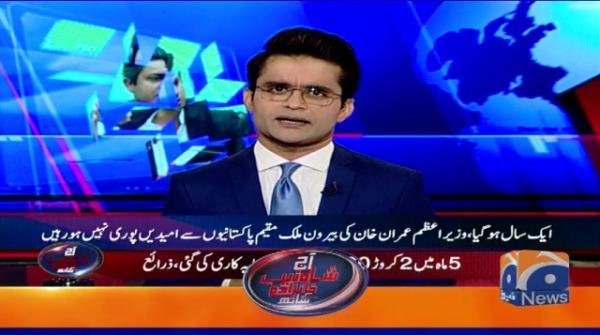
Whopping losses of Rs122 billion were inflicted to the national exchequer in the petroleum sector alone due to fallout of illogical delays and misguided decisions, but the prime minister (PM) and his teammates are not prepared to disclose as to who benefitted from the damage, journalist Shahzeb Khanzada has claimed.
During his show on Geo News, the journalist claimed deliberate falsehood was spread in the media by ministers and the special advisers who, instead of owning the decisions, hold the media, bureaucracy or the past governments responsible.
While he also accused the government of losing taxpayers’ money to the tune of Rs400 billion in wheat and sugar scandals and taking no action against the ministers responsible, Khanzada raised the question about delayed purchase of Liquefied Natural Gas (LNG) in August and September.
“In July, the LNG was available at 5.7 per cent for August but the government instead of timely tender purchased the commodity in August at the inflated rates of 9.3 per cent that turned out to be $5 million more expensive and the next bid further heaped a loss of $2.5 million. The same was repeated in the purchase of LNG for September in August.”
He said it was available at 6.9 per cent but the timely decision was delayed and then suddenly in September it was decided to purchase the cargo which cost 10.8 per cent. These two cargos alone cost the country Rs1.5 billion. When Special Adviser to Prime Minister (SAPM) Nadeem Babar was asked about it, he blamed K-Electric and accused it of suddenly raising the August and September demand instead of raising advance warning of depleting stocks.
When Federal Minister for Power and Petroleum Omar Ayub was asked if he did not know of the required demand in time, he said the power utility had not intimated of the demand and the load shedding duration in Karachi was increasing prompting the federal government to release their stocks for K Electric.
But, according to Khanzada, the true picture is entirely different from that being stated.
In the last few years, there were differences between the government and the K-Electric due to non-negotiation of a new agreement, The News reported. The power utility kept on demanding gas from the Sui Southern Gas Company (SSGC) on the basis of allocation. But the government denied that on the pretext that there was no prior agreement. The confusion led to a severe power crisis in Karachi.
Back in April 2018, the Cabinet Committee on Energy decided that the Karachi power utility be provided 130 MMCFD gas from the SSGC and 60 MMCFD LNG. Under the agreement, K-Electric kept getting 190 MMCFD since 2018. But SAPM Nadeem Babar and Federal Minister Omar Ayub erroneously claimed that the sudden raising of demand by the Karachi power utility in August and September forced them to tender expensive gas.
MMCFD stands for million standard cubic feet per day.
The anchor maintained the federal government provided K-Electric 198 MMCFD LNG in June, and 121 MMCFD LNG in July but reduced it to 73 MMCFD LNG in August and 66 MMCFD LNG in September. This clearly shows that the K Electric had not suddenly raised the demand in August and September but the government in fact had reduced the amount of gas supply. Not only this was far reduced than the amount given during June and July but was equivalent to the gas supply provided in August and September last year.
There was no justification for purchasing the LNG late in those months, Shahzeb maintained. The prime minister must ask his cabinet why the treasury was inflicted massive loss of Rs 1.5 bn because of this incompetency. Khanzada said when in June the petroleum crisis emerged why the government failed to import the fuel. Both SAPM Nadeem Babar and Federal Minister Omar Ayub blamed fuel companies and announced a thorough probe the results of which are still awaited. Due to this, the refineries had run out of furnace oil stocks and there was nothing left for K-Electric. Here once again the responsibility was lumped on the Karachi power utility.
In January 2019, the government banned the import of furnace oil and the PM ordered cheaper power generation through coal and LNG. It was decided that if need arise the K-Electric would be asked to procure furnace oil from the refineries. Against this scenario, K Electric could not have imported the furnace oil on its own. Furthermore due situation emerging out of Covid-19, the refineries had run short of furnace oil. Primarily, it was the responsibility of the government to monitor the fuel stocks. They must have imported LNG when it was cheaply available globally.
In June, the second LNG terminal was running only at its 45 per cent capacity but the government did nothing. In April, the K-Electric had informed the government in advance of its requirement of 120,000-tonne furnace oil for June.
But in June, the demand was increased to 130,000 tonne furnace oil but the PSO only provided 69,000 tonnes as the refineries had run short of furnace oil. In June 2019, PSO had provided 113,000 tonne furnace oil.
The PSO had informed the Ministry of Petroleum of the increased demand by K Electric on June 2, 2020, while reminding it of the May 19 directive by the Ministry of Petroleum to the refineries to supply maximum furnace oil.
But to this day, there has been no confirmation about it nor the allocation was increased. The PSO had intimated the Ministry of Petroleum of the impending crisis due to shortage of furnace oil, but it was not imported.
Similarly, the LNG was available at rock bottom prices but even that was not imported, causing power and fuel crisis in the country leading to losses running into billions of rupees, Khanzada said. He said the criticality of the situation forced the government to import furnace oil in panic at the last moment.
The anchor said ever since the inauguration of the PTI government, this was not the first time the gas crisis had occurred, but the central government ministers blamed the K Electric and the Sindh government for it.
In 2018 winters, a similar gas crisis had created severe problems for the people, but the government did not import the LNG in time nor it owed its responsibility for it and by blaming the MDs of the SNGPL and SSGC instead sacked them. This negligence led to power production using expensive furnace oil in 2018. In Dec 2018, the power sector was given 200 MMCFD gas which generated only 1,200 MW power instead of the needed 2,600MW. Furthermore, 1,600MW was produced by furnace oil which increased its daily consumption from 4,200 tonnes to 18,000 tonnes. The expensive power generation caused a loss of Rs 10 billion. When the then Minister for Petroleum Ghulam Sarwar was asked that though the SSGC and SNGPL MDs were sacked but if the Ministry of Petroleum and Ministry of Power had “in time “raised gas demand or if the two MDs had to import LNG on their own, Sarwar conceded that the meeting was held late in December.
Today the situation is being repeated in exactly the same manner and expensive power is being generated by furnace oil. Omar Ayub is continues to be the Minister for Oil and Power, while Ghulam Sarwar’s portfolio has been changed to that of aviation. He has, however, struck disaster with the national airline and the pilots. Nothing has changed, no responsibility has been affixed on the members of the cabinet.
Even today cheap LNG is available globally. In July, once again expensive power was generated from furnace oil at 18 month high rates and even then the gas is not available for bitter winters.
Khanzada said that from October to January one million tonnes furnace oil needs to be imported, expensive power would be generated, forex would be wasted with an additional loss of Rs25 billion.
GOVT RESPONDS:
Reacting to the report on Wednesday, PM’s petroleum aide said that LNG terminals are being run on full capacity while arrangements are being made to import around 1,300 cubic feet of LNG to meet domestic needs.
The special assistant said that it’s unfortunate that a negative media campaign is being run against the government about LNG through fudged statistics.
Addressing a press conference along with Information Minister Shibli Faraz, he said that the present government has imported 35 cargo ships of LNG in the last 27 months at a 20 per cent low rate as compared to expensive LNG agreements signed by the Pakistan Muslim League-Nawaz’s (PML-N) previous government with Qatar.
Babar said that the government has also allowed the private sector to construct LNG terminals in the country and two companies have shown their readiness to establish these facilities in Pakistan. In addition, he said that the last PML-N government had established two LNG terminals with the government’s guarantee of running these facilities, inflicting a huge loss to the treasury.