Tag: PTI government

  • US bans PIA

    US bans PIA

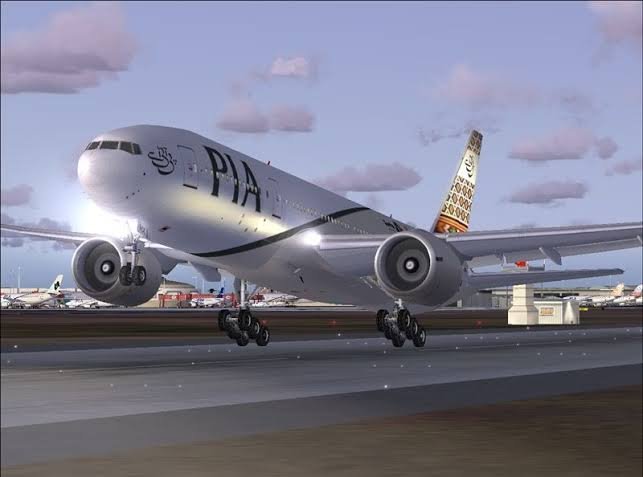
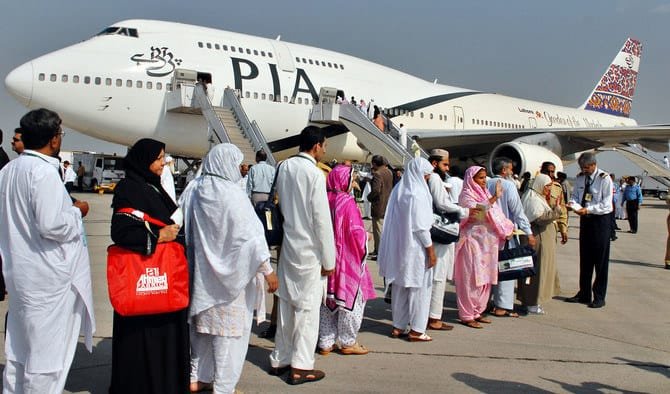
    Following footsteps of the European Union (EU), the United States on Thursday banned all flights of Pakistan International Airlines (PIA) with immediate effect.

    The US Transport Department said in a statement that special permission given to PIA had been suspended due to safety concerns.

    The move follows the grounding of 262 airline pilots in Pakistan over fake licences in a decision made by the Civil Aviation Authority of Pakistan.

    PIA said on Thursday it would ground pilots with “dubious” licences.

    As per sources, Kuwait Air has grounded at least seven Pakistani pilots and 56 engineers, while Qatar Airways, Oman Air and Vietnam Airlines have compiled lists of Pakistani pilots, engineers and ground staff.

    The UAE’s Emirates airline has also put a halt on all Pakistani airline flights, barring them from using the airports for destination and transit flights.

    This has been done after the Imran Khan-led government announced and notified various countries about the actions it took against the alleged 141 pilots, who have been grounded and were under investigation.

    As per officials of Kuwait Air, Omar Air and Vietnam Airlines, “employees whose name are on the lists will remain grounded till a report is received from the Pakistani authorities”.

    Moreover, the European Union (EU) has also put a ban on Pakistani airlines while many other Pakistani pilots working on other airlines have also been barred from flying till the investigation into the fake licenses is concluded and results are revealed by the Pakistan government.

    This action was taken after Pakistan International Airlines (PIA) wrote to foreign missions and global regulatory and safety bodies, notifying them that it grounded all 141 pilots suspected of obtaining licenses through unfair means.

    “It is also ensured that pilots flying PIA flights are having genuine licenses endorsed by the government of Pakistan and are in physical possession of the same during all domestic and international flights,” said a copy of the letter sent to the US Embassy in Islamabad.

    Pakistan grounded at least 262 pilots, 109 commercial and 153 airline transport pilots as an investigation to verify their license was initiated.

    The 262 pilots include 141 from PIA, nine from Air Blue, 10 from Serene Airlines and 17 from Shaheen Airlines, which has closed down.

    The step has brought global embarrassment for Pakistan as serious questions are bring raised over the safety of passengers, who use Pakistani airlines services for domestic and international travelling.

    On the other hand, the pilots whose names have been listed and have been grounded, have rejected the claim stating that the government’s issues list is based on wrong and false facts.

    “The list of grounded pilots has stated that many pilots were found guilty of falsely clearing nine papers, while there are eight papers in total required to get a pilot license from Civil Aviation Authority (CAA),” said one of the pilots whose name is in the list.

    “There are many others, who have not even given eight papers till now and are co-pilots, they have put their names in there too,” he added.

    As per Standard Operating Procedures (SOPs) followed by the CAA, a pilot is required to pass all eight papers to become fully qualified, after completing at least 1,500 hours commercial flying time.

    Pilots association has called on the government to form a judicial commission and inquire into the matter, adding that they do not trust the transparency of the government-led investigation.

    The incumbent Pakistan government is also suffering to major criticism by the opposition political parties, who are now accusing the aviation minister and the government for bringing global embarrassment to the country.
  • Shah Mahmood Qureshi rubbishes rumours of his death after Wikipedia page edited

    Shah Mahmood Qureshi rubbishes rumours of his death after Wikipedia page edited

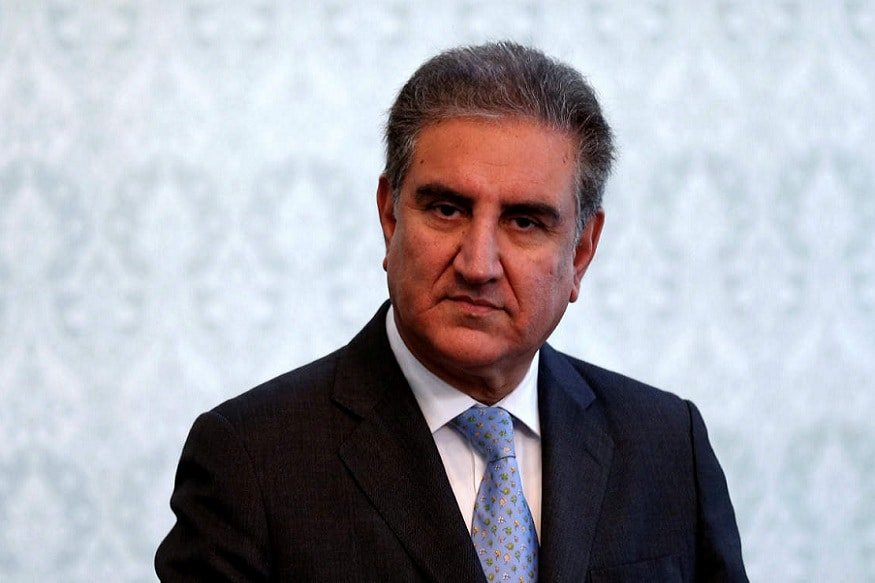
    Foreign Minister (FM) Shah Mahmood Qureshi, who contracted COVID-19 last week, has rubbished rumours of his death after his Wikipedia profile was edited, and said there was no truth to them.

    In a statement issued on Thursday, the Foreign Office (FO) said that “mischievous” elements had edited Qureshi’s profile on the site. “Many complications were created, and it caused distress to my loved ones and family members,” FM Qureshi said in a separate statement, adding that he also started receiving phone calls.

    “There is no truth to these reports, and I am doing well,” he said.

    While Qureshi did not specify the changes that were made, the page’s history showed that the edits were made on July 5 to reflect that the foreign minister had died on July 4.

    “We strongly condemn attempts by mischievous elements to hack [the] Wikipedia page of the foreign minister and spread rumours on social media about his health and well-being,” said FO spokesperson Aisha Farooqui in a tweet.

    “By the grace of Almighty Allah, [Qureshi] is recovering fast. Everyone’s prayers, from Pakistan and abroad, are deeply appreciated.”

    The FM had tested positive for coronavirus on July 3 and announced quarantining himself.

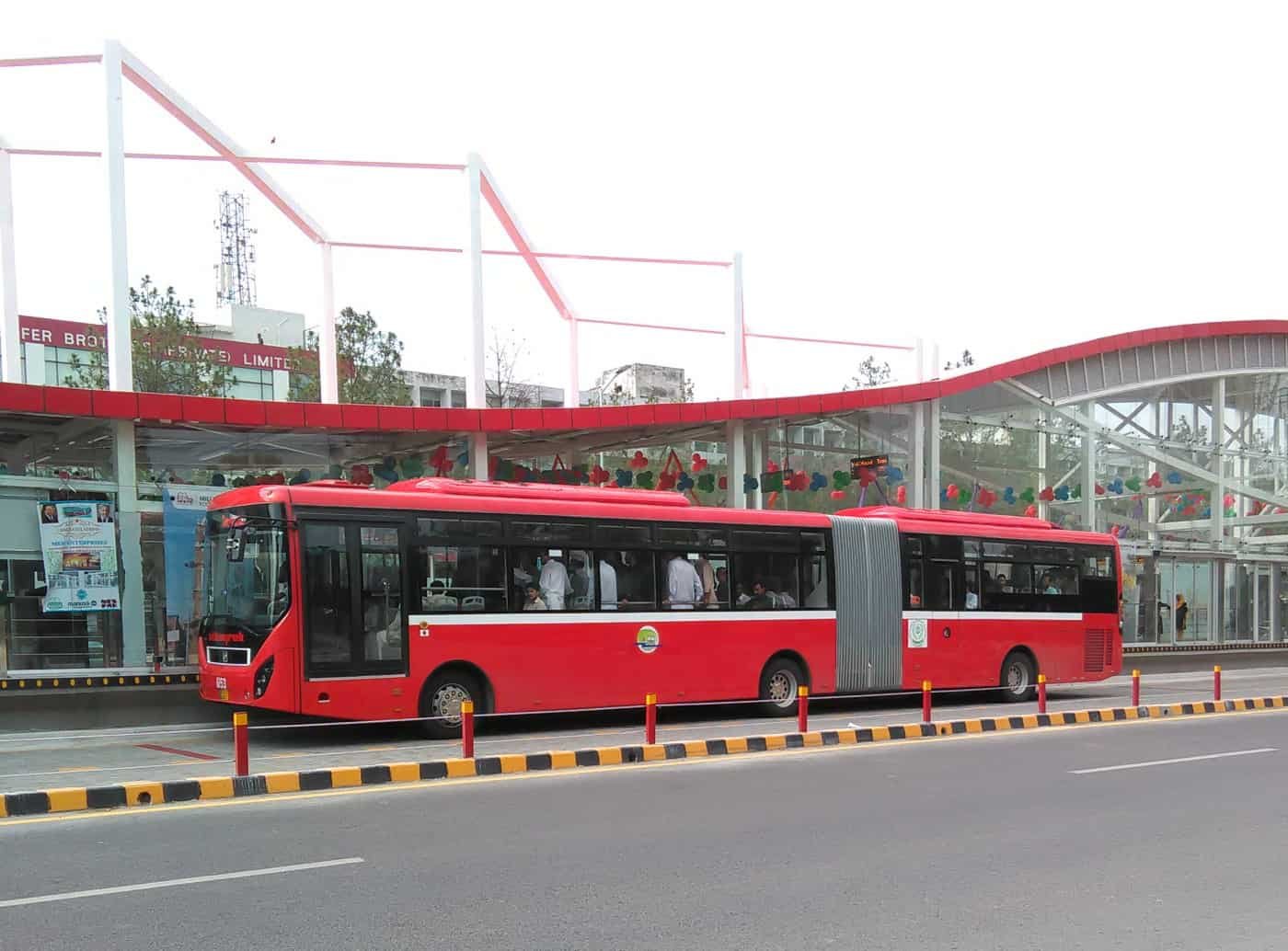
  • Metro, causing ‘Rs3.6 million loss a day’, remains shut for over three months

    Metro, causing ‘Rs3.6 million loss a day’, remains shut for over three months

    The Punjab Mass-Transit Authority’s (PMA) deficit has reached Rs375 million due to the closure of the metro bus service for 105 days while officials believe that a single-day shutdown of metro bus causes a loss of Rs3.6 million, Pakistan Today reported.

    According to reports, while no decision has been taken to restore the service by the government so far, the Punjab government had earlier also cut subsidy of PMA by Rs1 billion and the fourth quarter’s funds were not fully released in the last fiscal year (2019-2020).

    “Due to non-issuance of funds, there have been problems in payment to contractors,” reports quoted officials as saying.

    They lamented that the government’s policies were beyond understanding as it had allowed intra-city and inter-city transport to operate but had not yet restored the metro bus service since after the first coronavirus lockdown.

    “An average of 130,000 commuters were benefiting from the metro bus service daily. The authority is currently facing the worst financial crisis. No strategy has been formulated to restore the financial damages nor has it been decided how the foreign company which is operating the metro bus will be supported.”

    Due to the outbreak of coronavirus, the Punjab government had decided to close Lahore, Rawalpindi and Multan metro bus service in March. However, local transporters were later allowed to operate inter and intra-bus service while following certain guidelines.

    The report also quoted sources in the Punjab government as claiming that the metro bus service was a white elephant. “The service had been subsidised by the previous government but it is very difficult for the present government to subsidise the bus service further.”

    PMA General Manager (Operations) Uzair Shah said the decision to reactivate the bus service would be taken by the Punjab government whereas no order had so far come from the government. “The authority is facing problems due to non-receipt of subsidy,” he added while also requesting the government to release funds.

  • Six-star PIA downgraded to one   star on fake licences issue

    Six-star PIA downgraded to one star on fake licences issue

    Six-star Pakistan International Airlines (PIA) has been downgraded to one star by AirlineRatings.com after the recent revelation of 150 fake pilot licences.

    The European Union (EU) has banned the airline from member states — costing one star –, while AirlineRatings.com has stripped the airline of three stars for the IATA Operational Safety Audit (IOSA) besides one star for the ICAO country audit.

    The rating downgrade to the lowest safety standards could further dent PIA’s business because customers will avoid travelling through it while other countries may close their airports for Pakistan’s national carrier.

    AirlineRatings.com Editor-in-Chief Geoffrey Thomas said, “Clearly there needs to be an investigation into possible bribery and falsifying related to the pilot licences. This is deeply disturbing as the IOSA audit and ICAO country audit should pick this up.”

    In a statement, IATA said, “We are following reports from Pakistan regarding fake pilot licences, which are concerning and represent a serious lapse in the licensing and safety oversight by the aviation regulator. We are trying to obtain more information on the matter.”

    Earlier, PIA sacked 150 pilots over cheating on their exams in the wake of the Karachi crash of an A320 that killed 98 people in May.

    The sacking had come in the wake of the statement by Aviation Minister Ghulam Sarwar Khan that 262 out of 860 Pakistani pilots had “fake” licences through bribing other qualified pilots to take the exams.

  • An ordinary budget in extraordinary times

    An ordinary budget in extraordinary times

    The federal budget for 2020-21 has been approved amid protests by the opposition and criticism by economic analysts. Is it really that bad a budget? Not at all. In fact, if anything, it might be incrementally better than the previous years’ budgets in many ways.

    For instance, budget 2020-21 can be termed as pro-business as it did not introduce any new taxation measures and instead included a reduction in custom and regulatory duties in a number of areas. In addition, there is no provision for any foreign loan repayment on the account of debt moratorium granted to us by our international lenders. Power and petroleum subsidies have been reduced by more than Rs100 billion, which, if reflected in energy pricing, can very well reduce the financial pressure on the government.

    “Despite all the talk of ‘corona budget’, ‘structural reforms’ and an ‘expansionary fiscal policy’, this was truly an ordinary budget but in extraordinary times, falling short of people’s expectations and exhibiting a meek response to the enormous challenge at hand.”

    Most importantly, for the very first time, the budget included statements on contingent liabilities, fiscal risks and tax expenditure, setting a new standard of information disclosure and budget transparency. These statements might not be perfect and may need substantial improvements, but nevertheless it is the first time any government has opted for such measures in Pakistan.

    The government also restrained from financing its deficit from the State Bank of Pakistan (SBP), albeit under IMF pressure. The development budget does not exhibit the kind of cuts that one would have expected, and last but not the least, the Public Sector Development Programme (PSDP) did not include any unapproved projects, setting a good practice for public investment management.

    If all this is true, then what is the fuss really about? Why are people not appreciating government’s efforts?

    First and foremost, despite all the talk of ‘corona budget’, ‘structural reforms’ and an ‘expansionary fiscal policy’, this was truly an ordinary budget but in extraordinary times, falling short of people’s expectations and exhibiting a meek response to the enormous challenge at hand.

    At a time when the country truly needed a fiscal push through ambitious development spending, the budget ended up sticking to fiscal discipline that is usually required under the International Monetary Fund (IMF) programmes. Perhaps the government could not communicate its domestic priorities to the IMF well. But it is quite clear that in the contest of balancing the preferences, appeasing the IMF won by a wide margin over the goal of stimulating the economy.

    “When history would be written, budget 2020-21 would not be criticised for any excesses but for not doing enough to revive the economy in the wake of COVID-19.”

    Secondly, and even more importantly, it is an unrealistic budget. The Rs4.9 trillion revenue target for the Federal Board of Revenue (FBR) can never be achieved without new taxation measures and is likely to fall short by at least Rs500-600 billion. The Rs242 billion provincial surplus is also quite unrealistic, especially considering that both Sindh and Balochistan have posted a cumulative deficit of more than Rs100 billion. Notwithstanding the windfall gains on the account of interest rate cut leading to reduced markup payments and an increase in fuel prices resulting in an increase in petroleum levy, the overall revenue receipts will fall short of targets, and when that happens, it will happen at the cost of development expenditure.

    READ:Twitter loses it over Rs1.29 trillion budget for defence, Rs83.63 billion for education

    Lastly, a crisis generally brings in the appetite for bold and difficult decisions and a crisis of this unprecedented proportion should have led to a paradigm in our priorities. The next few years are going to be tough, leaving little room for fiscal leakages. If there was ever a time to fix the state-owned enterprises and to privatise them, to take decisions on circular debt and power sector reforms, to put a stop on the relentless expansion in government size, to manage the ballooning pension liabilities, or to create a balance between civil and military spending, that time was now. But unfortunately, none of this could be traced in the budget documents.

    When history would be written, budget 2020-21 would not be criticised for any excesses but for not doing enough to revive the economy in the wake of COVID-19.

  • Low testing rate bigger a reason for drop in coronavirus cases than govt efforts

    Low testing rate bigger a reason for drop in coronavirus cases than govt efforts

    Federal Minister for Planning, Development, Reforms and Special Initiatives Asad Umar has said that the coronavirus situation in the country is improving as the number of COVID-19 cases “decrease owing to effective measures taken by the government and a majority of people following social distancing guidelines”.

    But the statement the minister made while addressing a press conference at the National Command and Operation Centre (NCOC) last Friday, has been contradicted by the government itself as its data suggests that COVID-19 cases have declined over the past one week because of low testing rate.

    READ: Govt is grossly under-reporting coronavirus deaths and infections: PM’s task force head

    As many as 5,000 to 6,000 cases were being reported on a daily basis in Pakistan by mid-June, which had prompted the government to impose selective lockdowns in different parts of the country, especially Punjab and Sindh, and the number of daily infections has now dropped to 3,000 to 4,000.

    While data from June 15 to June 29 shows that the number of cases reported in the country after June 19 has comparatively been lower, contrary to Umar’s claims, a major reason behind the drop has been that the number of tests performed to diagnose COVID-19 across the country also dropped significantly during the said period.

    The rate of testing came down from 31,000 to 20,000 while the target set by the government to achieve in July was the enhancement of Pakistan’s testing capacity to 100,000.

    LIVE BLOG: COVID-19 pandemic

    If you look at the statistics, it is clear that Pakistan has conducted 1,327,638 (1.3 million) tests so far, while according to Worldometers, Pakistan ranks 32nd out of 49 Asian countries in terms of testing capacity. Countries including Iraq, Bhutan, Iran and Maldives have a higher testing capacity than that of Pakistan.

    According to Punjab health officials, the government is continuing to enhance testing capacity in the country but the testing rate has dropped because patients are less exposed to the virus amid lockdowns.

    “A test is conducted when a suspected patient comes forward after complaining of symptoms or as part of a random testing drive in hotspots,” they said, adding that both instances had seen a significant drop amid lockdown restrictions

  • PTI govt mulls selling PIA-owned luxurious New York hotel worth ‘billions of dollars’

    PTI govt mulls selling PIA-owned luxurious New York hotel worth ‘billions of dollars’

    The Pakistan Tehreek-e-Insaf (PTI) government is planning to privatise the Pakistan International Airlines (PIA)-owned luxurious Roosevelt Hotel in Manhattan, drawing the ire of opposition members and the general public for “attempting to sell an asset of the national carrier worth billions of dollars”.

    The 19-storey hotel with 1,025 rooms plus allied facilities in New York City, with some of the suites being among the most luxurious available in Manhattan, is considered a valuable property that also carries cultural significance for Pakistan.

    Standing on the corner of 45th Street and Madison Avenue, in the heart of Midtown Manhattan, the hotel bears a quintessentially American name in honour of former United States (US) President Theodore Roosevelt, who had previously been the governor of New York State.

    It has remained in news for the last several years for its proposed auction. However, the management of PIA always rejected such claims.

    The said hotel was acquired by PIA Investment Limited on lease during the year 1979 with an option to purchase the property. PIA had purchased the hotel against $36.5 million against a demand of $59.5m by contesting a lawsuit against the owner in 1999. The Interstate Hotel and Resort is managing the Roosevelt Hotel since 1997.

    According to a notification issued Monday — at a time when the federal government is reportedly at odds with the national carrier after Aviation Minister Ghulam Sarwar Khan’s statements regarding PIA pilots having “dubious” licences –, the privatisation of the hotel was discussed in a meeting of the cabinet committee on privatisation on Wednesday.

    The meeting was chaired by Adviser to Prime Minister (PM) Imran Khan on Finance and Revenue Dr Abdul Hafeez Shaikh, stated the notification issued a day before the meeting.

    It has, however, not been very well-received by the Twitterati.

    What do you think of the government’s plans to sell the luxury hotel owned by PIA? Let The Current know in the comments.

  • Punjab spends Rs8,600,000 on Buzdar’s helicopter trips

    Punjab spends Rs8,600,000 on Buzdar’s helicopter trips

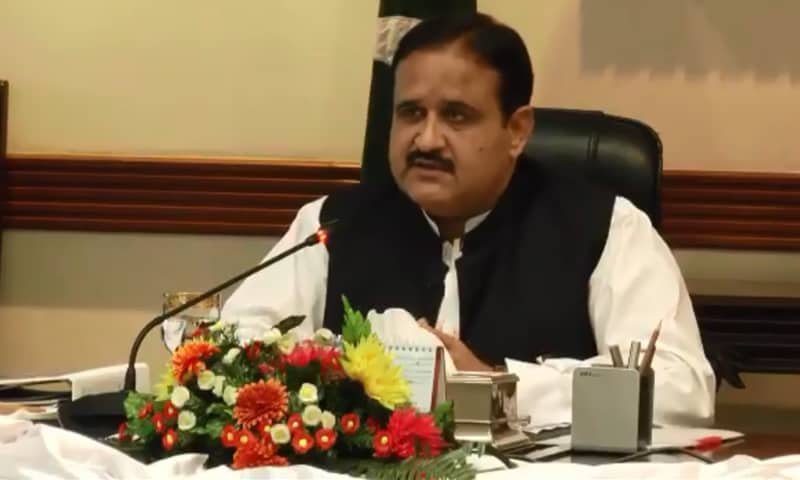
    The Punjab government has spent Rs8.6 million in 16 months — from August 2018 till November 2019 — on the helicopter flights of Chief Minister (CM) Sardar Usman Buzdar, including 14 flights to his hometown and constituency, Punjab Information Commission has revealed.

    According to data released by the commission, CM Buzdar made his first visit to Mian Channu and Pakpattan from Lahore on August 28, 2018, on his official helicopter soon after assuming the office.

    In September 2018, the helicopter was used twice for local flying in Lahore. Interestingly, the helicopter was used five times in October out of which Prime Minister (PM) Imran Khan used it thrice to visit Punjab Governor’s House during his visits to the provincial capital.

    In November 2018, the official helicopter was used 14 times — thrice to Dera Ghazi Khan, which is also the constituency of the Punjab CM. The official chopper was used to visit Taunsa Sharif, the hometown of the provincial chief executive, during the same month.

    In February 2019, Buzdar paid a visit to Multan, Rajanpur and DG Khan while in the same month he also went to Taunsa via helicopter.

    In April 2019, the Punjab CM made 28 trips on his official helicopter of which five were made to Taunsa. In May 2019, he made 27 visits, eight in July, 13 in August, 10 in September, 14 in October, and 11 in November, of which two trips were to DG Khan.

    He also made several visits to Pakpattan on board his official helicopter during this period.

    The Punjab government helicopter made a total of 164 flights and remained air borne for 119 hours and 30 minutes during this period.

  • Every day I’m told it’s my last in power… I am the only choice: PM

    Every day I’m told it’s my last in power… I am the only choice: PM

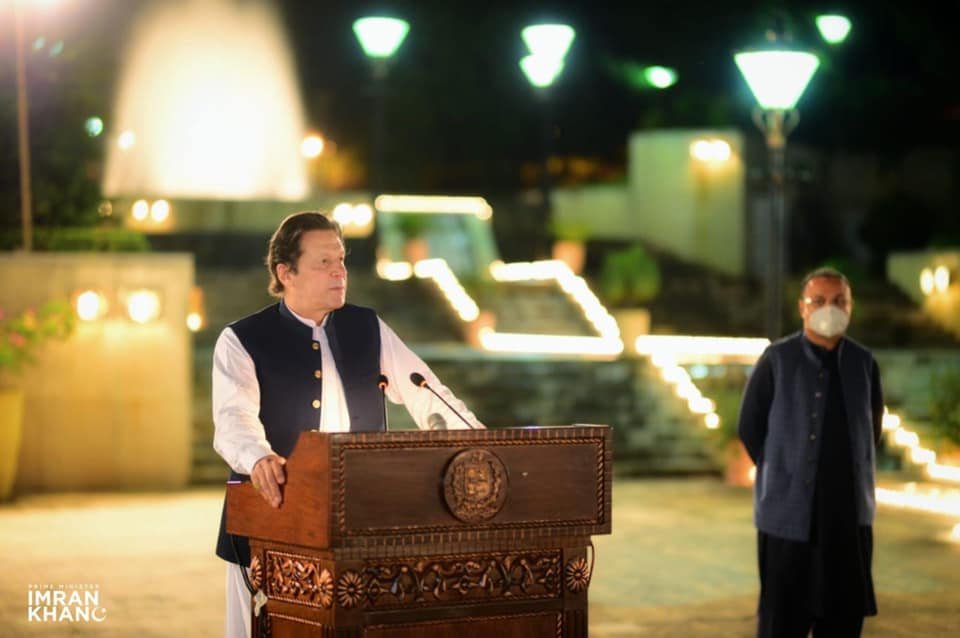
    Prime Minister (PM) Imran Khan has said that every day he is told by someone that it, or the day after, is his last in power, but he knows he can “easily complete his five-year tenure”.

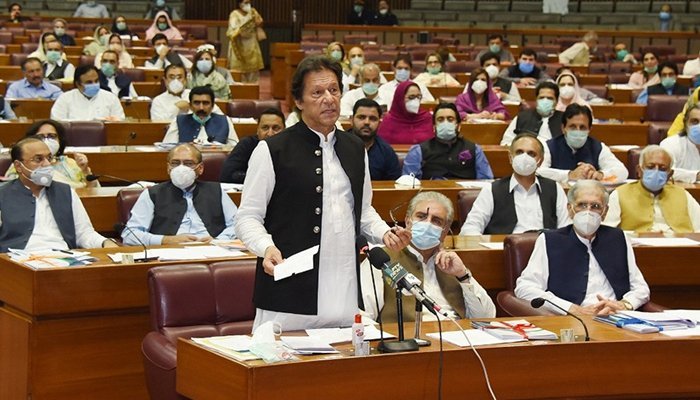
    Addressing a dinner reception hosted at the PM House to muster support of the ruling Pakistan Tehreek-e-Insaf (PTI) lawmakers as well as coalition partners for the passage of budget 2020-21 in the face of its rejection by the joint opposition, the premier asserted that his government would definitely complete its five-year term because he was determined to face every challenge.

    “I am the only choice,” he said, adding that all rumours regarding his government’s uncertain fate and the challenges facing his administration would cease to exist “if he strikes a deal with people”.

    He was of the opinion that opposition leaders had a bigger stake than the ruling PTI.

    According to Dawn, a participant of the event quoted PM Imran as saying that the members of opposition parties had a bigger stake because if PTI leaders lose the election they would only lose their seats while “if opposition leaders lose them, they would go to jail”.

    Responding to the allegation that the government was being run by a team of non-elected people, the premier said, “If we have included some non-elected members in the cabinet, they [opposition parties] had filled the slots with their relatives.”

    He reportedly also asked PTI leaders and all government allies to get the budget passed on Monday with a significant majority and spoke about the recent hike in petroleum prices, corruption as well as coronavirus in the country.

    The function concluded after the PM’s address, as no one spoke after him on the occasion.

    As many as 14 MNAs belonging to the Imran-led PTI, Pakistan Muslim League-Q (PML-Q) Baloch­istan National Party-Mengal (BNP-M), Pakistan Awami Muslim League (PAML) did not attend the dinner, reports said.

    It merits a mention that a day later, the National Assembly has approved the federal budget for the fiscal year 2020-21, despite the opposition’s vow to not let it sail through the house.

  • Audit unearths Rs270,000,000,000 corruption, irregularities under PTI govt in one year

    Audit unearths Rs270,000,000,000 corruption, irregularities under PTI govt in one year

    The first audit report of the Pakistan Tehreek-e-Insaf (PTI) government has unveiled irregularities and corruption to the tune of Rs270 billion in 40 departments and ministries.

    According to Dawn, the Auditor General of Pakistan (AGP) has unearthed misappropriation and embezzlement of public funds to the tune of over Rs12 billion, with irregularities of government funds amounting to Rs258bn.

    The AGP’s report covers the fiscal year 2018-19 — the first year of the PTI government — and recommends strict action, including references, to investigation agencies against those responsible. The AGP has finalised its report on audit year 2019-20 and it would be submitted to parliament and the president in a couple of days.

    The report also disclosed that record for a number of entities and accounts was not given to audit teams in violation of rules.

    The audit revealed corruption and fake receipts in ministries and departments to the tune of Rs12.56 billion. It stated that recovery cases of Rs79.59 billion in federal ministries were reported and a record of Rs17.96 billion was not provided to the auditor general by government departments.

    The report further said that Rs8.89 billion in corruption cases had been recorded owing to weak internal controls and cases worth Rs152.20 billion were reported due to poor financial management.

    The AGP recommended that government institutions not be allowed to undertake expenditures unless approved from the parliament and similarly, to not allow supplementary grants to these institutions without the parliament’s approval.

    He recommended that corruption cases be handed over to investigative agencies.

    A government minister while commenting on the audit report said that such irregularities during the period of past governments used to involve up to Rs1,000 billion. Geo quoted Minister for Industries Hammad Azhar as saying the graph had come down by 80 per cent but added that the PTI government needed to improve it further.