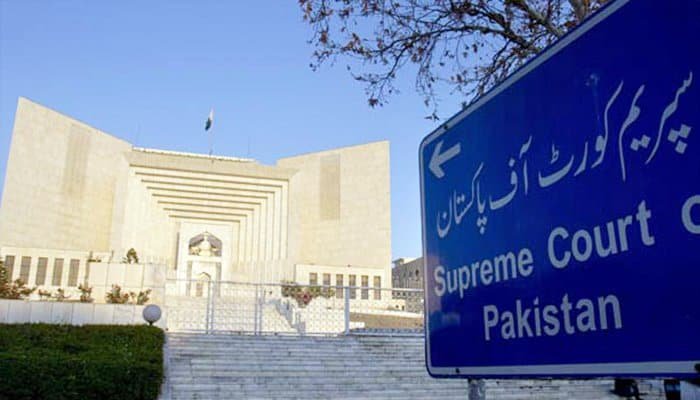
Despite coronavirus continuing to spread across the country, the Supreme Court (SC), which seems to be at odds with the government over the latter’s handling of the pandemic, has ordered the reopening of shopping malls across the country.
According to the details, a five-member larger bench of the apex court was hearing a suo motu case regarding measures taken to curb the spread of COVID-19.
The bench was headed by Chief Justice of Pakistan (CJP) Gulzar Ahmed while Justice Umar Ata Bandial, Justice Mazhar Alam Khan Miankhel, Justice Sajjad Ali Shah and Justice Qazi Muhammad Amin Ahmed were also on the bench.
During the hearing today, Chief Justice of Pakistan Gulzar Ahmed remarked that if the shops are shut down then shopkeepers will ‘die of hunger rather than the coronavirus’.
CJP Ahmed said that in Karachi, except for five big malls every market has resumed operations.
Upon which, Commissioner Karachi Iftikhar Shallwani said that a few markets were sealed for not following the Standard Operating Procedures laid out by the government.
“The sealed markets should be opened and instead of intimidating them (shop owners) make them understand (the situation and SOPs),” remarked the top judge.
The CJP noted that the SOPs will be ‘better implemented’ at the big shopping malls.
The apex court also ordered that on the weekends, all the small markets should remain open to public.
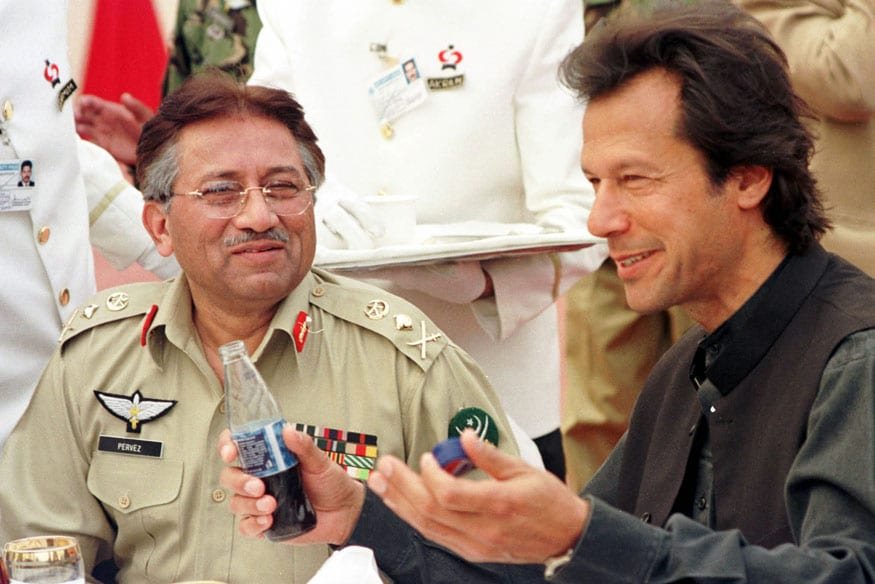
Former president and Pakistan People’s Party (PPP) Co-chairperson Asif Ali Zardari has said that Prime Minister (PM) Imran Khan is following the footsteps of former military ruler General (r) Pervez Musharraf, adding that the Pakistan Tehreek-e-Insaf (PTI) government has ruined national consensus.
Speaking to PPP leader Qamar Zaman Kaira on the coronavirus crisis and the evolving political situation in the country, Zardari criticised the government, saying that it wants to curtail constitutional and financial powers of provinces.
“This government is fighting the opposition instead of fighting coronavirus,” he said.
Referring to PPP’s past tenure, the former president stated that when he came to power in 2008, the country was a victim of terrorism and division. “We conducted the Swat operation through national consensus and brought peace [throughout the country],” the former president asserted.
The PPP and the PTI have been trading barbs over the past few weeks. On Tuesday, after being criticised for the second consecutive day by Foreign Minister Shah Mahmood Qureshi in the Parliament House, PPP Chairman Bilawal Bhutto-Zardari had demanded that the foreign minister either withdraw his statement against PPP or resign from his position.
The minister had spoken at length about PPP’s style of governance and the participation of the province in national decision-making, saying that the former ruling party was focused on only provincial politics rather than thinking of the entire country.
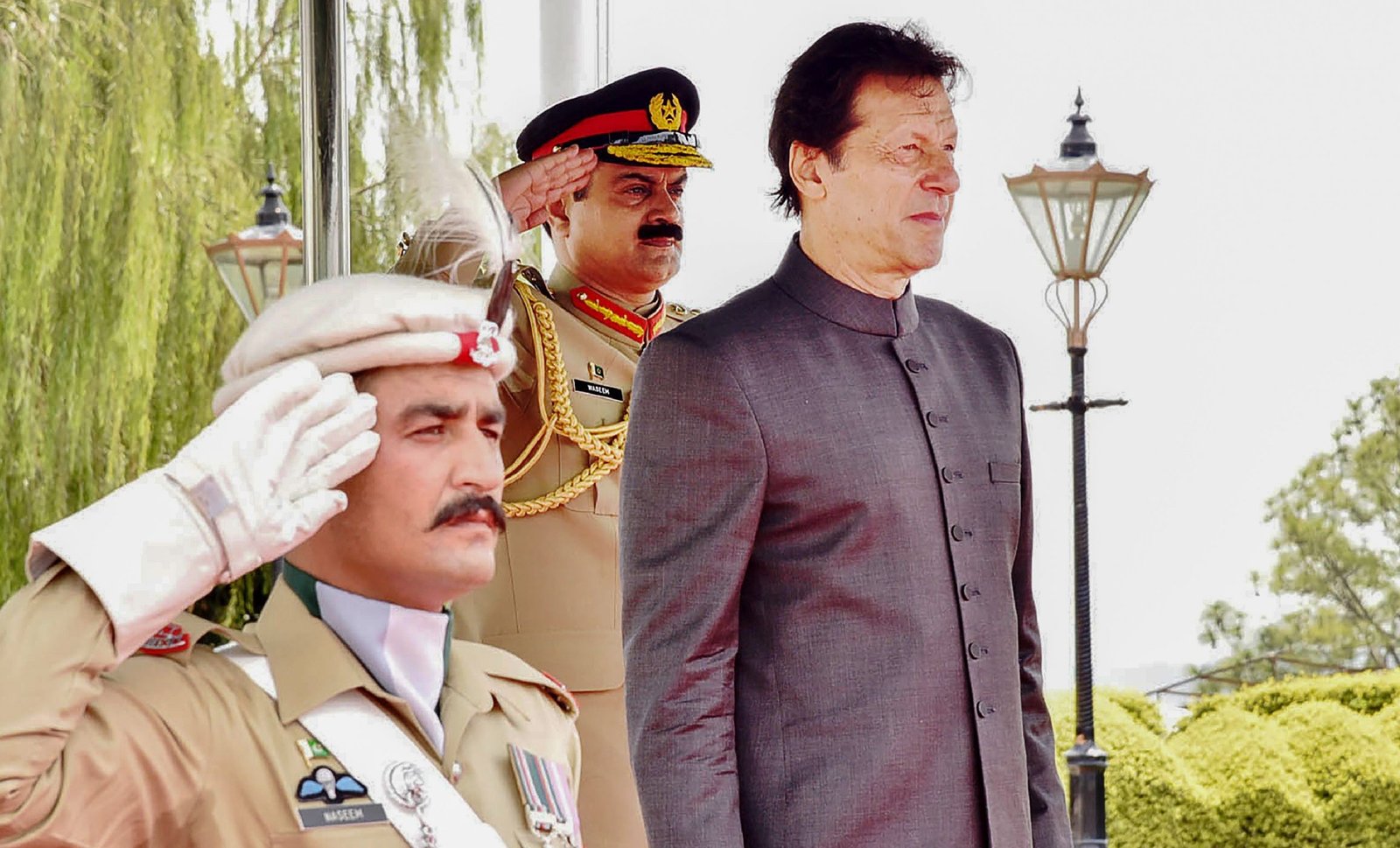
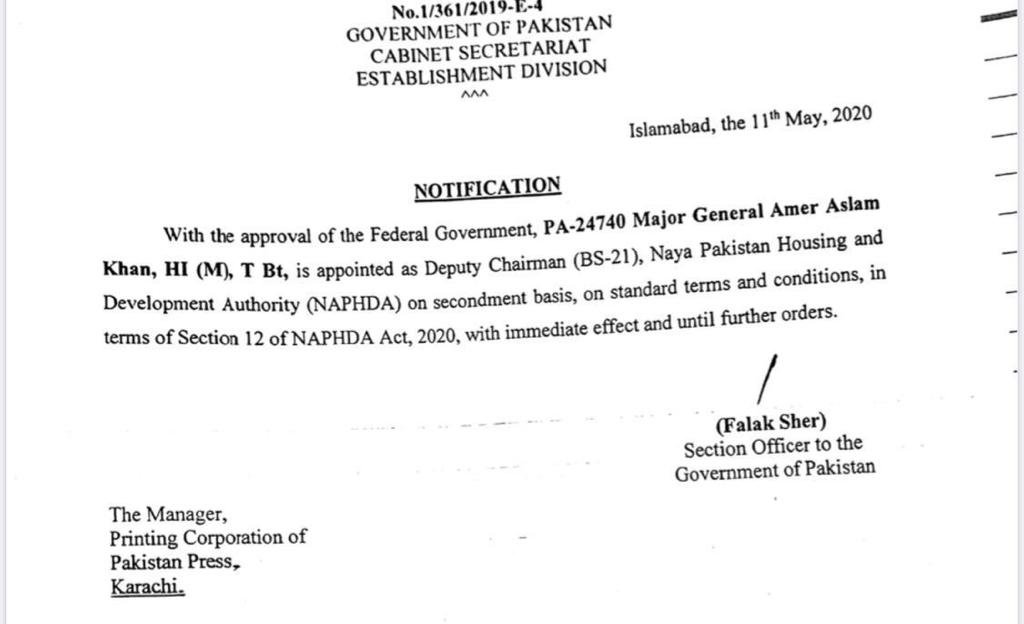
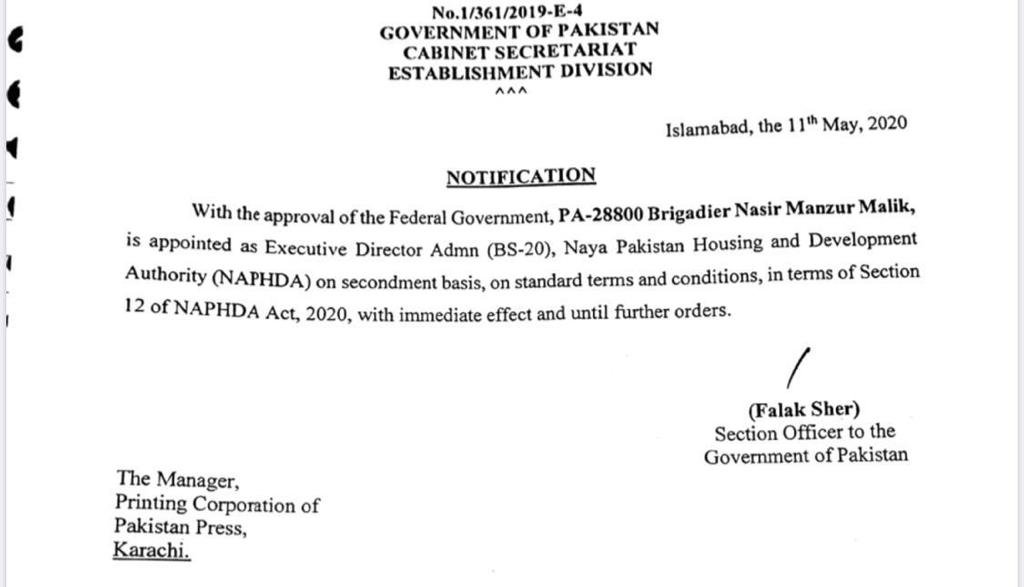
Prime Minister (PM) Imran Khan has appointed Major General Amer Aslam Khan as the deputy chairman of the Naya Pakistan Housing and Development Authority (NPHDA) while Brigadier Manzur Malik has been appointed as the executive director admin of the same, an Establishment Division notification revealed.
According to the notification, a copy of which is available with The Current, both officials have been appointed on a secondment basis, on standard terms and conditions, under Section 12 of NPHDA Act, 2020, with immediate effect.
Naya Pakistan Housing is a flagship project of the Pakistan Tehreek-e-Insaf (PTI) government that would provide housing facility to the homeless population, accelerate economic activity in the country and provide job opportunities to the youth.
Last year, the government had launched the scheme for the provision of five million housing units to low-income population.
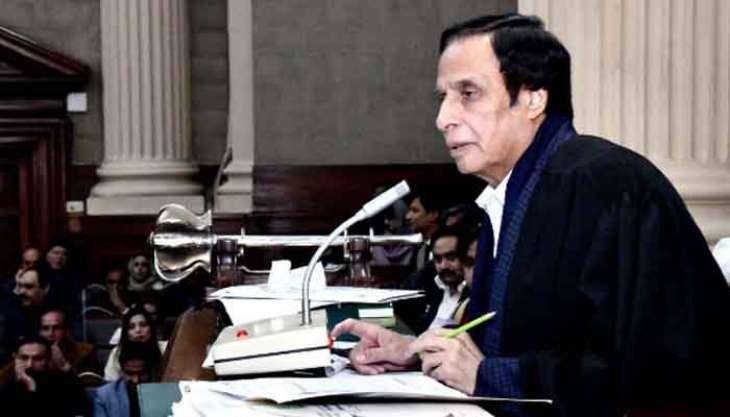
Almost all 371 members of the Punjab Assembly are at risk of contracting the deadly coronavirus as the speaker of the provincial house and senior leader of the Pakistan Muslim League (PML), Chaudhry Pervaiz Elahi, continues to chair assembly sessions despite coming into contact with Deputy Speaker Dost Muhammad Mazari, who tested positive for COVID-19 on Sunday.
CORONAVIRUS PATIENT:
As per the details, Mazari tested positive for the novel virus days after he returned from Dubai by a special Pakistan International Airlines (PIA) flight along with his two cousins just over a week ago. After landing at the Multan airport, they reportedly left for Lahore without being quarantined there.
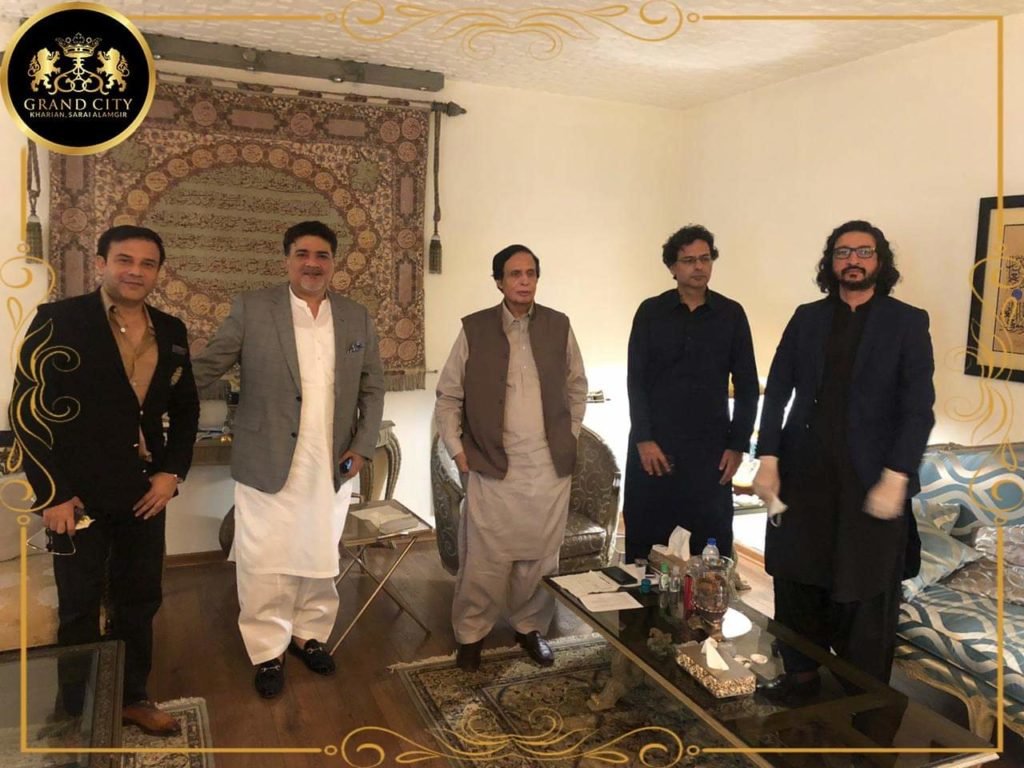
“As their departure was against the official Standard Operating Procedures (SOPs) in wake of COVID-19 outbreak, Mazari had told a joint team of the district administration and the Civil Aviation Authority (CAA) that they would isolate themselves,” sources told The Current, adding that the deputy speaker, however, continued with his routine in Lahore and came into contact with dozens of people, including Elahi, his son Moonis Elahi, as well as property tycoons Syed Rehan Gilani and Syed Salman Gilani.
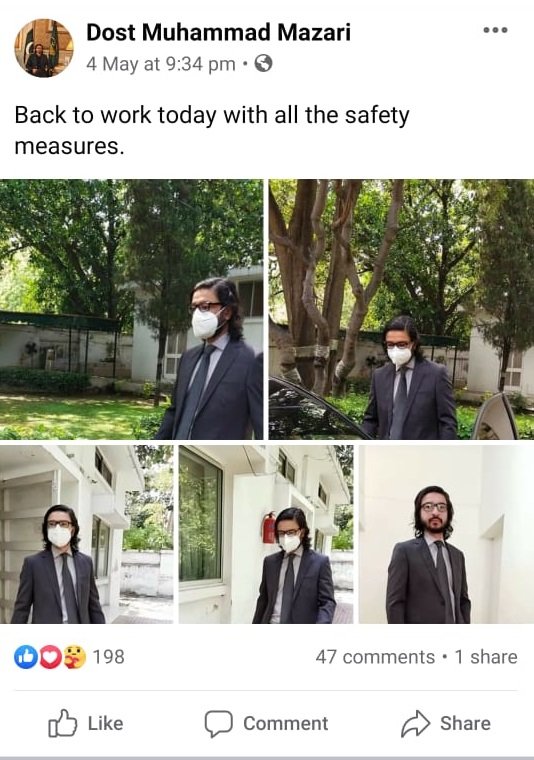
While Mazari claims he is following all SOPs and has stayed in self-isolation since after returning from the United Arab Emirates (UAE) despite his first test coming out negative, the above picture from days leading to the deputy speaker’s second test that came out positive, as well as an album shared to his social media account on May 4, suggests otherwise.
“He interacted with several people, including his friends, colleagues and Punjab Assembly staffers, until his second test confirmed that he had contracted the virus. All those people he met must have come into contact with hundreds of others,” sources said.
Speaking to The Current, Mazari confirmed all developments while clarifying his position. “I landed in Multan where I was received by the district administration. I told them how I had to rush to Lahore for a very important official meeting and was allowed to do so.”
He said he coordinated with the officials concerned in Lahore and quarantined himself along with his cousins at a local hotel as per government SOPs. “I stayed there until I took the test that came out negative. I shared my reports with the hotel management and government officials concerned, who allowed me to leave.”
“I was congratulated by Pervaiz Elahi Sahib and others over my reports and told to resume discharging my duties… and so I did,” the deputy speaker said, confirming that he went on to attend the meetings this scribe highlighted.
When asked why did he not follow government instructions as per which any international passenger who tests negative “will be advised compulsory self-isolation to complete a 14-day period”, Mazari said he did what he was told to and wasn’t aware of “any changes to the SOPs that have now been made”.
“It wasn’t until the first week of May that I tested positive, which was seven or eight days after my return to the country. Since then, I am in complete isolation and am doing fine.”
He went on to say that he had informed the Punjab Assembly speaker of his infection and advised him to get tested. “I think Chaudhry Sahib has also taken the test. He, undoubtedly, won’t take it lightly and ensure all precautionary measures.”
Mazari also announced that once he has recovered, he will be donating blood plasma to help critical patients fight the virus. “We must take care of ourselves and others. That’s the only way to defeat coronavirus,” he said.
MPAs AT RISK:
While Moonis Elahi is now in Gujrat, his father, who also met Mazari last week, is going on to chair the sessions of the Punjab Assembly for the past four days.
When contacted, Pervaiz Elahi’s close aide, who is also a member of the speaker’s personal staff, Chaudhry Iqbal, confirmed that the speaker had not isolated himself.
To a question, he said that Elahi had come into contact with Mazari but neither had he gone into self-quarantine nor was he planning to do so. “He is chairing a 150-member session of the Punjab Assembly right now.”
It may be noted that as per the SOPs for holding assembly sessions amid the COVID-19 outbreak, only 100 out of 371 MPAs are being allowed to attend the session each day so as to ensure social distancing inside the house where, so far, at least three staffers have tested positive for the virus.
The ratio of 52 and 48 has been set which means that only 52 MPAs from the government and 48 MPAs from the opposition benches can attend the proceedings.
The entry of guests and staff of MPAs is also completely banned while only the minister concerned will answer the questions of lawmakers during the question-hour.
The assembly secretariat has also installed a disinfection tunnel at the entry gate while lawmakers will use masks and gloves to protect themselves from the virus. Only those MPAs will be asked to attend the proceeding who have their questions on the agenda item.
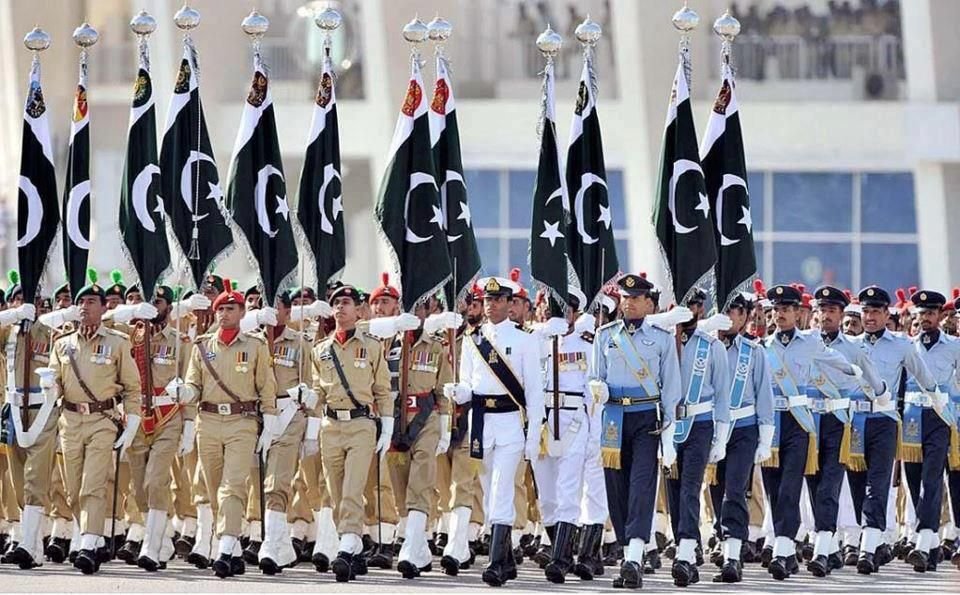
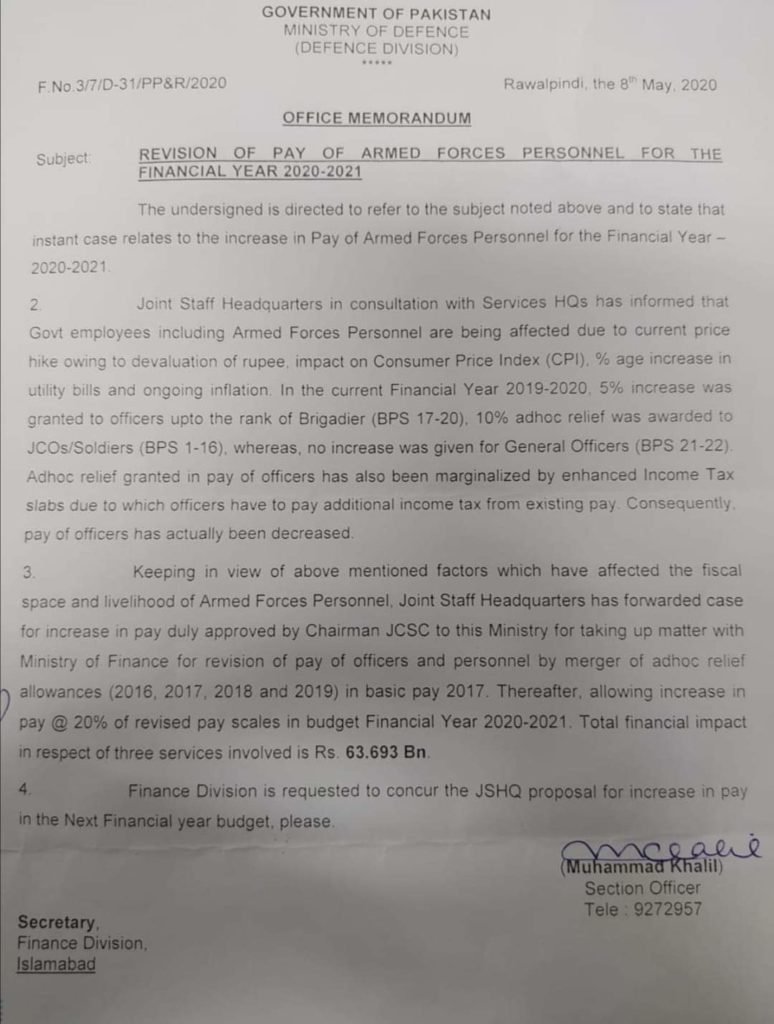
The armed forces of the country have sought a 20 per cent increase in the salaries of their personnel for the financial year 2020-2021, which will cost an estimated Rs63.67 billion.
According to a letter forwarded by the Defence Ministry to the Finance Division, a copy of which is available with The Current, the joint staff headquarters, in consultation with the services headquarters, has sought an increase in the salaries of armed forces personnel for being affected due to the current price hike owing to the impact of the devaluation of rupee on consumer price index (CPI), increase in utility bills and the persisting wave of inflation.
In the current financial year 2019-2020, a five per cent increase was granted to the officers up to the rank of brigadier (BPS 17-20) and 10 per cent ad hoc relief was awarded to JCOs/soldiers (BPS 1-16), whereas no increase was given to general officers (BPS 21-22).
Ad hoc relief granted in the pay of the officers has also been marginalised by enhanced income tax slabs due to which officers have to pay additional income tax from existing pay.
Consequently, the pay of officers has actually decreased during the current financial year, the document maintained.
Keeping in view the above mentioned factors, which have affected the fiscal space and livelihood of the armed forces personnel, joint staff headquarters have forwarded a case for the increase in pay duely approved by the chairman joint chief of staff committee to the Defence Ministry for taking up the matter with the Finance Ministry for the revision of pay of armed forces personnel.
The Defence Ministry had also sought that the adhoc relief allowance for the year 2016, 2017, 2018 and 2019 be merged in the basic pay scale, and proposed a 20 per cent increase in the revised pay scale in the upcoming budget 2020-2021.
Meanwhile, according to a Defence Ministry official, if the proposal of merging of four ad hoc allowances into revised pay scale is allowed along with a 20 per cent raise in salaries and pension of all employees, including civilians and armed forces, it will require Rs150 to Rs200 billion in the next budget.
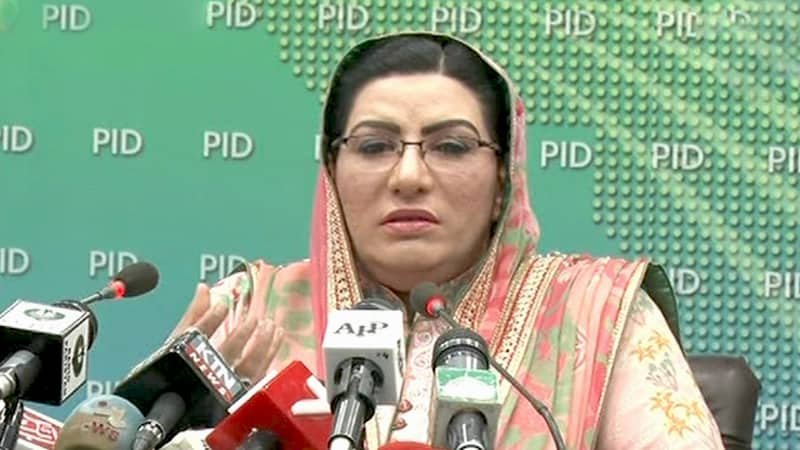
Former special assistant to prime minister (SAPM) on information and broadcasting Dr Firdous Ashiq Awan was refused government-owned residence in Multan for an overnight stay, Geo reported.
The former SAPM travelled to Multan from Karachi in a car and was accompanied by friends and a maid. However, reports said, upon arrival at a government-owned circuit house in Multan, she was refused entry by the night guard who said that she was not a public office holder anymore. Firdous asked the guard for a Sehri meal but was refused again and had to send her driver to the market to purchase a meal.
The former SAPM exchanged hot words with the lower staff of the government residence and tried to get in touch with Pakistan Tehreek-e-Insaf’s (PTI) District President Khalid Javed Warraich and Deputy Commissioner (DC) Amir Khattak, but their phones were switched off.
The news outlet reported that when the caretaker of the official residence was contacted, he said that there was no advance booking and the lower staff did not have the authority to allot a room to someone not holding a public office. He added that when he reached the circuit house in the morning on Sunday, Firdous had already left for Lahore.
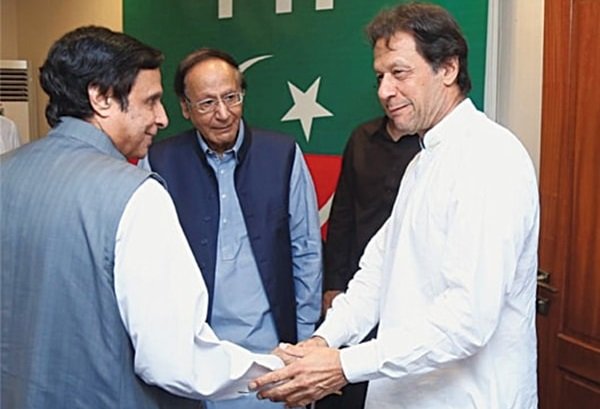
With the National Accountability Bureau (NAB), in line with Prime Minister (PM) Imran Khan’s vision of holding the corrupt accountable, planning to reopen a decades-old investigation against the Chaudhrys of Gujrat, trouble seems to be around the corner for the ruling Pakistan Tehreek-e-Insaf (PTI) that is in power owing to the support of its allies, including the Chaudhry cousins’ Pakistan Muslim League (PML).
PML President Chaudhry Shujaat Hussain and his cousin, Punjab Assembly Speaker Chaudhry Pervaiz Elahi, have approached the Lahore High Court (LHC) against NAB Chairman Justice (r) Javed Iqbal’s jurisdiction after reports said that an investigation into the assets of the two leaders was being re-opened 19 years later.
Reiterating that the accountability watchdog has no authority to reopen an almost two-decade-old case that had already been closed, the Chaudhrys, in their petition, have questioned the jurisdiction of NAB to invoke provisions of the National Accountability Ordinance (NAO) 1999 and Anti-Money Laundering Act 2010 simultaneously, arguing that the bureau has no power to hold an inquiry into allegations of money laundering under NAO 1999.
While the court has directed the NAB chief and other parties to submit a reply till May 11, the bureau alleges that it is facing propaganda onslaught since after reports of reopening of the alleged cases against the PML leaders and the decision in this regard is yet to be taken by the NAB chief.
The Chaudhrys, however, are convinced that the anti-graft watchdog is an institution of “political engineering”.
“NAB is an independent institution and worked transparently without an influence,” NAB has in response to the allegations levelled by the PML leadership, which seem to support the stance of opposition parties, including the PML-Nawaz (PML-N) and the Pakistan People’s Party (PPP), as leaders of both the former ruling parties have time and again also accused the government of using the anti-graft watchdog for political vendetta.
TROUBLE FOR IMRAN?
“Relationship between PM Imran and the Chaudhrys is not based on principles, but is rather a marriage of inconvenience since the two need each other in the post-2018 election scenario, when Imran, despite all his reservations about them was left with no other choice but to reach an agreement to come to power,” sources told The Current.
They said it was interesting how the PML leadership was trying to evade the process of accountability that the premier has a special place for in his heart, adding that members of the opposition parties and even some from both the PTI and PML are eagerly waiting for whatever is to follow the episode.
“The PTI has a total number of 156 members in the Lower House [National Assembly] against rival PML-N’s 84 and the PPP’s 55. The two largest opposition parties also enjoy the support of a few independent lawmakers in addition to those from other parties of the anti-government alliance,” they said, adding that the support of MNAs from the PML among other allies such as the Muttahida Qaumi Movement-Pakistan (MQM-P) was imperative for the PTI to keep on enjoying a majority in the parliament.
“PTI seems to be struggling in this regard as it has lately not been the best of friends with many of its allies. Other than the PML and MQM-P, Balochistan National Party-Mengal (BNP-M) is also not very happy and is finding it difficult to not break ties,” a senior member of the ruling party, on the condition of anonymity, told The Current.
To a question, they said that if the PML strikes a deal with the opposition parties, the current system would collapse like a “house of cards” as it is no secret that PTI is in power in Punjab also only because of the Chaudhry’s support. “Independent members do not mind joining hands with whoever seems to be in charge.”
“The recent developments regarding the NAB’s old case against Chaudhrys coincided with their recent meetings with some PML-N leaders, including Rafiq brothers and some backdoor exchange of possibility of cooperation between the two. This has led to them believing that the PTI is trying to force them back into the coalition and not jump ship,” said a close aide of Pervaiz Elahi.
They, however, refused to shed light on the possible troubles facing Chaudhrys because of Punjab Chief Minister (CM) Usman Buzdar, who had also elevated to the position of the provincial chief executive as part of the deal struck between the PTI and PML.
MOONIS SAYS ‘NO COMMENT’:
When contacted, senior PML leader and son of Pervaiz Elahi, Moonis Elahi, refused to comment on the situation.
The PML leader was asked about his party’s goals with regard to taking NAB to court; why was the PML, despite being an ally of the PTI, not letting the anti-graft body go through with its aim to eradicate corruption; and who exactly was using NAB as a tool for political engineering as claimed by the party.
He said that the party leadership and lawyers had strictly told them not to directly comment on the case as it was sub-judice and any statement could be used against them in court.
The federal government has decided to gradually lift the lockdown restrictions, imposed to contain the coronavirus, from Saturday, Prime Minister Imran Khan announced after the National Coordination Committee (NCC) meeting on Thursday.
The announcement came in spite of the 46 deaths, highest recorded so far in the country, as the total number of coronavirus cases shot to 24,954 with the addition of over 1,300 cases in a single day. From April 28 to May 7, 297 coronavirus deaths have been reported in the country; these account for more than 49.7 per cent of the total number of deaths till May 7, which stands at 593.
Pakistan is recording 1,000 new coronavirus cases on average daily, the World Health Organization (WHO) said in its daily situation report about the disease in the country.
The WHO report, dated May 6, stated that the number of cases reported per day has risen to 1,000 on average this week in Pakistan, doubling since mid-April.
Punjab and Sindh have the highest number of infection, with 9,195 and 9,093 cases, respectively. Balochistan and Khyber Pakhtunkhwa have reported 1,725 and 3,956 cases each. In Islamabad and Gilgit-Baltistan, the infection swelled to 521 and 388, respectively. However, Azad Kashmir has the lowest number of cases, with 76 infections so far.
As per the WHO report, the highest case density is reported from Gilgit-Baltistan, followed by Islamabad and Sindh.
Comparing the testing numbers of each province and the federating units, the report notes that Islamabad has the highest testing per million of its population, followed by Gilgit-Baltistan, Sindh, Punjab, Balochistan and Khyber Pakhtunkhwa.
Majority of the country’s case fatalities have been reported from Khyber Pakhtunkhwa, according to the situation report.
Moreover, 84% of the confirmed cases are between the ages of 20 and 64 years, while the highest mortality rate, 74%, is amongst the age bracket of 50-79 years.
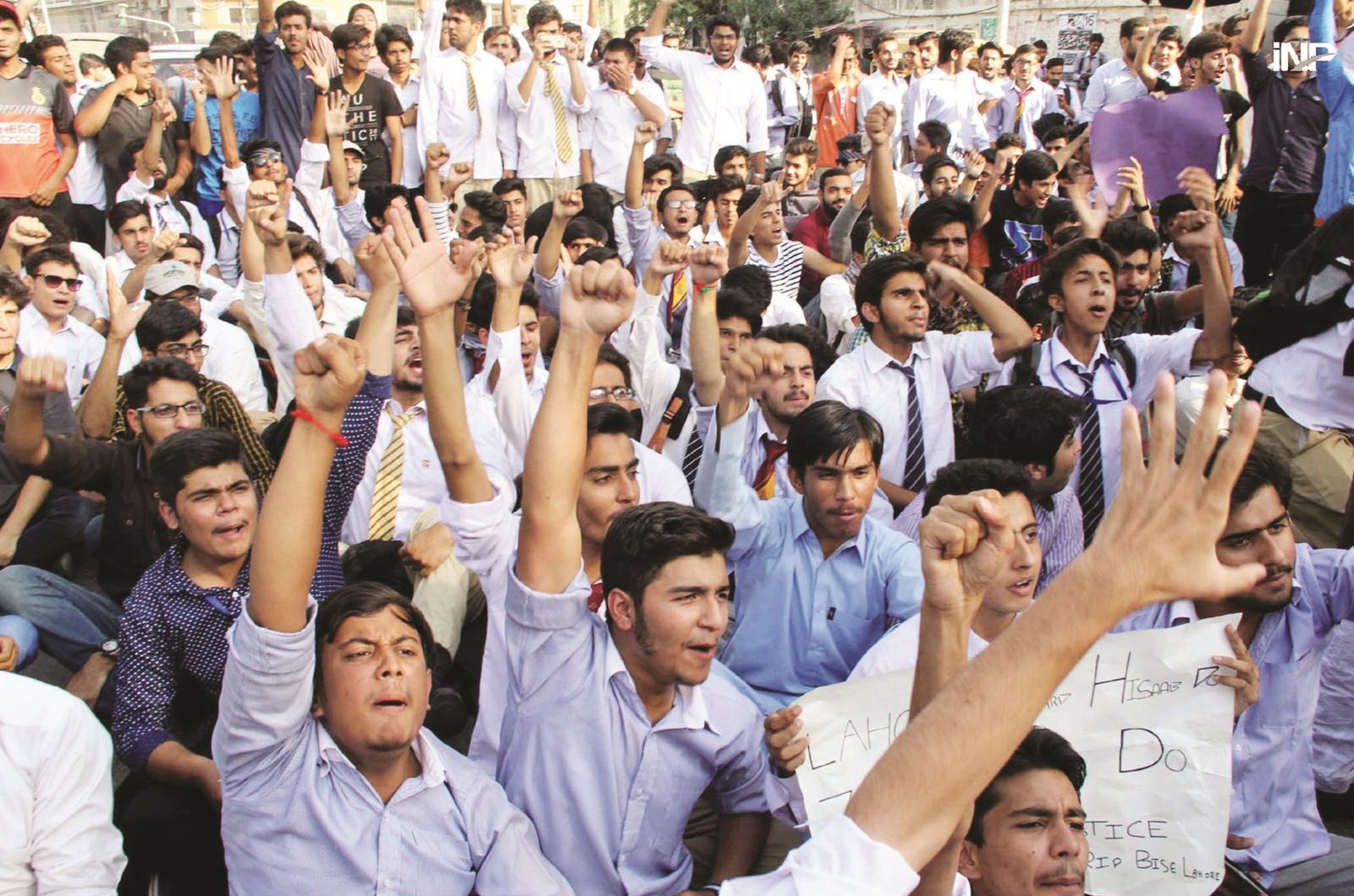
Federal Education Minister Shafqat Mehmood has announced the cancellation of all board exams across the country as the coronavirus outbreak continues to worsen.
Speaking after the National Coordination Committee (NCC) meeting in Islamabad Thursday, Mehmood said that all provinces have decided to keep schools closed till July 15, whereas all students of grades 9 and 10, besides those of intermediate parts I and II, will be promoted on the basis of their results from the previous class.
“All board exams have been cancelled and students of class 9, 10, 11 and 12 will be promoted for the next class on the basis of results obtained in the previous class,” he said, adding that student can seek admissions to universities on the basis of their results from the 11th grade.
Two important decisions taken by PM Imran Khan in the NCC today. One, All educational institutions will remain closed till July 15. Two, ALL Board exams throughout the country have been cancelled. Students would be assessed on their previous performance in Board exams.
The minister further said that the decision was taken with the consensus of all provinces and students will be able to enroll in the next class as soon as schools reopen in July.
Meanwhile, the government has decided to begin lifting lockdown restrictions from Saturday (May 9), Prime Minister (PM) Imran Khan has announced.
The government’s Economic Coordination Committee (ECC) has approved a “supplementary grant” of Rs1.66 billion for the upgradation of Special Telecom Monitoring Project at the directorate of the Inter-Services Intelligence (ISI).
According to a press release issued by the Press Information Department (PID), the ECC has also approved a supplementary grant of Rs500 million for the construction of Special Education School at the Defence Complex in Islamabad.
The proposals for “technical supplementary grants” were moved by the defence division, the press release said.
The committee has also instructed the ministry of national security and research to ensure procurement of wheat as per 8.25 million tonnes target set for the public sector this year.
The ISI is the premier intelligence agency of Pakistan, operationally responsible for gathering, processing and analysing national security information from around the world.