Tag: PTI government

  • Pakistan to lose Rs628,000,000,000 by June

    Pakistan to lose Rs628,000,000,000 by June

    A report prepared by the sub-committee of the National Coordination Committee (NCC) for coronavirus has said that the country, due to an adverse impact of COVID-19 on the economy, will record a loss of over Rs628 billion by the end of the current financial year.

    The report ‘COVID-19: Preliminary Macroeconomic and Socioeconomic Assessment’ said almost all the departments of the country were going in a loss due to lack of human activity in the wake of the pandemic that has killed over 200,000 people worldwide.

    Giving a breakdown of the losses, the report said the Aviation Division will face an estimated financial loss of Rs13.6bn; the Pakistan Stock Exchange Rs250bn; Petroleum Division Rs 87bn; Ministry of Energy (Power Division) Rs136bn; Pakistan Railways over Rs7 bn; National Food Security Rs 55bn; Overseas Pakistanis over Rs 76bn; Ministry of Information Technology Rs1-5bn under the head of withholding tax; and Maritime Affairs will report a loss of Rs30 million.

    It further said that the Federal Board of Revenue will face a total estimated revenue shortfall of Rs600bn in the last three months of the current financial year.

    The report also suggested the way forward to deal with losses, saying some measures have already been taken.

  • ‘U-Turn’: Ahmadis excluded from National Commission for Minorities

    ‘U-Turn’: Ahmadis excluded from National Commission for Minorities

    In what netizens are calling “another U-Turn by the ruling party”, the federal government has reportedly withdrawn its decision of including Ahmadis to the National Commission for Minorities.

    According to reports, following recommendations from the Ministry of Religious Affairs, the government on Tuesday withdrew its earlier decision to give representation to the Ahmadi community in the minorities commission.

    They said that the decision was reconsidered after the move sparked fierce criticism from the religious right on mainstream and social media.

    Meanwhile, the federal cabinet has approved the reconstitution of the commission.

    A Hindu community member from Sindh, Chela Ram Kewlani has been named as chairman of the commission while Maulana Syed Muhammad Abdul Khabir Azad and Mufti Gulzar Ahmed Naeemi will represent the Muslim community.

    Three members each have been selected from the Hindu and Christian communities, while two members have been named from the Sikh community and one member each will represent Kelash and Parsi communities in the commission. The chairman of the Council of Islamic Ideology (CII) will be the commission’s ex-officio member while the religious affairs secretary will also act as the commission’s secretary.

    The federal cabinet on April 15 had decided in principle that the Ahmadi community, being a minority in accordance with the Constitution of Pakistan, should also be represented in the commission.

    The Ahmadi community of Pakistan was to be included in the commission for the first time since 1974, when they were declared non-Muslim by the then Pakistan People’s Party (PPP) government.

  • PM Imran approves special CSS exam to fill 188 vacancies

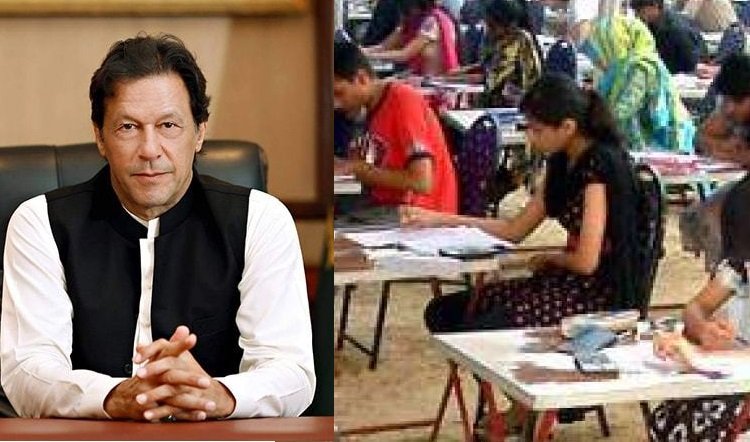
    PM Imran approves special CSS exam to fill 188 vacancies

    Prime Minister (PM) Imran Khan has approved the special Central Superior Service (CSS) exam to fill 188 vacancies.

    “Balochistan 49, Rural Sind 41, Urban Sind 19, KP 22, ex Fata/GB 16 & AJK 2. We truly believe in giving equal opportunities to all federating units [sic],” tweeted Special Assistant to Prime Minister (SAPM) on Establishment Shehzad Arbab.

    Speaking to a private media outlet, Arbab said the exam is likely to be conducted by year-end.

    Annual CSS examinations are held to recruit candidates to the permanent elite bureaucratic authority, and the civil service that is responsible for running the civilian bureaucratic operations and government secretariats and directorates of the Cabinet of Pakistan. The premier is the final authority on all matters regarding the civil service.

  • New deal on the table? Proposed NAB law can undo Nawaz and Maryam’s conviction

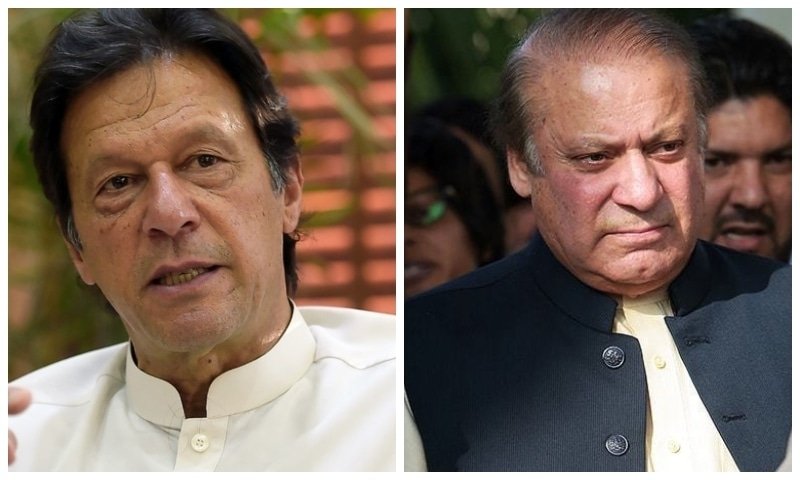
    New deal on the table? Proposed NAB law can undo Nawaz and Maryam’s conviction

    Amid government’s efforts to amend the 18th Amendment that turned Pakistan from a semi-presidential to a parliamentary republic, which the ruling Pakistan Tehreek-e-Insaf (PTI) cannot do without the support of opposition parties owing to its strength within the parliament, the Pakistan Muslim League-Nawaz (PML-N) in collaboration with Pakistan People’s Party (PPP) has prepared a draft of proposed changes in NAB Ordinance and shared it with power brokers which, if incorporated, will undo the conviction of former Prime Minister (PM) Nawaz Sharif and his daughter Maryam Nawaz for now.

    According to The News, a Lahore-based businessman who was in the custody of the National Accountability Bureau (NAB) until recently, is a go-between in this process as he is equally close with the power brokers. In a meeting arranged at his place on April 24, a draft was prepared. Shahid Khaqan Abbasi represented PML-N and Farooq H Naek was from the PPP side.

    While Abbasi says he did not attend any such meeting, a picture of the same showed him present there. It has also been learnt that Nawaz is not up for amendments and insists on scrapping the anti-graft body altogether.

    Former premier Abbasi has not only confirmed the preparation of a new draft, but also said that he offered a set of recommendations aimed to reform NAB and they were incorporated in the draft. However, he dispelled the impression that the draft has either been shared with apolitical players or is being used as a bargaining ploy on the 18th Amendment.

    A PML-N leader, however, was quoted as saying that Abbasi has been given the task at his own desire to mend the fences through a common friend as the channel used during the amendment to the Army Act had now become dysfunctional.

    According to reports, the draft indicates that it will be beneficial for the entire political class in general and for Nawaz in particular — Nawaz, who was thrown out as the country’s chief executive through the instrument of disqualification. The proposed amendment under question is related to section 15 of the ordinance dealing with disqualification. In sub-section (a), reads the proposed change, the words “forthwith cease to hold public office” shall be omitted and substituted by “cease to hold public office after the appeal process against his conviction has been exhausted”.

    Presently, disqualification comes into effect with conviction from a trial court whereas the proposed change suggests it be actualised only after the entire appeal process is exhausted.

    In addition, the burden of proof has been proposed to be shifted on NAB, unlike the present practice where the accused has to prove that the allegations leveled against him or her are untrue. Likewise, the proposed change requires that an offence should form part of NAB jurisdiction only when public money equivalent to Rs1 billion or above is involved. Remand duration has been proposed to be limited to 14 days instead of making it extendable up to 90 days.

    Among other proposed rules, NAB chairman’s power has also significantly been curtailed in the proposed draft. His term has also been cut to three years from four.

    The arrest of an accused has been linked with his/ her non-cooperation and it has been proposed that the chairman’s power to order arrest should be delegated to the court along with prescribed criteria as to when arrests can be ordered by a judge. NAB is required to formally inform an accused about the nature of charges along with a set of questions the investigators want him/ her to answer, according to the proposal.

    Likewise, entire interrogation shall be video-recorded and the accused is entitled to have an attorney of choice during the course of interrogation, according to the proposed amendment. NAB is required to focus on the charges it leveled instead of opening new fronts and there must be no supplementary challan unlike the present practice, the draft revealed.

    Public office holders have also been proposed to be redefined as this definition should be limited to those holding executive powers; parliamentary secretaries and lawmakers must not fall in this jurisdiction. As per the proposal, decisions made by the cabinet or a statutory policy-making body can’t be called into question by NAB that would also be required to complete any investigation within a period no longer than six months.

    Likewise, NAB can’t recommend placing anyone on the no-fly list once the accused has been granted bail.

  • Punjab govt gives 25-acre army land to 47 civilian officials

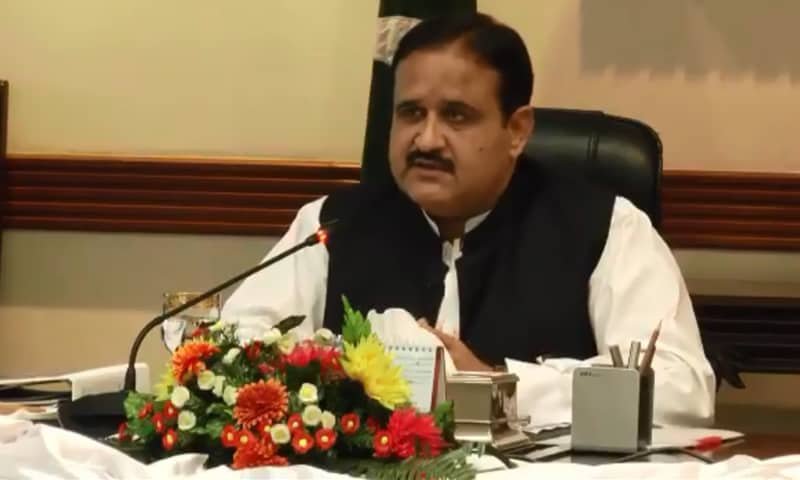
    Punjab govt gives 25-acre army land to 47 civilian officials

    An approval has been given for the allotment of up to 25 acres of state land, which was meant for the families of the martyred soldiers and war veterans under the Army Welfare Scheme (AWS), to 47 civilian government officials instead.

    According to Dawn, the Punjab government has made the allotments without legal sanction on the orders of former military ruler Gen (r) Pervez Musharraf in contravention of merit and law. The report also quoted two officials at the Chief Minister’s (CM) Secretariat also confirming this on the condition of anonymity.

    The Pakistan Muslim League-Nawaz (PML-N) government had cancelled the allotment, which had been ordered by the former dictator during January 2004 and May 2008 in alleged violation of the Colonisation of Government Land (Punjab) Act 1912 and the allotment policy framed in 1962 under it for the AWS.

    After the cancellation order, the PML-N government had also rejected multiple summaries put up to former CM Shehbaz Sharif for ratification. The land branch of General Headquarters (GHQ) had first approached the Punjab government in April 2009 to not revoke the allotments. The military was of the opinion that the “allotments made to the civil officials may be treated as closed chapter” and offered to work out allotment modalities for the future in consultation with the provincial government and the provincial Board of Revenue (BoR). However, Shehbaz had not obliged.

    CM Secretariat reportedly said that around 837 acres of the AWS land had been allotted to civilian officials without consulting the provincial government. The land had been allotted in districts of Bahawalpur, Pakpattan, Khanewal, Sahiwal, Muzaffargarh, Bahawalnagar, Rahim Yar Khan and Sadiqabad.

    The former CM rejected another summary prepared by the BoR in February 2012, as the then Punjab chief secretary noted that it didn’t augur well for the civil service and the overall good governance.

    According to the fresh summary approved by the Usman Buzdar government to restore and validate the allotments, the Shehbaz government had cancelled the allotments and retrieved the allotted land from the beneficiary officials in 2010, because the land was actually allotted to the military for a specific purpose under the law.

    Those who had sold the land allotted to them were told by the Shehbaz administration to deposit the sale proceeds to the provincial treasury. The provincial officials who had benefited from the GHQ’s decision were suspended while the matter of the three DMG officers who got the land was sent to the Establishment Division. Apparently, the Establishment Division did not take any action against them.

    The prominent beneficiaries include DMG officers – Sardar Ahmed Nawaz Sukhera (currently the federal cabinet division secretary), Dr Faisal Zahoor and Syed Imtiaz Hussain Shah. Ex-PCS officials who will benefit from the government decision include Mohammad Zahid Ikram, Sikandar Ali Bokhari, Syed Najaf Abbas Bokhari, Malik Mohammad Ramzan, Mohammad Ashraf Yousufi, Abdul Ghafoor Virk, Dur Mohammad Khan, Irshad Mohyuddin, Syed Zahid Hussain Jilani, Mohammad Ashfaq, Mohammad Akram Bhatti, Amir Karim Khan (currently PSO to CM Buzdar), Mushtaq Ahmed Anjum and Mohammad Azam Khan. The remaining officials mostly included district revenue officials.

    Eight beneficiary officers then filed a petition with the Lahore High Court (LHC) against the cancellation order of the Punjab government. In June 2013, the court directed the BoR member (colonies) to set aside the cancellation order and decide the matter afresh in accordance with the law after considering all the legal and factual submissions made by the parties and after following the due process as per law.

    The GHQ then cancelled the allotments in October 2013 in its papers.

    Officials at the CM Secretariat said as long as Shehbaz was there, no one dared to bring the matter up again.

    Later in November 2019, the DG Lands at GHQ wrote to the Pakistan Tehreek-e-Insaf (PTI) government led by Usman Buzdar for the restoration of the allotments, stating that “all the orders of president/chief executive of Pakistan were subsequently given constitutional protection and also upheld by the Supreme Court of Pakistan in the Tikka Iqbal case”.

    Strangely enough the DG Lands did not mention that the said judgement was overturned by a 14-member bench in July 2009 in the PCO Judges case.

    Two days after the receipt of the DG Lands’ letter, the BoR member (colonies) initiated a fresh summary for the Punjab CM, requesting Buzdar to “take an explicit decision whether to withdraw the order cancelling the impugned allotments”. The CM referred the matter to the standing committee of the cabinet on legislative business that in February endorsed the viewpoint of the DG Lands, GHQ.

    The CM later approved the allotments “as recommended by the standing committee subject to ratification by the cabinet” given last week.
  • Mixed signals in the time of corona

    The total number of coronavirus cases in Pakistan, by the time this was written, stood at 19,854 and the same is likely to reach the 20,000 mark some time today or by tomorrow morning.

    Every ten days, the number of COVID-19 cases in Pakistan double. Just look at the month of April and how many cases increased, especially after easing down the lockdown. The government, however, thinks that coronavirus has not been “as fatal in Pakistan as it has been in many other countries”, especially the west.

    Minister for Planning, Development and Special Initiatives Asad Umar recently said, “Coronavirus has caused 58 per cent more deaths in the United States (US), 207 per cent more in Spain and 124 per cent more in the United Kingdom (UK) as compared to Pakistan in the same period.” Even if we think the mortality rate is lower when compared to other countries, it does not mean we have to be lax about it. Official projections predict 150,000 cases by the end of this month.

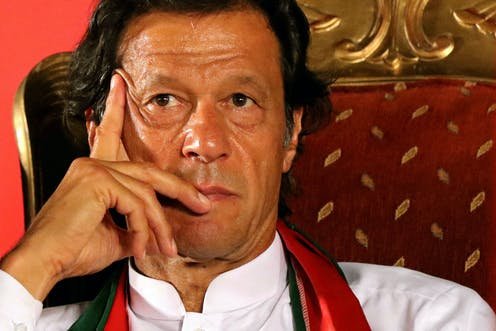
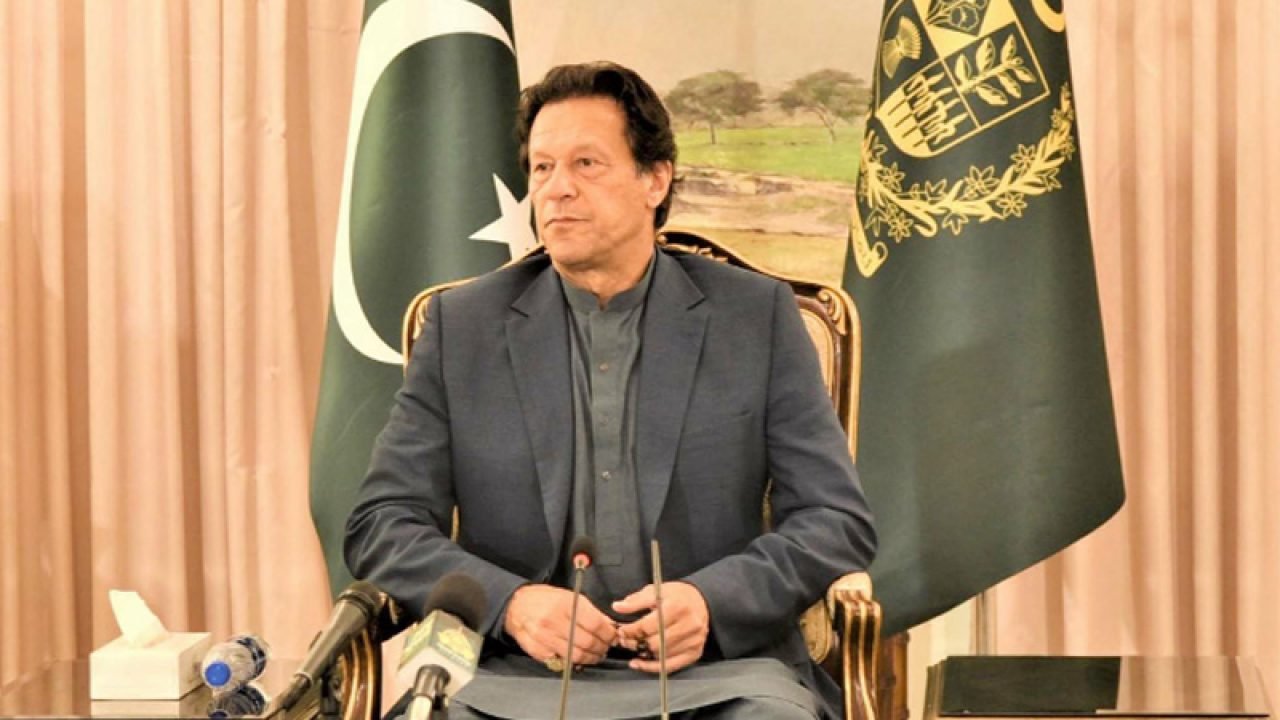
    What was even more surprising was how, in a recent speech, Prime Minister (PM) Imran Khan shifted the blame of the lockdown to the “elite”. He said the decision to impose a lockdown was taken by the elite and the rich, without thinking of the poor. PM Imran tweeted to that effect also while felicitating Muslims for Ramzan.

    The premier blames the elite and rich for taking this decision when it was indeed he and his government that imposed the lockdown. Granted that Imran himself was against the lockdown and finally gave in due to the health emergency but blaming the elite, in this case, is quite misplaced. The World Health Organization (WHO) and others who are dealing with the coronavirus pandemic have recommended lockdowns and aggressive testing apart from social distancing and other measures that we have to take in order to avoid falling prey to this pandemic.

    China went for a lockdown and PM Imran doesn’t tire of giving China’s example so why blame the rich and the elite for a lockdown in Pakistan — a lockdown that is now not much of a lockdown either. Traffic has increased, more shops are open, and except for Sindh, mosques are open as well during Ramzan.

    While we acknowledge that self-isolation is a privilege that isn’t afforded by many, especially the poor, we do not have the answer to how we will cope with an outbreak if cases start to rise exponentially. Doctors have recently warned that Pakistan’s healthcare system will collapse if this happens. So where will the poor go if lockdown is relaxed and they get coronavirus?

    The rich and elite and privileged will go to private hospitals but what about the poor? We have to choose between struggle and death, and can only hope that the cases in Pakistan remain low.

  • Naya Pakistan: Govt starts paying unemployed people to plant trees

    Naya Pakistan: Govt starts paying unemployed people to plant trees

    When construction worker Abdul Rahman lost his job to Pakistan’s coronavirus lockdown, his choices looked stark – resort to begging on the streets or let his family go hungry.

    But the government has now given him a better option: Join tens of thousands of other out-of-work labourers in planting billions of trees across the country to deal with climate change threats, Reuters reported.

    Since Pakistan locked down starting March 23 to try to stem the spread of COVID-19, unemployed day labourers have been given new jobs as “jungle workers”, planting saplings as part of the country’s 10 Billion Tree Tsunami programme.

    Such “green stimulus” efforts are an example of how funds that aim to help families and keep the economy running during pandemic shutdowns could also help nations prepare for the next big threat: climate change.

    WATCH VIDEO:

    “Due to coronavirus, all the cities have shut down and there is no work. Most of us daily wagers couldn’t earn a living,” Rahman, a resident of Rawalpindi district in Punjab province, told the Thomson Reuters Foundation.

    He now makes 500 rupees ($3) per day planting trees – about half of what he might have made on a good day, but enough to get by.

    “All of us now have a way of earning daily wages again to feed our families,” he said.

    The ambitious five-year tree-planting programme, which Prime Minister (PM) Imran Khan launched in 2018, aims to counter the rising temperatures, flooding, droughts and other extreme weather in the country that scientists link to climate change.

  • From interior to info, health, telecom, power, civil aviation among others: Military men serving Pakistan

    From interior to info, health, telecom, power, civil aviation among others: Military men serving Pakistan

    With former military bigwig Lieutenant General (r) Asim Bajwa being appointed as the special assistant to the prime minister (SAPM) on information and broadcasting earlier this week, the list of military men discharging their duties in various sectors to serve Pakistan has been added to.

    The development falls in line with the beliefs of various members of the ruling Pakistan Tehreek-e-Insaf (PTI), including PM Imran Khan and his federal ministers such as Fawad Chaudhry, who have time and again praised the armed forces of the country for being the most powerful and well-organised national institutions.

    While some elements appear bothered by the increasing list of both former and serving military officials working with the government at a time when civil-military relations in the country “stand at their historic best”, here is what you should know about those working to revamp different sectors for the cause of ‘Naya Pakistan’.

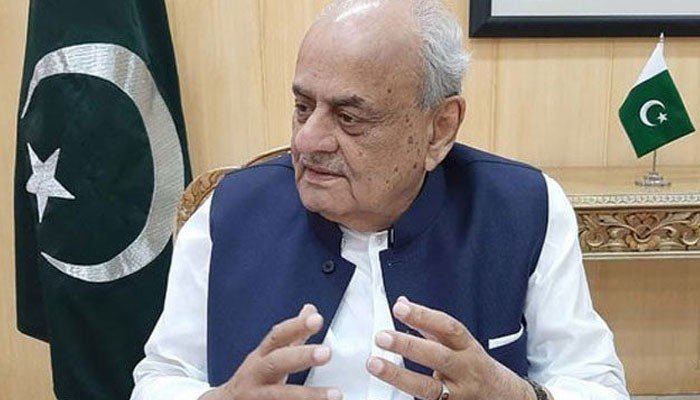
    Interior Minister Brigadier (r) Ijaz Shah:

    The Ministry of Interior, which is primarily responsible for implementing the internal policies, state security and administration of internal affairs involving the state, is being led by Brig (r) Ijaz Ahmed Shah. Prior to entering politics, Shah has served as a spy military officer of the Pakistan Army. He has also served as the minister for parliamentary affairs.

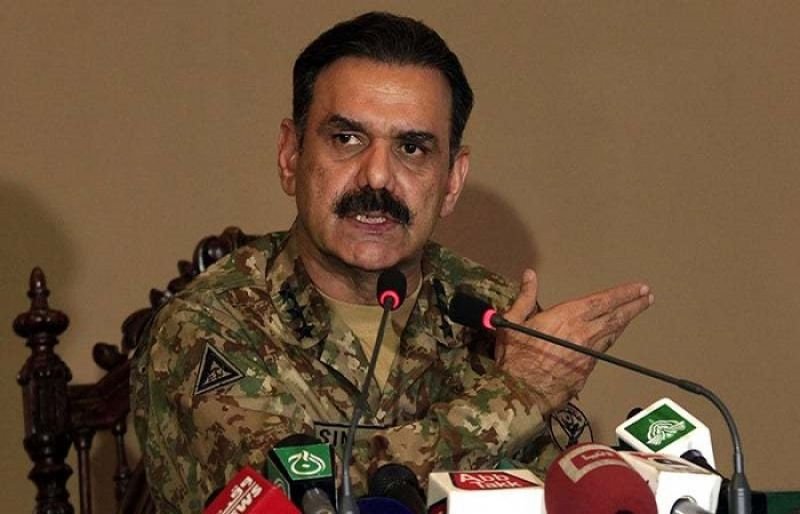
    SAPM on Information & Broadcasting Lt Gen (r) Asim Bajwa:

    Lt Gen (r) Bajwa, who replaced former information minister Dr Firdous Ashiq Awan as the premier’s media aide on Monday, is a retired three-star general. During his military career, he has served as the director general (DG) of the Inter-Services Public Relations (ISPR) as well as the commander of Pakistan Army’s Southern Command. He is also the chairman of the China-Pakistan Economic Corridor (CPEC) Authority.

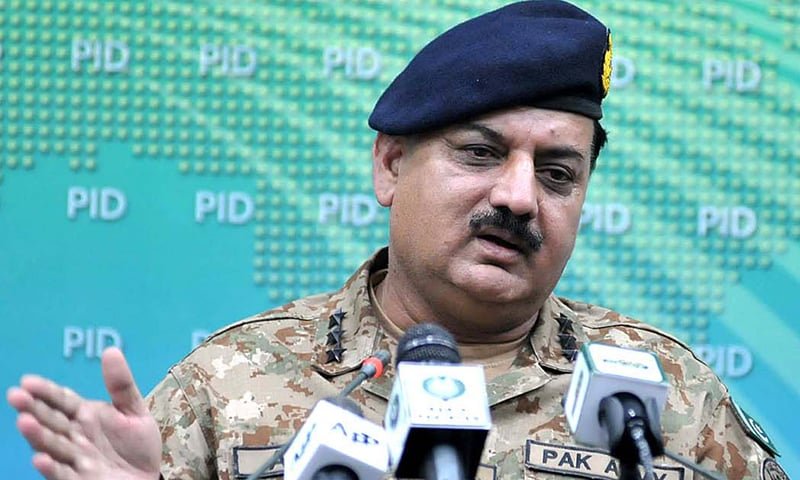
    NDMA Chairman Lt Gen Muhammad Afzal:

    Lt Gen Muhammad Afzal of the National Disaster Management Authority (NDMA) — a federal authority mandated to deal with disasters and their management in the country — has risen to the occasion over the past few weeks as the coronavirus situation in Pakistan started worsening. Other than his experience with the Frontier Works Organization (FWO), he is qualified in international law of conflict with a special focus on civilian casualties and displaced persons.

    FROM CIVIL AVIATION TO HEALTH AND BEYOND:

    Among other not so familiar names are Squadron Leader (r) Shahrukh Nusrat, who is serving as an executive at the Civil Aviation Authority (CAA) after he was reappointed as the authority’s DG last year; National Institute of Health (NIH) Executive Director Maj Gen Dr Aamer Ikram, Air Marshal Arshad Malik, who is serving as the chief executive officer (CEO) of the Pakistan International Airlines (PIA); Water & Power Development Authority (WAPDA) Chairperson Lt Gen (r) Muzammil Hussain and Pakistan Telecommunication Authority (PTA) chief Maj Gen (r) Amir Bajwa.

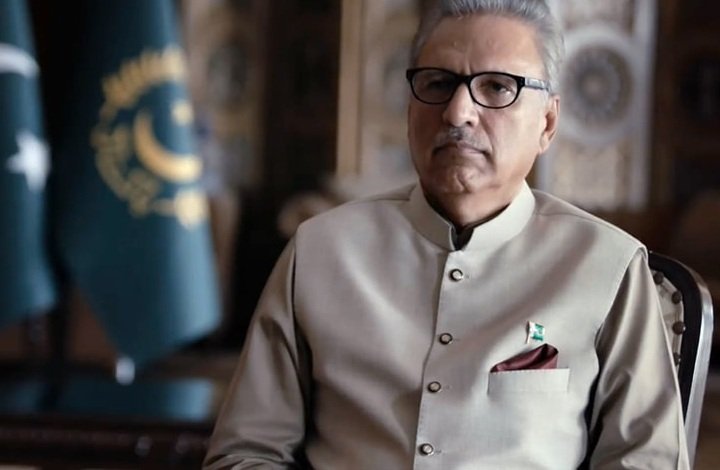
  • VIDEO: ‘Country has not only been raped but gang-raped,’ President Arif Alvi says

    VIDEO: ‘Country has not only been raped but gang-raped,’ President Arif Alvi says

    In a rather insensitive statement, President Dr Arif Alvi, while speaking of the damning investigation report regarding independent power producers (IPPs), has said the way mafias looted the country was “not rape but gang-rape”.

    The federal cabinet on Tuesday decided to make public the investigation report on deals that allowed IPPs to earn illegal profits worth billions of rupees and also gave the nod to the formation of an inquiry commission to further probe into the matter.

    The decision came two days after the president and Prime Minister (PM) Imran Khan reportedly discussed the report.

    “I first read the executive summary of the 300-page [IPPs] report. I discussed it with the PM a day before we met [on Monday]. My exact words were… forgive me for what I am about to say and let’s not forget how the report doesn’t yet include the opinion of all stakeholders… but my exact words to the premier were that the country has not only been raped but gang-raped by mafias,” he said in a conversation with senior journalist and analyst Hamid Mir.

    WATCH VIDEO:

    WHAT DOES THE REPORT SAY?

    A nine-member committee headed by former chairman of the Securities and Exchange Commission of Pakistan Mohammad Ali was formed last year to investigate reasons behind the high cost of electricity, especially in connection with IPPs.

    According to the report prepared by the committee, deals were signed at the expense of interests of the consumers and the government. The national exchequer suffered a loss of over Rs4 trillion in the last 13 years because of circular debt and subsidies being given to power producers.

    The report further disclosed that 16 IPPs invested around Rs51.80 billion and earned over Rs415 billion in profits – having dividends taken out in excess of 310 billion — in a period ranging from two to four years.

    “Pakistan has regionally the highest power tariffs consequently raising the cost of manufacturing,” read a summary of the report. “This has been one of the prime reasons for loss of competitiveness of our industry and the stagnation of our exports,” it read.

    It was noted that the profits generated by most of these IPPs were 18.26 times than their investment and the dividends taken out were 22 times higher.

    Six companies earned an annual return on equity (ROE) between 60% and 79%. Four of them earned an ROE of 40%.

    The report further revealed that 13 residual fuel oil- and gas-based plants in the last eight to nine years of their operations earned profits of Rs203 billion against their combined investment of Rs57.81 billion.

    Excess payments of 6.33 billion to four bagasse-based plants were also identified.

    “Coal companies with government connivance obtained a tariff which is more than 50% higher than the market rate leading to an annual over payment of $477 million per annum or $14.5 billion over the life of these projects,” the report read.

    “Thermal IPPs set under the 2002 Power Policy and Nepra [National Electric Power Regulatory Authority] tariff determination were entitled to a 15% rate of ROE on a cost plus basis. However, the projects set up under this policy have been posting returns in dollar terms in excess of 50%. This could only have been possible if the tariff setting process of Nepra was compromised.”

    It was noted that the Quaid-e-Azam Solar Park was instrumental in getting a very high upfront tariff for solar power approved at US cents 14 levelised and 18 cents for first 10 years through influence peddling and corruption.

    The solar tariff in India at that time was between 7-8 cents with similar cost structure, while a much higher upfront tariff and capital cost allowed by Nepra, causing a massive loss to the country.

    “The first project in the Quaid-e-Azam Solar Park established by the Punjab government involved a kickback of approximately $50 million,” the document read.

    The committee found that private companies had provided false oil statistics to secure better tariffs.

    Malpractices by IPPs with respect to project setting up costs, actual fuel use being less than the invoices submitted to Nepra, kickbacks in commission on fuel were also identified.

    The report suggested that the power tariffs could be cut down by Rs3 per unit by adopting three measures: converting the payment to IPPs from dollar to rupee, switching from “take-or-pay” to “take-and-pay” option, and reducing capacity payments.