Tag: PTI government

  • PM House’s conversion into university to cost taxpayers over Rs35 billion

    PM House’s conversion into university to cost taxpayers over Rs35 billion

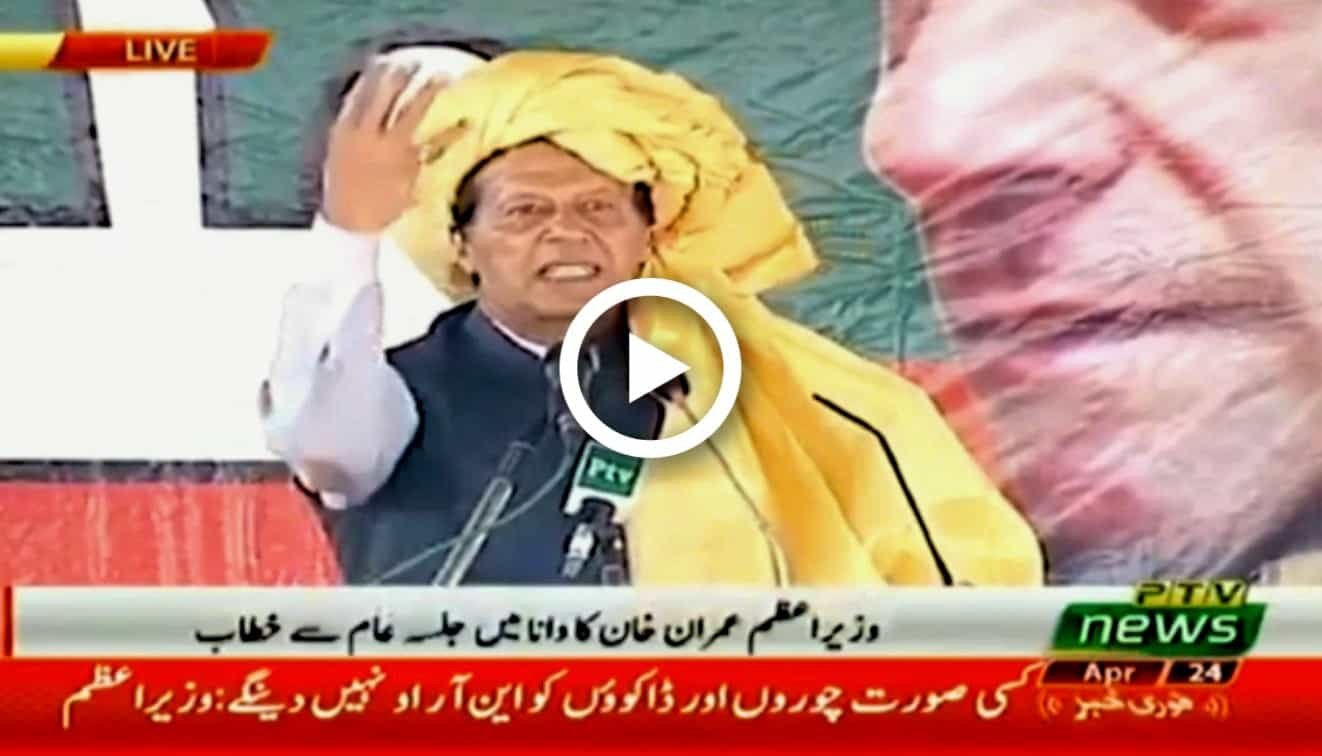
    The Pakistan Tehreek-e-Insaf (PTI) government’s plan of converting the Prime Minister (PM) House into a modern university is likely to cost over Rs35 billion as new buildings will be constructed over 50 acres of land.

    According to a report in Profit, Pakistan Science and Technology Task Force, which is looking into the proposed university project, estimated an initial cost of over Rs35 billion for the university, however, a feasibility study for the said project is yet to be conducted.

    The report quoted officials at the Ministry of Planning and Development as saying that an important meeting on the planned project was held at the ministry on Thursday, which was chaired by Federal Minister for Planning, Development and Special Initiatives Asad Umar.

    The meeting was also attended by Federal Minister for Science and Technology Fawad Chaudhry, Pakistan Science and Technology Task Force Chairperson Prof Dr Attaur Rehman, Member Science and Technology Dr Hussain Abidi and senior officials from the Higher Education Commission (HEC).

    According to the officials, Prof Dr Rehman briefed the participants about the latest developments in the establishment of the university at the PM House. The ministers were informed that the planned university will have three centres of excellence and eight departments with a special focus on innovation and technology development. The university will accommodate more than 1,000 PhDs and PostDoc fellows along with 200 faculty members.

    He also elaborated that a budget of Rs200 million was required to conduct an initial feasibility study.

    The planning minister noted that the manufacturing sector in Pakistan needs to be supported through cutting edge and latest technologies in order to make them more competitive. He directed the Ministry of Science and Technology (MoST) to form a special committee to ensure that the university focuses on relevant technologies that can support the manufacturing industry in Pakistan. He said that there should be no delay in the establishment of the University as it is a high priority project.

    The planning minister was also briefed about the scholarships that will be offered at the university.

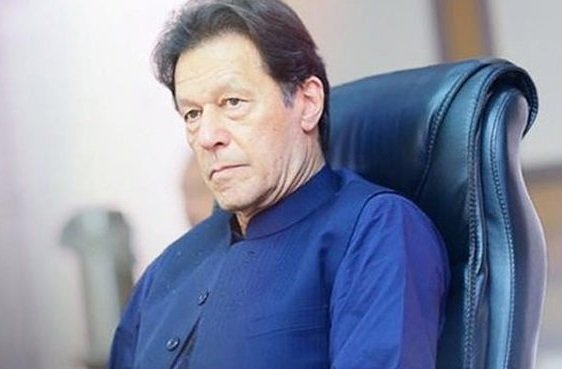
    Sources said that since the premier wants fast-track progress on the project, the concerned ministries and authorities have expedited initial work on the proposed university. The university was among PM Imran Khan’s election promises and was also included in the manifesto of the Pakistan Tehreek-e-Insaf (PTI), which was released before 2018’s general election.

    Initially, the incumbent government faced great difficulty in going ahead with the proposal because the PM House is located in a highly sensitive area and red zone of the federal capital, but the premier insisted that the university be built there.

    To build the new university, the government also needed to change the master plan of the capital for carrying out new/additional construction on the land adjacent to the PM House. To deal with this, the federal cabinet approved a specific change to the master plan of Islamabad last year.

  • Inflation: PM seeks ISI, other agencies’ help

    The Pakistan Tehreek-e-Insaf (PTI) government has sought the help of Inter-Services Intelligence (ISI) Intelligence Bureau (IB) and Federal Investigation Agency (FIA) to present monitoring reports regularly, as Prime Minister (PM) Imran Khan directs for a large-scale crackdown on smuggling of edibles and other commodities, The News reported.

    According to reports, the premier has asked the Interior Ministry, law enforcement agencies of the federal and provincial governments, and Federal Board of Revenue (FBR) to collectively take action against the menace of smuggling. He has also directed the Interior Ministry to present a report on related measures and a comprehensive strategy on the matter within 48 hours.

    He emphasised that keeping in view the recommendations of the task force formed to combat smuggling, short-term, medium-term and long-term measures should be initiated.

    The decision was taken at a high-level meeting, presided over by PM Imran and attended by Minister for National Food Security Makhdoom Khusro Bakhtiar, Minister for Planning Asad Umar, Adviser to the PM on Commerce and Trade Abdul Razak Dawood, interior and national food security secretaries, and acting FBR chairman among other senior officials.

    The meeting took stock of the demand and supply of essential commodities and their prices with particular reference to their smuggling. The report on progress so far made on the establishment of markets at the western border was also presented at the meeting. The PM directed accelerating the pace of establishment of markets and observed that because of smuggling of food items, common man was facing difficulties.

    “The menace of smuggling is causing losses worth billions to the national economy. Combating this menace is in national interests,” he contended, adding that prices of food items must be brought down by up to 20 per cent.

    The premier also made it clear that no negligence would be tolerated with regard to smuggling.

  • The inconvenient truth about Pakistan’s economy

    Battle of narratives confuses ordinary citizens who are less interested in politics and are more keen to know where the economy is actually heading, what they should expect in terms of growth and whether Pakistan can offer them a prosperous future.

    Economy is the hottest subject these days. Political zealots from opposing sides pick and choose data snippets of their choice, build an argument and relentlessly attack the other party.  On one hand, the Pakistan Tehreek-e-Insaf (PTI) social media machine keeps focusing on massive current account deficit and export decline during Pakistan Muslim League-Nawaz’s (PML-N) tenure, while the PML-N social media warriors rely on abundant ammunition provided by high inflation and slowing down economy.

    This battle of narratives, however, confuses ordinary citizens who are less interested in politics and are more keen to know where the economy is actually heading, what they should expect in terms of growth and whether Pakistan can offer them a prosperous future.

    Let’s first understand the origin of the present economic crisis.

    For years, Pakistan’s foreign exchange inflows — earned through exports, foreign direct investment, remittances and official development assistance — have been lagging behind its forex outflows required to pay for its imports. But this gap increased considerably in recent years, thereby forcing the country to excessively rely on external borrowing. The problem was further compounded by the overvalued exchange rate that was held artificially high during the last government’s term. This overpricing made imports cheaper and exports expensive, further enhancing the trade deficit. As a result, the current account deficit went as high as about $1.5 to 2 billion a month, which became unsustainable. The PTI government sought help from friendly countries like Saudi Arabia and China and managed to get more than $6 billion in loans or deferred payments. But without working on reducing the current account deficit, even this didn’t last long.

    The situation was no better on the fiscal front. Pakistan has been generating far less revenue than what it was spending, leading to huge fiscal deficits, which were again financed through borrowing. The state-owned enterprises kept on draining the exchequer and the circular debt kept on piling up, crippling the government. This unsustainable financial situation compelled Pakistan to knock at the doors of the International Monetary Fund (IMF).

    IMF is considered the lender of last resort and provides a bailout to a country to avoid an economic crisis when no other lender is willing to step in. But in return, it puts down certain conditions for the borrower, to put its house in order. The same happened with Pakistan.

    Pakistan has a resilient economy on the back of its 200+ million-strong population, abundant natural resources and a vibrant private sector. About two-thirds of the Pakistani population is youth, making it the youngest country in South Asia and skilling this workforce can do wonders for the country.

    To immediately curtail the current account deficit, Pakistan had to significantly devalue its exchange rate to bring it in line with its market value. But this sudden devaluation overnight made imports expensive, including petrol, leading to a round of imported inflation. Along with consumer goods, industrial goods and raw materials also became expensive. Many industries such as automotive had to pass this increase on to consumers, putting their products out of reach of many, slowing down the consumer demand for them.

    The government also had to raise prices of gas and electricity to reduce the fiscal deficit, fueling inflation. Mismanagement leading to food supply disruptions, such as wheat and flour crisis, also played its part in further pushing the inflation higher. In anticipation of the inflationary pressure, the government had already increased the interest rates. But these high interest rates, while curbing inflation, made borrowing expensive for the businesses, thus taking a further toll on their growth.

    Factories had to cut down production. Unemployment rose. And the economy started to slow down. It was as if an over-heated engine was suddenly sprayed with a splash of cold water.

    The tight fiscal and monetary policies, which were unavoidable to reign in out of control current account and budget deficits, also brought in inadvertent consequences making life hard for the people. And this is how the government ended up where it is right now. The inflation is still rising, growth is nowhere in sight and the government keeps on mulling over ways to cut corners to meet stringent IMF conditions.

    The dark night of economic hardship will be over soon. But what matters is if we can take some hard decisions during this time, correct the imbalance between our public sector spending and income, develop our export base and pull Pakistan out of its perpetual reliance on foreign and domestic borrowing.
    But all is not doom and gloom. Pakistan has a resilient economy on the back of its 200+ million-strong population, abundant natural resources and a vibrant private sector. About two-thirds of the Pakistani population is youth, making it the youngest country in South Asia and skilling this workforce can do wonders for the country. Not only does the country have 10+ million expats, forming the sixth-largest diaspora in the world, but their remittances have also been growing. Since the year 2000, remittance inflows to Pakistan have grown by 19-20 times in real terms. Moreover, in recent years, China has pumped in billions of dollars, as part of the China-Pakistan Economic Corridor (CPEC), improving Pakistan’s infrastructure and putting it on the Belt Road Initiative (BRI) map. The improved connectivity can yield sizeable trade and investment dividends for Pakistan.

    Given this tremendous economic potential, it is quite likely that as soon as the government will ease out the fiscal and monetary policies, the economy will rebound. But that growth can only be sustained if our trade deficit does not go out of control, our manufacturing sector has the capacity to expand and we can generate enough investments to sustain the growth momentum. And for this to happen, our public sector needs to be more efficient and give more space to the private sector to grow. It also requires that the government should reduce its non-productive expenditure and increase public investments, broaden the tax base and use the tax money effectively to stimulate the economy and stop using state-owned enterprises like Pakistan International Airlines (PIA) and Pakistan Railways (PR) for patronage and instead make them self-sustainable and profitable entities.

    The dark night of economic hardship will be over soon. But what matters is if we can take some hard decisions during this time, correct the imbalance between our public sector spending and income, develop our export base and pull Pakistan out of its perpetual reliance on foreign and domestic borrowing.
  • Bilawal names sister Aseefa to lead party if arrested by NAB

    Bilawal names sister Aseefa to lead party if arrested by NAB

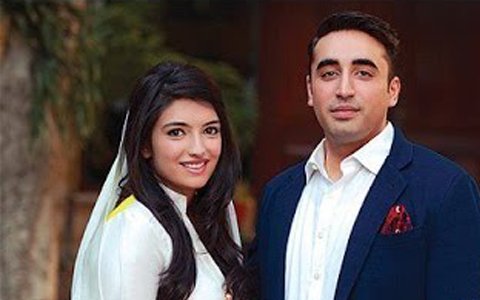
    Pakistan People’s Party (PPP) chief Bilawal Bhutto-Zardari has named his sister and daughter of the late former prime minister (PM) Benazir Bhutto, Assefa Bhutto-Zardari, to lead the party in case he is arrested by the National Accountability Bureau (NAB) in the days to come.

    As the PPP chairman spoke to journalists after appearing before the anti-graft watchdog in the case related pertaining to JV Opel-255 — a joint venture between Zardari Group Pvt Ltd, of which Bilawal is a director, and a large real-estate business –, he was asked about his party’s plans regarding the execution of its forthcoming protest movement against the “anti-people” government’s economic policies in case he was arrested by NAB.

    “The [protest] march would go on come what may. Both the leaders and workers of the PPP know what struggle is and have never shied away from it,” Bilawal said, adding that his sister Assefa would, however, be there to lead PPP workers. “She’ll be my voice if I am arrested.”

    NAB HEARING:

    Earlier, Bilawal appeared before NAB for hearing of the case regarding JV Opel-255

    PPP Senator Mustafa Nawaz Khokar had confirmed Bilawal’s appearance before the accountability bureau.

    “PPP Chairman Bilawal Bhutto-Zardari will appear before the NAB despite the fact that the NAB notice to him is just political victimisation. The PPP chairman believes in the supremacy of the law of the land,” Khokar had said.

    Khokar had noted that NAB sent Bilawal a notice within the week after he protested against the PTI’s “anti-poor” economic policies. 

    “NAB sends a notice to Bilawal whenever he criticises the government,” he had alleged, adding that the Supreme Court (SC) has already declared Bilawal innocent. “This is nothing but political victimisation by NAB.”

    The PPP chairman on Thursday reportedly recorded his statement with regard to the alleged transfer of over Rs1 billion from the accounts of JV Opel-225.

    JV Opel-255:

    JV Opel was set up in 2011 and had its office on a property in Karachi owned by the Zardari Group. From 2011 to 2013, the company did not generate any revenue, yet it purchased major assets, agriculture lands, commercial and residential properties in Islamabad and Karachi, according to a joint investigation team (JIT) report.

    The only amount it received, during this period, was Rs1.2 billion from its business partner, the real-estate firm, which, according to the JIT report, was not due to the Zardari Group.

    The investigators suspect that this payment was made by the real-estate company as a bribe or kickback for getting favours from the Sindh government in the form of illegal allotment of state land.

    While the JIT has not been able to make a direct link between the Bhutto scion and the fake accounts, it states that money stashed in these fictitious bank accounts was used to pay the water and sewerage bill of the Bilawal House; an amount to a restaurant that catered an event; to purchase air tickets for Bilawal and his younger sister; and to renovate his bomb-proof container and bullet-proof vehicles.

  • Naya Pakistan: Govt to set up 50,000 shops to sell daily-use items on subsidised rates

    Naya Pakistan: Govt to set up 50,000 shops to sell daily-use items on subsidised rates

    The Pakistan Tehreek-e-Insaf (PTI) government has reportedly decided to provide jobs and daily-use items to people on subsidised rates under which 50,000 new retail shops will be opened.

    Reports quoted sources as saying that Rs25 billion have been allocated for the programme in the first phase, citizens will get loans up to Rs500,000 for opening retail shops and 1,500 such shops will be opened immediately.

    The Utility Stores Corporation (USC) will reportedly supply 60 per cent items to retails shops, while shop owners will get remaining items from the open market. This plan of the government will provide jobs to 50,000 families.

    Prime Minister (PM) Imran Khan has also directed to continue the Rs7 billion relief package to Utility Stores till the end of Ramzan. The premier was informed that Utility Stores need up to Rs10 billion funds after which he had directed the ministries concerned to make arrangements for the same.

    Meanwhile, PM Imran has said that his government would announce various measures to reduce the prices of basic food items for the common man.

    He explained that the government departments concerned had also begun doing an in-depth probe into the flour and sugar price hike.

    In a series of tweets, the premier said he was aware of the difficulties being faced by ordinary people, including the salaried class, and had decided to announce a number of measures for giving relief to them come what may.

  • As Dar’s residence is converted into Panahgah, Musharraf’s farmhouse remains untouched

    As Dar’s residence is converted into Panahgah, Musharraf’s farmhouse remains untouched

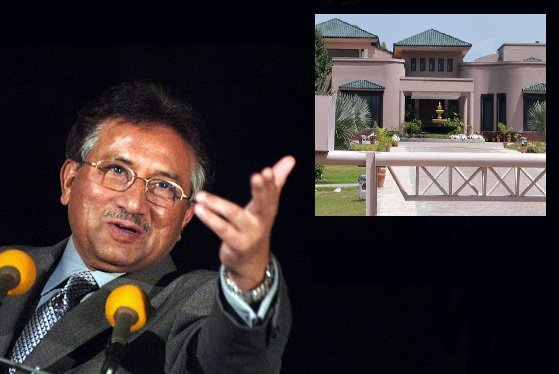
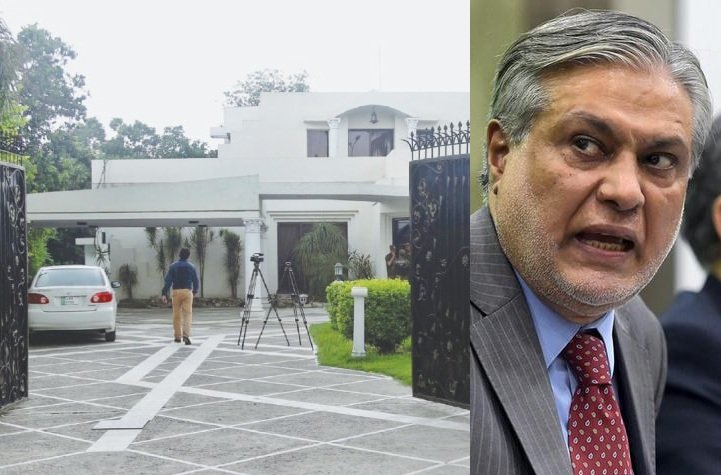
    The conversion of Pakistan Muslim League-Nawaz (PML-N) leader and former finance minister Ishaq Dar’s Lahore residence into a Panahgah [shelter home] by the Punjab government is reminiscent of the military rule of Gen (r) Pervez Musharraf, who had turned Sharif family’s Model Town residence into Gosha’aye Aafiat — an institution for elderly destitute people — nearly two decades back; while the former dictator’s own farmhouse remains untouched under the ruling Pakistan Tehreek-e-Insaf (PTI).

    While this was also pointed out by senior journalist and analyst Hamid Mir, it was reported by The News that such an act was last carried out by a military dictator out of vengeance against the Sharifs, who had then departed for Saudi Arabia to live in exile for seven years.

    The present dispensation is a civilian arrangement that has taken the instant decision. While a quick action has been taken against Dar’s property, Musharraf’s Chak Shahzad farmhouse attached by two courts separately has not been touched by authorities to convert it into a shelter home for the poor although he has been sentenced to death and declared a fugitive.

    In November 2016, an Islamabad district and sessions judge attached Musharraf’s farmhouse as the special court trying the dictator for high treason declared him an absconder. The special tribunal ordered the confiscation of his movable and immovable properties.

    According to the details submitted to the special court by the Interior Ministry, he operated nine bank accounts and owned seven immovable properties, including the farmhouse, land in the Army Housing Scheme in Karachi, Khayaban-e-Faisal, Defence Housing Authority (DHA) Karachi, Beach Street, DHA Islamabad and DHA Lahore.

    Musharraf’s wife claims ownership of the farmhouse just like Dar’s spouse does about the Gulber residence, but the latter’s plea has not been accepted.

    In January 2017, the Islamabad district administration had informed a district and sessions court that Musharraf’s properties have been attached in compliance with court orders after he had been declared as a proclaimed offender and absconder in the murder case of Lal Masjid cleric Abdur Rashid Ghazi, the report said.

  • Ishaq Dar to take govt to court for turning his residence into shelter home

    Ishaq Dar to take govt to court for turning his residence into shelter home

    Pakistan Muslim League-Nawaz (PML-N) leader and former finance minister Ishaq Dar has accused the federal and Punjab governments of contempt of court for turning his Lahore residence — seized as part of the National Accountability Bureau’s (NAB) action against him in an assets beyond means case — into a shelter home.

    “They have violated the decision of the Islamabad High Court (IHC) and I will take them to court for it,” Dar said in a video message tweeted by the PML-N.

    Dar’s 4 kanal 17 marla residence in Lahore’s posh Gulberg area was seized on July 27, 2019, on NAB’s orders and was to be auctioned last month.

    “The government had raided my residence in Lahore and wanted to auction it in January, but the court had on January 27 barred it from doing so,” Dar said in the video, adding that when the government failed to auction it, it decided to convert the house into a shelter home.  

    He termed the conversion of his residence as “state terrorism”, and maintained that he had proof of his innocence. “I can show it to the world in a global conference but I’m waiting for the right time.”

    Dar had left Pakistan in 2017 to seek medical treatment abroad and hasn’t returned since. On May 8, 2018, he was ordered by the Supreme Court (SC) to return to the country and Pakistan had even sought Interpol’s help for the same, however, on November 7, 2019, Interpol had said there was insufficient evidence against Dar for his extradition.

    His house is going to be inaugurated as a shelter home by Punjab Social Welfare Department on Saturday. As many as 40 people will be given a place to stay in the house, and beds have been set up in what was once a living room. Each room is air-conditioned and separate rooms for women have also been set up.

  • Naya Pakistan? Irregularities worth over Rs6 billion detected in PIA accounts

    Naya Pakistan? Irregularities worth over Rs6 billion detected in PIA accounts

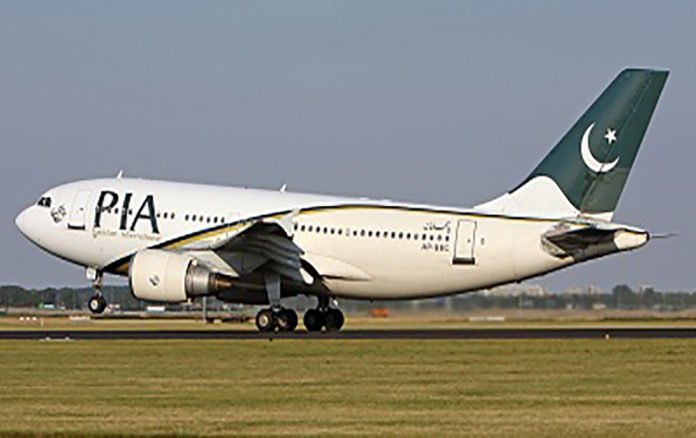
    The Directorate General of Commercial Audit and Evaluation (South) Karachi — a department of the Auditor General of Pakistan (AGP) — has pointed out 16 irregularities worth whopping Rs6.85 billion in the accounts of Pakistan International Airlines (PIA), The News reported.

    According to the report, besides financial irregularities, numerous serious violations of rules and regulations have also been noticed and reported in hiring, promotions and postings of staffers of the national carrier, 87 per cent shares of which are owned by the government of Pakistan.

    The Directorate General of Commercial Audit and Evaluation has audited PIA’s accounts and scrutinised its affairs after receiving several complaints regarding accounts of PIA Corporation in Islamabad and Karachi.

    It has observed that PIA suffered an operating loss worth Rs5,282 million, noticing that the appointment of the national airliner’s chief executive officer (CEO) was irregular and dual benefits worth Rs2.9 million were awarded to him against rules, PIA had suffered a loss of Rs71.866 million due to illegitimate elevation of allowances and benefits of officers on deputation from Pakistan Air Force (PAF).

    It further pointed out that the national flag carrier had suffered another loss of Rs1.24 million due to the holding of dual jobs/services by a regular employee of PIACL and withdrawal of unjustified salaries from both sides, and the fraudulent settlement of advances paid to the district managers of PIA, Rawalpindi, had inflicted a loss of Rs 1.638 million to the organisation.

  • VIDEO: PTI’s Faisal Javed reaches Kashmir event on bike after car breaks down midway

    VIDEO: PTI’s Faisal Javed reaches Kashmir event on bike after car breaks down midway

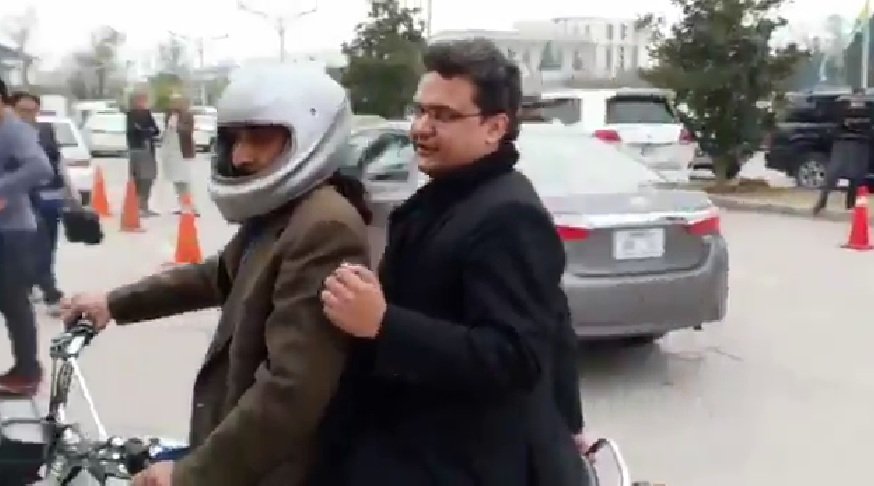
    Ruling Pakistan Tehreek-e-Insaf (PTI) Senator Faisal Javed reaches the venue of a Kashmir Day event on a motorcycle.

    Senator Javed reportedly sought a stranger’s help after his vehicle broke down midway. Kashmir Solidarity Day is to be observed by the country tomorrow (February 5).

  • Coronavirus: Pak-China trade suspended, Opp demands bringing students back

    Coronavirus: Pak-China trade suspended, Opp demands bringing students back

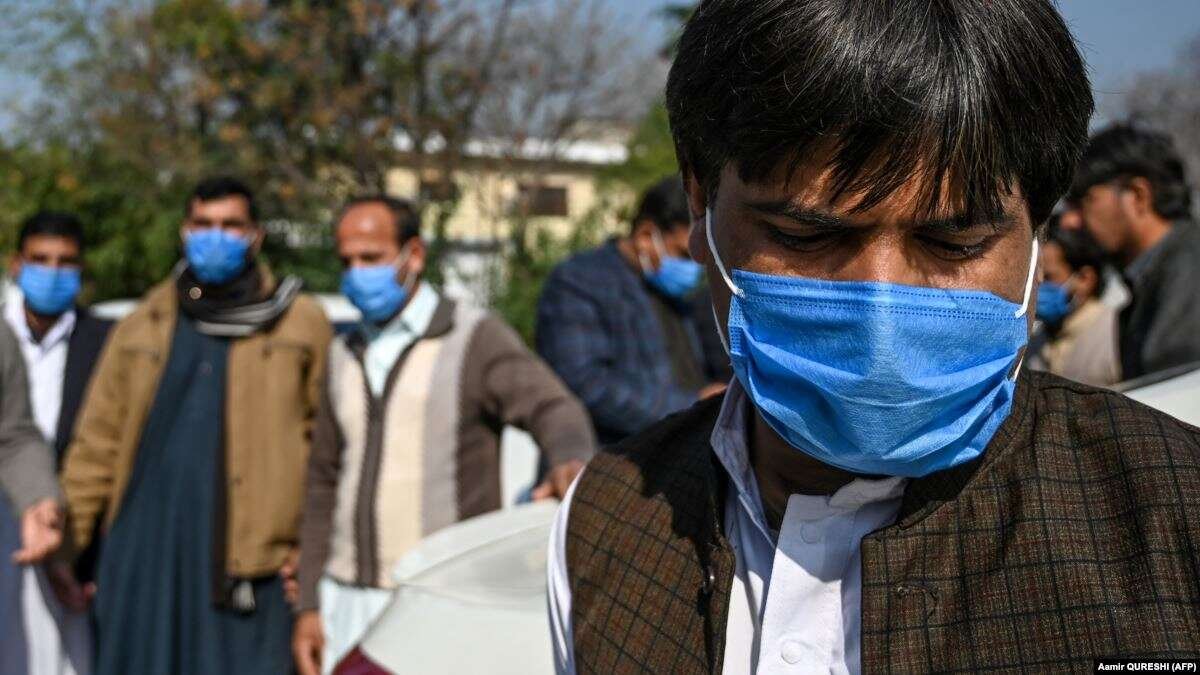
    With the World Health Organization (WHO) declaring a global emergency over the spreading coronavirus, as Chinese authorities increase the toll to 213 dead and nearly 10,000 infections, trade between Pakistan and China has been suspended while opposition demands bringing back Pakistanis stuck in China.

    According to reports, while it was also decided that all Chinese imports will be sprayed with disinfectants, Pakistan on Friday suspended flight operations — except those of Pakistan Internation Airlines (PIA) — to the neighbouring country.

    TRADE SUSPENDED:

    According to a statement, trade has been suspended between the two countries for at least a month, while the issuance of Chinese visas to traders has also been halted.

    The volume of trade between the two countries is around $15 billion — around 30 per cent of Pakistan’s total trade — and the country is now mulling to import goods from other countries instead, a report said.

    Also, the Karachi Port Trust (KPT) will quarantine the Chinese and Southeast Asian ship personnel, its chairperson, Rear Admiral Jamil Akhtar, said. He added the containers, especially those arriving from China and Southeast Asia, would be thoroughly checked, and that special care would be taken to ensure that the staff on these ships remained limited to the port only.

    NO FLIGHTS TO OR FROM CHINA:

    “We are suspending flights to China until February 2,” Aviation Additional Secretary Abdul Sattar Khokhar told Reuters, adding the situation would be reviewed after that date. He declined to comment on the reason for the closure.

    Some airlines, including British Airways, have suspended flights to China due to warnings of the coronavirus outbreak. Germany, Britain and other countries have issued warnings about travel to China.

    Russia also sealed its remote far-eastern border with China as a precaution on Thursday. Some countries have banned entry for travellers from Wuhan, the central Chinese city where the virus first surfaced, while reports said that PIA would continue to operate between the two countries.

    OPPOSITION WANTS STUDENTS RESCUED:

    Meanwhile, opposition leaders have demanded that the government take responsibility of the Pakistani students stuck in China, and bring them back to the country.

    Reports quoted Pakhtunkhwa Milli Awami Party (PkMAP) Usman Kakar as saying in the Senate that over 28,000 Pakistanis, 10,000 of which are students, were stuck in China, and the government’s decision to not bring them back was no less than “attempted murder”.

    While Pakistan Muslim League-Nawaz (PML-N) leader Mushahidullah said that the government should take responsibility of the students stranded in China, Pakistan People’s Party (PPP) Senator Rehman Malik said that military’s C-130 aircraft should be sent to rescue them

    ‘WE’RE MONITORING SITUATION’:

    The Pakistani government is monitoring the situation in China and is in close contact with the relevant authorities in order to ensure the safety of Pakistani students in Wuhan, said the Foreign Office on the other hand. 

    “Islamabad has taken up the issue of food shortages with concerned officials and we are assured by the Chinese government of full cooperation in this regard,” Foreign Office Spokesperson Aaisha Farooqui said at a press briefing.

    In response to questions about the evacuation of Pakistani citizens from Wuhan, the spokesperson said, “Islamabad is monitoring the evolving situation and will take a decision after consultations among all the stakeholders.”