Tag: PTI government

  • Jahangir Tareen’s sugar mills post profit of Rs138.92 million in three months: report

    Jahangir Tareen’s sugar mills post profit of Rs138.92 million in three months: report

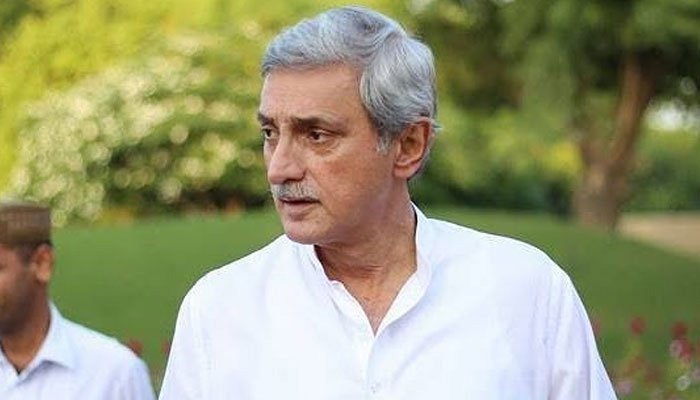
    Pakistan Tehreek-e-Insaf (PTI) stalwart Jahangir Tareen’s sugar mills have reportedly posted a profit after tax of Rs138.92 million — a 170% increase in gross profits in three months — as compared to a loss of Rs353 million recorded in the same period last year.

    According to media reports, JDW Sugar Mills Limited has announced its financial results for the first quarter that ended on December 31, 2019, which show that the revenue of the largest white sugar producer in the country went up by 61.45% to Rs13.19 billion during the first quarter as compared to Rs8.17 billion recorded in the same period last year.

    The sales have increased mainly due to an increase in average selling prices of sugar, molasses and carryover sugar stocks.

    The sugar division comprises three sugar mills units, JDW Unit-I, JDW Unit-II and JDW Unit-III in Rahim Yar Khan and Ghotki districts. It is one of the largest groups in the sugar sector and contributes approximately 15-17% of the country’s sugar production. It is also managing Sugarcane Corporate Farms over an area of 24,000 acres in Punjab and Sindh.

    While people allege that the government had a role to play in scoring Tareen these profits, it is pertinent to note that as of last week, a serious case of sugar shortage had emerged as the country already stumbled amid a wheat crisis.

    During the PTI government’s 15 months, sugar prices have shot up to as high as Rs64 a kilogram (kg). However, over the past week, the wholesale rate rose from Rs64 to Rs74 per kg and an acute shortage surfaced in the country. Last year, Pakistan produced 600,000 tonnes of sugar. Now, however, the wholesale rate of sugar is expected to reach Rs80 per kg, The News reported.

    Further, if the government does with sugar what it did with wheat-flour and does not halt exporting it, prices could reach up to Rs100 per kg in Pakistan.
  • VIDEO: ‘PM Imran’s killer smile is enough for any doubts in crises,’ says Zartaj Gul

    VIDEO: ‘PM Imran’s killer smile is enough for any doubts in crises,’ says Zartaj Gul

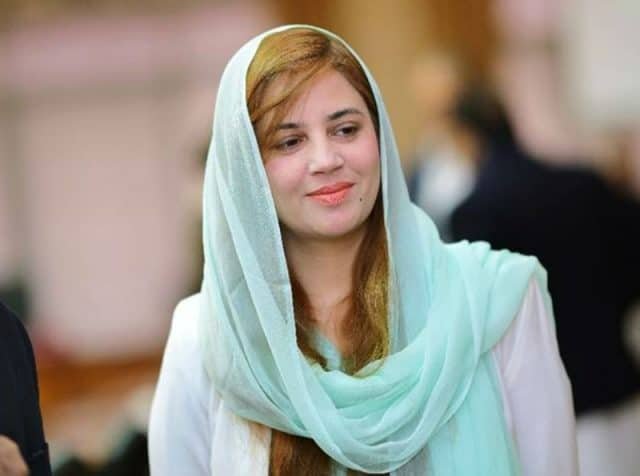
    Minister of State for Climate Change Zartaj Gul Wazir, who is known for making statements that leave people in fits, has showered praise on Prime Minister (PM) Imran Khan for having a charismatic personality and killer smile.

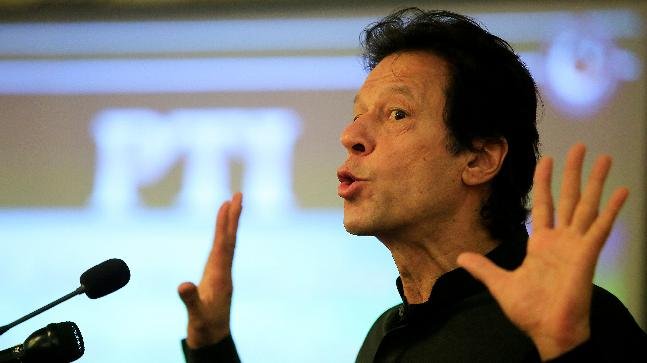
    “If we talk about the body language of PM Imran Khan, I think he is the finest charismatic man,” she can be heard as saying a video doing rounds over the internet.

    “The manner in which the premier walks, which can be seen in various videos, he comes with so much confidence and authority, which removes all doubts from our minds amid crises,” she adds.

    WATCH VIDEO:

    This is not the first time the minister has expressed how starstruck does the premier leave her.

    Believe it or not, she had once said that the reason Pakistan was getting an abundance of rain and snowfall was because an honest man like Imran Khan was the country’s PM.

  • PTI’s Pakistan more corrupt than PML-N’s Pakistan: Transparency International

    PTI’s Pakistan more corrupt than PML-N’s Pakistan: Transparency International

    Transparency International (TI) — a Berlin-based international non-governmental organisation combating global corruption — on Thursday released a new report, according to which, the country under the Pakistan Tehreek-e-Insaf (PTI) government has witnessed more corruption in 2019 than it did in the outgoing year of the former ruling Pakistan Muslim League-Nawaz (PML-N).

    According to TI’s global report on the 2019 Corruption Perception Index (CPI), while Pakistan’s ranking dropped from 117 to 120 in 2019, the CPI score also dropped from 33 to 32.

    Here’s what Twitterati have to say about the report that was to determine if corruption in the country under the PTI government has decreased as Prime Minister (PM) Imran Khan’s promised accountability drive continues against opposition lawmakers and government officials.

    PAKISTAN AND CPI:

    Pakistan witnessed slight improvement in the 2018 CPI, scoring a point higher than in 2017 but remaining unchanged in the rankings.

    According to Geo, the country scored 33 out of 100 on the index — one point better than its score of 32 in the previous year. Its ranking, however, remained unchanged at 117 out of 180 countries, same as 2017.

    TI’s annual report on CPI is formulated on the basis of input from 13 international agencies. In the case of Pakistan, however, the assessment of eight agencies is taken into account. These include the World Economic Forum Executive Opinion Survey; the World Bank Country Policy and Institutional Assessment; the World Justice Project Rule of Law Index; the Bertelsmann Stiftung Transformation Index; the Economist Intelligence Unit Country Risk Service; the Global Insight Country Risk Ratings; the IMD World Competitiveness Center World Competitiveness Yearbook Executive Opinion Survey; and the Varieties of Democracy project’s findings.

    Pakistan in the last 10 years (since 2010) has improved its index score from 23 in 2010 to 33 in 2018. In 2016 and 2017, Pakistan maintained the same score, 32, which in 2018 increased to 33. However, never in these last ten years has Pakistan been assessed to have performed negatively as compared to the previous year.

  • VIDEO: President says he doesn’t know who is responsible for wheat crisis

    VIDEO: President says he doesn’t know who is responsible for wheat crisis

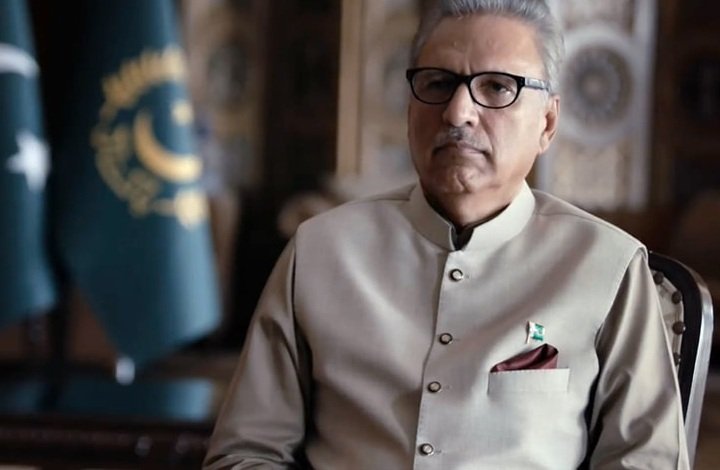
    President Dr Arif Alvi has said he doesn’t know who is responsible for the wheat crisis in the country, but he should have known about it.

    According to Geo, the president on Monday arrived at National Institute of Child Health (NICH) on a surprise visit along with his wife Sameena Alvi. The two were welcomed and given a tour of the hospital by Executive Director Dr Jamal Raza.

    Speaking to journalists later, the president said he was visiting the hospital on Prime Minister (PM) Imran Khan’s advice. “It is regrettable how patients have no other choice but to share beds for treatment and their families are being sent to buy medicines from outside the hospital,” he reportedly said.

    When asked about the condition of hospitals and the government’s apparent inability to bring relief to the masses, President Alvi said the Pakistan Tehreek-e-Insaf (PTI) was unaware of the economic conditions while making its promises ahead of 2018’s general election.

    To a question about the persisting wheat crisis across the country, the president said he had no idea who was to be held responsible for it. “But I should have known,” he added.

    WATCH VIDEO:

    WHEAT CRISIS:

    The PTI government was first warned of the ongoing wheat crisis in September last year when several high-ranking officials had suggested appropriate measures. The government had ignored the warning.

    Initially, the crisis appeared when Sindh decided not to procure wheat because different officials were facing corruption probes on account of its procurement. Meanwhile, Punjab had imposed a ban on inter-provincial movement of wheat.

    Keeping in view the situation, profiteers and hoarders started exploiting the situation and stock piling wheat.

    The federal government has refused to take any responsibility for the crisis, saying it is the domain of the provinces to procure wheat.

  • The Current Quiz: Which newsmaker PTI minister are you?

    The Current Quiz: Which newsmaker PTI minister are you?

    The Current Quiz:

    Let’s find out which newsmaker PTI minister are you?

  • PML-N takes U-Turn on Gen Bajwa’s extension: report

    PML-N takes U-Turn on Gen Bajwa’s extension: report

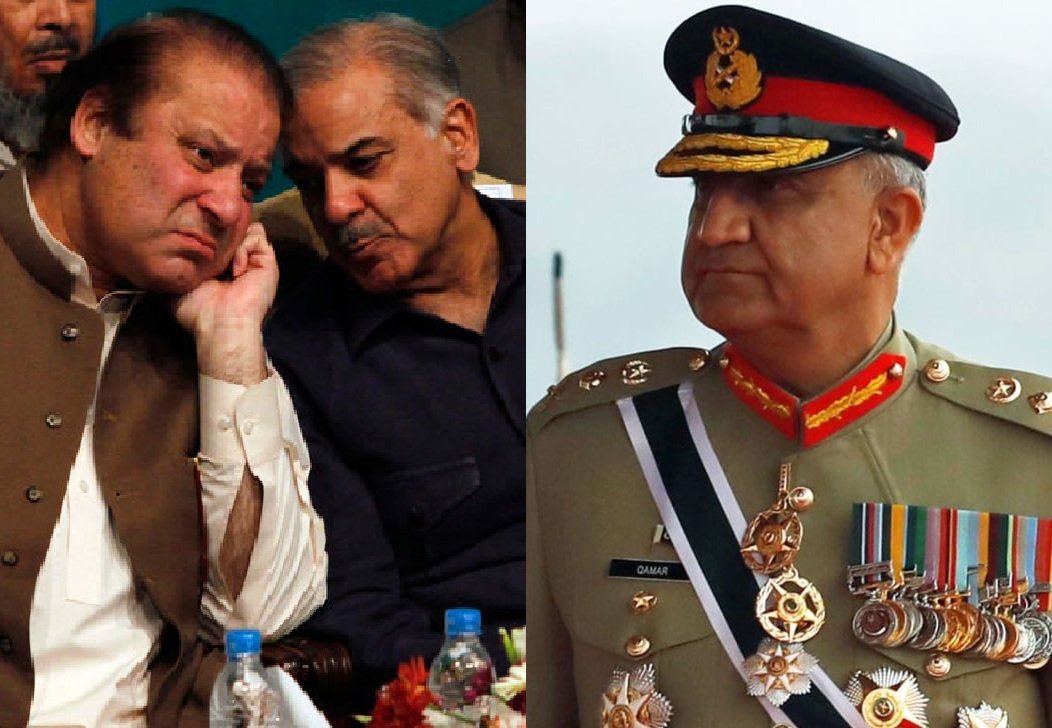
    Contrary to earlier claims, the Pakistan Muslim League-Nawaz (PML-N) has reportedly decided to unconditionally back the amendments made to the Army Act by the Pakistan Tehreek-e-Insaf  (PTI) government to facilitate the extension service of Chief of Army Staff (COAS) General Qamar Javed Bajwa.

    According to Geo News, the decision was made after a meeting of PML-N parliamentary members received a message from the party leadership on Thursday, advising the party to fully back the amendment bill when it is tabled in the parliament by the government. 

    “The PML-N leadership reportedly does not want the position of COAS to become controversial, and has thus decided to support the PTI government in a bid to amend the Army Act under the directions of a verdict of the Supreme Court (SC) in this regard,” the report said.

    A day earlier, the federal cabinet had in an emergency meeting accorded its approval to amendments to the Army Act under which the premier will be empowered to extend the tenure of all services chiefs.

    The bill pertaining to the amendment will be tabled in the National Assembly on Friday and the amendment has been prepared as per the guidelines enumerated in the SC’s verdict.

    The top court had in November 2019 told the government to legislate on an extension in the COAS’s services within six months, allowing Gen Bajwa to stay in office until then, after briefly suspending the notification of the extension in his tenure.

    With the government going into action to ensure an extension for the army chief but lacking the numbers in the parliament for necessary legislation, the PML-N had earlier warned the PTI, saying it would not be easy if the hostile attitude of the Imran Khan-led government towards the opposition continued.

  • Billion Tree Tsunami: NAB detects Rs462 million loss to exchequer

    Billion Tree Tsunami: NAB detects Rs462 million loss to exchequer

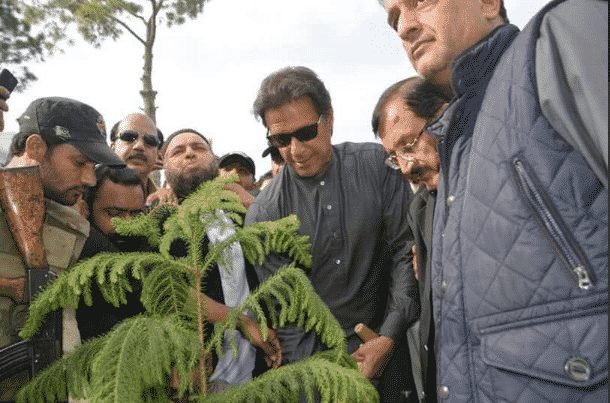
    A loss of Rs462 million to the public exchequer has been detected by the National Accountability Bureau (NAB) as it conducted its initial inquiry into the Billion Tree Tsunami Project of the Pakistan Tehreek-e-Insaf (PTI), The News reported.

    NAB Chairman Justice (r) Javed Iqbal had authorised the inquiry against the flagship project in March last year.

    “The NAB regional office has recommended to the headquarters for upgrading the inquiry along with authorisation for separate investigations and six inquiries to unearth the mega scam in Khyber Pakhtunkhwa (KP),” the report said.

    Meanwhile, an officer was quoted as saying that NAB officials “had checked only 10 to 20 per cent of only one region out of three, which is the smallest region as compared to Hazara and Swat.

    In 2014, the then PTI-led KP government had started the Billion Tree Tsunami Project with Rs14.32 billion utilised for the project execution by the Forest Department.

    Allegations of ghost labour, misappropriation and embezzlement of daily wages, enclosures failure and payments against ghost plantations were received by the anti-graft body at its Peshawar bureau earlier.

    According to official documentsduring the initial inquiry based on proceedings conducted so far, a loss of Rs462 million has been detected. The NAB reports further disclosed that due to the shortfall in the hectare-wise plantation area in Dera Ismail Khan, a loss of Rs80.044 million has been detected.

    The regional NAB office has recommended the headquarters to convert the ongoing inquiry into a proper investigation to probe the case. It further recommended four investigations against the divisional forest officer and others regarding misuse of authority, embezzlement, corruption and corrupt practices.

    Furthermore, six additional inquiries were also recommended against the officers and officials of the KP Forest Department and others regarding embezzlement, misappropriation, corruption, and corrupt practices in procurement of seeds, polythene bags, machinery, vehicles and office equipment in forest region 1, 2 and 3.

    While NAB sources were quoted as confirming that the matter is under scrutiny as per law, media has reportedly been requested to avoid speculations in this regard.

  • Hareem Shah controversy: Govt issues statement, drags religion into it

    Hareem Shah controversy: Govt issues statement, drags religion into it

    The Pakistan Tehreek-e-Insaf (PTI) government has broken its silence over the controversial video clips released by TikTok celebrity Hareem Shah last week, saying that technology brings many facilities “but it can also lead one to god’s wrath”.

    In a video doing rounds over the internet, Special Assistant to the Prime Minister for Information and Broadcasting (SAPM) Firdous Ashiq Awan can be seen parrying a question posed by a senior reporter regarding the videos that showed PTI ministers “flirting” with the TikTok celebrity and a friend of hers.

    She said that the society was facing many challenges “like crumbling of the social fabric”, and added that technology brought many facilities, but it had “also become a way to earn the wrath of Allah”.

    “It paves the way to hell,” Awan said.

    WATCH VIDEO:

    CONTROVERSY:

    The videos — featuring Federal Minister for Railways Sheikh Rasheed Ahmed and Punjab Information Minister Fayazul Hasan Chohan — were released over the internet with the claim that Rasheed had “also sent Hareem inappropriate videos”.

    “What about all those naked videos you used to send me have you forgotten about them?” Hareem can be heard as saying to the federal minister in one of the videos of their telephonic conversation, following which Rasheed abruptly disconnected the call.

    While the videos were removed by Hareem, it wasn’t later that they went viral over the internet, drawing mixed reactions. Amid all the criticism facing the internet star, she on Tuesday was reported to have left the country and applied for Canadian citizenship.

  • ‘Smart performance’: Pakistan’s debt falls to 84.7pc of GDP

    ‘Smart performance’: Pakistan’s debt falls to 84.7pc of GDP

    Pakistan’s general government debt, including guarantees and the International Monetary Fund (IMF) loan, have declined to 84.7 per cent of the GDP, Dawn reported.

    According to details, a recently published IMF report has revealed that the decline in debts was a consequence of the government’s smart performance in reducing expenditures, registering primary budget surplus and increasing tax and non-tax revenues during the first five months of the current fiscal year.

    “In the first quarter of 2019-20, budget execution by the incumbent government improved considerably, registering a primary surplus of 0.6pc of GDP and an overall deficit of 0.6pc – about 1pc of GDP better than programmed,” the report added.

    It said the over-performance was driven by stronger than expected non-tax revenues, accompanied by double-digit growth in tax revenue net of refunds.

    At the same time, due to import compression, customs receipts and other external sector-related taxes have suffered (up only 6pc year-on-year), the report said, adding that spending, including by the provinces, has remained prudent.

    However, the document observed that in FY19, the budget registered a primary deficit of 3.5pc of GDP and an overall deficit of 8.9pc, against its target of 1.8pc and 7pc, respectively.

    Revenue collection at the federal level came in at 2pc of GDP, lower than expected, while total expenditures and provincial fiscal balances were in line with projections, it added. Around three-fourth of the revenue shortfall were due to one-off factors, which are not expected to carry over into FY20.

    In particular, delays in renewing telecom licences, a temporary delay in the sale of state assets, and weaker than expected amnesty proceeds contributed around 1pc of GDP, while a shortfall in the transfer of State Bank profits to the budget, stemming from losses related to the exchange rate depreciation in late FY19 added an additional 0.5pc of GDP.

    As a consequence of the fiscal slippages and the exchange rate depreciation, but also the government’s decision to increase cash deposits considerably to provide a financing cushion against potentially unfavourable market conditions, government debt (including guarantees and IMF borrowing) rose to 88pc of GDP.

    With respect to government’s performance in revenue collection, the report observed that with 34pc nominal growth, compared to 1QFY19, total revenue over-performed the programmed projections by 0.2pc of GDP.

    On account of tax policy measures implemented at the beginning of FY20, the domestic component of tax revenue collected by the FBR, recorded robust growth of 25pc.

    Growth was particularly strong in sales and direct taxes, where most measures were targeted (including removal of tax exemptions, zero and reduced rates). At the same time, taxes collected at the import stage were impacted by substantial import compression, with a decline in all revenue categories except of sales tax.

    Given that more than 40pc of total tax revenue in Pakistan is collected at the import stage, this shortfall had a notable impact on overall tax revenue performance 0.2pc of GDP lower than programmed.

    One-off tax revenue inflows (around Rs30bn) also contributed to the overall result and are related to tax advances and tax amnesty receipts that were not collected at the end of FY19 but were realised in the first quarter of 2019-20 instead. Tax revenues collected at provincial level were also strong, increasing by 18pc.

  • PTI govt approves Rs11.7 billion for special military projects

    The Pakistan Tehreek-e-Insaf (PTI) government has approved a supplementary budget for military allowances worth Rs11.7 billion as the Economic Coordination Committee (ECC) met on Monday.

    According to The Express Tribune, the meeting headed by Adviser to the Prime Minister (PM) on Finance, Dr Abdul Hafeez Shaikh, approved the allowances under three technical supplementary grants for Special Security Division (North), Internal Security Duty Allowance and construction of bunkers.

    Of the Rs11.7 billion, Rs6.2 billion have been allocated for the recurring cost of the Special Security Division of Pakistan — for protection of China Pakistan Economic Corridor (CPEC)-related projects — whereas Rs4.966 billion have been set aside for Internal Special Duty Allowance for troops deployed on the western border, a Ministry of Finance handout revealed.

    While the remaining Rs500 million has been reserved for the construction of community bunkers, the heads for the supplementary grants from where the budget will be diverted, have not yet been specified by the Finance Ministry.

    Earlier, the ECC had directed that the cost of providing protection to the CPEC and other important installations by the military should be made part of the regular defence budget instead of meeting it through supplementary grants.

    The Defence Ministry had requested a supplementary grant for paying the recurring cost of the Special Security Division and Internal Security Duty Allowance to the troops deployed on the western border.