Tag: PTI

  • IK sold three watches to local dealer gifted to him as PM for Rs37 million

    IK sold three watches to local dealer gifted to him as PM for Rs37 million

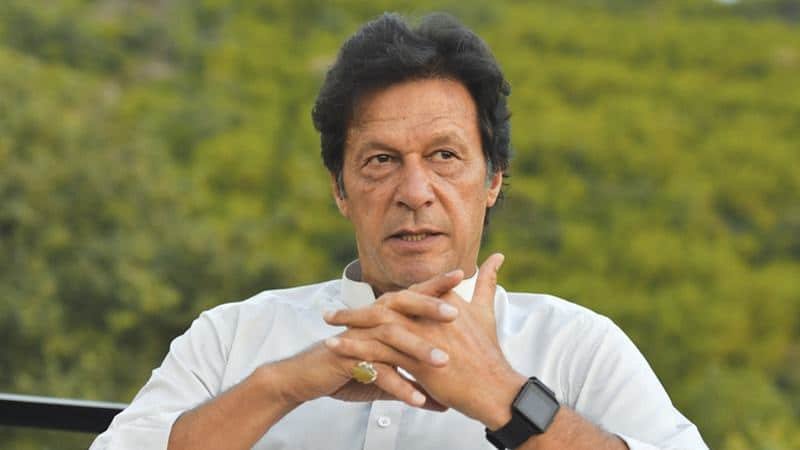
    Pakistan Tehreek-e-Insaf (PTI) Chairman Imran Khan reportedly sold three luxury watches worth more than Rs154 million to a local watch dealer in Islamabad. The watches were gifted to him by visiting dignitaries from Gulf countries when he was Prime Minister (PM), reports The News.

    By selling these watches, Khan earned a whopping amount of Rs37million. According to the news report, instead of buying these watches from Toshakhana with his own money, Khan first sold the watches and then deposited 20 per cent of each in the government treasury.

    It has been revealed that these gifts were never deposited in Toshakhana. These watches were supposed to be submitted to Toshakhana as per the laws that restrict any head of the state to possess the gifts they receive from officials of other countries.

    The most expensive watch among these three was assessed at Rs101 million. However, Khan had declared he sold it for Rs51 million and deposited the 20 per cent of its sales money, which is Rs20 million, in the government treasury, thus earning a whopping Rs31 million. The watch was sold on January 22, 2019.

    By selling a Rolex Platinum watch gifted by a member of a royal family from a Gulf island, Khan almost earned Rs4.5 million profit in November 2018, two months after it was gifted to him.

    Another Rolex watch gifted by a dignitary from the same Gulf island was sold by the former PM. This time Khan made Rs1.5 million profit from this deal.

    It is pertinent to mention that these watches are in addition to the ones reported earlier in the media.

    In April, PM Shehbaz Sharif revealed that Khan took gifts worth Rs140 million from Toshakhana and sold them in Dubai.

    Earlier, responding to the Toshakana controversy, Khan had said they were his gifts, so it was his choice whether to keep them or not.

  • ‘Khan is complaining about institutions being neutral since he cannot win otherwise’: Bilawal

    ‘Khan is complaining about institutions being neutral since he cannot win otherwise’: Bilawal

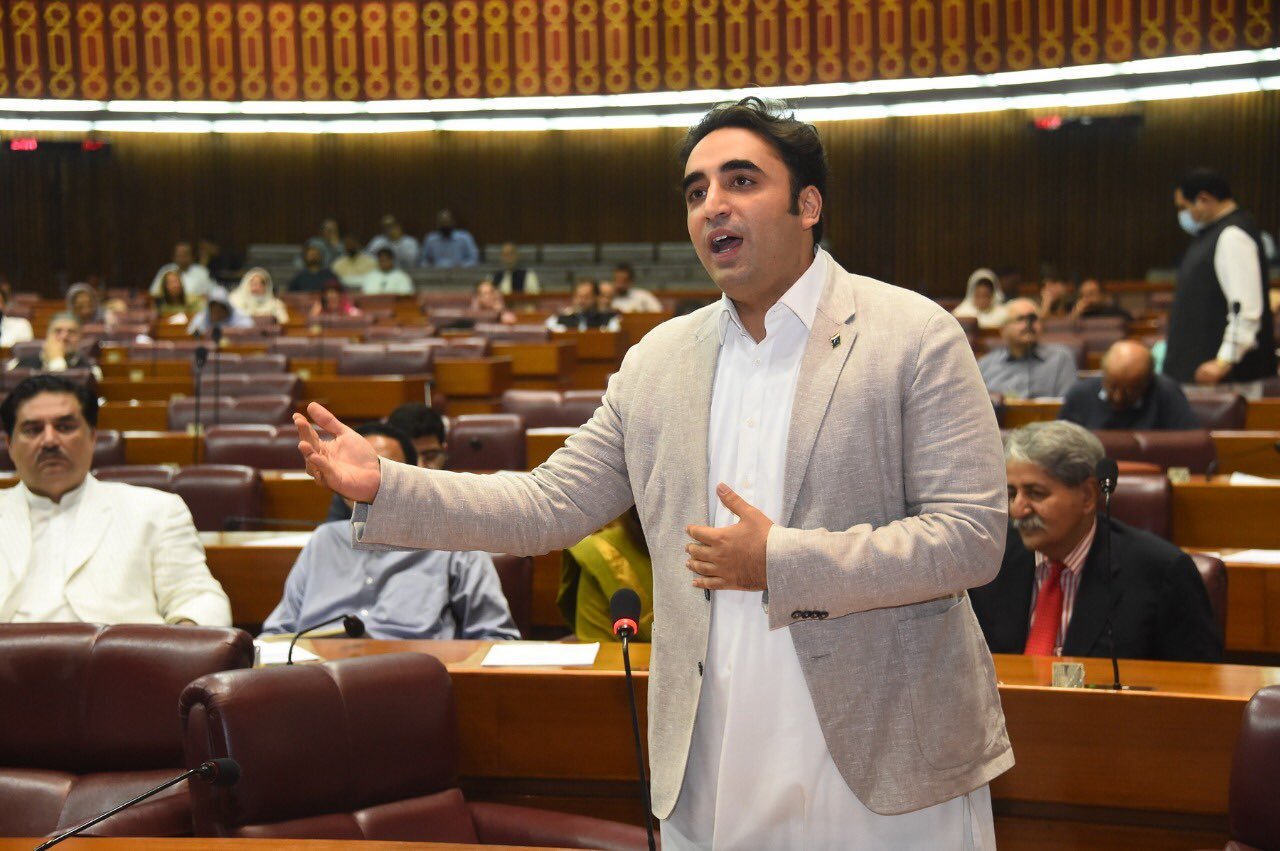
    Foreign Minister (FM) Bilawal Bhutto-Zardari criticised Pakistan Tehreek-e-Insaf (PTI) Chairman Imran Khan and said that he is complaining about the institutions being neutral since undemocratic parties like his cannot win otherwise. Bilawal’s comments were in response to the allegations made by PTI after the first phase of local body elections held in Sindh.

    “The beneficiaries of rigging are complaining before you. They cannot win. Imran Khan is complaining about our institutions being neutral since undemocratic parties like his cannot win otherwise. This is why today they are running a movement for our institutions to play a controversial role instead of a neutral and constitutional one,” said Bilawal addressing the National Assembly (NA) today (June 29).

    “Like Imran Khan, there are a few parties, politicians, and puppets in Sindh who are helped and made to come forward in a dictatorial rule. They were hoping, like Khan, for our institutions to not be neutral but controversial,” said the foreign minister.

    “When our institutions started becoming neutral, be it the Election Commission, the courts, or other institutions who used to take interest in elections, these people started panicking,” said Bilawal.

  • ‘Khan through paid social media teams is running vulgur, abusive trends against COAS, DG ISPR’: Aisha Gulalai’s letter to CJP

    ‘Khan through paid social media teams is running vulgur, abusive trends against COAS, DG ISPR’: Aisha Gulalai’s letter to CJP

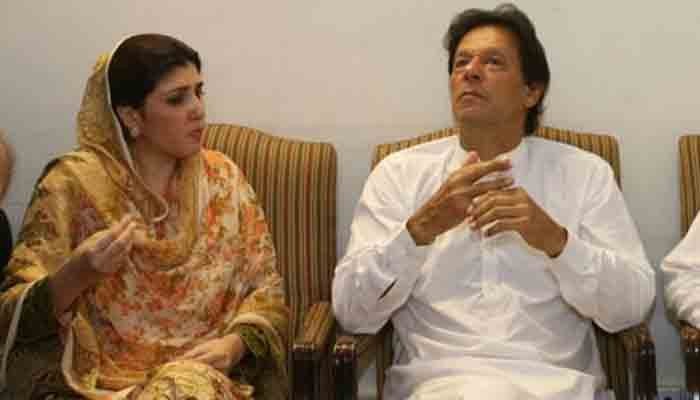
    Former Pakistan Tehreek-e-Insaf (PTI) lawmaker Aisha Gulalai Wazir has written a letter to the Chief Justice of Pakistan (CJP) Umar Ata Bandial, demanding the apex court to take suo motu notice of the anti-army campaign being run “by PTI Chairman Imran Khan”.

    In the letter, she demanded the court to put Khan’s name on Exit Control List (ECL), for a treason case to be registered against him and that he and his party should be banned.

    Gulalai argued that Khan is “shamelessly” dragging the army into politics. “Criticising it [army] for being neutral, maligning it, threatening with dismembering the country, waging civil war and creating anarchy in the country, if the army stayed neutral,” she added.

    Furthermore, she said, “Acting like a mafia, Khan and his party through social media teams are running shameful, abusive and vulgar social media trends against Pakistan army, Chief of Army Staff (COAS) General Qamar Javed Bajwa and Director General (DG) Inter-Services Public Relations (ISPR) Major General Babar Iftikhar.” Along with these allegations, she also attached screenshots as proof.

    Gulalai also alleged that they [Khan and PTI] are using some mainstream media channels and journalists for their propaganda.

    The former PTI member also pointed out that in this way Khan is trying to “instigate the masses” against the armed forces. Moreover, she said, “Khan is threatening the state that he will disclose the security secrets of Pakistan.”

    She also alleged that the provincial government recruited social media influencers in Khyber Pakhtunkhwa (KP) with Rs736 million from public funds.

    Giving the reference of the Muttahida Qaumi Movement (MQM) leader Altaf Hussain — who is banned due to hate speech — and Member National Assembly (MNA) Ali Wazie, Gulalai wrote that if their hate speech cannot be allowed who actually “never went to such an extent”, Khan “should be no exception and above law”.

    Who is Aisha Gulalai Wazir?

    In 2017, Gulalai quit PTI and alleged that her then-party Chairman Imran Khan had sent her inappropriate text messages but she did not reveal any other details to support her allegations.

    According to her, she is not the only one who faced this and claimed many women in the party are facing similar issues.

  • Sindh local govt elections turn into a bloody ground with two deaths

    Sindh local govt elections turn into a bloody ground with two deaths

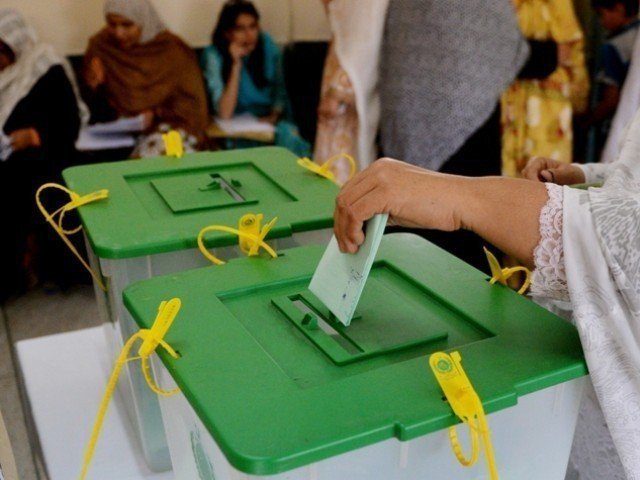
    The first phase of Sindh local government in 14 districts has been completed. According to unofficial results, the provincial ruling party Pakistan People’s Party (PPP) is ahead of all the parties with the highest number of winning candidates as 885 out of 946 representatives were already elected unopposed when the polling started.

    The Grand Democratic Alliance (GDA) came second, independents third, Pakistan Tehreek-e-Insaf (PTI) fourth, and Jamiat Ulema-e-Islam Fazl (JUI-F) secured the fifth position.

    According to media outlets, several complaints of missing ballot papers and changes in the election symbols were reported from many districts of the province, which eventually led to chaos.

    However, the provincial government ruled out such a possibility and described the demand as an “escape” from Opposition parties after they “failed” to field candidates in all districts, reports Dawn.

    Voting started at 9am and ended at 5pm on Sunday. The elections in the rest of the districts of Sindh will be held next month, i.e. July 24.

    Violence at the scene:

    During the election polling when clashes broke out between political parties, it led to deaths and multiple injuries. Two people, including the brother of a PTI candidate, were killed and at least 20 people were injured.

    PTI’s divisional president from Tando Adam, Mushtaq Junejo, said, “I can confirm the death of Qaiser, the brother of our party’s candidate Asghar Gandapur in Tando Adam.” The candidate was contesting in ward-13 of the Tando Adam municipal committee.

    In Nawabshah, the situation became tense when a group of armed people attacked social security. Later, the group fled the polling station along with the election material.

    Kashmore was among the most-affected districts in terms of violence.

    In Durrani Mahar, reports were received that around 10 polling staff members were kidnapped. However, the issue was resolved and police tried to cover up the issue as the polling staff was only released after successful negotiations between the police and the kidnappers.

    Misprinting of ballot papers:


    On Sunday, the Election Commission of Pakistan (ECP) announced that some districts had incorrect candidate names printed on the ballot papers. In a tweet, the ECP said that polls in these regions would be postponed and a new schedule would be presented for them.

  • Man caught installing spy device in Khan’s bedroom

    Man caught installing spy device in Khan’s bedroom

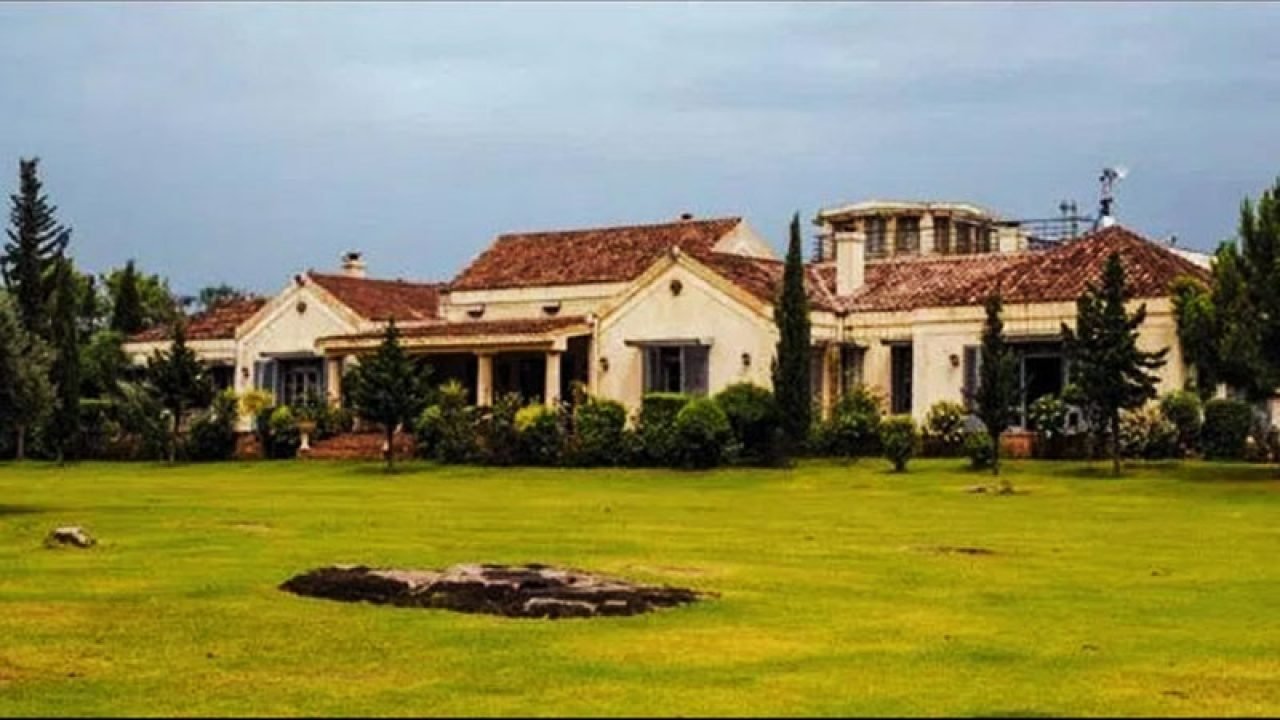
    Staff at Pakistan Tehreek-e-Insaf (PTI) Chairman Imran Khan’s Bani Gala residence on Saturday night caught a man red-handed while installing a spy device in his bedroom.

    ARY News reported that an employee of Bani Gala was paid to install a device in the former prime minister’s bedroom. However, the spying attempt was foiled after another employee informed the security team about the installation of the device.

    PTI leader and the chief of staff of the former premier, Dr Shahbaz Gill, handed over the suspect, an employee of Bani Gala, to the police.

    Shahbaz Gill claimed, “An employee – who cleans the former premier’s room – was paid to install a spy device,” terming the act ‘ heinous and unfortunate’.

    “Our people are being threatened to get information. Such shameful acts should be avoided,” he added. The PTI leader further said that the ‘arrested’ employee has made several revelations – which he refused to share at the moment.

    Many from PTI have been asserting that Imran Khan’s life is in danger. “In this regard, we have informed all relevant agencies, including the government,” Gill said.

    However, Islamabad police said that a media person had handed over the alleged spy to the police but the suspect was not able to speak properly.

    “The suspect could not be identified as he cannot speak properly. It has been decided that a medical test will be conducted on him to ascertain his physical and mental condition. The suspect was kept in Bani Gala house for a day. The person who handed over the suspect to the police has not provided any evidence or proof of spying. Police are investigating the matter and will soon reach the conclusion,” said the police.

  • PM Shehbaz in Karachi: What is he planning to do today?

    PM Shehbaz in Karachi: What is he planning to do today?

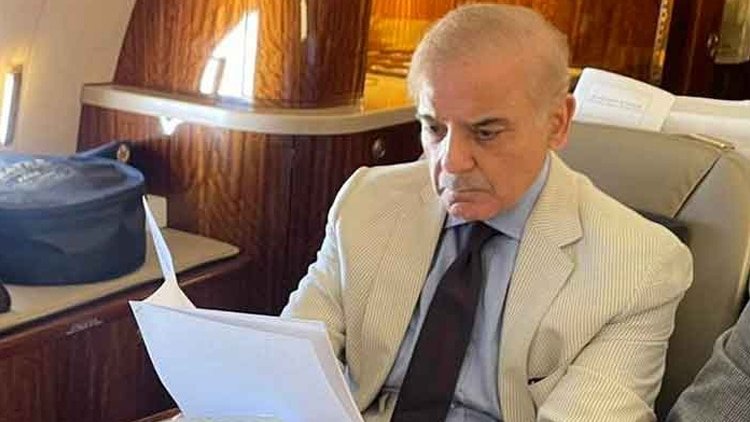
    Prime Minister (PM) Shehbaz Sharif has arrived in Karachi today (Saturday) on a day-long visit.

    During this visit, he will meet a delegation of leaders of the government’s allied party Muttahida Qaumi Movement-Pakistan (MQM-P).

    According to Geo News, the premier will discuss the MQM-P’s agreement with Pakistan Muslim League- Nawaz (PML-N).

    When former PM Imran Khan was ousted, an agreement was signed to confirm MQM-P leaving the Pakistan Tehreek-e-Insaf (PTI) coalition and joining hands with the then-opposition parties [PML-N, PPP, JUI-F and others]. The MQM-P decided to part ways with PTI almost a week before the no-confidence motion against Khan and announced its final decision on March 30.

    Other than this, discussions on the census, electoral reforms and upcoming local body elections will also take place between PM Shehbaz Sharif and MQM-P.

    PM Shehbaz also paid a visit to Nawabshah to offer condolence to Pakistan People’s Party (PPP) co-chairperson Asif Ali Zardari on his mother’s demise.

    The premier’s first stop was Pakistan Naval Academy Manora where he attended the passing out parade of the 25th Short Service Commission.

    In his speech during the ceremony, PM Shehbaz expressed happiness over witnessing women cadets in the passing out parade.

    On Friday, PM Shehbaz made a visit to the port city of Gwadar.

  • Khan in court, granted pre-arrest bail in 10 cases against him

    Pakistan Tehreek-e-Insaf (PTI) Chairman Imran Khan has been granted pre-arrest bail till July 6 by the court of a district and sessions judge in Islamabad today (Friday). He got bail in 10 cases related to vandalism during his party’s Azadi March in the federal capital which happened on May 25.

    He is booked on charges involving interference in state affairs and damaging public property.

    Khan appeared in court with strict security arrangements. The court directed Khan to submit Rs5,000 as surety in each of the cases and directed the police to submit a record of cases in the next hearing which is on July 6.

    Prior to this development, the Peshawar High Court (PHC) granted transit bail to PTI Chairman till June 25 in different cases registered against him in connection with his party march.

    Bail to PTI leaders:

    Earlier, police had booked around 11 PTI leaders including Imran Khan, Asad Umar, Shah Mahmood Qureshi, Fawad Chaudhry and others in a case pertaining to violence at the Kohsar police station. However, an Islamabad court granted interim bail to them in this case on June 20.

    Similarly, last week, an anti-terrorism court (ATC) granted interim bail till June 28 to more than a dozen PTI leaders for vandalism in the case pertaining to violence at the Bhatti Gate police station, Lahore. The bail was granted to Hammad Azhar, PTI Central Punjab President Dr Yasmin Rashid, Mian Aslam Iqbal and others.

  • ‘All pending cases would have been solved by December 2022’: former special assistant to Khan

    Former Special Assistant to the Prime Minister (SAPM) on Accountability Brigadier (Retd) Musaddiq Abbasi said that all the pending cases of politicians would have been solved by December 2022. Abbasi was SAPM to Imran Khan.

    Speaking on Express News‘ political programme‘ Kal Tak‘ with anchorperson Javed Chaudhry, the former special assistant revealed that he was working to make amendments to the Code of Criminal Procedure (CRPC) 1898 so that all the cases could be streamlined. According to him, when he took over the office as SAPM, he discussed it with Khan and he agreed.

    Moreover, talking about pending cases of Nawaz Sharif and other politicians, he clarified that all the cases would have been decided either in their favour or against them.

    On the show, Abbasi who is also the former National Accountability Bureau (NAB) director-general, talked about the recent amendments to NAB law. He said that the bureau is almost closed. It is pertinent to mention that the incumbent government through the new amendments has limited the powers of NAB.

    Abbasi also termed the allegations by Energy Minister Khurram Dastgir’s revelations as baseless. Dastagir alleged that in November when a new army chief would have been appointed by Imran Khan, the new chief would have violated the Constitution and would have helped Imran Khan make false cases against his opponents in order to disqualify them.

    Earlier, Dastgir said, “This is based on information. Imran Khan and his followers would have stayed in power for 15 years. The entire Opposition would have been disqualified. He [Imran Khan] was of the point of view that he will remove everyone and will not spare anyone.”

    Replying to Dastagir, Pakistan Tehreek-e-Insaf (PTI) leader Asad Umar said that he believes that Dastagir is lying but is still waiting for Director General (DG) Inter-Services Public Relations’ (ISPR) statement because these are very serious allegations and the military spokesperson should respond to them.

  • ‘Free and fair’ elections, demands Khan

    ‘Free and fair’ elections, demands Khan

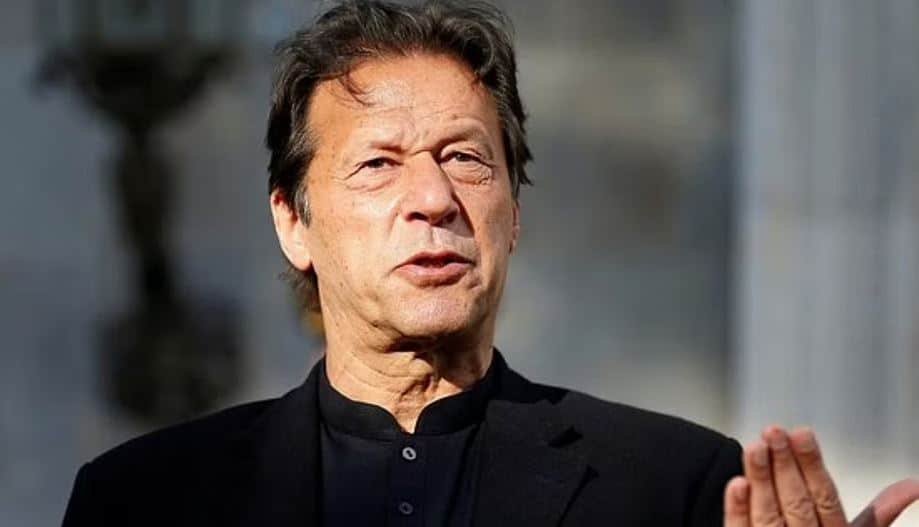
    Chairman Pakistan Tehreek-e-Insaf (PTI) Imran Khan on Sunday demanded free and fair election and revealed that he expects match-fixing in Punjab by-elections.

    PTI took out countrywide protests against rising inflation at Khan’s call on Sunday. Khan addressed his supporters via video-link.

    On Monday, Khan thanked his supporters for coming out across Pakistan yesterday, especially those “who braved difficulties & in some cities rain, to join our protest against massive inflation & clearly reject Imported Govt of crooks imposed by US regime change conspiracy”.

    No free lunch, warns Khan

    Imran Khan warned that Pakistan can become the next Sri Lanka. He said that Finance Minister Miftah Ismail has asked for the support of the United States (US) for the revival of the International Monetary Fund (IMF) programme. “I want to tell Miftah Ismail and Shehbaz Sharif that the Americans have a philosophy, which is that there is no free lunch. Everything has a price. The US will extract our sovereignty as a price.” Khan said that the new government seems ready to pay this price.

    Recognising Israel part of foreign conspiracy agenda: Khan

    Khan also mentioned Pakistan People’s Party (PPP) Senator Saleem Mandviwalla’s statement on the potential of Pakistan having diplomatic ties with Israel. “This is part of the same agenda due to which there was a regime change. The agenda is to follow what Israel, India and the US want,” said Khan.

    However, Mandviwalla clarified on Sunday that his words were being taken out of context. “I never wanted Pakistan to further ties with Israel or indulge in trade with it,” said Mandviwalla, adding that recognising Israel was not in Pakistan’s interests.

    Match-fixing in Punjab by-polls on the cards

    “We have to struggle together. Get ready. I will soon give another call for protest, which will continue until we are given a date for free and fair elections. Not just elections but free and fair elections,” said Khan.

    He reiterated that there is a plan of rigging by-elections in Punjab through ‘match-fixing’. By-polls in Punjab are set to take place next month in July.

    Imran Khan’s full address can be seen here:

  • Pakistan pushed into darkness due to Europe’s decision to cut off Russian fuel

    Pakistan pushed into darkness due to Europe’s decision to cut off Russian fuel

    The European attempt to abandon Russian oil is intended to punish Moscow for its invasion of Ukraine. It’s also wreaking havoc thousands of miles away, throwing Pakistan into darkness, destabilising one regime, and jeopardising the country’s new leadership’s stability.

    According to Bloomberg, Pakistan invested heavily in liquefied natural gas and inked long-term contracts with Italian and Qatari suppliers. Some of those suppliers have now defaulted, although continuing to sell into the more lucrative European market, putting Pakistan in the very situation it hoped to avoid.

    The country took particular precautions a decade ago to protect itself from the sorts of price increases that are currently shaking the market.

    Last month, the government spent about $100 million on a single LNG shipment from the spot market to avert outages during the Eid holiday, a record for the cash-strapped country.

    The country’s LNG costs could reach $5 billion in the fiscal year ending in July, more than double what they were a year ago. Even still, the government is powerless to protect its citizens: the IMF is in talks to bail out the country on the condition that it reduces fuel and energy subsidies.

    Outages lasting more than 12 hours

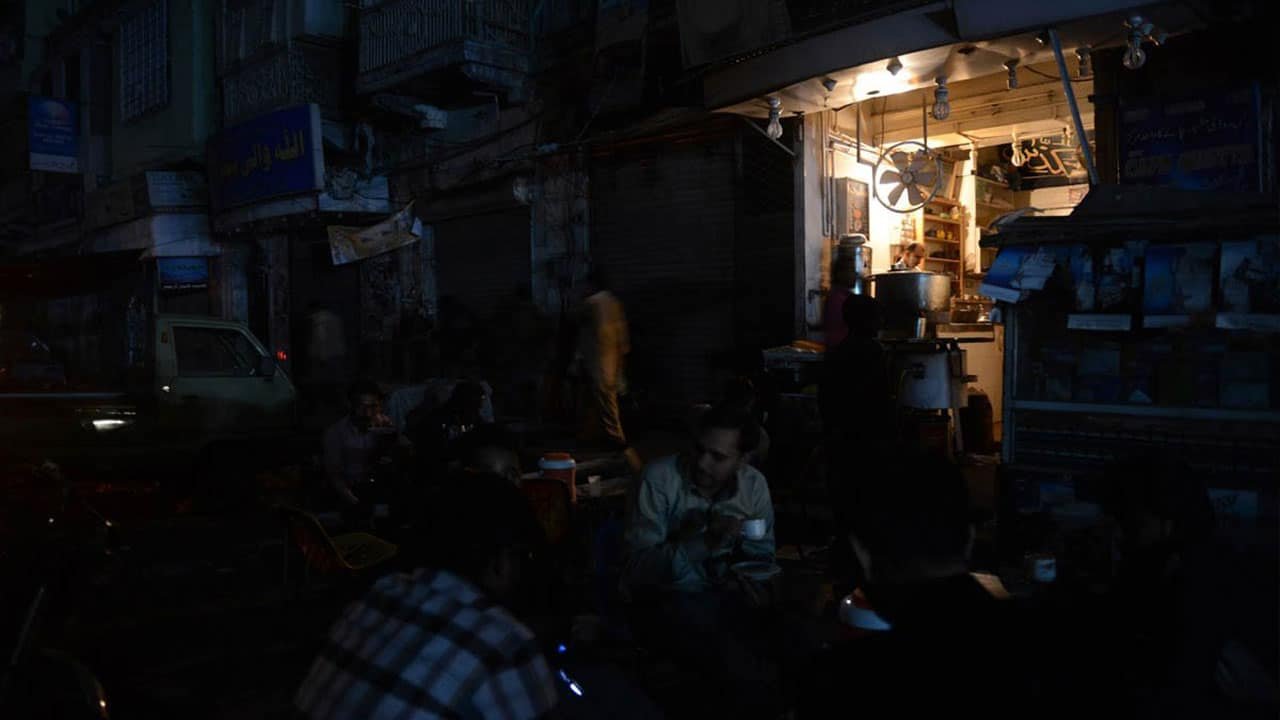
    Parts of Pakistan are currently suffering scheduled blackouts lasting more than 12 hours, reducing the ability of air conditioning to provide respite during the current heat wave. The former prime minister continues to gather enormous audiences to demonstrations and marches, exacerbating voters’ discontent with 13.8 per cent inflation. The hosts of prime-time talk shows frequently discuss how Pakistan will obtain the petroleum it requires and how much it would have to spend.

    The administration introduced a fresh set of energy-saving measures last week. Civil servants were relieved of their normal Saturday shifts, and the security budget was slashed by half.

    Prime Minister (PM) Shehbaz Sharif remarked in an April tweet before of the Eid holiday, “I am acutely aware of the sufferings people are facing”. That same week, he ordered his government to resume purchasing costly overseas natural gas shipments.

    He also warned earlier this month that they don’t have the money to keep importing gas from other countries.

    Rerouted supply to power plants

    There will be more than just outages as a result of the supply shortage. The government has rerouted existing natural gas supply to power plants, causing fertiliser manufacturers to be shortchanged. This approach could jeopardise the next harvest, resulting in even higher food prices the following year. Backup generators are being used by cellphone towers to keep service going during the blackouts, but they, too, are running out of fuel.

    There’s not much hope in the future. LNG prices have risen by over 1,000 per cent in the previous two years, first due to post-pandemic demand and subsequently due to Russia’s invasion of Ukraine. Russia is Europe’s largest natural gas supplier, and the possibility of supply disruptions pushed spot rates to an all-time high in March.

    Increasing LNG demand in Europe

    Meanwhile, Europe is increasing its need for LNG. Europe’s LNG imports have increased by 50 per cent so far this year compared to the same period last year, and show no signs of slowing down. As they cut ties with President Vladimir Putin’s regime over the crisis in Ukraine, European Union policymakers created a plan to considerably increase LNG deliveries as an alternative to Russian gas.

    Floating import terminals are being built at a breakneck pace in countries like Germany and the Netherlands, with the first ones set to open in the next six months.

    “Europe is draining LNG from the rest of the globe,” according to Steve Hill, executive vice president of Shell Plc, the world’s largest LNG trader. “However, this means that less LNG will be sent to developing markets”.

    Pakistan was formerly thought to be the LNG industry’s bright future. Demand for the fuel had peaked in developed markets by the mid-2010s. However, technological developments had reduced the costs and time it took to build import terminals, and new gas sources had reduced the cost of the fuel itself.

    Poor nations could finally contemplate the gasoline at the new, lower prices. Suppliers flocked to these new markets, and when Pakistan published a request for long-term LNG supply, over a dozen businesses competed for the contract.

    Pakistan chose Italy’s Gunvor Group Ltd to sell LNG to the country for the next decade in 2017. The terms were favourable at the time, and the prices were lower than those of a comparable arrangement struck with Qatar the previous year.

    Delay in supplies

    However, due to the rise in European gas prices, the two suppliers have postponed more than a dozen shipments slated for delivery between October 2021 and June 2022.

    According to Bruce Robertson, an expert at the Institute for Energy Economics and Financial Analysis, such defaults are nearly unheard of in the LNG market. Bloomberg spoke with traders and industry insiders who couldn’t recall the last time so many cargoes were rejected without being linked to a big outage at an export terminal.

    Eni and Gunvor stated they had to cancel because they were experiencing their own supply problems and didn’t have enough LNG to export to Pakistan. When exporters confront such difficulties, they typically replace deliveries by purchasing a consignment on the spot market, but Eni and Gunvor have not done so.

    Vendors are generally averse to cancelling orders. It harms the company connection and is often extremely costly. In established markets, fines for “failure to deliver” might be as high as 100 per cent.

    “It’s quite rare for LNG suppliers to renege on long-term contracts beyond force majeure occurrences,” says Valery Chow, an analyst at Wood Mackenzie Ltd.

    Pakistan’s contracts stipulated a lower cancellation penalty of 30 per cent, most probably in exchange for cheaper overall costs. The European spot market prices are currently high enough to more than compensate for the penalties.

    Pakistan’s $12 million LNG supply contract

    As per sources, an LNG supply to Pakistan for delivery in May under a long-term contract would cost $12 per million British thermal units. In comparison, spot cargoes to Europe for May delivery were trading for more than $30. Eni and Gunvor have kept their promises to customers in the region.

    As a result, Pakistan is back to square one, in a weaker negotiation position than before. After a dispute with Pakistan’s army over a variety of problems, including his management of energy supply and the greater economy, Prime Minister Imran Khan was deposed in April.

    Shehbaz Sharif, the new prime minister, has directed the state-owned importer to obtain the petroleum at any cost in order to end the debilitating blackouts. It’s also attempting to reach new long-term LNG purchase agreements, albeit the conditions will almost probably be harsher than six years ago.

    High risk of default

    The cost is having its own cascading repercussions. The government is now “at high risk of default,” according to a paper published last month by the Institute for Energy Economics and Financial Analysis. Moody’s Investors Service reduced Pakistan’s outlook from stable to negative, citing financial worries including a potential IMF bailout delay.

    Pakistan’s dependency on LNG, as well as its suppliers’ tendency to default, has exacerbated the country’s energy dilemma. Pakistan isn’t alone in this regard. Emerging economies all around the world are trying to meet their residents’ requirements while staying within their budget restrictions.

    It has also prompted them to purchase electricity from Russia, reducing the impact of Europe’s attempts to isolate them.

    Pakistan seeks LNG supply contract with Russian companies

    According to reports, Pakistan is also looking at long-term LNG supply agreements with Russian companies. India has already increased its purchases from Russia, and this trend is likely to continue. The government has directed power plants to purchase fuel from overseas in response to the scorching summer heat.

    Other cash-strapped importers, such as Bangladesh and Myanmar, are likely to suffer as a result of Pakistan’s problems. Bangladesh’s state-owned utility recently purchased the country’s most expensive LNG shipments on the spot market to keep the grids functioning and industry stocked, while Myanmar has stopped importing LNG for the past year owing to price increases.

    Other nations, such as India and Ghana, may be prompted to reconsider long-held plans to increase their reliance on super-chilled fuel as a result of Europe’s major change. Instead, governments would increase their reliance on polluting coal or oil, thwarting efforts to meet ambitious emission reduction objectives this decade.