Tag: Public Funds

  • Govt’s bank borrowings jump 3.15x in six months

    Govt’s bank borrowings jump 3.15x in six months

    The government’s reliance on bank borrowings has displayed a concerning upward trajectory, intensifying the nation’s debt burden and raising doubts about its optimistic economic outlook. 

    Recent data for the six months ending December 2023 reveals a substantial increase in borrowing through banks, soaring to Rs3.214 trillion compared to Rs1.019 trillion during the same period last year—an alarming surge of 3.15 times.

    Notably, this surge occurs amid a caretaker government’s administration, signalling that within six months, the government has amassed a level of debt equivalent to the entire fiscal year 2023. 

    While governments commonly borrow from banks to address financial gaps, refinance debts, and fund public projects, the scale of the borrowing indicates a matter of heightened concern.

    Despite the Federal Board of Revenue’s commendable performance in tax collections, with historic achievements of over Rs1 trillion in December and Rs4.468 trillion in 6MFY24, these impressive figures clash with the substantial reliance on bank borrowings.

     Economic apprehensions grow as these borrowing patterns contradict the government’s objective of optimising the allocation and expenditure of public funds.

    The caretaker government’s limited authorisation of Rs300.904 billion for development funds, out of a total allocation of Rs950 billion for ongoing and new social sector uplift projects, contrasts starkly with the escalating borrowing figures, hinting at the possibility of an expanding Public Sector Development Programme (PSDP).

    Furthermore, this escalating trend in government borrowings raises concerns among economists and financial experts who emphasise the importance of fiscal discipline. 

    The growing debt levels may not only impact the country’s creditworthiness but also strain future budgetary allocations, potentially limiting the government’s capacity to respond to unforeseen economic challenges. 

    As stakeholders closely monitor these developments, there is a pressing need for transparent fiscal policies and strategic measures to ensure a sustainable and resilient economic future for the nation.
  • Free electricity extended to President, judges, and NAB chairman, contrary to PM’s claims

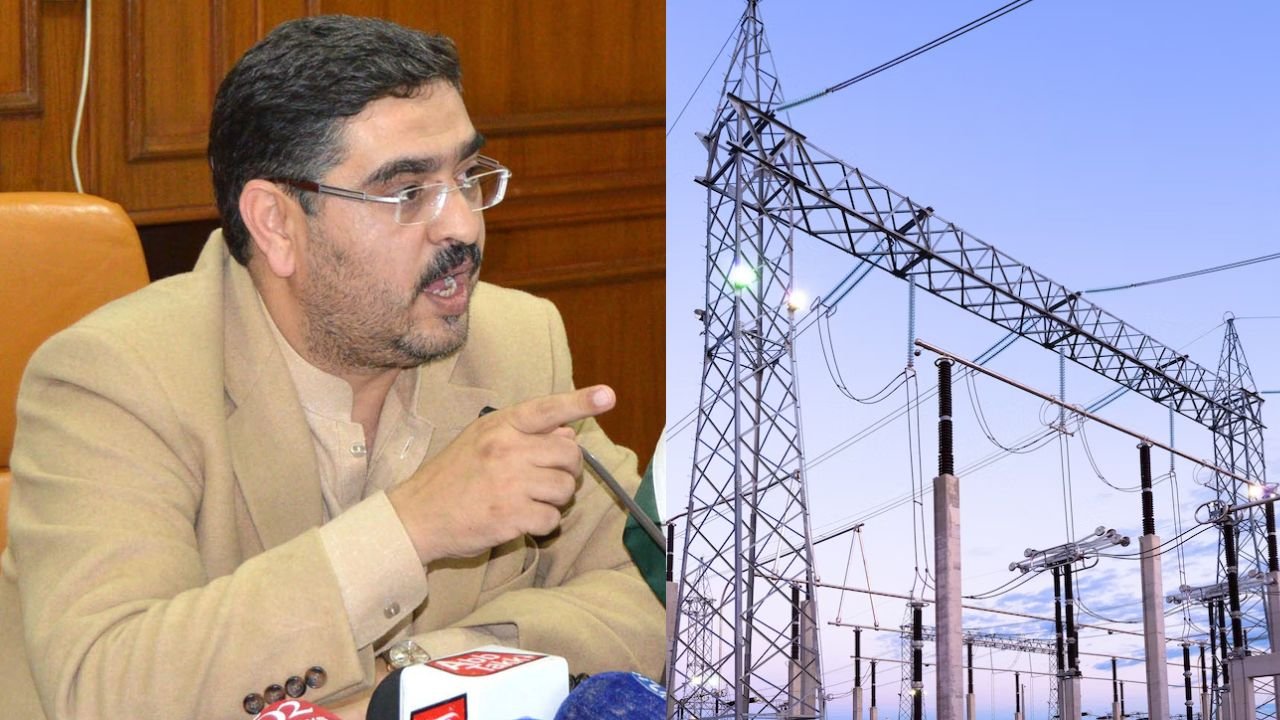
    Free electricity extended to President, judges, and NAB chairman, contrary to PM’s claims

    Prime Minister Anwaar ul Haq Kakar’s recent statement regarding free electricity for judges in Pakistan has sparked controversy, as it appears to be at odds with existing policies and practices.

    In a recent address, the Prime Minister asserted that only Wapda’s employees, including retirees, are entitled to free electricity, and this privilege is not extended to judges or other officials. However, a closer examination of the facts suggests that the Prime Minister may have been misinformed., according to Geo.

    Contrary to the Prime Minister’s statement, serving judges of the Supreme Court and High Courts in Pakistan enjoy the benefit of having their utility bills, including electricity, covered by the government. This includes both current and retired judges.

    For retired Supreme Court judges, the provision of free electricity extends up to 2000 units per month, while retired High Court judges receive 800 units per month without incurring any charges. The President and Prime Minister, whether in office or after retirement, are also entitled to free utilities, including electricity, without any specified limits.

    It’s worth noting that even former President’s receive a monthly allowance of 2000 units of electricity, with the costs borne by taxpayers’ funds.

    Additionally, the National Accountability Bureau (NAB) chairman enjoys similar privileges to those of a Supreme Court judge, which includes the provision of free electricity. However, there is no official confirmation regarding the entitlements of services’ chiefs as claimed by the Prime Minister.

    The President’s Salary, Allowance and Privileges Act of 1975, amended in 2018, specifies in Section 7 that the actual charges for electricity and gas consumption shall be covered each year for the President. Similarly, the President’s Pension Act outlines provisions for electricity, gas, and water supplies.

    The transparency of these policies was underscored in October 2020 when Justice Faez Isa and his wife disclosed their income tax and asset details. These documents clearly indicated that post-retirement benefits for a Supreme Court judge include 2000 units of electricity, 25 HM3 of gas, water, and 300 litres of petrol per month.

    Furthermore, the High Court Judges (Leave, Pension, Privileges) Order of 1997 not only addresses the payment by the government for electricity, gas, and water but also states in Section 28 that retired judges and their spouses are entitled to certain benefits, including 800 units of electricity per month and 25 HM3 of gas per month.