Tag: Public outcry

  • Indonesia: Chief Justice dismissed over decision in favor of the President’s son

    Indonesia: Chief Justice dismissed over decision in favor of the President’s son

    A judicial panel in Indonesia has dismissed the Chief Justice of the country over allegations of conflict of interest. It was reported that Chief Justice Anwar Usman gave a verdict in favour of President Joko Widodo’s son, Gibran Rakabuming Raka.

    Last month, Chief Justice who happened to be the President’s relative, gave a ruling regarding the age limit of vice-presidential elections, a decision critics saw as favouring him to a great extent. The controversy led to an outrage resulting in his dismissal by the panel of judges in the top court.

    The judicial panel found him guilty of violating the ethical code of judges as he is the brother-in-law of the president and should have remained neutral but he could not recuse himself.

    The panel was asked to investigate the conduct of judges amid public outcry after they ruled that the minimum age requirement of 40 need not apply to election candidates who had previously held elected office. The ruling was made just days before the start of registration for the 2024 election. The 36-year-old, already serving as a mayor of Surakarta city, was able to register for the election of the vice president.

    The panel has decided that Justice Anwar can serve as one of the nine judges of the court but must not take part in any election-related cases in the future as those fall under a conflict of interest. The rest of the eight judges have also been reprimanded by the panel.

    Criticism against the decision stemmed from the public seeing the step as part of Widodo’s aim of forming a dynasty by appointing his son the the vice-president. He himself has completed two terms and has not backed any candidate formally for upcoming elections.

  • Taxes in your electricity bill: What Pakistanis are paying and what for?

    Taxes in your electricity bill: What Pakistanis are paying and what for?

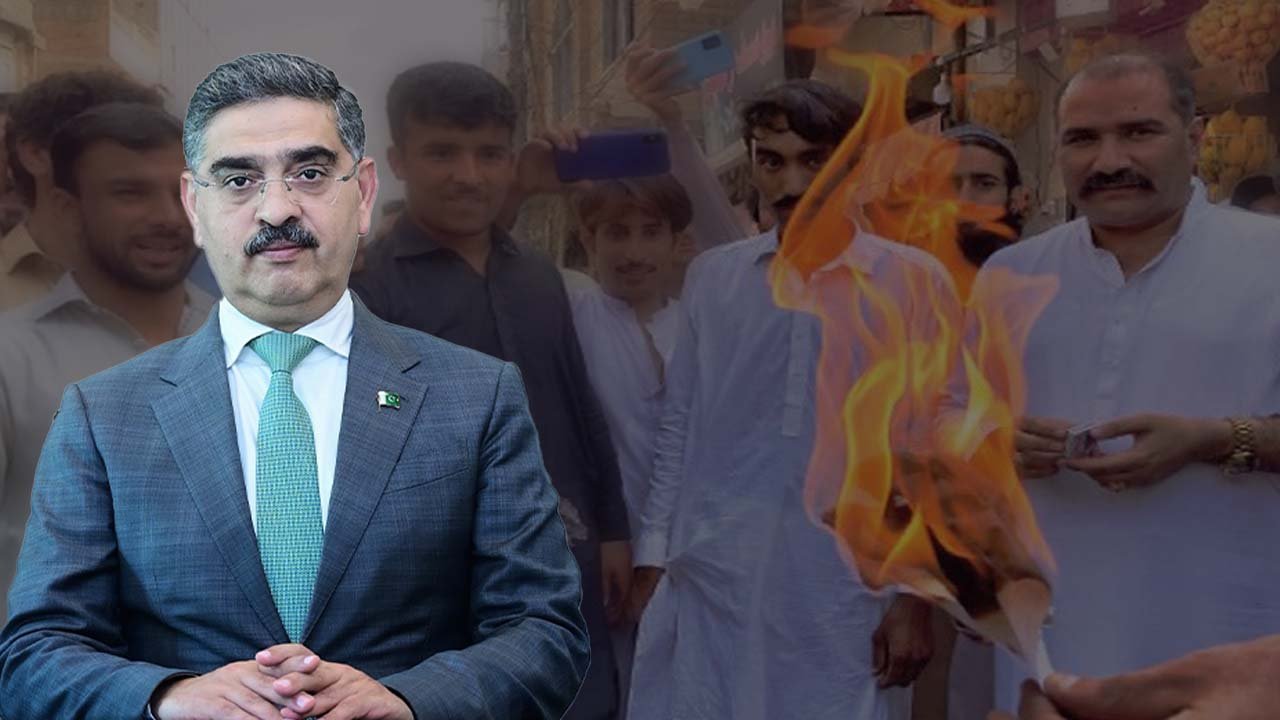
    Protests against exorbitant electricity prices continued to grip Pakistan as consumers from all corners of the country voiced their frustration by burning electricity bills and chanting slogans denouncing overcharging. With Pakistan facing a severe economic crisis and inflation rates surging to a staggering 29 per cent, citizens are grappling with the overwhelming impact of inflated electricity costs.

    The outcry has intensified as incumbent authorities adhering to an IMF deal have slashed power sector subsidies, resulting in unprecedented price hikes that have burdened already inflation-weary citizens. The new pricing structure has set electricity rates at a record high, significantly affecting the cost of living for the nation’s over 240 million inhabitants.

    Central to the grievances is the manner in which electricity bills are calculated. The basic charge is linked to kilowatt-hours (kWh) or units consumed, a component that carries an array of additional taxes. These taxes, directly borne by the masses, have contributed to the mounting frustration felt by the population.

    An individual from Gujranwala recently shared an eye-opening example of the impact of these charges. Despite consuming around 212 units in the previous month, he received an electricity bill of Rs10,500, while the cost of the electricity consumed was merely around Rs6,400. The disparity between consumption and billing has drawn attention to the various components contributing to the final cost.

    For those consuming slightly over 200 units, the Fuel Price Adjustment (FPA) accounts for approximately Rs250. This adjustment is contingent on the price of the fuel used in electricity generation. If the cost of fuel rises during power generation, WAPDA (Water and Power Development Authority) levies an additional charge in subsequent billing cycles.

    Breaking down the bill further, it reveals a complex web of charges. An electricity duty of around Rs100 is imposed, accompanied by a General Sales Tax (GST) of Rs1,316.

    Additional charges include Income Tax amounting to Rs900 and Extra Taxes totaling Rs366. The bill also features a peculiar charge of Rs227 labeled as ‘Further Taxes,’ which has prompted criticism from citizens questioning its purpose and transparency.

    Additional charges on the bill encompass Rs365 for Sales Tax, Rs680 for Financing Cost Surcharge (FC Surcharge), and Rs115 designated as ‘Taxes on FPA.’ Notably, non-filers of income tax are subjected to supplementary charges on their utility bills.

    As confusion mounts among consumers regarding the breakdown of charges, it is imperative for electricity consumers to comprehend the various taxes levied on their monthly bills. Diverse categories of consumers are subject to a range of taxes, duties, and surcharges, contributing to the complex structure of electricity pricing in Pakistan.

    Below is a list of the taxes and levies imposed on electricity consumers in Pakistan:

    Electricity Duty: Ranging from 1.0 per cent to 1.5 per cent of Variable Charges, this provincial duty is levied on all consumers.

    General Sales Tax (GST): At a rate of 17 per cent of the electricity bill, GST is levied on all consumers under the Sales Tax Act 1990.

    PTV License Fee: Domestic consumers pay Rs35, while commercial consumers pay Rs60 as PTV license fee in their electricity bills.

    Financing Cost Surcharge: This surcharge of Rs0.43 per kWh applies to all consumer categories except lifeline domestic consumers.

    Fuel Price Adjustment (FPA): FPA represents the difference between actual fuel charges and reference fuel charges. Positive variation leads to a charge, while negative variation benefits the consumer.

    Extra Tax: Imposed on industrial and commercial consumers not registered in the active taxpayer list, rates range from 5 per cent to 17 per cent based on different bill amount slabs.

    Further Tax: Levied at a 3 per cent rate on all consumers without a Sales Tax Return Number (STRN), except for domestic, agriculture, bulk consumers, and street light connections.

    Income Tax: Charged at varying rates depending on the applicable tariff and the electricity bill amount.

    Sales Tax: Commercial consumers face a 5 per cent sales tax on bills up to Rs20,000 and a 7.5 per cent tax on bills exceeding Rs20,000.

    With public discontent on the rise, authorities are urged to address the concerns of citizens and seek a balanced approach that mitigates the impact of these charges on the already struggling populace.

    As the nation grapples with economic uncertainties, finding a solution that eases the burden on citizens while ensuring the sustainability of the power sector remains a pressing challenge.

  • PM calls emergency meeting as public outcry grows over high electricity bills

    PM calls emergency meeting as public outcry grows over high electricity bills

    On Saturday, people residing in various areas of the country openly expressed their deep sense of despair and frustration due to the shockingly high electricity bills they had received.

    Some individuals even went so far as to issue veiled threats of organising protests and, in more extreme cases, initiating a campaign of civil disobedience. These actions were contingent on the condition that the additional taxes included in the bills were not waived.

    The intensity of these emotionally charged reactions prompted the caretaker Prime Minister, Anwaar ul Haq Kakar, to swiftly convene an emergency meeting at the Prime Minister’s residence. This urgent gathering is scheduled to take place on the subsequent day, Sunday.

    Clarifying the purpose of the meeting, the premier stated, “In the meeting, a briefing will be taken from the ministry of power and distribution companies, and consultations will be held regarding giving maximum relief to consumers regarding electricity bills.”

     Protests took place in several cities including Islamabad, Rawalpindi, Multan, Rahim Yar Khan, Gujranwala, Narowal, Kasur, Attock, Sargodha, Peshawar, Haripur, and numerous other cities across the nation. Numerous videos were shared on social media, depicting individuals burning their electricity bills and chanting slogans against power companies.

  • Punjab govt set to spend Rs2.3 billion on new cars for officials

    Punjab govt set to spend Rs2.3 billion on new cars for officials

    In a recent development, the caretaker government of Punjab has taken a decision to acquire 200 new vehicles at a total cost of Rs2.3 billion, raising concerns about the use of taxpayer money on luxury vehicles for bureaucrats.

    According to reliable sources, the financing for this purchase will be drawn from the tax revenue contributed by the public, prompting scrutiny over the allocation of such a substantial amount for the benefit of government officials.

    A letter has been issued requesting the release of advance funds from the finance ministry to facilitate the acquisition process. The Assistant Commissioners throughout Punjab are slated to get Toyota Corolla Altis 1600cc vehicles, while Deputy Commissioners in each district will be given Toyota Yaris. At the Tehsil level, Assistant Commissioners will be provided with Double Cabin vehicles, as per an official notification.

    However, amidst this decision, a concerned citizen has taken legal action by filing a petition in the Lahore High Court (LHC), seeking the removal of Punjab’s caretaker Chief Minister, Mohsin Naqvi, and his cabinet members from office. The petitioner argues that the caretaker government’s term has exceeded its constitutional mandate.

    The petitioner contends that although the Supreme Court has extended the election date in the province, it has not extended the tenure of the caretaker government. Consequently, the continued occupation of office by Caretaker CM Mohsin Naqvi and his cabinet is perceived as a breach of the constitution and raises questions about its constitutional legitimacy.

    As the situation unfolds, public attention remains focused on the utilisation of public funds for bureaucratic privileges, while the legal challenge adds further complexity to the already contentious political landscape in Punjab.

  • Transporters overcharge passengers after fresh increase in fuel prices

    Transporters overcharge passengers after fresh increase in fuel prices

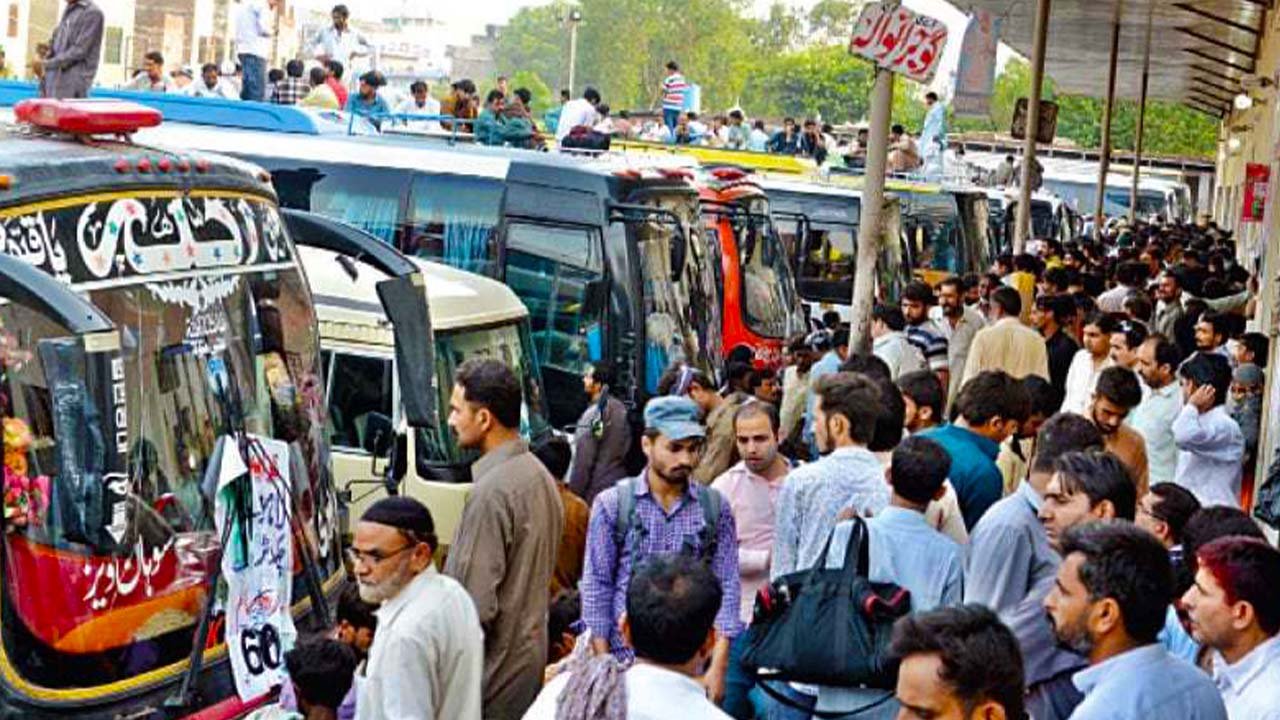
    The recent hike in petroleum prices has been met with public outcry, with many stating that the significant increase in petrol prices has severely impacted the common man, as transporters have raised fares just ahead of Eid-ul-Fitr. This rise in oil product prices is also expected to have repercussions on the cost of daily commodities, particularly kitchen items.

    The Statistical Department of Pakistan has reported that people were already facing 44.6 per cent inflation, and the weekly report showed that this figure was expected to increase further with the recent hike in petroleum prices. The price of petrol has been raised to Rs282 per litre, while high-speed diesel and light diesel oil rates will remain stable at Rs293 per litre and Rs174.68 per litre, respectively. However, kerosene oil has seen an increase of Rs5.78 per litre, with its price now standing at Rs186.07 per litre.

    Long route transporters have increased fares by 10 to 20 per cent per ticket, while freight services charges have risen by 30 per cent. Over 70 per cent of people have started to travel to their native towns to celebrate Eid-ul-Fitr with their families, and they have protested against the sitting government for the fresh increase in petroleum prices. The business community has also warned of a new wave of inflation, and the Pakistan Oil Tankers Association and All Pakistan Truck and Trailer Association have rejected the hike in petroleum product prices.

    Local transporters have also increased fares without permission, claiming that there is no government in the country. However, the District Regional Transport Authority (DRTA) Secretary has stated that they have started a crackdown against transporters who are overcharging passengers. The senior representatives of the trader’s community have also rejected the present hike in petroleum prices and have advised political parties to work together to boost the country’s economy.

    The All Pakistan Clerks Association (APCA) has stated that they are facing difficulties due to the government’s wrong policies and have decided to start a revolution after Eid-ul-Fitr against the wrong government policies. Wagon owners and drivers have protested at the termination points of their routes, while public transport operators in the Rawalpindi division will be meeting to discuss the situation. In summary, transporters, traders, and the general public have strongly reacted to the recent increase in fuel prices.