Tag: Punjab government

  • NAB arrest: Cat and mouse as Shehbaz not found

    NAB arrest: Cat and mouse as Shehbaz not found

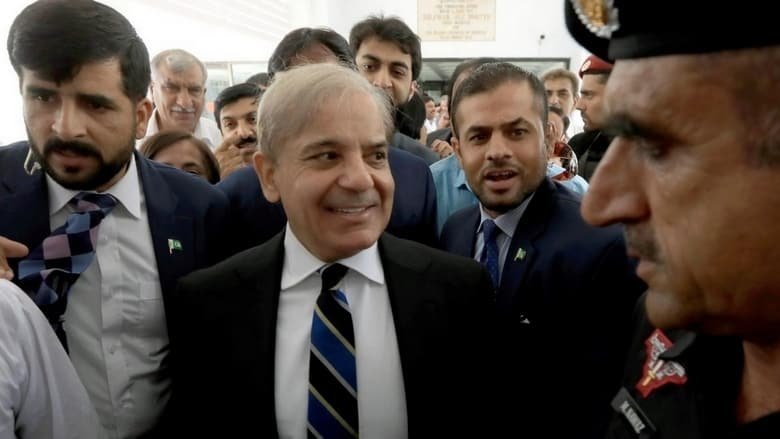
    A team of the National Accountability Bureau (NAB) accompanied by police on Tuesday reached the residence of Pakistan Muslim League-Nawaz (PML-N) President Shehbaz Sharif to once again arrest him, this time in the assets beyond means case.

    Videos available with The Current showed a contingent of police’s anti-rioting force also reaching the PML-N chief’s Model Town residence in Lahore to make the arrest that comes after Shehbaz, being a cancer survivor, once again avoided appearing before the anti-graft watchdog amid the coronavirus outbreak.

    The teams, however, had to return empty-handed as the leader of opposition in the National Assembly (NA), who has also sought pre-arrest bail in the case, was not at home.

    The teams were headed to the Sharif family’s Jati Umra residence near Raiwind by the filing of this report.

    PRE-ARREST BAIL AND THE CASE:

    Earlier in the day, Shehbaz filed a bail plea in the Lahore High Court (LHC) to avoid arrest in the assets beyond means and money laundering cases against him, which is to be taken up by the court tomorrow (Wednesday).

    NAB had summoned the PML-N president to record his statement in both cases today (June 2) as the bureau needs Shehbaz’s statement to bring the cases to their logical conclusion.

    It had also provided the ex-Punjab chief minister (CM) with a detailed questionnaire as per its standard operating procedure (SoPs), which the PML-N says was submitted by the younger Sharif’s lawyers.

    However, Shehbaz on Monday filed a petition in the LHC requesting the court to grant him bail before arrest in both the cases “in the interest of justice”. He requested that he might also be admitted to ad-interim pre-arrest bail till the decision of the petition.

    The petitions said the power to arrest was permissive and not obligatory and the arrest was not desirable even in most heinous offences so long as the accused cooperated and kept joining the investigation.

    According to The Express Tribune, The PML-N president contended that on October 31, 2017, a complaint was made to various authorities including NAB chairman against management of the public limited companies in Punjab. The complaint claimed that the companies were incorporated and operated in violation of the Constitution and law.

    On November 15, 2017, NAB director general (DG) ordered an inquiry into the complaint “in a slipshod and mechanical manner, without application of judicious mind”.

    On January 10, 2018, the director general passed an order under section 18(C) of NAO 1999 for an inquiry into against management/officers/officials of Punjab Land Development Company (PLDC), management /owners of M/s Lahore CASA Developers (JV) and officers/officials of the Lahore Development Authority (LDA) in Lahore’s Ashiana housing scheme.

    Shehbaz said the above-said order was passed on the basis of an anonymous complaint and neither the complaint nor the order for inquiry mentioned the name of the petitioner or his office “yet under its cover”, NAB officials embarked upon “a fishing and sniffing expedition” against him.

    On October 5, 2018, when Shehbaz appeared before a NAB team in response to call up notice in the matter of Saaf Paani Company but he was arrested in Ashiana case.

    READ: ‘NAB forcing me to become approver against Shehbaz,’ former LWMC MD tells court

    During his 64 physical remand, the PML-N chief was also arrested in Ramzan Sugar Mills/Construction of Sullage Carrier case. He was still in NAB’s custody when NAB authorized yet another inquiry against the petitioner and others in assets beyond means case.

    Later, the petitioner was granted bail after arrest in both the above said cases but just after one week’s time of his bail, NAB put his name in the Exit Control List (ECL) – the country’s no-fly list.

    “The petitioner assailed the above said memorandum February 21, 2019 before this court and his petition was allowed.” He contended that NAB served him another call up notice requiring his appearance before the CIT on April 17, 2020.

    Shehbaz said he did not appear before NAB team in view of his ill health and the lockdown. Later NAB again issued call up notice requiring his presence on April 22, 2020.

    “However, hectic efforts were made and a comprehensive reply was submitted within time with an assurance of personal appearance after the holy month of Ramazan subject to lifting of the lockdown.”

    Later, the petitioner appeared before the CIT whereupon he was interrogated for about 2 hours, however, he could not be confronted with any evidence worth name on record to show any act of commission or omission by him to attract the mischief of any offence under NAO 1999.

    “That now the petitioner has again been served with a call up notice for June 2, 2020 requiring his personal appearance and written reply before CIT,” it added.
  • 670,000 coronavirus infections in Lahore alone?

    670,000 coronavirus infections in Lahore alone?

    A summary forwarded to Punjab Chief Minister (CM) Usman Buzdar by Primary & Secondary Health Secretary Captain (r) Usman last month estimated that there could be 670,000 cases of the new coronavirus — COVID-19 — in Lahore alone.

    The summary was forwarded to Buzdar on May 15, Geo quoted the secretary as saying, and reported that it contained results of samples collected from hotspots, residences and offices in Lahore.

    As per the summary, 6 per cent of the total samples collected, tested positive for COVID-19. In some towns, the percentage of positive cases went up to 14.7 per cent. The report said that there wasn’t a single area in Lahore where the infection had not reached. 

    Members of the Technical Working Group — formed to ascertain the number of coronavirus affected persons in the city — have recommended imposing a complete lockdown for four weeks and quarantining persons aged above 50 years. The group has also advised the government to declare it essential for people to stay inside their homes. 

    Lockdown restrictions have, however, only been eased since before Eidul Fitr last month.

    Amid soaring cases, the Punjab government has decided to further ease lockdown restrictions that were imposed to contain the outbreak. Buzdar last week chaired a meeting of the Cabinet Committee on Anti-Coronavirus Measures, wherein it was agreed that recommendations for the opening of the different departments and institutions, according to the standard operating procedures (SOPs) defined by the government, would be forwarded to the federal government.

    In the meeting, Buzdar said that a request would be made to the federal government to provide 1,500 ventilators. He added the instructions of the federal government regarding opening of restaurants, cafes etc, would be followed by the provincial government.

    The Cabinet Committee allowed the Punjab Public Service Commission to conduct interviews of one thousand lady doctors. It was also decided in the meeting that the Drug Regulatory Authority Of Pakistan (DRAP) would be approached for permission to prepare ventilators and respirators at the local level.

    It was decided the National Command and Operation Centre ( NCOC ) would take final decision to reopen the parks’ proposal, new working hours for the commercial enterprises and two-day holidays.

  • Government mulls allowing restaurants to reopen

    Government mulls allowing restaurants to reopen

    As coronavirus cases continue to surge across the country, the Punjab government has decided to allow restaurants to reopen.

    The decision was taken during a cabinet committee meeting on coronavirus which was convened on the directives of Punjab Chief Minister (CM) Usman Buzdar.

    Reportedly, recommendations in this regard have been sent to the federal government and would be presented before the National Coordination Committee (NCC) for final approval.

    The committee also decided that markets and shopping malls would be allowed to open from 9 am to 5 pm on Monday, Tuesday, Wednesday and Thursday, while on the remain three days, they would remain closed.

    The provincial government also recommended opening recreational sites and tourist destinations such as Murree.

    The meeting was attended by Law Minister Raja Basharat, Senior Minister Abdul Aleem Khan and Commerce Minister Mian Aslam Iqbal.

    Officials of the health department also briefed the meeting about the coronavirus situation while administrative agencies presented a report on the implementation of the standard operating procedures (SOPs).

    Earlier, Lahore Restaurants Unity (LRU) and Lahore Super Markets Association (LSMA) sought help from the Lahore Chamber of Commerce and Industry (LCCI) for reopening their businesses with implementation of SOPs.

    LCCI President Irfan Iqbal Sheikh, along with Senior Vice President Ali Hussam Asghar and Vice President Mian Zahid Jawaid Ahmad, met the delegations of the LRU and LSMA and listened to their grievances.

    LRU Chairman Amir Rafiq Qureshi and LSMA President Ahmad Nawaz and Marriage Halls Association Chairman Mian Muhammad Ilyas said that the lockdown had destroyed their businesses to such an extent that they were no heading towards a point of no return.

    They said that restaurants and marriage hall owners were ready to follow the SOPs set by the government to contain the coronavirus outbreak.

    Sheikh said that the LCCI was well aware of the miseries of traders and had already taken up the issues at the highest level. He said that a number of countries, including Turkey, had allowed hotels to open up. “We have to live with coronavirus like various other diseases, therefore, the government should manage and allow businesses to reopen,” he said.

    The LRU representatives demanded relief in rents of restaurants located in buildings of government and semi-government departments. They demanded a 100 per cent waiver in utility bills of small restaurants and 50 per cent waiver in utility bills of large restaurants for the next three months.

  • Punjab ‘controls’ coronavirus numbers by sending lab staff on Eid holidays, resulting in less testing

    Punjab ‘controls’ coronavirus numbers by sending lab staff on Eid holidays, resulting in less testing

    The secret behind the sudden drop in number of new coronavirus cases being reported in Punjab has been revealed as journalist Amber Rahim Shamsi quoted Punjab Minister for Industries, Commerce, Investment and Skill Development Mian Muhammad Aslam Iqbal as saying that lab workers had been given Eid holidays, resulting in less testing.

    After easing lockdown restrictions, Punjab has generously announced six Eidul Fitr holidays from May 22 to May 27, which means the rate of increase in the number of cases in Punjab started going down Friday as lab personnel, who had been working tough shifts since the outbreak began, started getting off work and heading home to celebrate Eid with their families.

    The number of COVID-19 infections in Punjab, which increased from 13,914 to 14,584 from May 16 to May 18 and then 16,685 on May 20, stood at 18,455 on Friday with over a thousand cases being reported every day since May 17-18.

    However, the same number on Saturday stands at 18,730 with an increase of just 275 cases — unlike what trends had suggested.

    “It is true that labs have started working at a lower capacity that is leading to the number of cases going unreported as of yet,” a provincial health official told The Current on the condition of anonymity. They refused to comment on the government’s decision of allowing Eid holidays to lab personnel, but said it was a much-needed relief.

    “Things will get back to normal and the testing capacity will be restored after… or maybe even during Eid,” the official added.

    By the time this report was filed, the total number of coronavirus infections in Pakistan stood at 52,437 with 1,101 deaths. Sindh topped the chart with 20,883 cases, followed by Punjab with 18,730 infections, Khyber Pakhtunkhwa (KP) with 7,391 and Balochistan with 3,198. Islamabad had reported 1,457 cases while Gilgit-Baltistan (G-B) and Azad Kashmir had 607 and 171 infections, respectively.

  • COVID-19 & industry: Current situation and the way forward

    In the previous two years, Pakistan had started to pick its pace at a slightly high point and the economy had started to improve.  Both the current account along with the non-oil current account had continued to improve after exchange rate reforms while sectors with the highest forward linkages i.e cement, iron and steel, had started to show an upward spike in production.

    The fiscal side also seemed to strengthen over a period of time while growth in revenue collections at all levels, especially direct taxes, was also witnessed.

    However, with the ongoing coronavirus pandemic raising its ugly head, the meager growth achieved is now threatened.

    According to a World Bank (WB) assessment, the global impact of COVID-19 can reach $347 billion (0.4 per cent of Global GDP). Nearly all regions suffer a double-digit decline in trade volumes in 2020, with exports from North America and Asia hitting the hardest. But it is important to note that this hit was majorly experienced by countries with sizable exports due to trade problems while Pakistan has a low global value chains (GVC) exposure to the world, especially to People’s Republic of China (PRC), which means it has suffered lesser trade disruptions so far.

    Trades have fallen steeper in sectors with complex value chains, particularly electronics and automotive products.

    According to Urban Unit’s spatial industrial data, currently, 18 per cent of the industries in Pakistan are operational. These include the fertilizer industry, agriculture, agriculture spare parts and export industry, all of which are operating under conditions of following certain standard operating procedures (SOPs) developed by the Punjab government. However, strict monitoring from the government will also be required as an exemplary practice of these SOPs which will further encourage the authorities to open up other capital-intensive sectors.

    On the monetary side, there are several efforts made by the government. Under a federal package, a Rs100 billion relief package has been provided to small and medium-sized enterprises (SMEs) and the agriculture sector along with concessional loans. Money is allocated to lower the input cost for farmers along with a Rs12,000 monthly package with facilities of panagahs [shelter homes] and langar centers [soup kitchens].

    The Punjab government has also implemented tax reductions as all forms of GST have been removed from online platforms, businesses and services related to HR; deferment of tax has been implied for properties and CVT & stamp duties have been reduced to 2 per cent on property transactions, construction industries, hospitals and medical consultants. In addition to these, the State Bank of Pakistan (SBP) has provided relaxation in export schemes (EFS & LTFF) and has enhanced liquidity for exporters while providing extensions in the time period to ship and import goods against advance payment.

    The central bank has also reduced its interest rate from 13.5 per cent to 9 per cent.

    However, there are some further actions that the government can take in order to improve the current economic situation. A regulatory framework can be adopted keeping in view some of the best international practices from where many risk management practices can be learnt to determine the best price discovery (for example, the United States has dropped the interest rate to 0 per cent).

    Secondly, allowing ease of entry for institutional capital in order to broaden the depth of the market i.e. attracting FDIs in newly established special economic zones in Faisalabad, Bhalwal, Vehari and Rahim Yar Khan by simplifying provincial and federal procedures. Thirdly, the role of aggregators, producers and organisations can be improved for better price negotiations for SME’s.

    Fourth, access to foreign capital should be made easier and distortions should be minimised by developing linkages with the international markets. That means ease of doing business index, logistic performance index and reduced lead time for exports should be commenced. Lastly, e-markets should be developed where participants can access both international and domestic markets. An e-commerce policy at the provincial level must be put in place with incentives to increase documentation of economy and online trade at B2B B2C and C2C levels.

    It is to be noted that Pakistan is not alone in this economic downfall. It is vital to have a positive outlook on the situation and prepare for the future with better resilience. Effective policies and active preparedness can give impetus to the post-pandemic industrial revival.

  • Coronavirus patients can now stay at home in Punjab

    Coronavirus patients can now stay at home in Punjab

    Punjab Chief Minister (CM) Sardar Usman Buzdar has given his permission for coronavirus patients with mild symptoms to quarantine themselves at home rather than being admitted to a government facility.

    According to a notification issued by the Punjab Primary and Secondary Healthcare Department, the Punjab chief minister, on the directions of corona expert advisory group and technical working group, has advised for following standard operating procedures (SOPs), devised by the International Health Organisation (IHO) for home isolation.

    He said that the patient would be kept in isolation under the supervision of the district health authority concerned in his or her house where all necessary facilities were available.

    He said that such hotels, school buildings, mosques, hostels and community centres could also be used for isolation where all necessary facilities were provided by the government which would also take the responsibility to disinfect the buildings on a daily basis.

    “However, buildings, where cooling and heating systems can cause the spread of the virus, cannot be used for isolation,” he made it clear.

    Buzdar said that solid waste of patients would be disposed of according to the given guidelines.

    The CM said that food would be provided to the patient in only disposable packs. He said that decision of home isolation of any patient would be made by home isolation committee, formed by the assistant commissioner of the area and assistant commissioner or his representative, DDO Health and chief officer of the area concerned would be members of the committee.

    “Population Welfare, Livestock, Excise and Taxation staff would monitor and report about the isolation committee and three isolation committees would be formed in one union council in which at least one doctor would also be a member of the committee, whereas one committee would be constituted in a rural union council with one doctor in it,” the CM said.

    The chief minister said that the committee would also review space for keeping patients in home isolation according to the number of family members whereas the family would be informed about the SOPs before allowing any patient home isolation.

    “The patient would be bound to inform the authorities about his condition on a daily basis and testing protocol would be mandatory for the patient,” he said.

    The chief minister said that the period of home isolation would be for 10 days and for removal of home isolation conditions, the patient had to show at least two negative corona tests and after the termination of home isolation, another test would be conducted after five days.

    In case of non-availability of the test, the patient would have to stay in quarantine for more than two weeks.

  • Trouble for Imran? Govt’s allied PML avoiding accountability, adopting Opp’s stance

    Trouble for Imran? Govt’s allied PML avoiding accountability, adopting Opp’s stance

    With the National Accountability Bureau (NAB), in line with Prime Minister (PM) Imran Khan’s vision of holding the corrupt accountable, planning to reopen a decades-old investigation against the Chaudhrys of Gujrat, trouble seems to be around the corner for the ruling Pakistan Tehreek-e-Insaf (PTI) that is in power owing to the support of its allies, including the Chaudhry cousins’ Pakistan Muslim League (PML).

    PML President Chaudhry Shujaat Hussain and his cousin, Punjab Assembly Speaker Chaudhry Pervaiz Elahi, have approached the Lahore High Court (LHC) against NAB Chairman Justice (r) Javed Iqbal’s jurisdiction after reports said that an investigation into the assets of the two leaders was being re-opened 19 years later.

    Reiterating that the accountability watchdog has no authority to reopen an almost two-decade-old case that had already been closed, the Chaudhrys, in their petition, have questioned the jurisdiction of NAB to invoke provisions of the National Accountability Ordinance (NAO) 1999 and Anti-Money Laundering Act 2010 simultaneously, arguing that the bureau has no power to hold an inquiry into allegations of money laundering under NAO 1999.

    While the court has directed the NAB chief and other parties to submit a reply till May 11, the bureau alleges that it is facing propaganda onslaught since after reports of reopening of the alleged cases against the PML leaders and the decision in this regard is yet to be taken by the NAB chief.

    The Chaudhrys, however, are convinced that the anti-graft watchdog is an institution of “political engineering”.

    “NAB is an independent institution and worked transparently without an influence,” NAB has in response to the allegations levelled by the PML leadership, which seem to support the stance of opposition parties, including the PML-Nawaz (PML-N) and the Pakistan People’s Party (PPP), as leaders of both the former ruling parties have time and again also accused the government of using the anti-graft watchdog for political vendetta.

    TROUBLE FOR IMRAN?

    “Relationship between PM Imran and the Chaudhrys is not based on principles, but is rather a marriage of inconvenience since the two need each other in the post-2018 election scenario, when Imran, despite all his reservations about them was left with no other choice but to reach an agreement to come to power,” sources told The Current.

    They said it was interesting how the PML leadership was trying to evade the process of accountability that the premier has a special place for in his heart, adding that members of the opposition parties and even some from both the PTI and PML are eagerly waiting for whatever is to follow the episode.

    “The PTI has a total number of 156 members in the Lower House [National Assembly] against rival PML-N’s 84 and the PPP’s 55. The two largest opposition parties also enjoy the support of a few independent lawmakers in addition to those from other parties of the anti-government alliance,” they said, adding that the support of MNAs from the PML among other allies such as the Muttahida Qaumi Movement-Pakistan (MQM-P) was imperative for the PTI to keep on enjoying a majority in the parliament.

    “PTI seems to be struggling in this regard as it has lately not been the best of friends with many of its allies. Other than the PML and MQM-P, Balochistan National Party-Mengal (BNP-M) is also not very happy and is finding it difficult to not break ties,” a senior member of the ruling party, on the condition of anonymity, told The Current.

    To a question, they said that if the PML strikes a deal with the opposition parties, the current system would collapse like a “house of cards” as it is no secret that PTI is in power in Punjab also only because of the Chaudhry’s support. “Independent members do not mind joining hands with whoever seems to be in charge.”

    “The recent developments regarding the NAB’s old case against Chaudhrys coincided with their recent meetings with some PML-N leaders, including Rafiq brothers and some backdoor exchange of possibility of cooperation between the two. This has led to them believing that the PTI is trying to force them back into the coalition and not jump ship,” said a close aide of Pervaiz Elahi.

    They, however, refused to shed light on the possible troubles facing Chaudhrys because of Punjab Chief Minister (CM) Usman Buzdar, who had also elevated to the position of the provincial chief executive as part of the deal struck between the PTI and PML.

    MOONIS SAYS ‘NO COMMENT’:

    When contacted, senior PML leader and son of Pervaiz Elahi, Moonis Elahi, refused to comment on the situation.

    The PML leader was asked about his party’s goals with regard to taking NAB to court; why was the PML, despite being an ally of the PTI, not letting the anti-graft body go through with its aim to eradicate corruption; and who exactly was using NAB as a tool for political engineering as claimed by the party.

    He said that the party leadership and lawyers had strictly told them not to directly comment on the case as it was sub-judice and any statement could be used against them in court.

  • Can’t test people only to see if they have coronavirus or not: Dr Yasmin Rashid

    Can’t test people only to see if they have coronavirus or not: Dr Yasmin Rashid

    In a statement for which she is being trolled, Punjab Health Minister Dr Yasmin Rashid has said that the government cannot conduct tests of people “only to check if they have coronavirus or not”.

    Reports quoted the minister as contradicting the only utility of the tests amid the global COVID-19 outbreak, leaving people wondering what else were tests being conducted for.

    She further said that 90 per cent of coronavirus patients reported to the health officials had shown no symptoms after contracting the virus.

    “We need to create awareness among the masses regarding coronavirus and how it could be avoided,” the minister said, adding that Pakistan had less cases as compared to several other countries across the globe.

    Dr Yasmin further said that the nation had to show a compassionate behavior towards the masses at the time of the pandemic.

    Separately, she said that the Punjab government had conducted 101,897 tests so far, out of which 5,043 were conducted in a single day on May 4.

    “8103 cases were reported positive, we sadly lost 136 people but by the grace of Allah SWT 2,716 patients recovered fully to return home safe & sound [sic],” she tweeted.

    PUNJAB LOCKDOWN:

    Meanwhile, the Punjab government has decided to ease the ongoing lockdown after May 9 as the provincial tally of COVID-19 infections reaches 8,693 — highest in the country.

    Textile, steel and spare part shops will be allowed to operate for six hours. Shopkeepers have reportedly been directed to strictly follow SOPs while dealing with the public.

    Parks will also be reopened but swings will remain closed.

    The province made the announcement prior to the National Command and Operation Centre meeting that is due to take place today.

    Planning Minister Asad Umar will chair the meeting in Islamabad to decide whether the country-wide lockdown will be extended after May 9 or not. The chief ministers from all provinces will attend the meeting via video link.

    It is expected that the provinces will be told to decide on lockdown restrictions by themselves.

  • Punjab govt gives 25-acre army land to 47 civilian officials

    Punjab govt gives 25-acre army land to 47 civilian officials

    An approval has been given for the allotment of up to 25 acres of state land, which was meant for the families of the martyred soldiers and war veterans under the Army Welfare Scheme (AWS), to 47 civilian government officials instead.

    According to Dawn, the Punjab government has made the allotments without legal sanction on the orders of former military ruler Gen (r) Pervez Musharraf in contravention of merit and law. The report also quoted two officials at the Chief Minister’s (CM) Secretariat also confirming this on the condition of anonymity.

    The Pakistan Muslim League-Nawaz (PML-N) government had cancelled the allotment, which had been ordered by the former dictator during January 2004 and May 2008 in alleged violation of the Colonisation of Government Land (Punjab) Act 1912 and the allotment policy framed in 1962 under it for the AWS.

    After the cancellation order, the PML-N government had also rejected multiple summaries put up to former CM Shehbaz Sharif for ratification. The land branch of General Headquarters (GHQ) had first approached the Punjab government in April 2009 to not revoke the allotments. The military was of the opinion that the “allotments made to the civil officials may be treated as closed chapter” and offered to work out allotment modalities for the future in consultation with the provincial government and the provincial Board of Revenue (BoR). However, Shehbaz had not obliged.

    CM Secretariat reportedly said that around 837 acres of the AWS land had been allotted to civilian officials without consulting the provincial government. The land had been allotted in districts of Bahawalpur, Pakpattan, Khanewal, Sahiwal, Muzaffargarh, Bahawalnagar, Rahim Yar Khan and Sadiqabad.

    The former CM rejected another summary prepared by the BoR in February 2012, as the then Punjab chief secretary noted that it didn’t augur well for the civil service and the overall good governance.

    According to the fresh summary approved by the Usman Buzdar government to restore and validate the allotments, the Shehbaz government had cancelled the allotments and retrieved the allotted land from the beneficiary officials in 2010, because the land was actually allotted to the military for a specific purpose under the law.

    Those who had sold the land allotted to them were told by the Shehbaz administration to deposit the sale proceeds to the provincial treasury. The provincial officials who had benefited from the GHQ’s decision were suspended while the matter of the three DMG officers who got the land was sent to the Establishment Division. Apparently, the Establishment Division did not take any action against them.

    The prominent beneficiaries include DMG officers – Sardar Ahmed Nawaz Sukhera (currently the federal cabinet division secretary), Dr Faisal Zahoor and Syed Imtiaz Hussain Shah. Ex-PCS officials who will benefit from the government decision include Mohammad Zahid Ikram, Sikandar Ali Bokhari, Syed Najaf Abbas Bokhari, Malik Mohammad Ramzan, Mohammad Ashraf Yousufi, Abdul Ghafoor Virk, Dur Mohammad Khan, Irshad Mohyuddin, Syed Zahid Hussain Jilani, Mohammad Ashfaq, Mohammad Akram Bhatti, Amir Karim Khan (currently PSO to CM Buzdar), Mushtaq Ahmed Anjum and Mohammad Azam Khan. The remaining officials mostly included district revenue officials.

    Eight beneficiary officers then filed a petition with the Lahore High Court (LHC) against the cancellation order of the Punjab government. In June 2013, the court directed the BoR member (colonies) to set aside the cancellation order and decide the matter afresh in accordance with the law after considering all the legal and factual submissions made by the parties and after following the due process as per law.

    The GHQ then cancelled the allotments in October 2013 in its papers.

    Officials at the CM Secretariat said as long as Shehbaz was there, no one dared to bring the matter up again.

    Later in November 2019, the DG Lands at GHQ wrote to the Pakistan Tehreek-e-Insaf (PTI) government led by Usman Buzdar for the restoration of the allotments, stating that “all the orders of president/chief executive of Pakistan were subsequently given constitutional protection and also upheld by the Supreme Court of Pakistan in the Tikka Iqbal case”.

    Strangely enough the DG Lands did not mention that the said judgement was overturned by a 14-member bench in July 2009 in the PCO Judges case.

    Two days after the receipt of the DG Lands’ letter, the BoR member (colonies) initiated a fresh summary for the Punjab CM, requesting Buzdar to “take an explicit decision whether to withdraw the order cancelling the impugned allotments”. The CM referred the matter to the standing committee of the cabinet on legislative business that in February endorsed the viewpoint of the DG Lands, GHQ.

    The CM later approved the allotments “as recommended by the standing committee subject to ratification by the cabinet” given last week.

  • VIDEO: Trouble for Buzdar as coronavirus patients in Lahore come out to protest

    VIDEO: Trouble for Buzdar as coronavirus patients in Lahore come out to protest

    As Punjab retains its position as the worst-hit province with over 6,800 coronavirus infections, Punjab Chief Minister (CM) Usman Buzdar-led administration faces another challenge as patients at the Expo Field Hospital in Lahore come out in protest, complaining against the hospital’s inefficient management and testing.

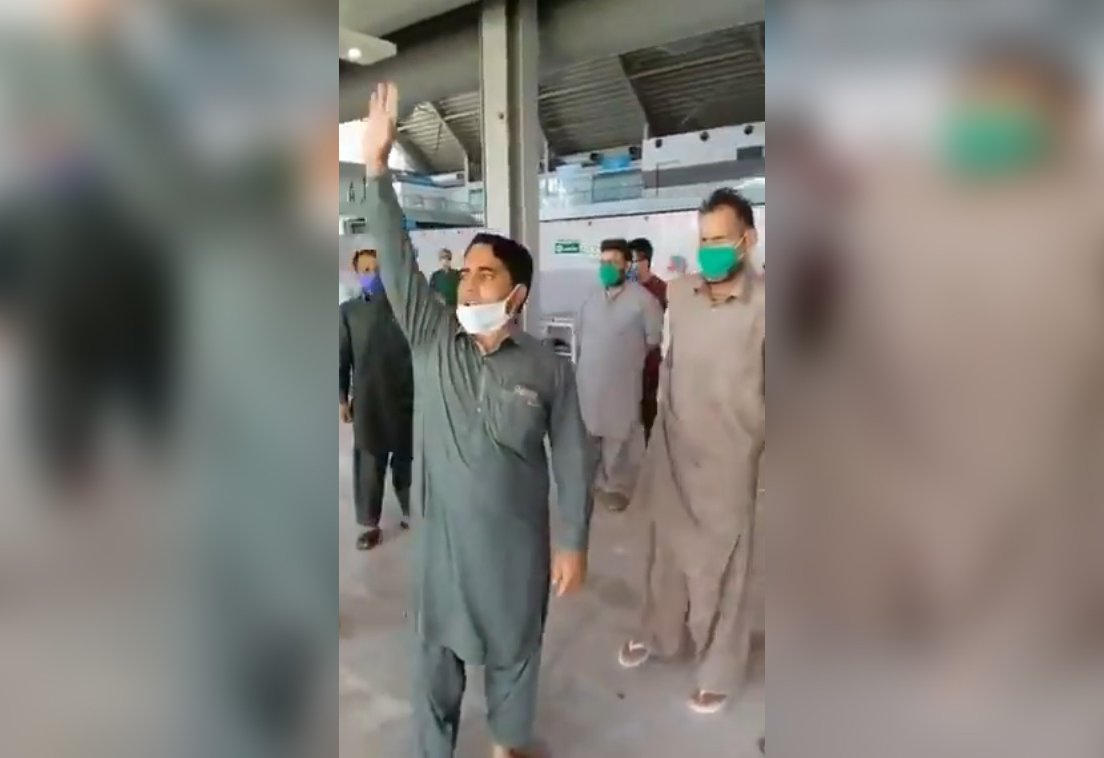
    A video available with The Current showed the patients bashing the government as they claimed that the services being provided at the hospital were inadequate and not up to basic health standards. They also claimed that due to the incompetence of the government officials, it could not be determined if many people at the centre even had coronavirus.

    “Sometimes we test positive, sometimes negative… it is going on for over 20 days. The only people who have been allowed to leave this jail are the ones who have paid Rs8,000 to a private lab for testing.”

    WATCH VIDEO:

    https://twitter.com/fatah_pak/status/1255926871734312960

    They appealed to the government to take action against the staff that had made the facility a living hell for them.

    Washrooms at the hospital are extremely dirty and don’t even have soap let alone sanitiser, Samaa quoted a patient as saying.

    Another complained that the food provided to patients was either stale or bad. “We have complained to the government multiple times but they haven’t even acknowledged our concerns,” he added.

    The patients have demanded that the government let them go home if they can’t be taken care of. Quarantining at home is better than staying here, they said, adding that living in these conditions will never pull them out of the disease.

    Previously, due to similar complaints, CM Buzdar had taken notice of the hospital, however, no changes seem to have been made yet.

    The provincial government had in April has set up a 1,000-bed field hospital in Expo Centre Lahore due to rapidly increasing number of COVID-19 cases.

    Punjab Health Minister Dr Yasmin Rashid had directed setting up Triage Centre at the Expo Center Field Hospital.

    Triage Centre serves as the point where patients are prioritised for different sections based on the severity of symptoms and their condition in emergencies. The government has set up a field hospital at the Expo Center where emergency arrangements have been made for COVID-19 patients.