Tag: Punjab government

  • What is in the Single National Curriculum books? In-depth data analysis of the syllabus

    What is in the Single National Curriculum books? In-depth data analysis of the syllabus

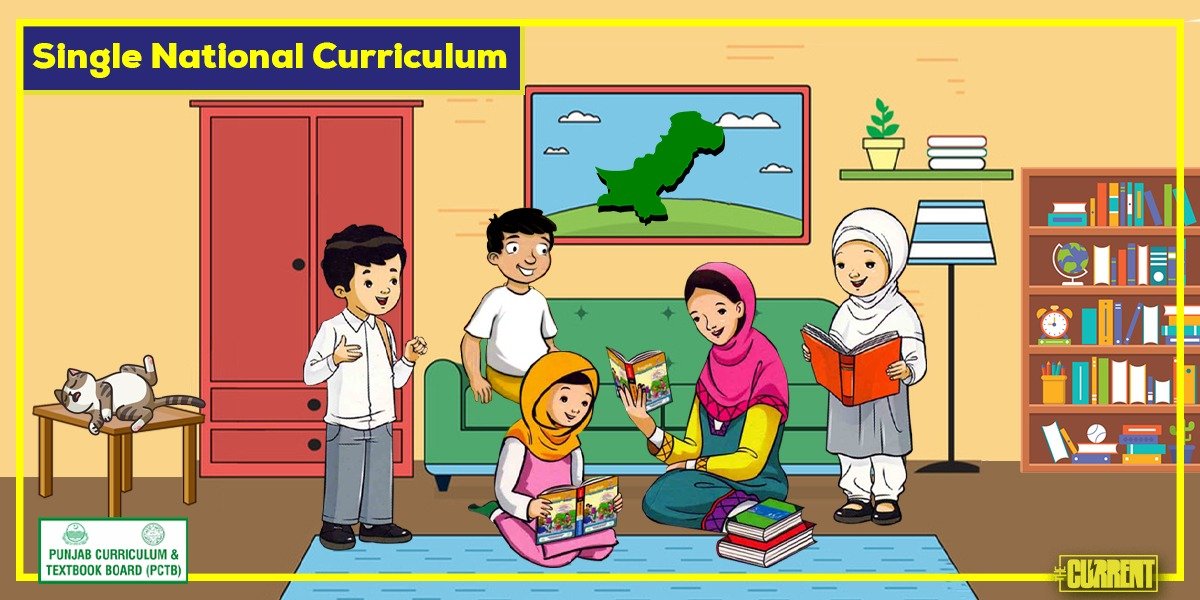
    On August 16, 2021, Prime Minister Imran Khan officially launched the Single National Curriculum (SNC). The newly launched curriculum was prepared by the National Curriculum Council (NCC) and the Ministry of Federal Education, in consultation with the provinces. According to PM Khan, “SNC would transform the nation into a unified one.”

    What is SNC?

    According to the Ministry of Federal Education and Professional Training, the SNC is a ‘uniform’ system of education, which means the same curriculum for everyone. All public schools, private schools, and madrassas were meant to have the same curriculum so that the learning outcomes are similar and without any discrimination in teaching standards. This is not the first time SNC was imposed in Pakistan. It was previously introduced in 2006 by Former President Musharraf. Whereas the previous SNC was a curriculum-based initiative, the one introduced by the PTI government is imposing the use of the textbooks produced by the provincial boards.

    Is it being implemented across the country?

    No. Sindh has decided not to implement the curriculum since education is a provincial issue. Only Punjab and Khyber Pakhtunkhwa have enforced it so far. However, many schools in both provinces — including the prestigious Aitchison College, Lahore — expressed their concerns over the books in the curriculum. The Director of the National Curriculum Council (NCC), Dr Mariam Chughtai, has also said that madrassas will implement the SNC syllabus in five to six years, which undermines the reason why the government had wanted to introduce the SNC in Pakistan – to bring madrassas into the mainstream so students would be able to get jobs in other professions after they graduated.

    Controversies surrounding the SNC

    After the SNC syllabus was imposed on schools across Punjab, many controversies surrounding the books and the curriculum came forward. From the disparity in gender representation, the reinforcement of patriarchal gender roles, the lack of female heroes, and religious texts in the non-religious books.

    To see if the criticism is valid, The Current analysed the following books published under the Punjab Textbook Board (PTB):

    Urdu books from grades 1 to 5, English books from grades 1-5, Mathematics books grades 1, 2, 4, and 5, General Science grades 4-5, Waqfiyat Aama grade 1 and 3, Social Studies 4-5, and Islamiat grade 1- 5.

    Two books were not available at the time of research. Grade 3 Math and Waqfiyat Aama grade 2, which have not been included in the study.

    The analysis here has been divided into two parts.

    Part one comprises the data analysis of all the books included in the SNC by the Punjab Text Book board.

    Part two comprises the data analysis of individual subjects being taught to the students.

    We studied the total number of male and female representations in the books, a comparison of the eastern and western wear of both genders, the presence of religious (Islam and others) content in non-religious books, and studying the distribution of power roles assigned to both men and women.

    Here is the list of most common criticism against the curriculum and the evidence we found:

    SUMMARY OF CONTENT IN ALL SNC BOOKS

    1- Disparity in Gender Representation:

    One of the most debatable points in the entire SNC is the representation of men and women.

    After a thorough evaluation, we found that the concerns about the disparity in gender representation are TRUE.

    The study reveals that a total of 60.2 percent of the books have images of men, including boys and only 39.4 percent of the books have images of women, including girls.

    Statistical Studies for Learning

    2-Women represented in hijab vs non-hijab, and women in western clothes:

    What the women are wearing became a source of contention in the discussion about the SNC, with critics suggesting that the women should equally represent the country in terms of the hijab, eastern clothes, and the choice to wear western wear.

    It is TRUE that there is no equal representation of women’s appearance in the books.

    Women’s appearance was divided into three categories.

    A) Number of women wearing eastern clothes with hijab.

    B) Number of women wearing eastern clothes without hijab.

    C) Number of women wearing western clothes.

    Our research shows that 41.6% of all women and girls in the SNC books are wearing a hijab, 28.9% are wearing eastern clothes without a hijab, and 29.4% of the images show girls wearing western wear. It is important to note that in the western wear percentage, almost all of the images are of young girls. Older women are not shown wearing western wear.
    Statistical Studies for Learning

    3-Men represented in eastern vs western clothes:

    Since the appearance of women in eastern wear and hijab became controversial, we also studied how many times men appeared in western or eastern wear.

    A massive 79.9 percent of men were seen wearing western clothes, in comparison to 20 percent dressed in eastern clothes.

    Statistical Studies for Clothing

    4- More men in ‘power roles’ compared to women:

    Another controversy suggested that the books did not show women in positions of ‘power’, and they were mostly listed as helpers or homemakers. While there were many images that showed women in ‘inferior roles’ to men, there were women that were shown in roles of power.

    This controversy is TRUE.

    We defined power roles shown in the books as doctor, pilot, lawyer, police officer, traffic warden, army sports personality, etc and after analysing all the books, we found that a men are given power roles three times more than women. The results in the graphic below are based on the total number of images shown of men and women in all the SNC Punjab books.

    Statistical Studies for Rolels of Gender

    I

    5. Religious content in non-religious books

    In almost all the books which were studied, we saw the presence of religious references or mentions in non-religious books. Minorities felt their rights were being compromised since books that are not for religious studies should not have references to a specific religion, which may come under the context of ‘preaching’.

    In our analysis, we saw a total of 7.77 percent of religious text in all SNC non-religious books, which lends TRUTH to the fact that there is religious content in non-religious books.

    Religious content is present in 7.7 percent of English, Math, Social Studies, Urdu, Science, and General Knowledge books.

    7.47 percent of books have references to Islam while 0.27 percent mention other religions in all non-religious books.

    Dr Mariam Chughtai, while answering a question for The Current about the religious references in non-religious books, did not provide a clear answer but stated that these are model books that require changes.

    Statistical Studies for Religious Students

    SNC BOOKS ANALYSIS – SUBJECT ANALYSIS

    This section of the report comprises an analysis of individual subjects being taught to students. The subjects under study were, Urdu books from grades 1-5, English books from grades 1-5, Mathematics books grades 1, 2,4, and 5, General Science grades 4- 5, Waqfiyat Aama (General Knowledge) grades 1-3, Muashrati Uloom (Social Studies) grades 4-5.

    The graphical representation of the subject-wise evaluation is as follows:

    English:

    In 668 pages of English books, 58.1 percent have male representation while females have 41.8 percent.

    Statistical Studies for National Curriculum

    29.7 percent of women are seen with Hijab and 70.2 percent are without Hijab.

    Statistical Studies for National Curriculum

    There is a total of 9.8 percent presence of religious text in English books. This is based on the total number of pages in English books.
    Statistical Studies for National Curriculum

    Mathematics:

    In 672 pages of the Math books, when gender representation was analysed, 51.1 percent of the books have male representation and 48.8 percent have female representation.

    Statistical Studies

    A total of 53.9 percent of females are seen without hijab and 46 percent are seen wearing hijab.

    Statistical Studies for Books

    The Math books have a 4.1 percent presence of religious text. This is based on the total number of pages in Math books.
    Statistical Studies for National Curriculum

    Urdu:

    The five Urdu books comprising 791 pages. A total of 59.7 percent presence of males are seen as compared to 40.4 percent of females.

    Statistical Studies for National Curriculum

    58.5 percent of women/girls are seen wearing hijab and 41.4 percent are seen without hijab.

    Statistical Studies

    12.8 percent of religious text is present in Urdu books. This is based on the total number of pages in Urdu books.

    Statistical Studies for SNC Punjab Books

    General Science:

    Out of 310 pages, 76.8 percent have male representation as compared to 23.1 percent female representation.

    Grade 4 and 5 Books

    64 percent of women/girls are seen without hijab and 36 percent of women/girls are seen with hijab.

    Grade 4 and 5 Books

    The General Science books have a 0.96 percent presence of religious content. This is based on the total number of pages in Science books.

    Grade 4 and 5 Books

    Waqfiyat Aama (General Knowledge):

    49.5 percent of male images are seen in comparison to 50.15 percent of females.

    Statistical Study for Male and Female

    23.1 percent of females are seen with hijab and 76.8 percent without hijab.

    Statistical Study for Religious Aspects of Learning

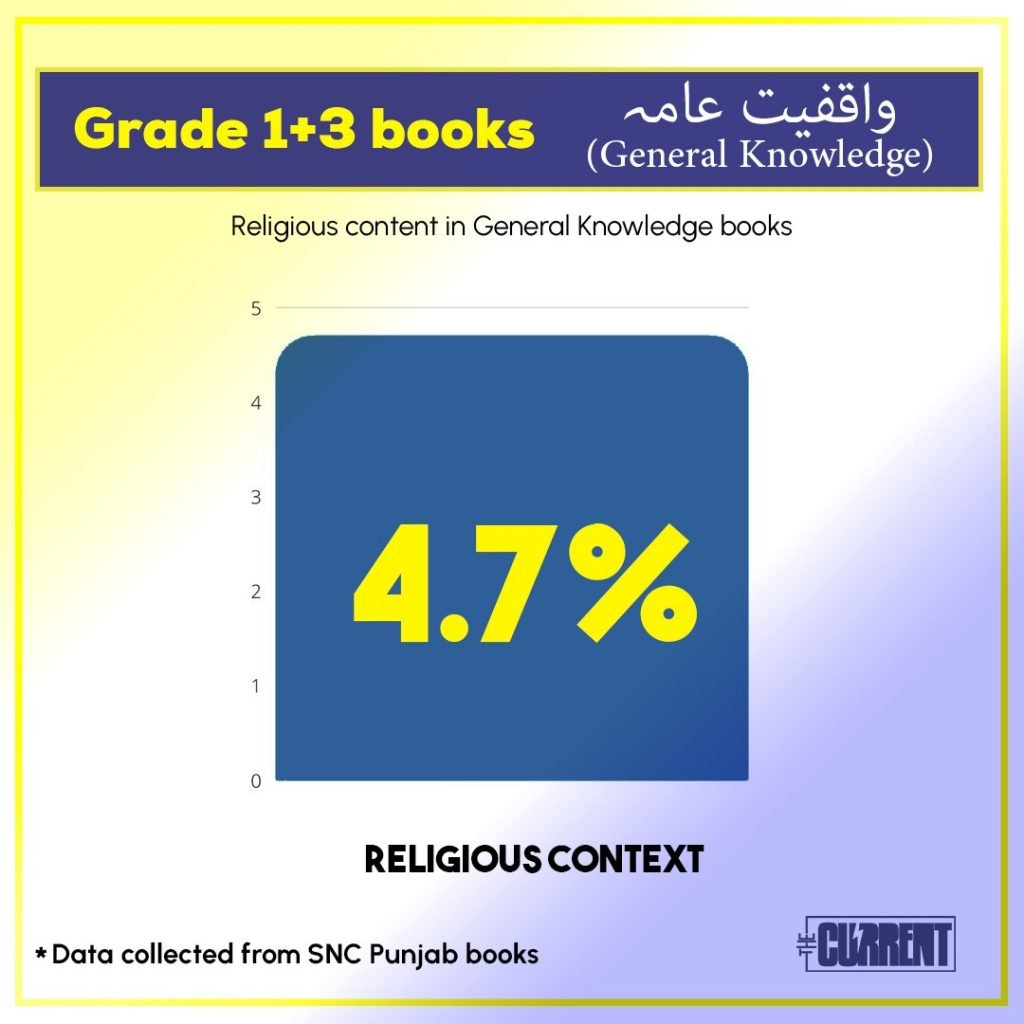
    There is a 4.7 percent presence of religious text in the books studied. This is based on the total number of pages in General Knowledge books.
    Statistical Study for Religious Curriculum

    Muasharti Uloom (Social Studies):

    From 234 pages analysed, 65.1 percent of men/boys are represented in the books and 34.8 percent of females are shown.

    Statistical Study for National Curriculum

    36.8 percent of females are seen without hijab and 63.1 percent are seen with hijab.

    Statistical Study for National Curriculum

    10.2 percent of religious content is present in the books. This is based on the total number of pages in Social Studies books.

    Books of Grades

    The last portion of the report highlights the pros and cons, which we have observed in almost all the books. We have provided both positive and negative outcomes deduced from the books after careful analysis.

    The positive outcome deduced from the books:

    1. The books are locally published and designed. The books are affordable, with a total set for one grade set at Rs. 800 per child according to Dr Chughtai.
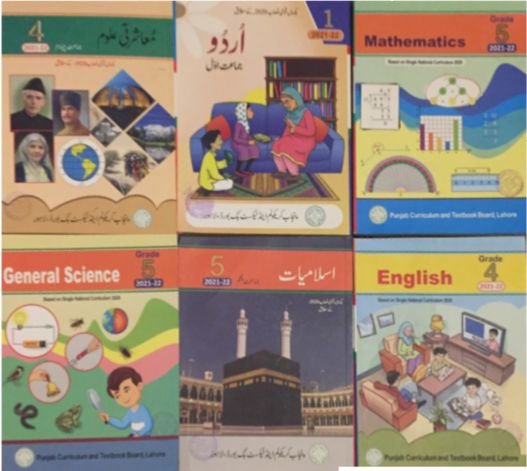
    Positive Outcome of Books

    2. There is a public service message printed at the end of each book to raise awareness against talking to strangers, crossing the road, exercising, and even information about fighting dengue.
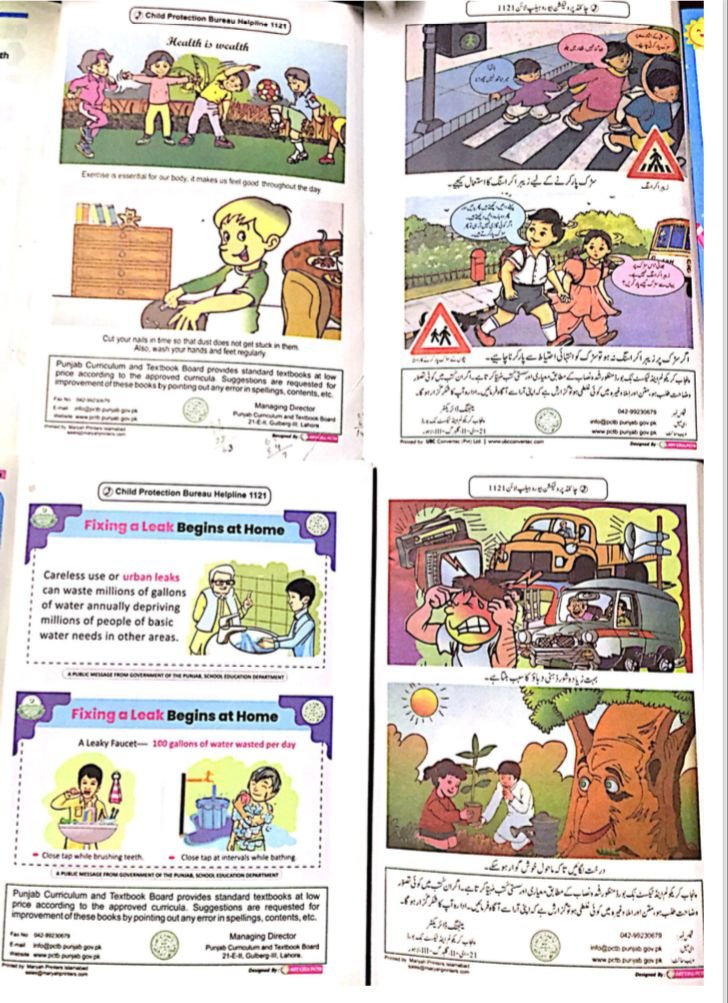
    National Curriculum Books

    The possible negative impact of the books

    1. After analysing the books, we deduced that mostly nuclear families have been shown in the books. No representation of single parents or children being raised by guardians is seen. Moreover, the presence of both parents is seen as almost essential in all stories in the books.
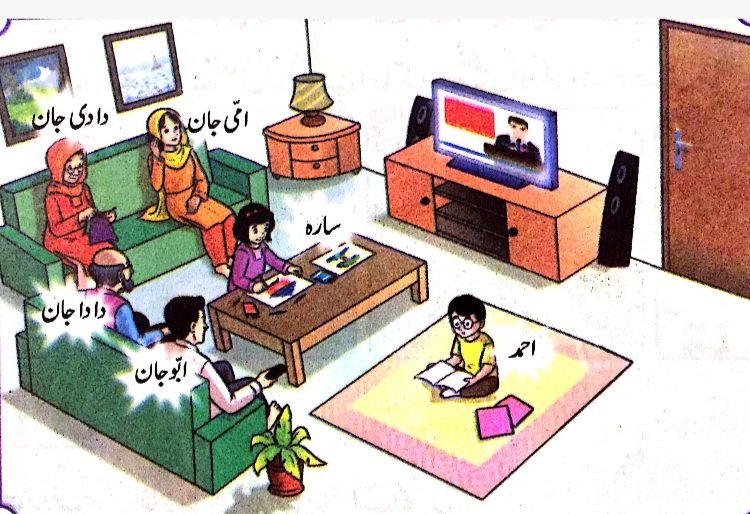
    National Curriculum

    2. Women are mostly shown doing domestic work, taking care of the family, and looking after their children. In stories as well, they seem to come second to their male counterparts.
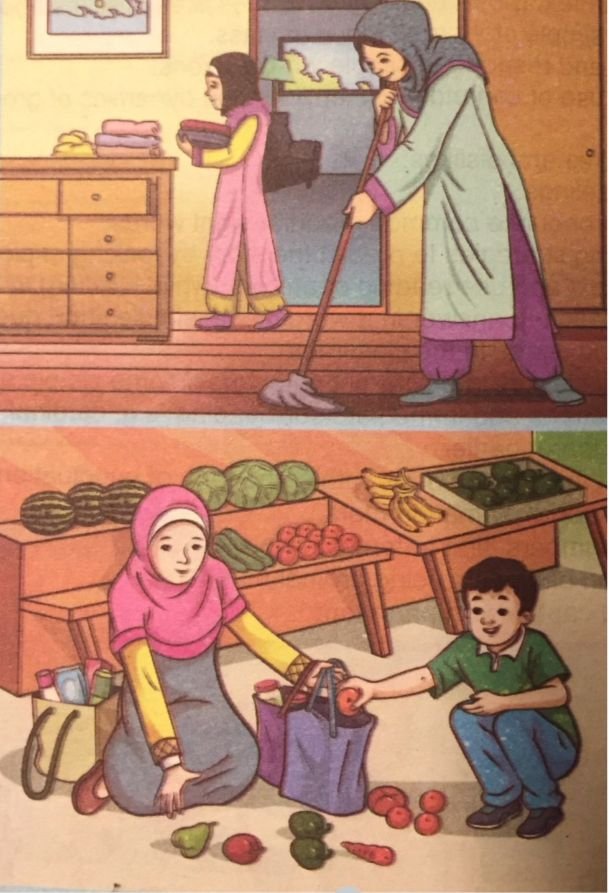
    Book Cover

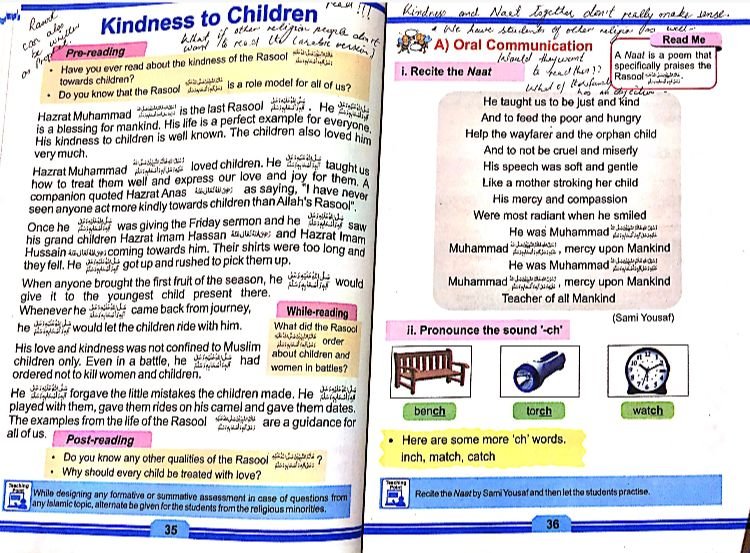
    3. As discussed in detail above, there is the presence of religious text in non-religious books.
    Books

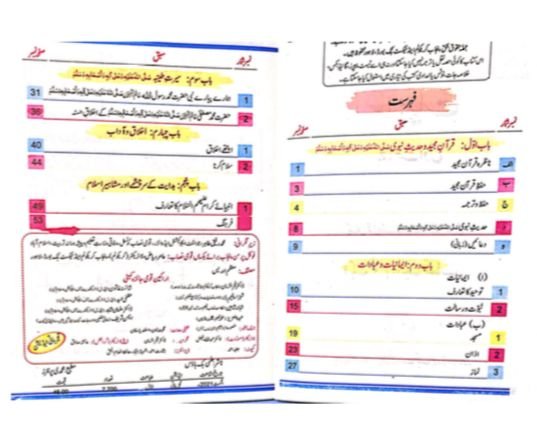
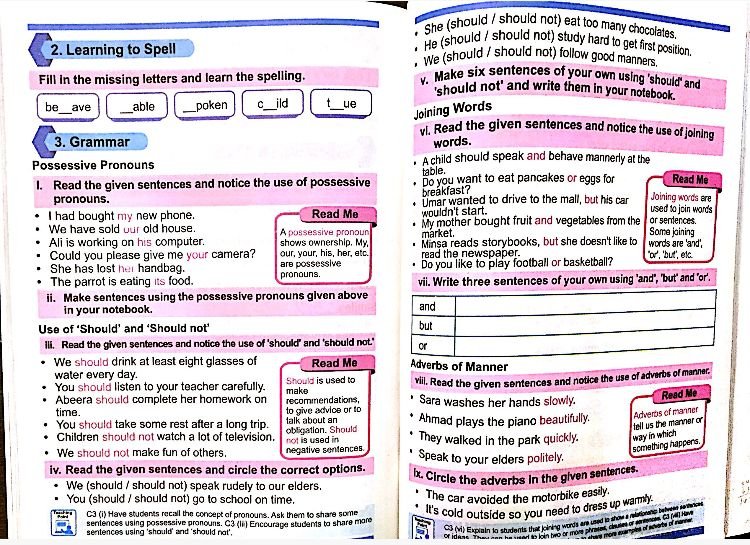
    4. The stylisation of the books are difficult to understand, fonts and texts are way too clustered. The quality of the pages is not refined, making them unattractive and confusing for students.
    National Curriculum
    National Curriculum

    CONCLUSION:

    According to NCC director, Dr Chughtai, the curriculum is an evolving process and the books can be changed in future publications, based on the response by schools and parents. The biggest hurdle to the books is that the teachers have not been trained in teaching these new books and according to Dr Chughtai, it is up to the school to teach and implement the books. There are no worksheets given with the books and from initial student reactions, students are confused and wary of books that are laid out in a clustered fashion. There is also the subject of a language change. Where students study general knowledge, a precursor to Science, in Urdu, they switch to difficult English in grades 4-5.

    While the government should be commended in trying to create a national syllabus, the forced enforcement of the books along with the lack of supplemental information and training will make this very difficult for teachers and students. Moreover, parents should be given a choice as to what they want their children to study. This implementation should be a free choice rather than that of enforcement. What would have been a practical approach is that the government should have improved the structure of the government/public schools, provided better teacher training, spent more on financially improving the conditions rather than lowering the standard for all.

    *Graphics credits: Asma Ahmad (Graphic Designer)

    How did we collect the data?

    The percentage of male characters in the books: Divided the total number of male by the total number of characters.
    The percentage of female characters in the books: Divided the total number of female by the total number of characters.


    The percentage of Islam:
    Divided the Islamic pictures or references given in the books by the number of total pages of all books.
    The percentage of other religion: Divided the other religions pictures or reference given in the books by the number of total pages of all books.


    The percentage of female power roles:
    Divided the number of female by the total number of characters (female and male).
    The percentage of male power roles: Divided the total number of male by the total number of characters (female and male).

    The same process/calculation/method was applied to the findings of each book.
  • Dengue on the rise in Punjab, Shehbaz Sharif urges govt to protect people

    Ninety-two cases of dengue have been reported in Punjab in the last 24 hours, Dawn has reported. Of those 92 cases, 64 cases were reported from Lahore. As per the details, 828 cases of dengue virus have been reported in Punjab, and 687 in Lahore.

    Pakistan Muslim League-Nawaz (PML-N) president Shehbaz Sharif has urged the government to implement dengue control guidelines to protect people.

    “Dengue is spreading & people are getting infected. I would ask the government to implement the dengue control guidelines & protocols that are already in place to mitigate the threat. People’s lives are precious and every measure should be adopted to protect them from dengue,” Shehbaz wrote in a tweet.

    In 2019, more than 8,670 cases of dengue were recorded in Punjab alone with over 50,000 reported from all over Pakistan.

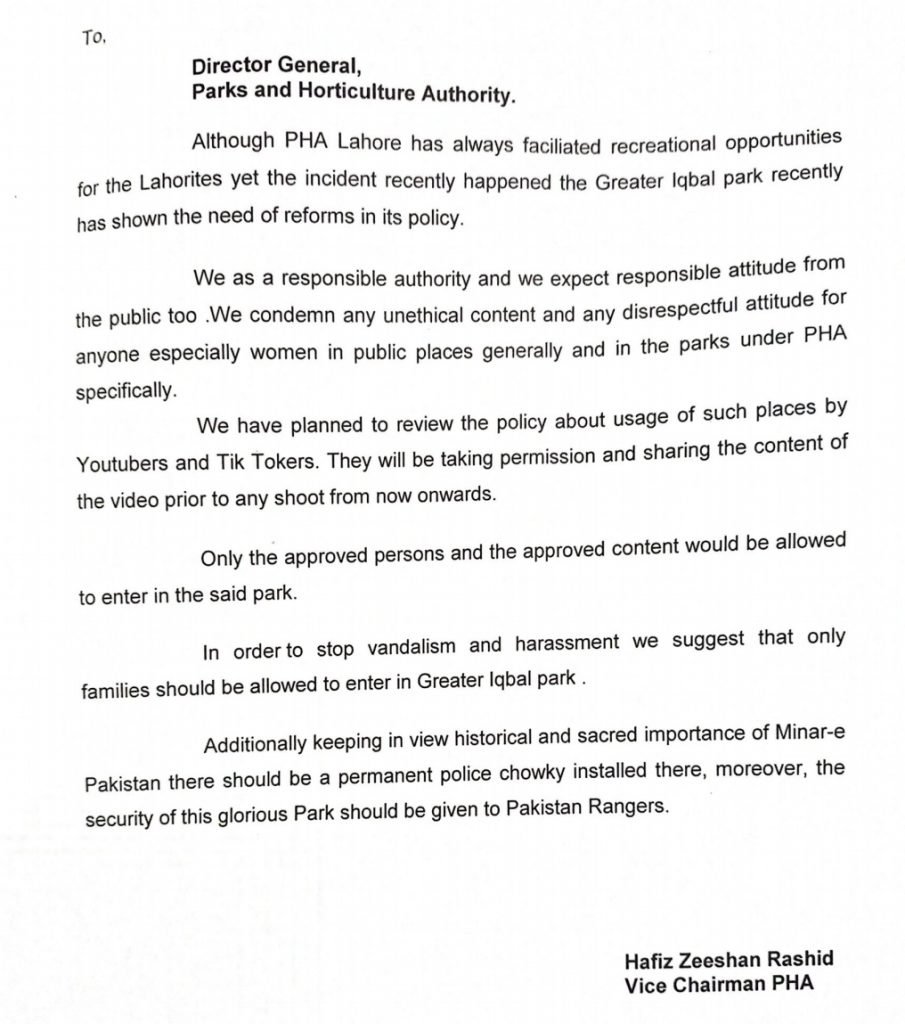
  • Fact Check: TikTokers are not banned in public parks

    Fact Check: TikTokers are not banned in public parks

    Claim: TikTokers are banned from public parks in Pakistan

    Fact: A fake notification by the Parks and Horticulture Authority claimed TikTokers have been banned in public parks

    Media outlets reported on Sunday, August 22nd, 2021 that the Punjab Parks and Horticulture Authority (PHA) has officially banned TikTokers in all public parks. A document was also circulated, stating that ‘we are a responsible authority expect responsible attitude from the public too…[Youtubers and TikTokers] will be taking permission and sharing the content of the video prior to any shoot from now onwards.”

    However Azhar Mashwani, Focal Person of Digital Media to the Chief Minister of Punjab has clarified this statement, in a tweet. He, while calling the news a fake one said that “no such decision taken so far by Govt Currently TikTok is banned in Pakistan.”

    The Current spoke to Mashwani and asked him about the official notification related to the ban which is circulating.

    He stated that it is merely a suggestion by the Vice Chairman of PHA and it requires a lot of approval from the other high officials. We even asked him that if we go to a public park right now and make a TikTok video there would the authorities there allow us? He responded with a yes.

    The notice has been making rounds on social media platforms since yesterday following the Minar-e-Pakistan incident in which Ayesha Akram, a TikToker survived a mass sexual assault on August 14.

    No other official from PHA or Punjab Government has commented so far on the matter.

    VERDICT: FALSE

  • Punjab govt announces Rs1 million cash rewards for Arshad, Talha and Shehroz

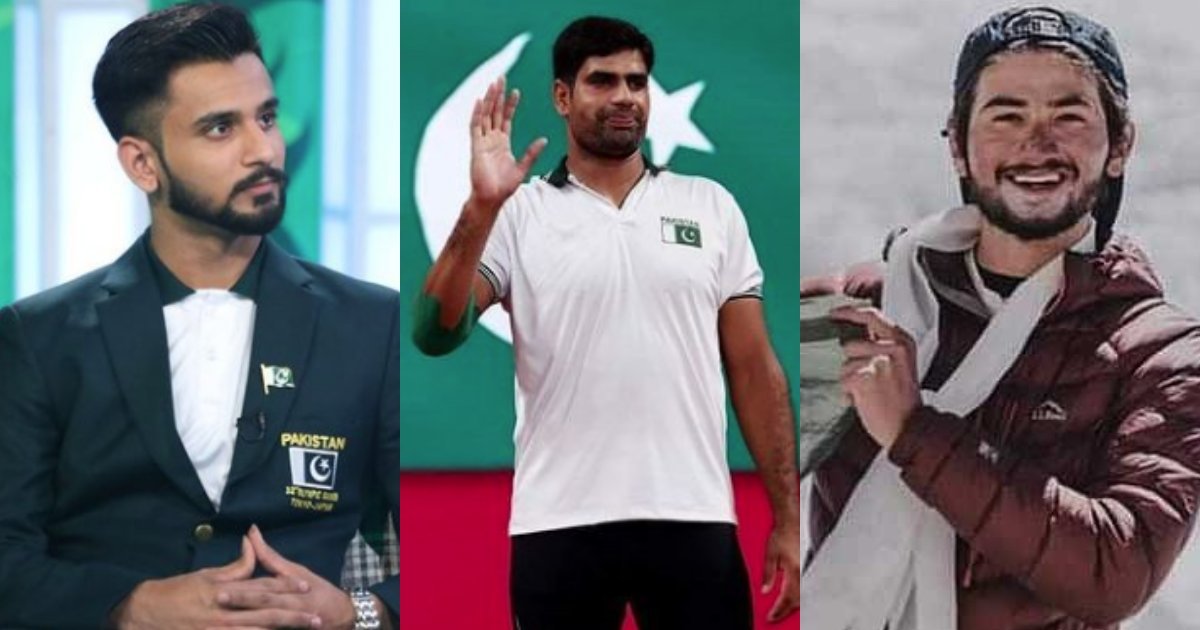
    Punjab govt announces Rs1 million cash rewards for Arshad, Talha and Shehroz

    The Punjab government on Tuesday announced cash rewards of Rs1 million for javelin thrower Arshad Nadeem, weightlifter Talha Talib and mountaineer Shehroz Kashif for their recent stellar performances at the global level.

    Read More – CM Punjab Buzdar promises to ensure better sporting facilities for youth

    Nadeem missed out on an Olympic medal and finished fifth in the javelin throw event at the Tokyo Olympics, but the athlete from Mian Chunnu received wide acclaim back home for his achievement with little resources at his disposal.

    Similarly, 21-year-old weightlifter Talha Talib from Gujranwala took part in the 67kg category in the Tokyo Olympics and held the gold medal spot until the final round before eventually being bumped down and finishing fifth in the competition. However, he was widely hailed in the country for his effort.

    Kashif, 19, had on July 27 become the youngest person to reach the summit of K2. The world’s second-highest peak at a height of 8,611 metres (28,251 foot) above sea level, with the aid of bottled oxygen.

    Hailing the athletes for their remarkable gains, Punjab Sports Minister Rai Taimur Khan Bhatti said the nation watched the Tokyo Olympics with zeal, while Pakistan’s participants Nadeem and Talib “did really well” in the competition.

    Addressing a press conference, Bhatti said he would personally visit the airport to receive Nadeem. The minister said that the Government of Punjab had always supported and encouraged sports persons.

    He also announced an award of Rs0.5m for Nadeem’s coach.

    The minister further said the Punjab government would bear travel expenses of Haider Ali and Nabila Baig, who will take part in the Paralympic Games.

  • 46% unhappy, 32% satisfied with Punjab govt: Survey

    46% unhappy, 32% satisfied with Punjab govt: Survey

    46 per cent of the people in Punjab are rating the Pakistan Tehreek-e-Insaf (PTI) provincial government’s performance as bad, while the PTI still enjoys the support of a good 32 per cent who are satisfied with their performance, reported The News.

    The Institute for Public Opinion Research (IPOR) conducted an all-Punjab survey to gauge the feelings of voters and measure their understanding of the current political situation.

    The voters had a mixed reaction to the situation, on the one hand, half of the voters (49 per cent) were not happy with the rising prices of daily essentials and (57 per cent) declaring things were not heading in the right direction, while on the other hand, despite all these problems, majority 52 percent of the voters said they are still willing to let the current government complete its five-year term.

    49 per cent of the respondents reported inflation as the most important issue they are facing these days, while 19 per cent said unemployment, followed by 13 per cent poverty, and another 09 per cent said corruption.

  • ‘Stop making trends on Twitter, focus on your studies’: Shafqat Mahmood advises students

    Federal Education Minister Shafqat Mahmood has advised Pakistani students to stop making trends on Twitter against exams and focus on the preparation for the upcoming exams.

    Speaking on Dawn News programme ‘Live with Adil Shahzeb’ Mahmood said that exams have already started in Sindh and will also commence in Punjab from Friday so there is no possibility of papers being postponed or cancelled.

    “I would advise the students to stop spending time on Twitter to make trends and that it is better to focus on their education. There is still time left for exam preparation,” says Mahmood.

    When asked about Pakistani students waiting to return to China, Mahmood said he has discussed the issue with the Chinese envoy and hoped that it will be solved soon.

    “Every country is dealing with the COVID-19 pandemic in its own way. We all know that China is a big country and there is a risk of the virus spreading there, so the Chinese government enforced the strictest restrictions and imposed a lockdown.”

    Earlier Mahmood had said that board exams for students of classes nine and 10 would be held only for elective subjects and mathematics while exams for students of classes 11 and 12 would be held for elective subjects only.

  • PM ‘worried’ about the Opposition

    PM ‘worried’ about the Opposition

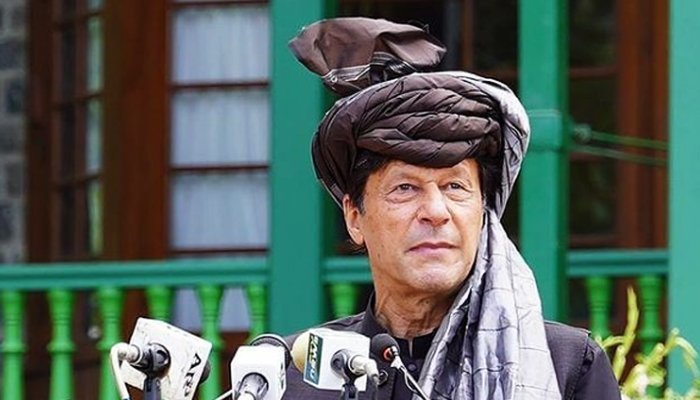
    Prime Minister Imran Khan on Tuesday, while speaking at a ceremony in Ziarat said, “I am worried, whether they [Opposition] will remain as an alliance or not.”

    Khan took a jibe at the Pakistan Democratic Movement (PDM), which faced a setback after the Pakistan People’s Party (PPP) and the Awami National Party (ANP) left it.

    The premier said the country was “getting out of a very difficult time”, adding that the Opposition parties had been “making noise” that his government would fail ever since it came to power.

    “Our opponents have created hue and cry. Even when Pakistan Tehreek-i-Insaf (PTI) had formed the government in 2018, our opponents said that we were bound to fail,” said Khan.

    The Opposition kept reiterating that the country’s economy would suffer, but now, when the growth rate’s statistics were made public, they rejected them, he said.

    “Our opponents want us to fail,” he said, as he stressed the government was doing everything in its power to uplift the economy.

    The premier, shedding light on how his government achieved growth in Khyber Pakhtunkhwa, said the PTI-led government promoted tourism, launched health cards for nearly half of the population.

    Moreover, till this year’s end, Punjab’s population will have a health card and soon enough, all of Pakistan will have this facility. “Even in Balochistan, every family will have a health card.”

    Prime Minister said his government “considers Balochistan ours” in a way that previous governments did not. Previous governments had not spent money on the province’s development, he said, adding that his government would “use all of our resources in this difficult time” to ensure progress.

    The premier said there was a gas issue in Ziarat, and a member of the provincial assembly (MPA) had told the premier that a gas line would be installed to overcome this problem.

    Installing an LPG plant is more feasible in Ziarat, he said, adding in the next fiscal year, he would try his best to get an LPG plant installed in the city.

    “Balochistan is a large province, so developing streets here is quite expensive …. Pakistan’s development will actually take place when the entire country develops,” he said.

    The premier said despite reservations from Punjab and KP that he was being “too generous with Balochistan”, it was the government’s “responsibility to make full efforts” because the province had been ignored in the past.

    “Pakistan’s development will only be in real terms when it is inclusive [and] when the whole country develops,” he reiterated.

    “I will keep coming here and checking the progress. We are giving another package for roads. We will give funds wherever there is room,” the premier concluded.

  • Punjab to vaccinate students of universities, medical institutions

    Punjab to vaccinate students of universities, medical institutions

    The Punjab government has decided to vaccinate students of medical colleges and universities, to ensure the safety of all and protection from the virus.

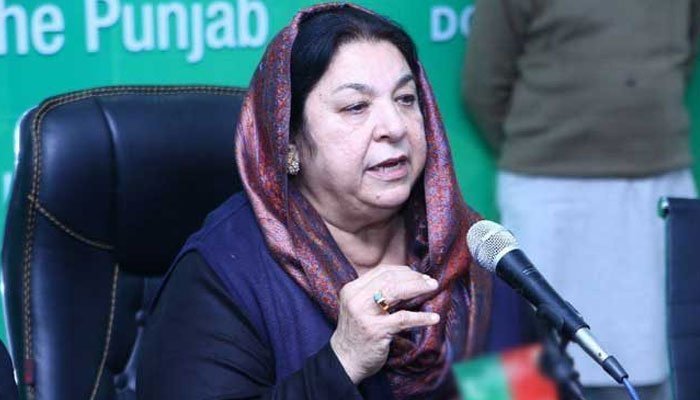
    The decision was taken during a meeting chaired by Punjab Health Minister Dr Yasmin Rashid. The government discussed a possible move to vaccinate people employed in 30 other sectors where the dangers of contracting the virus are high. 

    “Strict implementation of SOPs led to reduction in coronavirus tests. As of today, 901 cases emerged across the province. For the first time, less than a thousand cases have been reported across the province,” Dr Yasmin Rashid had said. 

    There is a total of 905,852 confirmed cases of Covid- 19 in the country, with a positivity rate of 4.8 per cent.

  • CM Buzdar to meet JKT group today

    CM Buzdar to meet JKT group today

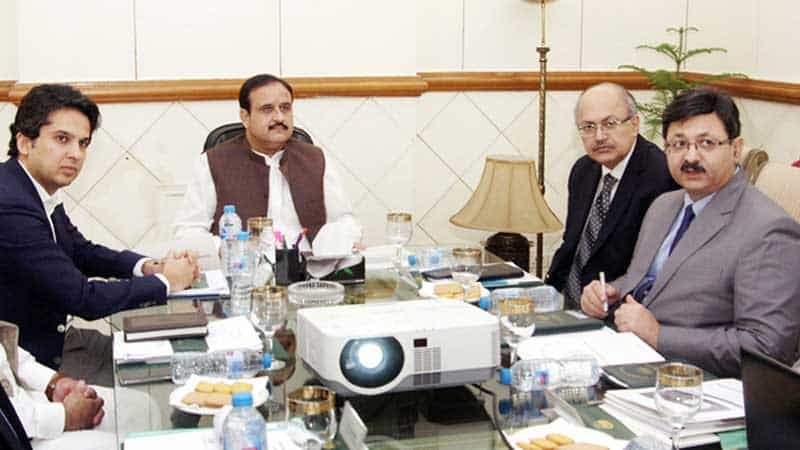
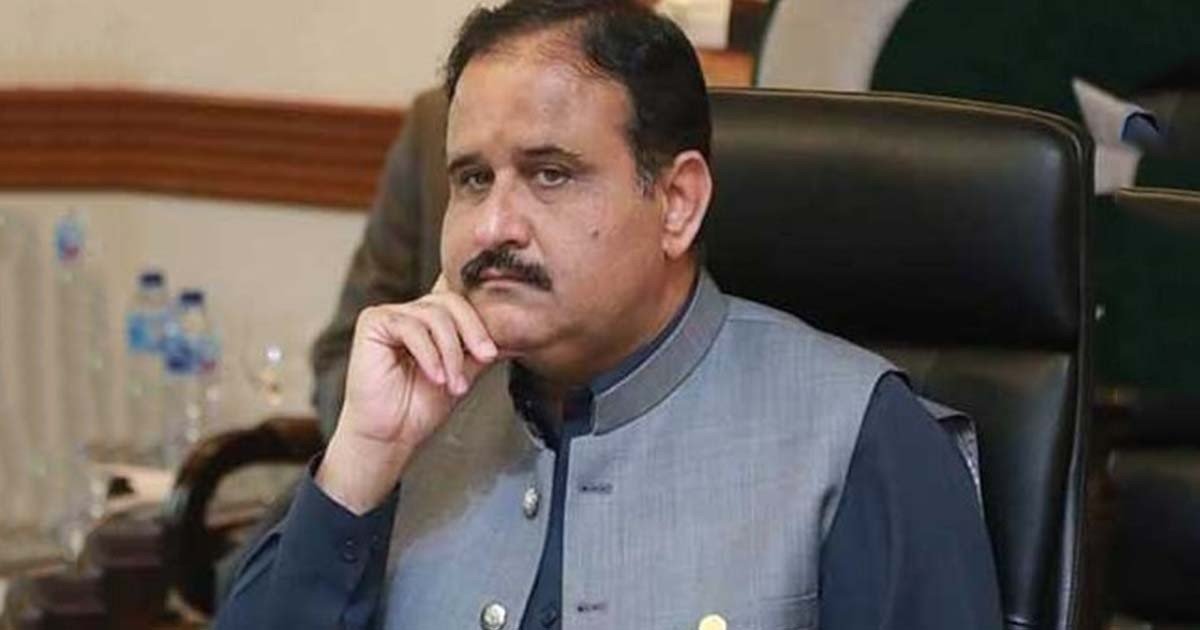
    Chief Minister Punjab Usman Buzdar will meet members of the Jahangir Khan Tareen (JKT) group today to hear their grievances.

    Talking to the media, Punjab MPA and JKT group member Nazir Chohan said they would meet the chief minister and tell him about his “faults”.

    “The purpose of our meeting is the betterment of the province. Punjab’s affairs are being run by the bureaucracy.” Chohan added that while the MPAs have elected Buzdar as the chief minister, he did not get them elected.

    Earlier, PTI MNA Raja Riaz had claimed that CM Buzdar is ready to address the reservations of the Tareen group.

    Riaz claimed CM House Punjab had contacted him and said that he expects to meet the chief minister soon.

    These development come after Jahangir Tareen announced that his supporters had decided to form a separate group after the Punjab government initiated vindictive actions against them. However, he clarified that this was not a forward bloc and all members of the JKT group are still part of PTI.

  • Cop among three killed, over 100 arrested as Labbaik protesters resort to violence

    Cop among three killed, over 100 arrested as Labbaik protesters resort to violence

    • Interior minister announces action against those breaking law; necessary measures to reopen roads, entry/exit points also ordered

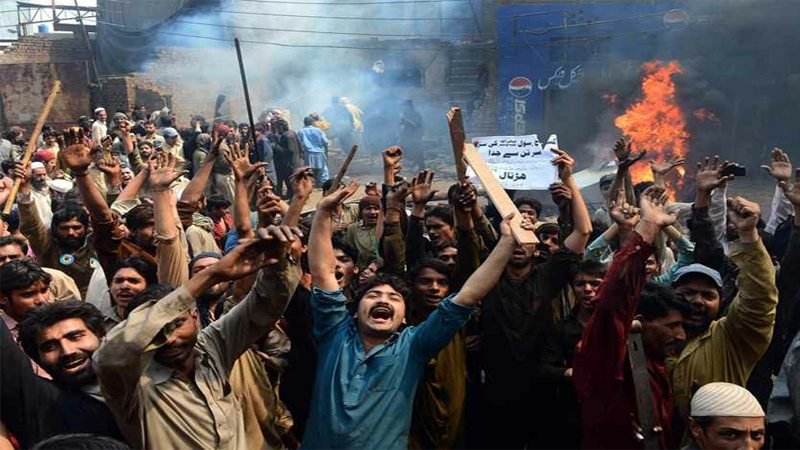
    At least two protestors and a policeman were killed Tuesday in violent clashes between members of Tehreek-e-Labbaik Pakistan (TLP) and police in Lahore early Tuesday morning, less than a day after police arrested party chief Saad Rizvi.

    According to reports, the policeman was killed in overnight clashes with the supporters of Rizvi, Lahore police chief Ghulam Mahmood Dogar said. Ten policemen were also wounded in these clashes in the Shahadra neighbourhood.

    Two members of the TLP were also reported dead in Punjab.

    As the protests spilled over into other cities on Tuesday, the police arrested more than 100 supporters of the party.

    The violence began late on Monday after police arrested Rizvi for threatening protests if the government did not expel the French ambassador, Marc Baréty, over blasphemous cartoons.

    According to Dogar, the arrest was aimed at maintaining law and order. But Rizvi’s detention quickly sparked violent protests by Islamists in cities around the country. The protesters blocked highways and roads in several cities.

    The deadly clashes come two days after Rizvi in a statement asked the government of Prime Minister Imran Khan to “honour” a commitment it made in February to his party to expel Baréty before April 20.

    However, the government has said it only committed to discussing the matter in the National Assembly.

    The reaction from Rizvi’s supporters against his arrest was so swift that police in Lahore could not clear a main highway and roads. Thousands of people were stranded in their vehicles.

    Monday’s clashes initially erupted in Lahore. Rizvi’s supporters later clashed with police in Karachi and they continued rallying on the outskirts of Islamabad, disrupting traffic and inconveniencing residents.

    INTERIOR MINISTER:

    Meanwhile, Interior Minister Sheikh Rasheed Ahmed has ordered action against those who take law into their own hands, besides putting in place measures needed to reopen roads as well as entry and exits points of major cities across the country.

    The Interior Ministry decided to take strict action against those creating law and order situations, and ordered to suspend cellular and internet services in affected areas.

    The decisions were taken during a high-level meeting chaired by Rasheed.

    It was attended by federal minister for religious affairs, chief commissioner, Islamabad and Punjab inspector generals (IGs) and chief secretaries concerned.

    BACKGROUND:

    Saad Rizvi emerged as the leader of the party in November after the sudden death of his father, Khadim Hussain Rizvi, due to the coronavirus. His supporters have previously held violent rallies to pressurise the government not to repeal the blasphemy laws.

    Blasphemy is punishable with a mandatory death sentence, and the very mention of blasphemy is enough to inflame violent reactions.

    The TLP wants the government to boycott French products and expel the French ambassador under an agreement signed by the government with Rizvi’s party in November.

    TLP and other religious parties have denounced French President Emmanuel Macron since October last year, saying he tried to defend blasphemous caricatures of the Prophet Muhammad (PBUH) as freedom of expression.

    Macron’s comments came after a young Muslim beheaded a French school teacher who had shown caricatures in class.

    The images had been republished by the satirical magazine Charlie Hebdo, best known for vulgar irreverence, to mark the opening of the trial over the 2015 attack against the publication for the original caricatures.