Tag: Punjab

  • CM Mohsin Naqvi says PTI worker died in car accident

    CM Mohsin Naqvi says PTI worker died in car accident

    Interim Punjab Chief Minister (CM) Mohsin Naqvi and Punjab Inspector General (IG) Dr Usman Anwar on Saturday jointly addressed the press conference, presenting their case that Pakistan Tehreek-e-Insaf (PTI) worker Ali Bilal lost his life in a car accident and not due to custodial torture by the Punjab police.

    Both of them claimed that PTI leadership had known the truth yet accused the Punjab government of Bilal’s death.

    CM Naqvi said that the Vice president of the PTI in Central Punjab Raja Shakeel informed PTI leader Yasmin Rashid that Bilal was hit by a car. Later, Rashid also informed the party about it at Zaman Park.

    He added that all the evidence will first be taken to Bilal’s family. He claimed that the PTI worker’s father was also offered money to stick to torture allegations.

    Naqvi asserted that the government will financially help the family.

    “I am accused of murder, is it that easy to level murder accusations on someone?” he asked, adding that the PTI is openly asking to file an FIR for the murder.

    Naqvi said he would have answered the accusations “in a different manner” had he not been in CM’s position.

    Addressing the presser, Punjab IG said that the people who brought Bilal to the hospital have been arrested and will be presented before a court.

    “Action will be taken if evidence of police torture is found,” the IG said.

    During the press briefing, confessional video statements of the two suspects, who are currently under police custody, were also played.

    On March 8, PTI workers were picked up by the police when a clash took place just before a scheduled election rally.

    Later, the party leadership claimed that Bilal was tortured and killed while in police custody. Bilal’s postmortem report, issued by the Mayo Hospital, says the victim suffered “massive blunt trauma”, while a fracture to his skull and subsequent bleeding has been cited as the cause of death. The report also noted damage to his liver, spleen and testes, which led to profuse bleeding.

  • Censor Board bans documentary ‘My Mother’s Daughter’ about forced religious conversion

    Censor Board bans documentary ‘My Mother’s Daughter’ about forced religious conversion

    Filmmakers Ahmen Khawaja and Mariam Khan took to their social media accounts to call out Pakistan’s Central Board of Film Censors for censoring their short documentary ‘My Mother’s Documentary’ which was due to screen at the Women International Film Festival.
    The documentary explores the issue of forced religious conversions by following the life of a minor christian girl who was abducted and forcibly married to a middle-aged man.
    Khan shared the letter sent by the censor board which had based its reasons for censoring the film by calling it “propaganda” as well as for highlighting “wrong values” which are “against the Pakistani culture and society.”

    Read Khan’s full statement here:

    “On International Women’s Day we found out that Pakistan’s Central Board of Film Censors in Islamabad (CBFC) has decided to censor our short documentary My Mother’s Daughter and is not allowing it to screen this weekend at the @womenthroughfilm film festival.

    The film follows the real story of a minor Christian girl in Faisalabad who is abducted by a middle aged man, forcefully married to him and converted to Islam. Up to 1,000 young girls are forcefully converted every year (1), and to call this propaganda is a gross injustice to their plight and stories. We spent months verifying the case and going to court hearings with the survivor to ensure the utmost authenticity in the film. The censor board seems to be of the view that our film is ‘propaganda that is trying to highlight wrong values that go against the culture in Pakistan’. Upon speaking directly with the Chairperson, we were told “the full board review can’t be done before the festival because the office is being renovated”. Please help spread the word because women’s stories deserve to be told.”

    ‘My Mother’s Daughter’ had also won the Short Documentary Award at the DC South Asian Film Festival last year.

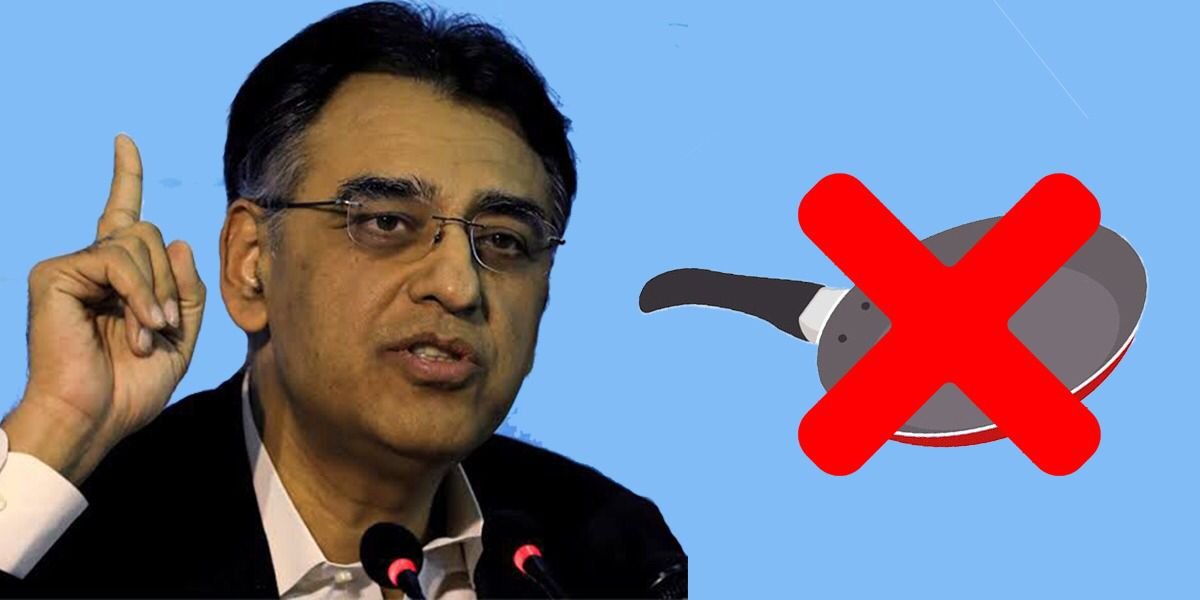
  • ‘Kapray istari karne ke liye frying pan bhi nahin deeya,’ Asad Umar jokes after being released from jail

    ‘Kapray istari karne ke liye frying pan bhi nahin deeya,’ Asad Umar jokes after being released from jail

    Pakistan Tehreek-e-Insaf (PTI) leader Asad Umar has been released from Rajanpur District Jail after he voluntarily got arrested as part of his party’s Jail Bharo Tehreek (voluntary arrest movement).

    After the release, Umar praised party workers for participating in the movement.

    In another tweet, he took a jibe at Pakistan Muslim League-Nawaz (PML-N) Senior Vice-President Maryam Nawaz, joking that jail officials did not provide him with a frying pan to iron his clothes.

    Several other prominent leaders also got released from jail including Shah Mahmood Qureshi, Senator Azam Swati and Zulfi Bukhari.

    Swati, after being released from Raheem Yar Khan district jail, said that “political engineering should stop now”. 

    PTI’s Zulfi Bukhari and Fayyaz ul Hassan Chauhan were released from Sargodha jail, while former Punjab Governor Umar Sarfaraz Cheema, Azam Khan Niazi, Sadaqat Abbasi, Ejaz Khan and others were also among the released PTI workers.

    The movement had been announced by PTI Chairman Imran Khan in the wake of the coalition government’s spree of arrests of key PTI leaders. However, after the Supreme Court’s verdict about the elections, the PTI chief called off the movement.

    LHC orders release of arrested PTI leaders during Jail Bharo Tehreek

    Earlier, Lahore High Court (LHC) ordered the release of the arrested leaders of PTI during Jail Bharo Tehreek.

    Justice Tariq Saleem Sheikh issued the order on the application of Fawad Chaudhry. The court suspended the detention orders of Shah Mahmood Qureshi, Asad Umar and other party leaders..

    The court also asked the parties, including the Punjab government, to respond on March 7.

    It is pertinent to mention here, that PTI leaders Shah Mahmood, Asad Umar and other leaders and activists were arrested from Lahore and transferred to other jails in the province.

  • PTI’s Jail Bharo Tehreek ends; election campaign begins from March 4

    PTI’s Jail Bharo Tehreek ends; election campaign begins from March 4

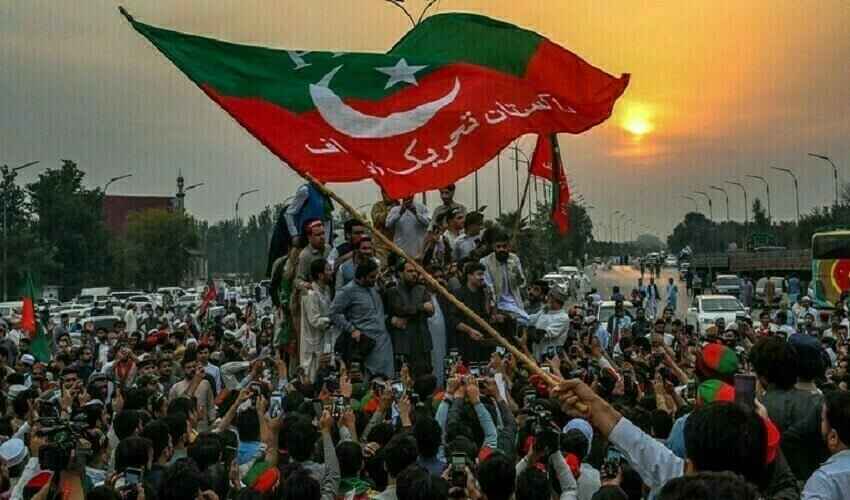
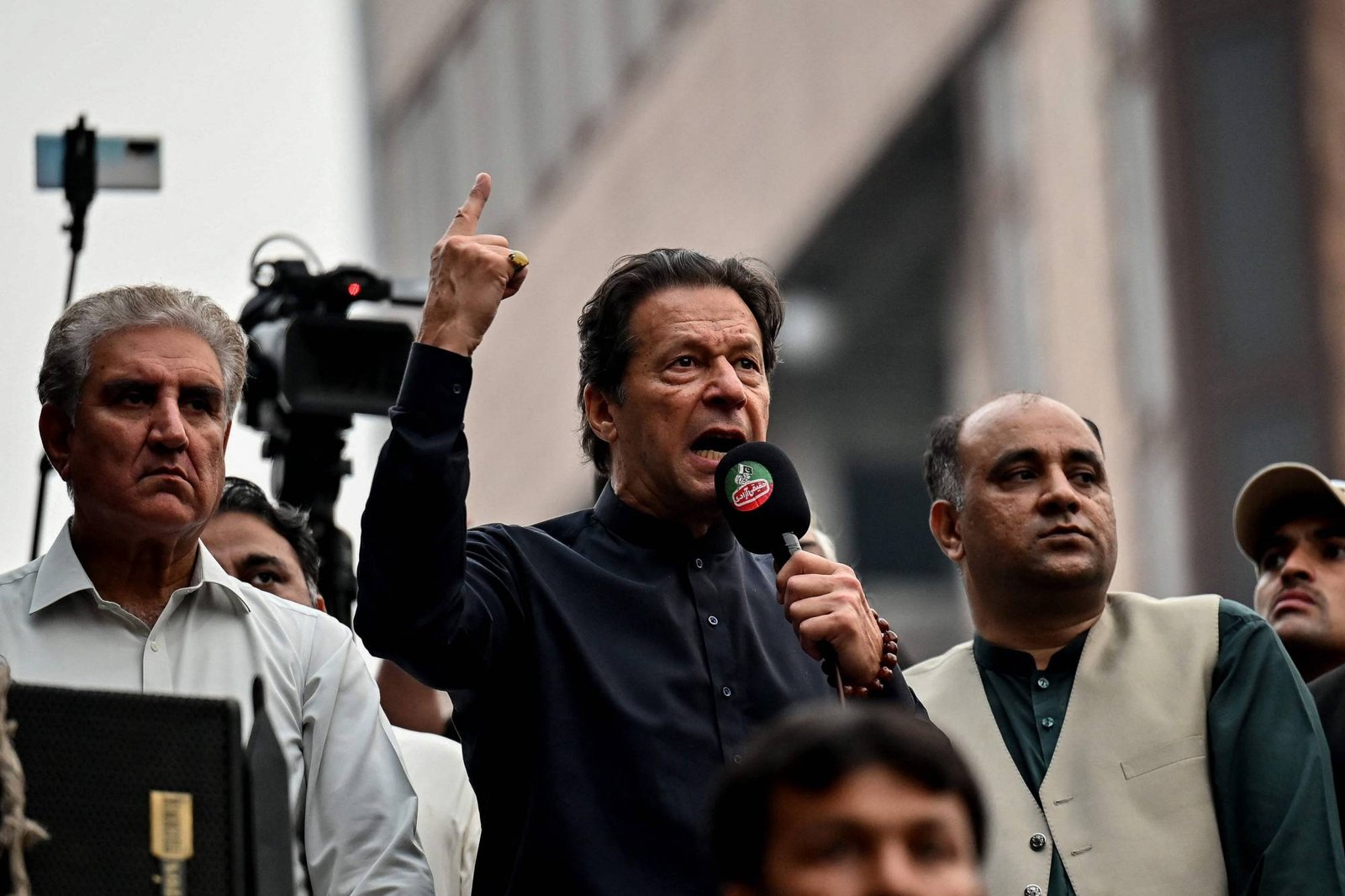
    After Supreme Court (SC) passed its verdict in the suo Moto case of election dates in Punjab and Khyber Pakhtunkhwa (KP), Pakistan Tehreek-e-Insaf (PTI) Chairman Imran Khan on Wednesday announced that his party would end its “Jail Bharo Tehreek (voluntary arrest movement)” and launch its election campaign on March 4 (Saturday).

    About the top court’s decision that elections will be held within 90 days, Khan praised the judiciary and said the nation stood with the court.

    However, he expressed fears that elections may not be held in 90 days, claiming that Law Minister Azam Nazeer Tarar tried to divide the judiciary.

    Slamming the federal minister’s views on the verdict, the PTI chief said: “His views on the Supreme Court verdict are shameful.”

    Khan added that since his government’s removal in April 2022, his party has won 30 by-polls out of 37.

    It is pertinent to mention that the elections in both provinces have been the core demand of PTI and the apex court’s verdict has been welcomed by the former ruling party.

  • PTI welcomes supreme court’s verdict while govt says it doesn’t require review

    PTI welcomes supreme court’s verdict while govt says it doesn’t require review

    Political parties from across the spectrum are reacting to Supreme Court’s (SC) verdict in the Punjab and Khyber Pakhtunkhwa (KP) elections suo moto case.

    Pakistan Tehreek-e-Insaf (PTI) Fawad Chaudhry welcomed the verdict, saying, “It’s a victory for the Constitution”.

    The Supreme Court, the PTI leader added, has bound the federation to provide all sorts of support with security and provision of funds for carrying out polls.

    When asked whether elections will happen on April 9, as earlier suggested by President Arif Alvi, he responded by saying that the Election Commission of Pakistan (ECP) proposed in court that the commission can make the elections possible on April 25.

    He also said that if the government doesn’t agree to the SC’s verdict, the top court will send the government home under Article 187.

    He also added that all five judges endorsed the principle of the election within 90 days. During a media talk, the PTI leader stressed that “Election is the foundation of the state.”

    On the other hand, Awami Muslim League Chief Sheikh Rashid congratulated the nation on the verdict and asked the country to “prepare for the elections”.

    He hoped that PTI is going to form governments in KP and Punjab

    From the government side, Federal Law Minister Azam Nazeer Tarar said that there is no need to review the decision of the Supreme Court’s verdict, nor is it a matter that requires interpretation.

    He said that petitions are still being heard in High Courts, and the interpretation of the decision can also be seen there.

    He also stressed that the verdict is quite clear. However, the law minister took a jibe at President Alvi, saying that he breached the constitution by giving a date for the elections in both provinces.

    Earlier today (Wednesday), the top court directed all relevant authorities to hold elections within 90 days.

    The decision was passed three-two in favour of the verdict by the five-member bench, with Justice Mansoor Ali Shah and Justice Jamal Khan Mandokhail giving dissenting notes.

  • Imran Khan suspends Jail Bharo Tehreek, decides to prepare for elections

    Imran Khan suspends Jail Bharo Tehreek, decides to prepare for elections

    Pakistan Tehreek-e-Insaf (PTI) Chairman Imran Khan has announced to suspend his party’s Jail Bharo Tehreek (Voluntary Arrest Movement).

    Taking to Twitter, Khan said, “We welcome the Supreme Court (SC) judgement. It was responsibility of SC to uphold Constitution & they have valiantly done that through their judgement today. It is an assertion of Rule of Law in Pak.”

    “We are suspending our Jail Bharo movement & moving forward with election campaigns in KP & Punjab,” tweeted Khan.

    It is pertinent to mention here that the announcement comes right after Supreme Court of Pakistan has directed all relevant authorities to hold elections in Punjab and Khyber-Pakhtunkhwa (KP) within 90 days.

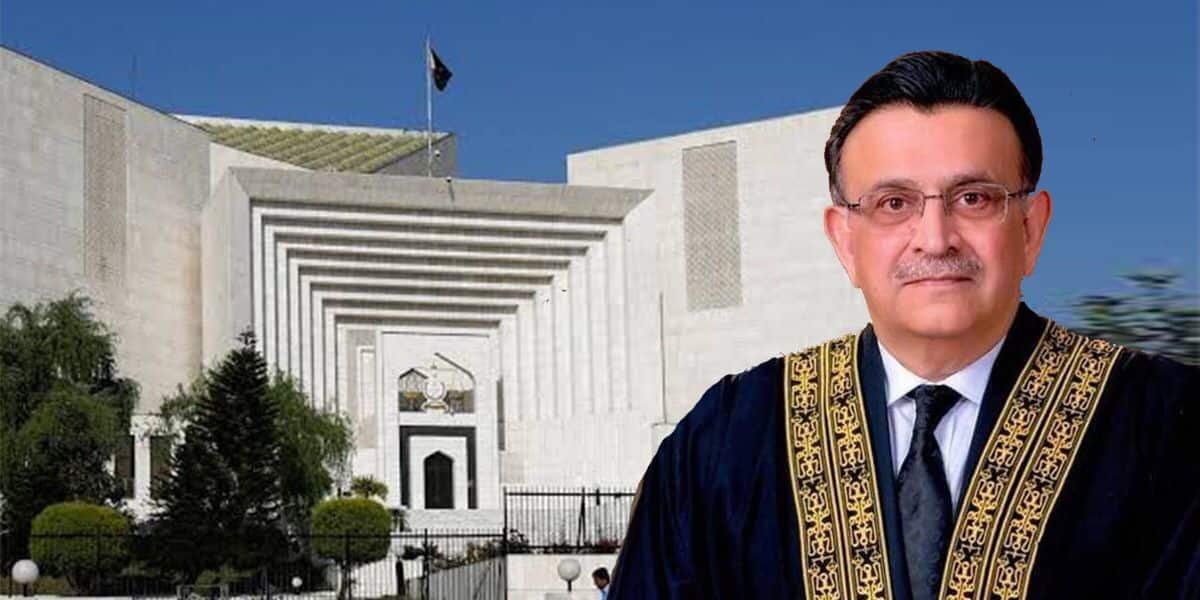
    Reading out the verdict reserved on Tuesday evening, Chief Justice Umar Ata Bandial said that the Election Commission of Pakistan (ECP) should suggest a date for polls to President Arif Alvi.

    “Elections must be held within 90 days of the dissolution of the assembly,” the verdict says, emphasizing that it was the constitutional responsibility of the Governor to announce an election date.

  • Supreme Court orders to hold polls within 90 days both in Punjab and KP

    Supreme Court orders to hold polls within 90 days both in Punjab and KP

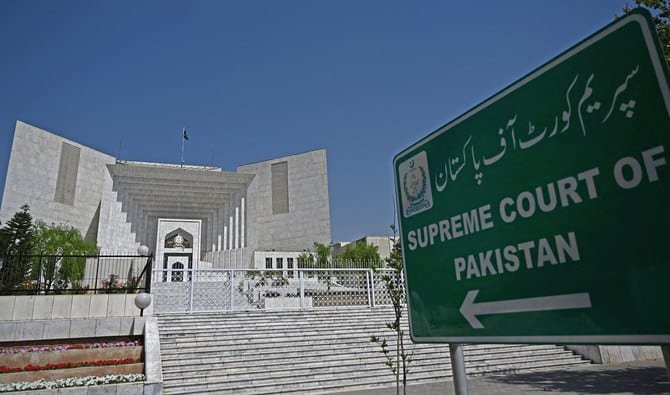
    The Supreme Court of Pakistan has on Wednesday directed all relevant authorities to hold elections in Punjab and Khyber-Pakhtunkhwa (KP) within 90 days.

    The decision was passed three-two in favour of the verdict by the five-member bench, with Justice Mansoor Ali Shah and Justice Jamal Khan Mandokhail giving dissenting notes.

    Reading out the verdict reserved on Tuesday evening, Chief Justice Umar Ata Bandial said that the Election Commission of Pakistan (ECP) should suggest a date for polls to President Arif Alvi.

    “Elections must be held within 90 days of the dissolution of the assembly,” the verdict says, emphasizing that it was the constitutional responsibility of the Governor to announce an election date.

    “Parliamentary democracy is a salient feature of the Constitution. There can be no parliamentary democracy without Parliament or the provincial assemblies. And there can be neither Parliament nor provincial assemblies without the holding of general elections as envisaged, required and mandated by and under the Constitution and in accordance therewith,” the top court remarked.

    The court order stated, “In situations where the assembly is not dissolved by order of the governor, the constitutional responsibility of appointing a date for the general election that must follow is to be discharged by the president.”

    “The Election Commission must proactively be available to the president or the governor, and be prepared for such consultation as required for a date for the holding of general elections,” the order said.

    The court directed President Arif Alvi to announce the date of the Punjab election after consulting with the Election Commission of Pakistan (ECP), and directed the KP governor to announce the date for polls in his province.

    It further said that in ordinary circumstances, the general election in Punjab ought to be held on April 9 — the date given by the president — but because there were delays in the announcement of the poll date, it might not be possible for the province to meet the 90-day deadline.

    “The Election Commission is therefore directed to use its utmost efforts to immediately propose, keeping in mind ss. 57 and 58 of the 2017 Act, date to the president that is compliant with the deadline. After consultation with the ECP, the President shall announce a date for holding the general election to the Punjab Assembly.”

    Meanwhile, the SC directed the KP governor to appoint a date for elections in the province after consulting the ECP.

  • Supreme Court to announce verdict tomorrow at 11am in elections suo motu case

    A five-member bench of the Supreme Court (SC) has reserved its verdict and said that it would announce the verdict in the elections suo motu case tomorrow (Wednesday) at 11am.

    The hearing of the case has been completed.

    Last Wednesday, the top court took suo motu notice of the delay in holding elections in Punjab and Khyber Pakhtunkhwa.

    SC orders PTI and govt to consult on elections dates themselves and inform court

    Earlier, the apex court directed Pakistan Tehreek-e-Insaf (PTI) and the coalition government to sit together and decide on a date for elections in Khyber Pakhtunkhwa and Punjab by 4pm today (Tuesday).

    In this regard, the top court directed Shireen Mazari and Fawad Chaudhry to consult with their party chairman, Imran Khan—who has been making appearances before various courts since Tuesday afternoon— and coalition partners’ lawyers to consult with their leaders and update the court.

    The instructions were issued after a five-member bench resumed hearing the apex court’s suo motu proceedings regarding the delay in the provincial polls.

    During the hearing on Tuesday, Chief Justice of Pakistan (CJP) Umar Ata Bandial stated that none of the institutions, other than the court, had the authority to extend elections further than 90 days.

    The CJP also said that the court wanted to wrap up the proceedings today. “Our entire work is on halt because of this case,” he added and adjourned the hearing.

    The hearing has resumed again.

    Bench toot gaya: Five judges resume SC hearing after four recuse themselves from suo motu

    On February 27, SC resumed the hearing regarding election date suo motu notice.

    The bench, which previously included nine SC judges, has been reconstituted to a five-member bench after four judges disassociated themselves. Justice Ijaz Ul Ahsan, Justice Sayyed Mazahar Ali Akbar Naqvi, Justice Athar Minallah and Justice Yahya Afridi recused themselves from hearing the case.

    A five-member bench has now started listening to the hearing of the case. Chief Justice of Pakistan (CJP) Umar Ata Bandial has said that the case has to be wrapped up by 9:30 tomorrow.

    At the previous hearing, the coalition parties — Pakistan Muslim League-Nawaz (PML-N), Pakistan People’s Party (PPP) and Jamat-e-Ulema Islami-Fazl (JUI-F) — had presented a note in the apex court asking two SC judges, Justice Ahsan and Justice Naqvi, to recuse themselves from the case.

    CJP Bandial said that four members of the bench have disassociated themselves from the bench. “The remaining bench, however, will continue hearing the case.

    “We will continue the hearing for the interpretation of the Constitution because what the Constitution says depends on its interpretation,” he stated.

    CJP Bandial also pointed out that the note of one of Justice Mandokhail had emerged on social media even before the verdict was released. “We will take precautions so that such an incident does not recur in the future.”

    The CJP also addressed the issue of Justice Jamal Khan Mandokhail’s objection note being leaked on social media, assuring that measures would be taken to prevent such incidents from occurring in the future.

    He remarked that whatever written in the Constitution was conditional on the interpretation of it, noting that the case was critical and warranted swiftness.

    Starting out his arguments, PTI’s counsel Barrister Ali Zafar said that the chief minister of Punjab sent a summary regarding dissolution of assembly to the governor.

    However, he said that the governor did not comply to it following which the assembly automatically dissolved after 48 hours.

    The counsel argued that the Election Commission of Pakistan (ECP) had requested the date of polls from the governor, who refused, citing that he was not the one who dissolved the assembly.

    Zafar said that President Arif Alvi summoned chief election commissioner for finalizing the date for polls however he did not show up.

    Following this, the lawyer said that the president unilaterally announced the dates for elections in both provinces.

    He emphasized that the Constitution clearly stipulated that elections could not exceed 90 days after the dissolution of the assembly.

    Justice Muhammad Ali Mazhar remarked that there was a difference between automatic dissolution of assembly and that performed by the governor.

    Barrister Zafar commented that there was a need for someone to intervene in matters of public interest and therefore, the president announced the date.

    In response, Justice Mandokhail asked whether the president unilaterally announced the election date or if he was instructed by someone else.

    The counsel clarified that the president had provided details regarding the election date in his letter. Additionally, Zafar highlighted that the president had sent two letters to the election commission, with the first one dated February 8 requesting the announcement of the election date.

    He added that the main issue at hand was related to the announcement of the election date, which nobody seemed to be prepared for.

    The chief justice then asked if the ECP had responded to the president’s first letter, to which the counsel replied in the negative.

    During the hearing, PPP’s lawyer Farooq H Naek highlighted that they had filed a petition for the formation of a full court.

    The chief justice responded by stating that they would decide on the matter after hearing the counsel’s arguments.

    Barrister Zafar maintained that the elections could not be delayed for ten years. The court inquired about the progress in KP and asked if the governor could write a letter seeking consultation on the election date citing terrorism.

    The lawyer responded by stating that, according to him, the governor does not possess such authority.

    Justice Mazhar asked if the elections could be delayed due to terrorism, to which Justice Ali remarked that the decision on whether the polls would occur could only be taken when a date was fixed for the electoral exercise.

    Justice Mazhar then stated that the entire month was wasted on consultations.

    Justice Mandokhail inquired if the law and order situation could hamper the organization of the election, to which the CJP responded by reminding everyone that the assemblies in 2013 and 2018 completed their five-year terms.

    The DG Law added that the president could only fix the date for the polls once the assemblies completed their term.

    Justice Munib Akhtar remarked that the advice of the chief minister was implemented in KP but not in Punjab.

    The CJP stated that holding elections was the ECP’s job, while Barrister Zafar pointed out that Articles 218, 219, and 222 of the Constitution declared the election commission responsible for holding elections.

    Justice Mandokhail asked who was responsible for announcing the election date, to which Barrister Zafar said that the same question was before the court.

    He went on to say that the ECP gets the right to announce the date if Articles 218 and 219 were read jointly.

    The hearing was adjourned for a short break and set to resume at 4pm.

  • Imran confirms Pervaiz Elahi is now President of PTI

    Imran confirms Pervaiz Elahi is now President of PTI

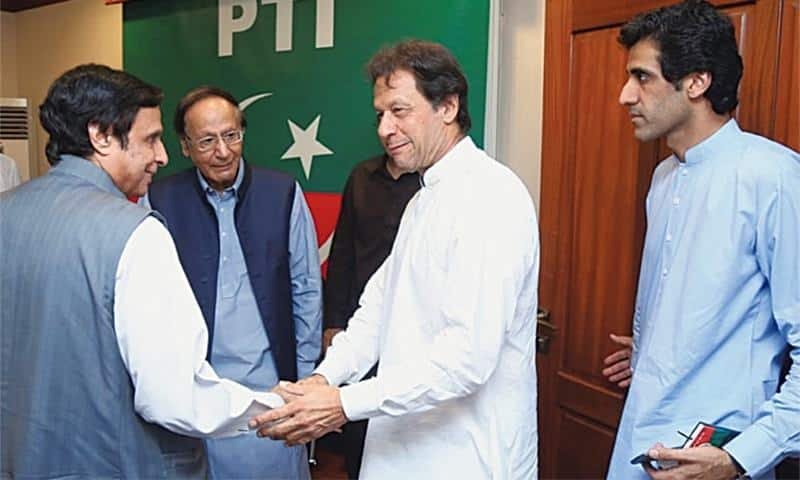
    Pakistan Tehreek-e-Insaf (PTI) Chairman Imran Khan has confirmed in a speech that his party has “honoured” Punjab Chief Minister (CM) Pervaiz Elahi for standing with the party and appointed him as the President of PTI.

    Addressing his followers through a video link on Thursday, the PTI chief started off by claiming that the establishment pressurised Pakistan Muslim League-Quaid (PML-Q). “They even were offered money and were threatened that there is no future for them with PTI”, he said.

    Stating that despite all this, the father and son stayed loyal, Imran Khan appreciated Pervaiz Elahi and Moonis Elahi for their efforts, especially for dissolving the Punjab Assembly on Khan’s directives.

    “Despite all the pressure, he agreed to a merger. We told him [Elahi] that we are honouring him by making him the president of the party,” Khan said.

    On Tuesday, Moonis and his father formally joined PTI with ten other former Members of the Provincial Assembly (MPA) of the Pakistan Muslim League-Quaid (PML-Q).

    On the same day, addressing a press conference in Lahore alongside PTI Vice President Fawad Chaudhry, Elahi said he had stood with Khan during “hard and testing times”. Fawad also announced that Pervaiz Elahi will be the President of PTI.

    PML-Q President Chaudhry Shujaat Hussain dismissed Elahi from his party post and terminated his basic membership on Tuesday.

  • President Alvi sets April 9 as election day for Punjab and KP

    President Alvi sets April 9 as election day for Punjab and KP

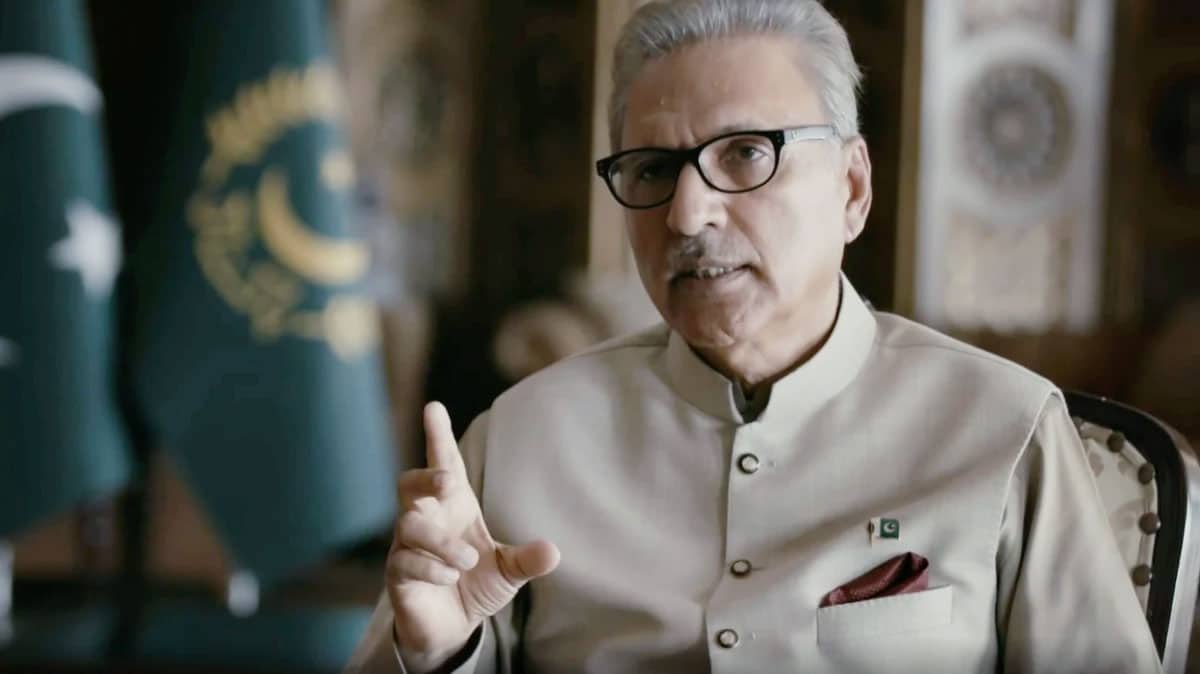
    President Dr Arif Alvi has announced that elections in Punjab and Khyber Pakhtunkhwa (KP) will be held on April 9.

    It is pertinent to mention here that Section 57(1) of the Elections Act, 2017 says that the president is entrusted to announce the election date after consulting the Election Commission of Pakistan (ECP)

    Earlier today, ECP said no to meeting President Alvi when he invited the commission to consult with him, citing that the matter of elections is sub judice.

    ECP says no to meeting with President Alvi

    On Monday, ECP, in a letter addressed to Alvi, has stated that the matter of deciding a date for elections is subjudice, hence, it cannot participate in a meeting on this issue with the president.

    The development comes days after Alvi wrote a letter to Chief Election Commissioner (CEC) Sikandar Sultan Raja, inviting him for an “urgent meeting” to discuss and consult on the election date in Punjab and Khyber Pakhtunkhwa (KP). The meeting was set to take place today (Monday, February 20).

    Two federal ministers, Rana Sanaullah and Marriyum Aurangzeb, have defended the ECP.

    In a statement issued on Monday, Information Minister Marriyum Aurangzeb said the Presidency has become “Awan-e-Sazish” [centre of conspiracy], adding that the government will not allow it to become “Imran Khan’s Tiger Force”. She also advised Alvi against becoming a puppet of the former Prime Minister.

    Meanwhile, in a tweet, Interior Minister Rana Sanaullah lambasted Alvi, stating that, “ECP is not your slave,” and adding that “Imran is now using the head of state [Alvi] for conspiracy”.

    President Alvi asks ECP for urgent meeting to consult on Punjab, KP’s election dates

    Earlier, in a letter to ECP, the president expressed displeasure over the “apathy and inaction” of the Election Commission of Pakistan (ECP) on not responding to his earlier letter as yet. The first letter was sent on February 8.

    The president stated that he had waited anxiously that the ECP would realise its constitutional duties to proceed and act accordingly, but was extremely dismayed by the commission’s “approach on this important matter”.

    The meeting will take place on February 20 (Monday).

    The president’s official Twitter account said that the two will discuss Section 57(1) of Elections Act, 2017 which details that the president is entrusted to announce the election date after consulting the ECP.

    Punjab and KP assemblies were dissolved in January to pave way for fresh elections.

    It is pertinent to mention that Pakistan Tehreek-e-Insaf (PTI) has been asking for the elections since the ouster of their chairman Imran Khan as Prime Minister.