Tag: Qazi Faez Isa

  • SC declares dismissal of former IHC judge Shaukat Aziz Siddiqui unlawful.

    SC declares dismissal of former IHC judge Shaukat Aziz Siddiqui unlawful.

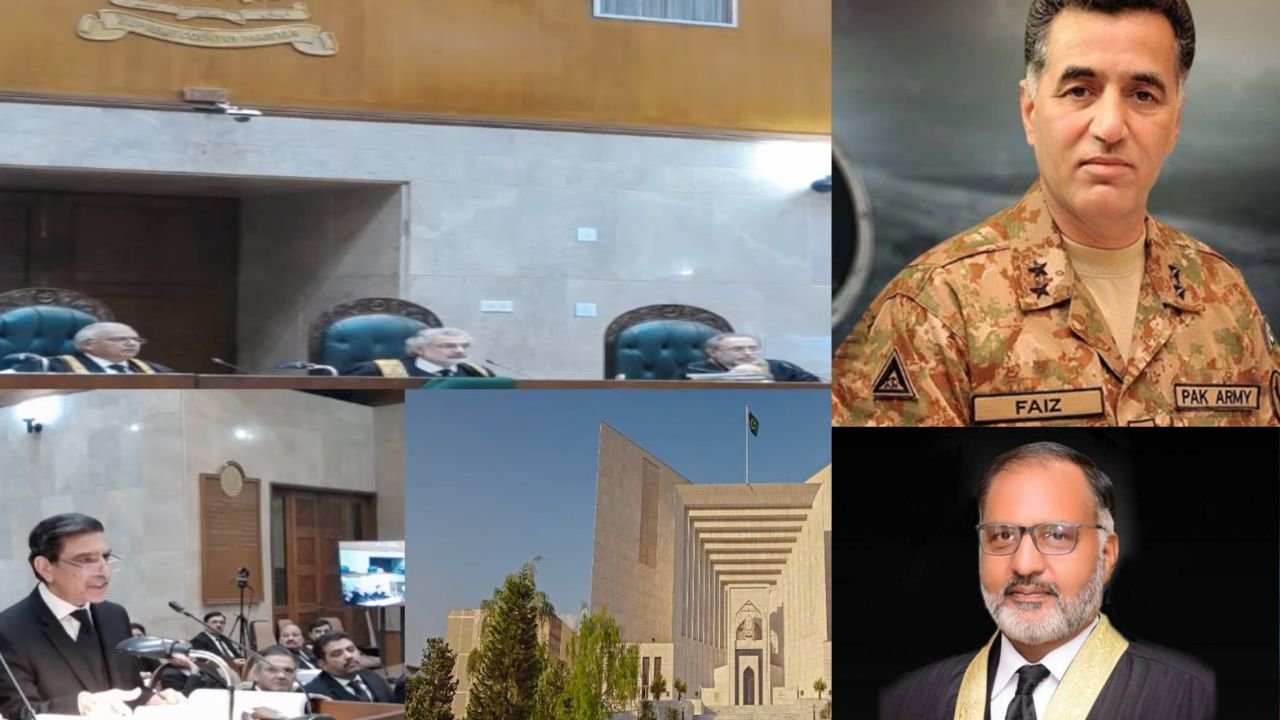
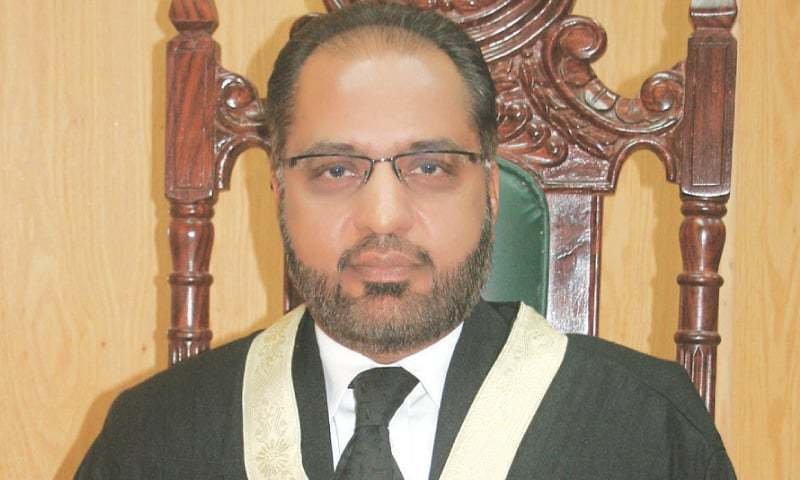
    The Supreme Court on Friday ruled the dismissal of former Islamabad High Court (IHC) senior judge Shaukat Aziz Siddiqui as illegal, issuing directions that he may now be considered a retired judge.

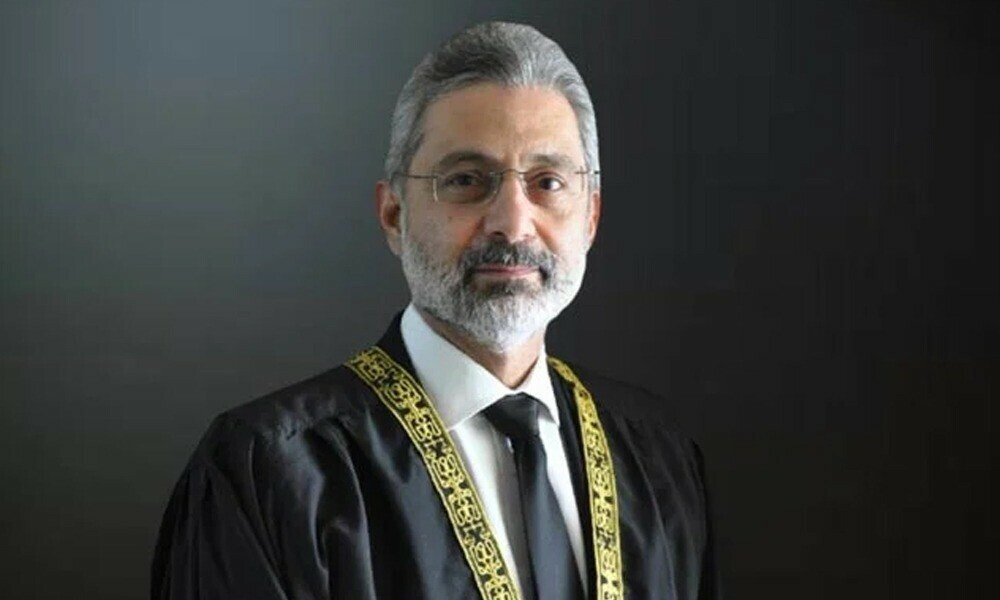
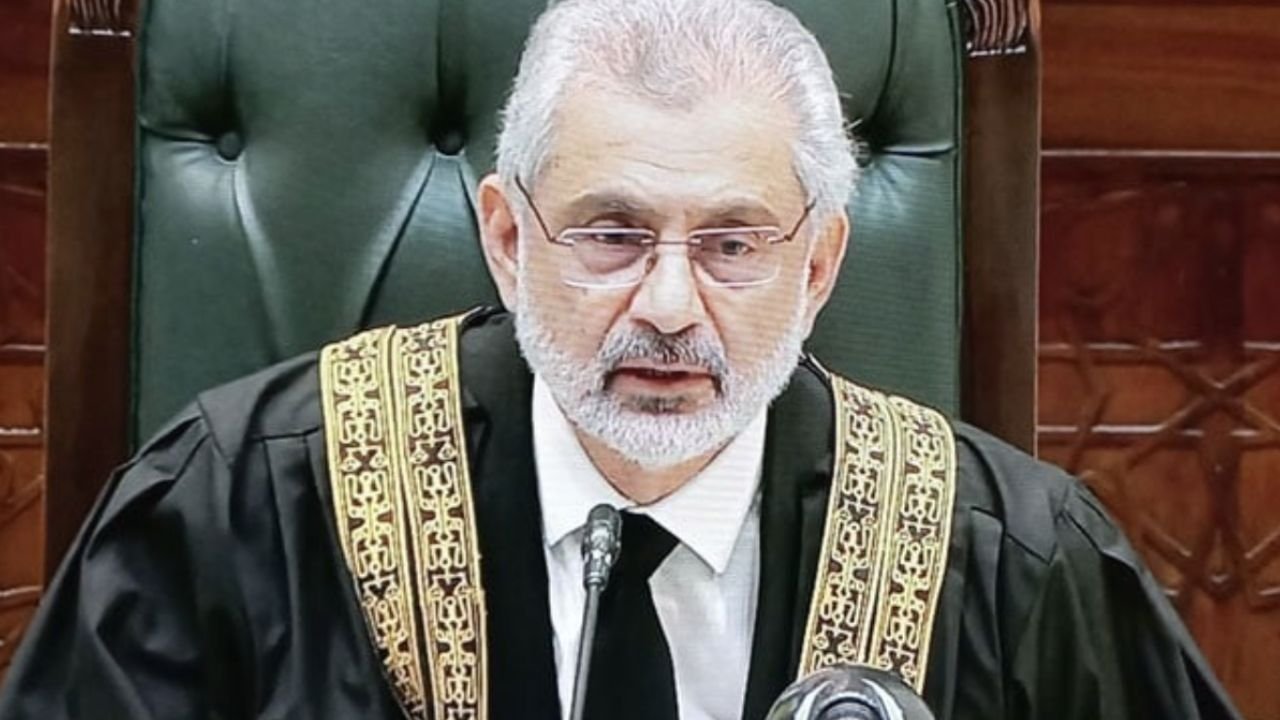
    The decision was announced by a five-member bench led by Chief Justice of Pakistan Qazi Faez Isa, Justice Aminuddin Khan, Justice Jamal Khan Mandokhail, Justice Hasan Azhar Rizvi, and Justice Irfan Saadat. The bench had reserved the verdict on Aziz’s plea in January this year.

    In his petition, the former judge challenged the decision of Supreme Judicial Council (SJC) removing him from office and an Oct 11, 2018 notification because of which he was dismissed for a controversial speech he had delivered at Rawalpindi Bar Association.

    In his speech, Aziz blamed the country’s premier spy agency ISI of illegally using their influence to manipulate the court proceedings and forming their choice of benches in cases related to indictment of former Prime Minister Nawaz Sharif and his daughter Maryam Nawaz.

    However, since the court noticed that since the former judge had attained the age of 62 years, he would not be able to resume his previous service as a judge. “Consequently, Justice Siddiqui shall be deemed to have retired as a judge of the IHC and he will be entitled to receive all the benefits and privileges due to a retired judge, by allowing these petitions in the above term,” it stated.

  • President Zardari will not take salary as president

    President Zardari will not take salary as president

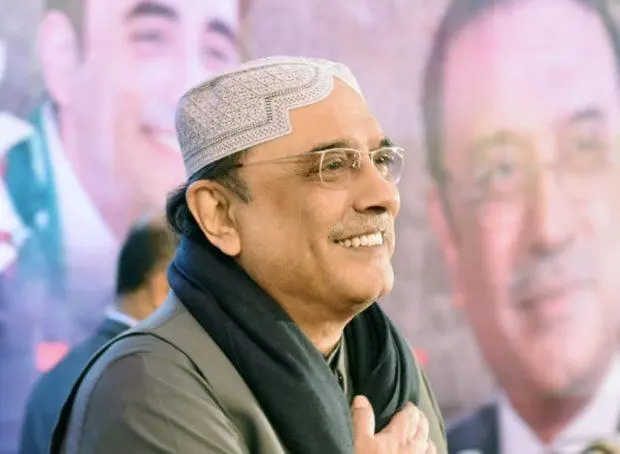
    The newly elected president, Asif Ali Zardari, has decided that he will not take salar in light of the economic crisis in Pakistan.

    President Zardari took the decision as the country is passing through a difficult time and the economy is not stable.

    President House said that Asif Ali Zardari has decided not to burden the national treasury and prefers not to take a salary.

    Zardari took the oath as the 14th president in a ceremony held at the President’s House on Sunday, with his children and grandson in attendance.

    The Chief Justice of Pakistan, Qazi Faez Isa, took the oath from the newly elected president. Political and military leaders, along with foreign ambassadors, attended the ceremony.

    A guard of honour was presented to the new president on the day after the swearing-in ceremony.

  • SJC recommends not using  titles ‘judge’, ‘justice’ with Mazahar Naqvi’s name

    SJC recommends not using  titles ‘judge’, ‘justice’ with Mazahar Naqvi’s name

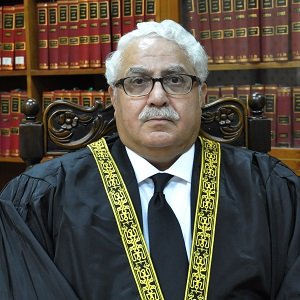
    A five-judge bench of the Supreme Judicial Council (SJC) has released a 33-page detailed opinion on Friday,  stating that former judge of the apex court, Sayyed Mazahar Ali Akbar Naqvi, has committed misconduct. The council recommended his removal from office and advised against using the titles ‘Justice’ or ‘Judge’ with his name in the future.

    The SJC discovered that the judge committed several instances of misconduct, which harmed the reputation of the judiciary.

    While Mr Naqvi had resigned a day before the SJC began proceedings on nine complaints against him under Article 209(6), the council decided to continue with its proceedings, with Chief Justice of Pakistan (CJP) Qazi Faez Isa saying it was “necessary to remove the misperception that the institution of judiciary is above the law”.
    The Supreme Judicial Council, led by the Chief Justice of Pakistan, praised the Pakistan Bar Council (which oversees lawyers) and Advocate Mian Dawood for filing complaints to support the rule of law and accountability.

    The council found Naqvi guilty of violating his oath of office and the Code of Conduct for judges after at least five allegations made by the complainants were proven true.

    The council explained that it could not be stated that Mr Naqvi was “untouched by greed”, “was above reproach”, his conduct was “free from impropriety expected of a judge” in his official and private affairs and thus he violated Article II and III of the Code of Conduct. According to the SJC opinion, it was clear that he violated Article IV as his actions were swayed by consideration of “personal advantage”.

  • FIA arrests Asad Toor in connection with campaign against judges

    FIA arrests Asad Toor in connection with campaign against judges

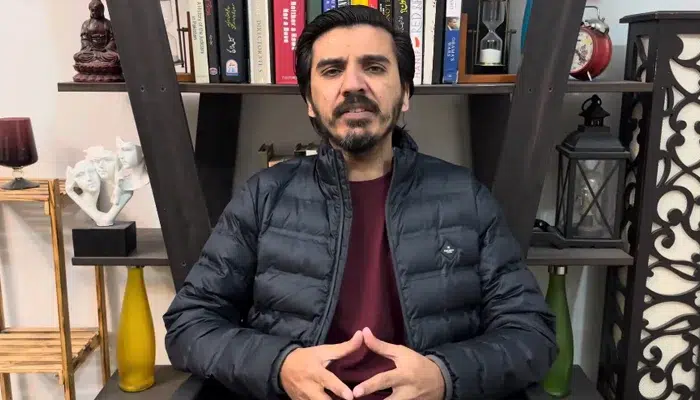
    Prominent journalist Asad Ali Toor was arrested on Monday by the Federal Investigation Agency (FIA) in connection with a campaign against Supreme Court (SC) judges, including Chief Justice of Pakistan (CJP) Qazi Faez Isa.

    His counsel, Imaan Mazari confirmed the arrest to Geo.tv.

    Last month, the caretaker government formed a Joint Investigation Team (JIT) comprised of six members to investigate a negative campaign against judges of apex court. 

    Imaan Mazari told Geo.tv that FIA officials detained Toor for eight hours on Friday, February 23 after he appeared before the JIT for questioning, even though he hadn’t received a formal notice as per the standard procedure.

    “We went to high court on Monday in the morning, and the chief justice, even though I specifically told him about the eight-hour detention and that there’s a real apprehension of arrest because they have threatened us as well, said that he cannot do anything based on apprehensions,” she added.

    After the hearing in the Islamabad High Court (IHC), Mazari stated that she went to the FIA office at 4:46 pm while Asad was being interrogated inside.

    On Tuesday morning, Asad was presented before the magistrate, however, his lawyers were not present there.

  • Suspect involved in social media campaign against CJP Qazi Isa arrested

    Suspect involved in social media campaign against CJP Qazi Isa arrested

    Authorities have arrested a social media user suspected of being involved in a threatening campaign against Chief Justice of Pakistan (CJP) Qazi Faez Isa, Geo reports.

    Sources of The News identified the suspect as a social media user named Abdul Wasay, who lives in Rawalpindi. They said he used social media to run a “threatening campaign” against CJP Isa, where he threatened the chief justice and tried to damage his reputation.

    “The rest of the people involved in the campaign will be identified and legal action will be taken against them,” the sources claimed.
    The government has formed a joint investigation team (JIT) to investigate people who have been spreading harmful information on social media about Supreme Court judges, the Election Commission of Pakistan (ECP), and government officers.

    The JIT has been tasked to investigate mainly three specific points, according to a notification.

    “To ascertain facts behind malicious social media campaign attempting to malign the image of honourable judges of the Supreme Court of Pakistan, to identify and to bring the culprits to book in accordance with the relevant laws and cause presentation of challans in the courts concerned, and to recommend measures for prevention against the occurrence of such incidents in future,” read the notification.

  • Former DG ISI Faiz Hameed denies meeting former judge Shaukat Aziz Siddiqui

    Former DG ISI Faiz Hameed denies meeting former judge Shaukat Aziz Siddiqui

    Lieutenant General (retd) Faiz Hameed, former director general of Inter-Services Intelligence (ISI), has firmly denied allegations of him meeting former Islamabad High Court judge Shaukat Aziz Siddiqui and manipulating the judicial proceedings related to the Panama Papers case, Geo has reported.

    General Hameed labeled the accusations as “absolutely false, frivolous, concocted, and based on an afterthought.”

    He emphasized that he neither contacted Judge Siddiqui nor engaged in any meetings with him, rejecting any involvement in discussions about the appeals filed by Pakistan Muslim League-Nawaz (PML-N) leader Nawaz Sharif in the court.

    IHC former chief justice Muhammad Anwar Khan Kasi also submitted his response to the Supreme Court rejecting Siddiqui’s allegations.

    In addition, Brigadier (retd) Irfan Ramay’s reply has also been submitted to the top court, in which he denies the allegations against him and meeting Siddiqui.

    Contrary to Faiz Hameed’s reply, Siddiqui claims he has concrete evidence of two meetings with Gen (retd) Faiz Hameed at his official residence in 2018.

    Talking to Geo News, Siddiqui says he not only has a list of witnesses but also material evidence to prove his allegation that the then-DG ISI visited him twice when he was a senior serving judge.

    Siddiqui says if required, he can furnish the evidence to the Supreme Court, which is presently hearing an appeal against his dismissal by the Supreme Judicial Council (SJC) in October 2018.

    Referring to the replies of Gen (retd) Faiz and others submitted to the Supreme Court in his case, he says the replies that deny his allegations prove the point that he was dismissed from service by the SJC without inquiring about the matter.

    Siddiqui says a day after his address to the Rawalpindi Bar Association on July 22, he had formally approached the then chief justice Saqib Nisar requesting him to constitute a commission to probe the authenticity and truthfulness of what he had alleged in the address.

    “If an independent commission holds that there’s no reality in the facts presented in the meeting of District Bar Association Rawalpindi, I am ready to face the consequences, but at the same time, I have a right to enquire that if my presented facts proved correct, what would be the fate of those persons, be they the serving army personnel who are involved in manipulating the judicial system,” reads his letter written to the then CJP.

    Siddiqui requested the issuance of directives for open proceedings of an independent commission, allowing media, civil society, and the legal fraternity to attend the inquiry into his allegations.

    Expressing his distress, Siddiqui stated, “It is a matter of concern that the independence of my institution has been compromised by the intervention of a few individuals of the prestigious institution of the Army and its allied agencies.”

    He noted that he had previously pointed out this intervention, leading to the initiation of a reference against him, along with another he deemed fabricated.

    Siddiqui’s troubles began after he addressed the District Bar Association on July 21, 2018, at the invitation of the executive body.

    During this address, he presented facts related to the Constitution’s applicability, the rule of law, the independence of the bar and bench, and the dispensation of justice.

    Following his revelations, Siddiqui claimed that a false and malicious campaign was launched against him on social and electronic media.

    The former judge expressed his disappointment, revealing that he learned of the Supreme Court’s instant annoyance through social media and the press release of the Supreme Court’s Public Relations Officer (PRO). Siddiqui noted that such outbursts of anger from the Supreme Court were not new and unusual in his experience.

    Despite Siddiqui’s request for an independent commission to probe the authenticity of his claims, none was constituted.

    Read more: Supreme Court issues notice to ex-DG ISI Faiz Hameed in Shaukat Aziz Siddiqui plea

  • ‘An umpire has recently given a no-ball’; Imran Khan slams Supreme Court decision

    ‘An umpire has recently given a no-ball’; Imran Khan slams Supreme Court decision

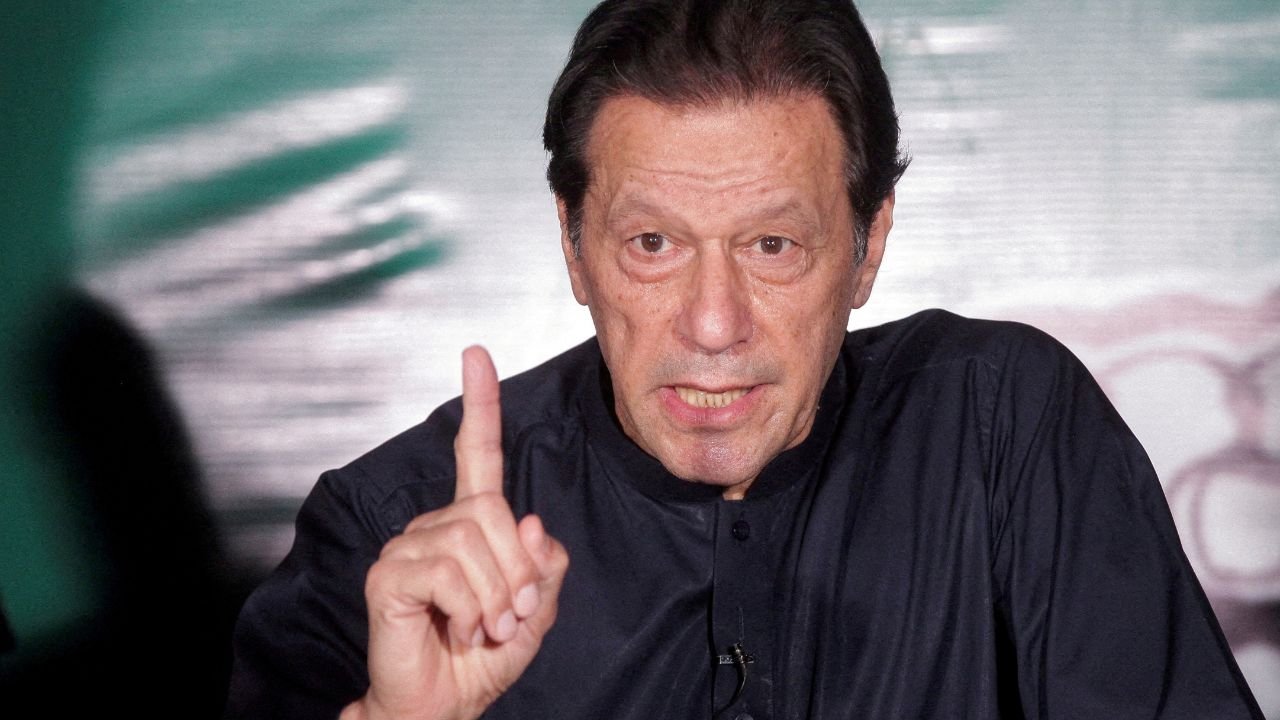
    Imran Khan, former Prime Minister and Founder Chairman of Pakistan Tehreek-e-Insaf (PTI), engaged in an informal conversation with media representatives during the Toshakhana case hearing in Adiala Jail on Monday.

    He voiced concerns over the political and legal developments, particularly critiquing the Supreme Court’s decision regarding PTI’s electoral symbol, referring to the decision as an “umpire giving a no-ball”.

    Khan suggested that the Supreme Court should have formed a five-member bench rather than a three-member one, to address controversies surrounding PTI’s electoral symbol. These remarks were made amidst the Toshakhana case proceedings.

    He again reiterated his belief that the current situation in Pakistan is part of what he referred to as the “London Plan”, alleging that elements of this plan include his imprisonment before elections, the perceived decline of PTI, and the exoneration of former Prime Minister Nawaz Sharif.

    Imran Khan further highlighted the alleged misuse of state resources, asserting that Nawaz Sharif, his daughter Maryam Nawaz, and PPP co-chairman Asif Ali Zardari had obtained bulletproof vehicles from the ToshaKhana without being held accountable.

    “Something very bad is going to happen to them,” he predicted.
    He demanded that an open trial of the cipher case should be conducted so that the people know the facts. “They ask me why did I not keep the cipher secret.”

    He alleged that the expose of former Army Chief General Qamar Javed Bajwa and U.S. State Department official Donald Lu is responsible for what is happening with PTI now, adding that his party is the only one that has consistently struggled for 27 years to attain its current position.

    Imran Khan remarked that recent decisions by decision-makers fail to accurately gauge public sentiment.

    He predicted significant repercussions for those involved and emphasized the power of social media in bringing transparency to such issues.

    Talking about the upcoming elections, Imran Khan claimed that PTI candidates are not being allowed to run their campaign properly, but he anticipates that the people’s dissatisfaction will become evident on February 8th.

    Despite facing various challenges, Imran Khan stated that PTI has not been entirely eradicated as the people continue to support the party. However, he voiced concerns about the electoral process, stating that PTI intended to give tickets to 850 candidates for the national and provincial assemblies in the general elections but were allegedly not allowed to consult with registered members in jail.

    In response to a question, Imran Khan ruled out the possibility of an electoral alliance with Bilawal Bhutto’s party.

    He also reiterated his claims about biased umpires in the political arena, asserting that Nawaz Sharif has never played a match without favoritism.

    In a related development, PTI Vice Chairman Shah Mahmood Qureshi announced that the party’s candidates would contest the upcoming elections as independent candidates. Qureshi, while referring to the SC verdict, commented on the perceived lack of a level playing field for the PTI and criticized the Election Commission of Pakistan (ECP) for its stance on intra-party elections.

    He further said that his daughter’s nomination papers were snatched when she went for scrutiny. She was compelled to leave her native city, Qureshi added.
    “We accept the court’s verdict. History will certainly write its judgment on the SC’s verdict [on PTI election symbol]”

    Jail Trials Challenged

    Former Prime Minister and Founder Chairman of Pakistan Tehreek-e-Insaf (PTI), Imran Khan, has taken legal action by challenging the jail trial notifications related to the Toshakhana and Al-Qadir Trust cases at the Islamabad High Court.

    Both notifications, about the jail trial, have been contested by Imran Khan in the Islamabad High Court.

    Notably, the notification for the jail trial in the Al-Qadir Trust case was issued on November 14, while in the Toshakhana case, it was issued on November 28, as per the petitions filed on behalf of the PTI leader.

    The legal challenges assert that the notifications for the jail trial are deemed illegal and are allegedly motivated by malice.

    Imran Khan’s legal team has requested the court to declare the jail trial notifications null and void.

    Additionally, they seek a halt in the proceedings of the trial court until a resolution is reached on this matter.

    Imran Khan has named Chairman NAB (National Accountability Bureau) and others as respondents in both petitions, marking a significant development in the ongoing legal saga surrounding the Toshakhana and Al-Qadir Trust cases.
  • Supreme Court ends lifetime disqualification

    Supreme Court ends lifetime disqualification

    In a landmark decision, the Supreme Court of Pakistan on Monday overturned the lifetime disqualification of lawmakers, rescinding its previous order that barred politicians from seeking office indefinitely.

    The decision came during the hearing of a case presented by former PML-N provincial member Sardar Meer Badshah Khan Qaisrani. The top court identified inconsistencies between the Election Act of 2017 and a previous Supreme Court ruling regarding the duration of disqualification.

    The Supreme Court declared that no person can be barred for a lifetime from running in elections if they are disqualified under Article 62 (1)(f), setting aside its landmark judgment in the Samiullah Baloch case.

    Sardar Meer Badshah Khan Qaisrani had filed a petition in 2007 challenging his lifetime disqualification over allegations related to a fake degree.

    Chief Justice of Pakistan, Qazi Faez Isa, announced that the Supreme Court aims to conclude proceedings on the lifetime disqualification case by January 4 (Thursday). This crucial decision will determine whether the amendment to the Election Act 2017 aligns with Article 62(1)(F) and establish whether lawmakers’ disqualification from contesting polls should be lifelong or limited to five years.

    The seven-member larger bench, led by Chief Justice Qazi Faez Isa and consisting of Justices Mansoor Ali Shah, Yahya Afridi, Aminuddin Khan, Jamal Mandokhail, Muhammad Ali Mazhar, and Musarrat Hilali, deliberated on the matter of lifetime disqualification for lawmakers during today’s proceedings.

    The apex court acknowledged the contradiction in the Election Act of 2017 and the earlier Supreme Court verdict and took this step after careful consideration. The decision marks a significant development in the ongoing debate over the length of disqualification for politicians and its alignment with constitutional provisions.

  • Supreme Court not running anyone’s campaign: Qazi Faez Isa

    Supreme Court not running anyone’s campaign: Qazi Faez Isa

    Chief Justice of Pakistan (CJP) Qazi Faez Isa stated on Monday that the Supreme Court (SC) is not running anyone’s election campaign while hearing Pakistan Tehreek-e-Insaf’s (PTI) plea seeking contempt charges against the Election Commission of Pakistan (ECP) for allegedly not providing a level-playing field to the party in the upcoming general elections set to take place on February 8, 2024.

    PTI lawyer and leader, Sardar Latif Khosa said that party leaders are facing political victimisation, on which CJP Isa responded, “We are the Supreme Court, not the government. We are not running anyone’s campaign.”

    A three-member bench, including CJP Isa, Justice Muhammad Ali Mazhar, and Justice Musrat Hilali heard the case.

    At the last hearing, the SC issued notices on Wednesday to the Inspector General of Police Punjab (IGP), chief secretary, and advocate general in response to the PTI plea.

    Sardar Latif Khosa presented arguments on behalf of party leader Shoaib Shaheen.

  • Finally, some good news for PTI

    Finally, some good news for PTI

    Several Pakistan Tehreek-e-Insaf (PTI) aspirants, along with their allies, re-entered the electoral fray on Thursday following successful appeals against the rejection of their nomination papers by Returning Officers (ROs) during the scrutiny process last week.

    The appellate tribunals, responsible for reviewing appeals against ROs’ decisions, swung into action a day after the deadline for filing appeals expired.

    Rulings were issued on many appeals, while notices were dispatched to the Election Commission of Pakistan (ECP) and other relevant parties for further cases.

    Numerous PTI candidates, facing rejection of their nomination papers, took up the challenge against RO decisions. Simultaneously, objections were raised against the acceptance of Pakistan Muslim League-Nawaz (PML-N) President Shehbaz Sharif’s papers in Karachi.

    According to the election schedule, nomination papers were accepted until December 22, scrutinized by December 30, and the appeal window extended until January 3. The tribunals are expected to conclude all appeals by January 10.

    Among those approved by the appellate tribunals are PTI Central Vice President Firdous Shamim Naqvi for NA-236, Karachi, and party ally Sheikh Rashid and his nephew Sheikh Rashid Shafiq for NA 56 and 57, Rawalpindi. Additionally, several other candidates from various parties, including Ijazul Haq and Punjab Assembly Speaker Sabatin Khan, received the green light to contest elections.

    Firdous Shamim Naqvi took to Twitter (former X) and wrote, “Jibran, Andaleeb and Shiraz, the team that batted for me to get my nomination cleared by the tribunal. My thanks to all those who prayed for my success. I hope to contest with your support and bat for Pakistan. Inshallah we will all succeed on the 8th of February 24.”

    In Rawalpindi, two election tribunals continued hearings on Thursday, deciding a total of 26 appeals—approving 20 and rejecting six. Notably, the tribunals accepted appeals from prominent figures such as PTI founder Imran Khan, former Punjab chief minister Parvez Elahi, and former minister Fawad Chaudhary, prompting notices to the ECP and relevant returning officers.

    Justice Chaudhry Abdul Aziz, a tribunal judge, emphasized the need to adhere to the Constitution and the law during appeal hearings, discouraging the discussion of political matters in court.

    In Islamabad, an appellate tribunal issued notices on appeals from 51 candidates whose nomination papers were rejected, including PTI’s Ilyas Mehrban, Aamir Mughal, Shiraz Kayani, and Zubair Farooq. Tribunal Judge Arbab Muhammad Tahir also sought responses on the appeal against the acceptance of the transgender candidate Nayab Ali’s nomination papers for NA-46 and NA-47.

    Meanwhile, in Karachi, the appellate tribunal at the Sindh High Court accepted the nomination papers of PTI Central Vice President Firdous Naqvi for NA-236, Karachi, declaring objections to his papers as “illegal.”

    The election process is currently undergoing a thorough review, with various candidates and parties actively participating in the appeal process to ensure fair representation in the upcoming elections. The tribunals are expected to play a crucial role in shaping the final candidate list for the upcoming polls.