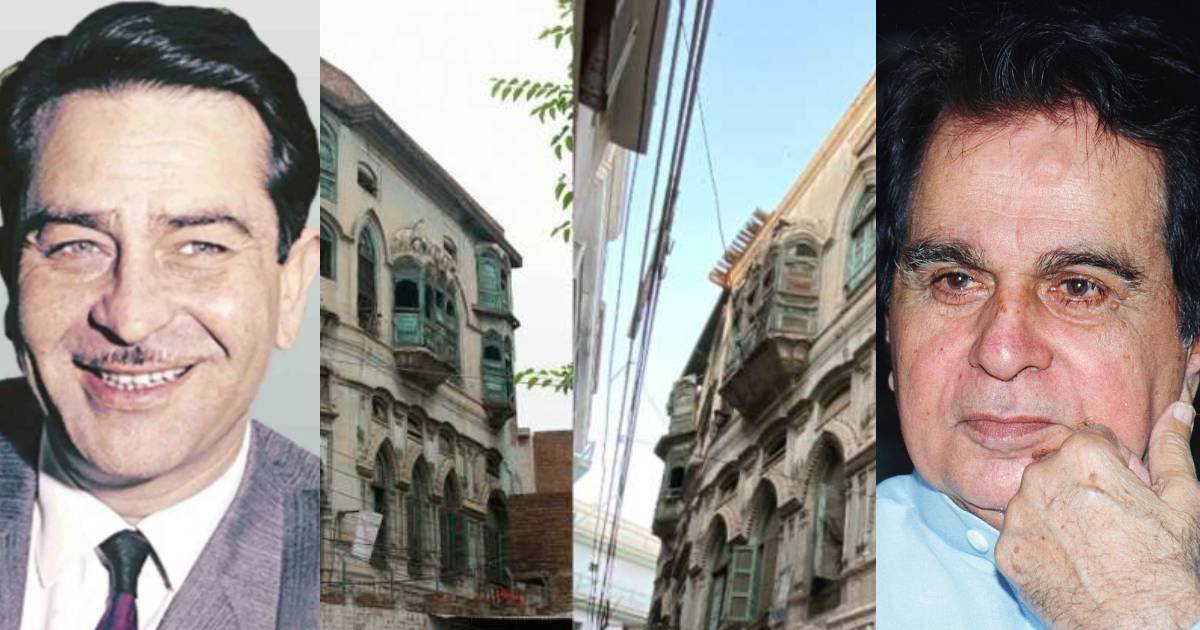
The restoration and renovation work of Bollywood legends Dilip Kumar and Raj Kapoor’s ancestral homes in Peshawar has started after the government got possession of the properties.
Raj Kapoor’s ancestral home, known as Kapoor Haveli, and Dilip Kumar’s ancestral residence are situated in the Qissa Khwani Bazaar area of Peshawar.
As per Geo News, the government is planning to restore the homes to their original state.
Initially, the debris from both houses was removed to begin the restoration work.
Meanwhile, Dilip Kumar’s nephew Fawad Ishaq lauded the government’s decision to restore his uncle and Raj Kapoor’s ancestral home.
He further said Dilip Kumar’s attachment to Peshawar never diminished.
The veteran Bollywood actor died of long ailment in July 2020. After his death, his wife Saira Banu, 77, has been diagnosed with a heart problem, termed as acute coronary syndrome.
The owner of Kapoor Haveli in Peshawar has refused to sell the house to the government at the price set by the authorities.
According to a report in The News, the owner of the mansion Haji Ali Qadir is asking for Rs 2 billion for the property whereas, the Khyber Pakhtunkhwa (KP) government has set a price of Rs 15 million for the house.
Speaking to the publication, Qadir had said that the price set by the government was ridiculous as “half a marla of land is not available in Dhaki Nalbandi near historical Qissa Khwani bazaar for Rs15 million and the government is giving us Rs15 million for a six marla house”. He added that the government has yet not made any formal contact for property and that he is getting news about it from the media.
He further shared that his father Haji Khushal had bought the property in 1965 through a government auction.
“When our father bought the house, the gold was Rs50 per tola,” said Qadir. “In this house, diyar wood has been used which is very expensive.”
On the other hand Director Archeology and Museum, Khyber Pakhtunkhwa Dr Abdul Samad said the government has fixed the price of the house at DC rate as plots are bought and sold at DC rate in the area, adding that the government cannot pay more than the said price.
Dr Samad further commented that if the owner has an objection to the price, he can submit an application to the Deputy Commissioner.
Previously, when it had been reported that the owner is demanding at least two billion rupees for the historic haveli, the province’s archaeology department had said that it will use legal powers to purchase the Kapoor Haveli as well as Dilip Kumar’s house if needed.
Meanwhile, Chief Minister KP Mahmood Khan recently approved funds of Rs 23.56 million to purchase the ancestral houses of Bollywood legends Dilip Kumar and Raj Kapoor in Peshawar. Both houses will be converted into museums after restoration work.
Chief Minister Khyber Pakhtunkhwa, Mahmood Khan has approved Rs 23.56 million to purchase the ancestral houses of two Bollywood legends Dilip Kumar and Raj Kapoor in Peshawar.
As per reports, the value of Raj Kapoor house is Rs 15 million, while Kumar’s home is worth Rs 8.56 million. Both houses will be converted into museums after restoration work.
The owner of the Kapoor Haveli Hajji Ali Qadir had earlier demanded at least two billion rupees for the mansion in Qissa Khawani Bazaar from the government. The province’s archaeology department at the time had said that it will use legal powers to purchase the Kapoor Haveli as well as Dilip Kumar’s house if needed.
The department had earlier declared the two houses as national heritage sites that were recognised internationally.
Earlier, Kumar himself took to social media to express his excitement over the government’s decision. The legendary actor asked his fans living in Peshawar to share photos of his ancestral house on Twitter.
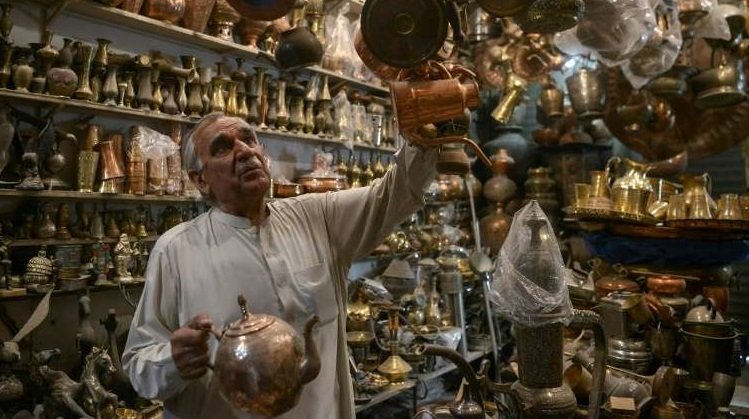
Mohammad Naseem’s eyes shine while he shares the legend of a remote, alpine lake nestled among snow-capped Himalayan peaks as a rare crowd of onlookers hears one of Pakistan’s last ‘storytellers’.
The story of Saif-ul-Malook — the winding saga of a brave prince who falls in love with a fairy — is just one of the 50 tall tales passed down to Naseem by his father.
“Usually people tell me I’m crazy when I tell these stories,” says Naseem, whose long white beard and traditional cloak give him the timeless appearance of a storyteller of old.
The 65-year-old shopkeeper says it would take days to recite all the stories he learned by heart that are imbued with “the history, the culture” of the land.
But few are still listening.
Naseem says he hasn’t bothered sharing the stories with his six children, and friends are no longer interested in hearing them as social media, video games, and soap operas have all but eclipsed his ancient art.
Video platform TikTok is now a major source of entertainment for the country’s youth, wildly popular in part because it is accessible to illiterate users in rural areas — just as the legends of old once were.
“When I die, these stories will die with me,” sighs Naseem outside his shop in northern Pakistan’s Shogran, where winter snows have blanketed the mountains.
Storytellers Bazaar
The city of Peshawar has long been the country’s stronghold of oral history, its Qissa Khawani or “storytellers bazaar” a Silk Road hub where travellers and locals alike congregated to hear a well-spun yarn.
The bustling frontier capital was once “the Times Square of the region” because of “the excellence of its storytellers,” explains Naeem Safi — a consultant at an Islamabad-based institute dedicated to Pakistani folk heritage, where cassettes of stories told at the bazaar have been archived.
“Writing was not very popular. The transfer of knowledge was verbal. Storytelling was fundamental — people considered themselves educated if they had heard enough stories,” says Safi.
Before tuk-tuks and buses clogged its narrow lanes the market was littered with Silk Road caravans of wandering traders who often stayed the night after the city’s sixteen gates were sealed at dusk.
In the evenings, the merchants would hear the city’s famed storytellers — who shared tales about the perils of the road, news of wars and local lore.
Bollywood legend Dilip Kumar, who grew up in the area recalled: “I have lovely memories of Qissa Khwani Bazaar, where I received my first lessons in storytelling, which later provided the impetus to choose meaty stories and scripts for my work. Every day as the trading closed in the market of Qissa Khwani Bazaar, a storyteller would sit in the centre of the square narrating stories of valour and victory, deceit and retribution which I would listen to with wide-eyed attention, seated next to my father and uncles.”
Kumar’s house has recently been acquired by the KP Government for restoration. Authorities say that the heritage sites will be converted into museums and tourist spots.
Similar, long-time Peshawar resident Khwaja Safar Ali, 75, remembers his youth in the city when the arrival of caravans was met with excitement.
During the day, “we used to run between the camels’ legs,” he recalls. And when evening came, “we would all sit together and listen to the storytellers”.
“They would tell us about Kabul, the USSR, Uzbekistan. We learned about these countries through them.”
Modern transportation eventually killed off the caravans, which even by the 1960s had become an increasingly rare sight in the area. While storytellers continued to perform for smaller circles, they were gradually replaced by radios and then televisions slowly fading away the art of storytelling.