Tag: racism

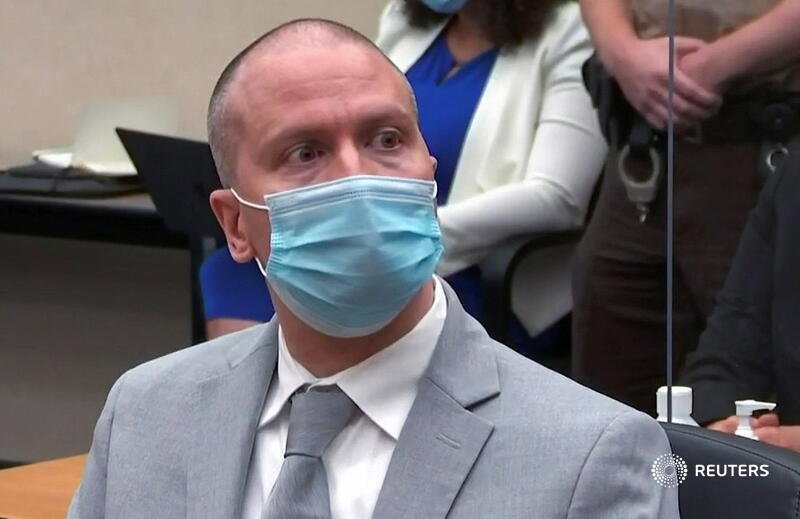
  • Derek Chauvin sentenced to 22.5 years in prison for George Floyd murder

    Derek Chauvin sentenced to 22.5 years in prison for George Floyd murder

    A judge sentenced former Minneapolis police officer Derek Chauvin to 22 years and six months in prison on Friday for the murder of George Floyd during an arrest in May 2020. Floyd’s murder galvanised a national protest movement against racism, reports Reuters.

    A jury found Chauvin guilty on April 20 of unintentional second-degree murder, third-degree murder, and second-degree manslaughter in the death of Floyd. The verdict was widely seen as a landmark rebuke of the disproportionate use of police force against Black Americans.

    Chauvin’s sentence was one of the longest ones to be given to a former police officer for using unlawful deadly force in the United States, said Minnesota Attorney General Keith Ellison, whose office prosecuted the case. Successful prosecutions of police officers in such cases have been rare.

    “Today’s sentencing is not justice but it is another moment of real accountability on the road to justice,” Ellison said outside the courtroom, calling on law enforcement leaders around the US to see it as a moment for reform.

    Hennepin County District Judge Peter Cahill said it was important to recognise the pain of the Floyd family.

    “I’m not basing my sentence on public opinion,” Cahill said. “I’m not basing it on the attempt to send any messages. The job of a trial court judge is to apply the law to specific facts and to deal with individual cases.”

    In a 22-page sentencing memorandum, Cahill gave weight to prosecution arguments that Chauvin acted with cruelty and abused his position of authority, aggravating factors that allowed him to give a harsher sentence than would be indicated by state sentencing guidelines for first-time offenders.

    Prosecutors had asked for a 30-year prison sentence, double the upper limit indicated in sentencing guidelines.

    Video of Chauvin kneeling on the neck of the handcuffed Floyd for more than nine minutes on May 25, 2020, caused outrage around the world and led to one of the largest protest movements seen in the US in decades.

  • George Floyd murder trial: former police officer found guilty

    The murder of a 46-year-old African-American man, George Floyd, on May 25, 2020 led to violent protests across the United States (US) last year. Floyd was killed after a white Minneapolis police officer pinned him down with his knee. A video of the gruesome incident shows how Minneapolis police officer Derek Chauvin pinned Floyd to the pavement with his knee on Floyd’s neck for several minutes.

    Today, a jury found Chauvin guilty on all three counts: charges of second-degree murder, third-degree murder and second-degree manslaughter.

    US President Joe Biden and US Vice-President Kamala Harris spoke with Floyd’s family immediately after the verdict. “At least now there is some justice,” Biden was heard saying. “We’ve been watching every second of this. We are all so relieved.”

    Biden thanked the “young woman with a smartphone camera” who filmed George Floyd’s death. He also thanked the police officers who testified against Chauvin “instead of just closing ranks”.

    Biden said Floyd’s murder “ripped the blinders off for the whole world to see on systemic racism”.

    Former President Barack Obama tweeted that the “jury did the right thing”. He added: “Michelle and I send our prayers to the Floyd family, and we stand with all those who are committed to guaranteeing every American the full measure of justice that George and so many others have been denied.”

    Floyd’s family celebrated the verdict. “Justice for George means freedom for all,” said his brother Philonise Floyd.

    https://twitter.com/ABC/status/1384621697723207686

    George Floyd told the police officers “I can’t breathe” more than 20 times according to the transcripts of the minutes leading up to his death revealed. Floyd’s words have become a rallying cry against racism around the world.

  • Pakistani businessman fined eight buffaloes for insulting indigenous groups in Malaysia

    Pakistani businessman fined eight buffaloes for insulting indigenous groups in Malaysia

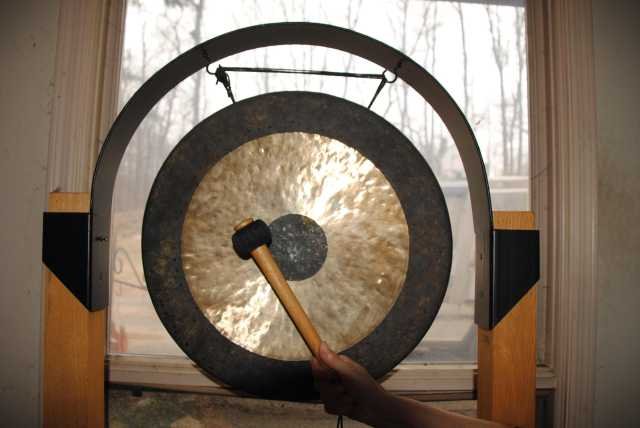
    A Pakistani man has been fined eight buffaloes and eight gongs by a court on the Malaysian part of Borneo for insulting indigenous groups, an official said on Wednesday.

    The island is home to a kaleidoscope of tribes and, in the Malaysian part, special courts deal with indigenous laws and customs.

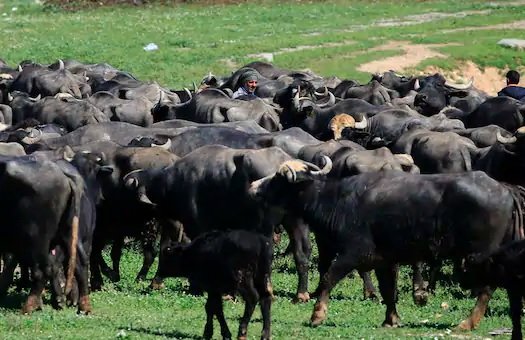
    According to reports, Amir Ali Khan Nawatay was ordered to pay the unusual fine by a native court in Sabah state after he pleaded guilty to making insulting comments about indigenous groups in May and June.

    Kota Marudu district chief Baintin Adun, who presided over Tuesday’s case, said recordings of the 50-year-old businessman’s comments had spread on social media, sparking a lot of rage.

    “We want to make this an example so other people don’t do the same thing again,” he said. “I want to appeal to the society that if there are misunderstandings or arguments, don’t mention another person’s race.”

    He did not reveal exactly what the Pakistani said. The businessman is a permanent resident of Malaysia, official news agency Bernama reported.

    Baintin said Amir had one month to pay the fine, or risked incurring a 4,000 ringgit ($940) fine or 16 months in jail, or both.

    Buffaloes and gongs are traditionally viewed as valuable items in indigenous communities in Sabah, and so can be used as a form of payment to settle grievances or even wedding dowries.

    Gong

    Race is a sensitive issue in multi-ethnic Malaysia, and Sabah is one of its most diverse states, with numerous indigenous groups.

    Borneo, shared between Malaysia, Indonesia and Brunei, is home to vast swathes of jungle and numerous exotic species.

  • Daren Sammy recalls being called ‘kalu’ by Indian cricketers during IPL

    Daren Sammy recalls being called ‘kalu’ by Indian cricketers during IPL

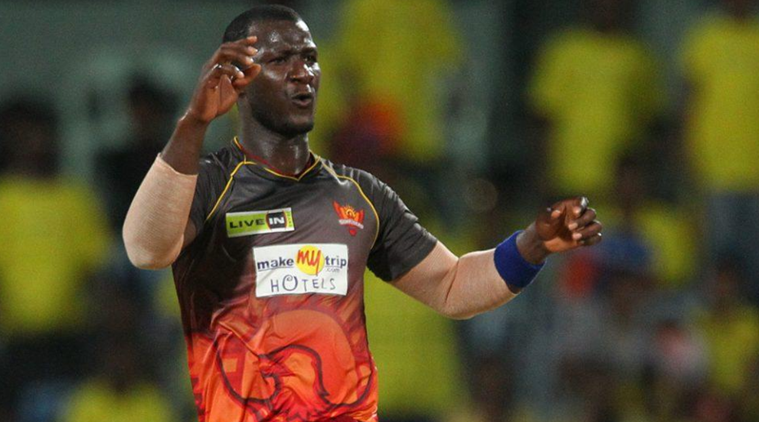
    Former West Indies captain and honorary citizen of Pakistan Darren Sammy has revealed that he was subjected to racial abuse in the Sunrisers Hyderabad (SRH) dressing room when he played for the franchise in the 2013-14 editions of the Indian Premier League (IPL).

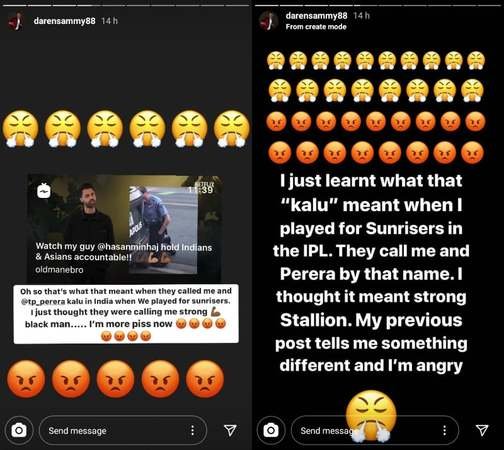
    After watching Hasan Minhaj’s latest segment, in which the comedian talks about anti-blackness in South Asian, the cricketer expressed his anger upon realising the meaning of the word ‘kalu’ which he says was used to refer to him and Sri Lanka’s Thisara Perera when the pair played for SRH. However, he did not reveal who used to direct these slurs at him.

    Following that, on Tuesday, Sammy released an Instagram video, saying those slurs came from players within the SRH camp and that he will be messaging them all to provide clarification and issue an apology.

    “Knowledge is power. So recently I discovered a word that I was being called was not what it actually meant, I need some answers. So before I start calling out names I need these individuals to reach out and please tell me there’s another meaning to that word and when I was being called it, it was all in love,” read the post along with the video.

    “I have played all over the world and I have been loved by many people, I have embraced all the dressing rooms where I have played, so I was listening to Hasan Minhaj as to how some of the people in his culture describe black people,” Sammy said in the video.

    “This does not apply to everybody but I say this because of what I’ve experienced. After I found out a meaning of a certain word, I had said I was angry on finding out the meaning and it was degrading, instantly I remembered when I played for Sunrisers Hyderabad in 2013-14, I was being called the exact the same word which is degrading to us black people,” he added.

    Sammy said that at the time when he was being called with the word, he didn’t know the meaning and he thought it was not degrading as his teammates used to laugh every time whenever he was called with that name.

    “I will be messaging those people, you guys know who you are. I must admit at that time when I was being called using that word, I thought the word meant strong stallion or whatever it is and I saw no problem. I did not know what it meant. Every time I was called with that word, there was laughter at the moment. Me being a team man, I thought hey teammates are happy, so it must be something funny,” Sammy said.

    “So now you can understand my frustration and my anger when it was pointed out to me that it wasn’t funny at all. It was degrading. I will be texting you guys and I will ask you as to when you called me with that name, did you all mean it in any bad way or in a degrading way? You repeatedly called me that word over and over again, to the point that I was even saying, that’s my name,” he continued.

    Sammy said he expects an apology from all those who called him that because he considered them his brothers and friends.

    “I have had great memories in all my dressing rooms, so all those who used to call me with that word, think about it, let’s have a conversation, if it was in a bad way then I would be really disappointed,” he added.

    “I have always been one to build up the relationship or build up a team, not bring it down,” he concluded.

    https://www.instagram.com/p/CBL-fuglF6o/

    Meanwhile, an old social media post of India pacer Ishant Sharma has surfaced which has confirmed Sammy’s allegations.

    Ishant had shared a group picture also featuring Sammy, on May 14, 2014, and used the word ‘kalu‘ for him.

    https://twitter.com/DennisCricket_/status/1270297785917517824?s=20

    The reaction from the West Indies all-rounder has come following the death of George Floyd, an African-American who last month died in police custody in the United States. Floyd, aged 46, died on May 25 after a police officer, held him down with a knee on his neck though he repeatedly pleaded, “I can’t breathe,” and “please, I can’t breathe”.

  • Shaniera Akram hits back at troll who told her that Pakistan is not for ‘whites’

    Shaniera Akram hits back at troll who told her that Pakistan is not for ‘whites’

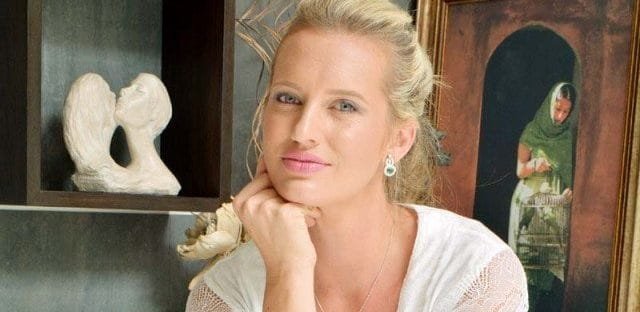
    Shaniera Akram has never been one to shy away from hitting back at trolls.

    Read more – Shaniera Akram loves being Pakistan’s bhabi

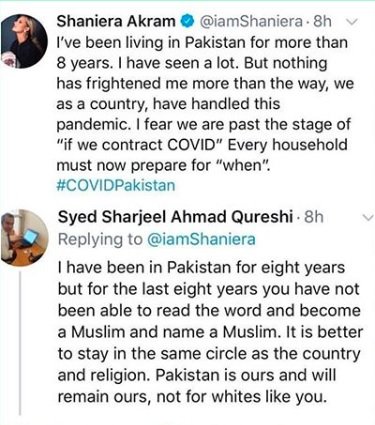
    In a recent incident, Akram slammed a troll, who told her that Pakistan is “not for whites like her”. Syed Sharjeel Ahmad Qureshi, who identifies himself as a political analyst and blogger, replying to Akram’s tweet about the coronavirus pandemic said that in the eight years Akram has been in Pakistan, she has “not been able to read the word and become a Muslim and name a Muslim”.

    In response to his remarks, Shaniera said that he has two pandemics to worry about: coronavirus and racism.

    Following this, several people apologised to the nation’s ‘bhabhi‘ for Qureshi’s comments.

    https://twitter.com/HaseebAhmaddd/status/1269552135190065152?s=20

    Following the backlash, Qureshi deleted the tweet.

    Meanwhile, it is pertinent to mention here that this is what Shaniera’s pinned tweet is:

  • Racism at home

    Racism at home

    Being away from my country, I am having a difficult time processing world affairs, especially the killing of George Floyd, which has left many around the world, including me, speechless, angry and stunned. To all the black people who have long and continue to suffer the systematic oppression in Western countries, especially in the United States (US), I stand with all of you.

    I don’t understand or can gauge your pain, but in silence, words, and action, I am with you.

    Respecting the suffering of African-Americans, I would like to bring to limelight the racial stigmas related to being black or a dark-toned person in Pakistan.  For hundreds of years, having a dark complexion has been looked down upon in South Asian countries. Pakistanis are no less, where a dark skin shade is culturally wired in our brains as synonymous with poverty, illiteracy, and slavery.

    I won’t be overstating that all of us have been racist at some point in our life, be it casually, unintentionally, or knowingly. To me, it seems that we are in a race to be whiter than white people. For us, our sense of pride is skyrocketed when someone compliments our facial colour and delivery of the English language. As a result, we adopt practices that corrupt society at large and infuses it with just not racism but injustice too.   

    “It is just not the educational system, but this racism is systematic and deep-rooted in our societies, for which we are equally responsible. There are racial slurs pretty standard such as “Kalia,” “Kali,” or “Kalu” to disrespectfully address someone with a dark skin tone. As if their measurement of respect comes with the shade of your body.”

    I am sure, like many others, I had a strange experience of unintentional racism through our education system. We were repeatedly lectured on how Islam treats everyone equally. The guiding example of Prophet Muhammad (PUBH) was quoted now and then, on how despite resistance from Arab society, he (PUBH) appointed Bilal ibn Rabah to call the first prayers, but in the same breath, our very teachers favour kids with a fairer skin tone. Those kids were likely to become your teachers’ favorite students. I also heard remarks such as, “OMG! You are so beautiful because you are white” or rejoining the classes after the summer break; one teacher unforgivingly remarked, “What have you done during your summer break, you have become so black!”

    It is just not the educational system, but this racism is systematic and deep-rooted in our societies, for which we are equally responsible. There are racial slurs pretty standard such as “Kalia,” “Kali,” or “Kalu” to disrespectfully address someone with a dark skin tone. As if their measurement of respect comes with the shade of your body. It doesn’t stop there; brown parents want a fairer daughter-in-law for their son, which helps them boost their societal pride as if she is a commodity or a showpiece.  In the same bid, women are obliged to use fairness creams so that they can wed their prince charming.

    I have always had a difficult time coping with advertisements prescribing color change possibility with-in 20 days of regular use. To add further, I knew someone who went to the US for higher education and wanted to marry an African-American. The family back in Pakistan didn’t approve of the marriage, objecting to her appearance. Similarly, I think of all women in Pakistan whose wedding proposals are causally rejected, on being dark. The amount of trauma and stress it leaves the person with, is unexplainable.

    “I can write a long speech about how I support the black lives movement in the US, but my head continues to bow down in shame because the ones in Pakistan are treated far worse.”

    I, however, am still speaking from a privileged position of being a man and can hardly relate to the suffering of women in Pakistan. 

    We often criticise US authorities for the handling of black people, but it is worse here in Pakistan. From security guards to cab drivers, the initial mental framework of respect is proportional to someone’s fairness. These and many other instances add up to racism at all levels in Pakistan. I can write a long speech about how I support the black lives movement in the US, but my head continues to bow down in shame because the ones in Pakistan are treated far worse. I, therefore, pick to criticise my own country and culture, with an ambition to change myself and the people around me in understanding that somebody’s colour should not be a measurement of their ability, intelligence, worth or respect.

    Please remember when you lash out at white people with #blacklivesmatter hashtags on your digital channels. Use your presence to be the voice of those who are unheard or racially abused in Pakistan. Whatever inspires you in your life, be it religion, science, or culture, let’s reform our vocabulary and lifestyle, and celebrate people beyond their color, ethnicity, race or gender.
  • VIDEO: Pregnant Muslim woman punch, kicked in racist attack in Australia

    A man in Australia has been charged for punching and kicking a heavily pregnant woman in what was described by a leading Australian Islamic association as an “Islamophobic” attack.

    Shocking security camera footage showed a man approaching a table of three women wearing headscarves as they chatted at a cafe Sydney on Wednesday (Nov 20).

    The 43-year-old suspect is seen lunging over the table to attack a 31-year-old woman, who police said is 38 weeks pregnant, without provocation.

    After several frenzied punches, the woman fell to the ground and was stamped on, before bystanders wrestled the assailant away.

    The Australian Federation of Islamic Councils (AFIC) said the man was heard “yelling anti-Islamic hate speech at the victim and her friends”.

    “This was clearly a racist and Islamophobic attack and we expect it to be treated as such,” said AFIC president Rateb Jneid.