Tag: rate

  • Pakistani rupee continues to rise for 13th consecutive session

    Pakistani rupee continues to rise for 13th consecutive session

    The Pakistani rupee is strengthening versus the US dollar in the interbank market and increased by more than 0.4 per cent on Tuesday morning.

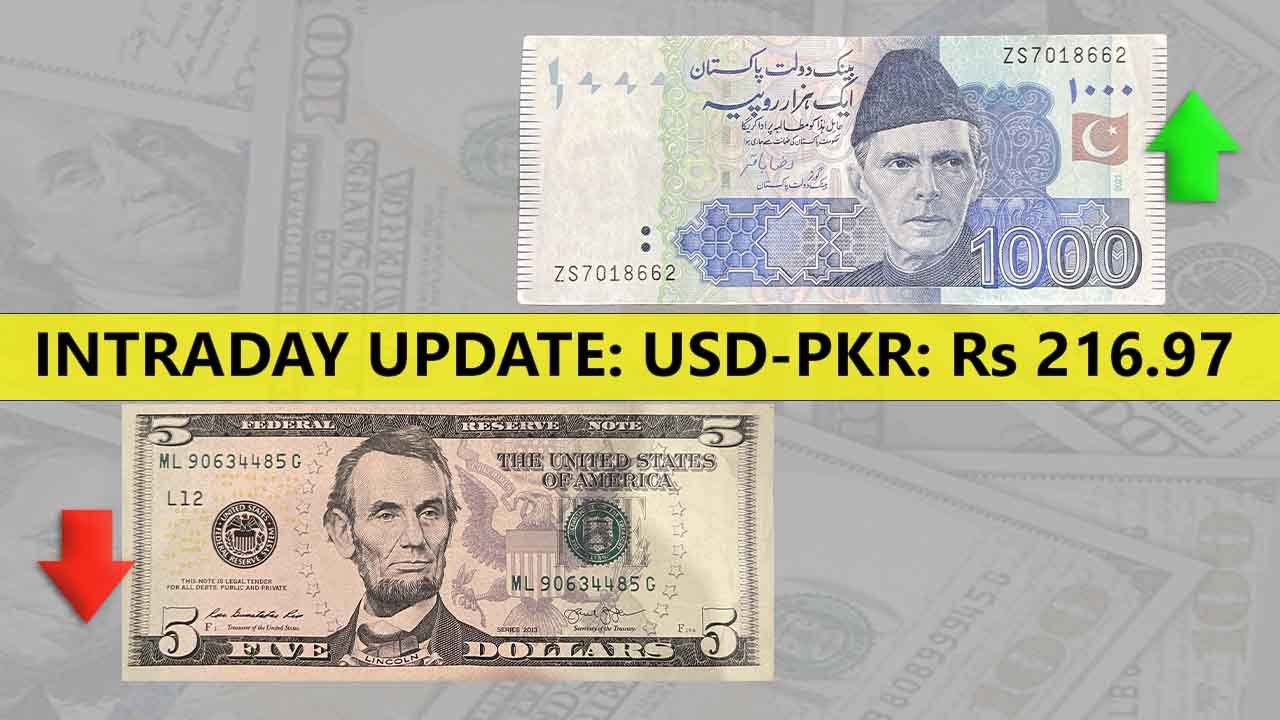
    During intra-day trading, the rupee was quoted at Rs216.97 at around 10:40 am, up Rs1 or 0.46 per cent against the US dollar.

    On Monday, the rupee continued its upward trend against the US dollar for the 12th straight session and appreciated Rs1.95 or 0.89 per cent to settle at Rs217.97.

    The Monetary Policy Committee (MPC) of the central bank maintained its benchmark policy rate at 15 per cent on Monday, which was a significant development.

    However, market observers attribute the rupee’s recent increase to the central bank and other authorities’ efforts to curb market speculation.

    According to Brecorder, the United Nations Development Programme issued a grim warning on Tuesday, stating that there was a debt problem that was rapidly worsening in a number of developing countries, including Pakistan.

    Without prompt assistance, the poverty rate in at least 54 countries would increase, according to UNDP, and “critical investments in climate adaptation and mitigation will not happen.”

    Sri Lanka, Pakistan, Tunisia, Chad, and Zambia are the nations most at risk right now, according to UNDP head economist George Gray Molina.

    In other countries, the dollar loomed big over precarious financial markets on Tuesday, worrying investors with concerns about rising interest rates, global growth, and geopolitical tensions.

    The 20-year high of Rs114.78 that it reached late last month was not far away; the US dollar index was up 0.053 per cent at Rs113.12 at the time.

    An increase in COVID-19 cases in China and a stronger US dollar contributed to Tuesday’s decline in oil prices, a major measure of currency parity, as they sparked worries about a faltering global economy.
  • Pakistani rupee remains volatile as US dollar surpasses Rs211

    Pakistani rupee remains volatile as US dollar surpasses Rs211

    On Monday, the Pakistani rupee dropped sharply to a record low of over Rs211 against the US dollar in the interbank market, indicating that the currency remains highly volatile.

    The rupee’s latest devaluation against the US dollar is the result of panic buying by traders in response to reports that some financial institutions were out of foreign currency.

    According to the State Bank of Pakistan (SBP), the US dollar was available at Rs211.21 at 11:03 AM and had closed at Rs208.75 on Friday.

    It is worth noting that the Pakistani rupee has fallen for the seventh working day in a row, losing nearly Rs6, or more than 3 per cent, to date.

    Experts predict that the Pakistan rupee will continue to fall against the US dollar and other major currencies owing to concerns regarding the IMF’s $6 billion program’s restoration, the country’s expanding current account deficit, and dwindling foreign exchange reserves.

    The PKR which lost 32.5 per cent of its value in the current financial year 2021-22 is forecasted to remain under stress as the dollar is in high demand in the market due to economic crises.

    SBP appears helpless to stem the rupee’s speculative fall, as demand for the US dollar continues to rise due to quarter-end payment strain.

    Monetary specialists attribute the depreciation of the local currency to a widening trade deficit, political instability, and a drop in foreign direct investment. The currency expert believes that the positive news from the Financial Action Task Force (FATF) will help attract foreign investment, increasing the availability of the dollar.

    Traders expect the rupee to settle in a range of 195-200 per dollar until the end of the current fiscal year 2021-22 if the IMF deal is finalised.

    According to data compiled by Ismail Iqbal Securities, Pakistan’s currency has depreciated by 14.57 per cent against the dollar this year, making it one of the worst performers in the world.

    The worst-performing currency was the Sri Lankan rupee, which fell 43.9 per cent, followed by the Laotian Kip, which fell 24 per cent, the Turkish Lira, which fell 23.18 per cent, and the Ghana Cedi, which fell 22.33 per cent, according to the data.

  • OGRA slashes LPG prices by Rs13 per kilogram

    OGRA slashes LPG prices by Rs13 per kilogram

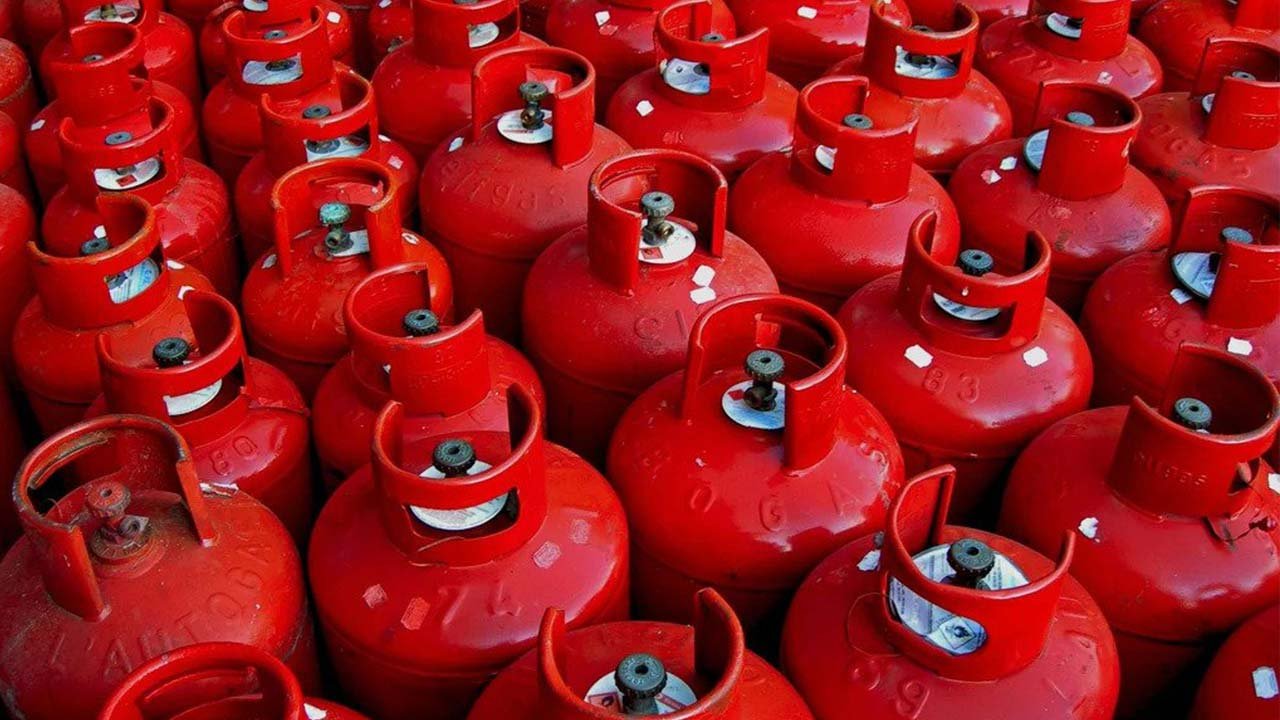
    The Oil and Gas Regulatory Authority (OGRA) has announced a Rs13 per kilog price cut for liquefied petroleum gas (LPG).

    The cost of an LPG household cylinder has been decreased by Rs155, according to a notification released today. Under the revised tariffs, it will be offered for Rs2,581.35, which includes the sale of a commercial cylinder for Rs9,931.65.

    Chairman of the LPG Distributors Association Pakistan, Irfan Khokhar, commented on the matter, claiming that LPG is 45 per cent cheaper than petrol and diesel at present pricing.

    If the government focuses on the sector, he claims that LPG prices can be decreased by another 60 to 65 per cent.

    This is somewhat good news, as many house owners in developing housing societies lack access to Sui Gas connections and rely on LPG cylinders, which are offered at exorbitant costs. The recent price reductions may help consumers cope with the effects of inflation.

    It is important to note that LPG is an alternative and fuel that is mostly utilised for cooking, heating, and lighting especially in rural and hilly sections of the country where natural gas pipelines are not available.

  • SBP determined to curb inflation, improve foreign exchange reserves

    SBP determined to curb inflation, improve foreign exchange reserves

    In a recent interview, the Governor of the State Bank of Pakistan (SBP), Dr. Reza Baqir expressed concern over the continuous deterioration in foreign exchange reserves but remained optimistic that a renewal of loans will be witnessed in the near future, which, coupled with SBP’s initiatives, will enhance market confidence.

    He claimed that the decline in reserves is “clearly alarming, but we are convinced that the central bank’s initiatives will prevent further deterioration”.

    According to data issued by the central bank on April 7, the reserves massively declined by $728 million to $11.32 billion as of April 1.

    The decline, according to SBP, is primarily attributable to debt repayment and government payments linked to the settling of an arbitration judgment.

    In addition to this, the currency even hit new lows in the week, forcing the SBP to intervene by boosting the policy rate, declaring a 100 per cent cash margin on 177 commodities with instant effect, and hiking the markup percentage by 2.5 per cent for borrowing under the Export Finance Scheme (EFS).

    In response to the Monetary Policy Committee’s (MPC) recent rate hike, Baqir stated that the move was made to tackle growing inflation and lessen external pressures. “The foreign exchange market has been under a lot of pressure for more than a month. A number of factors contributed to it: first, there was political uncertainty; second, our reserves were drained due to debt payments”.

    Consequently, the Pakistani rupee ended its devaluation run on April 8, and the KSE-100 Index witnessed positive sentiment, ending the day with an impressive gain of 658 points.

    The SBP Governor also discussed the skyrocketing petrol prices, which remain elevated because of the Russia-Ukraine conflict, adding more pressure on the local currency.

    The central bank made a determined decision after analyzing the statistics to lower inflation, improve foreign exchange reserves, and boost business confidence.

  • Pakistani rupee continues its record-breaking decline against the US Dollar

    Pakistani rupee continues its record-breaking decline against the US Dollar

    The Pakistani Rupee (PKR) continued its decline against the US Dollar (USD) today, reporting losses in the interbank market. At the close of the session today, the local currency lost 30 paisas against the US dollar.

    It fell 0.16 percent against the US dollar, closing at Rs182.64 after losing 30 paisas and closing at Rs182.34 in the interbank market on Tuesday, March 29.

    Pakistan’s ongoing political volatility and economic problems continue to weaken currency reserves as the country attempts to remove obstacles toward financial relief.

    After global oil prices surged on Monday, the PKR maintained its downward trend against the greenback.

    The rupee has lost about 17 per cent of its value since its last peak in May 2021. To date, the local currency has lost more than 13.6 per cent of its value.

    It is worth noting that the Pakistani currency depreciated 30.5 per cent against the US dollar in the last three years under the government of Prime Minister (PM) Imran Khan.