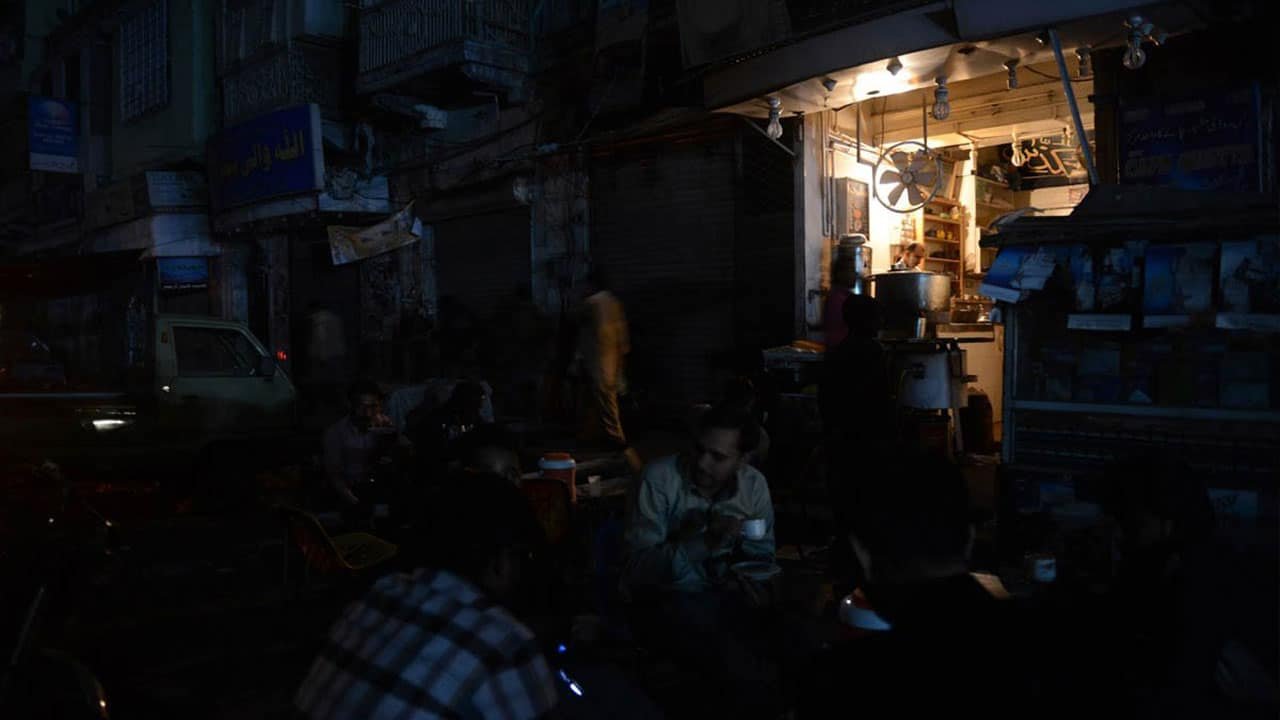
The European attempt to abandon Russian oil is intended to punish Moscow for its invasion of Ukraine. It’s also wreaking havoc thousands of miles away, throwing Pakistan into darkness, destabilising one regime, and jeopardising the country’s new leadership’s stability.
According to Bloomberg, Pakistan invested heavily in liquefied natural gas and inked long-term contracts with Italian and Qatari suppliers. Some of those suppliers have now defaulted, although continuing to sell into the more lucrative European market, putting Pakistan in the very situation it hoped to avoid.
The country took particular precautions a decade ago to protect itself from the sorts of price increases that are currently shaking the market.
Last month, the government spent about $100 million on a single LNG shipment from the spot market to avert outages during the Eid holiday, a record for the cash-strapped country.
The country’s LNG costs could reach $5 billion in the fiscal year ending in July, more than double what they were a year ago. Even still, the government is powerless to protect its citizens: the IMF is in talks to bail out the country on the condition that it reduces fuel and energy subsidies.
Outages lasting more than 12 hours
Parts of Pakistan are currently suffering scheduled blackouts lasting more than 12 hours, reducing the ability of air conditioning to provide respite during the current heat wave. The former prime minister continues to gather enormous audiences to demonstrations and marches, exacerbating voters’ discontent with 13.8 per cent inflation. The hosts of prime-time talk shows frequently discuss how Pakistan will obtain the petroleum it requires and how much it would have to spend.
The administration introduced a fresh set of energy-saving measures last week. Civil servants were relieved of their normal Saturday shifts, and the security budget was slashed by half.
Prime Minister (PM) Shehbaz Sharif remarked in an April tweet before of the Eid holiday, “I am acutely aware of the sufferings people are facing”. That same week, he ordered his government to resume purchasing costly overseas natural gas shipments.
He also warned earlier this month that they don’t have the money to keep importing gas from other countries.
Rerouted supply to power plants
There will be more than just outages as a result of the supply shortage. The government has rerouted existing natural gas supply to power plants, causing fertiliser manufacturers to be shortchanged. This approach could jeopardise the next harvest, resulting in even higher food prices the following year. Backup generators are being used by cellphone towers to keep service going during the blackouts, but they, too, are running out of fuel.
There’s not much hope in the future. LNG prices have risen by over 1,000 per cent in the previous two years, first due to post-pandemic demand and subsequently due to Russia’s invasion of Ukraine. Russia is Europe’s largest natural gas supplier, and the possibility of supply disruptions pushed spot rates to an all-time high in March.
Increasing LNG demand in Europe
Meanwhile, Europe is increasing its need for LNG. Europe’s LNG imports have increased by 50 per cent so far this year compared to the same period last year, and show no signs of slowing down. As they cut ties with President Vladimir Putin’s regime over the crisis in Ukraine, European Union policymakers created a plan to considerably increase LNG deliveries as an alternative to Russian gas.
Floating import terminals are being built at a breakneck pace in countries like Germany and the Netherlands, with the first ones set to open in the next six months.
“Europe is draining LNG from the rest of the globe,” according to Steve Hill, executive vice president of Shell Plc, the world’s largest LNG trader. “However, this means that less LNG will be sent to developing markets”.
Pakistan was formerly thought to be the LNG industry’s bright future. Demand for the fuel had peaked in developed markets by the mid-2010s. However, technological developments had reduced the costs and time it took to build import terminals, and new gas sources had reduced the cost of the fuel itself.
Poor nations could finally contemplate the gasoline at the new, lower prices. Suppliers flocked to these new markets, and when Pakistan published a request for long-term LNG supply, over a dozen businesses competed for the contract.
Pakistan chose Italy’s Gunvor Group Ltd to sell LNG to the country for the next decade in 2017. The terms were favourable at the time, and the prices were lower than those of a comparable arrangement struck with Qatar the previous year.
Delay in supplies
However, due to the rise in European gas prices, the two suppliers have postponed more than a dozen shipments slated for delivery between October 2021 and June 2022.
According to Bruce Robertson, an expert at the Institute for Energy Economics and Financial Analysis, such defaults are nearly unheard of in the LNG market. Bloomberg spoke with traders and industry insiders who couldn’t recall the last time so many cargoes were rejected without being linked to a big outage at an export terminal.
Eni and Gunvor stated they had to cancel because they were experiencing their own supply problems and didn’t have enough LNG to export to Pakistan. When exporters confront such difficulties, they typically replace deliveries by purchasing a consignment on the spot market, but Eni and Gunvor have not done so.
Vendors are generally averse to cancelling orders. It harms the company connection and is often extremely costly. In established markets, fines for “failure to deliver” might be as high as 100 per cent.
“It’s quite rare for LNG suppliers to renege on long-term contracts beyond force majeure occurrences,” says Valery Chow, an analyst at Wood Mackenzie Ltd.
Pakistan’s contracts stipulated a lower cancellation penalty of 30 per cent, most probably in exchange for cheaper overall costs. The European spot market prices are currently high enough to more than compensate for the penalties.
Pakistan’s $12 million LNG supply contract
As per sources, an LNG supply to Pakistan for delivery in May under a long-term contract would cost $12 per million British thermal units. In comparison, spot cargoes to Europe for May delivery were trading for more than $30. Eni and Gunvor have kept their promises to customers in the region.
As a result, Pakistan is back to square one, in a weaker negotiation position than before. After a dispute with Pakistan’s army over a variety of problems, including his management of energy supply and the greater economy, Prime Minister Imran Khan was deposed in April.
Shehbaz Sharif, the new prime minister, has directed the state-owned importer to obtain the petroleum at any cost in order to end the debilitating blackouts. It’s also attempting to reach new long-term LNG purchase agreements, albeit the conditions will almost probably be harsher than six years ago.
High risk of default
The cost is having its own cascading repercussions. The government is now “at high risk of default,” according to a paper published last month by the Institute for Energy Economics and Financial Analysis. Moody’s Investors Service reduced Pakistan’s outlook from stable to negative, citing financial worries including a potential IMF bailout delay.
Pakistan’s dependency on LNG, as well as its suppliers’ tendency to default, has exacerbated the country’s energy dilemma. Pakistan isn’t alone in this regard. Emerging economies all around the world are trying to meet their residents’ requirements while staying within their budget restrictions.
It has also prompted them to purchase electricity from Russia, reducing the impact of Europe’s attempts to isolate them.
Pakistan seeks LNG supply contract with Russian companies
According to reports, Pakistan is also looking at long-term LNG supply agreements with Russian companies. India has already increased its purchases from Russia, and this trend is likely to continue. The government has directed power plants to purchase fuel from overseas in response to the scorching summer heat.
Other cash-strapped importers, such as Bangladesh and Myanmar, are likely to suffer as a result of Pakistan’s problems. Bangladesh’s state-owned utility recently purchased the country’s most expensive LNG shipments on the spot market to keep the grids functioning and industry stocked, while Myanmar has stopped importing LNG for the past year owing to price increases.
Other nations, such as India and Ghana, may be prompted to reconsider long-held plans to increase their reliance on super-chilled fuel as a result of Europe’s major change. Instead, governments would increase their reliance on polluting coal or oil, thwarting efforts to meet ambitious emission reduction objectives this decade.