Tag: Raw Material Imports

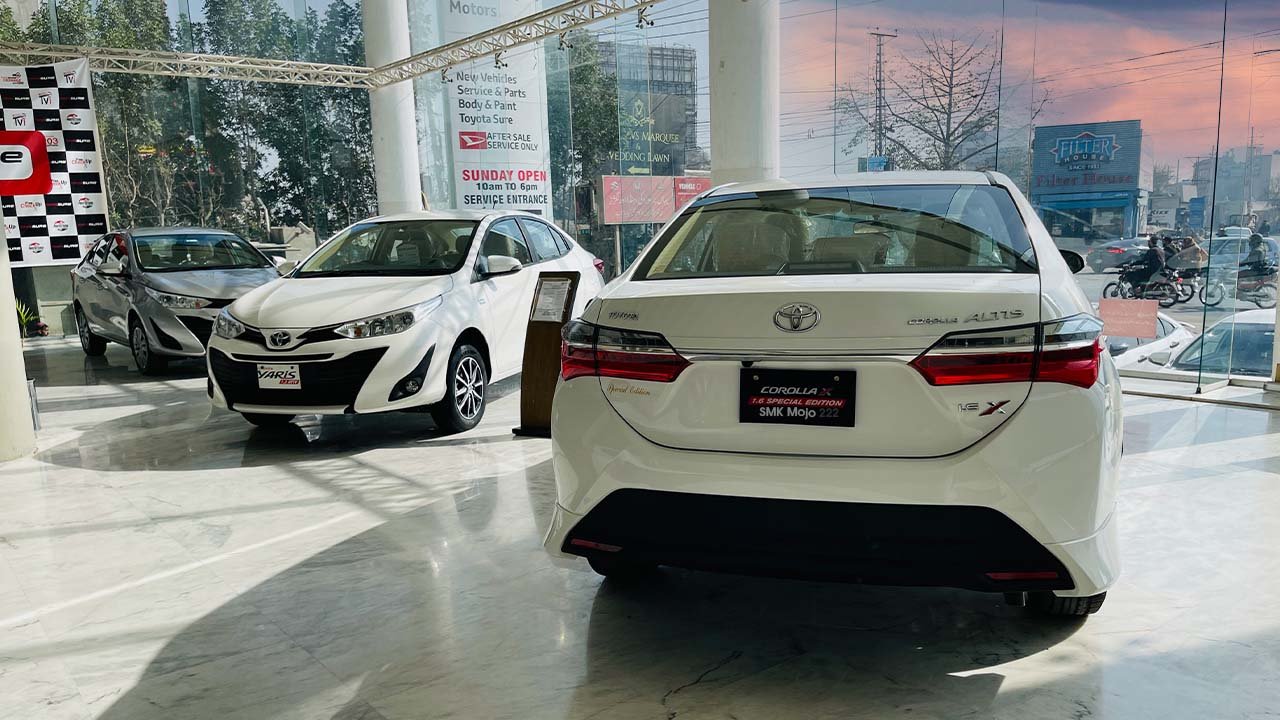
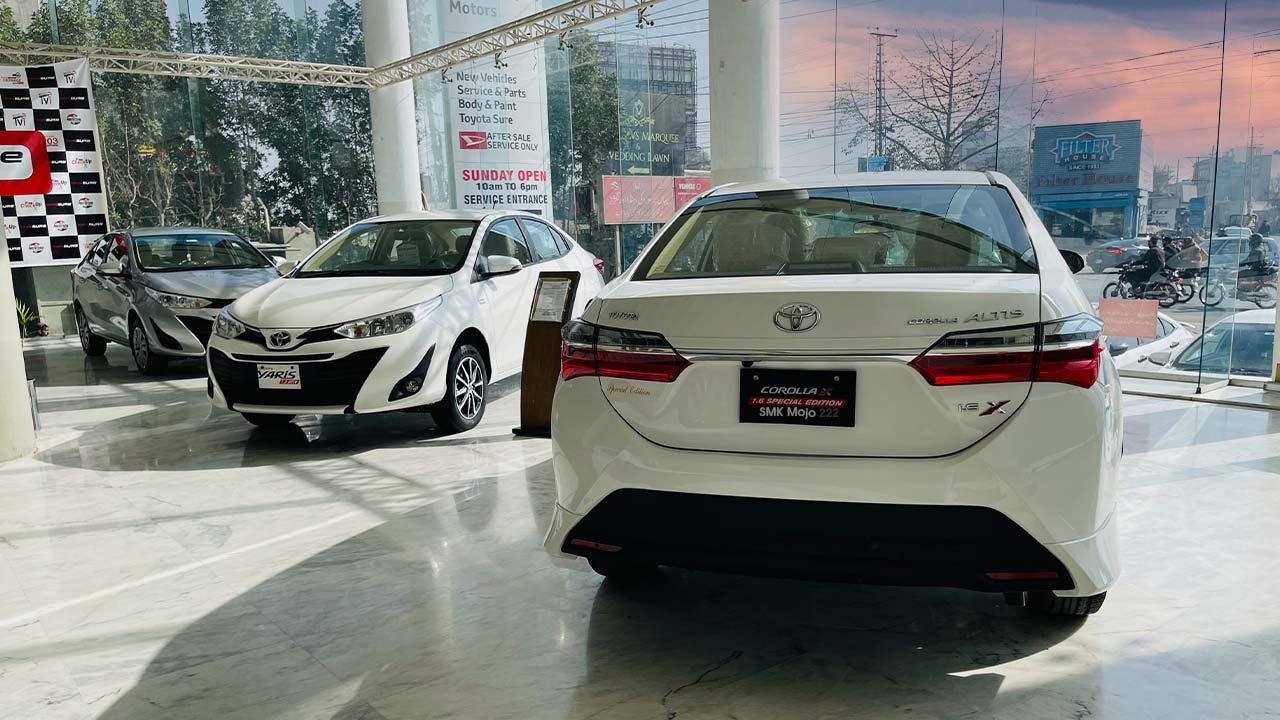
  • Inventory challenges lead Indus Motor Company to halt Toyota car production in Pakistan

    Inventory challenges lead Indus Motor Company to halt Toyota car production in Pakistan

    Indus Motor Company Limited, the firm responsible for the assembly of Toyota vehicles in Pakistan, has recently announced a temporary suspension of its production operations until October 9. This significant decision was formally communicated through a notice submitted to the Pakistan Stock Exchange (PSX).

    The rationale behind this temporary cessation of production is primarily linked to the company’s current vehicle inventory status. Indus Motor Company Limited has set the production plant’s closure period from September 28 through October 9 to address these concerns.

    This pause in production is the latest in a series of similar actions undertaken by the company. Previously, Indus Motor Company Limited had temporarily halted production from August 25 to September 6, attributing it to reduced demand and inventory challenges. Additionally, the company faced a production plant shutdown from July 21 to August 3, driven by complications in the importation of raw materials, logistical hurdles in clearing consignments, and disruptions in the supply chain from select international vendors.

    These issues collectively hampered the company’s supply chain, leading to insufficient inventory levels to sustain uninterrupted production. Furthermore, a similar production hiatus had occurred earlier, from June 26 to June 27, with the same underlying reasons.

  • Crisis on wheels: Pakistan’s automotive industry grapples with mass layoffs and 70% sales drop

    Crisis on wheels: Pakistan’s automotive industry grapples with mass layoffs and 70% sales drop

    The automotive industry in Pakistan is facing a severe setback as thousands of workers were laid off due to a decline in vehicle and spare parts sales. The government’s ban on raw material imports, coupled with the depreciation of the rupee and soaring inflation, has caused a significant strain on the industry. With foreign exchange reserves dwindling and the local currency hitting historic lows against the US dollar, the economic crisis has reached unprecedented levels.

    Pakistan finds itself in the midst of its most formidable economic crisis to date, as the State Bank of Pakistan’s foreign exchange reserves have plummeted to a mere $4 billion. This amount is barely sufficient to cover three weeks of imports, raising concerns about the country’s economic stability. The ban on raw material imports, implemented to prevent the outflow of US dollars, has caused a sharp decline in industrial output and triggered widespread layoffs and unemployment.

    Dollar crunch and inflation

    In the midst of the worsening dollar crunch, commercial banks have also halted the opening of letters of credit (LCs), leaving importers in a state of uncertainty regarding the provision of the necessary funds for already placed orders. This further exacerbates the challenges faced by the automotive industry, hindering its ability to procure essential raw materials and sustain production.

    The country is grappling with soaring inflation rates, which surpassed 36 per cent in April, the highest recorded since 1964. As a result, consumer purchasing power has diminished significantly, leading to a sharp decline in vehicle sales. Munir Karim Bana, Chairman of the Pakistan Association of Automotive Parts and Accessories Manufacturers (PAAPAM), laments the dire situation, stating that thousands of workers have been laid off, and production has ground to a halt. The closure of auto manufacturing plants has further exacerbated the industry’s challenges.

    Auto parts manufacturers are grappling with demurrage charges as raw materials worth billions of rupees remain stuck at the Karachi port. PAAPAM, responsible for supplying approximately 90 per cent of local vehicle parts, is bearing the burden of these charges. Furthermore, with production units closed, income streams have dried up, exacerbating the financial strain on the industry.

    Rana Ihsan Afzal, the coordinator to Prime Minister Shehbaz Sharif on commerce and industry, acknowledges that the automotive industry’s full efficiency may not be restored until the revival of the IMF bailout program. As a sector heavily reliant on imports and foreign currency, the automotive industry is particularly vulnerable to the country’s economic challenges. The delay in the staff-level agreement on the ninth review of the IMF bailout deal signed in 2019 has further hampered the industry’s prospects.

    Revival prospects and government assurance

    Amid the decline in sales and mass layoffs, the coordinator to the Prime Minister expressed his concern but assured that the government is tirelessly working to revive the economy. The coordinator acknowledges the temporary phase that necessitates import restrictions on the automotive industry to protect foreign exchange reserves. However, he remains optimistic that once reserves are replenished, the industry will experience a significant upturn.

    Pakistan’s automotive industry is facing a dire crisis, with plummeting sales, layoffs, and manufacturing plant closures. The ban on raw material imports, along with the economic challenges of soaring inflation and dwindling foreign exchange reserves, has pushed the industry to the brink. Despite the difficulties, the government is committed to revitalizing the sector and assuaging the concerns of manufacturers.
  • Pakistan’s forex reserves increase by 9%, cross $3 billion mark

    Pakistan’s forex reserves increase by 9%, cross $3 billion mark

    After declining for three weeks in a row and losing a cumulative $1,685 million during that period, the foreign exchange reserves held by the State Bank of Pakistan (SBP) have rebounded, according to a statement from the central bank.

    As of February 10, SBP’s foreign currency reserves totaled $3,192.9 million, which is up $276 million from the previous week. This increase represents a gain of over 9 per cent and has broken the streak of declining reserves.

    However, even with this increase, the amount is still only enough to cover one month of imports. Meanwhile, the net forex reserves held by commercial banks are $5,509.3 million, which is $2,316.4 billion more than SBP, bringing the total liquid foreign reserves of the country to $8,702.2 million. The statement did not provide a specific reason for the increase in SBP-held reserves.

    Pakistan’s economy is in dire straits due to a balance-of-payments crisis, political chaos, and deteriorating security. The government has banned all but essential food and medicine imports until it receives a crucial loan tranche from the International Monetary Fund (IMF), which could unlock other sources of funding for the country.

    Inflation has risen sharply, the rupee has declined, and the country is struggling to afford imports, which has caused a severe decline in its industry. Pakistan is no longer issuing letters of credit, except for essential food and medicine, since January, which has led to a backlog of raw material imports that the country can no longer afford.

    According to Geo, the rupee devaluation and the logjam have resulted in a significant decline in manufacturing, including textiles and steel, and building projects.

    While the IMF cash injection alone will not be enough to rescue Pakistan, the government hopes that it will boost confidence and pave the way for other friendly countries like Saudi Arabia, China, and the UAE to offer additional loans.