Tag: real estate

  • IMF urges Pakistan to expand capital gains tax scope to include cryptocurrencies

    IMF urges Pakistan to expand capital gains tax scope to include cryptocurrencies

    The International Monetary Fund (IMF) has advised the Federal Board of Revenue (FBR) to broaden the scope of capital gains tax (CGT) by incorporating cryptocurrencies into the tax regime.

    This recommendation arises amidst ongoing discussions between the Fund and Pakistani authorities regarding the $3 billion stand-by arrangement (SBA).

    The four-day review, which commenced on Thursday, aims to unlock the final tranche of approximately $1.1 billion secured by Islamabad under a last-minute rescue package last summer, thus averting a sovereign debt default.

    During these deliberations, the IMF proposed a reassessment of tax slabs for real estate and listed securities to ensure comprehensive taxation of all gains, irrespective of asset holding periods.

    Moreover, the IMF urged the FBR to mandate property developers to monitor and report all pre-completion property transfers, with penalties for non-compliance. This move aims to bring under the tax umbrella the prevalent practice of trading property plot files within housing schemes.

    These recommendations are anticipated to be incorporated into the forthcoming bailout package under the Extended Fund Facility (EFF), potentially becoming integral to the FY2024–25 budget through the finance bill.

    The IMF’s technical assistance report highlights the challenges faced by Pakistani authorities in assessing and collecting taxes on capital gains from real estate transactions, particularly those occurring before formal property registration.

    To address this issue, the IMF suggests obligating property developers to track and report all pre-completion property transfers, with penalties for non-compliance, thereby shifting tax liabilities to developers if they are not recoverable from the initial transferor.

    Furthermore, the IMF advocates for the expansion of assets subject to capital gains tax to include emerging investment avenues such as cryptocurrencies alongside real estate and listed securities. 

    It also proposes revising tax slabs to ensure equitable taxation of capital gains, irrespective of asset holding durations.

    Overall, these IMF recommendations seek to fortify the taxation framework, ensuring a more inclusive and equitable approach to capital gains taxation in Pakistan.

  • Corruption reference filed against Imran Khan and Bushra Bibi

    Corruption reference filed against Imran Khan and Bushra Bibi

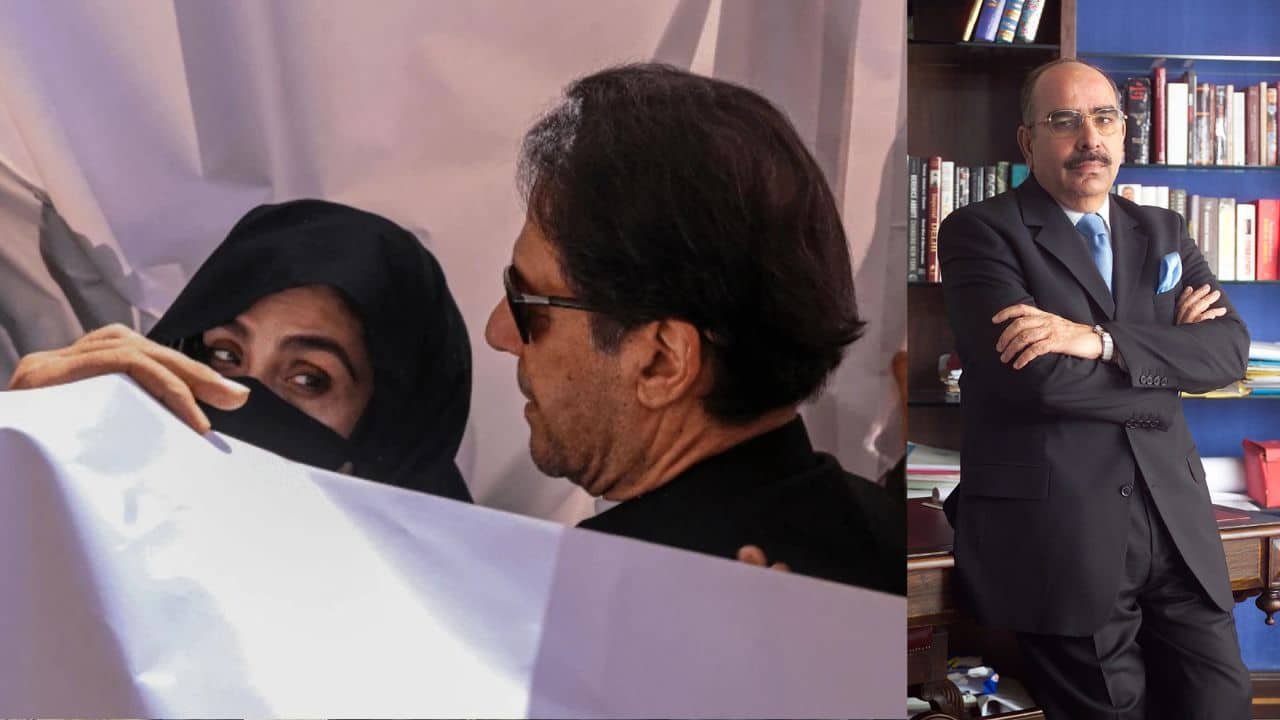
    The National Accountability Bureau (NAB) has filed a corruption reference against former Prime Minister Imran Khan, Bushra Bibi, and other suspects in the £190 million settlement case.

    The reference was submitted by NAB’s Deputy Prosecutor General Muzafar Abbasi and investigative officer Umar Nadeem in an accountability court in Islamabad, with the registrar’s office currently examining the document.

    Besides former Prime Minister Imran Khan and former First Lady Bushra Bibi, the reference names several other suspects, including Pakistan Tehreek-I-Insaf (PTI) leaders Zulfi Bukhari, Shahzad Akbar, lawyer Barrister Zia-ul-Mustafa Nazeer, and three others, totaling eight individuals.

    The filing of the reference comes days after the federal cabinet gave the go-ahead to conduct the jail trial of the PTI chairman in corruption cases.

    According to The News, the cabinet summary, moved by the Ministry of Law and Justice, was approved via circulation.

    The anti-graft watchdog had requested the ministry to allow the trial to be held in Adiala jail considering the law and order situation.
    The ministry had already issued a notification on the trial of the PTI chairman in the £190 million National Crime Agency (NCA), UK, and Toshakhana case in prison.

    According to the notification issued by the ministry on Nov 28, the concerned accountability court will sit at and conduct the trial of the suspects in the Central Prison, Adiala.

    “The federal government is pleased to accord approval that the accountability court concerned shall sit and conduct the trial of the accused (PTI chairman and former PM) and others in Central Prison, Adiala, with reference to the case regarding misuse of authority/ illegal sale of gifted state assets, etc. under Section 16(b) of NAB Ordinance, 1999,” the notification said.

    The case

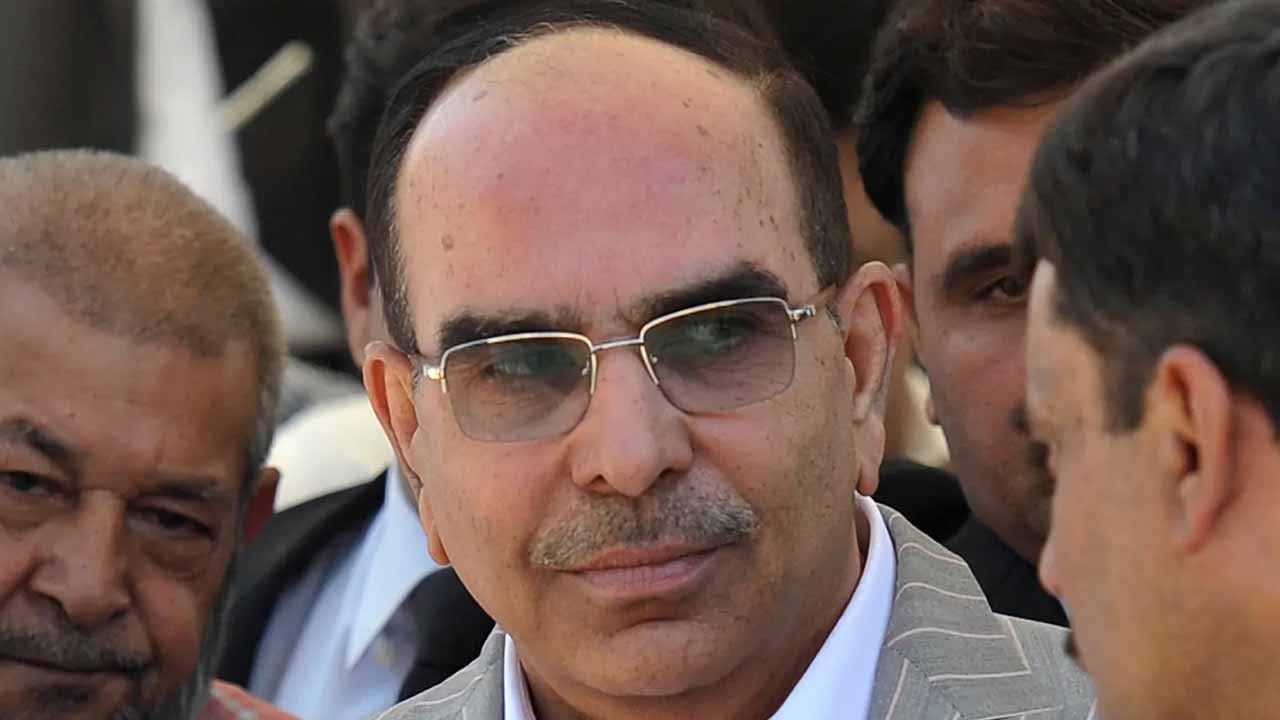
    The Pakistan Tehreek-e-Insaf (PTI) chairman, Imran Khan, along with his wife Bushra Bibi and other PTI leaders, is currently embroiled in a National Accountability Bureau (NAB) inquiry linked to a settlement between the PTI government and a prominent property tycoon, Malik Riaz. The case involves allegations of corruption amounting to billions of rupees and reportedly resulted in a loss of £190 million to the national exchequer.

    Adjustment of Funds:

    Imran Khan and other accused are charged with adjusting Rs50 billion (£190 million at the time) sent by Britain’s National Crime Agency (NCA) to the Pakistani government. This fund adjustment is said to be part of an agreement with Malik Riaz.

    Undue Benefit and Land Acquisition:

    Khan and Bushra are accused of receiving undue benefits, including over 458 kanals of land at Mouza Bakrala, Sohawa. This land was allegedly obtained to establish Al Qadir University.

    Seizure of Assets in the UK:

    During the PTI government, the NCA seized assets worth £190 million from Malik Riaz in Britain. The NCA stated that these assets would be passed to the government of Pakistan.

    Approval of Settlement:

    Then-Prime Minister Imran Khan sought approval for the settlement with the UK crime agency from his cabinet on December 3, 2019, without disclosing the details of the confidential agreement. It was decided that the money would be submitted to the Supreme Court on behalf of Malik Riaz.

    Establishment of Al-Qadir Trust:

    Subsequently, the Al-Qadir Trust was established in Islamabad a few weeks after the PTI-led government approved the agreement with Malik Riaz. Notable figures such as Zulfi Bukhari, Babar Awan, Bushra Bibi, and her close friend Farah Khan were appointed as members of the trust.

    Land Transfer and Trust Ownership:

    Two to three months after the cabinet’s approval, Malik Riaz transferred 458 canals of land to Zulfi Bukhari, a close aide of the PTI chief, who later transferred it to the trust. Bukhari and Awan eventually opted out as trustees, and the trust is now registered in the names of Khan, Bushra Bibi, and Farah.

    NAB Investigation:

    NAB officials were initially probing the alleged misuse of powers in the recovery of “dirty money” received from the UK crime agency. Following the emergence of “irrefutable evidence,” the inquiry was converted into a full-fledged investigation.

  • Govt plans to increase gas and electricity prices in January

    Govt plans to increase gas and electricity prices in January

    The interim Finance Minister, Dr Shamshad Akhtar, announced during a press conference that the caretaker government is planning to increase electricity and gas tariffs in January to address the circular debt issue, in line with the International Monetary Fund’s (IMF) Stand-By Arrangement (SBA). 

    The circular debt in the power and gas sectors, currently exceeding 4 per cent of the Gross Domestic Product, requires urgent action for reduction. 

    Dr Akhtar also discussed tariff revisions with the IMF and the potential imposition of additional taxes on sectors like real estate and retail, emphasizing that final decisions are pending. 

    She highlighted the necessity for a new short-term IMF program and anticipated a medium-term program under the Extended Fund Facility (EFF) after the SBA concludes. 

    Regarding the external financing gap, Finance Secretary Imdad Bosal expressed optimism that a successful IMF review would unlock programme and project loans from multilateral lenders. 

    He anticipated approvals in December for loans from the World Bank, Asian Development Bank, Asian Infrastructure Investment Bank, and Islamic Development Bank. 

    Bosal assured that there is no external financing gap, and the improved ratings post-review would attract foreign loans. 

    Dr Akhtar stated that the World Bank is expected to disburse $2 billion during the current fiscal year, contributing to foreign exchange reserves along with the $700 million tranche approval from the IMF, bringing the total disbursement under the SBA to $1.9 billion out of $3 billion. 

    The approval for the second tranche from the IMF’s Executive Board is anticipated within a month.

  • IMF pressures Pakistan for tax reforms, calls for intensified recovery efforts

    IMF pressures Pakistan for tax reforms, calls for intensified recovery efforts

    The International Monetary Fund (IMF) is urging Pakistan to intensify efforts towards tax recovery. 

    Specifically, the IMF calls for increased income tax collection from retailers and the real estate sector, alongside a heightened focus on agriculture income. 

    The IMF emphasises collaborative actions between the federal government and provinces to enhance tax recovery, considering the imposition of a fixed tax on retailers in case of collection shortfalls after December. 

    Additionally, the IMF recommends consultations with provinces for taxing agriculture and real estate. Proposals for tax policy amendments and addressing taxation flaws have been extended to the Federal Board of Revenue (FBR) by the IMF mission, emphasising effective taxation policies and enforcement in sectors with insufficient tax recovery. 

    The FBR has presented a revenue projection report to the IMF team for the current fiscal year, with the IMF expected to respond by Saturday. During the discussions, the FBR briefed the IMF on the task force dedicated to tax policy and administration. 

    As part of an agreement with the IMF, Pakistan commits to sharing data on tax evaders through collaboration with the FBR, banks, and NADRA, aiming to enhance overall tax collection. 

    This agreement was reportedly reached during policy review talks, facilitating the release of a $700 million loan tranche under the Standby Agreement (SBA).

  • World Bank urges urgent economic reforms in Pakistan to tackle rising poverty

    World Bank urges urgent economic reforms in Pakistan to tackle rising poverty

    The World Bank has issued a grave warning regarding Pakistan’s economic state, urging the nation to take swift action. They propose taxing key sectors like agriculture and real estate while reducing wasteful expenditures to stabilise the economy. This endeavour aims for a significant fiscal adjustment, equivalent to over 7 percent of Pakistan’s economic size.

    The World Bank also revealed alarming statistics, with poverty levels surging to 39.4 percent in the last fiscal year, pushing an additional 12.5 million people below the poverty line. Currently, nearly 95 million Pakistanis live in poverty.

    To address these challenges, the World Bank has drafted a set of policy recommendations in collaboration with stakeholders, focusing on low human development, unsustainable fiscal practices, overregulation in the private sector, and issues in the agriculture and energy sectors.

    Immediate measures include raising the tax-to-GDP ratio by 5 percent and reducing expenditures by about 2.7 percent of GDP, primarily targeting previously protected sectors.

    Tobias Haque, the lead country economist at the World Bank, underscores the need for substantial policy changes, given Pakistan’s economic and human development crises.

    According to Express Tribune, the World Bank’s recommendations encompass a range of fiscal reforms, including the removal of tax exemptions, increased taxation on real estate and agriculture, and mandatory use of CNIC for transactions.

    Furthermore, the institution advises cutting energy and commodity subsidies, implementing a single Treasury account, and adopting temporary austerity measures for short-term savings. Medium-term savings entail streamlining federal spending and enhancing the quality of development expenditures.

    Najy Benhassine, the country director for Pakistan at the World Bank, emphasises the importance of political consensus and domestic solutions to address Pakistan’s challenges.

    The World Bank highlights the need to address the human capital crisis, reduce energy subsidies, and promote inclusive, sustainable, and climate-resilient development in Pakistan. These measures are imperative to stabilise the nation’s precarious economic situation and alleviate the growing poverty crisis.

  • Painful IMF compliance, but no new taxes on agriculture and real estate, clarifies Dar

    Painful IMF compliance, but no new taxes on agriculture and real estate, clarifies Dar

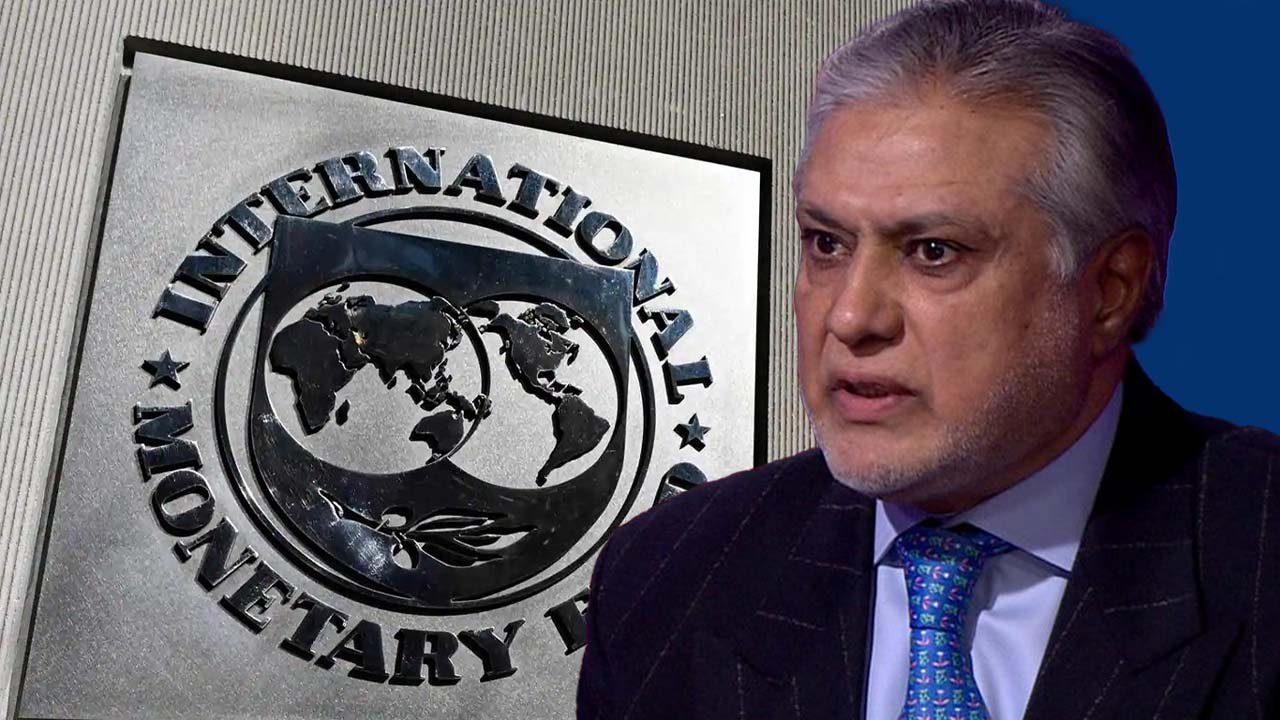
    Finance Minister Ishaq Dar made a resolute declaration on Thursday, assuring the public that the coalition government, despite having taken stern measures that burdened the masses, has no intentions of imposing additional taxes on the agriculture and real estate sectors.

    Speaking passionately on the floor of the National Assembly, Dar firmly stated, “I want to state categorically […] that no new tax will be imposed on agriculture or real estate. We have endured much pain in meeting the IMF’s conditions.”

    This assurance comes in the wake of the International Monetary Fund (IMF) approving a $3 billion bailout program for Pakistan, with $1.2 billion already disbursed to help stabilise the nation’s struggling economy.

    Media reports had indicated that the IMF requested a plan from the government to impose taxes on the real estate and agricultural sectors as a condition to release the remaining funds. The news caused concern among those associated with the agriculture sector, especially since the government had expanded the loan volume to support it in the budget.

    Dar emphasised that all prior actions demanded by the lender had been successfully completed, and the agreement with the IMF was carried out in a transparent manner. He reassured the public, “No further burden will be passed on to the people. All the commitments made with the IMF are available on the finance ministry’s website.”

    The positive effects of the deal are already evident, with investors in the country experiencing relief in the stocks, exchange rate, and bonds markets. Additionally, longstanding allies Saudi Arabia and the United Arab Emirates have recently deposited $3 billion in Pakistan’s central bank, while China rolled over $5 billion in loans over the past three months to prevent the country from defaulting.

    In light of the IMF’s observation that both agriculture and construction sectors are under-taxed in Pakistan, economist Khaqan Hassan Najeeb stressed their significance in broadening the tax base and promoting progressivism.

    Regarding the real estate sector, Najeeb advocated for a genuine capital gains tax, levied at the marginal income tax rate of the individual making the capital gains over the years, to encourage investment from unproductive real estate to more productive sectors like manufacturing.

    Read more: Pakistan’s petroleum dealers temporarily postpone nationwide petrol pump shutdown

    However, Najeeb acknowledged that such reforms would be better suited for implementation by a long-term new government after the upcoming elections. Moreover, he highlighted that provincial governments hold authority over agriculture income tax, which presently contributes only insignificantly. He urged provinces to contemplate a progressive income tax on agriculture, considering the size of farm holdings.

    With Minister Dar’s assurance and the IMF’s support, Pakistan’s economic prospects seem brighter, but the road ahead calls for careful consideration and judicious decision-making to ensure a sustainable and progressive financial future.

  • Historic Pakistan embassy building in the US capital sold for $7.1 million

    Historic Pakistan embassy building in the US capital sold for $7.1 million

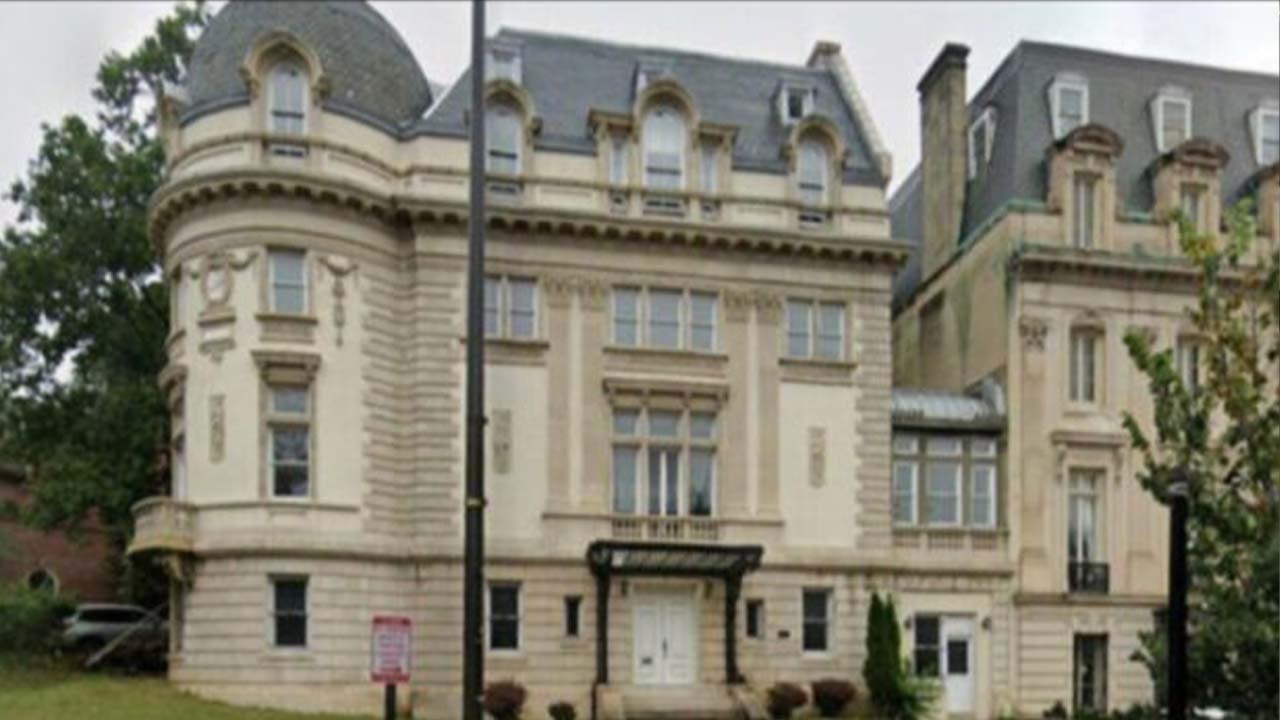
    After several months of persistent efforts, Pakistan has successfully sold a historic building in the United States capital for $7.1 million. The vacant property, which had remained unoccupied since 2003, was recently acquired by a Pakistani entrepreneur named Hafeez Khan.

    The government of the District of Columbia had reclassified the building owned by the Pakistan Embassy, resulting in an increased tax assessment on its value. This decision was taken as the building had significantly deteriorated over time.

    Known as the R Street building, this establishment once served as a chancery. It was put up for auction in late 2022, and the Pakistani government received three bids. However, the entire bidding process was later canceled by the Pakistani authorities without providing any explanation. The highest bid received for the property was $6.8 million, and its prime location in the heart of the city added to its desirability. Prior to the auction, the building had been evaluated at $4.5 million on an “as is” basis, serving as a benchmark.

    The building has remained unoccupied for well over a decade, and its diplomatic status was revoked in 2018, subjecting it to local government taxes. Furthermore, the local authorities downgraded the property’s status earlier this year, which placed additional financial burdens on the national treasury.

    In accordance with building codes, the real estate classification system consists of four categories: Class 1 denotes improved residential real property used exclusively for non-transient residential dwelling purposes, Class 2 signifies commercial property, Class 3 represents vacant property, and Class 4 designates blighted property.

    According to The News, official documents from the District of Columbia indicate that the Pakistani government did not receive any tax relief for the property starting from 2018. Consequently, the building was initially categorised as Class 2 in 2018 and 2019 due to its commercial nature. However, it was later reclassified as Class 3 between 2020 and 2022 due to its vacancy. In April 2023, the property’s classification was further downgraded, designating it as Class 4 due to its deteriorated condition.

    The Department of Buildings of the local government determines a building as blighted if it poses a threat to the community’s health, safety, or general welfare, such as being unsafe, unsanitary, or otherwise hazardous. This determination is based on several factors, including whether the building is boarded up, if its doors, windows, and other openings are weather-tight and secure, if its exterior walls are free of holes, graffiti, and decay, if all exposed metal and wood surfaces are protected against deterioration, and if balconies, porches, signs, and similar features are safe and well-maintained.

    It is also worth noting that Class 3 properties are taxed at a rate of $5 per $100 of assessed value, while Class 4 properties are taxed at a rate of $10 per $100 of assessed value. Unfortunately, due to insufficient maintenance, the building experienced significant deterioration, despite the approval of repair works by former Prime Minister Yousaf Raza Gillani through a $7 million loan from the National Bank of Pakistan in 2010.

  • Real estate in Pakistan is ‘parking lot’ for untaxed money with support of DHAs and Army, says former FBR chairman

    Real estate in Pakistan is ‘parking lot’ for untaxed money with support of DHAs and Army, says former FBR chairman

    Shabbar Zaidi, the former Chairman of the Federal Board of Revenue in Pakistan, stated that only 300 companies out of the entire business sector in the country pay 70 per cent of the total taxes collected.

    According to Dawn, Zaidi dismissed the claims of some businesses that there were too many taxes in Pakistan and no dividends. He pointed out that the real estate was the “parking lot” of untaxed money, and that with the support of the DHAs and army, a system had been developed to officially launder money through real estate, which had perpetual amnesty in the country.

    He called for removing DHAs from the real estate business as there could not be fair competition between a state institution and private businesses in real estate, and also suggested that plots of land should be confiscated if construction was not done on them.

    Kashif Anwar, the president of the Lahore Chamber of Commerce and Industry, argued in favor of amnesty on undeclared foreign reserves to bring money back to the country.

    In another session, Tassaduq Hussain Jillani, the former Chief Justice of Pakistan, acknowledged that criticism of the Supreme Court for messing up big corporate cases was justified as the judges were not expert at finance and economics.

    Jillani suggested the formation of commercial benches in the SC and high court for such cases. In a session on local governments, Ammar Ali Jan, the general secretary of Haqooq-i-Khalq Party, criticized the absence of local government in the country, citing examples of polluted water and waste management issues.

  • Illegal commercial properties worth billions sealed in Lahore

    Illegal commercial properties worth billions sealed in Lahore

    The Evacuee Trust Property Board (ETPB) has sealed 11 distinct commercial buildings and properties worth billions of rupees in Lahore on the Supreme Court’s directives.

    The Federal Investigation Agency (FIA), a police team, and the administration conducted a raid and took action against encroachments under the direction of ETPB Chairman Habibur Rahman.

    In renowned commercial areas like Sheesha Moti Bazaar, Wichuwali, Hingana Street, Sutar Mandi, Ravi Road, Mohini Road, and Bradlaugh Hall, the team sealed numerous properties that were in illegal possession.

    Participating in the operation under the direction of Administrator Lahore Akram Joya were Deputy Administrator Taskinullah, Abdul Waheed Khan, Asim Ejaz, Ahmed Hassan, and Saad Butt.

    While, Director FIA Mohammad Zawar, SHO Raza Awan, SHO Benish Rehman, Rana Naeem, Kashif Gujjar also participated in the raid.

  • NAB summons real estate tycoon Malik Riaz to reveal £190 million settlement

    NAB summons real estate tycoon Malik Riaz to reveal £190 million settlement

    The National Accountability Bureau (NAB) has asked real estate magnate Malik Riaz and close aides of PTI Chairman Imran Khan to appear before court on December 1 in a case relating to a £190 million (Rs50 billion) settlement.

    According to Profit, the owner of Bahria Town Malik Riaz was asked to appear before a joint investigation team of the anti-corruption watchdog on December 1 at 11 am at the bureau’s Rawalpindi headquarters, according to a NAB letter.

    “Call-up notice to the persons acquainted with facts of the case under section 19 of the National Accountability Ordinance-1999, inquiry against holders of public office and others qua misuse of authority, financial gains and criminal breach of trust in recovery of crime proceeds received from the UK and illegal sealing of its record,” the notice stated.

    It claimed that Ali Riaz Malik and others had entered into an out-of-court settlement agreement with Britain’s National Crime Agency for the repatriation of funds to the government of Pakistan following an investigation into allegations of abuse of power, financial gain, and criminal breach of trust.

    Imran and his wife were accused by Rana Sana Ullah of getting substantial amounts of land from Bahria Town property owners.

    Malik Riaz has been demanded to provide full records regarding the acquisition of 458 kanals in Tehsil Sohawa, the agreement by which Bahria Town donated land to Al Qadir Trust along with revenue documents, and information regarding any other property that he or any of his relatives transferred in favour of Al Qadir Trust or any of its trustees.

    Unverified reports claim that Imran Khan’s wife serves as one of the trustees. The real estate tycoon was informed that disobeying this notification could result in legal repercussions under NAO 1999.

    Interior Minister Rana Sanaullah revealed a secret arrangement between the NCA and Malik Riaz’s family members (referred to as “the counter parties”) in June of this year.

    In order to defend the real estate company in a case involving money laundering, he had charged Imran Khan and his wife of collecting Rs5 billion and hundreds of kanals of land from Bahria Town.

    A £190 million settlement offer that includes a UK property, 1 Hyde Park Place, London, W2 2LH, was accepted by the NCA in December 2019. All of the money, which had a value of almost £50 million, ended up in Malik Riaz’s blocked accounts.