Tag: record low

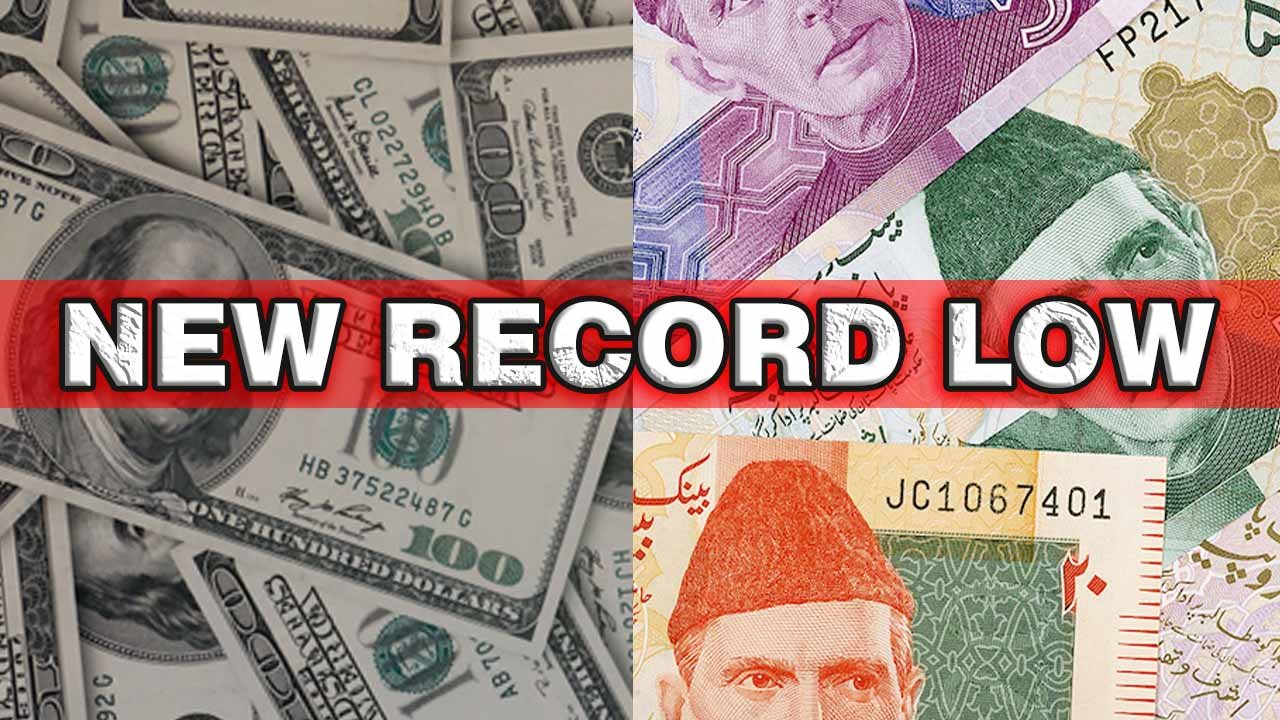
  • Pakistani rupee’s fall continues, settles at new record low of Rs301 against US dollar

    Pakistani rupee’s fall continues, settles at new record low of Rs301 against US dollar

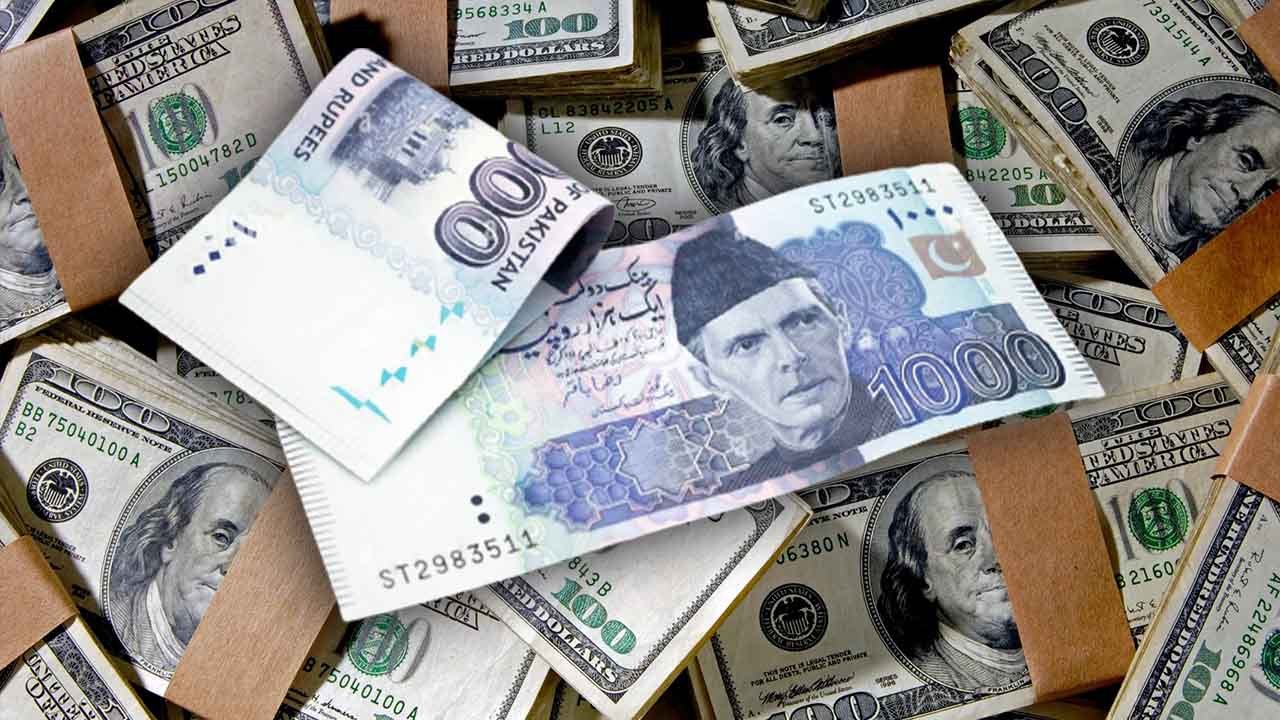
    The Pakistani rupee continued its unsettling descent, marking a fresh all-time low against the US dollar, with a settlement at Rs301 in the inter-bank market on Friday. As reported by the State Bank of Pakistan (SBP), the local currency reached the 301 mark, experiencing a decline of Re0.78 or 0.26 per cent.

    On the preceding day, the rupee concluded at a historic low against the US dollar, reaching a settlement of Rs300.22.

    On the global front, the US dollar achieved its highest position in over two months on Friday, poised for its sixth consecutive week of gains, as financial markets eagerly awaited a speech by Federal Reserve Chair Jerome Powell to gain insights into the trajectory of monetary policy.

    The dollar index, a measure of the US dollar’s strength against six other major currencies, witnessed a 0.019 per cent increase, reaching 104.11, the highest level since June 7. With a 2 per cent increase in August, the index is poised to end its two-month losing streak.

    Oil prices, a pivotal gauge of currency equilibrium, surged by over 1 per cent on Friday due to the firming of the dollar, as anticipation built ahead of a highly awaited speech by the head of the US Federal Reserve. This speech is expected to provide insights into the future of interest rates.

  • Pakistani rupee maintains upward trend for fourth consecutive day, closes at Rs285.15 against dollar

    Pakistani rupee maintains upward trend for fourth consecutive day, closes at Rs285.15 against dollar

    According to the State Bank of Pakistan (SBP), the Pakistani currency has maintained its upward trend against the US dollar for the fourth consecutive working day in the interbank market.

    The local unit (PKR) has recovered Rs0.59 against the USD, closing at Rs285.15, while the US dollar closed at Rs285.74 on the previous day.

    In contrast, the open market has seen the dollar being sold at over Rs300. Last week, the rupee reached a record low of Rs298.93 against the US dollar.

     Experts attribute the fluctuation in the dollar rate to the deadlock over the IMF deal and ongoing political unrest in the country.

    Due to the delay in the revival of the $6.5 billion International Monetary Fund (IMF) bailout programme, Pakistan is now seeking additional funding from friendly nations.

    The staff-level agreement between the International Monetary Fund and Pakistan, initially scheduled for February 9, has been postponed.

  • Pakistani rupee sinks to record low of Rs308 against US dollar in open market

    Pakistani rupee sinks to record low of Rs308 against US dollar in open market

    On Tuesday, the Pakistani currency experienced a significant decline, reaching a new record low of Rs308 against the US dollar in the open market. This marked a 1 per cent decrease, or Rs3, from the previous day’s closing rate, as reported by the Exchange Companies Association of Pakistan.

    Consequently, the disparity between the exchange rates in the open market and the inter-bank market widened considerably, reaching a historic high of Rs21 to a dollar. Just a couple of months ago, this difference was in the range of Rs1-3.

    In inter-bank transactions, the central bank stated that the rupee continued its downward trend for the fifth consecutive working day, dropping by 0.21 per cent, or Rs0.59, to a 12-day low at Rs287.15 against the US dollar.

    There has been speculation in the market that the rupee is facing mounting pressure due to the expanding gap between the demand and supply of the US dollar in the currency market.

    In the meantime, Pakistan’s foreign exchange reserves have been consistently depleting and have now reached a critically low level of $4.3 billion. This is concerning because the country requires a comparatively large amount of foreign currency to cover import expenses and repay foreign debt.

    By the end of June 2023, Pakistan has to repay $3.7 billion in foreign debt. Additionally, it needs another $3.7 billion each month to ensure smooth importation of essential goods.

    Currency dealers in the open market have revealed that commercial banks are purchasing dollars in the informal market (kerb market) to settle international payments made through their clients’ credit cards. Furthermore, individuals are acquiring Saudi riyals and US dollars to cover expenses during the Hajj and Umrah pilgrimages.

    Experts strongly emphasize that the government must persuade the International Monetary Fund (IMF) to resume its $6.7 billion loan programme. Additionally, they urge friendly countries to provide fresh financing, which will help mitigate the risk of defaulting on external debt obligations.

    The resumption of the IMF programme will not only assist Pakistan in averting an imminent default but will also enable the country to attract financing from other global lenders and friendly nations. This new financing will bolster the foreign exchange reserves and aid in the reopening of the partially closed economy.

  • Mobile phone imports in Pakistan drop by nearly 70%

    Mobile phone imports in Pakistan drop by nearly 70%

    According to the Pakistan Bureau of Statistics (PBS), Pakistan’s import of mobile phones has decreased by 68.29 per cent during the first eight months of the current fiscal year (2022-23) compared to the same period last year.

    The value of mobile phones imported from July to February (2022-23) was US $447.855 million, whereas it was US $1412.445 million in the corresponding period of the previous year.

    In February 2023, the import of mobile phones decreased by 76.73 per cent compared to February 2022. The imports for February 2023 were valued at US $33.054 million, whereas the exports for February 2022 were US $142.033 million.

    Furthermore, the data shows that the import of mobile phones witnessed a month-on-month decline of 36.39 per cent during February 2023, as compared to January 2023, with imports valued at US $51.960 million.

  • Euro drops to two-decade low against the US dollar

    Euro drops to two-decade low against the US dollar

    As the Federal Reserve implemented yet another aggressive interest rate hike in reaction to out-of-control inflation on Wednesday, the US dollar soared to a level that is almost 20 years higher against the euro.

    Only a few months after the euro was become the sole legal money of the 12 member states of the European Union, the euro to dollar ratio reached 0.9814 for the first time since October 2002.

    Prior to the 1800 GMT Fed speech, Wall Street equities were in the green. However, after the statement, they plunged into the red.

    Interest rate projections for the end of 2023 and 2024 in the most recent Fed announcement were higher than anticipated, indicating that the US central bank now believes a longer monetary tightening cycle is necessary in light of inflation trends.

    According to a report from High-Frequency Economics, “Overall, the message from the (Fed) remains hawkish, with the Fed committing to further rates hikes to combat inflation and keep inflation expectations anchored.”

  • Intraday trade: PKR slides to new all-time low of Rs240.30 versus dollar

    Intraday trade: PKR slides to new all-time low of Rs240.30 versus dollar

    On Wednesday, the Pakistani rupee (PKR) maintained its declining trend versus the US dollar for the fourteenth session in a row. In intraday trading, the PKR lost Rs1.09 and fell to Rs240.

    In comparison to its previous closing rate of Rs237.91, the rupee lost 0.42 per cent on Tuesday, ending the day at Rs238.91.

    Fears that Pakistan won’t be able to pay its debts have been raised by floods that have harmed 33 million Pakistanis, caused billions of dollars worth of damage and killed more than 1,500 people.

    One of the poorest performing currencies in emerging economies, the local currency has lost about 9 per cent of its value so far this month due to a variety of causes.

    While Pakistan was able to revive its IMF programme and receive a $3 billion rollover from Saudi Arabia, the record floods have eclipsed everything else and have caused an economic blow of at least $18 billion and possibly as much as $30 billion.

    Experts believe that the heavy flooding and lifting of the import ban have put pressure on the rupee. To address the ongoing economic crisis, Pakistan continues to look for assistance from ally nations and international and bilateral organisations.

  • Gold surges to Rs147,250 per tola in local market

    Gold surges to Rs147,250 per tola in local market

    On Monday, gold prices in the local market rose by Rs1,450 per tola to a new all-time high, pushed up by the Pakistani currency’s continued depreciation against the US dollar.

    Despite no change in gold rates in the international market, gold rates in the local market increased to Rs147,250 per tola, according to data released by the All Sindh Saraf Jewelers Association. Similarly, the price of a gramme of gold increased by Rs1,243 to Rs126,243.

    However, gold prices on the international market remained unchanged at $1,840 per ounce.

    The price of silver per tola remained unchanged at Rs1,560. The price of a gramme of silver also remained unchanged at Rs1,337.44. When compared to rates in the Dubai gold market, local jewellers said prices in the local market remained below Rs3,000 per tola.

    Pakistani rupee dips to new lows

    Experts predict that the Pakistan rupee will continue to fall against the US dollar and other major currencies owing to concerns regarding the IMF’s $6 billion program’s restoration, the country’s expanding current account deficit, and dwindling foreign exchange reserves.

    The PKR which lost 32.5 per cent of its value in the current financial year 2021-22 is forecasted to remain under stress as the dollar is in high demand in the market due to economic crises.

    The central bank appears helpless to stem the rupee’s speculative fall, as demand for the US dollar continues to rise due to quarter-end payment strain.

  • Pakistani Rupee crashes to a record low against US dollar 

    After a fourth consecutive session of losses on May 10, Pakistan’s currency hit an all-time low in the interbank market due to a lack of clarity on foreign cash inflow and a stronger US dollar.

    The rupee ended the day at Rs188.66, down Rs1.13, or 0.60 per cent, according to the State Bank of Pakistan (SBP). After a 0.48 per cent decline on Monday, the rupee finished at Rs187.53. Prior to Tuesday, the PKR’s lowest closing was Rs188.18 on April 7, 2022.

    Oil prices, a key indicator of currency parity, dipped in tumultuous trade on Tuesday as the market weighed the impact of expected European Union penalties on Russian oil against demand concerns stemming from China’s coronavirus lockdowns, a strong dollar, and rising recession threats.

    Read more: Pakistani rupee nearing an all-time low

    Despite the decline, the price of oil remains far above $100 per barrel, a high level for oil-importing nations like Pakistan, which is already grappling with a growing current account deficit and dwindling foreign exchange reserves.