Tag: reforms

  • Government to introduce 5-year economic plan under supervision of British economist Stefan Dercon

    Government to introduce 5-year economic plan under supervision of British economist Stefan Dercon

    A five-year economic plan for the development of Pakistan’s struggling economy has been prepared under the supervision of Belgian-British economist Stefan Dercon. Prime Minister Shehbaz Sharif is likely to launch it on August 14.

    Geo News reported that the proposed economic plan has been named the Stefan Dercon plan. It contains target of 6 percent annual economic growth target by 2028.

    The ambitious plan also emphasises on structural reforms to take the export target to $60 billion by 2028.

    The proposed plan prioritises the promotion of private investment and the increase in exports. The successful implementation of reforms is estimated to create one million employment opportunities annually.

    According to the Dercon Plan, the proposed plan’s results would be fairly visible by 2028, one year after the IMF programme ends.

    “The failure of structural reforms for growth in Pakistan is not due to a lack of ideas, but a lack of political will to implement these reforms,” warns the draft report.

    It also warns that Pakistan won’t get chances like this; therefore, the opportunity must not be wasted.

  • IMF says focus on economic reforms rather than size of loan

    IMF says focus on economic reforms rather than size of loan

    The Director of International Monetary Fund (IMF) Middle East and Central Asia has said that Pakistan must focus more on the implementation of structural reforms instead of a loan.

    “I think what is important at this stage is to accelerate the reforms, double down on the structure of reforms in order to provide Pakistan with its full potential of growth,” Jihad Azour told a press conference on the sidelines of the IMF 2024 Spring Meetings.

    The statement comes as Finance Minister Muhammad Aurangzeb, who is currently in Washington DC, to finalise yet another bailout package that the country is seeking from IMF.

    Pakistan is nearing the end of a nine-month, $3-billion SBA with the IMF designed to tackle a balance-of-payments crisis, which brought it to the brink of default last summer.

    The Finance Minister in a recent interview, had mentioned that Pakistan would need two to three years of to implement the structural reforms.

  • Halaat kb behtar honge? Finance Minister gives timeline for structural reforms

    Halaat kb behtar honge? Finance Minister gives timeline for structural reforms

    Finance Minister Muhammad Aurangzeb spoke at the US think tank Atlantic Council in Washington DC, stating that Pakistan needs two or three years to implement structural reforms prescribed by International Monetary Fund (IMF).

    The minister remarked that Pakistan does not need any more policy prescription from the IMF because it knows what it needs to do in terms of reforms.

    “We have known the what and why not for years but for decades. […] It’s time for us to actually start moving the execution of these aspects and why we’re looking for a larger and extended program, so once we get into the execution we will need a two to three-year time period to go through the structural reforms,” said Aurangzeb, previously the head of Pakistan’s largest bank.

    The minister also remarked that if Pakistan failed to implement reforms, then it would be looking at another IMF program later.

    The Finance czar was of the opinion that Pakistan entered 2024 in a much better economic shape and credited the nine-month Stand-By Arrangement (SBA) programme.

    He also emphasized that needs to bring the under-taxed and untaxed sectors into the national tax net and also said that taxation process needed reforms.

  • PM Shehbaz foresees three-year IMF programme continuation

    PM Shehbaz foresees three-year IMF programme continuation

    Prime Minister (PM) Shehbaz Sharif has indicated that the new International Monetary Fund (IMF) programme is expected to extend for three years.

    Addressing the session of the Special Investment Facilitation Council’s (SIFC) apex committee, attended by both civil and military leadership on Thursday, the PM mentioned that a new installment of the loan from the IMF is anticipated in a few days. However, he underscored the necessity for another programme.

    He highlighted the unity displayed by the civil-military leadership and elected lawmakers from various political parties in today’s session, emphasising their collective commitment to the country’s development and prosperity.

    Regarding the economic challenges, the Prime Minister stressed the importance of the SIFC in facilitating foreign investments and acknowledged its significant role over the past eight months. He credited Chief of Army Staff (COAS) General Syed Asim Munir for his pivotal role in establishing the SIFC.

    Prime Minister Shehbaz emphasised the imperative of implementing reforms under the IMF programme to attain macroeconomic stability. He noted the shortfall in revenues, highlighting the need to increase them to Rs13 to 14 trillion from the current Rs9 trillion.

    Furthermore, he outlined the government’s plans to digitise the Federal Board of Revenue (FBR) to address issues such as electricity theft, which annually costs the national exchequer Rs400 billion. During the caretaker government’s tenure, measures were taken to save Rs87 billion in electricity expenses.

    PM Shehbaz also highlighted the pressing issue of circular debt in electricity and gas, which has surged to Rs5 trillion.

    He underscored the importance of unity among the federal and provincial governments to address these challenges collectively.

    Shehbaz Sharif urged the expedited privatisation of loss-making state-owned entities, citing Pakistan International Airlines (PIA), burdened with a debt of Rs825 billion, as an example.

    Acknowledging the need for tough decisions, the Prime Minister admitted that subsidies had been disproportionately allocated to the elite segments of society, emphasising the importance of redistributing the financial burden to those capable of bearing it.

  • Moody’s cautions on Pakistan’s fiscal challenges despite recent stability

    Moody’s cautions on Pakistan’s fiscal challenges despite recent stability

    Moody’s Investors Service, a global credit rating agency, stated on Tuesday that Pakistan’s credit rating could see an upgrade if the government successfully reduces liquidity and external vulnerability risks.

    Despite this potential, Moody’s maintained Pakistan’s credit rating at ‘Caa3’ for long-term issuer rating with a stable outlook in its periodic review.

    The credit profile of Pakistan reflects significant liquidity and external vulnerability risks, attributed to low foreign exchange reserves insufficient to meet high external financing needs in the near to medium term, according to Moody’s.

    The agency also highlighted the country’s very weak fiscal strength and elevated political risks as constraints on its credit profile.

    Moody’s expressed uncertainty regarding the new government’s ability to swiftly negotiate a new International Monetary Fund (IMF) programme after the ongoing programme concludes in April.

    While acknowledging Pakistan’s large economy and moderate growth potential, the agency emphasized the nation’s high liquidity and external vulnerability risks, despite economic stability maintained by the caretaker government and recent reforms.

    The agency recognised the government’s efforts to unlock financing from the IMF and other partners, resulting in a modest accumulation of foreign exchange reserves.

    However, it cautioned that, despite meeting external debt obligations for the fiscal year ending June 2024, there is limited visibility on sources of financing to address high external financing needs post-the current IMF stand-by arrangement.

    Moody’s rationale for the stable outlook at the Caa3 rating level is based on the assessment that pressures on Pakistan align with this rating, with broadly balanced risks.

    The agency suggested that continued IMF engagement beyond the current programme could attract additional financing from other partners, reducing default risk.

    Nonetheless, it emphasised the substantial external financing required and low reserve position, indicating potential default risks with funding delays.

    Moody’s indicated that an upgrade in Pakistan’s rating could occur with a substantial and sustained reduction in liquidity and external vulnerability risks, coupled with increased foreign exchange reserves and fiscal consolidation.

    Conversely, a downgrade might be likely if Pakistan defaults on debt obligations with significant losses to creditors.

    The agency expressed uncertainty regarding the new government’s ability to negotiate a new IMF programme swiftly after the ongoing one expires in April, citing high political risks following the controversial general elections held on February 8, 2024.

    Moody’s warned that without a new programme, Pakistan’s ability to secure loans from other partners would be severely constrained.

  • IMF praises Pakistan’s economic progress and stability efforts 

    IMF praises Pakistan’s economic progress and stability efforts 

    The Executive Director at the International Monetary Fund (IMF), Bahador Bijani, acknowledged a positive trend in the economic landscape of Pakistan, highlighting the effective measures taken by the authorities. 

    The statement was made during an event hosted by Masood Khan, Pakistan’s Ambassador to the US, bringing together representatives from key international financial institutions (IFIs) such as the IMF, International Finance Corporation (IFC), World Bank, and Multilateral Investment Guarantee Agency (MIGA) at Pakistan House. 

    Expressing optimism, Bijani highlighted Pakistan’s significance regionally and globally, asserting that the nation merits enhanced prospects.  

    This observation coincides with Pakistan’s current status under a caretaker government while participating in an ongoing IMF programme. 

    Nathan Porter, IMF Mission Chief to Pakistan, addressed the assembly of over 40 IFI representatives, expressing contentment with the recently concluded staff-level agreement.  

    Porter praised the interim government’s actions and policies, underscoring their dedication to steering the country towards stability. He expressed the hope that this foundation would enable the pursuit of reforms for a more robust, prosperous, and inclusive Pakistan. 

    Porter further commended the State Bank of Pakistan (SBP) for its cooperative efforts and policies aimed at ensuring fiscal stability in the country.  

    Athanasios Arvanitis, Deputy Director of the Middle East and Central Asia Department at the IMF expressed optimism that the upcoming elections in February would bring about the necessary reforms for Pakistan’s progress. 

    Syed Ali Abbas, Advisor Mission Chief UK, European Department at the IMF, echoed similar sentiments, anticipating a more enduring approach following the successful completion of the electoral process. 

    Ambassador Masood Khan underscored the transformative impact of Pakistan’s economic digitization, emphasising the emergence of new opportunities for the youth and professionals in steering the nation towards a promising future. 

    Khan asserted that Pakistan, as a nation of talented individuals, has the potential for significant accomplishments.  

    The statement aligns with earlier commendations from Kristalina Georgieva, Managing Director of the IMF, who lauded the Pakistani government for its adept handling of economic stability and timely implementation of reforms earlier this month. 

  • World Bank proposes tax reforms with 3% GDP growth projection for Pakistan

    World Bank proposes tax reforms with 3% GDP growth projection for Pakistan

    The World Bank has advised Pakistan to implement taxes on the agricultural and real estate sectors and merge the income thresholds for salaried and non-salaried individuals to create a progressive Personal Income Tax (PIT) system.

    If agriculture income and property taxes are effectively enforced, they could contribute 3 per cent of the GDP annually, totaling over Rs3 trillion. The World Bank is awaiting approval for a $350 million allocation for Pakistan under RISE-II, with the meeting date yet to be confirmed.

    Currently, the annual income threshold for salaried individuals is Rs600,000, and for non-salaried income, it stands at Rs400,000, both exempt from taxes.

    The World Bank emphasises the urgency of Pakistan’s fiscal situation and the need to generate revenue and reduce expenditures, recommending taxing the wealthy while protecting the poor.

    The World Bank proposes simplifying the income tax structure by aligning it for both salaried and non-salaried individuals, ensuring progressivity without suggesting a reduction in the current nominal threshold.

    They acknowledge the importance of considering inflation and labour market changes in recent data when reforming the income tax structure.

    The focus of the recommended tax reforms should fall on higher income brackets and include a comprehensive tax package and expenditure reforms to address unsustainable fiscal deficits.

    These reforms involve cutting down on subsidy expenditures, eliminating regressive tax exemptions, and increasing the taxation of high-income earners, particularly in agriculture, property, and retail sectors, to enhance the progressivity of the tax system.

    Regarding a question about lowering the current exemption threshold for salaried workers earning below Rs50,000 monthly, the World Bank’s lead economist clarified that the bank does not recommend a reduction in the current nominal threshold.

    Instead, the emphasis is on streamlining the income tax structure for both salaried and non-salaried individuals to ensure progressivity while protecting the poor during the reform process.

  • KP govt limits Health Card benefits, shifts focus to fiscal sustainability

    KP govt limits Health Card benefits, shifts focus to fiscal sustainability

    The Khyber Pakhtunkhwa (KP) caretaker government, under the leadership of caretaker Chief Minister Muhammad Azam Khan, recently convened a significant cabinet meeting. During this gathering, attended by cabinet members, the chief secretary, additional chief secretary, and administrative secretaries, the pivotal topic of discussion was the Health Card scheme.

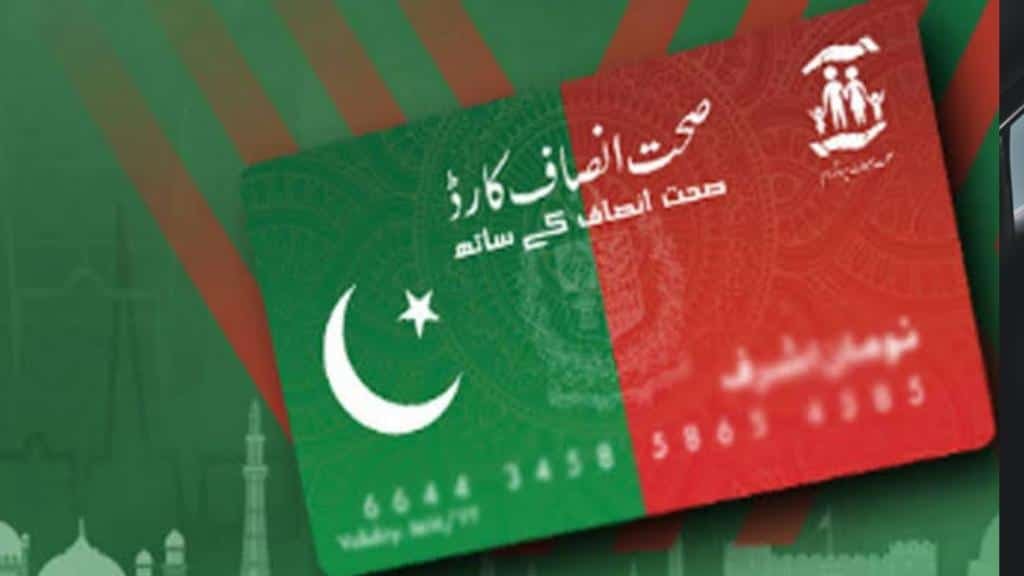
    During a press conference, Advisor to the Chief Minister on Health, Riaz Anwar, said that due to escalating expenses, the full benefits of the Health Card scheme would now be exclusively available to beneficiaries of the Benazir Income Support Programme. The financial liability associated with the scheme had surged from Rs30 billion to Rs39 billion, leading to a proposal to potentially discontinue the programme.

    The cabinet subsequently approved a set of reforms for the Health Card initiative. Under these reforms, individuals with an income of up to Rs37,000 will be required to cover 25 per cent of their medical expenses. This contribution will be calculated based on data from the Benazir Income Support Programme, ensuring that those with higher incomes contribute to their healthcare costs.

    While the poor and underprivileged will continue to receive free healthcare services, access to free facilities at the emergency ward will be extended to everyone. Importantly, it was clarified that the Health Card programme itself would not be terminated; instead, it would persist in serving the underprivileged.

    According to Samaa, this shift in focus is a response to budgetary constraints, as the expenses of KP’s Health Card programme rose from Rs30 billion to Rs39 billion.

  • Slow economic growth and inflation challenges persist in Pakistan: ADB Outlook Report

    Slow economic growth and inflation challenges persist in Pakistan: ADB Outlook Report

    During the last fiscal year, Pakistan faced the twin challenges of low economic growth and high inflation, in contrast to other South Asian countries.

    According to the Asian Development Bank (ADB), to foster economic improvement, Pakistan must continue implementing reforms under the new IMF programme.

    However, the ADB’s Outlook Report predicts that the economic growth rate in the upcoming financial year is expected to remain sluggish, similar to the performance observed in the previous fiscal period.

    The primary reasons for the slow economic growth were last year’s floods and the implementation of strict monetary and fiscal policies.

    The ADB’s report also highlights that inflation in Pakistan exceeded expectations during the past year. This inflationary pressure was further exacerbated by increased demand for commodities.

    In comparison, India is projected to experience a growth rate of 6.7 per cent, Sri Lanka 1.3 per cent, and Bangladesh at a rate of 6.5 per cent.

  • IMF, Pakistan reach staff-level agreement on policies and reforms

    IMF, Pakistan reach staff-level agreement on policies and reforms

    The International Monetary Fund (IMF) and Pakistan reached a staff-level agreement on policies and reforms needed to complete the sixth review under the $6 billion Extended Fund Facility (EFF), which has been ‘in recess’ since April, the Fund announced in a statement on Monday.

    The agreement is subject to approval by the Executive Board, following the implementation of prior actions, notably on fiscal and institutional reforms. The approval of the agreement will make available 750 million in Special Drawing Rights (SDR), equivalent to $1,059m, read the statement.

    The Fund acknowledged Pakistan’s progress in improving its anti-money laundering and combatting the financing of terrorism (AML/CFT) regime. However, additional time was needed to strengthen its effectiveness, according to the statement.

    “Available data suggest that a strong economic recovery has gained hold, benefiting from the authorities’ multifaceted policy response to the Covid-19 pandemic that has helped contain its human and macroeconomic ramifications,” the IMF said.

    “At the same time, external pressures have started to emerge: a widening of the current account deficit and depreciation pressures on the exchange rate — mainly reflecting the compound effects of the stronger economic activity, an expansionary macroeconomic policy mix, and higher international commodity prices.”

    The IMF emphasised that the monetary policy needs to remain focused on curbing inflation, preserving exchange rate flexibility, and strengthening international reserves.

    The introduction of the Finance Bill in the National Assembly to increase taxes and approval of the State Bank of Pakistan (SBP) Amendment Bill are pre-conditions for the revival of the IMF loan programme, Finance Adviser Shaukat Tarin said last week.

    The IMF said that despite a difficult environment, progress continues to be made in the implementation of the EFF-supported programme.

    “All quantitative performance criteria (PCs) for end-June were met with wide margins, except for that on the primary budget deficit”, said the IMF.