Tag: Reko Diq

  • Reko Diq to possibly secure $4.5 billion in loans and investments

    Reko Diq to possibly secure $4.5 billion in loans and investments

    Bilateral sources line up to extend loans totalling USD 4.5 billion to Pakistan for the Reko Diq mining operation. Business owners surrounding the mining facility prepare to celebrate as the influx of funds will serve to promote business activity in the region.

    The greatest potential lender is the EXIM (Export-Import) Bank of the United States, which is interested in lending USD 1.5 billion to the Reko Diq mining operation.

    Other lenders like the World Bank, Asian Development Bank and bilateral sources like Canada, Japan, and Germany, among many others also expressed their interest in the project by offering to pitch in the combined value of three billion dollars in loans.

    The inflow of foreign investments and loans is bound to improve the transportation infrastructure of the area around the extraction site – primarily roads. Saudi Arabia has already offered to invest USD 150 million in infrastructure as part of the Saudi investment package into Reko Diq, which has still not been accepted by Pakistan.

    The new roads that will get paved for transporting gold and copper out of the mines will also be used by local businesses to move goods from warehouses to stores. Travel times and costs will witness a drop, helping businesses in the area improve their supply chain.

    This will also make the area around Reko Diq more accessible to tourists and travellers, which will rake in more traffic. With the increase in visitors, local shops, restaurants, rest stops, and other businesses will have the chance to attract more customers.

    Moreover, foreign investments will bring foreign workers to the mining zone who will need housing, food, and other services. New businesses could spring up to meet these needs, which will likely create jobs and reduce the current unemployment rate of 9.13 per cent, which is second only to Kashmir.

    The Government of Balochistan owns a 25 per cent stake in the mining operation. If the loans flow in, Balochistan’s economy will likely see an improvement along with the businesses that call it home.
  • What is Reko Diq and how does it help us?

    What is Reko Diq and how does it help us?

    Reko Diq has been deemed a game changer for Pakistan as its natural resources have the potential to improve the country’s struggling economy.

    However, the question remains: How can the Reko Diq project change Pakistan’s financial dynamics?

    The Pakistani government first signed an agreement on the Reko Diq copper and gold reserve in 1993 with the Australian mining company Broken Hill Proprietary (BHP) Minerals.

    In 2000, BHP handed over the project to Tethyan Copper Company (TCC), a joint venture of Antofagasta of Chile and the Barrick Gold Corporation.

    The Diplomat Magazine reported that in 2006, TCC invested $200-400 million to take over the project and convert the exploration permit into a mining license. However, in 2011, the Balochistan government rejected TCC’s application, and in 2013, Pakistan’s Supreme Court ruled against the mining license.

    Meanwhile, when the Balochistan government cancelled the mining license, TCC filed for international arbitration at the International Centre for Settlement of Investment Disputes (ICSID), alleging a breach of contract.

    A new agreement was signed in 2022, under which Barrick agreed to a 50 percent stake, down from the previous 75 percent.

    In 2024, after the withdrawal of Barrick Gold Cooperation from Riko Diq, Pakistan and Saudi Arabia entered into a preliminary agreement for Islamabad to sell a 15 percent stake in the mining project to Saudi investors.

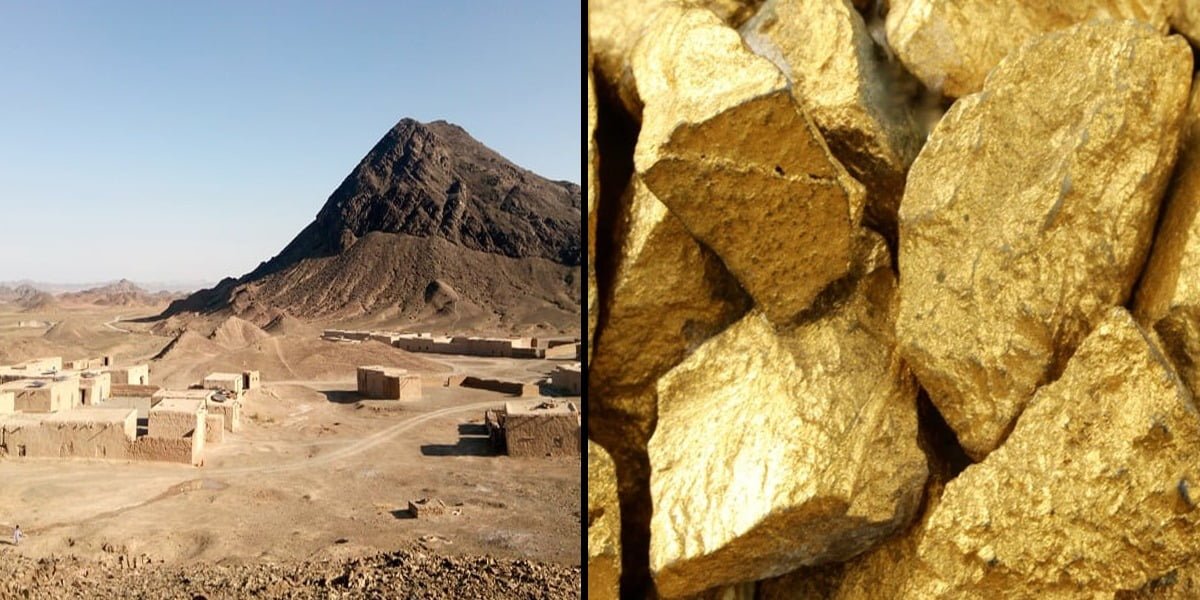
    Reqo Diq covers an area of 3.3 million acres in the Chagai district, bordering Iran and Afghanistan. Beneath this dusty surface lies one of the world’s largest undeveloped gold and copper reserves.

    A geological Survey in 1978 discovered the gold and copper resources in Chaghi.

    According to Dawn News, estimated deposits of Riko Diq are around 200,000 tons of copper and 250,000 ounces of gold a year for nearly 50 years.

    Chagai is one of the poorest areas of Pakistan and South Asia. With one of the lowest literacy rates and the highest infant and maternal mortality rates, Chagai district ranks lowest in Pakistan on most social and human development indicators.

    Saudi Minister for Investment Khalid bin Abdulaziz Al-Faleh addressed the Pakistan Saudi Arabia Business Forum in Islamabad on Thursday, saying that the ties between his country and Pakistan “have no limits” and that this extends to economic cooperation as well.

    Prime Minister Shehbaz Sharif on Wednesday said that Pakistan and Saudi Arabia will sign an agreement worth around two billion dollars.

    “I think there are essentially no limits to what Saudi Arabia and Pakistan can do in the economic sphere, just like there are no limits to our friendship, to our bonds, to our historic relations,” stated the Saudi Minister.

    Al Faleh stated that Saudi Arabia intends to invest in Pakistan’s infrastructure and mining sectors, and his delegation would sign 25 agreements across various fields.

  • Saudi Arabia to invest $25 billion in Pakistan over five years: PM Kakar

    Saudi Arabia to invest $25 billion in Pakistan over five years: PM Kakar

    On Monday, Interim Prime Minister Anwaar ul Haq Kakar announced that the Kingdom of Saudi Arabia (KSA) intends to invest a substantial sum of up to $25 billion in Pakistan over the next two to five years.

    During a media briefing, PM Kakar explained that Saudi Arabia’s investment focus will primarily encompass the mining, agriculture, and information technology sectors. This initiative aims to boost foreign direct investment in Pakistan, which is currently facing financial challenges. 

    If this investment materialises, it will mark the largest-ever commitment by Saudi Arabia to Pakistan. The country is grappling with a pressing need for funds to address its trade deficit and repay international loans in the ongoing fiscal year. 

    While specific projects earmarked for Saudi investment were not disclosed during the meeting, Barrick Gold Corp. expressed interest last month in partnering with Saudi Arabia’s wealth fund for the Reko Diq mine in Pakistan. 

    Kakar emphasised that Pakistan holds substantial untapped mineral resources valued conservatively at $6 trillion. Additionally, the government intends to expedite two privatisation transactions, likely involving state-owned power sector entities, within the next six months. There is also a plan to privatise another government-owned company, preferably outside the energy sector. 

    Read more: Business community finds hope as COAS Munir vows to tackle corruption and boost investment  

    It’s worth noting that privatisation efforts in Pakistan have faced challenges in the past, as the sale of state assets is a politically sensitive issue that previous elected governments have largely avoided. 

    Currently, Pakistan is navigating a challenging path to economic recovery under a caretaker administration, following the approval of a $3 billion loan plan by the International Monetary Fund in July, which prevented a sovereign debt default. Islamabad is confronted with a balance of payments crisis and requires substantial funds to rectify its trade deficit and settle outstanding debts. 

  • ‘Company CEO more respected than us’: BNP, JUI-F not happy with PM Shehbaz led govt

    ‘Company CEO more respected than us’: BNP, JUI-F not happy with PM Shehbaz led govt

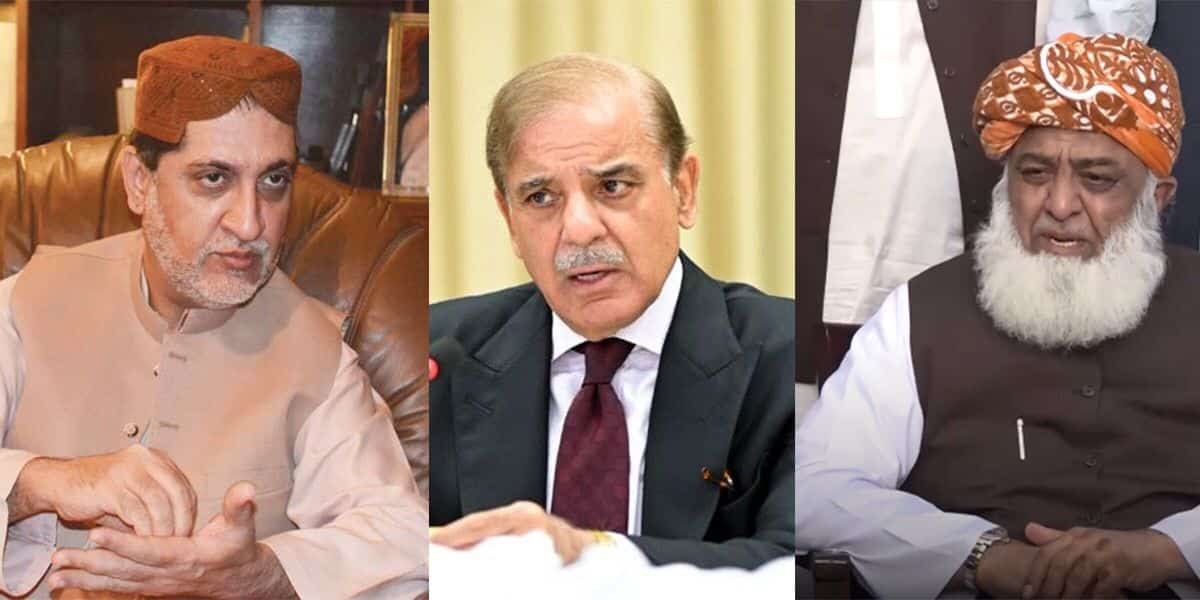
    Jamiat Ulema-i-Islam-Fazl (JUI-F) and Balochistan National Party-Mengal (BNP-Mengal) — boycotted a federal cabinet meeting over a controversial bill regarding the revival of the Reko Diq copper and gold mine project in Balochistan.

    Prime Minister (PM) Shehbaz Sharif formed a cabinet committee to address the grievances of JUI-F and BNP-M while assuring them that an amendment bill would soon be tabled in the parliament after consulting the two allies.

    Both JUI-F and BNP-Mengal were of the view that the recently passed Reko Diq related bill — the Foreign Investment (Promotion and Protection) Bill, 2022, in the Senate, was against the rights of the people of Balochistan and that both parties had not been taken on board during the preparation of the bill.

    Chairman BNP Akhtar Mengal has signalled that he may separate his party from the incumbent Pakistan Muslim League-Nawaz (PML-N)-led government at the centre.

    Discussing his reservations during Geo News programme “Capital Talk”, the BNP-M leader said that the coalition government, instead of taking allies into confidence, takes investors into confidence. “More importance is given to companies instead of the parliament. We will have to think about the basis of our unity,” he warned.

    Expressing his displeasure, Mengal said that a CEO of a company is respected more than the allies. He added that his province was “looted” by everyone. “The resources change people’s lives, but it is Balochistan’s misfortune that the way the resources were discovered there, they became a disaster for the people,” he said.

    During the programme, another ally of the government Jamaat-e-Islami-Fazl’s (JUI-F) Senator Kamran Murtaza said that the Foreign Investment Bill has been passed forcefully and with deceit which is a threat to Pakistan.