Tag: relief

  • Lights, camera, action: Minister promises tax relief to stimulate entertainment sector

    Lights, camera, action: Minister promises tax relief to stimulate entertainment sector

    In a move set to ignite the entertainment industry, Punjab Finance Minister Mian Mujtaba Shujaur Rehman has pledged tax concessions to help filmmakers and cinema owners, during a meeting with a star-studded delegation of film producers and the Cinema Association, led by singer Waris Baig.

    The delegation included:
    • Zulfiqar Ahmed, Chairman of the Pakistan Film Producers Association
    • Producer and director Shehzad Rafiq
    • Safdar Malik, General Manager of Q Cinemas
    • Rabia Khan, General Manager of Cinepax Cinemas
    • Azhar Joya, General Manager of Universal Cinemas
    • Nadeem Mandviwala

    Shujaur Rehman emphasized the importance of the entertainment industry and encouraged filmmakers to revive traditional Punjabi cinema. He also urged provinces to become less dependent on federal funds by ensuring that industrialists pay their taxes.

    Additionally, he mentioned ongoing construction in the Nawaz Sharif IT City and plans to lower electricity and gas bills in the next budget.
    The film industry representatives highlighted the need for government support to revive the industry and proposed several initiatives. The minister assured them that he would consider their suggestions.

  • IMF approves relief plan for 4 million consumers with monthly power usage below 200 units

    IMF approves relief plan for 4 million consumers with monthly power usage below 200 units

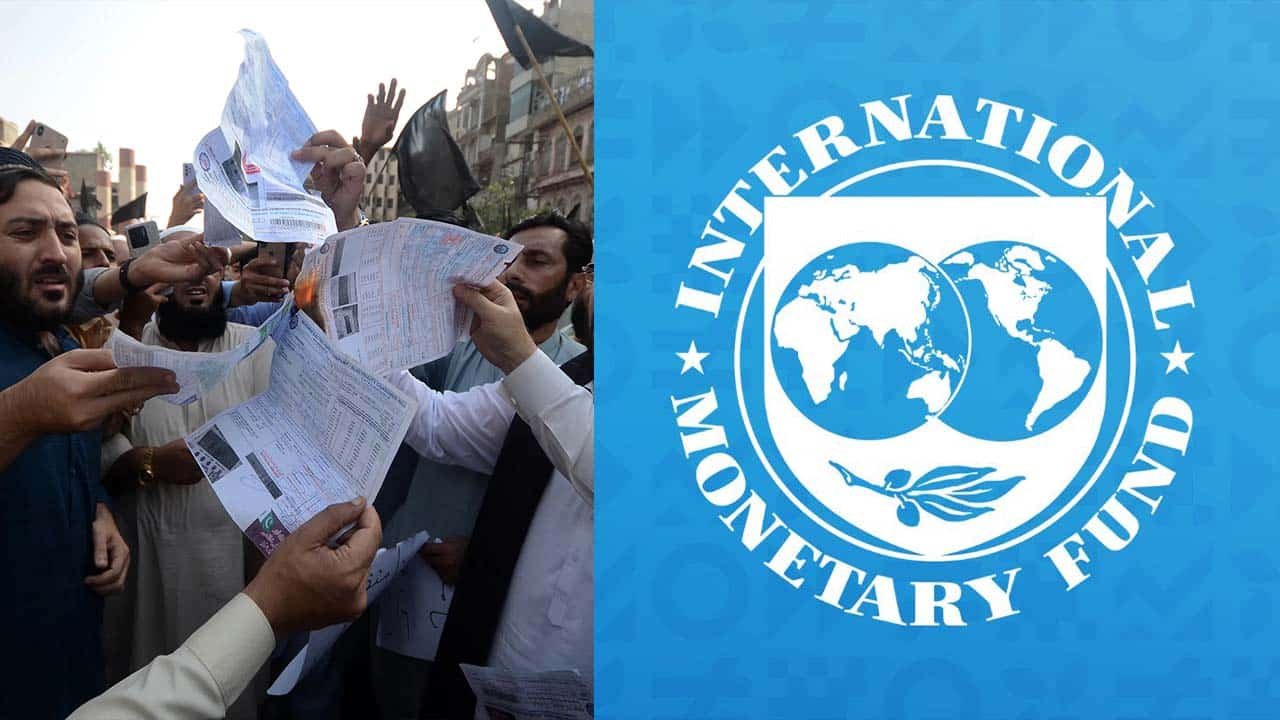
    After extensive negotiations prompted by widespread protests against soaring electricity bills, the International Monetary Fund (IMF) has reportedly granted approval to a relief proposal targeting consumers with monthly electricity consumption of up to 200 units, allowing authorities to implement an installment-based billing system, according to sources cited by Geo News.

    Sources indicated that the final authorisation for implementing the installment billing system will require approval from the federal cabinet. 

    Approximately 4 million electricity consumers are expected to benefit temporarily from this initiative.

    Regrettably, the interim government’s proposal to extend relief to consumers using up to 400 units of electricity per month was rejected by the IMF. This decision means that approximately 32 million consumers would have benefited if the proposal had been accepted.

    Additionally, sources disclosed that the IMF stressed the importance of combating electricity and gas theft while also focusing on improving revenue collection.

    Furthermore, the sources revealed that the IMF had requested an increase of 45 to 50 per cent in gas tariffs, effective from July 1. However, the approval of this tariff hike remains contingent upon federal cabinet approval.

    In response to persistent protests by citizens and traders who have taken to the streets to denounce the steep increases in power bills and additional taxes, the caretaker government led by Prime Minister Anwaar ul Haq Kakar in Islamabad has been actively engaging with the IMF to secure immediate relief for electricity consumers in the economically challenged nation, where the populace is grappling with soaring inflation.

    It is crucial to note that Pakistan is currently operating under an IMF programme, making any relief or subsidy subject to IMF approval.

  • Govt announces relief for employees with early salary and pension release ahead of Eid-ul-Fitr

    Govt announces relief for employees with early salary and pension release ahead of Eid-ul-Fitr

    To ease the burden of inflation on the public, the federal government has decided to release salaries to employees of public sector departments before Eid-ul-Fitr. This decision was made after consultations between Prime Minister Shehbaz Sharif and Finance Minister Ishaq Dar.

    Pakistan is currently facing historic levels of inflation which resulted in many individuals being unable to afford basic necessities. In addition, the country is struggling to secure external financing, with the threat of default looming over it.

    Information Minister Marriyum Aurangzeb has confirmed that the government will also be releasing monthly pensions before the festival. As a result of this decision, Finance Secretary Hamed Yaqoob Sheikh has been directed to make the necessary arrangements.

    In a similar move, the Government of Sindh had previously announced the early release of salaries for Muslim government employees ahead of Eid-ul-Fitr. According to a notification from the finance department, full pay and allowances will be paid in advance to all Muslim employees and pensioners of the Provincial Government of Sindh, including work-charged and contingent paid establishment.

    The salaries and pensions will be released on April 17, instead of May 2, as Eid is expected to fall on either April 21 or April 22, according to Geo.

  • Relief for workers as Punjab govt raises minimum wage to Rs32,000 per month

    Relief for workers as Punjab govt raises minimum wage to Rs32,000 per month

    The Punjab government has announced an increase in the minimum wage for unskilled workers from Rs25,000 to Rs32,000 per month, providing some relief to workers during a period of skyrocketing inflation.

    This increase of Rs7,000 was made official through a notification issued by the interim government on Thursday. It is worth noting that in April of last year, Prime Minister (PM) Shehbaz Sharif announced a minimum wage increase for government employees to Rs25,000 and a 10 per cent increase in civil and military pensions for retired employees.

    Following this announcement, the Punjab government set the minimum wage at Rs25,000. On January 31, 2023, Asif Ali Zardari, the former president and Pakistan Peoples Party (PPP) Co-chairperson, proposed to the coalition government that the minimum wage should be raised to Rs35,000.

    Zardari emphasised that the government should take responsibility for providing relief to workers and take far-reaching measures to address the problems faced by the masses.

  • PM Shehbaz expresses concern over IMF conditions burdening people

    PM Shehbaz expresses concern over IMF conditions burdening people

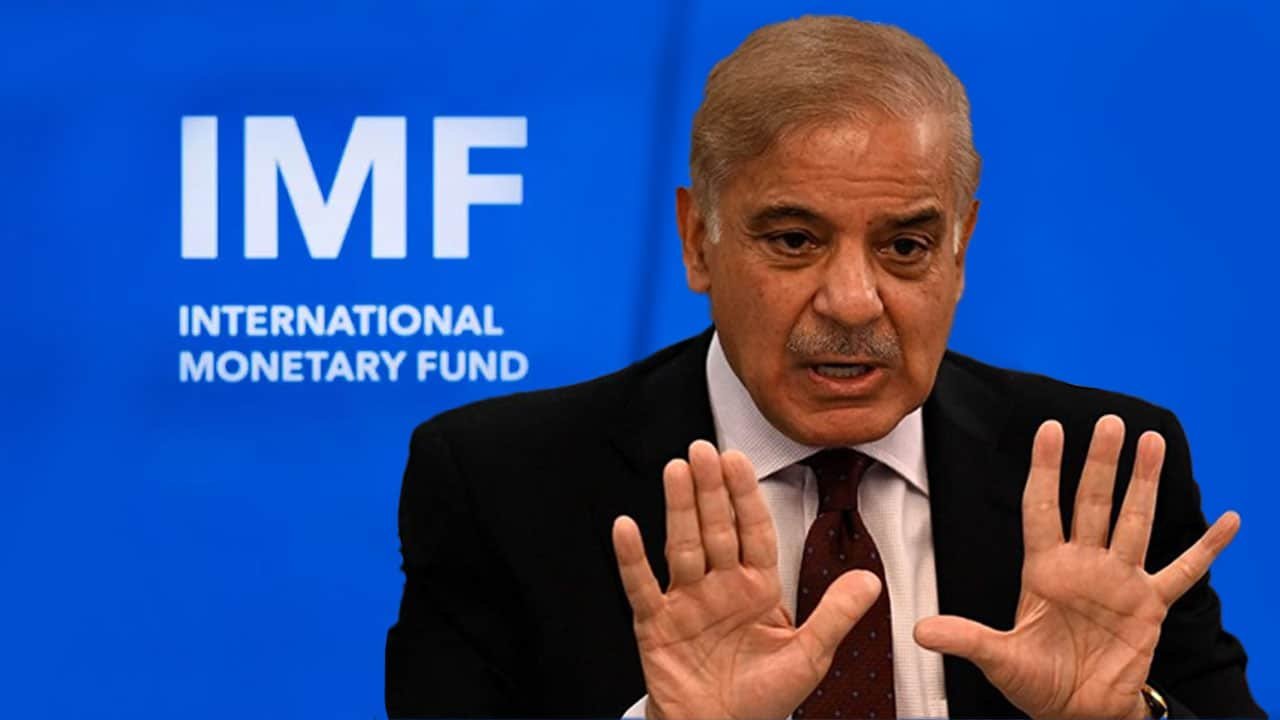
    The Prime Minister, Shehbaz Sharif, has shown worry that the terms set by the International Monetary Fund (IMF) will result in an increased burden on the citizens.

    During an appearance on the Geo News program Capital Talk, the Prime Minister attributed the stringent conditions to the previous government, alleging that they had breached their commitments to the IMF.

    Consequently, the IMF is insisting that Pakistan fulfills all of the conditions regardless of the cost, according to the Prime Minister. He acknowledged that many people in Pakistan are having trouble putting food on the table, purchasing medication, and paying for their children’s education.

    The Prime Minister claimed that former Prime Minister Imran Khan almost defaulted on Pakistan and damaged the country’s relations with numerous friendly countries. However, he stated that his government had provided relief to underprivileged individuals through the Benazir Income Support Program.

    He further stated that inflation was caused by the increased cost of imported goods as commodity prices rose due to the Russia-Ukraine conflict. In Pakistan, inflation is expected to reach its highest level in nearly 50 years.

    Additionally, Pakistan is struggling to obtain funding from friendly nations, resulting in a delay in the IMF bailout. The IMF Managing Director, Kristalina Georgieva, recently urged Pakistan to increase tax revenues and distribute subsidies only to those who truly require them. She emphasized that the IMF is dedicated to protecting the impoverished people of Pakistan.

  • Punjab govt to provide free flour to 15.8 million deserving households during Ramzan

    Punjab govt to provide free flour to 15.8 million deserving households during Ramzan

    Prime Minister (PM) Shehbaz Sharif has announced a scheme to provide free flour to impoverished individuals during the holy month of Ramzan. The premier stated that the distribution of free flour will encompass 15.8 million households throughout Punjab from 25 Sha’ban to 25 Ramzan.

    To ensure effective implementation of the scheme, the Prime Minister directed the utilisation of 8,500 utility stores and the establishment of an additional 20,000 distribution points for public convenience.

    Moreover, PM Shehbaz stressed the need for the transparent and modern distribution of free flour among the poor while also emphasising that the quality of flour provided should be of the highest standards.

    Eligibility for the program can be confirmed through SMS, and the federal government will also support other provinces in this regard.

    During a review meeting to discuss the distribution of free flour under the Ramzan package, chaired by the Prime Minister himself, the Punjab government provided a detailed briefing on the program.

    The meeting was attended by the Caretaker Chief Minister Punjab Syed Mohsin Raza Naqvi, Adviser to the Prime Minister Ahad Cheema, and other relevant senior officials.

    This decision is expected to bring much-needed relief to the underprivileged during the holy month of Ramzan. By utilising modern technology and additional distribution points, the distribution of free flour can be carried out efficiently and transparently, ensuring that the benefits reach those who are most in need.

  • World Bank approves $1.69 billion financing for flood-hit Sindh

    World Bank approves $1.69 billion financing for flood-hit Sindh

    The Board of Executive Directors of the World Bank approved funding for five projects totaling $1.692 billion on Tuesday in order to support those residing in Sindh, Pakistan’s flood-affected areas.

    According to Geo, out of the five initiatives, three support rehabilitation, home reconstruction, and the restoration of crop production for vulnerable populations, according to a statement released by the World Bank. Two of the three projects have a combined value of $500 million, while the third is worth $292 million.

    “Sindh was the province worst affected by the 2022 floods. There were huge damages to the housing, health, and agriculture sectors and people lost their livelihoods. Beyond the rehabilitation and reconstruction of damaged houses and infrastructure, our engagement in the flood response effort is an opportunity to strengthen resilience, and reform institutions and governance structures”, said Najy Benhassine, World Bank Country Director for Pakistan.

    The “Sindh Flood Emergency Rehabilitation Project,” which will cost $500 million, will prioritize creating short-term livelihood opportunities and enhancing the province’s ability to respond to emergencies.

    “The project will help restore and improve critical irrigation and flood protection infrastructure, water supply schemes, roads, and related infrastructure. At least 2 million people—approximately 50 per cent of whom are women—in the most flood-affected districts will benefit from the restoration and the resilient reconstruction of critical infrastructure”.

    About 100,000 households will get short-term financial support through a community-level cash-for-work program.

    “The $500 million Sindh Floods Emergency Housing Reconstruction Project will support owner-driven and multi-hazard resilient reconstruction of core housing units. A housing subsidy will provide reconstruction and restoration grants for 350,000 housing units (almost 20 per cent of the total housing rehabilitation needs for Sindh). Cash grants will be provided for houses with structural damage to partially finance reconstruction or restoration. “

    To increase access to water and sanitation, twin pit latrines and simple rainwater collection systems will also be provided.

    Furthermore, the $292 million approved for the “Sindh Water and Agriculture Transformation Project” will enhance integrated water resource management, boost agricultural water productivity, and enable farmers who were impacted by the flood to resume crop production.

    “More than 385,000 households (approximately 1.9 million people) are expected to benefit from the project. As an immediate response to the floods, the project will provide cash transfers to approximately 300,000 flood-affected farming households to help restore crop production through the purchase of seeds, fertilizer, and other critical inputs. In the medium term around 70,000 households will benefit from improved irrigation services and agricultural support that will help boost farming income. An estimated 14,000 households will receive direct financial benefits from the pilot smart subsidy schemes targeting small- and medium-sized farmers,” the WB said.

    By improving access to and use of mother and child health services, the Sindh Strengthening Social Protection Delivery System Project ($200 million) will also boost the province’s social protection delivery system. As part of the project, the Federal National Database Registration Authority will be aligned and connected, and conditional cash transfers (CCTs) will be given to 1.3 million mothers and their kids to support better maternal and child health outcomes, particularly in the wake of service disruption caused by the floods.

    The CCTs will be made available to Sindh’s bottom 15 districts, selected depending on the Multidimensional Poverty Index (MPI), and will cover 65 per cent of the province’s total flood-affected areas. They are intended to help lessen the effects of the floods, particularly food insecurity, and to maintain access to maternal and child health services open.

    The Sindh Integrated Health and Population Project have been granted $200 million by the lender. The project will assist in raising the standard and uptake of fundamental nutrition, and maternal, neonatal, child, and adolescent health care. Additionally, it will aid in the repair and reconstruction of health infrastructure that was harmed during the floods and impeded the provision of these services.

    The initiative would enhance the population’s access to high-quality healthcare services in Sindh’s flood-affected settlements as well as in distant and peri-urban areas, particularly for women, girls, and children.

    “The World Bank will continue to support the Government and people of Pakistan to recover from the recent flood emergency and strengthen long-term resilience to such climate-related shocks,” the statement concluded.
  • Dar stresses on providing maximum relief to the underprivileged sector of society

    Dar stresses on providing maximum relief to the underprivileged sector of society

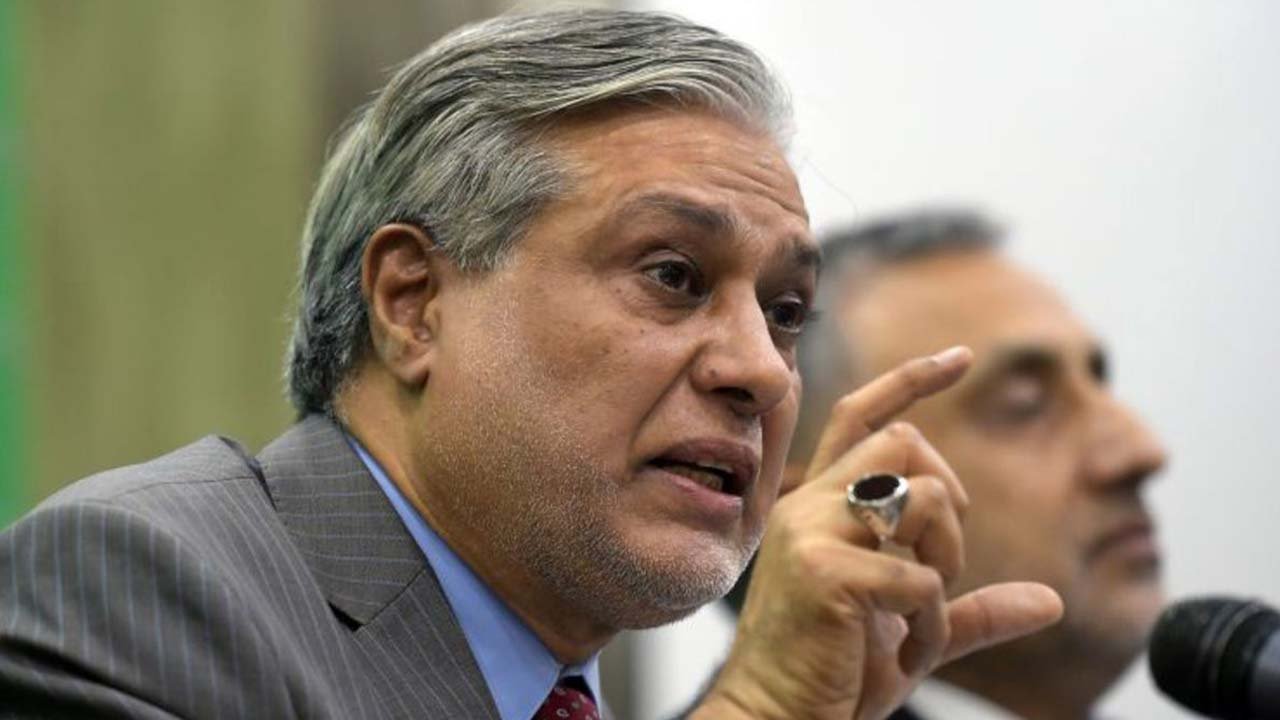
    Minister for Finance and Revenue Ishaq Dar urged the Ministry of Industries and Production on Saturday to develop a comprehensive strategy that would prioritise providing maximum relief to the least endowed sector.

    Dar, who was chairing a meeting to examine the prime minister’s relief package through Utility Stores Corporation (USC), said the current government was aware of the difficulties confronting the underprivileged section of society, which required maximal relief support.

    He went on to say that the government’s primary goal was to help the poor and that it was doing everything it could to help them.

    The meeting was attended by Federal Minister for Industries and Production Makhdoom Syed Murtaza Mehmood, SAPM for Finance Tariq Bajwa, SAPM for Revenue Tariq Pasha, Secretary Finance, Secretary Industries and Production, MD USC, and senior authorities.

    The chair was informed about the PM’s relief package and subsidy on five vital products (pulses, wheat, sugar, rice, and ghee) granted by the USC to help the public.

    It was revealed that subsidised flour, sugar, rice, ghee, and pulses were being distributed to the populace across the country. The meeting also considered the financial ramifications of the subsidies.

    The finance minister also met with Federal Communications Minister Asad Mehmood here at the Finance Division.

    Financial SAPM The meeting was attended by Tariq Bajwa, SAPM on Revenue Tariq Pasha, Secretary Finance, Secretary Communications, Chairman NHA, IG Motorway, and top officers.

    Asad Mehmood informed the finance minister of the financial status of various Communication Ministry agencies, including Motorway Police, Pakistan Post, and NHA.

    He also emphasised the organisations’ contributions to the country’s success and development.

    While acknowledging the contribution of the Ministry of Communication and its affiliated organisations to the country’s economic stability and progress, the finance minister stated that the current government was aware that a well-integrated communication network was critical for the country’s socioeconomic development and financial stability.

    According to APP, Dar also informed the communications minister that he would handle and resolve the concerns of the Communication Ministry’s organisations in order for them to perform better and contribute to Pakistan’s prosperity and development.

  • Govt increases petroleum levy by Rs14.84 to Rs47.26

    Govt increases petroleum levy by Rs14.84 to Rs47.26

    The government has increased the Petroleum Levy (PL) on petrol by Rs14.84 to Rs47.26 per litre, while decreasing it on diesel, with immediate effect from October 16, 2022, maintaining the prices at Rs224.80 and Rs235.30 per litre, respectively. From October 1, 2022, the PL for petrol was Rs32.42.

    The rise in the petroleum levy on Mogas was enforced in response to the IMF’s concerns after the finance ministry lowered the levy on petrol by Rs5 to Rs32.42 per litre on October 1, 2022, from Rs37.42.

    According to Geo, Pakistan has to raise Rs850 billion in income during the current fiscal year by increasing the Petroleum Levy to Rs50 per litre on petrol and diesel.

    However, it has lowered the diesel levy by Rs5.44 to Rs7.14 per litre beginning October 16, 2022. From October 1, 2022, the petroleum levy on diesel was Rs12.58 per litre.

    Currently, the petroleum duty on HOBC is Rs30 per litre, kerosene oil is Rs8.90 per litre, light diesel oil is Rs1.59, and E-10 gasoline is Rs23.21 per litre.

    The inland freight equalisation margin (IFEM) on gasoline was cut by Re0.52 to Rs2 per litre from Rs2.53.

    The district margin, which includes the extra margin on petrol, is Rs3.68 per litre, while the dealer margin is Rs7 per litre.

    IFEM on diesel has risen by Re0.07 per litre to Rs1.83 from Rs1.76 per litre. The dealer margin on diesel is similarly Rs7 per litre, while the district margin, including extra margin, is Rs3.68 per litre.

  • Video: Young shoe polisher wins hearts by donating half of his earnings to flood victims

    Video: Young shoe polisher wins hearts by donating half of his earnings to flood victims

    A charity organisation, Alkhidmat Foundation Pakistan, posted a video of a young boy donating Rs30 for flood relief efforts.

    The shoe polisher has been donating to the flood relief camp at Thokar Niaz Baig in Lahore for the last five days, according to the Alkhidmat Foundation.

    It went on to say that since he did not have any money to donate the day before yesterday, he shined some shoes and donated Rs30 of the Rs60 he had earned.

    In the emotional video, the boy can be seen searching his pockets for money before putting it inside the contribution box.

    The post has been retweeted 8k times and received over 24k likes, with others applauding the noble gesture from a poor youngster. Some netizens stated that it is a lesson for people who earn a lot of money but do not contribute or have a big enough heart to donate enough money in such instances.