Tag: religion

  • Hajjis to get mobile sims and free internet

    Hajjis to get mobile sims and free internet

    Caretaker Minister for Religious Affairs and Inter-faith Harmony Aneeq Ahmed has said that the government will provide free-of-cost mobile SIMs with roaming internet packages for pilgrims, on Tuesday.

    He further stated that female abayas having a Pakistani flag on the backside and 13 Kg suitcases will also be provided to pilgrims performing hajj this year.

    The minister said that it was a historic step that the caretaker government has declared a significant reduction of one lac in government Hajj expenses, adding that a further Rs50,000 will also be reduced in the coming few days after which Hajjaj will get back their money in their accounts.

    He further revealed that a new mobile application has been designed to assist pilgrims, which will provide navigation support and enable constant communication between pilgrims and relevant officials.

    Initially available in English and Urdu, the application will later incorporate various regional languages, he said, adding that, the app will also provide digital training programs to every pilgrim.

    The minister also disclosed a project that the Ministry of Hajj in collaboration with the Ministry of Education has planned to convert city mosques into schools to enroll out-of-school children where the Imam of mosques will play a leading role.

    Minister said that mosques will play their role as community centers in every city area, adding that imams will resolve community issues as well after offering prayers.

    He said that the Ministry of Hajj is taking all four provinces on board and enhancing the connectivity of mosques.

    While describing another project, minister for religious affairs said that his ministry with the collaboration of health ministry has another project in which medical clinics will also be part of mosques.

    Lady health workers and other essential staff of doctors will also be provided in all masajid where they will facilitate to citizens visiting inside the masque of areas, he added.

  • Gaza’s embattled main hospital buries patients in ‘mass grave’

    Gaza’s main hospital has been forced to bury dozens of dead patients in a mass grave, its director said Tuesday, while thousands of Palestinians were trapped inside by fierce combat.

    Israeli forces were at the gates of the sprawling Al-Shifa hospital they say sits atop an underground Hamas command base, but the militants deny the charge while doctors say patients and people seeking shelter were stranded in horrific conditions.

    “There are bodies littered in the hospital complex and there is no longer electricity at the morgues,” said Al-Shifa hospital director Mohammad Abu Salmiya, adding that 179 bodies had been interred so far.

    “We were forced to bury them in a mass grave,” he said, adding that seven babies and 29 intensive care patients were among those who had died after fuel for the hospital’s generator ran out.

    A witness said the stench of decomposing bodies was everywhere in the Gaza City facility as bombardment and gunfire echoed constantly in the area.

    The United Nations estimates that at least 2,300 people — patients, staff and displaced civilians — are inside and may be unable to escape because of fierce fighting from the facility where supplies are nearly exhausted.

    Israel says it is not targeting the hospital, but has vowed to destroy Hamas in response to the attacks of October 7, which killed an estimated 1,200 people, mostly civilians, and saw 240 hostages being taken to Gaza.

    The health ministry in Hamas-run Gaza says Israel’s relentless assault has killed 11,320 people, also mostly civilians, including thousands of children.

    Israel’s military says 47 of its troops have been killed in Gaza.

    Al-Shifa’s fate has become a major focus of the more than five week war that has stirred international criticism of the suffering and death inflicted on civilians in the besieged territory.

    Israel’s Foreign Minister Eli Cohen acknowledged in a statement shared by his spokesman Monday that his nation has “two or three weeks until international pressure really steps up”. 

    ‘Completely soaked’

    The situation in Gaza’s other hospitals is also dire, with the UN saying 22 of 36 are not functional due to lack of generator fuel, damage and combat.

    “The 14 hospitals remaining open have barely enough supplies to sustain critical and life-saving surgeries and provide inpatient care, including intensive care,” said the World Health Organization in the Palestinian Territories.

    But the humanitarian crisis in the territory also includes the hundreds of thousands of people who have fled south at Israel’s urging to get away from the most intense fighting.

    On Tuesday displaced Palestinians in the south woke up to yet another scourge: rain, soaking their meagre belongings and threatening to bring waterborne diseases to their places of shelter.

    “We are completely soaked, all of our clothes are soaked, our mattresses, our blankets too, even a dog could not live like this,” said Ayman al-Jueidi, who has set himself up in the courtyard of a UN school in Rafah at the southern extremity of the Gaza Strip.

    Even escaping the fighting is dangerous and wounded Palestinians told AFP how they were hit by a strike on their way south.

    “I walked around three to four kilometres (around two miles) while I was bleeding,” said Hasan Baker, whose head and left hand were bandaged. “There was no possibility for any ambulance to enter the area.”

    Hostage talks

    Israeli leaders have so far insisted there will be no ceasefire until hostages are released, but Qatar is mediating talks on a possible deal to free captives.

    Abu Obeida, a spokesman for Hamas’s military wing, said Monday that Israel asked for the release of 100 hostages while the militants want 200 Palestinian children and 75 women freed from Israeli prisons.

    “We informed the mediators we could release the hostages if we obtained five days of truce… and passage of aid to all of our people throughout the Gaza Strip, but the enemy is procrastinating,” Abu Obeida said in an audio statement.

    Qatari foreign ministry spokesman Majed bin Mohammed Al-Ansari told a news conference in Doha that the “deteriorating” situation in Gaza was hampering mediation efforts.  

    “We believe that there is no other chance for both sides other than for this mediation to take place,” he said. 

    Relatives of hostages set out Tuesday on a five-day protest march to Prime Minister Benjamin Netanyahu’s office to demand “the immediate release of all the hostages”, the Hostages and Missing Families Forum said.

    Netanyahu responded in a statement that the government was “working relentlessly for the release of the hostages, including using increased pressure since the start of the ground incursion”.  

    As security officials and diplomats continued negotiations, Hamas’s military wing issued a video of captive Israeli soldier Noa Marciano.

    The Israeli army on Tuesday confirmed she was dead.

    Abu Obeida claimed Marciano was killed in an Israeli strike. The Israeli army did not say how she died.

    West Bank violence

    The Israeli army said it had captured Gaza’s parliament, the government building, the police headquarters and other government institutions run by Hamas in Gaza City, as its forces deepened their offensive in the Palestinian territory.

    The army also showed images of a discarded baby bottle, makeshift toilet and bullet-scarred motorbike as evidence Hamas held hostages in the basement of Al-Rantisi children’s hospital in Gaza City.

    AFP was not able to independently confirm the allegation.

    The video narrated by army spokesman Daniel Hagari also shows neatly arranged assault rifles, grenades and what he said were “vests with explosives”.

    The Hamas health ministry described the Israeli video as “poor staging” with “not a single piece of evidence” backing the Israeli army claims.

    The war in Gaza has also spurred violence on other fronts.

    In the occupied West Bank, eight Palestinians were killed in clashes with Israeli troops, seven during an army raid on the northern city of Tulkarem and one near the southern city of Hebron, the Palestinian health ministry said on Tuesday.

    At least 180 Palestinians and three Israelis have been killed across the West Bank since October 7, according to officials on both sides.

    The Israeli police said they were investigating “several cases” of alleged sexual violence against women by Hamas militants in the attack that triggered the conflict.

    Since the attacks, police have been gathering evidence about allegations of sexual violence from witnesses, surveillance footage and the interrogations of Palestinian militants arrested in the aftermath. 

    Police had “multiple witnesses” but no “living victims”, investigator David Katz said without giving the precise number of cases.

  • TikTok influencer Megan Rice converts to Islam after starting Quran Book Club during Gaza genocide

    TikTok influencer Megan Rice converts to Islam after starting Quran Book Club during Gaza genocide

    TikTok influencer and writer Megan Rice went viral on social media when she began a World Religon book club to read the Holy Quran in light of the ongoing genocide of Gaza. In a video, the activist explained the purpose of the club was to combat Islamophobia, racism and understand the significance behind why Palestinian people hold the Quran and its teachings so close to them. This book club included celebrities like rapper Kehlani.

    @megan_b_rice Replying to @Sabrina #quran #discord #theworldreligionbookclub #islam ♬ original sound – Megan Rice

    Now Megan Rice uploaded a video announcing she had converted to Islam after a viral video showed her taking the Shahada.

    In a recent video uploaded on her TikTok account, Megan slammed the users telling her to be mindful about her decision because embracing Islam would mean more conservatives would come after her. In her video, Megan criticised such users and shared the purpose of her club was to educate everyone about Islam as well as other religions. She only chose to convert to Islam after she found its teachings resonating with her own personal beliefs.

    @megan_b_rice

    Y’all I’m just trying to get everyone to love eachother! DASSIT!!!

    ♬ original sound – Megan Rice

  • Pakistani Hajjis to get special perks to make pilgrimage easier

    The Ministry of Religious Affairs has unveiled its Hajj policy for 2024, designed to bring a revolutionary transformation to the pilgrimage journey for Pakistani pilgrims.

    Caretaker Religious Affairs Minister Aneeq Ahmed announced this game-changing policy, which will be presented to the cabinet for approval within the next 10 days.

    The most striking feature is the introduction of a short Hajj option, where pilgrims have the flexibility to go for Hajj from 18 to 30 days, which empowers pilgrims to customise their journey as per their preference.

    QR codes for suitcases

    The new policy also introduces technological advances in which each Hajj pilgrim will be provided with two specially designed suitcases adorned with QR codes. These QR codes will contain essential information such as the pilgrim’s name, passport number, residence, school number, and other pertinent details. This innovation aims to streamline logistics and enhance security during the pilgrimage.

    Special Mobile Package

    In a significant step towards connectivity, the ministry has secured an agreement with a Saudi Arabian mobile phone company to offer a special mobile package exclusively for Hajj pilgrims. Priced at Rs 4,000, it enables pilgrims to make audio and video calls, ensuring they can stay in touch with their families back in Pakistan throughout their Hajj journey.

    Minister Aneeq Ahmed expressed his optimism about these advancements, stating, “Now Pakistani pilgrims will not be lost in the crowd. These changes are designed to simplify the Hajj experience, enhance communication, and provide pilgrims with peace of mind.”

    Additionally, the Saudi government has offered official residences for Pakistani pilgrims, further easing their accommodations during their sacred journey.

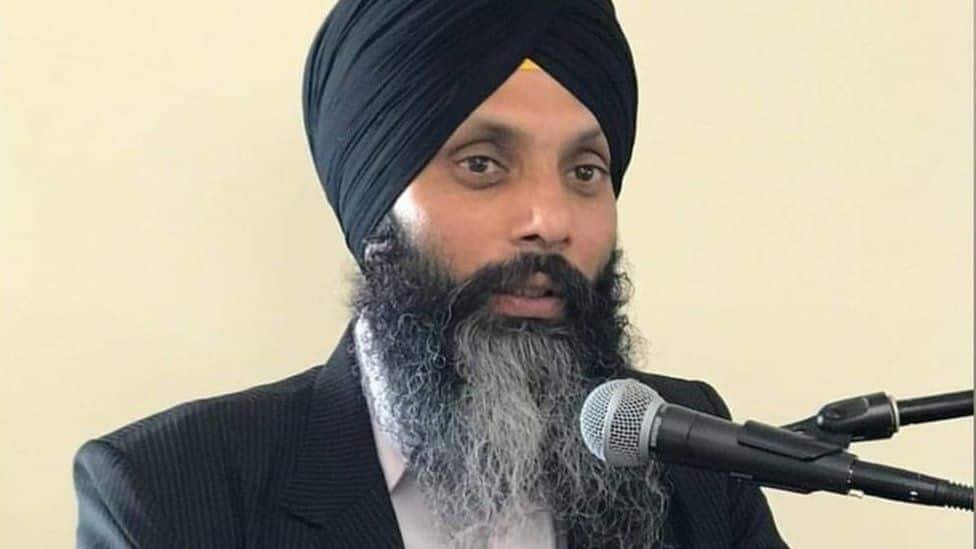
  • At least six men involved in Hardeep Singh Nijjar’s murder

    At least six men involved in Hardeep Singh Nijjar’s murder

    Latest CCTV evidence reveals that at least six suspects came to kill Hardeep Singh in two cars.

    The Washington Post has reviewed the video and gathered accounts of witnesses that suggest that it was a “larger and more organized operation than has previously been reported”.

    According to Washington Post, Nijjar’s gray pickup truck was by strewn bullets. While Bhupinderjit Singh, first person to visit the site, described the scene: “It was blood and shattered glass everywhere,”

    The community members state that investigators told them that the assailants fired about 50 bullets out of which 34 hit Nijjar.

    On the other hand, the Sikh community protested outside the Indian High Commission in Canada against the killing of Hardeep Singh, raising slogans against Modi. Canada’s defence minister says there are credible intelligence reports pointing towards Indian interference, and it will not back down.

    Nijjar’s murder

    Hardeep Singh Nijjar, a Canadian Sikh leader, was shot outside a Sikh temple on 18 June in Surrey, British Columbia, Canada. As per the police’ evaluation, it was a “targeted” attack.

    The world reacted after Prime Minister Justin Trudeau’s statement citing suspicion towards India in Hardeep Singh Nijjar’s murder case.

    “Any involvement of a foreign government in the killing of a Canadian citizen on Canadian soil is an unacceptable violation of our sovereignty,”, said Trudeau.

    On the other hand, in a tit-for-tat move, India ordered a senior Canadian diplomat to leave the country, keeping in view the “growing concern at the interference of Canadian diplomats in our internal matters and their involvement in anti-India activities”.

    India’s foreign ministry has rejected all allegations, deeming them as “absurd”.

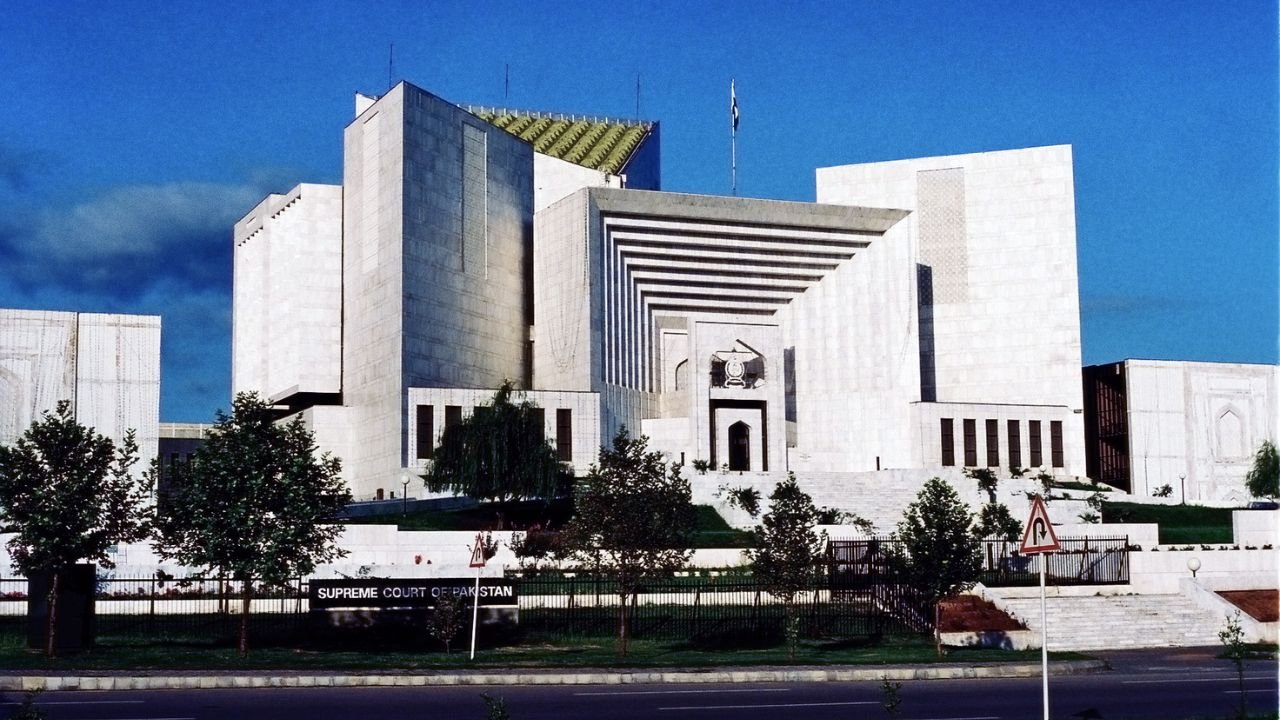
  • Supreme Court seeks reports on Sikh target killings, Jaranwala riots

    Supreme Court seeks reports on Sikh target killings, Jaranwala riots

    As reported by Geo News, the Supreme Court of Pakistan has, on Friday, asked the Inspectors General (IG) of Police to provide reports on cases pertaining to minority rights, asking what steps have been taken by the government on the Jaranwala tragedy and target killing of minority citizens.

    Sardar Bishna Singh, chairman of Baba Gurunanak Welfare Society, appeared in the Supreme Court, where he pointed out that while some of the people from Sikh community went to India in 1947, “We stayed in Pakistan, our religion also started from here. We are not claiming that we are being wronged because we are Sikhs but the Qabza group (land grabbers) does not take anything into consideration — temple, mosque, gurdwara.”

    He also highlighted the destruction of gurdwaras across the country, including Lahore.

    The Supreme Court described the target killing of the Sikh community as deplorable with Justice Ijazul Hassan stressing that the murders have forced Sikh community to move to different places or leave Pakistan, emphasizing that practical steps need to be taken to ensure their safety.

    The Supreme Court asked all the IGs for a detailed report on the recent target killings and also issued notices to the Attorney General and all Advocate Generals.

    The Apex Court also called for a report from a JIT on the Jaranwala tragedy, asking that the initial report be given to the petitioner.

    The petitioner said that after the Jaranwala tragedy, hateful speeches continue unabated.

    The court sought the report on Jaranwala tragedy from the Advocate General Punjab and the IG Punjab and also sought a report from the Punjab Interior Department on the steps taken after the incident, adjourning the hearing of the case for two weeks.

  • Unrest after Holy Quran burning in Sweden

    Unrest after Holy Quran burning in Sweden

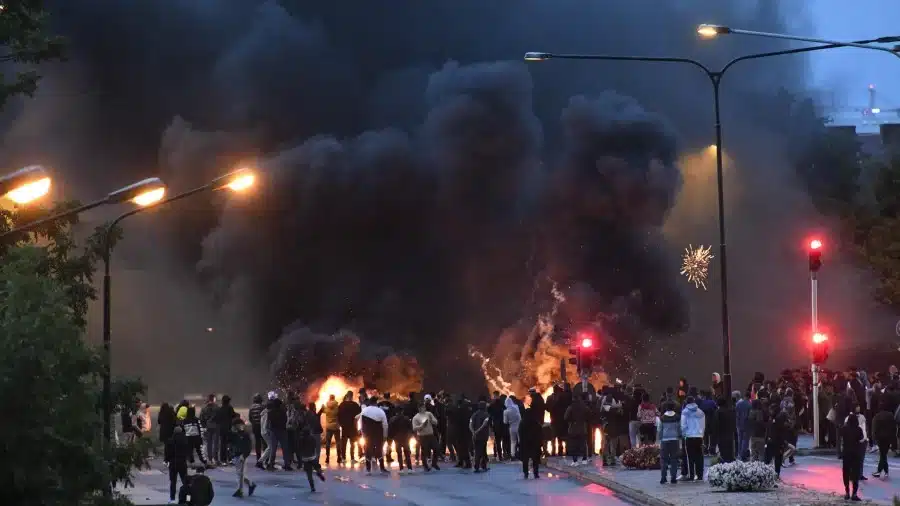
    Three men have been arrested in Sweden for participating in riots after another incident of the desecration of Holy Quran.

    Turmoil broke out after Iraqi anti-Islam activist Salwan Momika burned a copy of the Islamic holy book on Sunday.

    BBC reports that the police has detained 10 people for causing disruption in the city of Malmo.

    During the unrest, vehicles were set on fire and about a hundred people congregated in reaction to the desecration of the Quran.

    Momika has a record of desecrating the Quran during anti-Islam protests. According to the BBC, his actions have caused diplomatic outrage across the Middle East.

    Police officers have said that the protesters pelted them with stones while some threw electric scooters at police vehicles in addition to burning of the cars.

    This happened in the largely immigrant-populated area of Rosengard neighbourhood in Malmo.

    The city’s police area commander Petra Stenkula said while speaking to local media, “I understand that a public gathering like this arouses strong emotions, but we cannot tolerate disturbances and violence like the ones we saw on Sunday afternoon,”

    “It is extremely regrettable to once again see violence and vandalism at Rosengard.”

    Back in June, at the first day of Eid al-Adha, Momika set fire to a copy outside Stockholm’s central mosque

    Initially, Swedish police had given Momika a permit to protest, in conformity with the state’s free-speech laws but then said his case was to be investigated for incitement of hatred.

  • Pastor attacked near Jaranwala

    Pastor attacked near Jaranwala

    Pastor Alizer Sidhu of the Presbyterian Church survived a targeted attack in Khunwana, Faisalabad.

    The incident occurred when Pastor Sidhu was returning to his home following a prayer sermon. He was stopped by armed men who shot at him. He was then taken to the nearest hospital, where he was said to be out of danger.

    While being taken to the hospital, Pastor Sidhu recorded a video statement in which he said that armed men had stopped him and asked him to recite the Kalma, and when he refused to comply, one of the armed men chanted a slogan and opened fire at him.

    According to The Friday Times, the Pastor is a father of three.

    It is worth mentioning that on August 28, unidentified men spray painted slogans of Tehreek-e-Labaik Pakistan (TLP) on the boundary walls of the Presbyterian Church in Rehmat Town Khunwana, Faisalabad. This is the church where Pastor Alizer has been serving for the last four years.

    After the incident was picked up by the media, the slogans were removed in the presence of senior police officers.

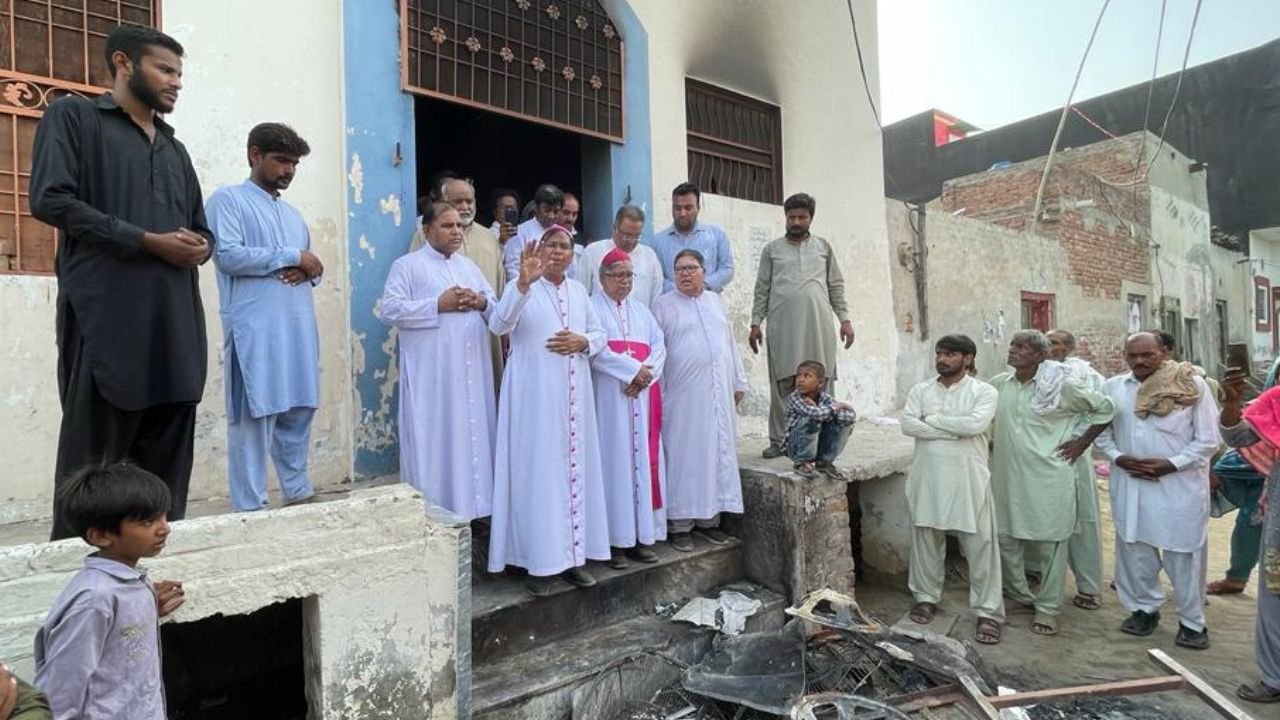
    Last month, the Christian community in Jaranwala was attacked by a large mob of 7,000 Muslims who destroyed their houses and set fire to their churches.

    According to The Friday Times, while the Christian religious and political leadership condemned the attack on the pastor, they also demanded justice, urging for a transparent investigation into the incident.

    Additionally, they also advised the pastors and minority rights activists to remain alert and abstain from travelling unnecessarily considering the sensitive and aggravating atmosphere of Faisalabad.

  • Blasphemy: what happened to the man who falsely accused 14-year-old Rimsha?

    In August 2012, Rimsha Masih was arrested on blasphemy charges. At the time, Masih was only 14 years old. She had allegedly desecrated the pages of Holy Quran by burning them.

    But what really went down?

    A local Muslim boy, Hammad, had asked Rimsha Masih to hand over the trash bag she was carrying. He inspected it and took the bag to the cleric of the local mosque named Hafiz Mohammed Khalid Chishti. As evidence against the girl, Chishti showed a few burned pages of the Holy Scripture to the police. As this incident came to light, there was a collective outrage from the local Muslims. And as narrated by Mohammad Hanif in an article for The Guardian, 300 local Christian families were forced to escape their residence and seek refuge in a forest in Islamabad.

    Chishti told AFP News that he thought Rimsha had ‘“deliberately” burnt the pages as part of a Christian “conspiracy” to insult Muslims and that action against such activities should have been taken “sooner”.

    Resultantly, minor Rimshah Masih was arrested. She spent more than three weeks on remand in an adult jail. During her trial, her age was evaluated through medical reports that concluded it to be 14 but with a “mental age younger than that”. This supported the claims of Masih being a child with Down’s Syndrome that the accuser’s lawyer rejected stating that the doctors are “favouring the victim and the state is also supporting her”.

    Rimsha was released on bail the following month of September after the police clarified in court that she was not guilty of the accusations made against her and that it was, in fact, the cleric himself who allegedly conspired against the young girl.

    But did Rimsha Masih get justice in the face of a false blasphemy case?

    Following Rimsha Masih’s acquittal, Hafiz Mohammed Khalid Chishti was arrested. Several witnesses against him were taken into record. It was claimed that Chishti had included the Holy Scriptures in the trash bag himself in order to portray Rimsha as the desecrator. The witnesses also claimed that Chishti believed that this was the only way to drive out Christians from their community.

    This meant that Chishti himself was now guilty of desecrating the Holy Scripture. The-then Investigation Officer (IO) Munir Jafferi, while talking to The Express Tribune, said that Chishti could be sentenced to life imprisonment if convicted of desecrating the Holy Book.

    He was sent on 14-day judicial remand under Section 295-B of the Pakistan Penal Code.

    By 2013, Rimsha Masih and her family escaped to Canada because even in her innocence, she was not safe in Pakistan. They were given permanent Canadian residency on “humanitarian and compassionate grounds”.

    All the while, that same year, all witnesses against Chishti withdrew their claims, and thus, the court dismissed all charges against him.

    History of Blasphemy Laws in Pakistan

    In 1860, the British colonisers introduced the Indian Penal Code. It consisted of a chapter that criminalised offences relating to religion in order to counter Muslim-Hindu-Sikh conflict in the Indian Subcontinent:
    Section 295, Injuring or defiling place of worship, with intent to insult the religion of any class
    Section 296, Disturbing religious assembly
    Section 297, Trespassing on burial places, etc.–Whoever, with the intention of wounding the feelings of any person (Section 297)
    Section 298, Uttering words, etc., with deliberate intent to wound religious feelings

    But in 1927, the laws buoyed out as vague clauses were added in the Penal Code, further deregulating the conflicts. As per 295 A, “Deliberate and malicious acts intended to outrage religious feelings of any class by insulting its religion or religious beliefs” was also a punishable offence.

    It is to note that the maximum punishment under these laws was from one year to a maximum of 10 years in jail, with or without a fine.

    In some instances, people took the law into their own hands. A case often recounted from the pre-partitioned India is of an objectionable book on Islam. It was written by a man named Pandat Chamupatt but anonymously published. The publisher was a journalist, Mahashe Rajpal, who owned a publishing house called ‘Rajpal & Sons’.

    The book was deemed as blasphemous by Muslims. Lawsuit against the publisher was filed under section 153 A: “Promoting enmity between different groups on ground of religion, race, place of birth, residence, language, etc.” Punjab High Court in Lahore, however, acquitted the publisher of the charges on “technical grounds” since the law did not highlight ‘adverse discussions of the life and character of a deceased religious leader’.

    The British Raj then made amendments to the law and included section 295-A to punish “deliberate acts intended to outrage religious feelings of any community… by words, either spoken or written”.

    The acquittal, nonetheless, led to protests, criticism, and threats; and after several failed attempts, the editor of the publishing house was assassinated in 1929.

    The next reported case was in Karachi in 1934. Nathu Ram, an active member of Arya Samaj, too, had allegedly written an objectionable book on the history of Islam.

    This, once again, prompted an angry reaction by the Muslims. After a trial, he was imprisoned for a year and fined for his offence. Ram had filed an appeal in the court but during one of his hearings in March 1936, he was attacked and killed.

    His killer was a man named Abdul Qayum from Hazara from the North West Frontier Province (now Khyber Pakhtunkhwa). Muslims back then gave him the status of Ghazi and a shrine was built after his death.

    Even then, however, killings over blasphemy were comparatively a rarity.

    Post-1947, with Muslims and Hindus officially divided, the anti-blasphemy laws remained intact in Pakistan.

    These laws were cemented under the dictatorship of General Zia-ul-Haq.

    General Zia made changes to the Penal Code and added five new clauses between 1980 to 1986, including:
    295 B, which criminalises the desecration of the Quran.
    295 C, which criminalises with life imprisonment or the death penalty any direct or indirect desecration of Prophet Muhammad (PBUH).
    298 A, which criminalises direct or indirect desecration of wives and relatives of Prophet Muhammad (PBUH).

    At first, section 295-C only contained life imprisonment as the punishment for blasphemy but it was replaced with death penalty as the parliamentarians pushed it on the basis of ijma (consensus of Islamic scholars). The Federal Shariat Court (FSC), too, defended the death penalty for blasphemy even though four out of seven ulemas that were consulted by the FSC opposed the ruling. The opponents of the death penalty included Jamaat-e-Islami’s founder, Maulana Maududi; head of the Barelvi sect, Ahmad Raza Khan; and the head of the Deobandi sect, Mahmood Deobandi.

    They all agreed that blasphemy was a pardonable offence and that “death penalty cannot be given for single offences”.

    In 2010, Dawn published an article tracing the qualitative results of the anti-blasphemy laws. While less than 10 cases of blasphemy were reported between 1927 and 1986; post-1986, as many as 4,000 cases were recorded. Then, between 1988 and 2005, 647 people were charged out of which 50 percent were non-Muslim. More than 20 people have been murdered for alleged blasphemy.

    49 per cent of 361 cases of blasphemy offences registered between 1986 and 2007 were against non-Muslims even though non-Muslims make less than four per cent of the total population.

    The situation began to worsen in 2011 with the murder of former governor of Punjab, Salmaan Taseer, who was vocal against the anti-blasphemy laws and supported Asia Bibi who was then given death penalty for committing blasphemy (but acquitted in 2019). Taseer’s killer, Mumtaz Qadri, was arrested and was later hanged but he became a hero to many who hailed him for his deed. More than 100,000 people attended his funeral and his shrine is still visited by hundreds.

    Lawyer Asad Jamal recalls the day after Salmaan Taseer’s death. He was on Mall Road, Lahore, where he spoke with sepoys regarding Taseer’s murder. “No one wanted to condemn the act”, he still remembers. “It was very telling of the direction the country was heading towards.”

    Since 2011, the number in cases, accusations, and killings have increased. In a report by Centre for Research and Security Studies (CRSS), as of 2021, 43 people have been extrajudicially killed since 2011 and 1,185 accused.

    When it comes to the role of lawyers and judges in blasphemy cases, Jamal believes that it is simply reflective of the socio-political situation of Pakistan. The state of affairs have worsened over the past 20 years. Apart from frail economy and political rifts, there is a major element of fundamentalism that comes in the shape of parties like TLP and their massive support.

    “Such an environment doesn’t encourage a lot of lawyers to take up blasphemy cases.”

    He also adds that very few lawyers have “worthwhile legal skills” to take up blasphemy cases. Many simply do not want to deal with these issues. People like Asma Jahangir and Abid Hasan Minto were not mainstream but exceptions. Apart from being courageous, they were competent. “But now, the times have changed,” he adds.

    Peter Jacob, a human rights activist and the director of Centre for Social Justice (CSJ), says that while some politicians condemn violence against the minorities like the recent Jaranwala case, it, nonetheless, always has a cost one has to bear due to the sensitivity of the matter.

    While talking about the youth belonging to religious minorities, Jacob has noticed a segment within Christians and Hindus who are actively participating in political discussions on- and offline. The examples are the recent protests held in various cities across Pakistan, including Karachi, Lahore, Swat, Kurram district, and Rawalpindi against the Jaranwala incident.

    “I am quite impressed by their sense of belonging and their affiliation with the case of a better Pakistan, their respect for human rights and democracy. Civil liberty will play a role of a natural healer — healing of the society and articulation of the way forward out of these troubled times,” he added.

    Jacob, however, believes that there has to be resolve at the national level by powerful quarters to understand the height of radicalisation that has taken place in order to control the lethality of the problem. “While there is political fragmentation, a free and fair atmosphere must be created where political forces can play their role and come up with people-centric solutions that will entail the process of self-healing and accountability.”

  • Pakistani media, stop obsessing over Sunita Marshall’s religion

    Pakistani media, stop obsessing over Sunita Marshall’s religion

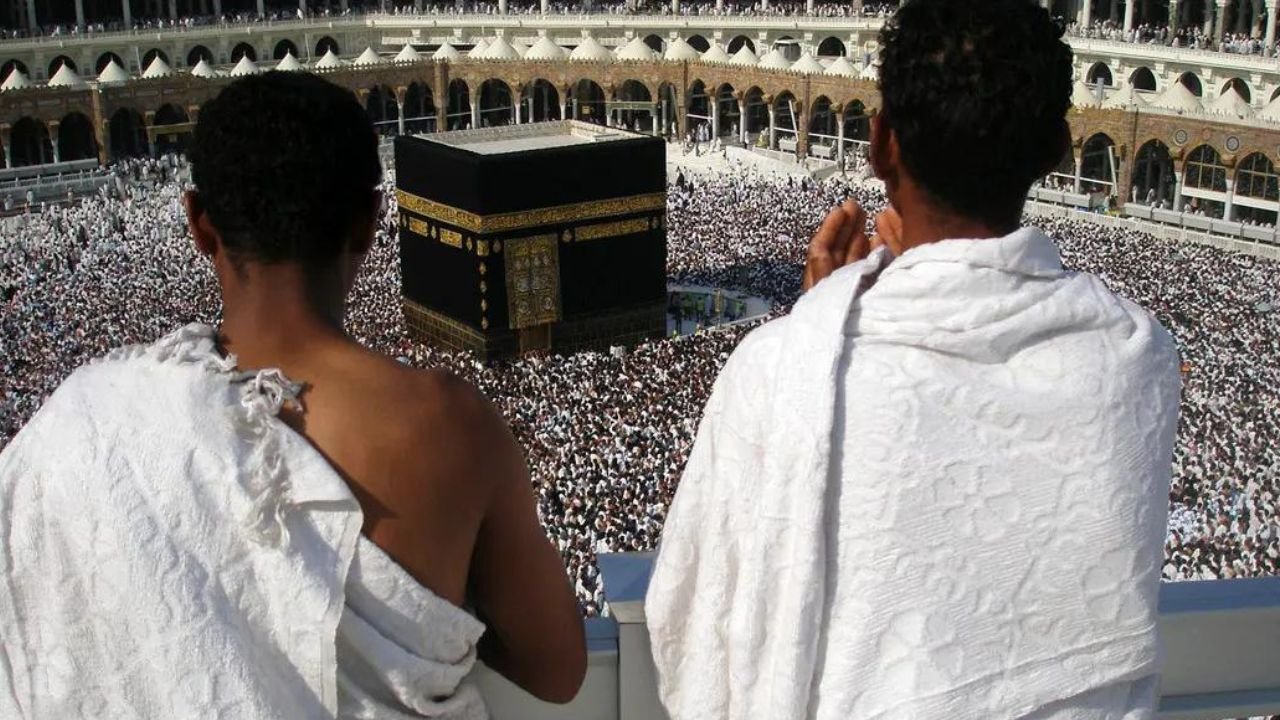
    The country’s media has decided that the average citizen is not raging inflation but whether a fully grown woman has decided to convert from Christianity to Islam or not.

    In an interview with Youtuber and journalist Maliha Rehman, actor Hassan Ahmed, Sunita Marshall’s husband, was asked about how he deals with the negative comments, especially regarding his marriage to the ‘Sar-e-rah’ actress. The actor responded that it is his deepest desire that his wife converts to Islam, but understands that these things do take time. He further went on to say that Sunita will only come towards Islam when she notices the positive inside him.

    But newsflash for the two of you, Sunita isn’t special just because she ‘could’ convert to Islam. She’s a fully grown human being who can dress how she wants and follow what religion she chooses. It is shameful how this is a topic that needs a 10 minute long discussion.

    The discussion arose just a few weeks after Sunita was questioned by controversial Youtuber Nadir Ali about her religious beliefs. She calmly handled the situation saying that it was her choice whether she chooses to remain a Christian or convert to Islam. But the fact remains, Sunita’s religion is not something to debate, and it’s shameful that her husband is commenting on personal matters in the public sphere.

    We were incredibly happy to witness how a flood of celebrities and social media users applauded the ‘Khuda Aur Mohabbat’ actress for bravely handling Ali’s misogynist remarks, but it doesn’t mean she needs to be subjected to this kind of questioning time and time again. This is the Islamic Republic Of Pakistan, where under the law, people from all kinds of faiths are allowed to practice their religion without any fear.

    It’s the year 2023, you have people leaving the country because they’re unable to make a decent living, so obsessing over whether Sunita Marshall will become a Muslim or not is irrelevant. Celebrity tabloids, please do better and let her live without feeling like her religion is in the spotlight all the time.