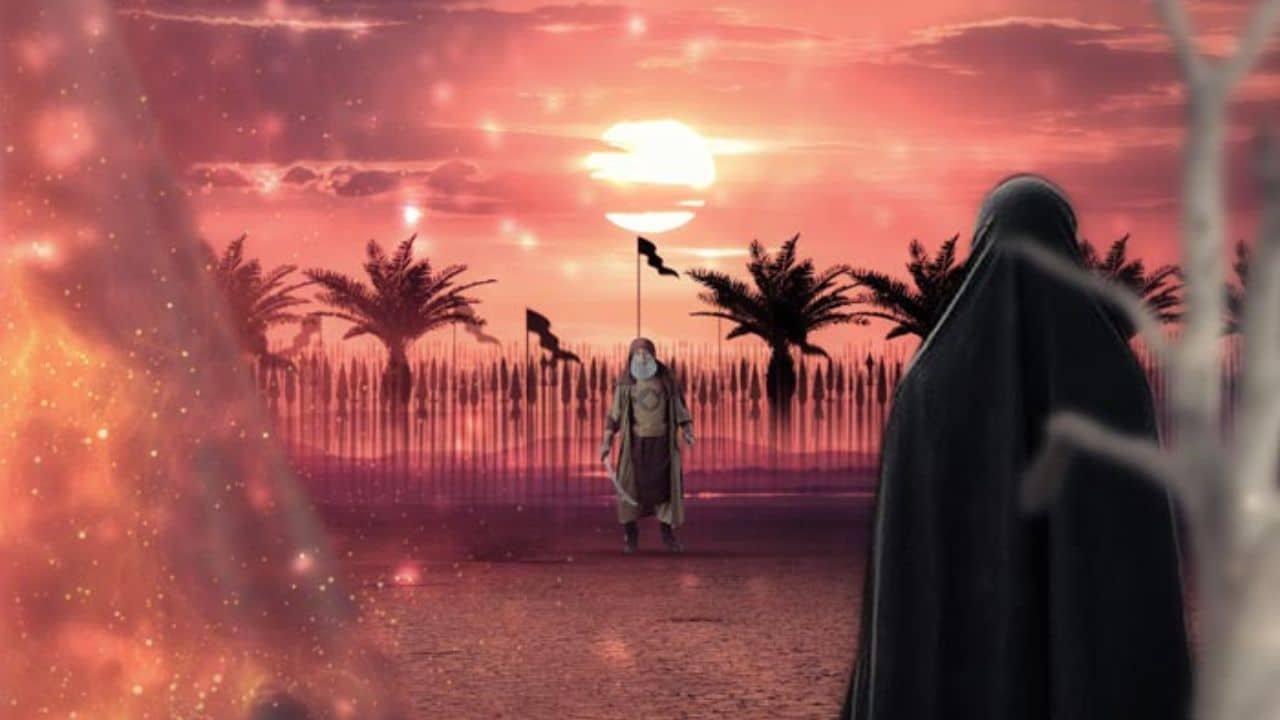
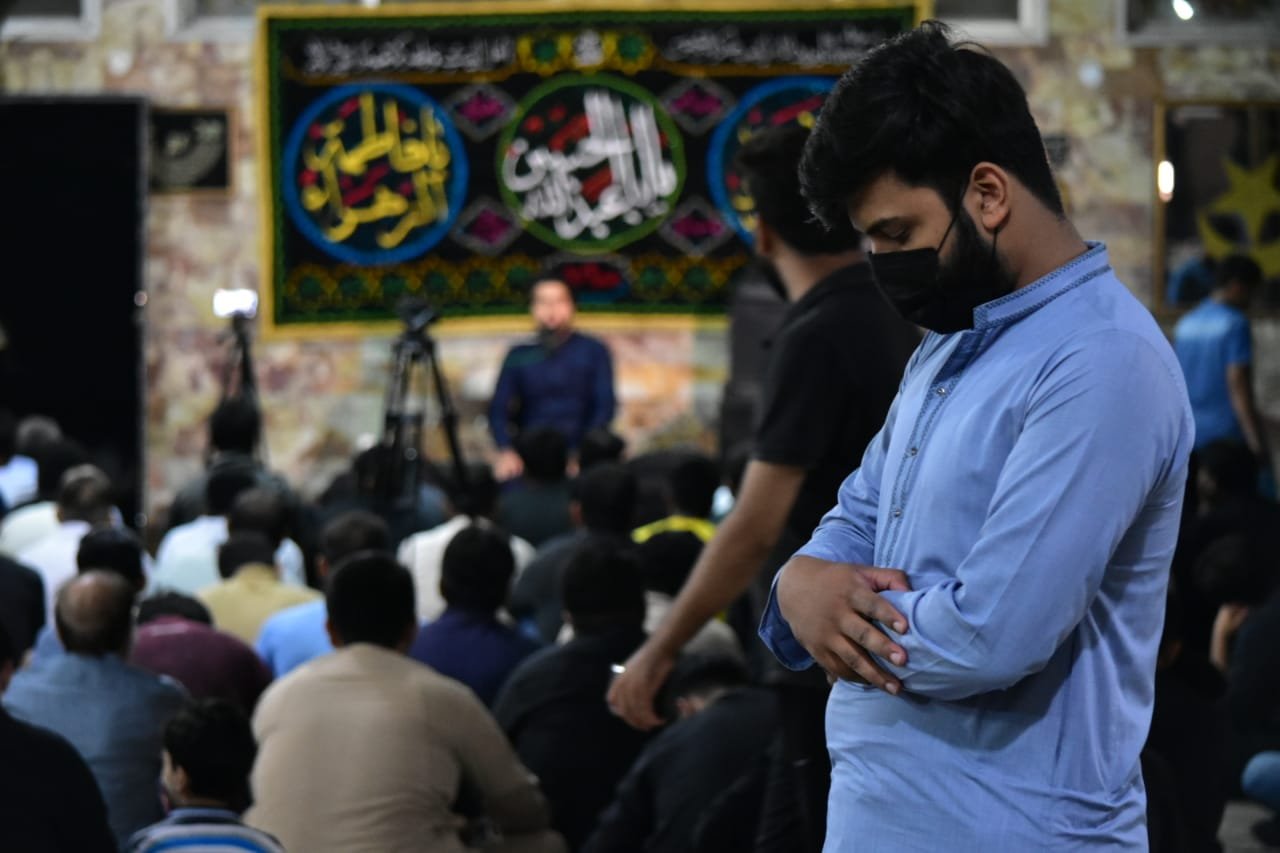
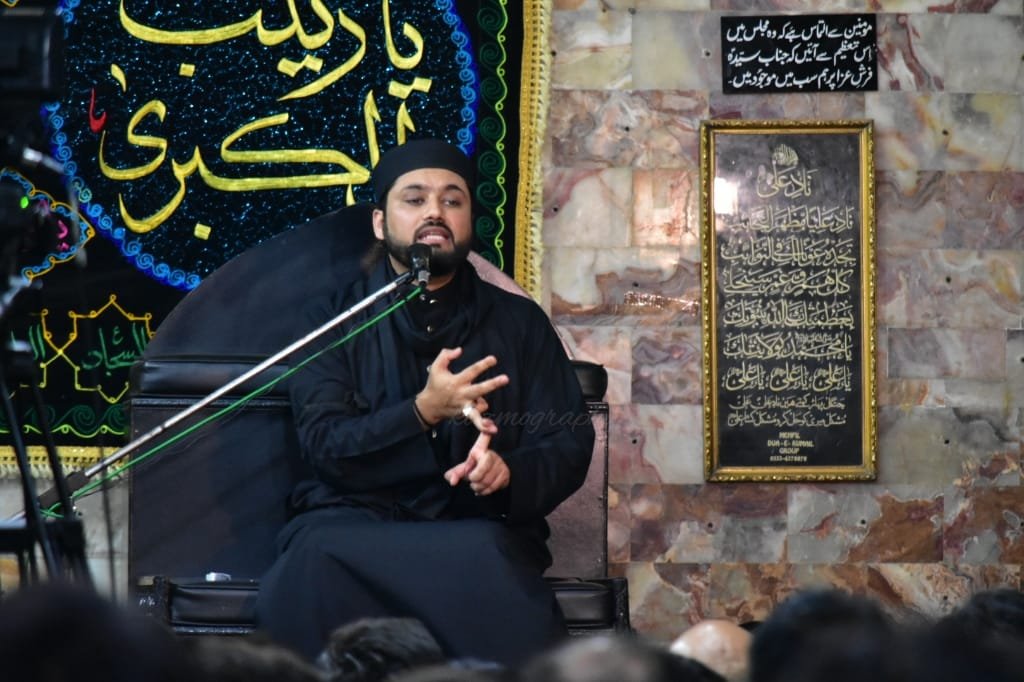
The month of Muharram is a time of collectively mourning the heroic sacrifices of the Prophet’s family at the battle of Karbala. Among the many heroic figures there was Bibi Zainab (RA), the sister of Hassan and Hussain (RA) and daughter of Hazrat Ali.
Had it not been for Zainab, that the tragedy of Karbala would have remained unknown because of the propaganda campaign Yazid and his followers launched to justify their crimes.
Her efforts to preserve the incident in history ensured that generations ahead would remember the sacrifices of Hussain (RA).
The third child of Hazrat Ali and Hazrat Fatima, Zainab stood beside her brother when he refused to swear allegiance to Yazid’s caliphate. It was these actions that drove Hussain and his followers out of Madinah to travel to Kufa.
After the martyrdom of Hussain (RA), the camps were looted as tents comprising of women and children were set on fire and they were bound in chains, paraded barefoot back to Kufa and then Damascus, Syria, where they were thrown in to prisons. It was at this time that Zainab (RA) took control and became a voice for the people. She lost two sons, her brothers and nephews to the tragedy of Karbala, but rose to the occasion to ensure that the events are never forgotten.
At Yazid’s palace in Damascus, Zainab (RA) gave a rousing speech, that has regarded her to this day as ‘The Hero Of Karbala’
“In the name of Allah, The most Gracious, the most Merciful. All praise is due to Allah, the Lord of the worlds. May praise and salutations be upon my grandfather, the leader of Allah’s messengers and upon his progeny. O Yazid! Do you think that we have become humble and despicable owing to the martyrdom of our people and our own captivity? Do you think that by killing the godly persons you have become great and respectable and the Almighty looks at you with special grace and kindness? You have, however, forgotten what Allah says: The disbelievers must not think that our respite is for their good We only give them time to let them increase their sins. For them there will be a humiliating torment. (Quran 3:178)
O son of the freed ones! Is it justice that you keep your women and slave-girls in seclusion but have made the helpless daughters of the Holy Prophet ride on swift camels and given them in the hands of their enemies so that they may take them from one city to another. It will be the day when Allah will deliver the descendants of the Holy Prophet from the state of being scattered and will bring all of them together in Paradise. This is the promise which Allah has made in the Holy Quran. Do not think of those who are slain for the cause of Allah as dead. They are alive with their Lord and receive sustenance from Him.(Quran 3:169)
Our blood is dripping from their hands and our flesh is falling down from their mouths.
You (Yazid) may employ your deceit and cunning efforts, but I swear by Allah that the shame and disgrace which you have earned by the treatment meted out to us cannot be eradicated.”
The speech completely moved members of Yazid’s court, listening to a battered and chained woman recount how Hussain (RA) was not an enemy, but a hero who had died protecting the nature of Islam and for righteousness to succeed over evil. Many stood up and protested against Yazid’s tyranny, as a result of which they were removed from court.
Zainab bore the heavy task of ensuring that the events of Karbala are not lost to propaganda of Yazid, reminding everyone how the fearlessness of her father and her grandfather, Hazrat Muhammad (P.B.U.H) was also present within her. She set up the first majlis in Syria after she was freed, and recounted to throngs of people the events of Karbala and how all the martyrs ensured that the legacy of Hussain (RA) as someone who fought for justice, lives on.
In difficult times it is nice to see doctors of this country doing their best to offer solace to people.
A viral video on social media shows a group of doctors from Agha Khan University (AKU) reciting the naat ‘Faasalon Ko Taqaluf’ for a patient in order to calm them down.
Since it was uploaded on social media, the video has received over 79.6K views on Twitter, with many users praising the professionals for such a moving and kind gesture and going beyond the call of duty to help a patient.
The video was first shared by the Instagram page lifeataku. Underneath the post, people began sharing their experiences of doctors in hospitals offering solace to their loved ones when they were suffering. One user wrote:
“I was admitted in the hospital for multiple organ failure and was in ICU. I remember the nursing staff playing Surah Rehman twice a day for the patients on their phones. It was such a soothing and pure experience to listen Surah Rehman, Alhumdulillah.”
Another wrote:
“When in South City my dad was admitted and was on bipap in covid days , the staff was keeping mobiles full time on eith surah rehman and yaseen no doubt whoever died are martyrs insha Allah like my dad ”
Pakistan Muslim League-Nawaz (PML-N) Vice-President Maryam Nawaz has said that religion should not be used for political benefits and blasted Pakistan Tehreek-e-Insaf (PTI) Chairman Imran Khan for allegedly using faith for political gain.
“Using religion for personal motives is very bad. I have suffered this and I am a victim”, she said while talking to members of the media.
“I think religion is a personal matter but it does not remain a personal matter when you say in rallies that ‘voting for PML-N is a sin and voting for me [Imran] is righteous and if my party members switch loyalties then it’s shirk’,” she stated, referring to a recent controversy speech given by Imran Khan at a rally.
“Shirk’s definition is associating partners with God. Are you changing the entire dictionary and the meaning of religion for your disgusting politics,” she asked the former Prime Minister.
Shirk is considered to be one of the most heinous sins in Islam.
“I think all institutions, whether the judiciary or army or politicians or government, should acknowledge he [Khan] is a fitna (chaotic miscreant) who was launched for destruction and from whom no one is safe.”
Maryam said that she is not in favour of fuel or electricity price increases.
“I will request the government to focus on it. I don’t support this decision and it should be corrected. However, it will take time to stabilise the economy after what Imran Khan did,” she said, adding that PM Shehbaz Sharif has saved the country from default and slowly the economy will begin to revive.
Moreover, the PML-N vice president asked Khan to dissolve the provincial assemblies of Punjab and Khyber Pakhtunkhwa (KP) if he wants fresh general elections.
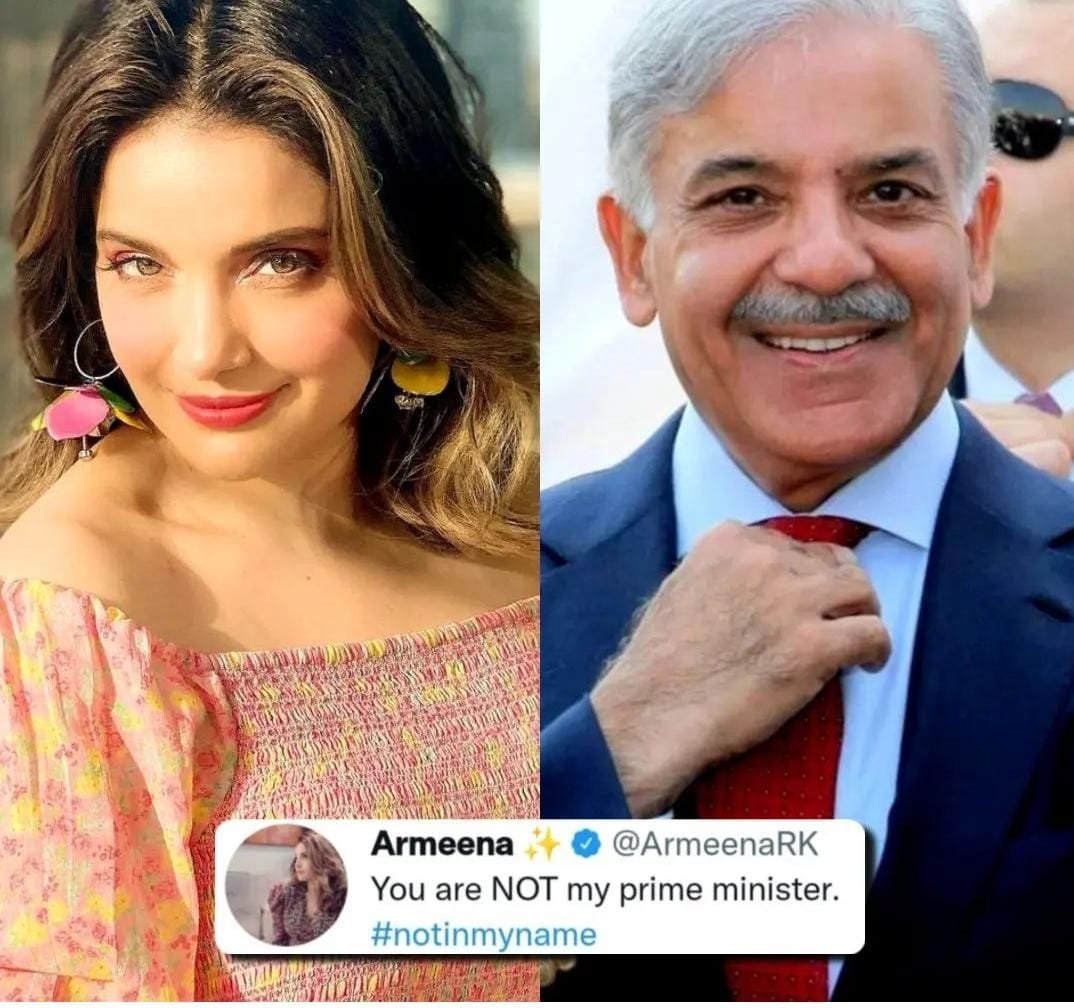
Actor Armeena Rana Khan has announced on her Instagram handle that she refuses to accept Shahbaz Sharif as the new Prime Minister after Imran Khan’s ouster.
The Janaan star is currently based in Canada.
She also tweeted a prayer after Imran Khan’s vote-out, “May God protect Pakistan and it’s loyal citizens from darkness and the forces of evil that are about to consume it once more. Ameen.”
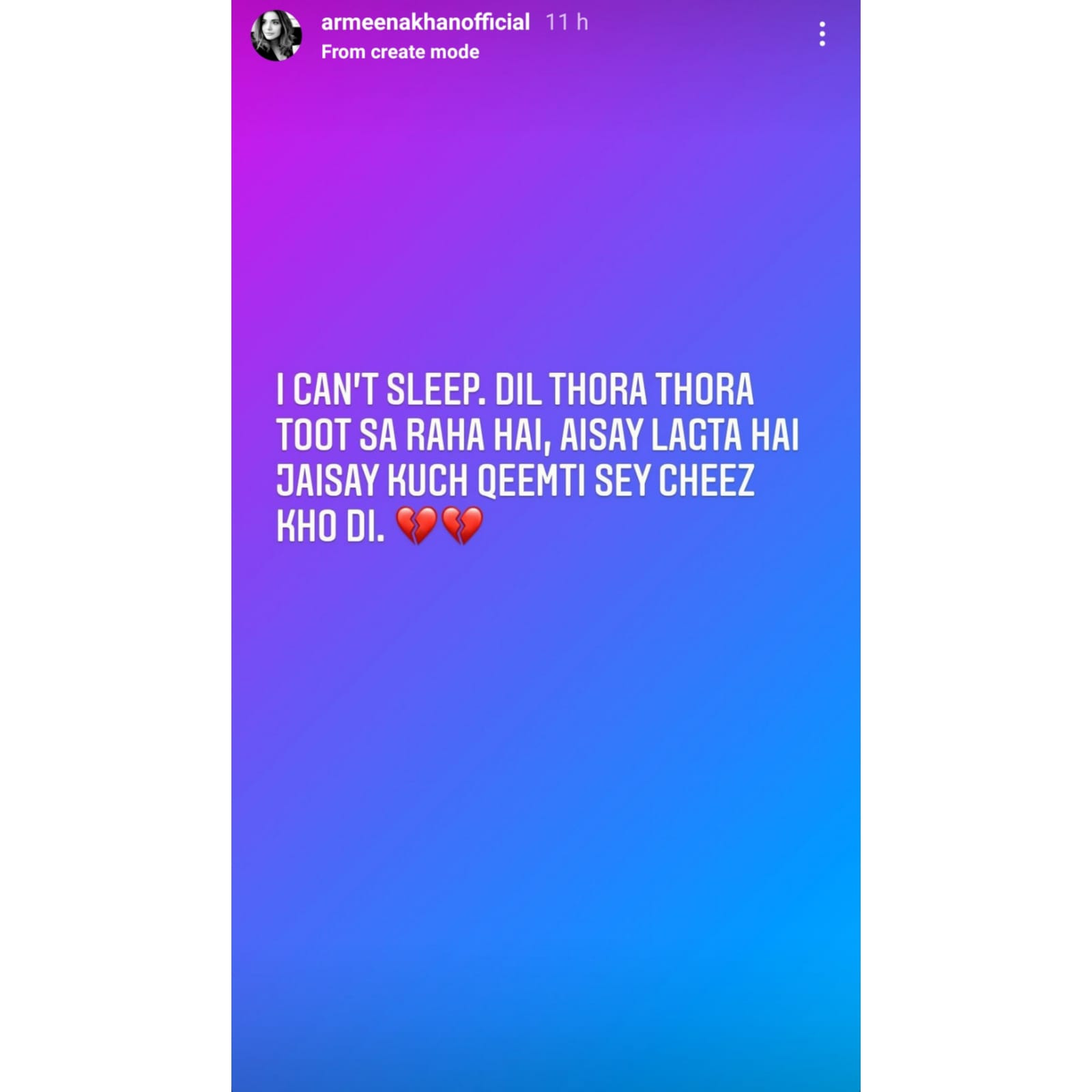
Unable to fall asleep, she took to her Insta Stories to add, “Dil thora toot sa raha hai. Aesa lagta hai jese kuch qeemti si cheez kho di (My heart is breaking a little, it feels like we’ve lost something very precious).”
Earlier she replied to netizens who criticized her tweets in which she highlighted the social hypocrisy towards the choice of dressing of local female celebrities at the Hum Style Awards.
The Sherdil diva wrote, “Truth is a bitter medicine. My recent statement hit the bullseye, I know this because it brought all the cockroaches out, waving their fake flags of religion and nationalism. Fake faith by day, a farrago of filth by night.”
Several female celebrities have been criticized by netizens over their choice of dressing at the 5th Hum Style Awards. Actress Armeena Rana took to Twitter to express her opinion on the on-going backlash for the female celebrities.
After receiving backlash on her tweet the Daldal actress deleted it.
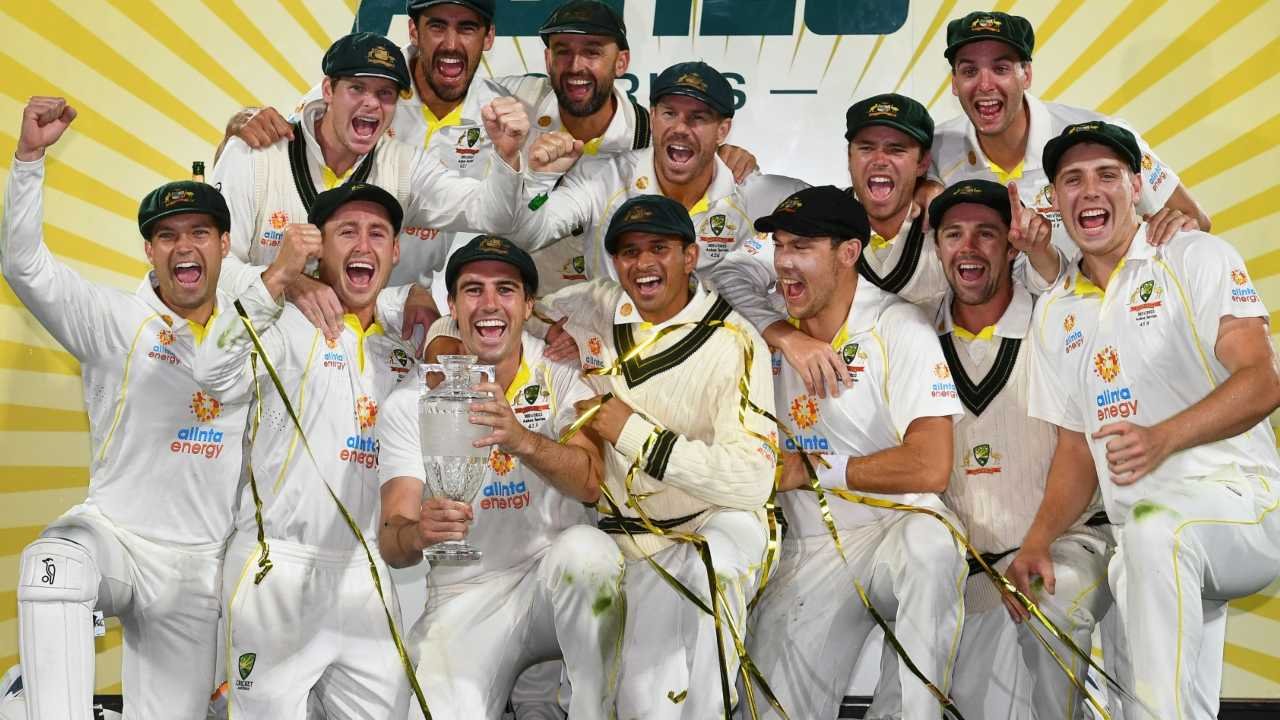
Australian Test Captain Pat Cummins has won heart of several fans around the world after a great gesture with Muslim batter Usman Khawaja during the Ashes trophy celebration.
Australia defeated England 4-0 under the captaincy of fast bowler Cummins and successfully retained the Ashes.
Spraying champagne all around the place and chugging is quite common during the trophy celebrations of Australian cricket team. But the moment which caught everyone’s attention was when Cummins could be seen calling back Khawaja to join the trophy celebrations and told his teammates to keep the champagne bottles away. Besides his on-field captaincy during the Ashes, the 28-year-old was praised for his incredible off-field gesture too.
Several people lauded the pacer for his brilliant gesture on Twitter. Have a look:
Pat Cummins realises Usman Khawaja had to step aside because of the alcohol spraying celebrations, asks his other teammates to put the drinks away and calls Khawaja back over to the centre of the victory photo to celebrate. This was nice ❤https://t.co/zykZ4bWa9Y
No but I’m Still thinking about this greatness from Pat Cummins and others to make way for Uzzii to celebrate with the team by leaving the alcohol aside. Each and every second feeling more respectful towards them ❤️ #ASHESpic.twitter.com/rjnJguq958
Usman Khawaja had to miss part of the celebrations earlier today as alcohol was present but Pat Cummins made sure he was called over and the drinks put aside https://t.co/ixFdUsbWWv#AUSvENG#Cricket
May seem like a relatively small gesture by Pat Cummins, but would have been massive for Usman in feeling acknowledged and part of the team https://t.co/EgYOhhDfTY
“Usman is obviously Muslim, so he doesn’t like champagne being thrown. I just made sure he got up there and no champagne was thrown,” Cummins told reporters after the match.
While taking to Twitter, Usman thanked his teammates for stopping their usual champagne celebration for him. “Inclusivity in the game and our values as a sport are so important,” he wrote.
If this video doesn’t show you that the boys have my back, I don’t know what will. They stopped their normal champagne celebrations so I could rejoin. Inclusivity in the game and our values as a sport are so important. I feel like we are trending in the right direction https://t.co/LrthzP9v2N
Pakistan-born Khawaja is the first-ever Muslim to represent the Australian men’s team. He made a stunning comeback in the fourth Test match at the Sydney Cricket Ground (SCG) where he scored centuries in both innings.
The Chief Minister (CM) of the Indian state Haryana, Manohar Lal Khattar said that namaz should not be offered in the open, adding that an earlier decision where some sites had been reserved for the purpose had been withdrawn, reports The Indian Express.
Khattar said the government had informed the police and the deputy commissioner that the issue needed to be resolved. “To resolve it, everyone offers prayers at their own place. Such practices should not take place in the open. This practice of offering namaz prayers here in the open will not be tolerated,” he stated.
“They (Muslims) have said that they have several places where they should be given permission to pray. Some of their properties or those under Waqf board are encroached up, how they can be made available to them is being discussed. Or they can offer prayers in their homes. Offering namaz in the open and this confrontation, we will not allow this confrontation to continue,” Khattar said.
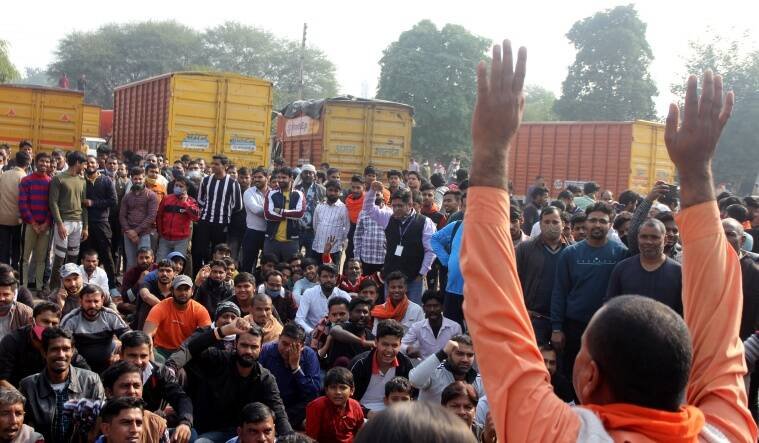
The announcement came after tension in Gurgaon city, where Hindu groups in several episodes disrupted Muslim Friday prayers and put pressure on authorities to stop Muslims from offering the prayers in open spaces.
Talking about the withdrawal of the agreement, Bharatiya Janata Party’s (BJP) Khattar said, “A decision had been taken earlier after consultation, but that decision too where some spots had been reserved, we have withdrawn it. Now, talks will be conducted with a fresh approach again. Everyone should get the facility. No one’s rights should be infringed, but no one will be forced.”
Authorities there had reached an agreement in 2018 in which Muslims were allowed to offer prayers at designated areas in the city.
While the CM meeting was on, some local residents and members of pro-Hindutva groups occupied the area outside the Sector 37 police station, which had been reserved for namaz prayers.
It is reported that the group conducted a “condolence meet” to mourn the demise of Chief of Defence Staff of the Indian Armed Forces (CDS) Bipin Rawat and other defence personnel who were killed in a helicopter crash.
The group also chanted slogans of “Jai Shree Ram” (Hail Lord Ram) and “Bharat Mata ki Jai” (Hail Mother India) at the site.
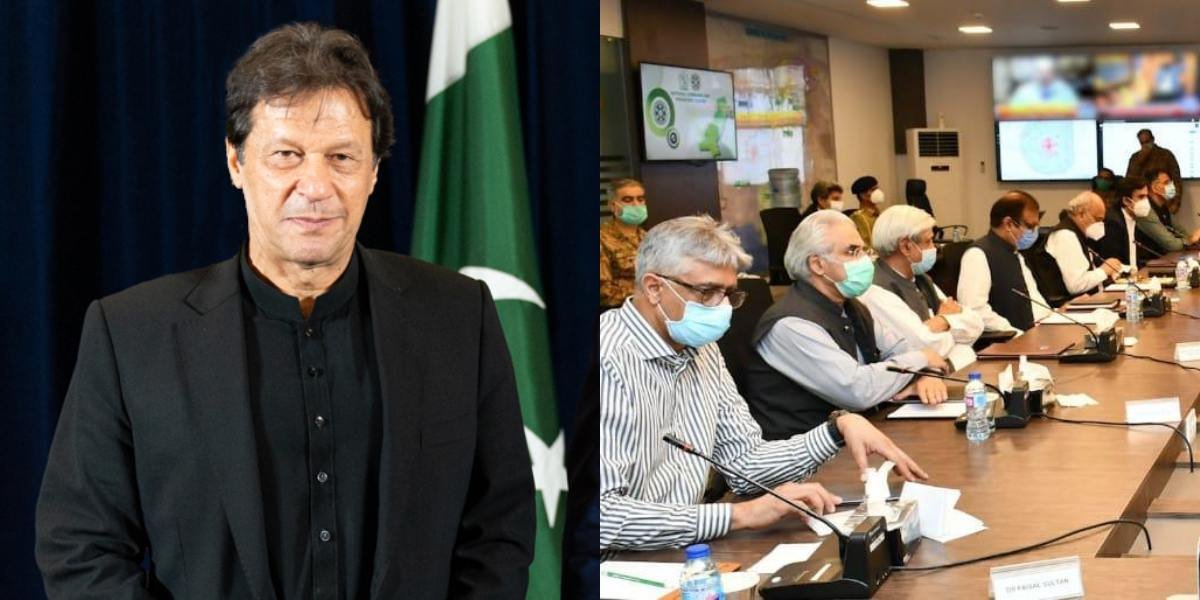
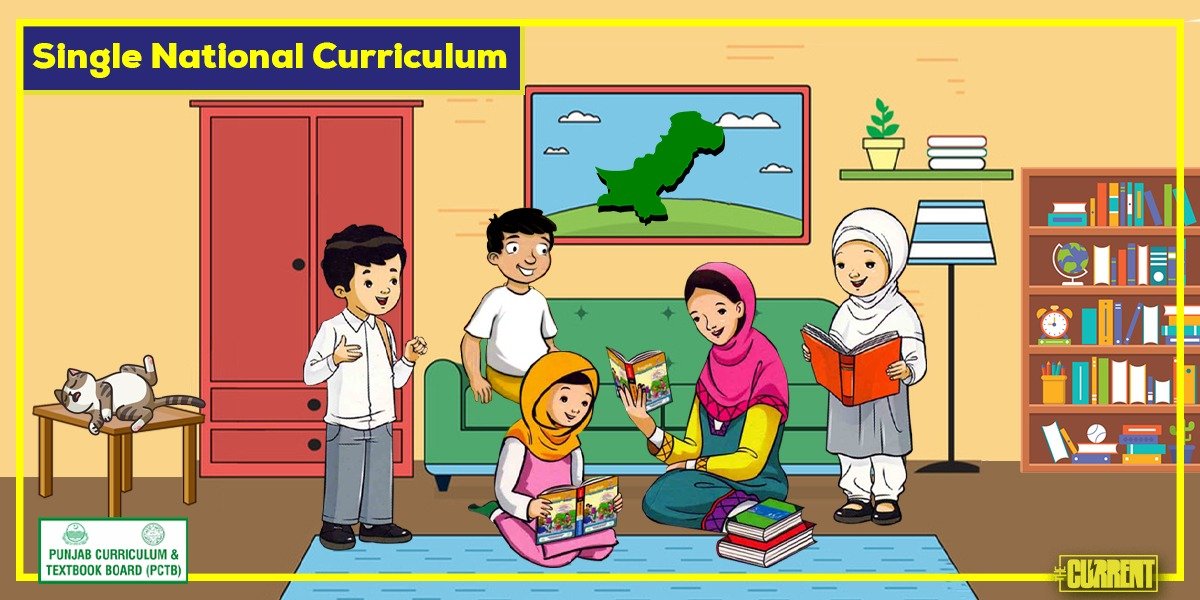
On August 16, 2021, Prime Minister Imran Khan officially launched the Single National Curriculum (SNC). The newly launched curriculum was prepared by the National Curriculum Council (NCC) and the Ministry of Federal Education, in consultation with the provinces. According to PM Khan, “SNC would transform the nation into a unified one.”
What is SNC?
According to the Ministry of Federal Education and Professional Training, the SNC is a ‘uniform’ system of education, which means the same curriculum for everyone. All public schools, private schools, and madrassas were meant to have the same curriculum so that the learning outcomes are similar and without any discrimination in teaching standards. This is not the first time SNC was imposed in Pakistan. It was previously introduced in 2006 by Former President Musharraf. Whereas the previous SNC was a curriculum-based initiative, the one introduced by the PTI government is imposing the use of the textbooks produced by the provincial boards.
Is it being implemented across the country?
No. Sindh has decided not to implement the curriculum since education is a provincial issue. Only Punjab and Khyber Pakhtunkhwa have enforced it so far. However, many schools in both provinces — including the prestigious Aitchison College, Lahore — expressed their concerns over the books in the curriculum. The Director of the National Curriculum Council (NCC), Dr Mariam Chughtai, has also said that madrassas will implement the SNC syllabus in five to six years, which undermines the reason why the government had wanted to introduce the SNC in Pakistan – to bring madrassas into the mainstream so students would be able to get jobs in other professions after they graduated.
Controversies surrounding the SNC
After the SNC syllabus was imposed on schools across Punjab, many controversies surrounding the books and the curriculum came forward. From the disparity in gender representation, the reinforcement of patriarchal gender roles, the lack of female heroes, and religious texts in the non-religious books.
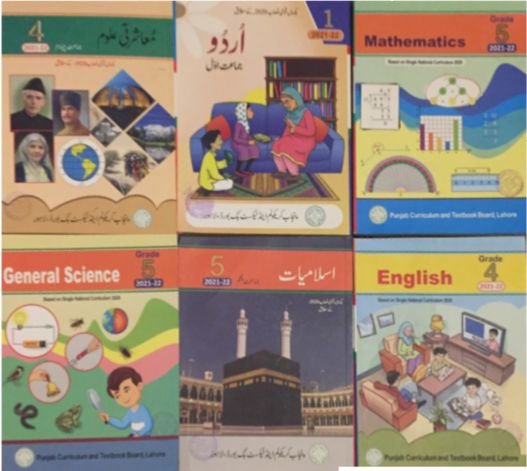
To see if the criticism is valid, The Current analysed the following books published under the Punjab Textbook Board (PTB):
Urdu books from grades 1 to 5, English books from grades 1-5, Mathematics books grades 1, 2, 4, and 5, General Science grades 4-5, Waqfiyat Aama grade 1 and 3, Social Studies 4-5, and Islamiat grade 1- 5.
Two books were not available at the time of research. Grade 3 Math and Waqfiyat Aama grade 2, which have not been included in the study.
The analysis here has been divided into two parts.
Part one comprises the data analysis of all the books included in the SNC by the Punjab Text Book board.
Part two comprises the data analysis of individual subjects being taught to the students.
We studied the total number of male and female representations in the books, a comparison of the eastern and western wear of both genders, the presence of religious (Islam and others) content in non-religious books, and studying the distribution of power roles assigned to both men and women.
Here is the list of most common criticism against the curriculum and the evidence we found:
SUMMARY OF CONTENT IN ALL SNC BOOKS
1- Disparity in Gender Representation:
One of the most debatable points in the entire SNC is the representation of men and women.
After a thorough evaluation, we found that the concerns about the disparity in gender representation are TRUE.
The study reveals that a total of 60.2 percent of the books have images of men, including boys and only 39.4 percent of the books have images of women, including girls.
2-Women represented in hijab vs non-hijab, and women in western clothes:
What the women are wearing became a source of contention in the discussion about the SNC, with critics suggesting that the women should equally represent the country in terms of the hijab, eastern clothes, and the choice to wear western wear.
It is TRUE that there is no equal representation of women’s appearance in the books.
Women’s appearance was divided into three categories.
A) Number of women wearing eastern clothes with hijab.
B) Number of women wearing eastern clothes without hijab.
C) Number of women wearing western clothes.
Our research shows that 41.6% of all women and girls in the SNC books are wearing a hijab, 28.9% are wearing eastern clothes without a hijab, and 29.4% of the images show girls wearing western wear. It is important to note that in the western wear percentage, almost all of the images are of young girls. Older women are not shown wearing western wear.
3-Men represented in eastern vs western clothes:
Since the appearance of women in eastern wear and hijab became controversial, we also studied how many times men appeared in western or eastern wear.
A massive 79.9 percent of men were seen wearing western clothes, in comparison to 20 percent dressed in eastern clothes.
4- More men in ‘power roles’ compared to women:
Another controversy suggested that the books did not show women in positions of ‘power’, and they were mostly listed as helpers or homemakers. While there were many images that showed women in ‘inferior roles’ to men, there were women that were shown in roles of power.
This controversy is TRUE.
We defined power roles shown in the books as doctor, pilot, lawyer, police officer, traffic warden, army sports personality, etc and after analysing all the books, we found that a men are given power roles three times more than women. The results in the graphic below are based on the total number of images shown of men and women in all the SNC Punjab books.
I
5. Religious content in non-religious books
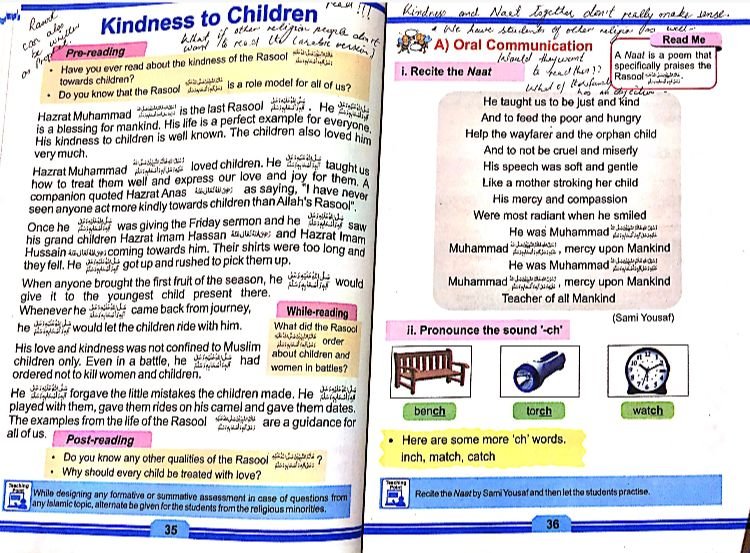
In almost all the books which were studied, we saw the presence of religious references or mentions in non-religious books. Minorities felt their rights were being compromised since books that are not for religious studies should not have references to a specific religion, which may come under the context of ‘preaching’.
In our analysis, we saw a total of 7.77 percent of religious text in all SNC non-religious books, which lends TRUTH to the fact that there is religious content in non-religious books.
Religious content is present in 7.7 percent of English, Math, Social Studies, Urdu, Science, and General Knowledge books.
7.47 percent of books have references to Islam while 0.27 percent mention other religions in all non-religious books.
Dr Mariam Chughtai, while answering a question for The Current about the religious references in non-religious books, did not provide a clear answer but stated that these are model books that require changes.
SNC BOOKS ANALYSIS – SUBJECT ANALYSIS
This section of the report comprises an analysis of individual subjects being taught to students. The subjects under study were, Urdu books from grades 1-5, English books from grades 1-5, Mathematics books grades 1, 2,4, and 5, General Science grades 4- 5, Waqfiyat Aama (General Knowledge) grades 1-3, Muashrati Uloom (Social Studies) grades 4-5.
The graphical representation of the subject-wise evaluation is as follows:
English:
In 668 pages of English books, 58.1 percent have male representation while females have 41.8 percent.
29.7 percent of women are seen with Hijab and 70.2 percent are without Hijab.
There is a total of 9.8 percent presence of religious text in English books. This is based on the total number of pages in English books.
Mathematics:
In 672 pages of the Math books, when gender representation was analysed, 51.1 percent of the books have male representation and 48.8 percent have female representation.
A total of 53.9 percent of females are seen without hijab and 46 percent are seen wearing hijab.
The Math books have a 4.1 percent presence of religious text. This is based on the total number of pages in Math books.
Urdu:
The five Urdu books comprising 791 pages. A total of 59.7 percent presence of males are seen as compared to 40.4 percent of females.
58.5 percent of women/girls are seen wearing hijab and 41.4 percent are seen without hijab.
12.8 percent of religious text is present in Urdu books. This is based on the total number of pages in Urdu books.
General Science:
Out of 310 pages, 76.8 percent have male representation as compared to 23.1 percent female representation.
64 percent of women/girls are seen without hijab and 36 percent of women/girls are seen with hijab.
The General Science books have a 0.96 percent presence of religious content. This is based on the total number of pages in Science books.
Waqfiyat Aama (General Knowledge):
49.5 percent of male images are seen in comparison to 50.15 percent of females.
23.1 percent of females are seen with hijab and 76.8 percent without hijab.
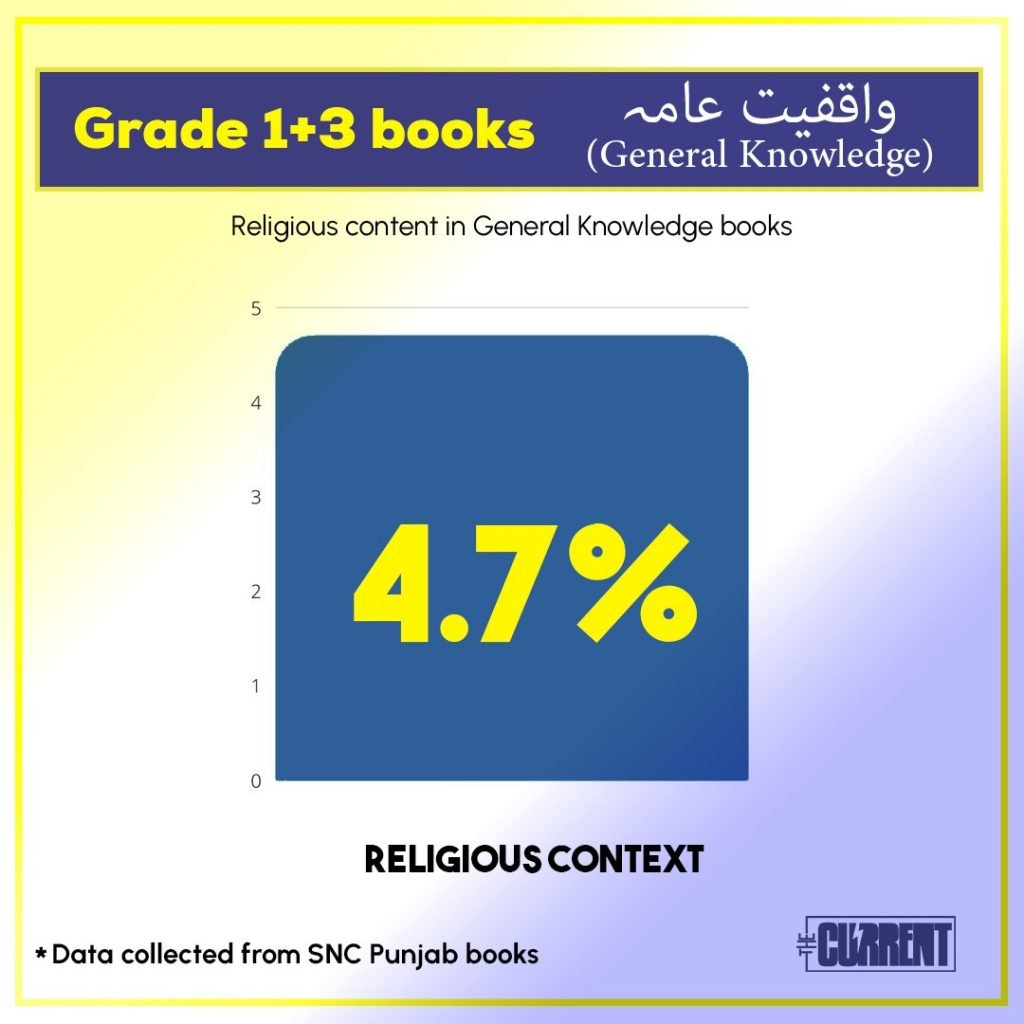
There is a 4.7 percent presence of religious text in the books studied. This is based on the total number of pages in General Knowledge books.
Muasharti Uloom (Social Studies):
From 234 pages analysed, 65.1 percent of men/boys are represented in the books and 34.8 percent of females are shown.
36.8 percent of females are seen without hijab and 63.1 percent are seen with hijab.
10.2 percent of religious content is present in the books. This is based on the total number of pages in Social Studies books.
The last portion of the report highlights the pros and cons, which we have observed in almost all the books. We have provided both positive and negative outcomes deduced from the books after careful analysis.
The positive outcome deduced from the books:
1. The books are locally published and designed. The books are affordable, with a total set for one grade set at Rs. 800 per child according to Dr Chughtai.
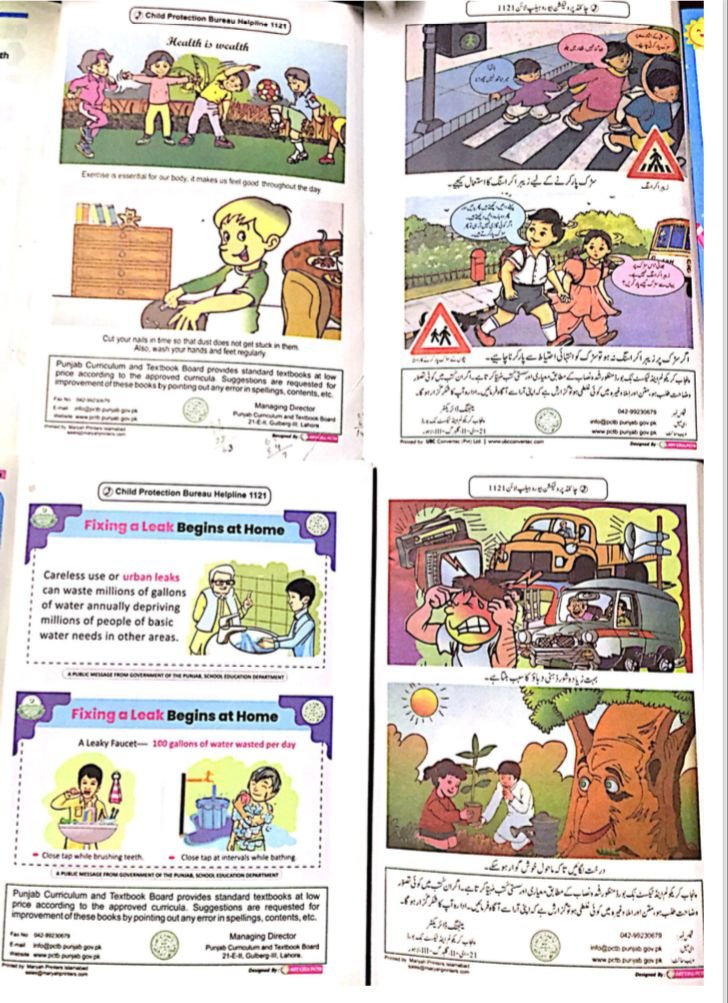
2. There is a public service message printed at the end of each book to raise awareness against talking to strangers, crossing the road, exercising, and even information about fighting dengue.
The possible negative impact of the books
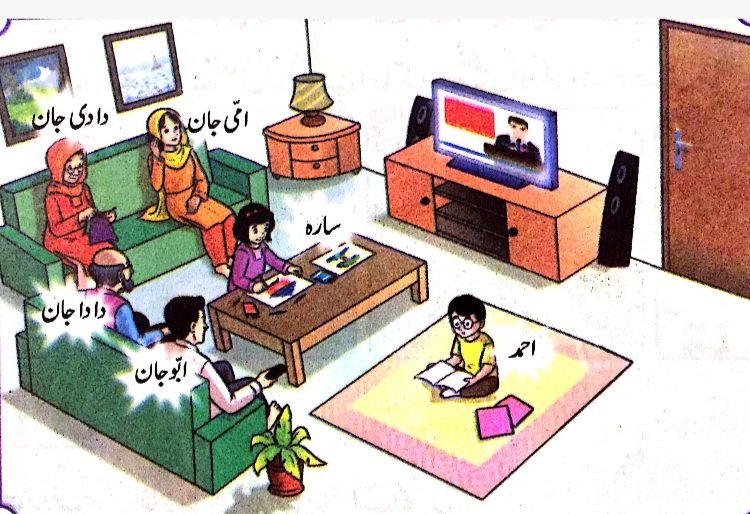
1. After analysing the books, we deduced that mostly nuclear families have been shown in the books. No representation of single parents or children being raised by guardians is seen. Moreover, the presence of both parents is seen as almost essential in all stories in the books.
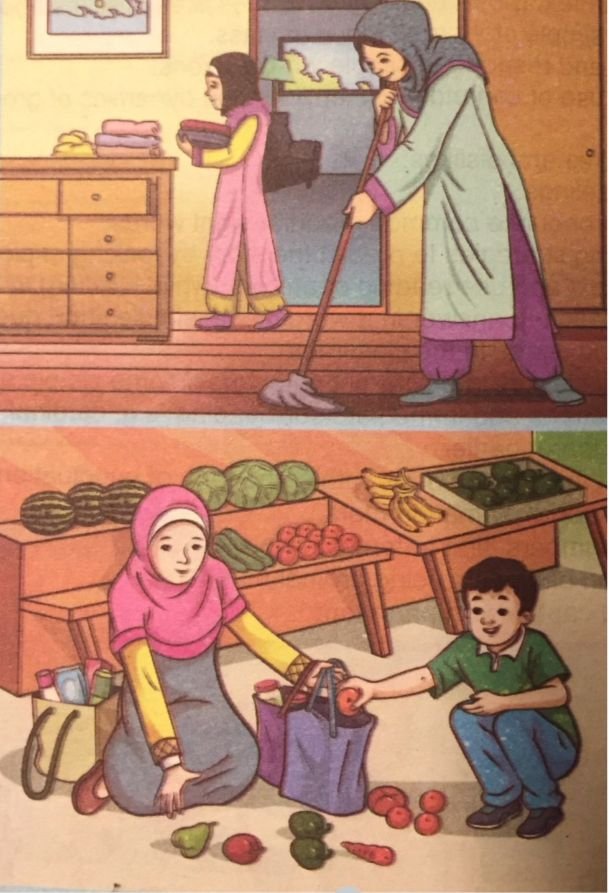
2. Women are mostly shown doing domestic work, taking care of the family, and looking after their children. In stories as well, they seem to come second to their male counterparts.
3. As discussed in detail above, there is the presence of religious text in non-religious books.
4. The stylisation of the books are difficult to understand, fonts and texts are way too clustered. The quality of the pages is not refined, making them unattractive and confusing for students.
CONCLUSION:
According to NCC director, Dr Chughtai, the curriculum is an evolving process and the books can be changed in future publications, based on the response by schools and parents. The biggest hurdle to the books is that the teachers have not been trained in teaching these new books and according to Dr Chughtai, it is up to the school to teach and implement the books. There are no worksheets given with the books and from initial student reactions, students are confused and wary of books that are laid out in a clustered fashion. There is also the subject of a language change. Where students study general knowledge, a precursor to Science, in Urdu, they switch to difficult English in grades 4-5.
While the government should be commended in trying to create a national syllabus, the forced enforcement of the books along with the lack of supplemental information and training will make this very difficult for teachers and students. Moreover, parents should be given a choice as to what they want their children to study. This implementation should be a free choice rather than that of enforcement. What would have been a practical approach is that the government should have improved the structure of the government/public schools, provided better teacher training, spent more on financially improving the conditions rather than lowering the standard for all.
*Graphics credits: Asma Ahmad (Graphic Designer)
How did we collect the data?
The percentage of male characters in the books: Divided the total number of male by the total number of characters. The percentage of female characters in the books: Divided the total number of female by the total number of characters.
The percentage of Islam: Divided the Islamic pictures or references given in the books by the number of total pages of all books. The percentage of other religion: Divided the other religions pictures or reference given in the books by the number of total pages of all books.
The percentage of female power roles: Divided the number of female by the total number of characters (female and male). The percentage of male power roles: Divided the total number of male by the total number of characters (female and male).
The same process/calculation/method was applied to the findings of each book.
In December 2020, Hamza had announced that he will be writing a book on religion and God.
“Will be a little inactive on social media because of that,” he had said, adding that he hopes to be done with it by June 2021.
In the process of writing a book….obviously it,ll be about God …hoping to be done by June 2021 Insha Allah. Will be a little inactive on social media bcz of that.
In November 2019, the Alif actor had announced that he is taking a break from acting to focus on his spiritual journey and get a better understanding of Islam.
“I had this divine revelation some time back, that all that I am doing in this world will end the moment I die,” Hamza had said in a video message, adding that death is inevitable.
“All these trophies, all these accolades will not bring me any good on the day of judgment when I meet my Maker. I have decided that I want to leave everything that might be a hurdle when it comes to making my matters easier on the day of Judgment.”
Hamza later clarified that he is only taking a break from acting and will continue to make videos and use his voice and popularity to spread the message of Islam and inspire others to undertake this spiritual journey.
Meanwhile, Hamza often engages with his followers on social media and shares his thoughts and understanding of religion with them.
In my opinion, the biggest mistake we Muslims have done collectively is to make it a standard that unless Quran is not understood through the lens of Islamic history, it can never be fully understood. This statement goes very much against a clear and repeated order in Quran.
Yes. I believe as a Muslim tht Bible does contain sum bits of the will of Allah & its my persnl opinion tht what Jesus Peace Be Upon Him said in the book of Mathews as chargesheet against the Pharisees is 100% applicable today to most of the popular clergy of all religions.
Because we have always had the same quran throughout the world for 1442 yrs with even some variant readings well preserved, so there is no incentive to doubt.
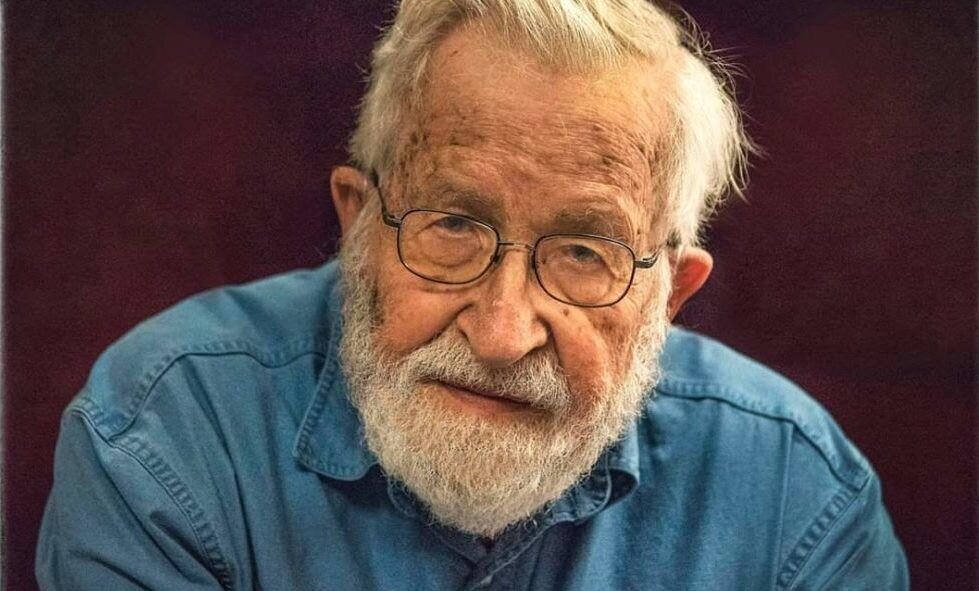
Professor Noam Chomsky, renowned linguist and analytic philosopher, has said that Pakistan lacks “serious scientists” to preserve a rational education system to deal with the reality of the world.
Speaking at a seminar organised by Karachi’s Habib University, Prof Chomsky said it’s sad that science has virtually disappeared from the country’s educational system.
“Pakistan used to have an advanced scientific establishment, Nobel Prize laureates [Abdus Salam] and so on,” the American linguist said. “Now science has virtually disappeared from the educational system.” “Pakistan has no future if it is going to live in a world of religious superstition,” he said.
During the lecture, Chomsky talked about a number of issues, including climate change, nuclear weapons, and the rise of populist leaders.
Speaking about Indian PM Narendra Modi, the US professor said India is destroying the remnants of Indian secular democracy, crushing the Muslim rights and placing Kashmir under a brutal rule. “Pakistan is not too far behind,” the philosopher said, referring to the rights abuses in the country.
Speaking about Iran-US ties under outgoing president Donald Trump, he said the Trump admin “is in a state where it is willing to do anything”. He said the tensions between US and Iran boiled over after Trump came to power.
The assassination of Iranian general Qasem Soleimani in a US airstrike in Baghdad and the recent killing of its nuclear scientist Mohsen Fakhrizadeh near Tehran have further escalated these tensions. Iranian authorities have pointed fingers at two US allies – Saudi Arabia and Israel.
“There is a possibility of war,” he said, adding that Iran has no “match for the US war machine” because its relatively low defence expenditure. But Iran would respond by attacking Saudi oil installations and other US allies in the region and that could lead to a full-blown war, said Chomsky.
Speaking about sanctions imposed on Iran by the US government, Prof Chomsky was of the view that “sanctions against Iran have absolutely no legitimacy”. These sanctions “are means of torturing and terrorizing the Iranian population”. He said the people of Iran have to suffer from those sanctions because the Iranian government is not obeying the US orders.
He also talked about Iran’s nuclear programme, saying it is very likely that Iran wants to use it as ‘deterrent’. Chomsky believes the countries that want to rampage freely in the region don’t want deterrents, and the US is one of them and its “Israeli client” another.
“They don’t want a deterrent,” Chomsky said. The US doesn’t even admit that Israel has nuclear weapons, let alone getting its nuclear war inspected, the American philosopher said, pointing out the problems with the US approach towards the Middle East region.