Tag: religious extremism

  • Seminary students sentenced to death for teacher’s murder over blasphemy allegations

    Seminary students sentenced to death for teacher’s murder over blasphemy allegations

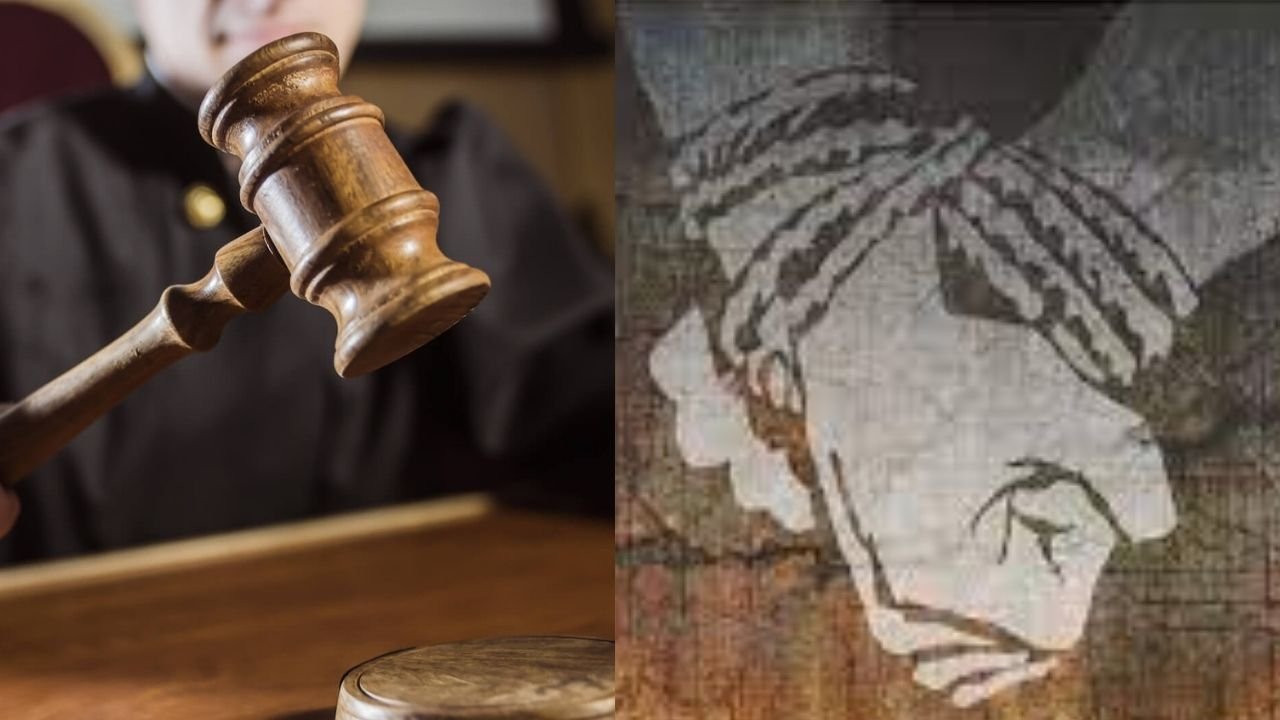
    In a significant legal development, Additional Sessions Judge-II Mohammad Jameel has handed down death sentences to two seminary students and life imprisonment to another for their involvement in the brutal murder of a young teacher over false blasphemy accusations.

    Public prosecutors Tanseer Ali and Haji Shakeel Advocate appeared on behalf of the prosecution, while Asad Aziz Advocate represented the accused.

    The judge imposed a fine of Rs2 million each on the convicts. He imposed Rs1 million fine on the girl given a life term for being a juvenile.

    According to a police report, on March 29, 2022, three female students of Jamia Islamia Falah Al-Banat located in Anjumabad area on the Dera-Multan Road within the limits of the cantonment police station had slaughtered a young female teacher of their madressah for allegedly committing blasphemy.

    The initial investigation revealed that the accused students assaulted Safoora Bibi with a stick at the seminary gate before fatally slitting her throat. Their motivation stemmed from a purported dream shared by one of the students, suggesting that the teacher had committed blasphemy and that her killer would be rewarded in paradise.

    Both the perpetrators and the victim hailed from the Mehsud tribe of South Waziristan and were residing in the Anjumabad area.

    Following the gruesome incident, Zahid, an uncle of the slain teacher, was informed by the seminary administration about her murder. Upon reaching the scene, he discovered his niece’s tortured and lifeless body abandoned in the street.

    Subsequently, the police apprehended the three students and recovered knives and sticks from their possession.
  • How many registered religious minority voters are in Pakistan?

    How many registered religious minority voters are in Pakistan?

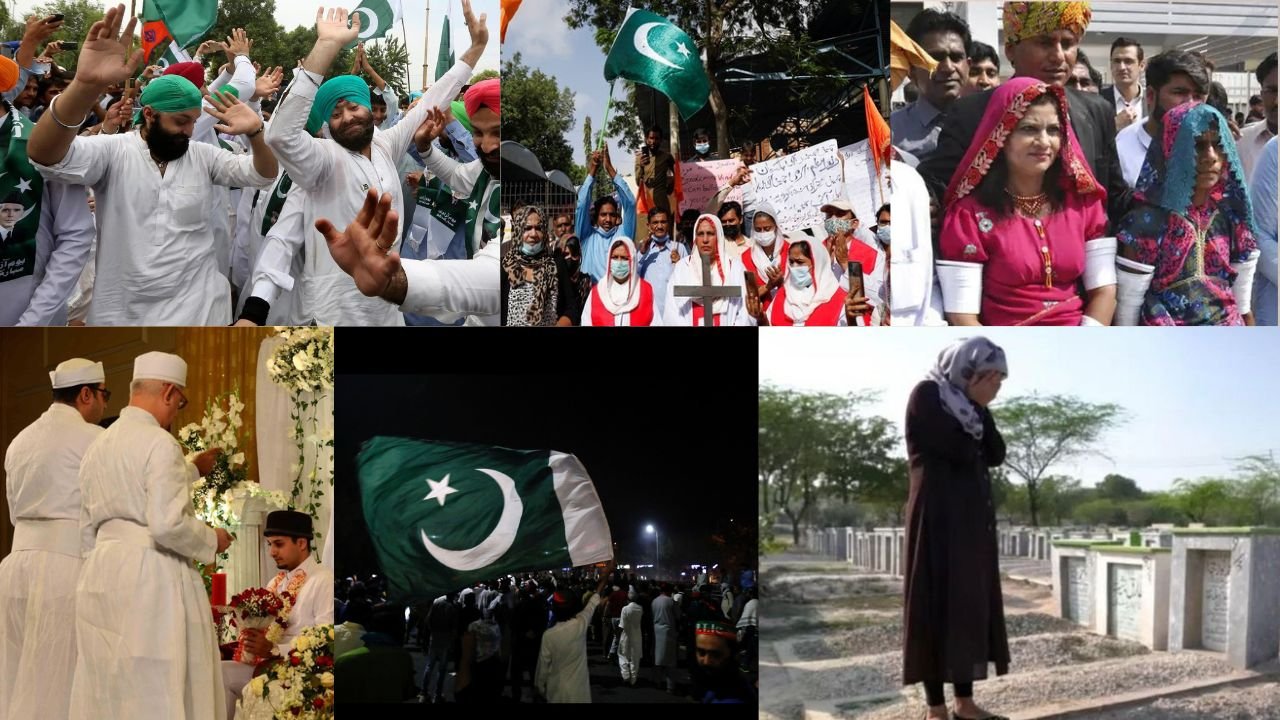
    As per the recent province-wise religion report of the Election Commission of Pakistan (ECP), there are 30 lac, 78 thousand, 3 hundred and 6 voters from religious minorities in Pakistan.

    Out of 40 thousand 781 minority voters in Khyber Pakhtunkhwa 3516 are Bahai, 220 Buddist, 28080 Christian, 4209 Hindu, 723 Parsi, 1149 Ahmadi, and 2884 Sikh.

    In former Federally Administered Tribal Areas (FATA) there are 3539 religious minority voters out of which 400 are Bahai, 41 Buddist, 1446 Christian, 669 Hindu, 16 Parsi, 23 Ahmadi, and 944 Sikh.

    For 12 lac 59 thousand 303 minority voters in Punjab, 18102 are Bahai, 786 Buddist, 1057071 Christian, 73456 Hindu, 262 Parsi, 108538 Ahmadi, and 1088 Sikh.

    In Sindh, there are 16 lac 80 thousand 582 minority voters, out of which 7269 are Bahai, 495 Buddist, 228552 Christian, 1423276 Hindu, 2787 Parsi, 16668 Ahmadi, and 1535 Sikh.

    Balochistan has 44 thousand 930 minority voters, out of which 1387 are Bahai, 1387 Buddist, 18702 Christian, 18702 Hindu, 265 Parsi, 549 Ahmadi, and 272 Sikh.

    In the Federal Capital, there are 44 thousand 783 minority voters, out of which 242 are Bahai, 41 Buddist, 40518 Christian, 276 Hindu, 16 Parsi, 3677 Ahmadi, and 13 Sikh.

    Although elections are not happening in Gilgit Baltistan and Azad Jammu and Kashmir in February 2024, ECP did share detailed data of these areas too.

    Out of 653 minority voters in Gilgit Baltistan, 472 are Bahai, 5 Buddist, 147 Christian, 8 Hindu, 16 Ahmadi, 5 Sikh, and none from the Parsi community.

    Azad Jammu and Kashmir has 3735 minority voters out of which 1083 are Bahai, 23 Buddist, 987 Christian, 45 Hindu, 13 Parsi, 1580 Ahmadi, and 4 Sikh.

    As Pakistan gears up for nationwide parliamentary elections in February 2024, a significant portion of the population, the Ahmadiyya community, faces disenfranchisement due to discriminatory provisions in the electoral law.

    Current electoral regulations in Pakistan effectively exclude Ahmadis from the voting process based on their religious beliefs.

    To register as voters, members of the Ahmadiyya community are compelled to either renounce their faith or accept placement in a distinct electoral list categorizing them as “non-Muslim.”

    However, self-identification as Muslim is a fundamental tenet of Ahmadiyya religious belief.

    This exclusionary practice has resulted in the denial of voting rights for Ahmadis, who comprise over 500,000 individuals in Pakistan.

    Despite their significant numbers, Ahmadis find themselves unable to participate in local, provincial, and national elections.

    It is noteworthy that in 2002, Pakistan discontinued an electoral system that segregated Muslims and non-Muslims into separate categories for registration and voting.

    However, discriminatory measures persist, particularly affecting the Ahmadiyya community’s ability to exercise their

    The government also created a separate category for Ahmadis. Since then, all Pakistani citizens have voted according to a single electoral list except the Ahmadis, who vote on a separate list.

  • Delhi’s Zafar Mahal mausoleum vandalised by miscreants

    Delhi’s Zafar Mahal mausoleum vandalised by miscreants

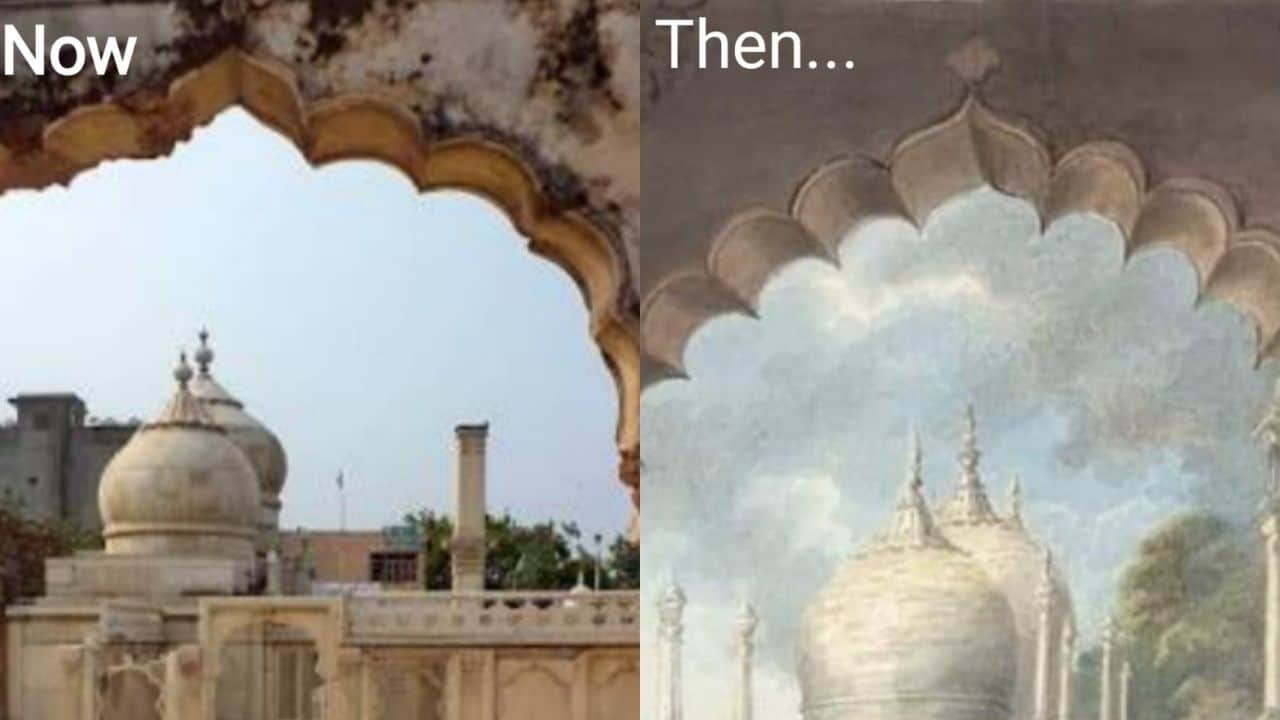
    Zafar Mahal, a historical monument in Delhi’s Mehrauli village, has been vandalized by unknown miscreants in India, damaging part of the jaali (lattice screen) in front of the tombs of three Mughal emperors and Bahadur Shah Zafar’s empty tomb.

    The incident was reported by Sunit Arora, a journalist, who visited the site. He was informed by the guard that the vandalism took place eight days ago, and no action has been taken by the authorities so far.

    Zafar Mahal is an ASI (Archaeological Survey of India) protected monument and is one of the last remnants of the architectural legacy of the Mughals in India. The palace is associated with the festival of Sair-e-Gul Faroshan, initiated by Bahadur Shah Zafar, to honour the Sufi saint Khwaja Qutubuddin Bakhtiar Kaki, whose dargah is also located nearby.

    However, Zafar Mahal is in a state of neglect, with minimal maintenance and frequent vandalism. The jaali, which is now spoilt, was a fine example of the Pachin Kari (inlay work) technique.

    Indian tombs of Mughal emperors, including Akbar Shah II, Shah Alam II, and Mirza Fakhruddin, also stand in a deteriorated condition inside the Mehrauli Archaeological Park.

    Art historian William Dalrymple criticised the ASI for its neglect.

    Twitter user Tamjeed Ahmed said that, “ASI earlier said they will restore Zafar Mahal in October but they never did!”

    However, poet Rafiq Kathwari, was reminded of Babri Mosque, as he said, “If they can do Babri, the worst is yet to be.”

    Another user pointed out that “unfortunately, far too many Indian visitors are extremely disrespectful of our ancient monuments”.

    Meanwhile, a user posted a pictorial comparison of the tomb of the past and the present.

  • BJP-ruled Uttar Pradesh bans halal products

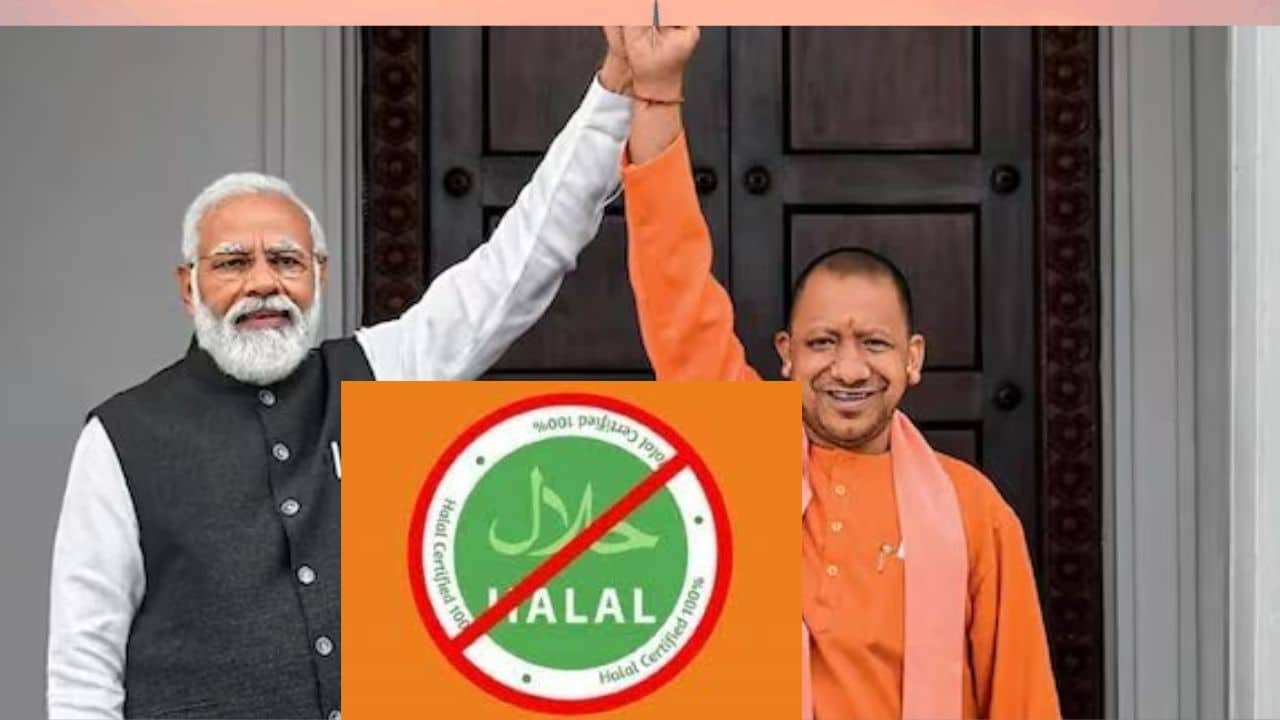
    BJP-ruled Uttar Pradesh bans halal products

    Authorities in India’s most populous Indian state Uttar Pradesh have banned the distribution and sale of Halal-certified products. These include dairy products, garments and medicines. A notificaton from the state government proclaims that the halal certification of the products is illegal.

    Uttar Pradesh, or UP as it is commonly called, is ruled by firebrand right-wing Hindu monk Yogi Adityanath, a member of Prime Minister Narendra Modi’s Bharatiya Janata Party.

    “Halal certification of food products is a parallel system which creates confusion regarding the quality of food items,” the notification said.

    The Food Safety and Standards Authority of India (FSSAI) is the country’s apex body in charge of determining standards for most food products sold in the country and determines the standards food products should meet, the notification said.

    Officials have conducted inspections all around the state.

    Campaigns have launched with the title #BycottHalalProducts.

    Extremists from the right wing are appreciating the step as a way to curb “jihad”, alleging that it is funded by the sale of halal products.

    “Religion should not be brought into food. There were many items such as garments, sugar, etc which were being branded as Halal, which is against the law,” state BJP spokesperson Rakesh Tripathi said on Monday.

  • ‘Will die here but not go back’: Indians seek asylum in Pakistan

    ‘Will die here but not go back’: Indians seek asylum in Pakistan

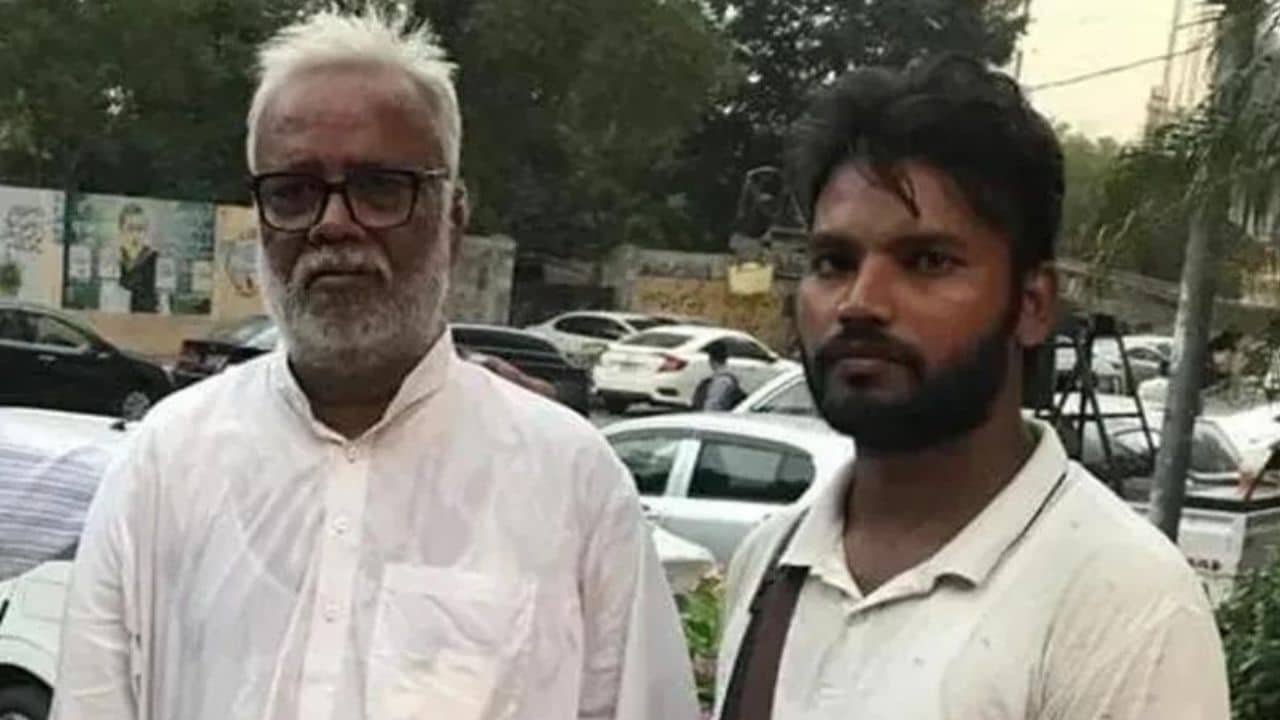
    Two Indian citizens who illegally travelled to Karachi last week have asserted that they would rather go to jail in Pakistan than go back to their own country.

    Identified as Mohammad Hasnain and Ishaq Ameer, the father and son want to seek asylum as their lives are threatened in India with increased religious extremism and Islamophobia, Karachi police have said.

    Dawn spoke with Karachi Deputy Inspector General of Police (South) Asad Raza who stated that the two are not suspected spies, “but were considered victims of religious bias and persecution in India”.

    For now, both the Indians have been sent to an Edhi Shelter home. According to IGP Raza, they seem to want to seek asylum here.

    The duo also protested outside Karachi Press Club on September 25 against the Indian government and its persecution of Muslims.

    “We are ready to go to jail but not back to India,” the police quoted them in a statement. “We will be killed as soon as we step on Indian land if we are deported.

    “If you want to kill us, kill us in Pakistan. At least we will get some land (for burial). In India, we won’t even get that,”

    The father-son also spoke with the media.

    The two left New Delhi on September 5 for the UAE and approached Afghanistan embassy for a visa. They then travelled to Kabul followed by air travel to Kandahar where they spent a night.

    Shedding light on the atrocities committed in India against Muslims and the lack of media coverage, Hasnain states that they are not the first ones to flee the country, stressing that many others have left before them but they could afford foreign citizenship in Europe, America, Britain, Germany, or Canada.

    “Those who are well off migrated to Turkey, Azerbaijan, or Malaysia. I did not have that stature. I had less money,” he added.
    They were not allowed to check in a hotel room in Karachi since they did not possess an identification card.

    Hasnain’s son Ameer said that they directly went to the office of IG Sindh on reaching Orangi Town, Karachi.

    “As soon as we reached there, we kept our baggage on the side, raised our hands, and said we are here to surrender.”

  • ‘Don’t slander someone else’s religion’: Hareem Shah’s distasteful video slammed by users

    ‘Don’t slander someone else’s religion’: Hareem Shah’s distasteful video slammed by users

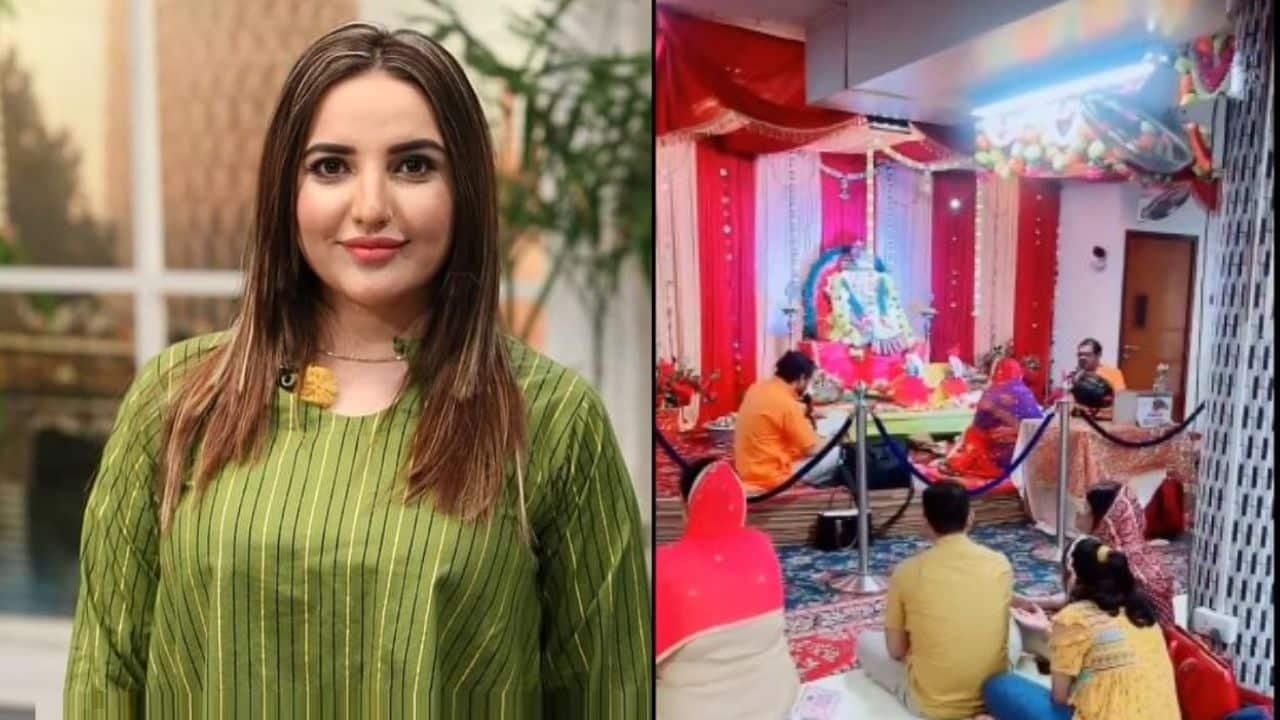
    Social media personality Hareem Shah was trolled by Twitter users yesterday after she uploaded a video where she can be seen visiting a Hindu temple.

    In the caption she had written:

    “Ek dafa Mandir gayi thi , bilkul bhi maza nahin aaya. Pata nahin ye log patthar ko kaise Khuda man lete hain.”

    Social media users criticised the Tiktok star for targeting the beliefs of a religious minority in Pakistan where non-Muslim communities have been subjected to attacks, pointing out that even in Islam, it is an insult to mock other religions and their practices.

    Religious minorities in Pakistan have been subjected to verbal and physical attacks, including the recent Jaranwala riots where a Christian neighborhood was set on fire by a mob over blasphemy allegations.

    READ MORE: Caretaker Prime Minister condemns attack on Christian Community in Jaranwala

    In January, human rights experts at the United Nations called to attention the rise of forced conversions, abductions and marriages of women from minority communities, urging the government to put an end to such practices.

    “We are deeply troubled to hear that girls as young as 13 are being kidnapped from their families, trafficked to locations far from their homes, made to marry men sometimes twice their age, and coerced to convert to Islam,” the experts said in a statement as reported by Al-Jazeera.

    “Why can’t people just respect each other’s religion and live in peace? Disgusting behaviour!” a user wrote.

    “Why do we Muslims feel entitled to belittle other religions? Imagine if a Hindu or a Christian had made a similar video in a mosque? How would we have felt? How is it fair to mock other religions? This is so disgusting I can’t even!

  • ‘Backward thinking dangerous for Pakistan’: Fawad on Taliban’s restrictions on Afghan women

    Federal Minister for Information and Broadcasting Fawad Chaudhry, while talking about the recent Taliban’s restrictions on Afghan women, stated that the Taliban’s ‘retrogressive thinking’ is dangerous for Pakistan, reports Dawn.

    While addressing a ceremony in Islamabad, the minister said, “Saying that women can’t travel alone or go to schools and colleges — this kind of retrogressive thinking is a danger for Pakistan.”

    “You see that two extremist regimes have cropped up on right [India] and left [Afghanistan] of Pakistan. On one side there is Afghanistan where the Taliban have arrived. We want to fully help the Afghan people”, he added.

    Fawad said, “We have had failures and successes but till now Pakistan is that bright hope in this region which while remaining amid these extremes can emerge out from them.”

    Chaudhry’s statement has come after Afghanistan’s Taliban authorities’ announcement about women who seek to travel long distances should not be offered transport if they are not wearing hijab or not accompanied by a close male relative.

    Furthermore, he pointed out that extremists in the country and said, “Quaid-e-Azam never saw Pakistan as a religious country and all these people who today on his name are fooling the people that the meaning of an Islamic country was a religious country — this was entirely not the case.”

    While talking about the Sialkot lynching incident, Fawad said, “You saw the whole of Pakistan was united and condemned that incident. This is happening every day in India with Muslims and no one is bothered.”

    Chaudhry stressed that Pakistan’s purpose was “preserving minority rights and safeguarding them”.

  • ‘Bunch of spineless people’: Virat Kohli slams trolls who abused Shami

    ‘Bunch of spineless people’: Virat Kohli slams trolls who abused Shami

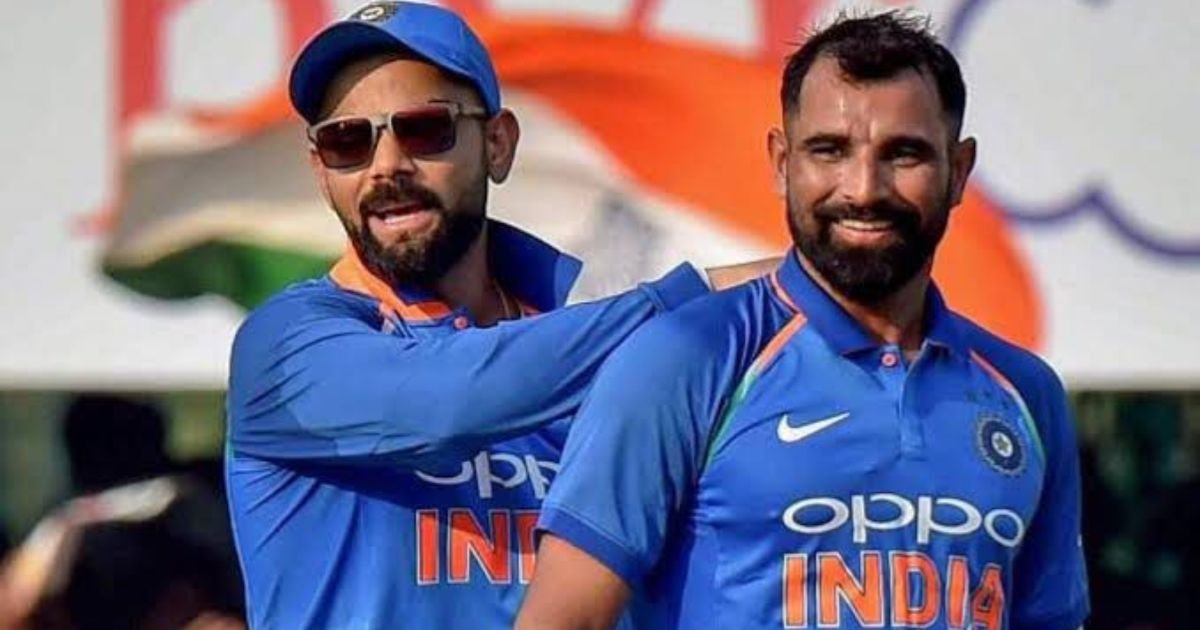
    Indian skipper Virat Kohli lashed out on Saturday at the “spineless people” who abused pacer Mohammad Shami on social media after Pakistan defeated India on Sunday, in their first clash in the T20 World Cup.

    “There’s a good reason why we are playing on the field and not some bunch of spineless people on social media that have no courage to actually speak to any individual in person,” said Kohli while talking to reporters in a presser.

    Kohli said that social media trolls were “literally the lowest level of human potential that one can operate at.”

    He further said: “Attacking someone over their religion is the most, I would say, pathetic thing that a human being can do.”

    The 32-year-old said that online abuse had become a “source of entertainment in today’s world” and that he was confident the episode would not affect the dressing room atmosphere.

    “We stand by him fully. We are backing him 200 per cent. Our brotherhood, our friendship within the team, nothing can be shaken,” he added.

    The Indian team as well as the Board of Control for Cricket in India (BCCI) had stayed silent after the incident.

    However, several former Indian players like Irfan Pathan, Virendar Sehwag and others had spoke against the abuse on social media.

    Pakistan’s wicketkeeper-batter Mohammed Rizwan also extended his support to Shami on social media.

    Team India lost the match by 10 wickets. Babar Azam and Rizwan’s prolific innings lead Pakistan to the record-breaking victory at the Dubai International Stadium.

  • ‘Muslims living in the western world are the ones who suffer from Islamophobia’: PM Khan

    ‘Muslims living in the western world are the ones who suffer from Islamophobia’: PM Khan

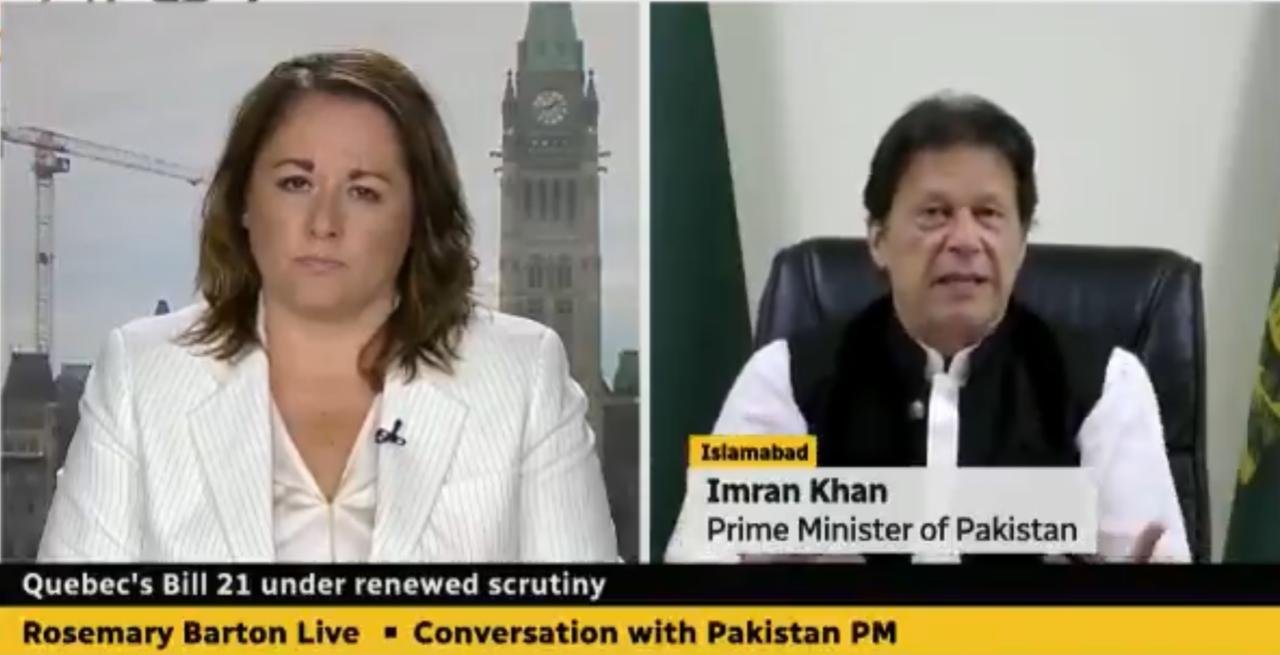
    In an interview with CBC’s chief political correspondent Rosemary Barton, Prime Minister (PM) Imran Khan said he had been trying to tell the world community that the Muslims living in the western countries are the ones who suffer from Islamophobia, and “we regularly hear about these incidents and many of them are not reported and our embassies tell us about those. So this gap needs to be closed”.

    The prime minister highlighted the grave issue of Islamophobia in the western world, which recently claimed the lives of four members of a Pakistan-origin family in Ontario last week.

    “Everyone is shocked [in Pakistan], because we saw the family picture, and so a family being targeted like that has had a deep impact in Pakistan,” PM Khan said.

    The prime minister said the use of the term “Islamic radicals” indicates there is something wrong with the religion, which radicalises people. Contrary to this, terrorism has no religion as extremists are found in every society, he added.

    Replying to a question about what should the governments do to shut down hate material, the prime minister called for strict action against online hate because such websites divide humanity by creating hatred through hate material.

    He further said that he “mostly agrees” with Trudeau and his position on extremism, but also expressed concern about some Canadian laws that he believed were contributing to Islamophobia.

    He asked as to why it became a big issue when someone wears a hijab (head scarf) or grows a beard in the west. “People objecting to hijab and a beard is quite bizarre for me. In liberal democracies, why is this an issue?”

    He described Quebec’s Bill 21 — which banned public servants, including teachers and police officers from wearing religious symbols at work — as a form of “secular extremism” that led to intolerance against Muslims.

    “I find this law secular extremism as it really is against, you see the whole idea behind secularism is liberalism, you want human beings to be basically free on how and the way they want to dress up as long as it doesn’t cause pain or hurt others. This is how I understand how liberalism is. If some cover their hair or their head, why has it become such a big issue,” he contended.

  • Back to the 40s?

    Back to the 40s?

    While violence against the Muslim community of India is no longer an internal secret of our neighbour, it would be nothing less than hypocrisy to turn a blind eye towards the quality of life of minorities in Pakistan where a majority of them is equally vulnerable due to intolerance rooted in religion or ethnicity.

    When Saadat Hasan Manto finally decided to leave India amid growing communal violence back in the 40s, Indian actor Sunder Shyam Chadda wasn’t very happy with his friend’s decision.

    “Are you going to Pakistan because you think you are a Muslim?” Shyam asked Manto as the former removed the bottle of alcohol from their table.

    “I am a Muslim enough to get killed here,” Manto replied.

    Seven decades later — in the year 2020 — the world’s most populous democracy, under fascist Narendra Modi’s Bharatiya Janata Party (BJP), witnesses similar circumstances as those belonging to India’s minority communities, flee their homes in order to save their lives.

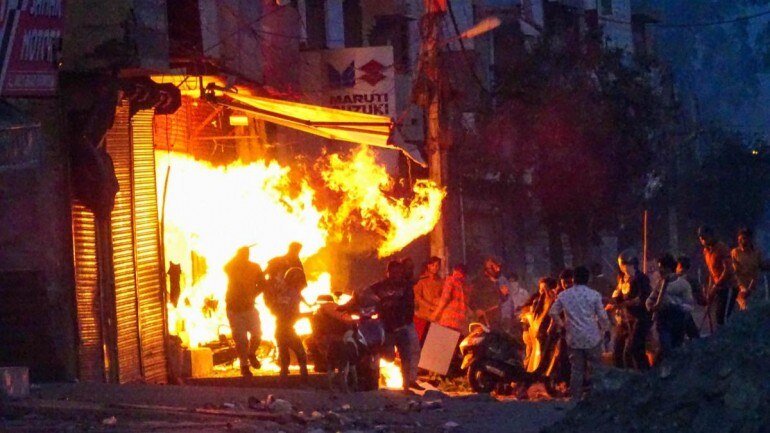
    The recent round of violence against Muslims in India by extremist Hindutva mobs has been the worst with over 40 innocent people losing their lives, mosques being set ablaze and properties of New Delhi’s Muslims being vandalised.

    The situation persisting across Pakistan’s eastern boundaries can be best explained through a mention of suzerainty, under which a single ideology asserts and maintains paramountcy or supremacy over the rest. But the problem in India is further accentuated by the fact that the state’s monopoly over violence has silently been delivered to the goons of the ruling BJP with the promise of targeting Muslims regardless of if they are at home or at a mosque.

    While violence against the Muslim community of India is no longer an internal secret of our neighbour, it would be nothing less than hypocrisy to turn a blind eye towards the quality of life of minorities in Pakistan where a majority of them is equally vulnerable due to intolerance rooted in religion or ethnicity.

    Although analyses suggest the factors that have led to the current upheaval in India are manifold, our focus, for now, will remain on religion since outside India, its importance has been rightly overshadowed by unfolding the neo-liberal agenda New Delhi is trying to implement; for which Hindutva serves as the best medium, and that too in disguise.

    It is nothing but Modi’s model from Gujarat, which is now expanding to Delhi and Ashoknagar.

    Nonetheless, the role of religion in itself cannot be undermined especially in the Indian subcontinent as both in Pakistan and India, religion has remained closely intertwined with politics since even before the partition. And from world-acclaimed statesman Gandhi to today’s fascist Modi, the combination has proved to be lethal while resulting in violence almost every time.

    The use of religion on state-level despite having a secular constitution is to achieve a purposive social order, which in other words is ‘national interest’ based on the exclusion of Muslims and inclusion of corporate and liberal values in society, surprisingly through the conservative ideology of RSS.

    Regardless of the intention behind employing religion in politics, its implications have not been desirable for the general masses, which brings into question the basic understanding of religion. Apart from politics, when religion is examined alone, the underlying principle of religion generally is expounded as that of peace and prosperity.

    Having said that, one inadvertently subscribes to the root word of religion as ‘lig’ and not ‘leg’ where the former means ‘to bind’ while the latter means ‘to gather.’

    Contrary to the broader agreement of religion to be in the greater interest of mankind by making people dependent on each other, the current predominant form of Hinduism in India is that of a certain mindset of people – the Rashtriya Swayamsevak Sangh (RSS) — coming together to serve a ‘holy purpose’ which in this case has become a national interest of BJP’s India.

    In this pretext, the use of religion on state-level despite having a secular constitution is to achieve a purposive social order, which in other words is ‘national interest’ based on the exclusion of Muslims and inclusion of corporate and liberal values in society, surprisingly through the conservative ideology of RSS, which ultimately benefits a handful of people in India by increasing their wealth and stay in power.

    Therefore, while mentioning the Citizenship Amendment Act (CAA), one should always mention its far-reaching effects in the lives of minorities other than Muslims, including Hindus with a working-class background.