Tag: Reserves

  • SBP-held foreign exchange reserves drop to a highly critical level of $2.92 billion

    SBP-held foreign exchange reserves drop to a highly critical level of $2.92 billion

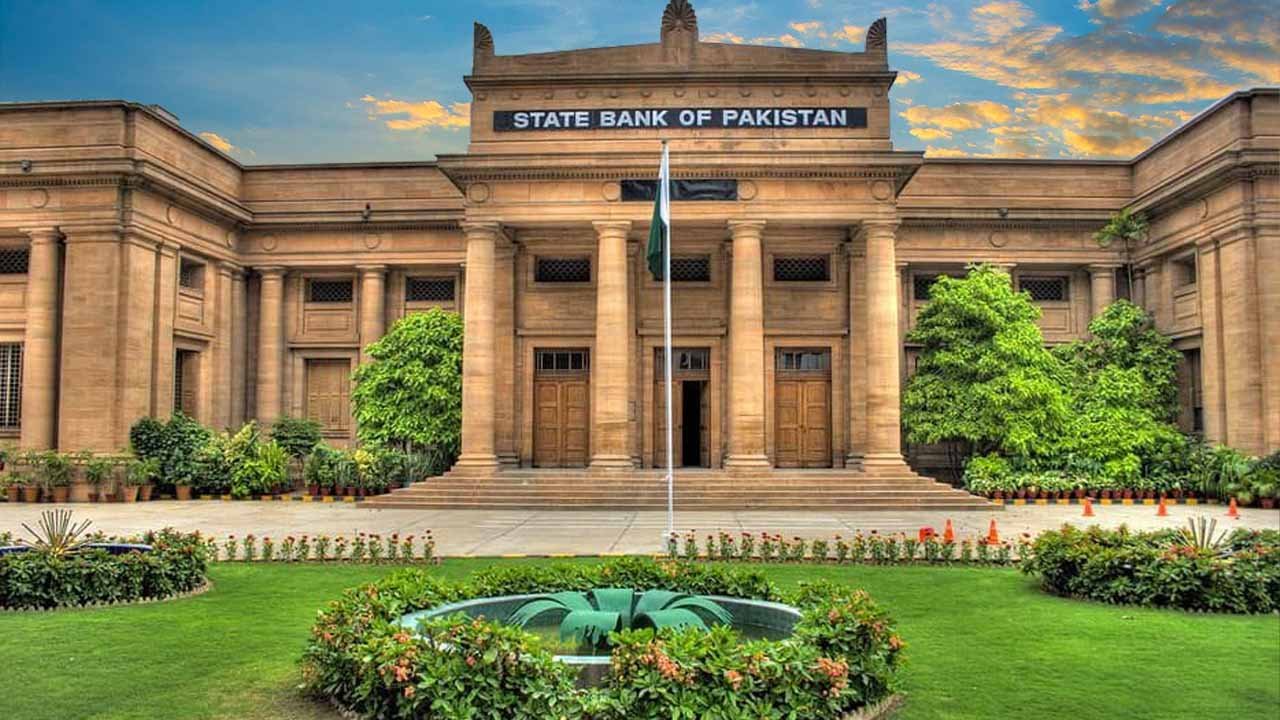
    The State Bank of Pakistan (SBP) has reported a decrease in its foreign exchange reserves, as reflected in data released on Thursday. The reserves fell to a total of $2.92 billion, marking a reduction of $170 million.

    According to the recent data, the current level of reserves held by the bank has reached its lowest point since February 2014.

    The country’s total liquid foreign reserves were reported to be at $8.54 billion, according to the latest data. Meanwhile, commercial banks in the country held net foreign reserves of $5.62 billion.

    “During the week ended on February 3, 2023, SBP’s reserves decreased by $170 million to $2,916.7 million due to external debt repayments,” the SBP said in a statement.

    The State Bank of Pakistan (SBP) experienced a substantial decrease in its foreign exchange reserves last week, declining to $3.09 billion, a drop of $592 million. This represents the lowest level of reserves for the central bank since February 2014. The current level of reserves falls below one month’s worth of import coverage.

    The depletion of the central bank’s reserves, which stood at nearly $18 billion at the beginning of 2022, highlights the pressing need for Pakistan to move forward with the next review of its International Monetary Fund (IMF) program.

    These declining reserves serve as a reminder of the economic challenges facing the country and the importance of addressing them in a timely and effective manner.
  • Pakistan receives $500 million from Asian Infrastructure Investment Bank

    Pakistan receives $500 million from Asian Infrastructure Investment Bank

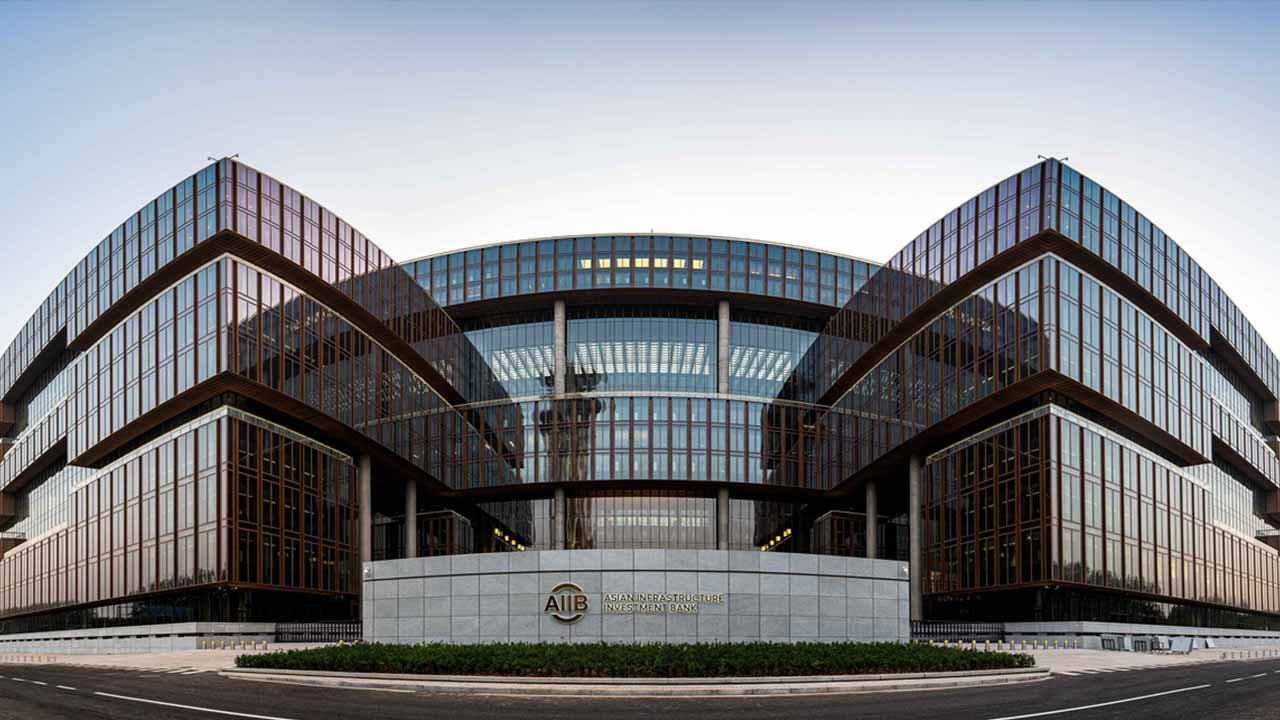
    The government of Pakistan on Tuesday received $500 million from Asian Infrastructure Investment Bank (AIIB), the Ministry of Finance announced on Tuesday.

    “Government of Pakistan has today received $500 million from AIIB. The funds are deposited with the State Bank of Pakistan (SBP) and will augment our reserves,” the ministry said.

    The funds by AIIB are crucial for the cash-strapped country, which has seen its foreign exchange reserves dwindle in recent months. The country’s reserves stood at $7.8 billion as of November 18.

    “During the week ended on November 18, 2022, SBP’s reserves decreased by $134 million to $7,825.7 million due to external debt repayment,” said the SBP on Friday.

    It is important to note that on October 26, 2022, the SBP got $1.5 billion from ADB as a loan disbursement for the government of Pakistan.

    An agreement between the ADB and Pakistan was inked last month to offer a $1.5 billion loan for budgetary support as well as assistance with flood-related repair and reconstruction efforts.

    The government’s $2.3 billion countercyclical development spending programme, created to lessen the effects of external shocks like the Russian invasion of Ukraine, was funded in part by a loan issued under the BRACE Program.

  • Pakistan’s total liquid foreign reserves increases to $14.68 billion

    Pakistan’s total liquid foreign reserves increases to $14.68 billion

    The Asian Development Bank (ADB) contributed to an increase of $1.517 billion in Pakistan’s foreign exchange reserves during the week ending October 28 to bring them to $14.679 billion, the central bank reported on Thursday.

    The State Bank of Pakistan’s foreign exchange holdings increased by $1.473 billion to $8.912 billion.

    “This increase is attributed to the receipt of US$ 1,500 million from ADB,” the SBP said in a statement.

    The SBP has enough reserves to cover imports for 1.29 months. Additionally, commercial bank reserves increased by $44 million to $5.766 billion.

    When the government is dealing with a balance of payments issue, the increase in foreign reserves is encouraging for the nation’s finances. At least $30 billion has been lost as a result of the country’s devastating floods this summer.

    A $500 million deal between Pakistan and the World Bank has been signed. The $200 million investment will be used to support an agricultural transformation project in Punjab.

    According to The News, another project in Khyber Pakhtunkhwa for $300 million in climate change projects will be funded by the World Bank.

  • Total volume of debt on Pakistan has risen to Rs49.2 trillion

    Total volume of debt on Pakistan has risen to Rs49.2 trillion

    The National Assembly was informed on Monday that Pakistan now owes a total of Rs49,200 billion.

    According to Finance Minister Ishaq Dar, as of June 30, 2022, the country had a domestic debt of Rs31,000 billion and an external debt of Rs18,160 billion.

    Indicators for the sustainability of the nation’s external debt further declined in the previous fiscal year, according to a report from the finance ministry, as a result of the government’s increased reliance on short-term loans from abroad and the risks associated with refinancing and rupee depreciation.

    For the fiscal year 2021–2022, the public debt indicators linked to debt maturity, currency risks, refinancing risks, and interest rate risks had gotten worse, according to the Annual Debt Review and Public Debt Bulletin.

    The Public Debt Management Office and the federal government did a dismal job, within a year, the overall public debt increased by Rs9.3 trillion, from Rs39.9 trillion to Rs49.2 trillion. according to Express Tribune.

    According to the finance ministry, currency depreciation caused an increase of Rs3.8 trillion as the exchange rate dropped from Rs157.3 to a dollar in June 2021 to Rs204.4 in June 2022. Budget finance requirements were the cause of the remaining increase.

    The proportion of external debt in the total public debt climbed from 34 per cent in 2020–21 to 37 per cent in the most recent fiscal year. It was approaching the 40 per cent upper limit.

  • PKR loses for 6th straight session due to declining reserves

    PKR loses for 6th straight session due to declining reserves

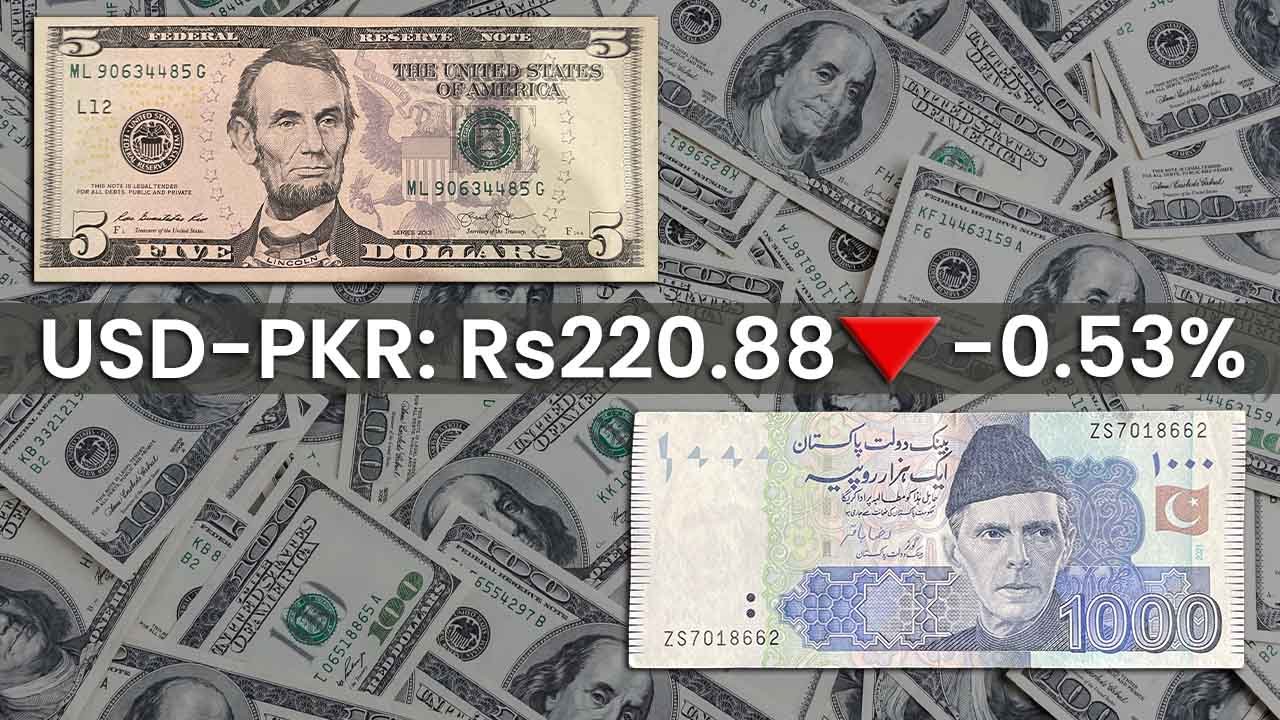
    The Pakistani rupee dropped against the US dollar for the sixth straight session on Wednesday, losing 0.53 per cent in the inter-bank market.

    According to the State Bank of Pakistan (SBP), the local currency dropped by Rs1.17, or 0.53 per cent, to close at Rs220.88. In the last six trading sessions, the rupee has lost Rs3.09, or 1.4 per cent, of its value overall.

    The rupee lost value against the US dollar on Tuesday for the fifth consecutive session, closing at Rs219.71 after losing Rs0.82 (0.37 per cent).

    According to market analysts, the local currency’s weakness is caused by declining reserves and a lack of evidence of foreign capital inflows.

    In an interview with Bloomberg, Finance Minister Ishaq Dar said that the rupee has been “heavily undervalued”.

    “It is due to speculation – and some players in the market have been responsible for that,” he added.

    Globally, the greenback hung close to a 32-year peak versus the yen on Wednesday while edging up from a two-week trough against a basket of major peers as traders weighed improved risk sentiment against the prospect of aggressive Federal Reserve rate hikes.

    The dollar index – which measures the currency against six peers including the yen, sterling and euro – edged up to Rs112.01, after dropping to the lowest since October 6 at Rs111.76 overnight.

    On Wednesday, oil prices increased marginally despite bearish factors like unclear Chinese demand growth and falling gas costs, which were offset by bullish factors like declining crude stocks and a generally undersupplied market.

  • PSX resumes recovery as KSE-100 index gains 670.87 points

    PSX resumes recovery as KSE-100 index gains 670.87 points

    The KSE-100 increased for the fourth consecutive session on Friday as the rupee continued to strengthen against the US dollar, maintaining positive investor confidence at the Pakistan Stock Exchange (PSX).

    The price of WTI crude oil was $87.95 per barrel during the day, while Brent crude oil was being sold at $93.75 per barrel, bringing the global oil prices to multi-month lows.

    The domestic equities market gained 670.87 points, or 1.62 per cent, to close at 42,096.24 points as a result of this development.

    The Pakistani currency’s ongoing rebound, which continued for the sixth day in a row against the US dollar, provided additional support for the market.

    Despite initial selling pressure on the market and a period of time in which the KSE-100 index traded flat, investor interest picked up toward the end of the first session, and the market closed roughly 300 points higher.

    The rise gained momentum in the second session, which enabled the index to pass the 42,000-point threshold and conclude with significant gains.

    The day ended strongly for index heavyweights in the banking, fertiliser, cement, chemical, automobile, and cement industries. On a weekly basis, the benchmark KSE-100 increased by 4.85 per cent. Capital Stake said that the PSX had strong sentiment for the fourth straight session.

    According to Topline Securities’ analysis, Pakistan’s stocks saw good momentum as a result of softening global energy prices for coal and oil, which experienced some correction.

    The decline enabled the market maintain its purchasing mood from Thursday and helped the KSE-100 index conclude the day at 42,096 points.

  • ADB projects Pakistan’s economy to ‘recover slightly’ in FY23

    ADB projects Pakistan’s economy to ‘recover slightly’ in FY23

    In FY2023, Pakistan’s Gross Domestic Product (GDP) growth is expected to modestly improve due to structural changes, according to the Asian Development Bank (ADB).

    According to the bank’s most recent Asian Development Outlook Supplement, Pakistan’s GDP growth is predicted to decrease in FY22 (which ends on June 30, 2022), as a result of fiscal tightening measures taken to control rising demand pressures and contain external and fiscal imbalances.

    As the country’s inflation surged from 12.3 per cent in December 2021 to 21.3 per cent in June 2022, the bank slightly lowered Pakistan’s inflation for FY22 and dramatically for FY23.

    “In addition to the effects of elevated global energy and food prices, the government’s efforts to revive the stalled International Monetary Fund (IMF) programme has meant raising power tariffs and withdrawing subsidies in the oil and power sectors,” said ADB.

    In comparison to Sri Lanka, which boosted its policy rate by 950 basis points over the previous six months, the State Bank of Pakistan (SBP) has upped interest rates by 525 basis points since January 1. This also makes it one of the most active central banks in the region.

    The ADB also reduced its 2022 growth prediction for Asia and issued a warning that things could become worse as a result of the conflict in Ukraine and supply chain disruptions that are expected to drive up costs.

    Read more: Pakistani rupee plunges to Rs227 against US dollar at midday trading

    Although Covid-19’s effects had subsided, the region was now dealing with the consequences of Russia’s invasion of Ukraine, lockdowns in China, and aggressively raised interest rates, according to the Manila-based lender.

    The bank reduced its 2022 growth prediction to 4.6 per cent to reflect the decline in developing Asia, which runs from Kazakhstan in Central Asia to the Cook Islands in the Pacific.

    South Asia’s economy is anticipated to grow less than the projected rate of growth in the Asian Development Outlook 2022.

  • Interbank trade: Pakistani rupee falls to all-time low of Rs214.74 against US dollar

    Interbank trade: Pakistani rupee falls to all-time low of Rs214.74 against US dollar

    As a result of the ruling PML-N’s defeat in the Punjab by-elections, which has caused political turmoil in the nation, the Pakistani rupee (PKR) on Monday fell to an all-time low of Rs214 against the US dollar in interbank trade.

    Today’s intraday trade saw Rs3.79 depreciation of the local currency against the US dollar. It is still unknown where the local currency will end up after the day’s trading.

    The local currency has reached an all-time low because the US dollar was trading for Rs214.74 on the interbank market, according to the Exchange Companies Association of Pakistan (ECAP).

    Pakistani rupee’s record low against the dollar was Rs211.48 on June 21. Since then, the currency has remained erratic.

    The Pakistan Stock Exchange’s (PSX) benchmark KSE-100 index is also down, with the bears controlling trading at the bourse. As of 11:34 am, the index was trading at 41,532.46 points, down nearly 550 points.

    Pressure on import payments and political unpredictability, according to Samiullah Tariq, Head of Research at Pakistan-Kuwait Investment Company, are to blame for the rupee’s decline.

    The results of the by-election on Sunday, according to the analyst, provided clarity, but the market is still waiting for a plan of action.

    PKR is weakening, but Arif Habib Limited analyst Ahsan Mehanti expressed optimism that it would soon rebound because all predictions favour the local currency.

    Mehnti was of the view that Pakistan will benefit greatly from the funds it will receive from the International Monetary Fund (IMF) as a result of the staff-level agreement.

  • Govt bans import of ‘luxury items’ to fight economic crisis

    Govt bans import of ‘luxury items’ to fight economic crisis

    For the first time in Pakistan, luxury or non-essential commodities have been completely banned in the country to help the nation emerge from its financial crisis. Minister of Information Marriyum Aurangzeb confirmed the economic strategy established by the federal government on Thursday.

    The Information Minister stated that this is an emergency situation and Pakistanis will have to make sacrifices under the economic plan. This will have a quick impact on foreign reserves. The ban will have an impact of $6 billion.

    Aurangzeb went on to say that the government’s priority was to cut imports, thus it was going to implement an export-oriented policy that would help local industry and producers.

    Prime Minister (PM) Shehbaz Sharif is working “day and night” to stabilise the economy, according to the information minister, and has decided to ban the import of all commodities that are not in common use.

    Food, decorating, and luxury automobiles were among the imports, according to Aurangzeb, who emphasised that the country was in a “difficult economic condition” as a result of the previous government’s policies.

    Here’s a detailed list of banned goods:

    1. Cars
    2. Mobile phones
    3. Home appliances
    4. Private weapons and ammunition
    5. Fruits and dry fruits (except Afghanistan)
    6. Crockery
    7. Shoes
    8. Chandeliers and lighting (except energy savers)
    9. Headphones and loudspeakers
    10. Sauces, ketchup etc.
    11. Doors and window frames
    12. Travelling bags and suitcases
    13. Sanitary ware
    14. Fish and frozen fish
    15. Carpets (except Afghanistan)
    16. Preserved fruits
    17. Tissue paper
    18. Furniture
    19. Shampoos
    20. Confectionary
    21. Luxury mattresses and sleeping bags
    22. Jams and jelly
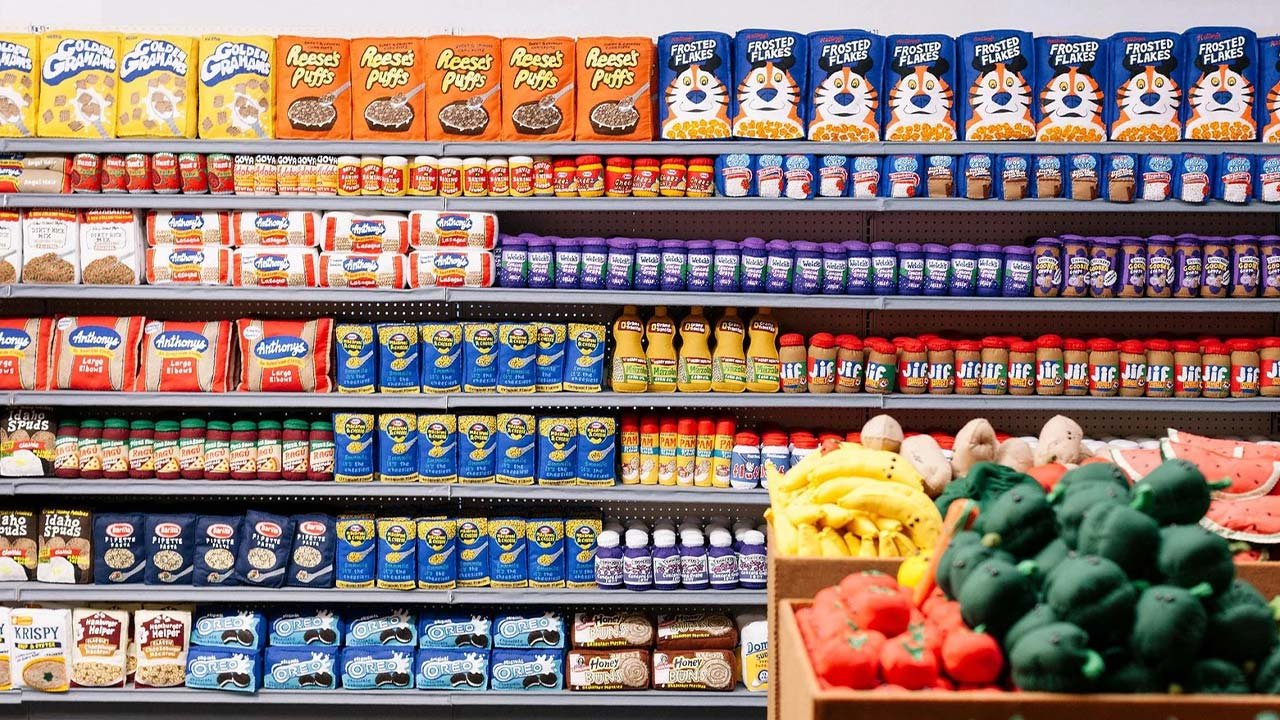
    23. Cornflakes
    24. Bathroom ware/toiletries
    25. Heaters/blowers
    26. Sunglasses
    27. Kitchenware
    28. Aerated water
    29. Frozen meat
    30. Juices
    31. Pasta etc
    32. Ice cream
    33. Cigarettes
    34. Shaving goods
    35. Luxury leather apparel
    36. Musical instruments
    37. Saloon items like hairdryers etc.
    38. Chocolates

    The declaration, according to the information minister, is part of the present government’s fiscal plan to combat the PTI’s incompetent policies.

    Aurangzeb chastised the PTI for criticising the incumbent administration over the country’s economic woes, claiming that the Imran Khan-led government had raised inflation, taken historic debts, committed “economic terrorism,” and manipulated the economy by subsidising gasoline prices.

    By subsidising the price of petroleum goods, the PTI administration broke its agreement with the International Monetary Fund (IMF), according to the Information Minister.

    Via: Geo

  • Pakistan’s foreign currency reserves down by $328 million

    Pakistan’s foreign currency reserves down by $328 million

    State Bank of Pakistan (SBP) on April 28, revealed that the central bank’s foreign exchange reserves fell by 3 per cent on a weekly basis.

    The central bank’s foreign currency reserves were $10,558.2 million on April 23, a $328 million decrease from the previous day’s total of $10,885.7 million. according to the SBP, this decline was caused by external debt and other payments.

    Pakistan’s total liquid foreign currency reserves, comprising net reserves held by banks other than the SBP, were $16,668.2 million. Banks held a total of $6,110 million in net reserves.

    SBP’s foreign exchange reserves reached an all-time high of $20.15 billion in the week ending August 27, 2021, after Pakistan received a general allocation of Special Drawing Rights (SDRs) worth $2,751.8 million from the IMF on August 24.

    Pakistan bought $2.5 billion using Eurobonds on March 30, 2021, by offering attractive interest rates to lenders in order to enhance foreign exchange reserves.

    Read more: All banks to remain open this Saturday

    On July 9, 2019, it received the first loan amount of $991.4 million from the IMF, which helped to boost reserves. The IMF released the second loan tranche of approximately $454 million in late December 2019.