Tag: restructuring

  • Govt kickstarts privatisation process for PIA

    Govt kickstarts privatisation process for PIA

    The government, as confirmed by sources within the Prime Minister’s Office, has formally commenced the privatisation procedure for Pakistan International Airlines Corp (PIA) by issuing a gazette notification.

    This notification delineates the transition of the national airline into a government holding company.

    Notably, PIA has experienced a persistent surge surpassing its previous peak performances. Despite being a loss-making entity, the airline has encountered fluctuations in recent trading sessions.

    Its stock price has escalated by 2.37 times this month alone and an astounding 7.6 times within the current fiscal year.

    This rally can be attributed to the new government’s endeavors aimed at restructuring and privatising the airline.

  • FBR restructuring: 145 offices set up to add 2 million new taxpayers

    FBR restructuring: 145 offices set up to add 2 million new taxpayers

    In a bid to streamline operations, the Federal Board of Revenue (FBR) has set up 145 district tax offices, aiming to bring in 1.5 to 2 million new taxpayers by June 2024. 

    Highlighting the significance of revenue and the need to increase the number of tax filers, the Prime Minister also stressed these goals in recent meetings.  

    The initiative is geared towards expanding the tax base, ultimately achieving the desired tax-to-GDP ratio. 

    Heading these offices are district tax officers responsible for compelling income tax returns from non-filers and preventing lapses from existing filers.  

    This marks a pivotal step in bridging the critical tax gap and incorporating all potential taxpayers into the system. 

    The newly established offices, led by dedicated Inland Revenue Officers in BS-17/18, will leverage third-party data obtained from various departments to track information on asset investments and significant expenditures by potential taxpayers.   

    This approach aims to curtail avenues for individuals evading taxation, particularly in terms of registration and filing returns. 

    The department will invoke the recently introduced Section 114B in the Income Tax Ordinance, 2001, to enforce compliance, enabling it to disconnect utility connections (such as electricity and gas) and block mobile SIMs if returns are not filed in response to issued notices. 

    A new documentation law is also in the works to mandate agencies and departments to provide data to the FBR through an automated common transmission system. 

    The Federal Board of Revenue has sought collaboration with the National Database and Registration Authority (NADRA), and the Chairman of NADRA is ensuring assistance for the expansion of the tax base through data integration. 

    This comprehensive initiative not only strengthens the FBR’s capacity to enforce tax laws but also facilitates taxpayers by establishing dedicated offices, ultimately fostering a more efficient and effective taxation system. 

  • FBR restructuring: Govt plans to separate Customs and revenue collection system

    FBR restructuring: Govt plans to separate Customs and revenue collection system

    Caretaker Finance Minister Dr Shamshad Akhtar has announced that the government is implementing significant restructuring measures within the Federal Board of Revenue (FBR) to eliminate apparent conflicts of interest in tax collection and enhance overall performance. 

    Speaking at the Future Summit organised by the Nutshell Group, she outlined the action plan for restructuring Pakistan’s tax administration, emphasising the crucial aspect of strengthening the internal governance of the FBR. 

    One notable decision involves separating customs from the revenue collection mechanism. Customs will focus on tracking smuggling and related activities, while revenue collection will remain the exclusive mandate of the FBR. 

    Akhtar noted that a formal notification for this change will be issued next week, with additional notifications expected for further FBR restructuring initiatives. 

    Discussing FBR reforms, Akhtar highlighted the adoption of innovative digital technologies to broaden the tax base, minimise the tax policy and compliance gap, and increase tax collection. 

    The government aims to reduce the share of the shadow economy by more effectively identifying non-filers and those under-reporting incomes or business activities. 

    Furthermore, Akhtar revealed plans to separate the tax policy and revenue division, making it an independent entity reporting directly to the Minister of Finance. 

    According to Brecorder, this move aims to eliminate perceived conflicts of interest in tax collection, emphasising the need for fair, equitable, and productive tax policy design. 

    Collaboration with the National Database and Registration Authority (NADRA) is also underway to upgrade data systems, with a technical committee chaired by NADRA and FBR chairpersons established for this purpose. 

    The overall objective is comprehensive tax administrative reforms and increased efficiency in revenue collection. 

  • Pakistan’s Civil Aviation Authority is dividing into two entities

    Pakistan’s Civil Aviation Authority is dividing into two entities

    A specialised committee consisting of nine members has been established to supervise the division of the Pakistan Civil Aviation Authority (CAA).

    Heading this committee is Shazia Rizvi, who holds the position of Joint Secretary II within the Ministry of Aviation. Assisting her as the committee’s deputy is Vice Air Marshal Taimoor Iqbal.

    As per the official notification, Vice Air Marshal Taimoor Iqbal will serve as the committee’s deputy. The committee will also include other distinguished members, namely Asif Iqbal, the Joint Secretary of the Ministry of Aviation; Abdul Malik from the Ministry of Finance; and Nadir Shafiq, the Deputy Director General of Regulatory CAA.

    In addition to the aforementioned members, Commodore Mirza Aamir, President of the Aircraft Accident Investigation Board; Saqib Butt, Director of Finance at CAA; Sameer Saeed, responsible for Aviation Security; Sadiqul Rahman, Director of APS; and Abid Ali Shah, Director of HR at CAA, will also be integral parts of this committee.

    The committee has been allocated a deadline of October 15th to carry out its assigned tasks. The primary objective of this restructuring initiative is to bifurcate the CAA into two distinct entities, namely the Pakistan Airport Authority (PAA) and the Bureau of Air Safety Investigation (BASI).

    In addition to the creation of these new entities, the committee holds the vital responsibility of seamlessly transferring assets, funds, personnel, records, and equipment between them.

  • Spotify announces second round of layoffs, cutting 200 jobs in podcast unit amid restructuring efforts

    Spotify announces second round of layoffs, cutting 200 jobs in podcast unit amid restructuring efforts

    On Monday, Spotify Technology announced its intention to implement a second wave of redundancies, resulting in the reduction of 200 positions within its podcast unit. This strategic restructuring follows a prolonged period of substantial investment, as the company seeks to adapt its business model accordingly.

    This decision affects approximately 2 per cent of the music-streaming giant’s workforce, bringing Spotify in line with other prominent industry players such as Meta Platforms and Roku. These companies, facing an uncertain economic landscape, have also resorted to similar measures by implementing a second round of job cuts.

    During early trading, the shares of this Sweden-based organisation exhibited a modest increase of approximately 0.5 per cent, outperforming the relatively subdued performance of the broader market.

    In recent years, Spotify has actively pursued the expansion of its podcast business, anticipating that the format’s heightened engagement levels would attract a larger number of advertisers. However, this ambitious endeavour resulted in a surge of the company’s operating expenditure, growing at twice the rate of its revenue last year. Furthermore, rising interest rates and persistent inflation have prompted businesses to curtail their advertising expenditures.

    Consequently, earlier in 2023, Spotify took the decision to reduce its workforce by 6 per cent, while also announcing the departure of Dawn Ostroff, a pivotal figure in shaping the podcast business. Ostroff adeptly navigated the company through contentious episodes, including the controversies surrounding Joe Rogan’s show and its alleged dissemination of misinformation concerning COVID-19.

    In light of these circumstances, Sahar Elhabashi, the head of Spotify’s podcast business, conveyed on Monday that the company has reluctantly but necessarily opted for a strategic realignment. This course of action aims to address the prevailing challenges and align the organisation with its evolving objectives.

    Additionally, Spotify unveiled its plan to consolidate the Parcast and Gimlet studios into a unified entity known as Spotify Studios. This amalgamation will oversee the production of Spotify originals. Elhabashi emphasised that the company intends to adopt a bespoke approach tailored to each individual show and creator, departing from the previously uniform approach.

    By undertaking these measures, Spotify aims to optimise its operations, remain agile in a dynamic market, and position itself for sustained success in the podcast industry.

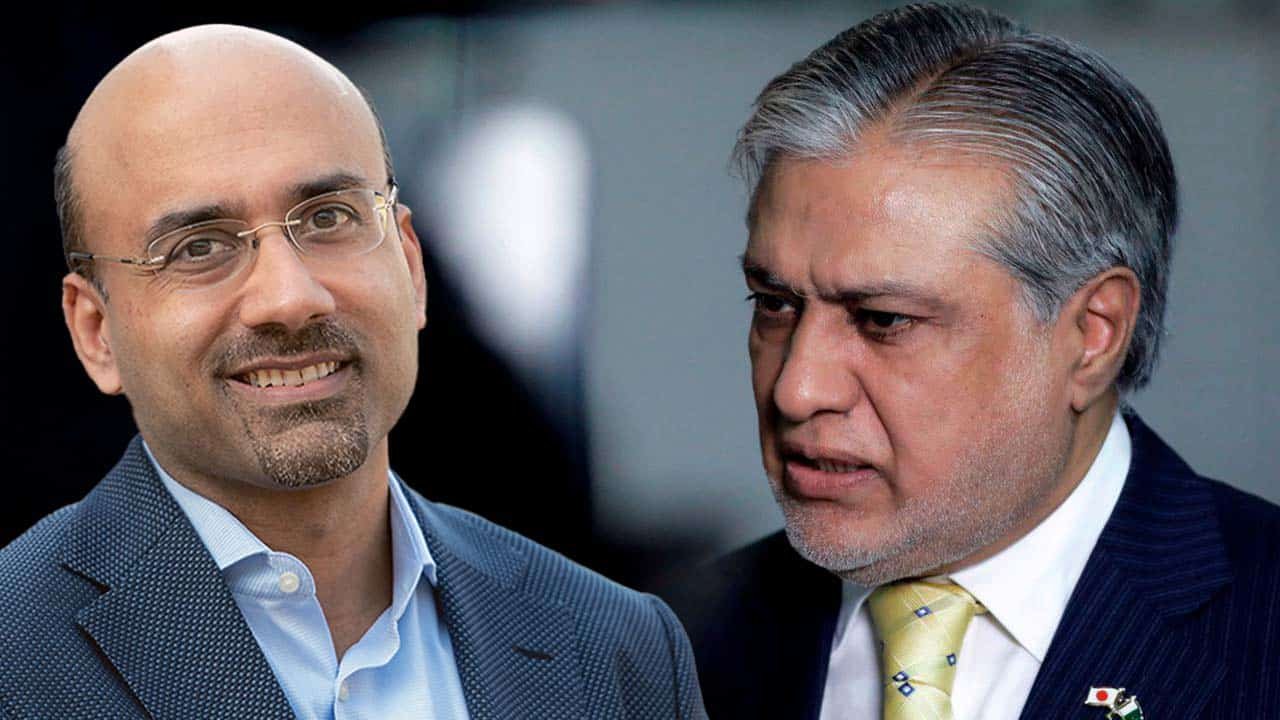
  • Finance Ministry hits out at Atif Mian’s ‘nonsensical’ label for Pakistan’s economic policies

    Finance Ministry hits out at Atif Mian’s ‘nonsensical’ label for Pakistan’s economic policies

    The Ministry of Finance strongly responded on Saturday to recent remarks made by Pakistani-American economist Atif Mian, criticising his lack of practical understanding of economics.

    Mian had labelled the government’s economic policies as ‘nonsensical’ and suggested that Pakistan should take decisive actions to restructure its economy, citing Ghana and Sri Lanka as examples. In response, the Ministry of Finance dismissed Mian’s comments as a veiled suggestion of default and argued that his critique was purely theoretical, lacking practical insight into economics.

    The ministry refuted Mian’s comparison of Ghana and Sri Lanka, pointing out that Pakistan’s economy and population are significantly larger, making the analogy misplaced.

    Regarding Pakistan’s debt structure, the ministry clarified that less than 10 per cent of the debt consists of commercial bonds/sukuks, with the next maturity due in April 2024. The majority of the debt is owed to multilateral and bilateral creditors, who have not indicated any risk of default.

    The ministry expressed disappointment that Mian overlooked the significant reforms undertaken by Pakistan in the past nine months. These reforms included market exchange rate adjustments, interest rate modifications, mid-year taxation to improve the fiscal position, levies on petroleum products, and non-monetisation of the fiscal deficit. These actions were implemented under an unprecedented IMF programme.

    Despite the delay in reaching a staff level agreement with the IMF, the ministry assured that Pakistan’s economy would continue on the path of reform towards stability and sustainable growth.

    The ministry dismissed Mian’s unwarranted comments on nominal exchange rates, stating that Pakistan’s real exchange rate is estimated to be 15 per cent undervalued, reflecting improving fundamentals.

    In terms of petroleum prices, the ministry highlighted that historically, Pakistan has sold petroleum products at significantly lower prices compared to regional countries. Imposing additional taxes on consumers, especially given the recent price hikes and rising inflation, would be unwise.

    The ministry attributed Pakistan’s current economic crisis to international shocks, including the COVID-19 pandemic, the Ukraine war, and devastating floods. It emphasised that the present government has successfully overcome the challenges inherited from an overheated economy and breached IMF conditionality. The current account deficit has been significantly reduced, indicating progress in balancing payments.

    Lastly, the ministry pointed out that Mian failed to consider the unprecedented political challenges faced by Pakistan. It concluded by expressing optimism that with the likelihood of political stability emerging soon, a major economic turnaround is expected.

    Overall, the Ministry of Finance strongly rebutted Mian’s criticism, emphasising the government’s commitment to reforms and the resilience of Pakistan’s economy.


  • Yahoo announces major layoffs, 20% of staff to be affected

    Yahoo announces major layoffs, 20% of staff to be affected

    Yahoo announced in a statement on Thursday that they will be cutting more than 20 per cent of their workforce by the end of 2023, starting with the elimination of 1,000 positions this week.

    The company, which was acquired by private equity firm Apollo Global Management in September 2021, had a headcount of around 10,000 employees at the time of acquisition, according to PitchBook data.

    However, recent reports by Axios indicate that the current headcount may be closer to 8,000 employees, with more than 1,600 workers set to lose their jobs in the latest round of cuts.

    The recent layoffs at Yahoo are part of the company’s plan to simplify its advertising unit’s operations. A spokesperson for the company stated that the strategy for the Yahoo for Business segment failed to meet the company’s expectations in all aspects. These layoffs are a step towards rectifying the situation and ensuring the business segment operates more efficiently.

    “Given the new focus of the new Yahoo Advertising group, we will reduce the workforce of the former Yahoo for Business division by nearly 50 per cent by the end of 2023,” a Yahoo spokesperson told CNBC.

    Yahoo announced that it will redirect its focus to its long-standing collaboration with Taboola, a leading digital advertising firm, to enhance its advertising services. The partnership between the two companies has existed for 30 years.

    “These decisions are never easy, but we believe these changes will simplify and strengthen our advertising business for the long run, while enabling Yahoo to deliver better value to our customers and partners,” the Yahoo spokesperson said.

    According to a statement made by a representative of Yahoo to CNBC, the company has announced plans to offer severance packages to its domestic employees who have been impacted by job loss. However, the company has not disclosed the exact amount or specifics of the severance packages being offered.

    Severance packages are typically offered by companies to employees who have been laid off or let go due to a reduction in workforce, restructuring, or other reasons. These packages typically include a combination of financial compensation and benefits, such as continued health insurance, unemployment assistance, and outplacement services.

    The size and value of the severance package will depend on factors such as the employee’s length of service, position, and company policies. In the case of Yahoo, without specific details on the size or value of the severance packages, it is difficult to determine what the employees can expect to receive.