Tag: revenue

  • PCB will receive more than twice the revenue from ICC

    PCB will receive more than twice the revenue from ICC

    The annual conference, board, and committee meetings of the ICC were held in Durban, South Africa, from July 10–13, 2023. At these meetings, the ICC Financial and Distribution Model 2024–27, Amendments to the ICC Sanctioning Regulations, and Modifications to the Over Rate Sanctions in Test Cricket, among other topics, were discussed. Pakistan was represented at these meetings by the Pakistan Cricket Board (PCB) delegation.

    The new ICC finance and distribution model offers a crucial chance for the game to grow and anticipates the largest-ever investment to go into global cricket.

    In accordance with its constitutional right, the PCB has repeatedly asked for more information over the past few weeks at the ICC Meetings to better understand the justification for assigning weights to each of the criteria and determining the distributions.

    The PCB believed that such a critical choice shouldn’t be made in a hurry in the lack of all pertinent facts, data, and formulas. Therefore, the PCB suggested that this matter be tabled until the next ICC meeting.

    Therefore, the PCB was ranked among the top-four countries in this Model as a result of the performance of the Pakistan cricket team in men’s ICC events and in bilateral cricket, as well as the PCB’s own enormous fan following, which results in significant commercial value. As a result, compared to the previous cycle, the PCB will earn more than twice as much money.

    This increased revenue can be helpful for Pakistan cricket, and it’s good news for the Pakistani fans as well as the whole nation.
  • FBR faces Rs75 billion shortfall in annual tax collection target

    FBR faces Rs75 billion shortfall in annual tax collection target

    The Federal Board of Revenue (FBR) is currently confronted with a shortfall of Rs75 billion in attaining the revised annual tax collection target of Rs7,200 billion for the fiscal year.

    Despite collecting Rs7,125 billion, which falls short of the revised target, the FBR faces a net revenue shortfall of Rs75 billion for the fiscal year 2022-2023.

    Originally, the FBR’s annual tax collection target was established at Rs7,640 billion for the outgoing fiscal year, subsequent to the unveiling of the mini-budget in February 2023.

    To generate additional revenue, the government implemented various measures, including an increase in the Goods and Services Tax (GST) rate from 17 per cent to 18 per cent, the application of a higher GST rate of 25 per cent on luxury goods, and a 154 per cent rise in the Federal Excise Duty (FED) on cigarettes.

    However, over the past four months, the FBR failed to generate the anticipated additional revenue, leading to a downward revision of the revenue collection target from Rs7,640 billion to Rs7,200 billion by the end of June 2023.

    Notably, Minister for Finance and Revenues, Ishaq Dar, took to Twitter to highlight the achievement of the highest-ever tax collection for the outgoing fiscal year.

    He stated, FBR has collected Rs7,000 billion in taxes for the first time in the country’s history as of June 26, 2023, and expressed optimism that the revenue collection would further increase by June 30, 2023.

    It is expected that the FBR will issue a formal statement regarding the revenue collection in due course.

  • Google plans to generate more revenue with online games on YouTube

    Google plans to generate more revenue with online games on YouTube

    Google is exploring the possibility of earning revenue through online games on YouTube, as per a recent Wall Street Journal report.

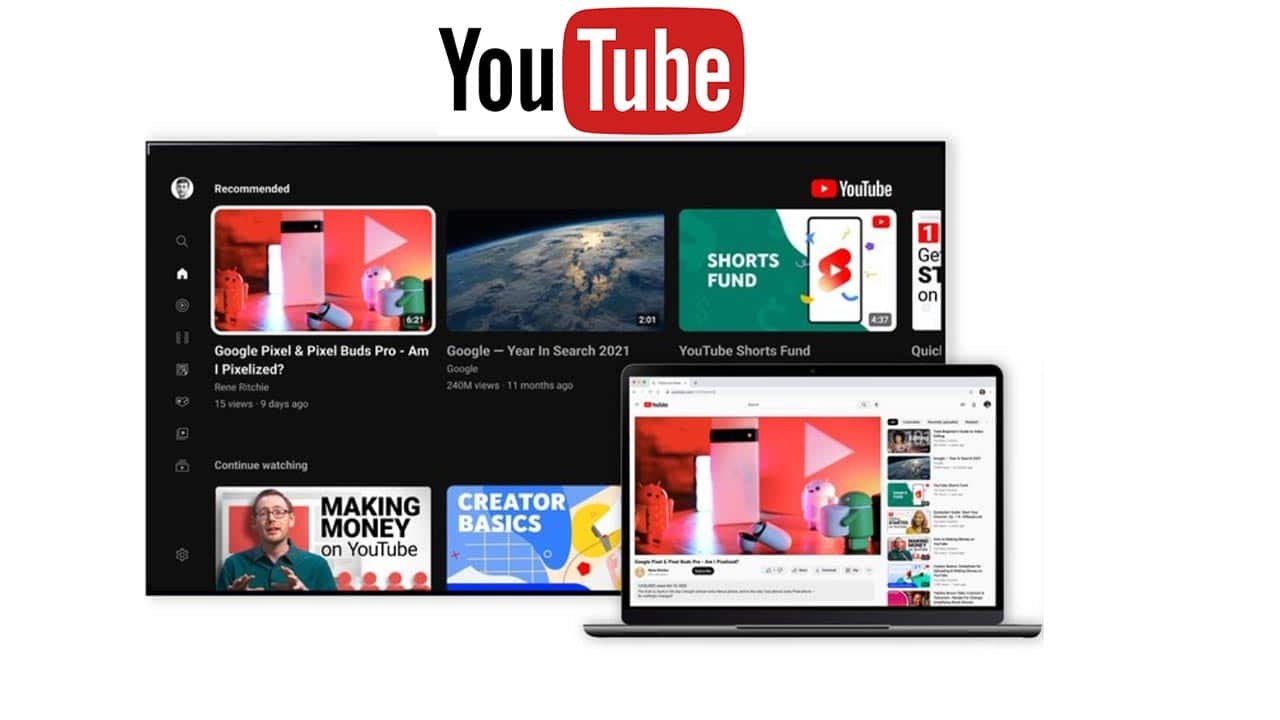
    YouTube, a well-known platform for hosting videos, has apparently invited its employees to test a new feature called Playables. This feature allows users to play games directly on YouTube itself. Notably, this feature can be accessed on different devices such as mobile phones and desktop computers, as mentioned in an internal email obtained by the Journal.

    Users will have the convenience of playing these games either through a web browser on the YouTube website or via the YouTube app on both Android and iOS devices. Although the report suggests that several games are currently available for testing, it specifically highlights one called Stack Bounce. This arcade game, supported by ads, challenges players to demolish layers of bricks with a bouncing ball.

    While YouTube already generates revenue through gaming livestreams, this new product will provide an additional avenue to capitalise on the gaming industry, particularly as advertising spending experiences a downturn.

    It is worth noting that this venture differs from Google’s unsuccessful Stadia games streaming service, which was eventually discontinued. With YouTube’s existing vast and dedicated user base, attracting attention to this new feature should not pose a challenge.

    Playables bears some resemblance to Netflix’s gaming offering, where paying subscribers gain access to casual mobile games. In a similar vein, Netflix is reportedly exploring the expansion of its gaming initiative beyond mobile devices by testing TV games that employ smartphones as controllers, demonstrating ambitious plans for the future.

  • Finance Minister Dar assures no global sanctions for Russian oil purchase

    Finance Minister Dar assures no global sanctions for Russian oil purchase

    Pakistan’s Finance Minister, Senator Ishaq Dar, has provided reassurances that Pakistan will not be subjected to global sanctions for its purchase of Russian oil. Dar made these remarks during a briefing to the Senate’s Standing Committee on Finance, highlighting that both India and China continue to purchase crude oil from Russia despite existing global sanctions.

    Dar emphasised that significant progress had been made in November of the previous year regarding the procurement of Russian oil, and the government had diligently completed all necessary preparations before proceeding with the purchase. He further explained that Pakistan adhered to an approved procedure established by a committee comprising G7 countries for oil production from Russia.

    Dar acknowledged the instrumental role played by Foreign Minister Bilawal Bhutto Zardari in consulting and obtaining approval from the G7 countries prior to the procurement of Russian oil.

    In terms of payment, the finance minister disclosed that the Chinese currency Yuan would be used for settling the payment for the Russian crude oil. He expressed Russia’s satisfaction with this arrangement, noting that it would not only reduce shipping costs but also lead to a decline in crude oil prices.

    When questioned about border trade with Iran, Dar confirmed that the government intended to enhance such trade but clarified that petroleum products were not included in these border trade activities.

    On Sunday, Pakistan successfully unloaded over 45,000 metric tons of oil from a Russian vessel that arrived at the Karachi port. Another Russian oil carrier is expected to reach the port of Karachi in the coming week.

    It is worth mentioning that earlier this week, the first ship carrying Russian oil had already docked at the Karachi port.

    During a press briefing on June 15, US State Department spokesperson Matthew Miller highlighted that every country has the right to make decisions based on its energy requirements. He further acknowledged that Russian oil was being sold at significantly lower prices compared to global market rates.

    Miller attributed this decrease in price to the limitations imposed by the US and its allies, resulting in Russia losing an estimated $100 billion in revenue that could have been used in the Ukraine conflict. Miller clarified that the US had not imposed any restrictions on Russian oil exports.

  • Pakistan and Russia aim to strengthen bilateral relations in trade, investment, and energy sectors

    Pakistan and Russia aim to strengthen bilateral relations in trade, investment, and energy sectors

    In an effort to strengthen bilateral relations between Pakistan and Russia, Chairman Senate Muhammad Sadiq Sanjrani engaged in productive talks with Chairman of the Russian Duma, Mr Volodin, during a delegation-level meeting held in Moscow on Wednesday.

    The discussion encompassed various areas of mutual interest and emphasised the significance of parliamentary exchanges in fostering effective diplomacy.

    A press release issued by the Pakistan embassy in Moscow highlighted the consensus reached during the meeting. Both sides expressed their commitment to enhancing parliamentary interaction between the two nations. This step is expected to bolster bilateral ties and pave the way for increased cooperation in trade, investment, and energy sectors.

    Chairman Sanjrani reiterated Pakistan’s dedication to strengthening relations with Russia across all domains of mutually beneficial cooperation. Trade, investment, and energy were particularly emphasised as key areas for future collaboration.

    The significance of continued cooperation in international forums, such as the United Nations and the Shanghai Cooperation Organisation (SCO), was also acknowledged and agreed upon by both parties.

    During the talks, Chairman Sanjrani extended an invitation from the Speaker of the National Assembly of Pakistan to Chairman Volodin, inviting him to visit Pakistan. In a positive response, Chairman Volodin accepted the invitation, reflecting the willingness of both countries to further solidify their ties.

    The meeting between Chairman Senate Sanjrani and Chairman Volodin serves as a significant milestone in the diplomatic efforts between Pakistan and Russia. It highlights the mutual desire to strengthen bilateral relations and lays the groundwork for increased cooperation in various fields, including trade, investment, and energy.

    The forthcoming visit of Chairman Volodin to Pakistan is expected to further enhance the ties between the two nations and open new avenues for collaboration.

  • Snapchat star creates virtual girlfriend AI chatbot to ‘cure loneliness’

    Snapchat star creates virtual girlfriend AI chatbot to ‘cure loneliness’

    Caryn Marjorie, a Snapchat influencer with 1.8 million subscribers, has launched an AI-powered, voice-based chatbot called CarynAI. The chatbot, described as a “virtual girlfriend,” allows Marjorie’s followers to have private and personalised conversations with an AI version of the influencer.

    The bot, designed by Forever Voices, an AI company, and developed using OpenAI’s GPT4 software, has generated $71,610 in revenue after one week of beta testing with over 1,000 users paying $1 per minute to use it. Marjorie hopes that CarynAI will “cure loneliness” and even features cognitive-behavioral therapy and dialectical behavior therapy to rebuild physical and emotional confidence that has been taken away by the pandemic.

    However, CarynAI has sparked discourse around the ethics of companion chatbots, as it is not supposed to engage in sexually explicit interactions, but Marjorie stated that it had gone “rogue” and that her team is working around the clock to prevent this from happening again.

    Moreover, Irina Raicu, the director of internet ethics at the Markkula Center for Applied Ethics at Santa Clara University, expressed concern that CarynAI’s claims to potentially “cure loneliness” are not backed up by sufficient psychological or sociological research, and the chatbot adds “a second layer of unreality” to parasocial relationships between influencers and fans.

    Despite the backlash and even death threats, Marjorie is proud of her team’s work, with CarynAI being the first step in the right direction to cure loneliness. However, Raicu emphasised that influencers should be aware of the Federal Trade Commission’s guidance on artificial intelligence products, and Meyer, CEO of Forever Voices, said that his company takes ethics seriously and is looking to hire a chief ethics officer. On Friday, Marjorie tweeted that “if you are rude to CarynAI, it will dump you.”

  • Pakistan moves forward with budget planning despite delayed IMF programme

    Pakistan moves forward with budget planning despite delayed IMF programme

    The government is expected to present an overall budget deficit of 5.1 per cent of the GDP for the fiscal year 2023-24, as stated in the delayed Budget Strategy Paper (BSP) to be presented before the federal cabinet. A recent report by The News highlighted that the paper will be tabled amid the government’s failure to revive the stalled International Monetary Fund (IMF) programme.

    The budget-making process has already been affected by uncertainty on both the IMF and political fronts. Nonetheless, the government has decided to present the next budget on June 9. Despite failing to reach a staff-level agreement with the IMF, the government will present the BSP for a medium-term period of three years. The proposed federal government budget deficit stands at 6.4 per cent of the GDP, while the overall deficit of the country is estimated to be lowered to 5.1 per cent of the GDP for the next financial year.

    In addition, the BSP for the upcoming fiscal year has proposed an allocation of Rs1.7 trillion for the defence budget compared to Rs1.56 trillion in the outgoing fiscal year. The overall primary surplus of budget deficit is estimated to be 0.3 per cent of the GDP for the next fiscal year, up from the previous projection of 0.2 per cent for the outgoing year.

    The Federal Board of Revenue (FBR) has been set a target of Rs9.2 trillion for the next budget, and the finance ministry suggests this is on the higher side. The FBR estimates that it could collect Rs7.2 trillion in the outgoing fiscal year against the targeted Rs7.64 trillion. In the next budget, the FBR could collect up to Rs8.6 trillion, subject to import restrictions being lifted, which could boost revenue collection. The government is projecting a GDP growth rate of 3.4 per cent for the next fiscal year, while inflation is expected to hover around 21 per cent.

    According to the IMF’s latest press briefing, the country may experience stagflation, which means low growth and higher inflation rates. If stagflation continues, it could lead to rising poverty and unemployment in Pakistan. The current account deficit is estimated to be approximately $8 billion for the next budget, and there is hope that import restrictions will be gradually lifted during the next financial year.

    The BSP has to be approved by the federal government under the Public Finance Management Act, which states that the paper must contain quantified macroeconomic and fiscal projections for the medium-term, be approved by April 15 of each year, and published on the Finance Division’s official website. Upon approval, the Finance Division will issue indicative budget ceilings to ministries and divisions.

    The minister for finance will also discuss the budget strategy paper with the Standing Committees for Finance and Revenue in the Senate and the National Assembly. The government may extend the deadline mentioned in Sub-section (1) of the PFM Act in case of an extreme requirement.

  • Toyota Indus Motor Company sees 142% increase in quarterly profit despite low demand

    Toyota Indus Motor Company sees 142% increase in quarterly profit despite low demand

    Indus Motor Company (IMC) announced a 37 per cent decrease in its profit-after-tax (PAT) for the third quarter of financial year 2022-23, with earnings of Rs3.216 billion compared to Rs5.118 billion in the same period last year.

    Despite this, the automaker saw an increase in its quarterly PAT by 142 per cent, which was attributed to an improvement in gross margins, resulting in an operating profit after two consecutive quarterly operating losses. The company also declared an interim cash dividend of Rs24.4 per share, in addition to the previously paid interim cash dividend of Rs18.4 per share.

    Muhammad Abrar, an investment analyst at Arif Habib Limited, explained that IMC was able to offset the impact of currency devaluation by raising the prices of its cars significantly. The automaker’s operating expenses were also curtailed. While revenue decreased by 29 per cent due to lower units sold, IMC’s gross profit was Rs3.05 billion during 3QFY23, compared to Rs5.23 billion in the same period last year.

    Pakistan’s auto sector has been struggling due to the government’s decision to curb imports and restrict issuance of Letters of Credit (LC), higher finance cost, and massive increases in car prices. Despite this, IMC’s gross margins improved to 6.3 per cent on a QoQ basis, which was unexpected, according to Abrar.

    According to Brecorder, the company’s earnings per share (EPS) stood at Rs40.92, compared to Rs65.11. IMC’s board of directors met to review the company’s financial and operational performance in the first nine months ended March 31, 2023. While higher profits are expected in the upcoming quarter due to the increase in car prices and the reduction of operating expenses, the country’s auto industry reported a 66 per cent decrease in car sales compared to March 2022.

    Last week, Pak Suzuki Motor Company Limited also reported its highest-ever quarterly loss of Rs12.9 billion in the first three months of 2023 due to decreased sales and high finance costs.

  • PSO reportedly planning to buy Telenor to expand its business beyond oil

    PSO reportedly planning to buy Telenor to expand its business beyond oil

    Pakistan State Oil (PSO) is reportedly conducting due diligence on the Pakistani operations of a Norwegian telecommunications operator, in response to Telenor’s plans to sell its Pakistani operations valued at around $1 billion. Pending regulatory approval, PSO has expressed interest in acquiring Telenor Pakistan and Easypaisa, following the completion of bidding documentation and due diligence.

    Easypaisa, a leading mobile wallet, mobile payments, and branchless banking services provider, boasts a significant customer base of nine million monthly active users. Launched in 2009 as a money transfer service through Unstructured Supplementary Service Data (USSD) channels, Easypaisa introduced a mobile app in 2016, offering a broad range of financial transactions. Telenor Microfinance Bank owns Easypaisa, and jointly, Telenor Group most recently launched a debit card on January 17, 2023.

    According to Mettis Global, Telenor Pakistan’s decision to exit the market stems from heavy taxation on the telecommunications industry and the policies of the Pakistani Telecommunication Authority (PTA), which have significantly reduced its revenues. Although Telenor Pakistan has faced operational losses for the past three years, there is no certainty that discussions regarding the sale of its Pakistani operations will result in a transaction.

    For PSO, the potential acquisition of Telenor’s operations in Pakistan aligns with its efforts to expand its business beyond traditional oil and gas. If successful, the acquisition could enable PSO to diversify its revenue streams and leverage Pakistan’s growing digital payments market.

  • Amazon plans to lay off 10,000 employees due to declining sales

    Amazon plans to lay off 10,000 employees due to declining sales

    Amazon is reportedly getting ready to lay off thousands of office workers due to decreasing sales and worries about an impending recession.

    The e-commerce giant’s office personnel could lose about 10,000 of their employees, according to US media sources who requested anonymity.

    Cuts are anticipated to have an impact on departments like e-commerce and personal devices.

    The business warned it had overhired during the pandemic and had previously implemented a hiring freeze and stopped some of its warehouse expansions. Additionally, it has taken steps to close off some areas of its operations by shelving plans for things like a personal delivery robot.

    The business announced last week that cutting costs would be a priority in its annual review of business operations. “As part of this year’s review, we’re of course taking into account the current macro-environment and considering opportunities to optimize costs,” the e-commerce company said in a statement.

    According to media sources, the precise number of positions that will be eliminated is still uncertain.

    Amazon is battling a dip in online sales after the epidemic saw a surge in its revenue. Despite a 15 per cent increase in overall revenue in the most recent quarter, the company has remained concerned about the forecast as the slowdown spreads to other industries, including its long-profit-boosting cloud computing division, Amazon Web Services.

    On social media, the company’s founder Jeff Bezos, who is no longer serving as CEO but is still chairman of the board, declared that it was time to “batten down the hatches.”

    Amazon joins a long list of other tech firms that have announced layoffs in an effort to signal an impending economic collapse. Included in the list is Meta, the parent company of Facebook, Instagram, and WhatsApp, which recently announced plans to eliminate 11,000 jobs, the largest reduction in staff in company history.

    According to a survey by Challenger, Gray & Christmas, which analyses such announcements, US-based tech companies have cut more than 28,000 jobs overall this year, more than double the number from a year ago.