Tag: Reza Baqir

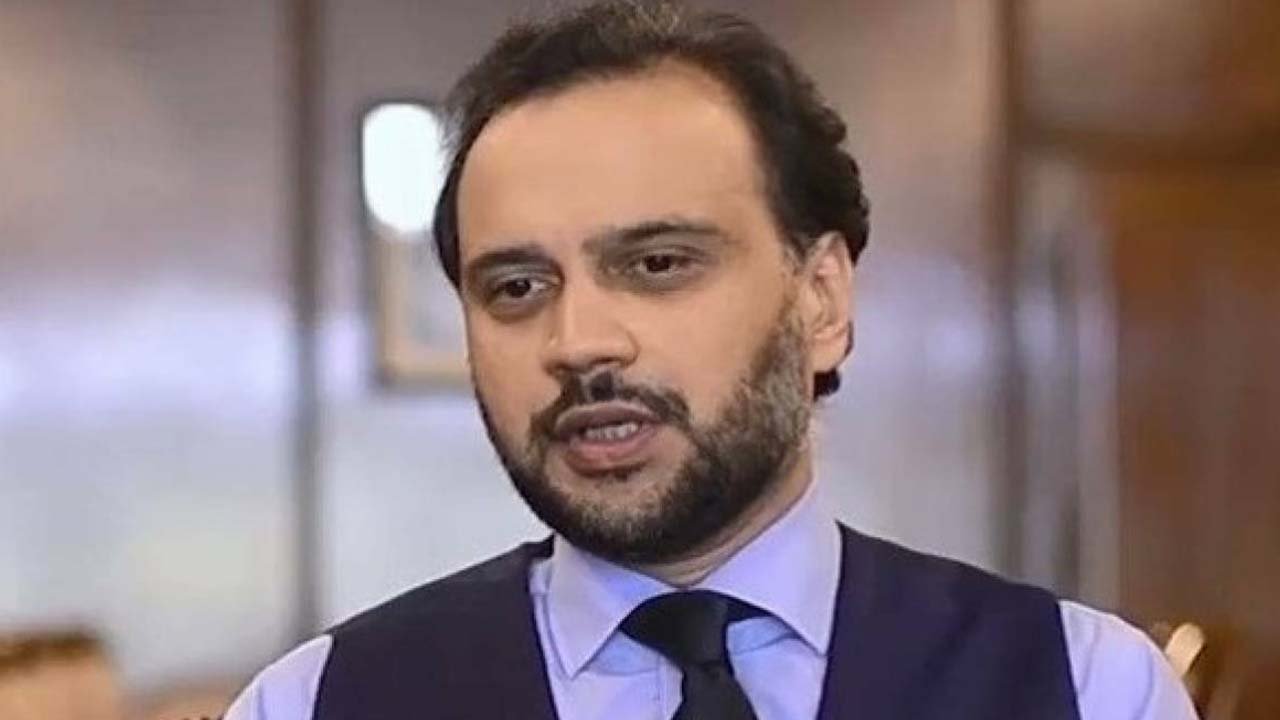
  • Dr Murtaza Syed assumes charge as the new Governor State Bank of Pakistan

    Dr Murtaza Syed assumes charge as the new Governor State Bank of Pakistan

    With effect from May 5, Dr Murtaza Syed, the senior-most Deputy Governor and a former Deputy Resident Representative of the International Monetary Fund (IMF), became the new acting Governor of the State Bank of Pakistan (SBP).

    Prior to this, the federal government named Dr Syed as the Deputy Governor of the SBP for three years on January 27, 2020.

    Dr Syed has taken up the position in light of Section 10(2) of the State Bank of Pakistan (SBP) Act 1956 (amended), and has therefore succeeded Dr Reza Baqir, whose term ended on May 4, according to the notification.

    He holds a Ph.D. in Economics from the University of Oxford’s Nuffield College and has more than 20 years of experience in macroeconomic research and policymaking, including 16 years at the IMF. He worked on IMF initiatives and monitoring of emerging markets and advanced economies such as the Eurozone, Japan, and Korea. Dr Syed also handled IMF training and technical support projects around the world, and between 2010 and 2014, he was the IMF’s Deputy Resident Representative in China.

    Dr Syed started his career as a Senior Policy Analyst at the Human Development Center in Islamabad, where he worked under former Finance Minister D. Mahbub ul Haq. Afterward, he worked for the Institute for Fiscal Studies (IFS), a London-based public policy think tank, where he did research on company investment and employment behaviour, as well as evaluating Latin American anti-poverty programmes.

    Read more: Pakistan’s foreign currency reserves down by $328 million

    Dr Syed has produced papers on a multitude of macroeconomic topics, including fiscal and monetary policy, financial stability, economic crises, investment, demographics, poverty, and inequality, in addition to teaching public policy at the universities of Cambridge and Oxford.
  • SBP determined to curb inflation, improve foreign exchange reserves

    SBP determined to curb inflation, improve foreign exchange reserves

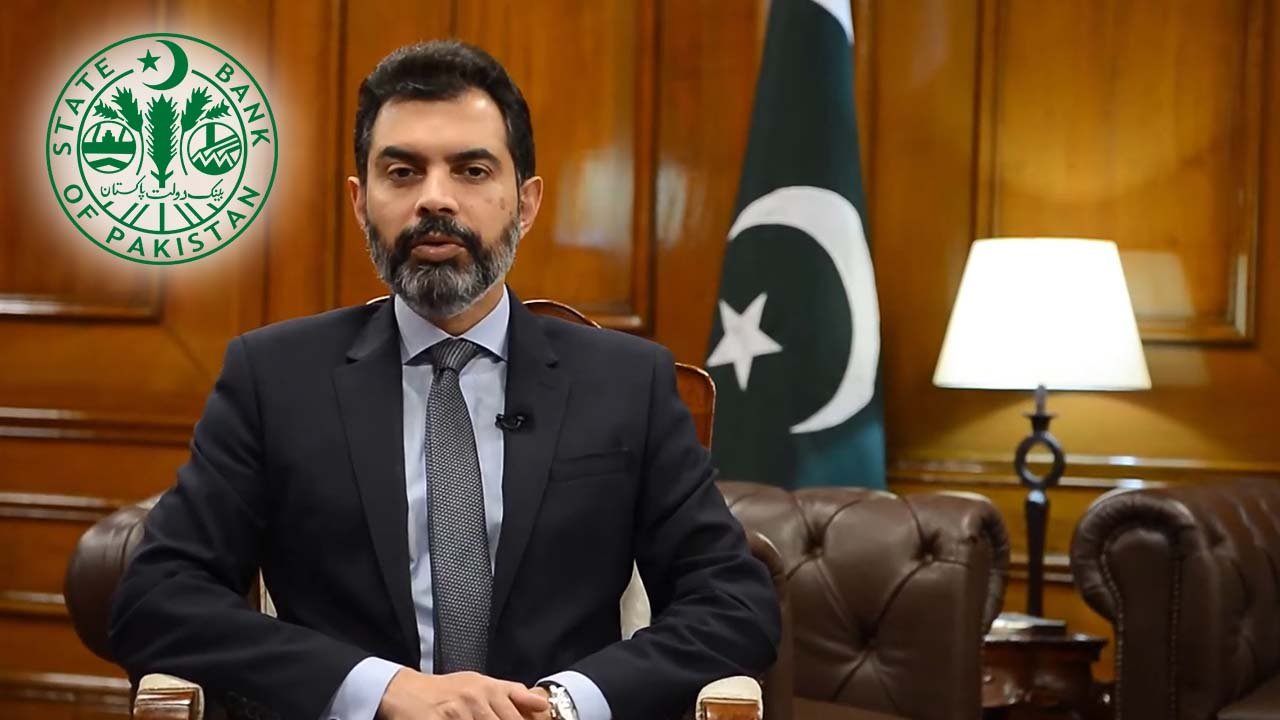
    In a recent interview, the Governor of the State Bank of Pakistan (SBP), Dr. Reza Baqir expressed concern over the continuous deterioration in foreign exchange reserves but remained optimistic that a renewal of loans will be witnessed in the near future, which, coupled with SBP’s initiatives, will enhance market confidence.

    He claimed that the decline in reserves is “clearly alarming, but we are convinced that the central bank’s initiatives will prevent further deterioration”.

    According to data issued by the central bank on April 7, the reserves massively declined by $728 million to $11.32 billion as of April 1.

    The decline, according to SBP, is primarily attributable to debt repayment and government payments linked to the settling of an arbitration judgment.

    In addition to this, the currency even hit new lows in the week, forcing the SBP to intervene by boosting the policy rate, declaring a 100 per cent cash margin on 177 commodities with instant effect, and hiking the markup percentage by 2.5 per cent for borrowing under the Export Finance Scheme (EFS).

    In response to the Monetary Policy Committee’s (MPC) recent rate hike, Baqir stated that the move was made to tackle growing inflation and lessen external pressures. “The foreign exchange market has been under a lot of pressure for more than a month. A number of factors contributed to it: first, there was political uncertainty; second, our reserves were drained due to debt payments”.

    Consequently, the Pakistani rupee ended its devaluation run on April 8, and the KSE-100 Index witnessed positive sentiment, ending the day with an impressive gain of 658 points.

    The SBP Governor also discussed the skyrocketing petrol prices, which remain elevated because of the Russia-Ukraine conflict, adding more pressure on the local currency.

    The central bank made a determined decision after analyzing the statistics to lower inflation, improve foreign exchange reserves, and boost business confidence.

  • ‘Good news for market’: IMF programme to restart soon, says SBP chief

    Pakistan is in talks with the International Monetary Fund (IMF) to put the fiscal support programme back on track, State Bank of Pakistan Governor Dr Reza Baqir said on Monday.

    Baqir said he was optimistic about the economic outlook despite the fallout from the coronavirus pandemic and the central bank was eyeing 1.5pc to 2.5pc GDP growth in the current fiscal year.

    With dwindling foreign exchange reserves and a struggling economy, Pakistan entered a three-year $6 billion IMF bailout programme in 2019, but is yet to have its second review approved, which has been pending since early last year.

    “We hope to have good news for the market and the world that we are putting the programme back on track,” Baqir said in an interview on Monday at the Reuters Next conference.

    Last year, staff from the IMF and Pakistani authorities reached an agreement to pave the way for a disbursement of $450 million in IMF funds pending approval from the global lender’s executive board, which is yet to take place.

    Baqir said there was no disagreement on the end goal between the two sides, and that Pakistan needs to increase its low tax-to-GDP ratio.

    Pakistan and the IMF have been working to implement IMF-supported economic reforms, in particular tax collection, aimed at stabilising the economy and shoring up a yawning fiscal deficit.

    Though the bailout programme is still pending, Pakistan received $1.4 billion in emergency financing from the IMF to allow it to fund targeted and temporary spending increases aimed at containing the pandemic and mitigating its economic impact.

    Authorities are counting on the IMF bailout package to bolster Pakistan’s fiscal position and increase global confidence in its economy.

    “Pakistani authorities and the IMF team remain closely engaged, discussions are going on, both teams are working very hard and non-stop to bring the programme review to positive conclusion,” IMF’s Resident Representative to Pakistan, Teresa Dabn Sanchez, told Reuters.

    Baqir also said he is more optimistic about the outlook even as Pakistan battles a second wave of the coronavirus outbreak.

    “We are prepared for the challenges that may come about. We are already in the middle of Covid without any vaccine and once the vaccine comes, it will only makes this better,” he said.

    Baqir added that an economic recovery is underway and the bank’s job is to support the rebound until a vaccine is available.

    1.5 to 2.5% GDP GROWTH:

    Pakistan is aiming to achieve 1.5pc to 2.5pc GDP growth in the current fiscal year, Baqir said. “I think the next two or three years should bring some good news on the economic front.”

    Pakistan’s economy contracted 0.4% in the last fiscal year ended June 30, 2020, as the pandemic hit. Baqir added that an economic recovery was under way and the bank’s job was to support the rebound until a vaccine was available.

    “I think the next two or three years should bring some good news on the economic front,” he said.

    Baqir said Pakistan’s growth in its foreign exchange reserves from $7 billion to $13 billion in recent months was not due to borrowing.

    He said Pakistan needed “a rollover of the support” of friendly countries that had parked money in the bank to shore up reserves, but did not need new loans.

    Among those countries is Saudi Arabia, which recently asked Pakistan to repay $2 billion of its loan. Islamabad returned $1 billion to Riyadh in December last year and was to pay another $1 billion this month.

  • ‘Pakistan ready to boost tech-enabled financial inclusion,’ says Queen Maxima

    ‘Pakistan ready to boost tech-enabled financial inclusion,’ says Queen Maxima

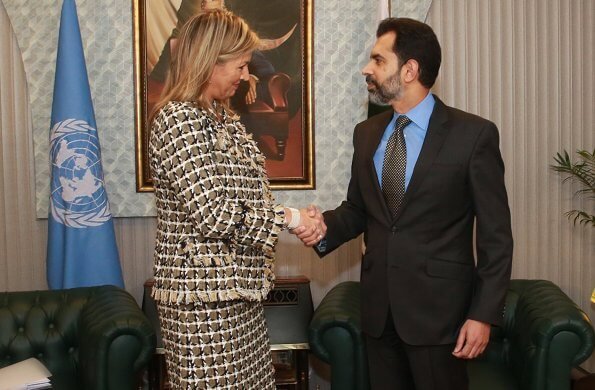
    United Nations (UN) Secretary General’s Special Advocate for Inclusive Finance for Development (UNSGSA) Queen Maxima has said that Pakistan is in a good position for a boost to the technology-enabled financial inclusion, Express Tribune reported.

    According to the details, Queen Maxima in a meeting with State Bank of Pakistan (SBP) Governor Reza Baqir said that in the last five years, the country’s start-up tech and fintech ecosystems had made some notable progress in relation to improving their supporting networks.

    She also appreciated the progress made by the SBP and Pakistan with respect to financial inclusion while focusing on gender mainstreaming and digital financial services.

    The queen said it could be helpful to establish a pro-poor gateway for the wider acceptance of micropayment methods and introduce consumers to micropayments on a large scale and supported the steps taken by the SBP for creating a micropayment gateway in 2020.

    She, however, added that while resolving the technical issues was important, it was more challenging to encourage people to engage in digital modes of payment.

    The UNSGSA emphasised that in this regard the inclusion of new players was important, whereby they should not only be competing but also participating in expanding the delivery of services as well.