Tag: Rice exports

  • Russian market reopens for Pakistani rice: 15 mills get export approval

    Russian market reopens for Pakistani rice: 15 mills get export approval

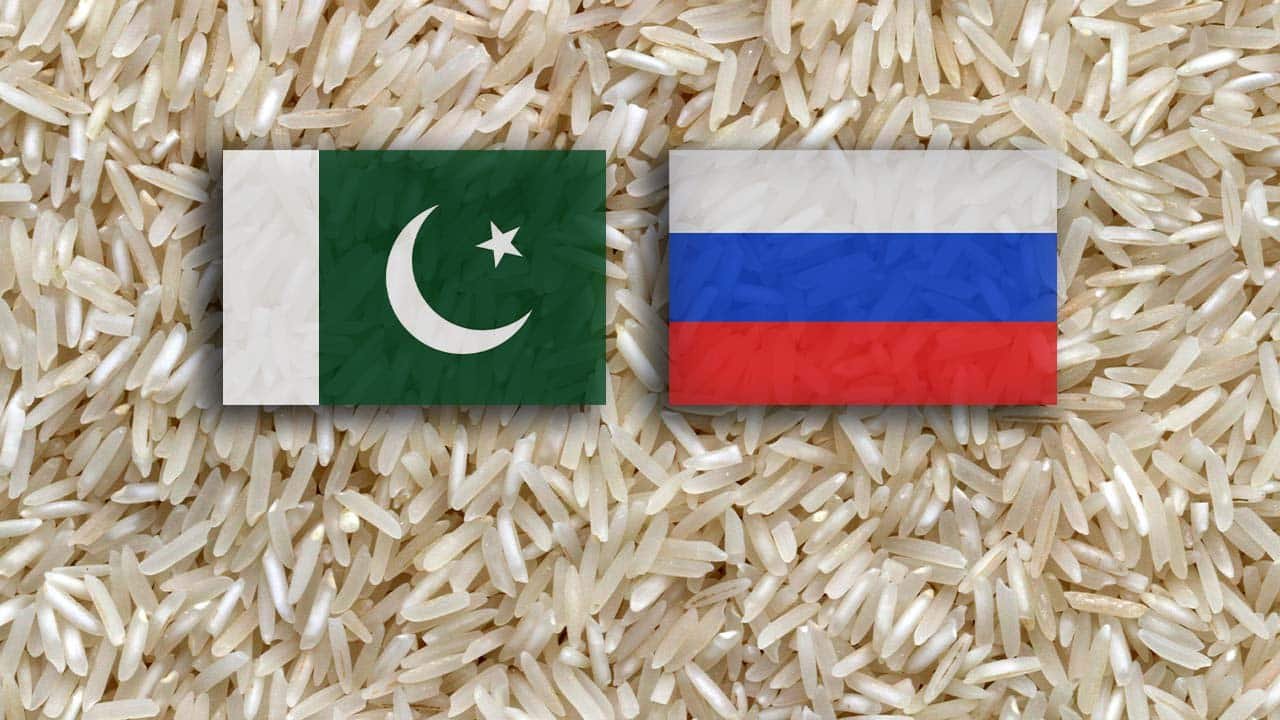
    In a significant development for Pakistan’s rice industry, the Department of Plant Protection (DPP) of the Ministry of National Food Security and Research has registered 15 rice establishments for exports to the Russian Federation. This announcement comes as a ray of hope amid a declining trend in rice exports during the outgoing fiscal year.

    The recommendation of these establishments to the Russian Federal Service for Veterinary and Phytosanitary Surveillance (Rosselkhoznadzor) follows a thorough technical audit conducted by the DPP. The successful registration has been hailed as a significant achievement by the food ministry, highlighting its potential to boost exports and contribute to the overall economy of the country.

    In the past, Russia had restricted imports of rice from Pakistan due to concerns over pest interception. However, in 2021, the ban was lifted, allowing only four mills that had met the required quality standards to export rice to Russia.

    Recognising the need to capitalise on this opportunity, the DPP, in collaboration with the Rice Exporters Association of Pakistan (REAP), took proactive measures to upgrade 15 additional mills, ensuring compliance with the sanitary and phytosanitary (SPS) requirements set by Russia for rice exports.

    With the registration of these establishments, the total number of rice companies eligible to export to Russia has now risen to 19. This development is particularly significant for rice farmers, primarily located in Punjab and Sindh, as they heavily rely on these exports as a primary source of income.

    Beyond the immediate benefits to rice farmers, this achievement sets a positive precedent for Pakistan’s agrarian economy, opening doors to enhance exports in other domains by improving quality standards to meet global market demands. The agreement with Russia acts as a gateway for potential rice exports to international markets.

    Building on this success, efforts are underway to bring more rice processing facilities in line with international standards, with the aim of securing a substantial share in high-end export markets across Asia, Europe, the United States, and Australia.

    The recent decline in Pakistan’s basmati rice exports, which contracted to 541,492 tonnes ($588m) in 11MFY23 from 695,564 tonnes ($632m) in the corresponding period of the previous fiscal year, has underscored the importance of revitalising the sector.

    However, foreign sales of other rice varieties have remained strong, totaling $1.4bn with shipments of 2.964 million tonnes in July-May FY23, albeit slightly lower than the $1.6bn (3.816 million tonnes) recorded during the same period last year.

    As Pakistan’s rice industry finds new avenues for growth, there is renewed optimism among farmers, exporters, and policymakers regarding the sector’s potential to contribute significantly to the country’s economic recovery.

    By tapping into international markets, enhancing quality standards, and diversifying export destinations, Pakistan aims to strengthen its position as a leading player in the global rice trade and capitalise on its status as an agrarian economy.

  • Pakistan’s export market takes a hit: Textile group exports down 14.83% in January

    Pakistan’s export market takes a hit: Textile group exports down 14.83% in January

    According to the Pakistan Bureau of Statistics (PBS), the country’s textile group exports declined by approximately 8.17 per cent during the first seven months (July-January) of fiscal year 2022-23, totaling $10.039 billion as compared to $10.933 billion during the same period of the previous year.

    The data also showed that textile group exports witnessed a year-on-year decline of 14.83 per cent in January 2023, amounting to $1.321 billion, compared to $1.551 billion during the same month in the previous year. Additionally, on a month-on-month basis, the textile group registered a negative growth of 2.53 per cent compared to $1.356 billion in December 2022.

    Cotton yarn exports experienced a negative growth of 34.66 per cent during July-January, totaling $449.419 million compared to $687.857 million during the same period in the previous year. On a year-on-year basis, cotton yarn exports registered a negative growth of 12.34 per cent, while on a month-on-month basis, it registered a growth of 27.22 per cent.

    Rice exports declined by 15.82 per cent during the first seven months of fiscal year 2022-23, totaling $1.083 billion compared to $1.286 billion during the same period in the previous fiscal year. Overall, the country’s exports during July-January 2022-23 totaled $16.499 billion (provisional) compared to $17.739 billion during the corresponding period of the previous year, showing a decrease of 6.99 per cent.

    In January 2023, the country’s exports amounted to $2.244 billion (provisional) compared to $2.313 billion in December 2022, reflecting a decrease of 2.98 per cent and a decline of 14.15 per cent compared to $2.614 billion in January 2022. The primary commodities of exports during January 2023 were knitwear, readymade garments, bed wear, cotton cloth, rice others, towels, cotton yarn, made-up articles (excluding towels and bedwear), rice basmati, and surgical goods and medical instruments.

  • 3Qs of FY-2022: Food exports up by 18.92% to $3.961 bln: PBS

    3Qs of FY-2022: Food exports up by 18.92% to $3.961 bln: PBS

    The national food exports recorded a huge increase of 18.92 per cent during the first three quarters of the current fiscal year as compared to the corresponding period of last year, informed Pakistan Bureau of Statics (PBS).

    The PBS data showed the number increased to $3,961.469 million during July-March (2021-22) from $3,331.257 million in July-March (2020-21).

    Rice exports, with an increase of 14.96 percent, increased from $1,560.429 million to $1,793.909 million.

    The Basmati rice increased from $408.117 million to $496.389 million, which is a 21.63 percent increase. Moreover, an increase in other rice products were recorded from $1,152.312 million to $1,297.519 million, which is a 12.60 sharing growth increase.

    The fish and its related items exports increased from $303.782 million to $309.979 million which is 2.04 percent increase. About fruit exports, the PBS data revealed that the numbers increased from $378.575 million to $294.538 million, which is a 4.22 percent increase.

    The exports of vegetables increased by 1.09 percent, from $245.739 million to $248.413 million; leguminous vegetables (pulses) by 100 percent, from zero exports to $0.068 million; tobacco by 59.35 percent, from $24.736 million to $39.418 million; spices by 18.05 percent, from $70.524 million to $83.251 million; oil seeds, nuts and kernals by 131.41 percent, from $76.348 million to $176.678 million; meat and meat preparations by 1.18 percent, from $247.010 million to $249.934 million whereas the exports of all other food items increased by 56.86 percent, from $424.114 million to $665.282 million.

    Meanwhile, on a year-on-year basis, the exports of food commodities went up by 10.22 percent during March 2022 as compared to the same month last year. They were recorded at $526.466 million against the exports of $477.668 million.