Tag: rich

  • Hannah Husain becomes first Pakistani to debute at Le Bal des Débutantes, wears diamond necklace worth USD 2.5 million

    Hannah Husain becomes first Pakistani to debute at Le Bal des Débutantes, wears diamond necklace worth USD 2.5 million

    Hannah Husain has become the first ever Pakistani woman to debut at the coveted Le Bal des Debutantes ball in Paris, attended by eligible single ladies from around the world. The ball was organised by Ophélie Renouard to raise funds for the cardiology research unit ARCFA of Neck-Enfants Malades Hospital and for the World Central Kitchen, which provides meals to vulnerable communities around the globe. It was held at the Shangri-La Paris, the former residence of Napoleon Bonaparte’s nephew.

    Hannah Husain is the great-great granddaughter of Sir Fazli Husain, a barrister from Cambridge, and an Education Minister, while her great grandfather served as Pakistan’s ambassador to Beirut, Lebanon.

    Husain debuted at the ball wearing a pastel gown adorned with roses designed by Georges Hobeika and Elie Saab, and was escorted to the event by her brother Harris.
    It was Hannah’s necklace that caught the attention of social media. The bauble has a history dating back all the way to the 1800s according to Christie’s, and is the estimated to be worth $1.5 to 2.5 million.

    According to royal watcher blog, the necklace was designed for Princess Maria Caroline of Bourbon-Two Sicilies, the Duchess of Aumale, later gifted to his god daughter Princess Helene of Orleans when she married the Duke of Aosta.

    The necklace was worn by the Marchioness of Chomondeley, Sybil Sassoon, and later by Lady Churchill in 1953 for the Nobel Prize Ceremony.

    At the 2022 debutante ball in Paris, Princess Helene d’Orelans had loaned the necklace to her namesake.
  • Climate crises drove 27 million children into hunger in 2022

    Climate crises drove 27 million children into hunger in 2022

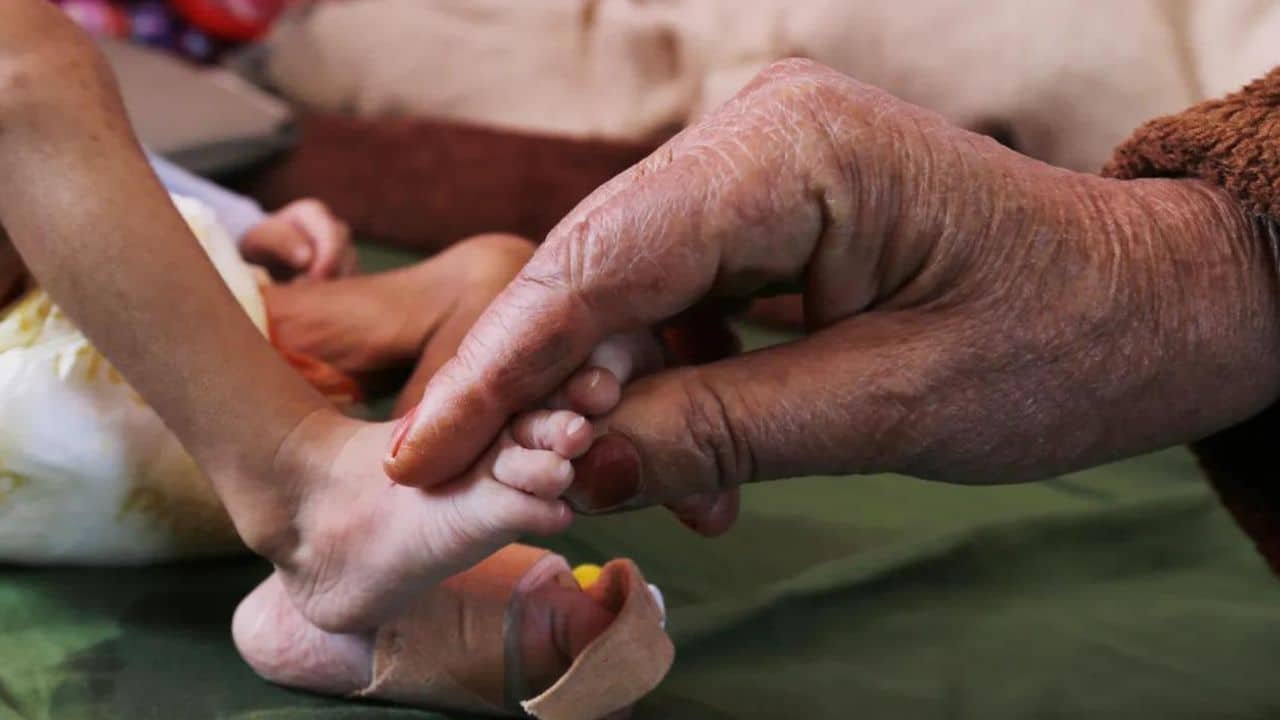
    Extreme weather events in countries vulnerable to climate change drove more than 27 million children into hunger last year, Save the Children said on Tuesday.

    The figure represented a sharp 135 percent increase over 2021, the UK-based charity said in an analysis ahead of the COP28 climate summit opening in Dubai on Thursday.

    It said children made up nearly half the 57 million people pushed into crisis levels of acute food insecurity or worse across 12 countries because of extreme weather in 2022, according to data from the IPC hunger monitoring system.

    Out of the 12, countries in the Horn of Africa were most affected, with Ethiopia and Somalia accounting for about half of the 27 million children facing hunger, Save said.

    “As climate-related weather events become more frequent and severe, we will see more drastic consequences on children’s lives,” Save’s CEO Inger Ashing said in a statement.

    The charity called on leaders meeting at COP28 in Dubai to take action on the climate crisis by recognising children as “key agents of change” but more broadly to address other causes of food insecurity such as conflict and weak health systems.

    Save highlighted the situation in Somalia, which is considered one of the most vulnerable countries to climate change, locked in a vicious cycle of drought and floods.

    It said the recent torrential rains and flooding that have engulfed many parts of the country had displaced about 650,000 people, about half of them children.

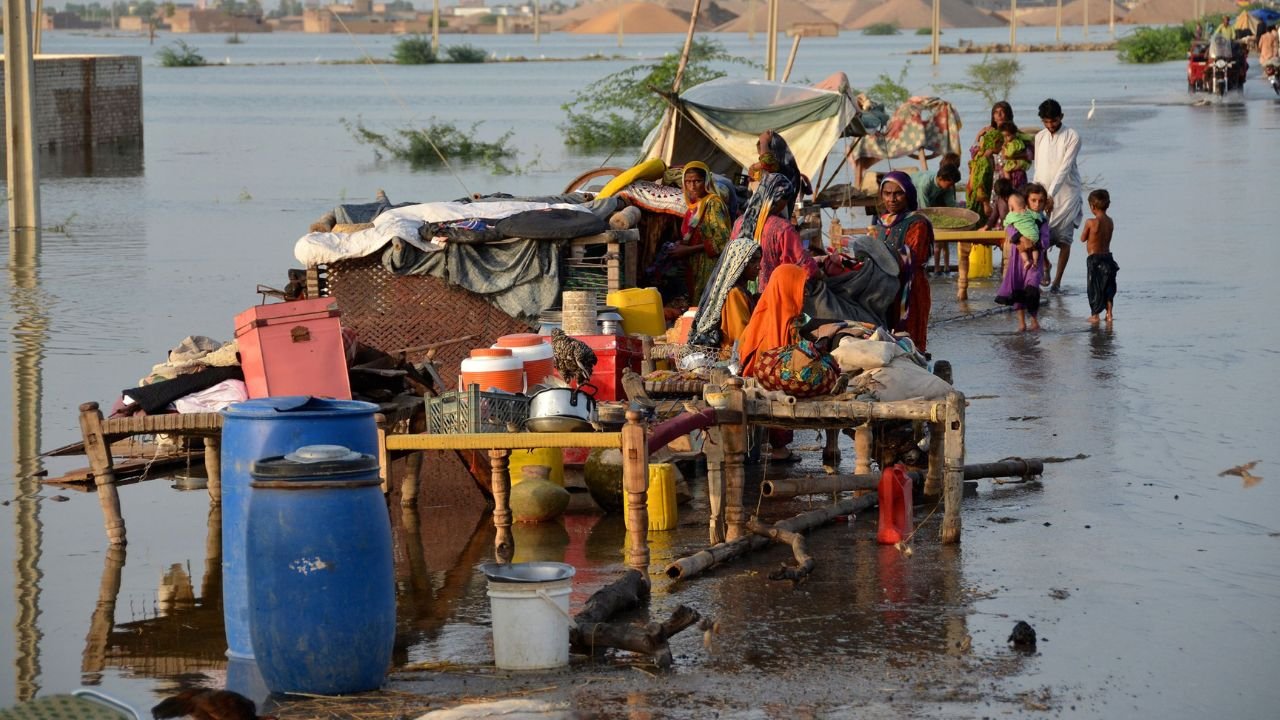
    Elsewhere, Save noted that two million children in Pakistan remained acutely malnourished after floods that swamped a third of the country last year.

    Across the planet, Save estimated that 774 million children -– or one third of the global child population — are living with the dual impacts of poverty and high climate risk.

    In a report issued last week, Save said that more than 17.6 million children will be born into hunger this year, one-fifth more than a decade ago.

  • Extreme Rainfall Increases Exponentially With Global Warming: Study

    State-of-the-art climate models drastically underestimate how much extreme rainfall increases under global warming, according to a study published Monday that signals a future of more frequent catastrophic floods unless humanity curbs greenhouse emissions.

    It comes as countries prepare to meet at the COP28 summit in Dubai beginning later this week, amid fears it could soon be impossible to limit long-term warming to the 1.5 degrees Celsius scientists say is necessary to curb the worst effects of human-caused climate change.

    Researchers from the Potsdam Institute of Climate Impact Research (PIK) looked at the intensity and frequency of daily precipitation extremes over land in 21 “next generation” climate models used by a UN body in its global assessments.

    They then compared the changes projected by the models with those observed historically, finding that nearly all climate models significantly underestimated the rates at which increases in precipitation extremes scaled with global temperature rise.

    “Our study confirms that the intensity and frequency of heavy rainfall extremes are increasing exponentially with every increment of global warming,” said Max Kotz, lead author of the paper published in the Journal of Climate.

    The changes track with the Clausius-Clapeyron relation in physics, which established that warmer air holds more water vapor. This finding underpinned the fact that temperature and not wind dominate the global change in extreme rainfall events, according to the authors.

    Stronger increases in rainfall intensity and frequency were found across the tropics and high-latitudes, like in Southeast Asia or Northern Canada, according to the study.

  • Pakistan’s climate problems partially due to world’s richest one per cent: Report

    Pakistan’s climate problems partially due to world’s richest one per cent: Report

    Oxfam has released a new report, “Climate Equality: A Planet for the 99%”, revealing that “The richest one per cent of the world’s population produced as much carbon pollution in 2019 as the five billion people who made up the poorest two-thirds of humanity.”

    While fighting the climate crisis is a shared challenge, not everyone is equally responsible and government policies must be tailored accordingly, Max Lawson, who co-authored the report, told AFP.

    “The richer you are, the easier it is to cut both your personal and your investment emissions,” he said. “You don’t need that third car, or that fourth holiday, or you don’t need to be invested in the cement industry.”

    Among the key findings of this study are that the richest one percent globally—77 million people—were responsible for 16 percent of global emissions related to their consumption.

    That is the same share as the bottom 66 percent of the global population by income, or 5.11 billion people.

    Pakistan

    The difference in recent floodings in Germany and Pakistan unveils how a country’s wealth can “enable or hinder its ability to respond to a climate emergency”.

    German floods affected a population of 40,000 people, resulting in damage and economic costs of 40 billion dollars. They were able to mobilise funding through federal and state government flood relief funds for reconstruction of 35 billion dollars within weeks.

    On the contrary, Pakistan floods affected a population of 33 million people, leading to damage and economic costs of 30 billion dollars. International donors pledged a funding of 8.57 billion dollars as of January 2023 for the next three years.

    While Germany could easily manage the financial and technical resources required, debt-troddened Pakistan was unable to allocate the necessary resources resulting in suffering from “the lasting impacts of the floods”.

    The report explains that this comparison between the two countries shows “a common double standard practised by many Global North countries: they rapidly find the funds needed when disasters hit within their borders, but fail to do so when they occur in the Global South”.

  • Latest gas price hike will hit the rich, not the poor: Petroleum Minister

    Latest gas price hike will hit the rich, not the poor: Petroleum Minister

    Minister of State for Petroleum Dr Musadik Malik stated that the latest hike in gas tariff was implemented without imposing a burden on the low-income segment. In a media briefing, he added that the government separated the poor and rich segments to protect low-income individuals from its impact.

    However, Malik admitted that the low-income segment in Pakistan is facing tough times. He also shared that 60 per cent of the Pakistani public will remain unaffected by the gas price hike, and the low-income segment might even see a decrease in their bills.

    Malik agreed with former finance minister Miftah Ismail that Pakistan is experiencing elite capture. He emphasized that Pakistan is different for the high-income and low-income segments, and the gas tariff has mostly increased for the high-income segment.

    During the speech, Malik criticised the developed countries for fancying development and progress, which he believed have put most of the world’s population – nearly 5 billion – at peripheries.

    According to Dawn, the minister said that the development has not been inclusive and countries like Pakistan were paying the price despite having “zero” contribution in carbon emissions and lately, it became the third most affected country from global warming.

    He made these comments after the government raised gas prices in line with the International Monetary Fund’s recommendation. As a result, the weighted average cost of gas has increased by 43 per cent from Rs620 to Rs885 per million British thermal units.

  • Police arrest beggar who owns five buildings, has over $190,000 in bank accounts

    Police arrest beggar who owns five buildings, has over $190,000 in bank accounts

    Police in Egypt have arrested a 57-year-old beggar who owns five buildings and has nearly 3 million Egyptian pounds ($191,164) in bank accounts, local media reported.

    The woman had feigned a leg amputation and used a wheelchair while begging in several provinces of the country, private newspaper Al Masry Al Youm reported.

    Police investigations revealed that she had been seen begging, claiming physical paralysis while sitting in a wheelchair. She was later seen walking on foot after finishing her rounds, according to eyewitnesses.

    Police also found that the offender, identified by her first name as Nafisa, does not suffer from any illness, and owns five residential buildings in the governorates of Gharbia and Qaliubia and nearly LE3 million in two banks, the report said.

    She was referred to public prosecution for questioning.

    Two weeks ago, police in Pakistan found Rs85,000 in a beggar’s bag who had lost his consciousness after a vehicle hit him.

    As per reports, the incident happened on Quetta’s Saryab road, where a motorcyclist allegedly hit the beggar, leaving him unconscious.

    He was taken Civil Hospital by police. While he was being treated for his wounds, his bag was checked to find out his identity. The beggar had been carrying Rs85,000 and some change. The bills were kept in a very organised manner, sorted by denomination and bound in separate bundles.

    Police said that the amount has been kept “safe” and will be returned to the beggar when he recovers.