Tag: rigging

  • ‘I was there’: Ali Haider Gillani reacts to leaked video

    With less than 24 hours to go, another controversy has come to the fore regarding the Senate elections.

    A leaked video of Ali Haider Gillani – son of former Prime Yousaf Raza Gillani – was aired by ARY News, where he is heard talking about how to waste Senate vote.

    It seems that the other person is from the ruling party, Pakistan Tehreek-e-Insaf (PTI). According to reports, the video was recorded a week ago.

    Addressing a press conference after the leaked video was aired, Ali Haider Gillani admitted the video was real and that he met more than one MNA over the course of campaigning for his father.

    He said he was not buying votes but was telling PTI member of how to waste his vote as that member did not want to vote for his own party.

    “Where do I talk about money in the video? I did no wrong. This is to distract us.”

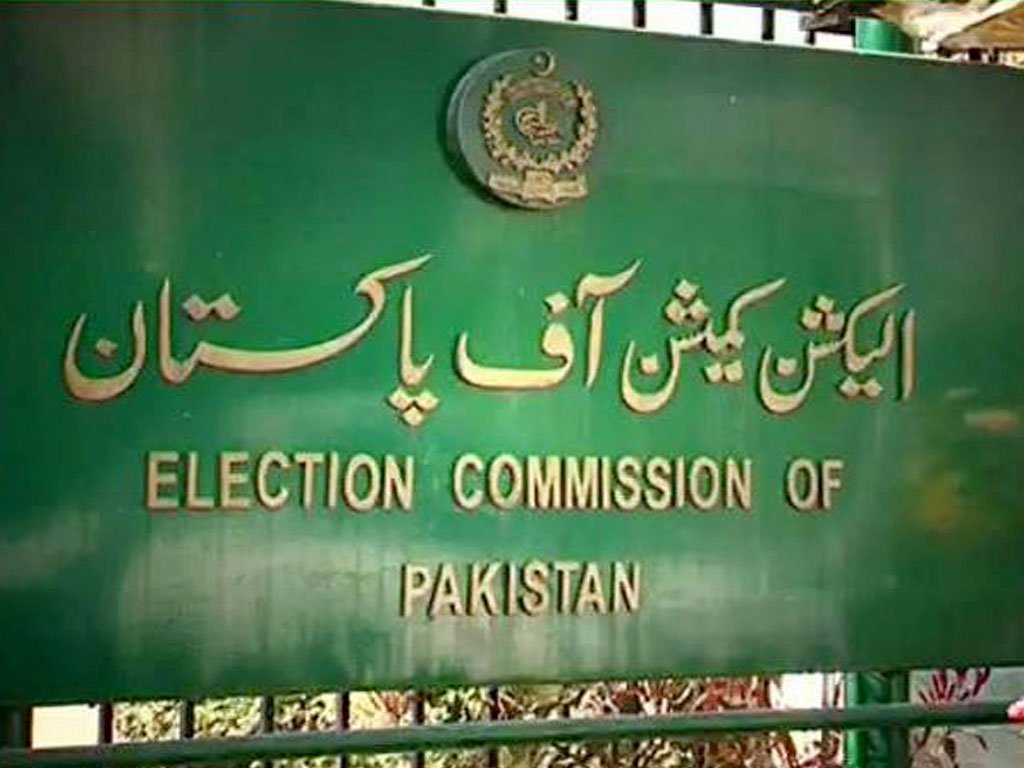
    The Election Commission of Pakistan has taken notice of the video and Gillani’s response and will be taking up the issue.

    https://twitter.com/profaltafkhan/status/1366783802849296386?s=21

    Yousaf Raza Gillani will face Finance Minister Abdul Hafeez Sheikh in the Senate elections.

  • ‘ECP should ask IT Ministry, not PTA for phone data,’ says Fawad Chaudhry

    ‘ECP should ask IT Ministry, not PTA for phone data,’ says Fawad Chaudhry

    The Election Commission of Pakistan (ECP) has approached the Pakistan Telecommunication Authority (PTA) to share the call record data of the 20 presiding officers who went ‘missing’ during the Daska by-polls in NA-75, The News has reported.

    Last week, the ECP had announced that new elections in the entire constituency will be held in NA-75 (Daska) after its returning officer alleged irregularities during the by-polls in a report submitted to the commission. Government sources told The News that the PTA has asked the government whether to share the data with the ECP or not.

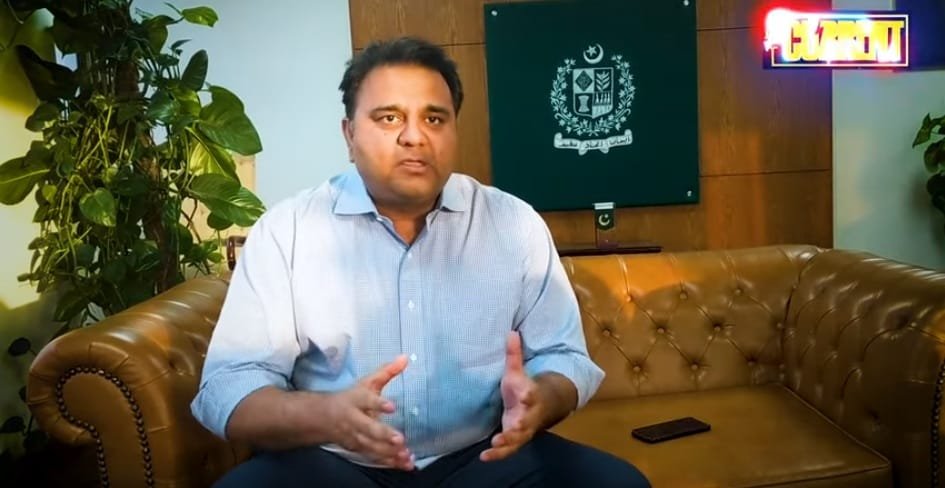
    Speaking to The Current, Federal Minister for Science and Technology Fawad Chaudhry said that the ECP has all the right to secure phone data though it “should ask the IT Ministry and not PTA under rules of business”.

    According to the story published in The News, the government may be uneasy about the phone data as it could reveal who had planned and supervised the Daska by-poll rigging. The phone records “will not only establish the whereabouts of these 20 presiding officers during the time when they were missing but will also uncover those they were in contact with”.

    On February 22, Prime Minister Imran Khan had tweeted that as he had always struggled for fair and free elections, he would ask the PTI candidate in NA-75 to ask for re-polling in the 20 polling stations that had become controversial. But the ECP later called for new elections in the entire constituency.

    The PTI has now decided to challenge the ECP’s decision for re-polls.

  • Rigging: ECP announces re-election on Daska seat, summons IG and chief secretary

    Rigging: ECP announces re-election on Daska seat, summons IG and chief secretary

    The Election Commission of Pakistan has announced that new elections will be held in NA-75 (Daska) after its returning officer alleged irregularities during the by-polls in a report submitted to the commission on Tuesday.

    The election watchdog has said that new elections in the constituency will be held on March 18, two weeks after the Senate elections. According to the ECP, polling will be held in all stations of the NA-75 (Sialkot-IV) instead of a mere 14 because elections weren’t transparent.

    The chief election commissioner (CEC) stated that the ECP came to the conclusion that a “conducive environment was not available for the candidates and voters and the election had not been conducted honestly, justly, fairly and in a transparent manner”.

    According to Section 9 of the Election Act, the ECP has the power to declare a poll void if “the commission is satisfied that by reason of grave illegalities …have materially affected the result of the poll at one or more polling stations … it can call upon voters to recast their votes.”

    ‘IG, SECRETARY SUMMONED’:

    Meanwhile, the election watchdog has decided to suspend the concerned government officials, particularly the deputy commissioner, assistant commissioner, district police officer over rigging in the election. The ECP has also sought an explanation from the police chief of Punjab and the chief secretary, said senior journalist Ansar Abbasi.

    The presiding officers, who went “missing” and submitted forged result after several hours, will face trial for their part in the electoral manipulation.

    RIGGING IN BY-POLLS:

    In a plea to the ECP, the Pakistan Muslim League-Nawaz had alleged that Daska by-polls were hijacked by the ruling Pakistan Tehreek-e-Insaf (PTI) and the final results were changed to favour Ali Asjad Malhi of the PTI. The vice president of the party, Maryam Nawaz, had also shared a number of videos to back her claims up. She had demanded fresh elections in Daska.

    Subsequently, the ECP withheld the results in NA-75 and started a probe into the rigging allegations. The commission had said results of the NA-75 constituency were received with “unnecessary delay”, adding that it tried to contact the presiding officers several times but with no success.

    During his appearance before the Election Commission of Pakistan committee on Tuesday, RO Athar Abbas had said that the initial investigation revealed that the presiding officers of at least 20 polling stations manipulated the result.

    The RO’s report quoted by Dawn said at least 20 presiding officers went missing for an entire night after the vote count at their station. It added that the presiding officers also appeared before the ECP panel after much delay.

    “The replies of almost all the presiding officers were stereotype that they were able to complete the counting process by 10 to 10.30pm and started back journey to the office of returning officer on the transport provided by the Election Commission and in escort of police but due to fog, they reached the office of returning officer at about 4.30am and most of them stated their phone batteries were low and they were having no chargers, in response to the questions that they were supposed to send snapshots of the result of the count through WhatsApp but they did not do the same,” the report read.

    As per the report, there was no discrepancy in the record of three out of 23 polling stations from where the presiding officers had disappeared. The returning officer has proposed re-polling at 14 polling stations were there was a marked difference between the number of polled votes in two different sets of form-45.

    On Friday, at least two people were shot dead as a result of firing at the polling place in Daska.

  • Daska by-polls: RO proposes re-polling at 14 stations over discrepancies in results

    Daska by-polls: RO proposes re-polling at 14 stations over discrepancies in results

    Daska (NA-75) by-polls Returning Officer Athar Abbas has proposed re-polling at 14 stations, saying the presiding officers were seemingly involved in tampering with the final result.

    During his appearance before the Election Commission of Pakistan committee on Tuesday, Abbas said that the initial investigation has revealed that the presiding officers manipulated the result. The ECP has taken up a plea filed by PML-N candidate from the constituency Nousheen Iftikhar. The five-member bench which heard the case was headed by Chief Election Commissioner (CEC) Sikandar Sultan Raja.

    According to the PML-N candidate, she got 5,000 votes from the contested polling stations against PTI leader Ali Asjad Malhi’s 6,705 votes. The number of rejected votes was 139 and turnout remained at 45.16 per cent.

    Whereas, the form-45 sent in by presiding officers after a delay of six hours showed that the vote gap between the PML-N and PTI candidates was 9,263 instead of 1,705. The form puts the number of rejected votes at 1,731 and the turnout at 75.34pc.

    The RO’s report quoted by Dawn said at least 20 presiding officers went missing for an entire night after the vote count at their station. It added that the presiding officers also appeared before the ECP panel after much delay.

    “The replies of almost all the presiding officers were stereotype that they were able to complete the counting process by 10 to 10.30pm and started back journey to the office of returning officer on the transport provided by the Election Commission and in escort of police but due to fog, they reached the office of returning officer at about 4.30am and most of them stated their phone batteries were low and they were having no chargers, in response to the questions that they were supposed to send snapshots of the result of the count through WhatsApp but they did not do the same,” the report read.

    As per the report, there was no discrepancy in the record of three out of 23 polling stations from where the presiding officers had disappeared. The returning officer has proposed re-polling at 14 polling stations were there was a marked difference between the number of polled votes in two different sets of form-45.

    On Friday, at least two people were shot dead as a result of firing at the polling place. Both the Pakistan Muslim League-Nawaz and the Pakistan Tehreek-e-Insaf (PTI) had alleged irregularities during the by-election on the National Assembly seat in Daska. Subsequently, the ECP withheld the results, saying it suspected irregularities in 20 polling stations.

    The commission had said results of the NA-75 constituency were received with “unnecessary delay”, adding that it tried to contact the presiding officers several times but with no success.

    In the backdrop of these allegations, the PM, in a series of tweet on Monday night, reaffirmed his pledge to hold transparent elections in Pakistan. “Have always struggled for fair & free elections. So even though there is no legal compulsion to do so before ECP announces results, I would request our PTI candidate to ask for re-polling in the 20 polling stations Opposition is crying hoarse over in the Daska NA 75 by- election,” Imran had tweeted.

  • ‘Siyanay’: Maryam reacts to PM Imran’s demand for re-polling in NA-75

    Pakistan Muslim League-Nawaz (PML-N) Vice President Maryam Nawaz has lashed out at Prime Minister Imran Khan after the latter said he would ask the Pakistan Tehreek-e-Insaf (PTI) candidate in Daska by-polls to demand re-polling in 20 polling stations of the constituency amid rigging allegations.

    On Friday, at least two people were shot dead as a result of firing at the polling place. Both the Pakistan Muslim League-Nawaz and the Pakistan Tehreek-e-Insaf (PTI) had alleged irregularities during the by-election on the National Assembly seat in Daska. Subsequently, the ECP withheld the results, saying it suspected irregularities in 20 polling stations.

    The commission had said results of the NA-75 constituency were received with “unnecessary delay”, adding that it tried to contact the presiding officers several times but with no success.

    In the backdrop of these allegations, the PM, in a series of tweet on Monday night, reaffirmed his pledge to hold transparent elections in Pakistan. “Have always struggled for fair & free elections. So even though there is no legal compulsion to do so before ECP announces results, I would request our PTI candidate to ask for re-polling in the 20 polling stations Opposition is crying hoarse over in the Daska NA 75 by- election,” Imran had tweeted.

    “It is because we want transparency that we are seeking open ballot for Senate elections,” said Imran in reference to the upcoming elections in Senate that have become controversial after the government promulgated an ordinance to end secret ballot amid protests by the opposition.

    But the PML-N VP who had alleged irregularities in the by-election took exception to the remarks made by the PM. She said that the premier was trying to hide rigging by making such claims.

    “Don’t try to be a know-it-all. You tried to manipulate elections using the full force of the state machinery, but when you lost the by-election you abducted the staffer of the Election Commission. Your decision to support re-polling is an attempt to hide your crime [of rigging], but you have been caught red-handed. Vote thief,” she wrote on her Twitter handle.

  • PTI leads GB polls amid rigging allegations

    Amid allegations of rigging, the Pakistan Tehreek-e-Insaf (PTI) and its allies are set to form a new government for the next five years in the northern Gilgit-Baltistan region, according to initial results late Sunday.

    Although Gilgit-Baltistan Chief Election Commissioner Raja Shahbaz Khan told reporters that the election authorities have not officially announced any results, local media and unofficial results showed the PTI and its allies were leading, clinching half of the contested seats.

    Official results are expected to be announced Monday as election authorities said they were facing difficulties in collecting results from several far-flung mountainous areas due to heavy snow and rain.

    The PTI and its allies, according to the initial results, are in the lead with at least 12 of the 24 seats being contested in the Gilgit-Baltistan Legislative Assembly.

    At least four independent candidates projected to win are most likely to join the PTI to form the government.

    The two other main contenders — the centre-left Pakistan People’s Party (PPP) and centre-right Pakistan Muslim League – Nawaz (PML-N), which won the 2015 elections in the region — have cried foul, accusing the election authorities of “rigging.”

    The Chief Election Commissioner, however, denied the charge, advising the opposition parties to contact the commission if there are any irregularities.

    The PPP, which is likely to clinch three to four seats, said its workers had staged a sit-in outside several polling stations where it claimed the results were not being announced in an attempt to favour the PTI candidates.

    Meanwhile, the candidates belonging to the PML-N and the JUI-F were leading in one constituency each.

    Several activists and police personnel were injured after PTI and PPP supporters clashed in Skurdu district, local broadcaster Geo News reported.

    NO SURPRISE

    The PTI’s victory would come as no surprise to many as voters have previously sided with the party that has been in power in Islamabad.

    The first two elections were won by the PPP and the PML-N while they were in power in Islamabad in 2009 and 2015 respectively.

    Over 700,000 voters cast ballots for 23 of the 24 seats up for grabs in the region’s Legislative Assembly, according to election authorities.

    Voting for one seat was postponed after the death of a candidate.

    Gilgit-Baltistan is a strategic area for Pakistan, bordering China and serving as a key route for the multibillion-dollar China Pakistan Economic Corridor.

    Formerly known as the Northern Areas, Gilgit-Baltistan is located at the confluence of the world’s greatest mountain ranges – the Karakoram, the Himalayas, the Hindu Kush and the Pamir.

    Before the end of British colonial rule and the creation of Pakistan and India in 1947, the region was part of the state of Jammu and Kashmir.

    Rich in history, culture and natural beauty, the area, which also remained a centre of rivalry between the Russian, British and Chinese empires, has been a paradise for trekkers and adventure tourists for centuries.

  • VIDEO: On-air fight between PTI’s Firdous, PML-N’s Azma goes viral

    VIDEO: On-air fight between PTI’s Firdous, PML-N’s Azma goes viral

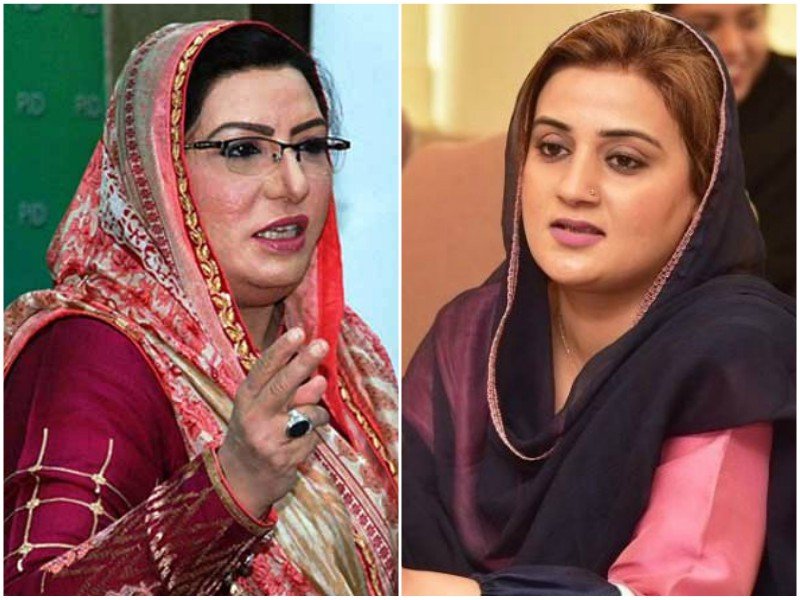
    Pakistan Tehreek-e-Insaf (PTI) spokesperson Firdous Ashiq Awan and Pakistan Muslim League-Nawaz (PML-N) leader Azma Bukhari had engaged in a verbal spat during a talk show, as both sides accused each other of stealing people’s mandate in the general elections.

    The show host tried to calm the duo down, but his attempts remained futile.

    Responding to Bukhari’s allegations, Firdous — who was appointed as chief minister’s information aide last week — said Nawaz Sharif was in cahoots with the military establishment in past. She gave examples of IJI [Islami Jamhoori Ittehad] — an alliance funded by the powers-that-be against then PPP chairperson Benazir Bhutto in the late ’80s.

    The CM’s aide also referred to a Supreme Court judgement in the Asghar Khan case. She asked how did Nawaz Sharif become the prime minister for three times?

    Responding to claims that Imran Khan was a ‘selected’ prime minister, Firdous said Nawaz had become the PM after going through the same process — getting 2/3 majority in parliament.

    “Whose mandate did he steal to become the PM?” Firdous asked Azma Bukhari, saying they didn’t question the polling when their party had won the elections.

  • What would happen if Trump cries ‘dhandli’?

    What would happen if Trump cries ‘dhandli’?

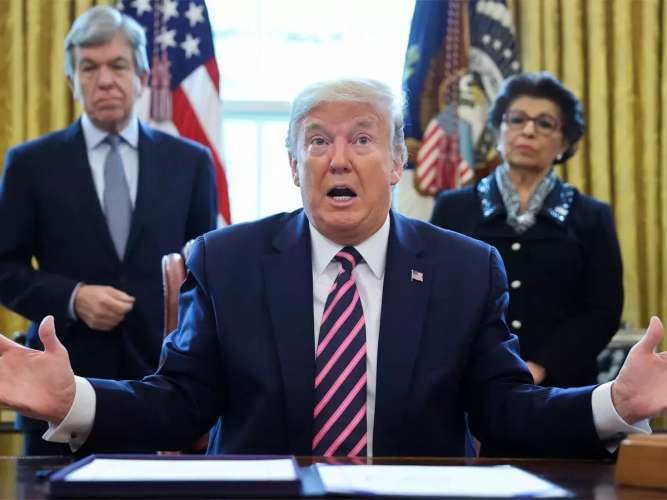
    While Democratic challenger Joe Biden on Thursday seems to have quite a lead against United States (US) President Donald Trump in the race for the key to the White House, the latter, despite incomplete results from several battleground states, proclaimed victory on Wednesday.

    The premature move in spite of incomplete results from the said states, that could determine the outcome of the presidential election, confirmed worries Democrats had voiced for weeks that Trump would seek to dispute the election results, forcing Americans to consider an extraordinary scenario in which Trump refuses to concede his loss.

    The said move could set off any number of legal and political dramas in which the presidency could be determined by some combination of the courts, state politicians and Congress.

    Here are the various ways the election can be contested…

    LAWSUITS:

    Early voting data shows Democrats are voting by mail in far greater numbers than Republicans. In states such as Pennsylvania and Wisconsin that do not count mail-in ballots until Election Day, initial results appeared to favour Trump because they were slower to count mailed ballots.

    Democrats had expressed concern that Trump would, as he did on Wednesday, declare victory before those ballots could be fully tallied.

    A close election could result in litigation over voting and ballot-counting procedures in battleground states. Cases filed in individual states could eventually reach the US Supreme Court, as Florida’s election did in 2000, when Republican George W Bush prevailed over Democrat Al Gore by just 537 votes in Florida after the high court halted a recount.

    Trump appointed Amy Coney Barrett as Supreme Court justice just days before the election, creating a 6-3 conservative majority that could favour the president if the courts weigh in on a contested election.

    ELECTORAL COLLEGE:

    The US president is not elected by a majority of the popular vote. Under the constitution, the candidate who wins the majority of 538 electors (270 votes) known as the Electoral College, becomes the next president. In 2016, Trump lost the national popular vote to Democrat Hillary Clinton but secured 304 electoral votes to her 227.

    The candidate who wins each state’s popular vote typically earns that state’s electors. This year, the electors will meet on December 14 to cast votes. Both chambers of Congress will meet on January 6 to count the votes and name the winner.

    Normally, governors certify the results in their respective states and share the information with Congress.

    But some academics have outlined a scenario in which the governor and the legislature in a closely contested state submit two different election results. Battleground states of Pennsylvania, Michigan, Wisconsin and North Carolina all have Democratic governors and Republican-controlled legislatures.

    According to legal experts, it is unclear in this scenario whether Congress should accept the governor’s electoral slate or not count the state’s electoral votes at all.

    While most experts view the scenario as unlikely, there is historical precedent. The Republican-controlled Florida legislature considered submitting its own electors in 2000 before the Supreme Court ended the contest between Bush and Gore. In 1876, three states appointed “duelling electors,” prompting Congress to pass the Electoral Count Act (ECA) in 1887.

    Under the act, each chamber of Congress would separately decide which slate of “duelling electors” to accept. As of now, Republicans hold the Senate while Democrats control the House of Representatives, but the electoral count is conducted by the new Congress, which will be sworn in on January 3.

    If the two chambers disagree, it’s not entirely clear what would happen.

    The act says that the electors approved by each state’s “executive” should prevail. Many scholars interpret that as a state’s governor, but others reject that argument. The law has never been tested or interpreted by the courts.

    Another unlikely possibility is that Trump’s Vice President Mike Pence, in his role as Senate president, could try to throw out a state’s disputed electoral votes entirely if the two chambers cannot agree, according to Foley’s analysis.

    In that case, the ECA does not make clear whether a candidate would still need 270 votes or could prevail with a majority of the remaining electoral votes — for example, 260 of the 518 votes that would be left if Pennsylvania’s electors were invalidated.

    The parties could ask the Supreme Court to resolve any congressional stalemate, but it’s not certain the court would be willing to adjudicate how Congress should count electoral votes.

    ‘CONTINGENT ELECTION’:

    A determination that neither candidate has secured a majority of electoral votes would trigger a “contingent election” under the 12th Amendment of the Constitution. That means the House of Representatives chooses the next president, while the Senate selects the vice president.

    Each state delegation in the House gets a single vote. As of now, Republicans control 26 of the 50 state delegations, while Democrats have 22; one is split evenly and another has seven Democrats, six Republicans and a Libertarian.

    A contingent election also takes place in the event of a 269-269 tie after the election; there are several plausible paths to a deadlock in 2020.

    Any election dispute in Congress would play out ahead of a strict deadline — Jan 20, when the constitution mandates that the term of the current president ends.

    Under the Presidential Succession Act, if Congress still has not declared a presidential or vice presidential winner by then, the Speaker of the House would serve as acting president. Nancy Pelosi, a Democrat from California, is the current speaker.

    TRUMP LAYING GROUNDWORK:

    The president has suggested he may not accept the results of the 2020 election enough times to prompt alarm over whether he may actually be serious.

    Over the past six months, Trump has repeatedly refused to commit to a peaceful transition of power, when asked, and has claimed he will only lose if the election is rigged.

    Trump displayed the same non-commitment in 2016, but this year an expectation of delays in the result gives the president more scope to claim election results can’t be trusted, or even to claim victory before enough votes are counted.

    Back in July, Trump seemed to be laying the ground for potentially disputing the vote. In an interview with Chris Wallace on Fox News, largely remembered for Wallace confronting Trump with the “very hard” cognitive test, the president claimed to have taken — the test required the sitter to identify an elephant, an alligator and a snake — Wallace asked Trump if he would accept the election results.

    “I have to see,” Trump said. “Look – I have to see. No, I’m not going to just say yes. I’m not going to say no.”

    On other occasions he was happy to bring up the question himself.

    “The only way we’re going to lose this election is if the election is rigged,” Trump told the crowd at a rally in Oshkosh, Wisconsin, in August. “Remember that. That’s the only way we’re going to lose this election.”

    The president repeated the message in a rare White House news conference in September, and during the first presidential debate a week later.