Tag: rights

  • Imran Khan not being allowed to use THIS electric item

    Former Prime Minister Imran Khan’s legal counsel Naeem Haider Panjutha has said that his high-profile client isn’t being allowed the use of an electric item in jail.

    Talking to journalists outside Adiala Jail, he recorded his protest that, “Imran Khan isn’t being allowed to use an electronic toothbrush.”

    The lawyer further said, “He [Imran Khan] has asked for the electronic brush many times, but there is a ban on its use for him and many other things like it.”

    Moving on from the pressing matter of toothbrushes, Panjutha spoke on the recent arrest of former ISI Chief Gen (retd) Faiz Hameed, quoting Khan: “If I was worried about anything, then I wouldn’t have suggested the formation of a judicial commission.”

    Imran Khan, while discussing the May 9 cases, remarked, “It would take one hour to complete the cases of May 9, but they’re not doing it because they are liars.”

  • Lady health workers standing up for their rights

    Lady health workers standing up for their rights

    “Lady Health Workers (LHWs) should not be asked to do security duty during elections,” said Bushra Arain, Founder and Chairperson of the All Lady Health Workers’ Programme Union (ALPU).

    Acknowledging that other government workers are called in for duty, Bushra Arain pointed out that they are given easier tasks and are trained before the elections. “We are asked to do difficult duties and there is no security or training for LHWs,” she observed.

    As elections are near, Bushra Arain is worried that LHWs will be again asked to work during elections without protection or training.

    “LHWs are already soft targets, and elections in Pakistan are not safe, we worry for our safety,” emphasised Bushra.

    Rubina Ghaffar is an LHW in Karachi, and she was called on election duty in 2018.

    “Elections are near, and many of us are afraid that we will be put on security duty again,” said Rubina, “Last time we were tasked to do two things: count votes and provide security to the polling staff. We were not trained how to do this nor given any protective gear.”

    Rubina continued, “On the morning of election day, a group of us were driven to the polling station early in the morning. Our duty began at 6 am and ended only when we protested and demanded that we be allowed to go home. It was very late in the night”, Rubina said. “We were brought to the polling station in police vehicles but had to go home on our own late at night.”

    Rubina further said, “There was no security at the polling stations and although we were paid Rs4500 as compensation for the duty, it was not enough considering LHWs are already soft targets as we have seen. We were giving the voter list to tally with voters’ ID cards and tally the numbers.”

    She added, “Afterwards we counted the votes, this was checked by the relevant people. We not allowed to leave and were asked to keep sitting despite asking to leave. We were hungry and thirsty; we had not been provided anything throughout the day although the political workers were provided with lunch and tea. We couldn’t even order food as we were not allowed to step out of the polling stations. It was only after we protested, we were allowed to go home. It was quite late, and we had to travel back in small groups.”

    People living in urban areas are probably not interested in the lives and work of LHWs. They may not be disrespectful or disregard LHWs but since most of them don’t have any real interaction with them and may only meet them during a polio campaign, these women remain invisible and faceless to most of the urban population.

    LHWs don’t play an important role for urban dwellers their role is quite significant for slum dwellers in many cities, as well as rural areas where a large section of the population especially women rely on the basic health services LHWs provide. Many of these people have never received proper medical service and LHWs are their link to medicines and vaccinations.

    Former prime minister Benazir Bhutto launched the Lady Health Workers Programme in 1994 and at the end of the programme, LHWs were merged into the health sector. This was the logical step so that these trained community health workers could enhance health services to marginalised communities. However, instead of being beneficial for the LHWs, it only added to their problems.

    “When the LHW programme ended, LHWs were absorbed by the health department. This didn’t help to improve our status. Like other employees of this department, we were government servants but unlike them, we have no benefits like promotions, pensions, or increments. The main reason for this is that we don’t have a proper service structure under which we would be given these rights and benefits,” said Bushra.

    She added, “We are sent to all kinds of “special duties” including election and census duties, but we are not given any training or protection when we are doing security during elections. We worked throughout the pandemic without any protective gear or hand sanitisers. LHWs are vulnerable and we have lost many members to targeted terrorism., it is not fair to send us for election duty without proper training or protective gear.”

    Bushra further said she understands LHWs will be sent on special duties like other government employees, “Why aren’t we given benefits like other members of our department? Why isn’t our service structure made despite the Supreme Court’s orders in 2012? Why are we being deprived of our rights like increments, promotions, and pensions despite the court’s order? Many LHWs have retired without receiving benefits. And when we protest, we are beaten.”

    Elaborating on this, Maqsood Ahmed, trade unionist and trainer, said, “LHWs work in the most deplorable conditions. They do the work of doctors, nurses, counsellors, and community & social workers for marginalised communities. The LHWs do more than they should – this exploitation is only because their service structure has not been enforced.”

    He added, “In March 2013, the Supreme Court ordered that the service structure be made for LHWs, and they be regularised. And after the 18th Amendment, the devolution of 1,56,000 LHWs including supervisors, drivers, and accountants should have been done by the provinces but this has not been done till date.”

    “The Civil Servants Act governs government and public services. Different rules help to determine the number of leaves, pensions, promotions, and other benefits to the employee. Depriving LHWs of their service structure is in contravention of the Apex Court’s orders. Over time more than two to three thousand LHWs have retired increasing the workload. More LHWs should be hired as the population is increasing but this cannot be done until the service structure is made.”

    “If Bushra Arain and ALPU members don’t speak up for their rights no one else will help them,” said Maqsood Ahmed.

    Bushra added to this, “We will continue to speak up for our rights because no one is willing to give them to us despite the court’s order. Our union will keep fighting.”

  • After months of treatment, 13-year-old Rizwana to be discharged from hospital

    After months of treatment, 13-year-old Rizwana to be discharged from hospital

    Rizwana, the underage domestic help tortured at work, will be discharged next week from hospital following months of treatment and surgeries.

    The 13-year-old has been undergoing treatment at the General Hospital in Lahore for the past five months.

    Talking to GeoNews, Principal Amiruddin Medical College Professor Al Farid Zafar said that Rizwana’s condition has improved and she is now walking and talking.

    He said that there have been requests from various departments to keep Rizwana, whichever department has better facilities, Rizwana will be shifted there.

    Professor Al Farid Zafar also said that after being discharged from the hospital, she will not go to Sargodha and will stay in Lahore.

    He also reported that one if Rizwana’s arms has mended while the other arm will be considered for surgery some time after discharge.

    The goal is to give Rizwana a normal life after discharge from hospital.

    In August, Rizwana went through plastic surgery.

    Rizwana had been allegedly tortured and abused while working at a civil judge’s home in Islamabad, after she was accused of stealing jewellery. Rizwana’s family revealed that the girl was not paid a single penny by the family for the extensive workload she was doing and was instead subjected to violence.

  • Equal pay, new contracts, and room for improvement; what is happening in women’s cricket around the world?

    Equal pay, new contracts, and room for improvement; what is happening in women’s cricket around the world?

    Pakistan

    It is the first time that the Pakistan Cricket Board (PCB) has given domestic contracts to 74 women cricketers. The period of the contracts is 11 months. 43 players are classified as emerging cricketers while 16 Under-19 cricketers. Thirteen of the players contracted have played international cricket. Among the many are Javeria Khan, Kainat Imtiaz, Anam Amin, Iram Javed and Gull Feroza who previously had central contracts.

    These cricketers will be paid the same monthly retainer. However, match and appearance fees, and travel and accommodation costs, will vary. ESPNcricinfo writes that “while the salaries are relatively modest, the fact that these contracts have been awarded at all will count as progress of some kind in Pakistan. In addition, the players will be offered a share in any prize money won”.

    A PCB press release stated that domestic contracts have been given to “individuals who have displayed remarkable performances across various cricketing platforms, including domestic cricket tournaments, emerging tournaments, U-19 domestic tournament, and the ICC U-19 Women’s World Cup,”.

    “I want to extend my heartfelt congratulations to the 74 women cricketers who have earned these contracts through their sheer talent and dedication,” PCB chairman Zaka Ashraf said. “Today marks a significant and joyous occasion for the Pakistan Cricket Board as we take a historic step towards uplifting women’s cricket in our nation.

    “This initiative isn’t just about signing contracts, it’s about investing in the dreams and aspirations of these extraordinary athletes. Our women cricketers have consistently showcased exceptional skills and dedication on the field, and it is high time we provide them with the platform they deserve.”

    West Indies

    In a recent conversation on Ladies Who Switch podcast, former West Indies cricket player Deandra Dottin alluded to the country’s cricket board, emphasizing the need to prioritize the players’ “respect and resources”. She has warned that negligence can have serious repercussions for Caribbean cricket.

    Dottin reflected on the issues she encountered during her time as a cricketer. She highlighted the negligence towards the needs of the players, “both in terms of resources and respect”, reports Sports Max. Dottin emphasized that the player will not be able to perform without required attention and a supportive space:

    “To be honest, there’s been a lot going on in the camp and so much I’ve been through, so many things that needed to be sorted out, and the players not getting the respect and basically the attention because there are things that needed to be done in order for players to actually perform to the best of their ability,” she said.

    Dottin announced her retirement from international cricket a year ago, claiming that the team environment was one of the reasons for her decision. She had a distinguished career of 14 years that includes the 2016 T20 World Cup title and the first century in Women’s T20 Internationals.

    Now, Dottin is among male and female cricketers working on franchise tournaments worldwide. She is associated with teams such as Manchester Originals, Adelaide Strikers, Trinbago Knight Riders, and Barmy Army.

    She believes that these leagues have more support to offer in comparison to the West Indies setup.

    “You will see a player come into West Indies Cricket and then you actually see they disappear… it’s basically like you’re getting what you want out of me and then you just throw me aside,” Dottin said.

    South Africa

    After New Zealand and India, Cricket South Africa (CSA) announces an equal international-match fee for their men and women’s players. This news came the same day as the announcement of a six-team professional domestic system for women.

    The past 18 months for the team were a great success as they reached the semi-finals of the ICC Women’s Cricket World Cup in New Zealand in 2022 and then made it through to the final while hosting the ICC Women’s T20 World Cup this year.

    It was the first time a senior South African team reached the World Cup final. Prominent individuals from the fraternity congregated in Tshwane on Tuesday to make the two celebratory announcements.

    Teams in South African domestic competition can now contract up to 11 players instead of 6. They will also have full-time coaches and support staff.

    “We are thrilled to unveil the Professional Women’s Cricket League, an initiative that celebrates the remarkable achievements of our national women’s cricket team and paves the way for an even brighter future,” said Cricket South Africa CEO Pholetsi Moseki.
    “Professionalising the women’s domestic structure has been met with enthusiasm from fans, players, and sponsors alike.”

  • Govt commits to reconstructing 150-year-old Marie Mata Temple in Karachi

    Govt commits to reconstructing 150-year-old Marie Mata Temple in Karachi

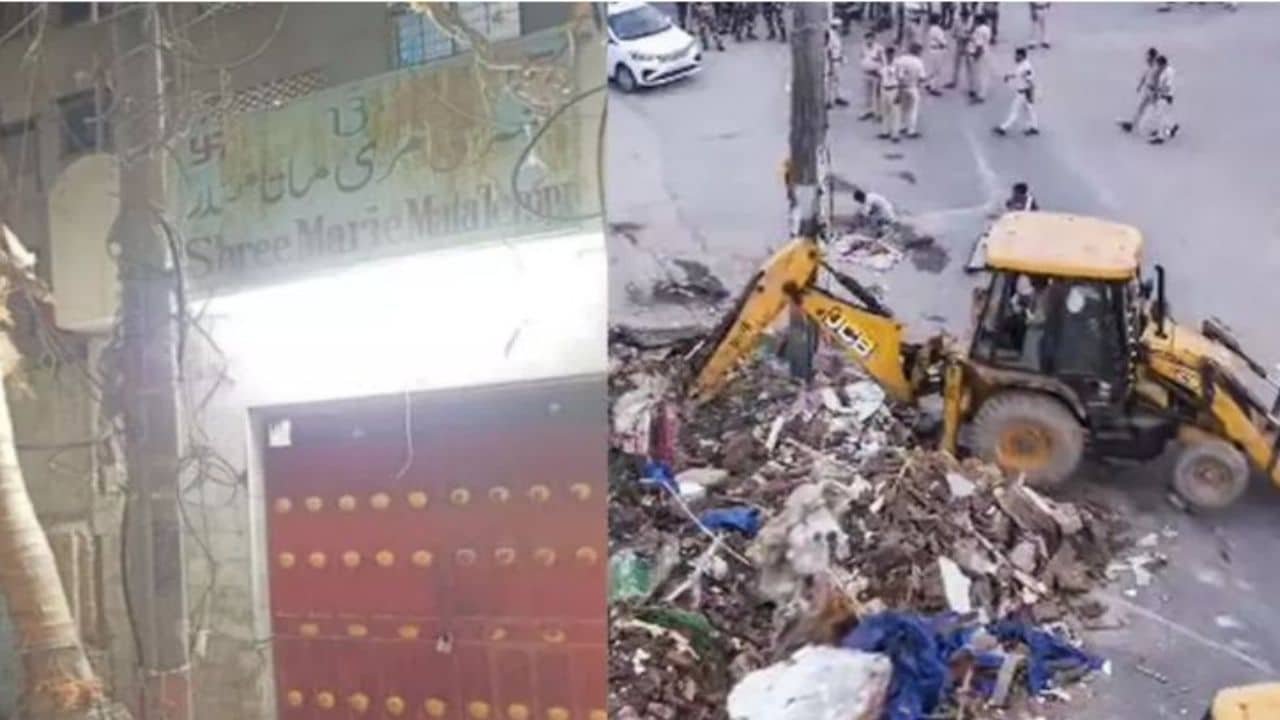
    The Sindh government has committed to undertake the rehabilitation and reconstruction of the historic Marie Mata Temple in Soldier Bazaar of Karachi, Dawn has reported.

    During Question Hour in a session of the Sindh Assembly, the Minority Affairs Minister raised his concern, emphasizing that the demolition of any place of worship is strictly prohibited. Consequently, all construction activities on the temple site have been halted.

    The temple, which has a rich history of over 150 years, had undergone partial renovation around eight years ago, during which the temple deities were temporarily relocated to a nearby room located above a storm water drain. Unfortunately, last week, the structure on the temple’s premises was demolished by a builder who intended to construct a plaza in its place.

    A woman living on the property said that her ancestors gave the land for the temple, but now she’s building her house there.

    According to the minister, the minority affairs department will conduct a comprehensive survey to prepare a detailed report, and subsequently oversee the reconstruction of the temple on its original site.

  • LUMS professor beaten up for demanding freedom of speech

    LUMS professor beaten up for demanding freedom of speech

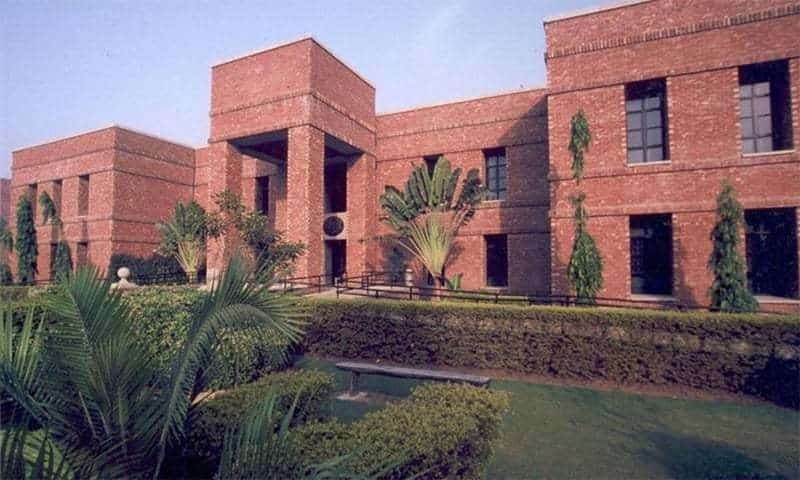
    Lahore University of Management Sciences (LUMS) professor Muhummad Tariq said that he was beaten up for holding placards outside of the university with his teenage children and for “suggesting upholding the constitution and exercising fundamental rights to express ourselves.”

    He has alleged that due to the beating, he ended up with a broken arm and knee.

    Taking to social media, he said that after all this he does not regret coming back to Pakistan and is proud of the country and will serve it with even more dedication, commitment and honesty.

    He also said he always tells his student to stand strong. He ended the note by saying that he is doing fine now.

  • Fact Check: Did the federal government shut down the internet?

    Fact Check: Did the federal government shut down the internet?

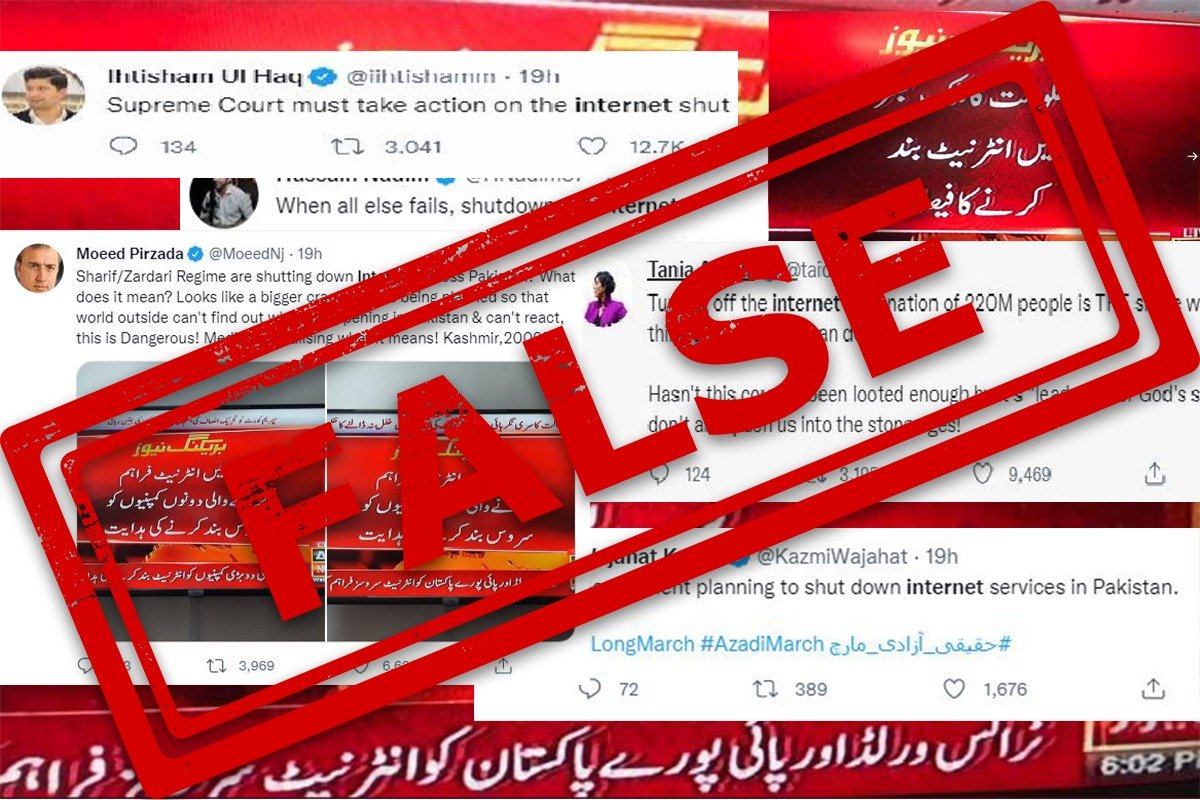
    Claim: Internet was shut down for people in various parts of Pakistan in order to suppress the coverage of Imran Khan’s PTI rallies

    Fact: The internet was not shut down but there is evidence of internet ‘throttling’ by internet service providers throughout the country

    On May 25, several social media users took to Twitter to condemn the government’s “draconian” decision to shut down the internet. Popular personalities came out on Twitter, with their verified accounts with millions of followers and announced that the federal government has decided to shut down the internet, in light of the escalating tensions in Islamabad and to avoid social media coverage of Imran Khan’s rally.

    Internet throttling is when your internet service providers limit the speed or bandwidth of your internet without taking your consent or informing you. In some cases, throttling also helps manage an unusual amount of traffic on the internet in order to equally distribute the bandwidth.

    However, this is false.

    Several people also tweeted that they had internet services available. However, everyone noted varying speeds at different times in the day. At The Current Check‘s office, we faced internet slowdowns throughout the day, but it was never shutdown.

    Hija Kamran, digital rights advocate working at Media Matters for Democracy, tweeted asking people in Pakistan to confirm whether their internet is working fine and several people reported operational internet in Karachi and Islamabad, others claimed that they were facing issues in internet speed.

    An internet observatory organization called Net Blocks released a report on the same day confirming “disruptions” in the internet across Pakistan. However, according to their report these disruptions only lasted for two hours within the whole day, which does not even come close to the claim that the internet was shut down.

    In their report, NetBlocks confirms that disruptions were faced by multiple internet service providers across Paksitan after 5pm on Wednesday, May 25. The service was restored within two hours, following the surge in complaints being posted on social media about the internet being throttled by ISPs across the country.

    NetBlocks used “diffscans”, a tool which allowed them to map the IP address space of Pakistan in real time and display corresponding internet connectivity levels and outages, which are represented in the graph attached in their tweet.

    Verdict: FALSE

  • Pakistan should deny legitimacy to Taliban till they give rights to women, minorities: US

    The United States (US) has urged Pakistan that it should not recognise the Taliban government until it gives women their due rights and allows Afghans who want to leave the country to do so, reports Khaleej Times.

    Testifying before Congress on the Taliban victory in Afghanistan, US Secretary of State Antony Blinken said, “What we have to look at is an insistence that every country, to include Pakistan, make good on the expectations that the international community has of what is required of a Taliban-led government if it’s to receive any legitimacy of any kind or any support.” He said the priorities included ensuring the Taliban let out people who want to leave Afghanistan and respect the rights of women, girls and minorities, as well as adhere to promises that the country not again become “a haven for outward-directed terror”.

    “Pakistan’s policies have been on many occasions detrimental to our interests, on other occasions in support of those interests. It is one that involved hedging its bets constantly about the future of Afghanistan, it’s one that’s involved harboring members of the Taliban … It is one that’s also involved in different points cooperation with us on counterterrorism,” Blinken said.

    “This is one of the things we’re going to be looking at in the days, and weeks ahead – the role that Pakistan has played over the last 20 years but also the role we would want to see it play in the coming years and what it will take for it to do that,” he said.

    Commenting on the US-Taliban relationship, Blinken said, “We achieved our objectives in Afghanistan,” adding that it was time to end the two-decade-long war.

    “The US will continue to play its role to promote anti-terrorism in the region,” he said, adding that the Taliban had also promised to not let Daesh and Al-Qaeda use the country for militant activities. 

    Meanwhile, Foreign Minister Shah Mahmood Qureshi said that the practice of human rights by the Taliban in Afghanistan was connected to economic pressures, reports Dawn.

    “Ensuring sustainable development and promoting respect for human rights requires political stability and peace in Afghanistan. And peace cannot consolidate unless Afghanistan is provided the necessary economic and fiscal space,” said Qureshi in a video statement made at the UN conference on the humanitarian situation in Afghanistan.

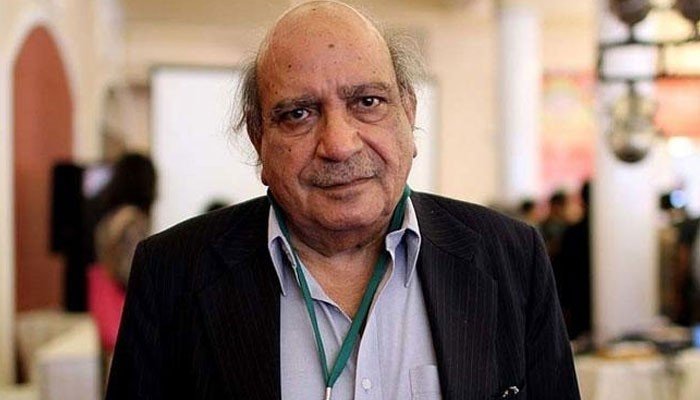
  • Rights champion IA Rehman passes away at 90

    Rights champion IA Rehman passes away at 90

     Journalist and veteran human rights activist Ibn Abdur Rehman aka I A Rehman passed away in Lahore at the age of 90 on Monday.

    He died of old age and high sugar and blood pressure levels, Human Rights Commission of Pakistan (HRCP) Secretary General Harris Khalique said.

    The deceased left behind three sons and two daughters. His wife, Tauseef I A Rehman, had died in 2015.

    A protégé of Faiz Ahmad Faiz, Abdur Rehman became chief editor of the now-defunct Pakistan Times in 1989. He wrote a regular column for Dawn until a few days before his death.

    He was the founding chair of the Pakistan-India Peoples’ Forum for Peace and Democracy (PIPFPD) and a director of the HRCP since 1990.

    Between 1978 and 1988, he remained executive editor of weekly Viewpoint.

    Tributes poured in from all quarters as word of Abdur Rehman’s passing spread.

    “A titan of human rights, Mr Rehman’s integrity, conscience and compassion were unparalleled,” HRCP said.

    Foreign Minister Shah Mahmood Qureshi said the country had lost a “true icon”.

    Political leaders from both the government and opposition, media persons and rights activists are among those expressing grief and sorrow over Rehman’s death on Twitter.

  • The Silencing Act

    “The biggest threat to gender justice right now are defamation laws and the FIA.”

    “Women are harassed and so we must introduce a law to protect them,” went the PML-N narrative in favour of enacting the Prevention of Electronic Crimes Act (PECA), 2016. This line peddled was mainly by the then minister for state for information technology and telecom, Anusha Rahman, to shut down critique levelled at the draconian provisions of the law, criminalising various forms of speech in an overbroad manner.

    Criticism of the law was deflected by making wild accusations and false imputations against critics, what actually qualifies as defamatory statements: foreign-funded agents working against the interests of the country and religion. As recorded in the House Debates on August 11, 2016, the day PECA 2016 was passed into law, dismissing all concerns raised regarding the violation of rights, Rahman remarked women were committing suicide as a result of online harassment, ‘what about them?’

    In 2017, news broke of Sindh University student, Naila Rind’s death. According to reports, she “committed suicide due to exploitation and blackmailing by a man who had befriended her on WhatsApp.” She was found hanging by the neck in her hostel room. Just last month in September 2020, a woman who had filed a complaint with the Federal Investigation Agency (FIA) committed suicide. Reportedly, she had contacted the investigation officer just hours before deciding to end her life. A law purportedly enacted to shield women from harassment and provide them with legal recourse has done no such thing.

    PECA In Practice

    While much haste was made to pass PECA, once enacted it took over a month to designate FIA as the investigation agency. It was not until March 2017 that courts to try PECA cases were notified. Meanwhile, complainants and litigants were left hanging. Many women who attempt to file a complaint through the online web form say it does not work or they do not hear back. Several women who visit FIA offices to file in-person complaints talk about the misconduct of investigation officers. Among the complaints that do make it to court, some complainants are advised – and at other times coerced – to withdraw and settle. Compromises are facilitated even in non-compoundable cases, which the law does not allow. Women who wish to see their cases through to the end are punished.

    In a case registered in 2016, FIA “lost” the evidence file. It was only after the complainant petitioned the Sindh High Court against the FIA that the file was “recovered.” Four years after the registration of the case, the trial has not concluded because the FIA’s investigation officers, who are required to appear as prosecution witnesses in order to complete evidence, do not show up. This is routine. Case diaries are replete with show-cause notices, bailable and non-bailable warrants to compel FIA officers to attend court hearings. But this has little effect on them.

    Women who participated in the Aurat Marches and were targeted online, women journalists who filed complaints with the FIA and are consistently attacked online, share the experience of so many others: the FIA does nothing about their complaints. Instead, the priority for the FIA is to register cases when men complain their reputation has been damaged by women alleging harassment. On September 29, 2020, an FIR was registered against singer Meesha Shafi and eight others under Section 20 of the PECA read with Section 109 of the Pakistan Penal Code. This FIR comes after a spate of summons issued last year by the FIA in response to a complaint made by singer Ali Zafar. Section 20, referred to as the criminal defamation section of PECA, has been weaponised by the state to silence journalists but also private complainants against women alleging sexual harassment or violence.

    In July 2019, several people received a summon by the FIA requiring their attendance in Lahore. Many received summons once the date for appearance written on it had already passed. The summons themselves were vague. They contained no details about what the investigation pertained to or the section of the law it was under. Requests for a copy of the complaint were met with yet another summon. In violation of the law and investigation Rules under PECA, “sources” within the FIA leaked names to the press during the 2019 investigation, even though the law requires confidentiality to be maintained and the Rules bar disclosure of identities of both the complainant and accused.

    Despite responding in writing and, in the case of some, appearing in person at the FIA office, an FIR was registered. Those summoned earlier and now named in the FIR include those who have spoken up in support of Shafi, spoken of their own experiences and covered the cases in a journalistic capacity. Many found out about the FIR through news reports. While a civil defamation trial was already underway, now a criminal case has also been lodged, not only against Shafi but also witnesses in her case. The purpose and intent of this exercise is nothing but to further harass and intimidate. It is also a tactic to scare away witnesses and diminish their credibility in the court of law.

    The Chilling Effect

    An FIR in another city entails contacting a lawyer, applying for protective/transitory bail. The amount is decided by the court and typically can be anywhere between Rs. 30,000-100,000. This is usually granted for a period of a week in which time arrangements have to be made to travel to the city the FIR is registered in — in this case, Lahore. A second lawyer, in the city where the FIR was lodged, must apply for pre-arrest bail. Then the investigation has to be joined which essentially means going to the FIA office and giving a statement that is included in the investigation report. This is all at the pre-trial stage. The trial itself has no specified time frame and can go on for years. As an accused in a criminal case, it is mandatory to attend hearings unless a special exemption is granted by the court. All this adds up to monetary expenses, time and psychological strain, affecting work, life and mental health. The cost of ostensibly one or a few social media posts.

    It is a myth that the FIA does not act in a coercive manner against women. This is not the first time an FIR has been registered by the FIA against a woman after she levelled an allegation of sexual violence and harassment. There are other cases in which the FIA obtained search and seizure permissions and moved arrest applications at the investigation stage, while a petition against harassment by the investigation officer and validity of the search and seizure order was pending before the High Court.

    The immediate fall out of summons by the FIA and now an FIR, is a chilling effect. Not only do people stop speaking about issues and self-censor to protect themselves, but those implicated in cases, depending on the level of support they enjoy and resources at their disposal, end up settling by retracting and apologising. This then serves as a narrative win for the other party. In the public domain, the outcome – retraction or apology – becomes the subject of debate, useful also to vindicate in ongoing legal proceedings. Hanging a criminal case over someone’s head to force certain terms and extract such an outcome never becomes public knowledge or the subject of discussion – for obvious reasons.

    What Next?

    A statement released by the Women’s Action Forum – Karachi chapter in August 2019, pointed to an emerging pattern of criminal defamation laws being used as a silencing tool against those speaking about sexual harassment and violence, both in relation to online calls outs but also against women who filed cases of harassment before legal forums. In September 2019, this issue was taken up with the Senate’s Functional Committee on Human Rights. The committee was apprised of the illegal and unconstitutional manner in which the FIA acts against citizens — in this case women. Proposals to repeal criminal defamation laws – 499 and 500 of the PPC and Section 20 of PECA – were laid before the committee and recommendations on fixing the civil defamation procedure in relation to cases of harassment, were also made. Since then, summons and investigations have turned into challans and FIRs. The onus lies on parliamentary committees to take this up again. The MeToo movement, women’s marches and more recently, the motorway rape has sparked conversations around everyday misogyny, harassment and a culture that enables harassment and rape. Laws and the criminal ‘justice’ system are being weaponised against women and their supporters, to suppress disclosures of harassment and sexual violence. Especially, PECA.

    The biggest threat to gender justice right now are defamation laws and the FIA. Repealing Section 20 of PECA, 499 and 500 of the PPC, fixing civil defamation law and procedures to prevent their misuse, and holding the FIA to account for its excesses is imperative.