Tag: rights

  • ‘#AttacksWontSilenceUs’ trends at No 1 after women journalists release statement on online harassment

    ‘#AttacksWontSilenceUs’ trends at No 1 after women journalists release statement on online harassment

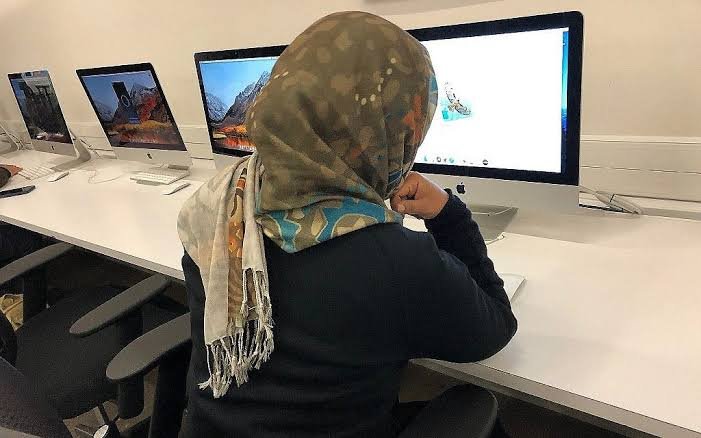
    Pakistani women journalists released a joint statement on attacks on women in media in Pakistan, which says that vicious attacks through social media are being directed at women journalists and commentators in Pakistan, making it incredibly difficult for them to carry out their professional duties.

    The statement was signed by journalists including Asma Shirazi, Nasim Zehra, Gharidah Farooqi, Amber Shamsi, Benazir Shah, Mehmal Sarfraz, Zebunnisa Burki, Alia Chughtai, Ayesha Bakhsh, Munizae Jahangir, Ramsha Jahangir, Alina Farooqi, Reem Khurshid, Najia Ashar and many more.

    “The target of these attacks are women with differing viewpoints and those whose reports have been critical of the Pakistan Tehreek-e-Insaf’s government, and more specifically its handling of the coronavirus pandemic. The online attacks are instigated by government officials and then amplified by a large number of Twitter accounts, which declare their affiliation to the ruling party. In what is certainly a well-defined and coordinated campaign, personal details of women journalists and analysts have been made public. To further discredit, frighten and intimidate us, we are referred to as peddlers of ‘fake news’, ‘enemy of the people’ and accused of taking bribes (often termed as ‘paid’ journalists or lifafas). In some instances, our pictures and videos have also been morphed.”

    The statement further says that women in the media are not only targeted for their work, but also their gender. “Our social media timelines are then barraged with gender-based slurs, threats of sexual and physical violence. These have the potential to incite violence and lead to hate crimes, putting our physical safety at risk. Lately, there have also been attempts to hack into the social media accounts of reporters and analysts, as well as limit our access to information. In some cases, journalists have been locked out of their social media accounts as a result of hacking attempts.”

    The statement said that women in the media, especially those on social media platforms, are finding it increasingly difficult to remain on these platforms and engage freely. Many now self-censor, refrain from sharing information, giving their opinion or actively engaging online. These sustained attacks undermine public trust in journalism and go against the basic tenets of democracy. It is a public right to access accurate and reliable information, especially during a public health emergency.

    “We are being prevented from exercising our right to free speech and participate in public discourse. When we self-censor, others are prevented from receiving information to form their views, which is a violation of their rights under Article 19-A. When attacks and threats are made against us, we do not enjoy the protection of the law as guaranteed under Article 4, and this is the direct result of the actions of those who hold positions in government and are affiliated with the PTI.”

    Women journalists have asked Human Rights Minister Shireen Mazari to fulfil her promise to take notice of threats against journalists and to address the climate of abuse, bullying, fear and censorship.

    Their demands from the government include:

    1) Immediately restrain its members from repeatedly targeting women in the media

    2) Send out a clear message to all party members, supporters and followers, to desist from launching these attacks, whether directly or indirectly

    3) Hold all such individuals within the government accountable and take action against them

    They also called upon the Standing Committees on Human Rights of the upper and lower house of parliament to take notice and hold the government accountable by ensuring they acknowledge, apologise and list the actions they will now take to put an end to such a threatening environment.

    It wasn’t later that the demands became the number one trend on Twitter in Pakistan, and PPP chief Bilawal Bhutto-Zardari tweeted that he has taken notice of threats to women journalists as chair of the NA Human Rights Committee and would like to invite all the signatories to brief the committee.

    As per the latest updates, the human rights minister has reacted to the trend, saying attacking women journalists for doing their job is disgusting.

    In a subsequent tweet, Mazari said she had once again spoken to the information minister and stressed the need for Journalist Protection Bill.
  • Minorities & Pakistan

    Minorities & Pakistan

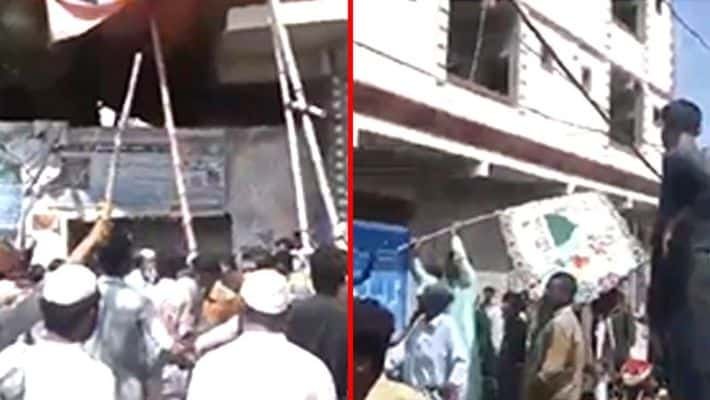
    Last month, Prime Minister (PM) Imran Khan approved a grant of Rs100 million for the construction of Islamabad’s first Hindu temple, which Minister for Religious Affairs Pir Noorul Haq Qadri had requested. Plan of the Sri Krishna Mandir complex was approved under the government of PML-N but the construction was delayed due to protests by religious groups and some administrative hurdles. Once again, there has been an uproar by religious groups who petitioned the Islamabad High Court (IHC) to stop its construction. The IHC disposed of three petitions filed against the construction of the temple and observed that it required the approval of the regulator, which in this case, is the Capital Development Authority (CDA).

    Religious affairs minister has said there was no need to debate on the rights of minorities as they were protected by the PTI government. “The party’s manifesto calls for removing all obstructions in the implementation of constitutional provisions regarding the rights of minorities.” Qadri insists that the construction of the Hindu temple has been stopped due to technical reasons and some issues with the CDA. Minister for Human Rights Shireen Mazari also asked “if we don’t protect and defend our own minorities then how will we fight the case of other Muslims across the world.”

    Islamabad has about 3,000 Hindus and due to there being no temple within the capital, they face many issues on religious festivals. We have had several prominent Hindu members of parliament, a former Hindu chief justice and military officers as well. Hindus make a large number of our minority population. We must not give in to reactionary forces.

    Pakistan’s founder Quaid-e-Azam Muhammad Ali Jinnah in his August 11 speech made it clear that there will be no discrimination in Pakistan on the basis of religion. “You are free; you are free to go to your temples, you are free to go to your mosques or to any other place or worship in this state of Pakistan. You may belong to any religion or caste or creed – that has nothing to do with the business of the state,” he said and all of us know, but still we fall short of respecting those who are equal citizens of the state.

    Unfortunately, Pakistan’s track record of protecting its religious minorities is not too good. Forced conversions of Hindu girls has become a norm in the country, mobs have burned down minorities’ places of worship in the past, religious minorities face discrimination quite regularly – incidents of such discrimination were recently shared by some cricketers as well.

    It is unfortunate that Muslim majority countries sometimes do exactly what is happening to Muslim minorities in other countries. The recent example of changing the status of Hagia Sophia in Turkey is an example – whether it is a politically calculated move or not, the religious connotations are quite obvious. We hope that the PTI government will go ahead with the construction of the temple in Islamabad. The premier has been quite committed to protecting the rights of religious minorities. We are hopeful that he will not disappoint the minorities, who are equal citizens of Pakistan.

  • Support pours in against ‘undemocratic’ rules as students take to roads across country

    Support pours in against ‘undemocratic’ rules as students take to roads across country

    Ministers, leaders of opposition parties, journalists as well as rights activists have voiced their support for marchers as students across the country take to roads for 2019 edition of the Students’ Solidarity March and press the authorities for better educational facilities.

    The marchers insist that the government must ensure the following:

    • Lift the ban and hold elections for student unions
    • Abandon privatisation of educational institutes and reverse the recent decision of school and college fee hike
    • The state should pledge free education for all
    • No more budget cuts for the Higher Education Commission (HEC) or sacking of educational staff
    • At least five per cent of the GDP should be allocated for education
    • Abolish the semester system
    • Lift the ban on students from participating in political activities
    • End the intervention of security forces in educational institutions and release all students held captive in the name of national security
    • Establish committees to investigate incidents of sexual harassment and ensure women are made a part of the setup
    • All universities should have a library, hostel and provide transport and an internet connection
    • Modernise education systems according to the modern scientific requirements
    • Set up schools and colleges in lesser developed areas and increase the quota of students coming from outside main cities
    • Establish research centres for a transition from fossil fuel energy to renewable energy in public sector universities
    • Announce April 13 as a national holiday to honour Mashal Khan

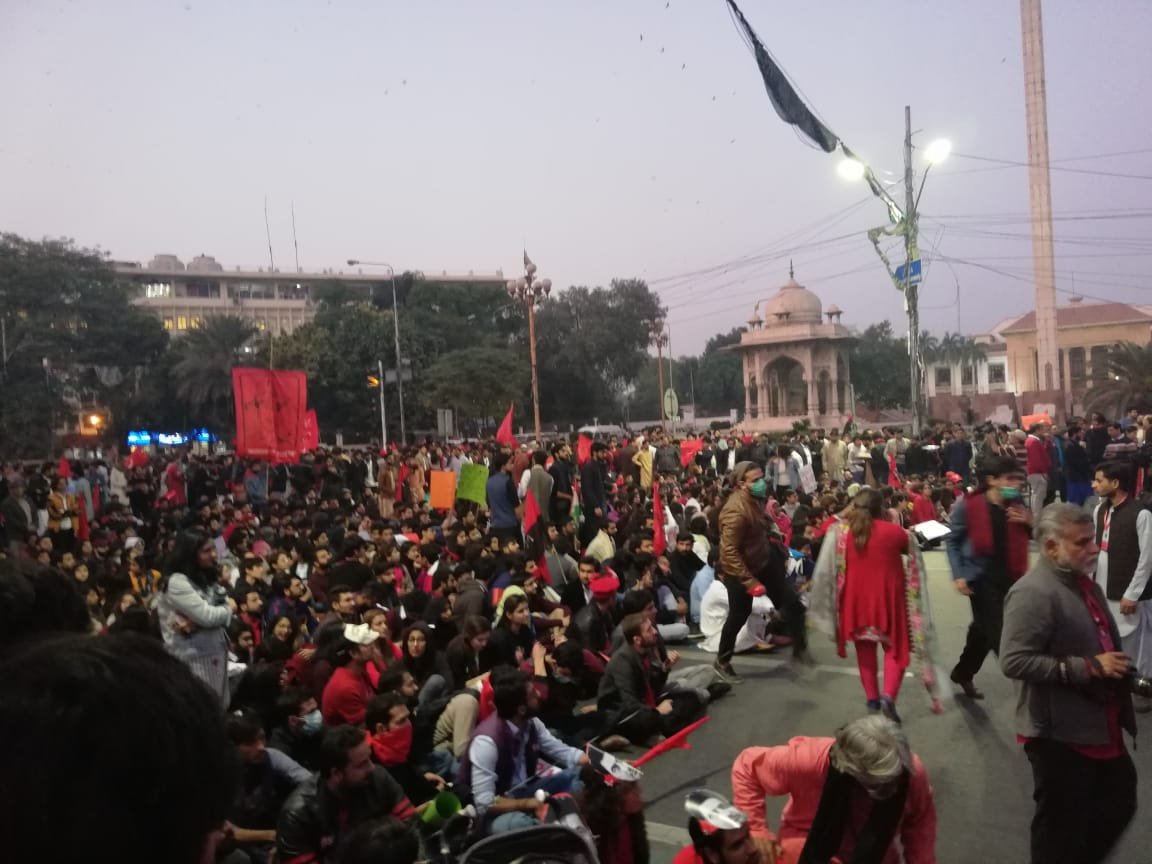
    The march on Friday was held in over 50 cities across Pakistan, including Karachi, Lahore, Islamabad, Rawalpindi, Quetta, Gilgit, parts of Khyber Pakhtunkhwa (KP), Azad Jammu & Kashmir (AJK) and interior Sindh.

    Students, labourers, lawyers and rights union members all joined in as thoroughfares flooded with marchers holding banners, placards and red flags. Solidarity was also expressed with members of New Delhi’s Jawaharlal Nehru University Students’ Union (JNUSU) as protests against fee hike continues across the border.

    In a tweet, the Progressive Students’ Collective (PSC) shared the final locations for the march.

    Pakistan People’s Party (PPP) chief Bilawal Bhutto-Zardari also lent his support to the marchers.

    “The PPP has always supported student unions. The restoration of student unions by SMBB [late former prime minister Benazir Bhutto] was purposely undone to depoliticise society,” he tweeted.

    “Today students are marching in the #StudentSolidarityMarch for the restoration of unions, implementation of right to education, end to privatisation of public universities, implementation of sexual harassment legislation, right to student housing & the demilitarisation of campuses. The spirit of activism and yearning for a peaceful democratic process from a new generation of students is truly inspiring [sic].”

    Earlier in the day, Federal Minister for Science and Technology Fawad Chaudhary also came out in support of the restoration of student unions and termed the ban “undemocratic”.

    Federal Minister for Human Rights Shireen Mazari wrote:

    Among others who expressed support for student marchers were politicians including PPP’s Farhatullah Babar, former Awami National Party (ANP) parliamentarian Bushra Gohar and journalists, including Mazhar Abbas.

    Earlier, the PSC and other organisations from all over Pakistan had formed the committee (SAC) at a national level to demand the revival of student unions and other issues. Representatives of student organisations from Sindh, Balochistan, Gilgit Baltistan, KP, AJK and Punjab are part of the SAC.

    According to Dawn, over the past three weeks, SAC office bearers have conducted corner meetings in public and private educational institutions to hold the march in their respective areas. They said the Pakistan Tehreek-e-Insaf (PTI) government had left students dejected and directionless and reduced the higher education budget to almost half, bringing Pakistan into the list of countries that spend very less on education.

    Ahead of the march, scores of Pakistani student leaders studying at international universities have also voiced their support for the march.

    In an open letter addressed to the government, students have come together under the banner of the Pakistan International Students Alliance (PISA) and registered opposition to the ban on student unions.

  • Why are we marching?

    On November 2 and 3, 2019, in a meeting hosted by the Progressive Students’ Collective, more than twenty students’ organisations from all across the country, including Gilgit-Baltistan (GB) and Azad Jammu & Kashmir (AJK) formed the Students’ Action Committee to demand revival of student unions and other issues in higher education.

    The committee vowed to
    launch a nationwide struggle for revival of student unions, against the cut in
    educational budget, increasing harassment cases in universities, security
    forces interferences in educational institutions, student torture cases, lack
    of educational infrastructure and ban on freedom of expression. It also decided
    that the first public activity under the banner of Students’ Action Committee
    would be the Students’ Solidarity March on November 29, 2019.

    The current crisis of
    higher education in Pakistan confronts students in the form of rising cost of
    education and a drastic decrease in immediate returns from a college degree.
    Not only is it harder to afford college education, but education expenses also
    leave students and their families in more debt and with limited job
    opportunities. A shrinking job market with employment opportunities swayed
    through social capital in the form of “contacts” has no space for a majority of
    graduates.

    We are marching on November 29 to organise and to seek institutional power in universities and create a way of holding onto that power. It’s our education — we should control it.

    It seems like a
    four-year degree only qualifies one to become a daily-wage labourer. Given this
    continual crisis, students are organising on campuses across the country for
    the forthcoming Students’ Solidarity March, after so many decades their
    struggles for the restoration of students’ unions are not fragmented but
    coordinated.

    Since the collapse of
    the students’ movement of the 70s and the subsequent ban on student unions in
    1984 under the dictatorship of General Ziaul Haq, most campus activism has
    taken the form of single-issue groups. There is a ban on any kind of political
    activity by students on campus and those who have tried to raise their voice
    for rights, have been rusticated, abducted and sometimes killed by fascist
    groups. By using anti-terror laws, their voices have been suppressed.

    Due to different kinds of repression on campuses, students haven’t been able to form an alliance that can give voice to all those being robbed of their rights and facing severe repression.

    From the past one year,
    students are agitating in different campuses on different issues, which include
    protests and sit-ins against fee hikes, sexual harassment, against the
    abduction of a number of students and for better housing, internet and transport
    facilities on campuses.

    While the resistance
    that popped up at Quaid-e-Azam University (QAU) against budget cuts and tuition
    hikes remained partially successful in pressurising the administration to succumb
    to some of their demands, the fiscal situation and budget cuts at QAU are not
    unique.

    We are marching because if we want to create radical change on our campuses — change that addresses economic and cultural aspects of our life — we need to move towards students’ unionism.

    Provincial governments
    across the country are cutting funding to schools and universities; the
    university officials are using budget cuts to jack up tuition fees (hikes that
    will continue for a long time) and to cut essential services and programmes.
    While the students at QAU, Punjab University (PU), Sindh University (SU) and
    the University of Balochistan (UoB) are putting up an amazing response to fee
    hikes, sexual harassment and securitisation of campuses, a coordinated effort
    under the banner of Students’ Action Committee to revive student unions would
    be more beneficial for the student body to assert its power as a class that
    represents the youth of this country.

    Therefore, we are marching on November 29 to organise and to seek institutional power in universities and create a way of holding onto that power.

    Progressive policy
    changes are a great thing on our campuses and they should be fought for, but
    they should be fought for in the context of building student power at campus
    level as well as at national level. Building student power means gaining more
    and more control over our campuses and the decisions that affect us as students.
    In the end, student power means a student-run higher education system.

    It’s our education — we should control it.

    We are marching
    together to ensure that local victories do not become isolated pockets of
    progress and resistance. We are marching to ensure that this work spreads and
    students find ways to coordinate efforts with those underway at other campuses
    in their areas.

    Movements grow not only by example, but when they actively engage people and share resources and hard-earned lessons. Because the federal government still makes most of the higher education policy decisions, students also need to coordinate on the national level in ways that foster cross-campus solidarity and encourage local initiatives.

    We are also aware of
    the fact that coordinating efforts should never mean that local campus organising
    becomes merely an extension of some larger campaign because this sort of
    strategy cannot support long haul organising. We need coordination that is
    mutually beneficial to everyone involved.

    We are marching on November 29 because if we want to create radical change on our campuses — change that addresses economic and cultural aspects of our life — we need to move towards students’ unionism. Unions that are run by the rank and file students; that fight alongside faculty and workers; that seek to empower the historically oppressed and revolutionise our educational system.